THE MOUSE MERCHANT [DILIGENCE AND GRATITUDE]

4. THE MOUSE MERCHANT [DILIGENCE AND GRATITUDE]

Buddhist Tales for Young and Old, volume 1, Prince Goodspeaker, Stories 1-50

Once upon a time, an important adviser to a certain king was on his way to a meeting with the king and other advisers. Out of the corner of his eye, he saw a dead mouse by the roadside. He said to those who were with him. “Even from such small beginnings as this dead mouse, an energetic young fellow could build a fortune. If he worked hard and used his intelligence, he could start a business and support a wife and family.”

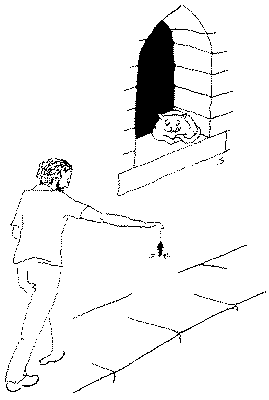
A passerby heard the remark. He knew this was a famous adviser to the king, so he decided to follow his words. He picked up the dead mouse by the tail and went off with it. As luck would have it, before he had gone even a block, a shopkeeper stopped him. He said, “My cat has been pestering me all morning. I’ll give you two copper coins for that mouse.” So it was done.

With the two copper coins, he bought sweet cakes, and waited by the side of the road with them and some water. As he expected, some people who picked flowers for making garlands were returning from work. Since they were all hungry and thirsty, they agreed to buy sweet cakes and water for the price of a bunch of flowers from each of them. In the evening, the man sold the flowers in the city. With some of the money he bought more sweet cakes and returned the next day to sell to the flower pickers.

This went on for a while, until one day there was a terrible storm, with heavy rains and high winds. While walking by the king’s pleasure garden, he saw that many branches had been blown off the trees and were lying all around. So he offered to the king’s gardener that he would clear it all away for him, if he could keep the branches. The lazy gardener quickly agreed.

The man found some children playing in a park across the street. They were glad to collect all the branches and brush at the entrance to the pleasure garden, for the price of just one sweet cake for each child.

Along came the king’s potter, who was always on the lookout for firewood for his glazing oven. When he saw the piles of wood the children had just collected, he paid the man a handsome price for it. He even threw into the bargain some of his pots.

Photo by ThuongDaiHua on Pexels.com

With his profits from selling the flowers and the firewood, the man opened up a refreshment shop. One day all the local grass mowers, who were on their way into town, stopped in his shop. He gave them free sweet cakes and drinks. They were surprised at his generosity and asked, “What can we do for you?” He said there was nothing for them to do now, but he would let them know in the future.

A week later, he heard that a horse dealer was coming to the city with 500 horses to sell. So he got in touch with the grass mowers and told each of them to give him a bundle of grass. He told them not to sell any grass to the horse dealer until he had sold his. In this way he got a very good price.

Time passed until one day, in his refreshment shop, some customers told him that a new ship from a foreign country had just anchored in the port. He saw this to be the opportunity he had been waiting for. He thought and thought until he came up with a good business plan.

First, he went to a jeweler friend of his and paid a low price for a very valuable gold ring, with a beautiful red ruby in it. He knew that the foreign ship was from a country that had no rubies of its own, where gold too was expensive. So he gave the wonderful ring to the captain of the ship as an advance on his commission. To earn this commission, the captain agreed to send all his passengers to him as a broker. He would then lead them to the best shops in the city. In turn, the man got the merchants to pay him a commission for sending customers to them.

Acting as a middle man in this way, after several ships came into port, the man became very rich. Being pleased with his success, he also remembered that it had all started with the words of the king’s wise adviser. So he decided to give him a gift of 100,000 gold coins. This was half his entire wealth. After making the proper arrangements, he met with the king’s adviser and gave him the gift, along with his humble thanks.

The adviser was amazed, and he asked, “How did you earn so much wealth to afford such a generous gift?” The man told him it had all started with the adviser’s own words not so long ago. They had led him to a dead mouse, a hungry cat, sweet cakes, bunches of flowers, storm damaged tree branches, children in the park, the king’s potter, a refreshment shop, grass for 500 horses, a golden ruby ring, good business contacts, and finally a large fortune.

Hearing all this, the royal adviser thought to himself, “It would not be good to lose the talents of such an energetic man. I too have much wealth, as well as my beloved only daughter. As this man is single, he deserves to marry her. Then he can inherit my wealth in addition to his own, and my daughter will be well cared for.”

Photo by Pixabay on Pexels.com

This all came to pass, and after the wise adviser died, the one who had followed his advice became the richest man in the city. The king appointed him to the adviser’s position. Throughout his remaining life, he generously gave his money for the happiness and well being of many people.

The moral is: With energy and ability, great wealth comes even from small beginnings.

4. The Mouse Merchant [Diligence and Gratitude]

Link: https://peacelilysite.com/2022/10/22/the-mouse-merchant-diligence-and-gratitude/

Source: INTERPRETER’S INTRODUCTION – BUDDHIST TALES FOR YOUNG AND OLD, VOLUME 1, STORIES 1-50

#Buddhisttalesforyoungandold #Buddhiststories #storiesforkids #moralstories #Buddha #Jatakastories #PansiyaPanasJataka #diligence #gratitude

Giving thanks can make you happier

Giving thanks can make you happier

Each holiday season comes with high expectations for a cozy and festive time of year. However, for many this time of year is tinged with sadness, anxiety, or depression. Certainly, major depression or a severe anxiety disorder benefits most from professional help. But what about those who just feel lost or overwhelmed or down at this time of year? Research (and common sense) suggests that one aspect of the Thanksgiving season can actually lift the spirits, and it’s built right into the holiday — being grateful.

The word gratitude is derived from the Latin word gratia, which means grace, graciousness, or gratefulness (depending on the context). In some ways, gratitude encompasses all of these meanings. Gratitude is a thankful appreciation for what an individual receives, whether tangible or intangible. With gratitude, people acknowledge the goodness in their lives. In the process, people usually recognize that the source of that goodness lies at least partially outside themselves. As a result, being grateful also helps people connect to something larger than themselves as individuals — whether to other people, nature, or a higher power.

In positive psychology research, gratitude is strongly and consistently associated with greater happiness. Gratitude helps people feel more positive emotions, relish good experiences, improve their health, deal with adversity, and build strong relationships.

People feel and express gratitude in multiple ways. They can apply it to the past (retrieving positive memories and being thankful for elements of childhood or past blessings), the present (not taking good fortune for granted as it comes), and the future (maintaining a hopeful and optimistic attitude). Regardless of the inherent or current level of someone’s gratitude, it’s a quality that individuals can successfully cultivate further.

Research on gratitude

Two psychologists, Dr. Robert A. Emmons of the University of California, Davis, and Dr. Michael E. McCullough of the University of Miami, have done much of the research on gratitude. In one study, they asked all participants to write a few sentences each week, focusing on particular topics.

One group wrote about things they were grateful for that had occurred during the week. A second group wrote about daily irritations or things that had displeased them, and the third wrote about events that had affected them (with no emphasis on them being positive or negative). After 10 weeks, those who wrote about gratitude were more optimistic and felt better about their lives. Surprisingly, they also exercised more and had fewer visits to physicians than those who focused on sources of aggravation.

Another leading researcher in this field, Dr. Martin E. P. Seligman, a psychologist at the University of Pennsylvania, tested the impact of various positive psychology interventions on 411 people, each compared with a control assignment of writing about early memories. When their week’s assignment was to write and personally deliver a letter of gratitude to someone who had never been properly thanked for his or her kindness, participants immediately exhibited a huge increase in happiness scores. This impact was greater than that from any other intervention, with benefits lasting for a month.

Of course, studies such as this one cannot prove cause and effect. But most of the studies published on this topic support an association between gratitude and an individual’s well-being.

Other studies have looked at how being grateful  can improve relationships. For example, a study of couples found that individuals who took time to express gratitude for their partner not only felt more positive toward the other person but also felt more comfortable expressing concerns about their relationship.

Managers who remember to say “thank you” to people who work for them may find that those employees feel motivated to work harder. Researchers at the Wharton School at the University of Pennsylvania randomly divided university fund-raisers into two groups. One group made phone calls to solicit alumni donations in the same way they always had. The second group — assigned to work on a different day — received a pep talk from the director of annual giving, who told the fund-raisers she was grateful for their efforts. During the following week, the university employees who heard her message of gratitude made 50% more fund-raising calls than those who did not.

There are some notable exceptions to the generally positive results in research on gratitude. One study found that middle-aged divorced women who kept gratitude journals were no more satisfied with their lives than those who did not. Another study found that children and adolescents who wrote and delivered a thank-you letter to someone who made a difference in their lives may have made the other person happier — but did not improve their own well-being. This finding suggests that gratitude is an attainment associated with emotional maturity.

Ways to cultivate gratitude

Gratitude is a way for people to appreciate what they have instead of always reaching for something new in the hopes it will make them happier or thinking they can’t feel satisfied until every physical and material need is met. Gratitude helps people refocus on what they have instead of what they lack. And, although it may feel contrived at first, this mental state grows stronger with use and practice.

Here are some ways to cultivate gratitude on a regular basis.

Write a thank-you note. You can make yourself happier and nurture your relationship with another person by writing a thank-you letter or email expressing your enjoyment and appreciation of that person’s impact on your life. Send it, or better yet, deliver and read it in person if possible. Make a habit of sending at least one gratitude letter a month. Once in a while, write one to yourself.

Thank someone mentally. No time to write? It may help just to think about someone who has done something nice for you, and mentally thank the individual.

Keep a gratitude journal. Make it a habit to write down or share with a loved one thoughts about the gifts you’ve received each day.

Count your blessings. Pick a time every week to sit down and write about your blessings — reflecting on what went right or what you are grateful for. Sometimes it helps to pick a number — such as three to five things — that you will identify each week. As you write, be specific and think about the sensations you felt when something good happened to you.

Pray. People who are religious can use prayer to cultivate gratitude.

Meditate. Mindfulness meditation involves focusing on the present moment without judgment. Although people often focus on a word or phrase (such as “peace”), it is also possible to focus on what you’re grateful for (the warmth of the sun, a pleasant sound, etc.).

Link: https://wisdomtea.org/2022/01/19/giving-thanks-can-make-you-happier/

https://www.health.harvard.edu/healthbeat/giving-thanks-can-make-you-happier#:~:text=In%20positive%20psychology%20research%2C%20gratitude,adversity%2C%20and%20build%20strong%20relationships.