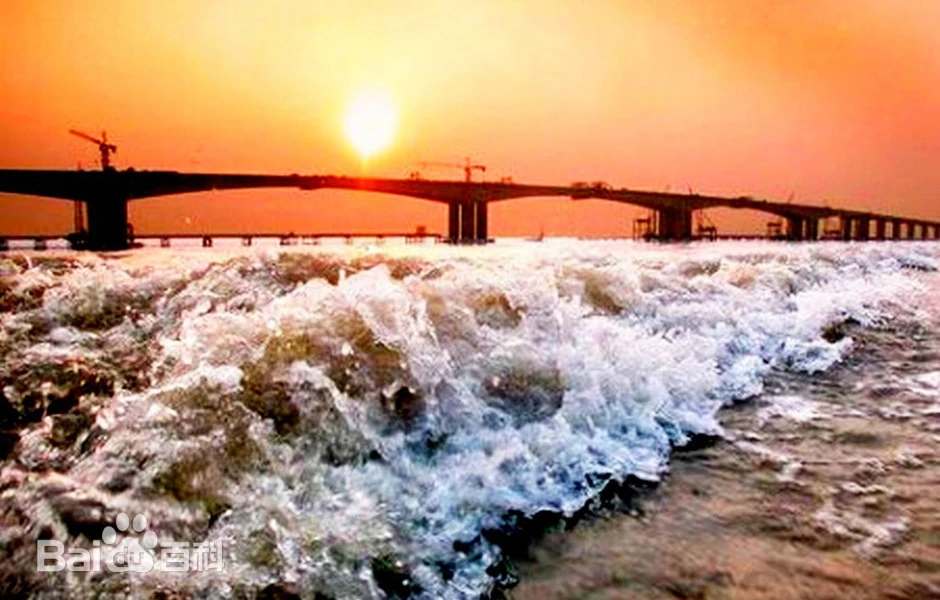
The Qiantang River, located in Zhejiang Province, China, flows majestically into the East China Sea. At its estuary lies one of nature’s most awe-inspiring phenomena—the Qiantang Tide, a tidal bore renowned across the globe. Every year, thousands of tourists flock to witness this breathtaking display of power and beauty. The tidal bore reaches its peak on the 18th day of the eighth lunar month, though it can be seen on several other days, providing around 120 days annually for tide-watching enthusiasts.
This year, the 18th day of the eighth lunar month, which falls on September 20th, 2024, will once again bring the grand spectacle of the great tide. As the tidal bore approaches, a small white dot appears on the horizon, swiftly transforming into a silver line, accompanied by a deep rumbling, reminiscent of distant thunder. In moments, the wave surges forward, growing into a towering crest over 9 meters high. The waves roll in, one after the other, layering like a long white ribbon, as though mountains and seas are being swept away. A famous poem captures the scene beautifully: “Gazing at Qiantang, waves stretch far, in an instant, wild surges fill the view. What seems like calm river waters holds energy that can shake the heavens.”
As the tide rushes forward, its roar grows louder, the crashing waves sending sprays of water into the air, resembling pearls and jade. The mighty surge mirrors the power of a thousand galloping horses. Tide-watching is a tradition that dates back over 2,000 years, originating in the Han and Wei dynasties and flourishing during the Tang and Song dynasties. It has become an essential cultural experience for locals and visitors alike.
The Science Behind the Qiantang Tide
The Qiantang River tidal bore is a marvel of natural forces. It results from the combined effects of celestial gravitational pulls and the centrifugal force of the Earth’s rotation, interacting with the unique trumpet-shaped terrain of Hangzhou Bay. Scientists have discovered that the formation of the tidal bore also depends on the relationship between the speed of the river’s flow and that of the tidal wave. When their speeds align or are close, the forces balance, giving rise to the dramatic tidal bore. However, if the speeds are significantly different, even a trumpet-shaped mouth cannot produce the same effect.
Best Spots to Experience the Qiantang Tide
For those seeking the ultimate tide-watching experience, there are three prime locations to catch the most spectacular views of the Qiantang River tidal bore:
1) Southeast Seawall of Yanguan Town, Haining County
This is considered the top spot for viewing the tide. Here, the tidal force is at its strongest, forming a straight line that has earned it the name “One-Line Tide of Haining’s Pagoda.” As the tide approaches, a white ribbon spans the river, accompanied by a thunderous rumble from the horizon. The tide races forward like a line of pristine white swans in flight, their wings outstretched in unison. In an instant, a 3-4 meter high wall of water rises before you, spraying droplets like pearls and jade, as the waves surge with the force of ten thousand horses. When the tide crashes into the seawall, it surges up to an astounding height of 9 meters, bringing to life the vivid imagery of the poem: “The sky-high turbid waves fill the air, overturning rivers and seas, shaking mountains!”
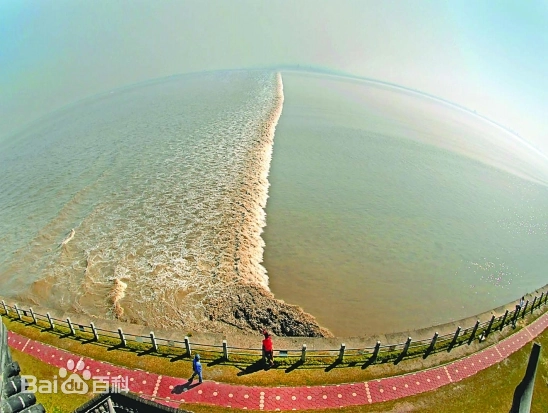

2) Babao, 8 kilometers east of Yanguan Town
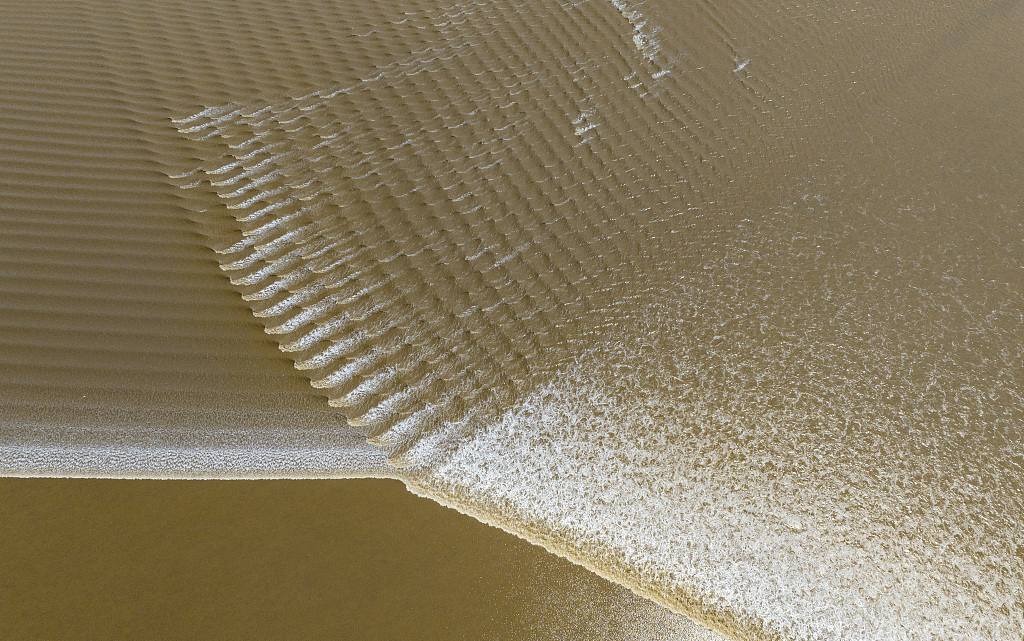
At Babao, you can witness the unique phenomenon of the tide heads colliding. After the tide flows into the river mouth, the differing terrain of the north and south banks causes the tide to split into two. The faster-moving southern tide, known as the “Southern Tide,” and the slower northern tide, called the “Eastern Tide,” meet in a dramatic head-on collision. The Southern Tide crashes into the southern bank, rebounds, and then surges northward, colliding with the Eastern Tide in a thunderous explosion of water. The river erupts into towering snowy peaks, an unforgettable sight that leaves viewers in awe.
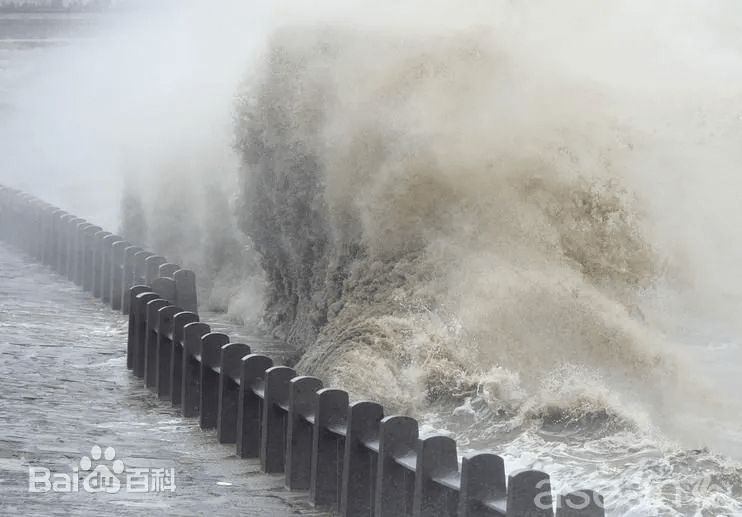

3) Laoyancang, 12 kilometers west of Yanguan Town
Laoyancang offers the opportunity to observe the incredible “Returning Tide.” Here, a 9-meter-high, 650-meter-long “T-shaped embankment” extends into the river, resembling a giant arm holding back the tide. Although the tide’s force diminishes slightly by the time it reaches this point, it still crashes into the embankment with the power of thousands of roaring lions. The tide then turns and rushes back toward the seawall, heading directly toward the onlookers standing on top, providing a thrilling close encounter with nature’s raw power.
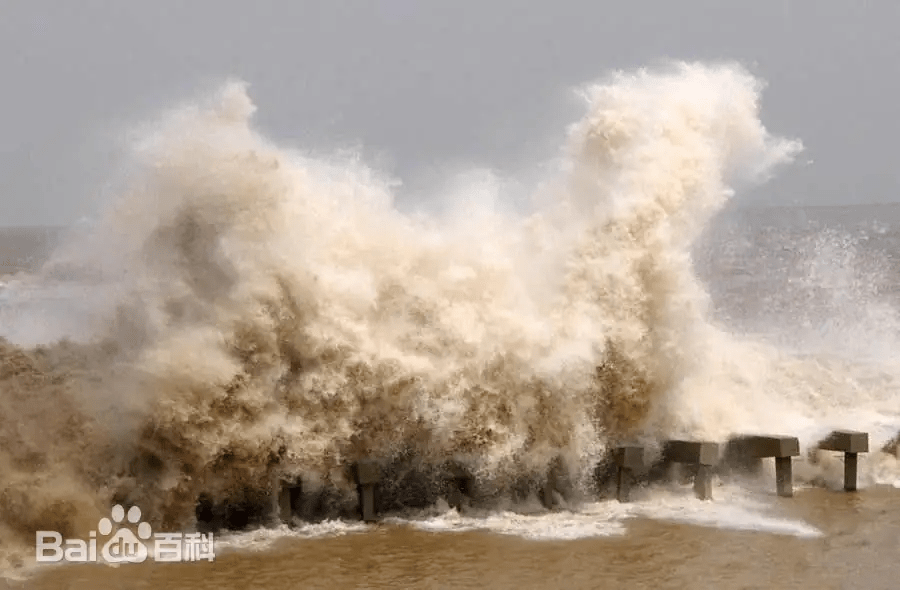
There are also other types of tidal bores, such as cross tides and fish-scale tides.

https://news.cctv.com/2023/09/25/ARTIvgR1OpAsU26yqTybCCmN230925.shtml?spm=C96370.PPDB2vhvSivD.ERPyWJCsPwT9.29
A Timeless Tradition and Spectacle
The Qiantang River tidal bore is not only a scientific wonder but a cultural treasure. With its blend of natural beauty, immense power, and centuries-old tradition, it remains one of the world’s most mesmerizing spectacles. Whether you’re drawn by the science behind the tides or the sheer grandeur of the waves themselves, watching the Qiantang Tide is an experience you’ll never forget.
#Travel #AmazingChina#Qiantang River Tidal Bore
 Peace LiLy