Even though we are cultivating ourselves, it is hard to overcome many, many lifetimes of evil behavior accumulated over eons of time, both as humans and as non-humans. However, we can stop negative actions from ripening by purifying them.His Holiness Dorje Chang Buddha IIIsaid it is like building a wall of good karma to protect us from the bad. Our bad karma cannot be eliminated–only by becoming enlightened can we escape the laws of cause and effect. The sutras say that “there can be no fault so serious that it cannot be purified by the four powers or four opponent forces.” EvenMilarepaand Angulimala, who were both mass-murderers, were able to purify their negative karma and become enlightened in a single lifetime, but they both were able to do this by following enlightened masters and using these powers. Thesefour opponent powersthat are essential for successful purification are:
H.H. Dorje Chang Buddha IIItells us that “within the truth of Buddhism, there is the doctrine that the law of cause and effect can never be denied. Cause and effect cannot be eliminated. To say that it can is to take anihilisticpoint of view. Hence, we can only build a wall of good karma, which is like building a retaining wall. This wall of good karma has the effect of blocking us from our evil karma.”
Dorje Pa Muhas also told us that allBuddha-dharmacan be condensed into the words cause and effect. All conditioned phenomena are subject to the processes of cause and effect and the four stages of arising, subsisting, changing and passing away. Those who realize the unconditioned obtain enlightenment as a result of certain causes. Yet, they are not attached to the thought of obtaining enlightenment. All Buddhist disciples must…
By Practitioner Yundun Duojibai V, Gadu with a heart of humility
Recently, when I was giving speeches to the friends at the Rotary Club, I was often asked a same question by a number of kind people, which is “What is a correct path of learning Buddhism and cultivation, and how can we correctly follow that path?”
In the following, I am going to use an analogy which is not exactly very appropriate but quite understandable by general public to explain the above question.
First, we must know that there are two very important acts or conducts on the path of learning Buddhism and cultivation, namely, “cultivation” and “dharma practice.”
The so-called “cultivation” means that we should, in our daily life and in our interaction with other people, correct our deeds that are not good so as to conform to the precepts and…
by H.E. Kaichu Rinpoche in the bookH.H. Dorje Chang Buddha III
H.E. Kaichu Rinpoche
I am an ordinary Buddhist disciple whose dharma name is Yizhen. I was recognized as a rinpoche by Dharma King Mohe, who is a Golden Throne Holder in the holy sense. He gave me the dharma name Kaichu. On December 13, 1996, I went to Chengdu on a trip led by Sister Chu Kuan and formally acknowledged H.H. Dorje Chang Buddha III Wan Ko Yeshe Norbu as my master. There, my Buddha Master transmitted dharma to me. Since then I have been following my Buddha Master. I have also been at the side of Dharma King Mohe for over eight years, even sleeping beside and below the bed of Dharma King Mohe.
After practicing for several months the Longchen Nying-thik Great Perfection Dharma transmitted…
The Buddha status of Namo His Holiness Dorje Chang Buddha IIIis not an appellation used by Buddhists for expressing respect. Rather, that resulted from the recognitions conducted by the Dharma kings, regent Dharma kings, and eminent monastics who have the authority of recognition according to the recognition system of Buddhism. Among these Dharma kings, regent Dharma kings, and eminent monastics are Dharma King Dodrupchen who is the sole holder of the Dharma of highest rainbow-body accomplishment, Dharma King Penor who was the third supreme leader of the Nyingma Sect in the world, Dharma King Achuk who is currently the foremost great virtuous one in Tibet, Dharma King Gongbao Dumu Quji who is the Yidam Dharma initiation master of the seventeenth Karmapa, Dharma King Jigme Dorje who is…
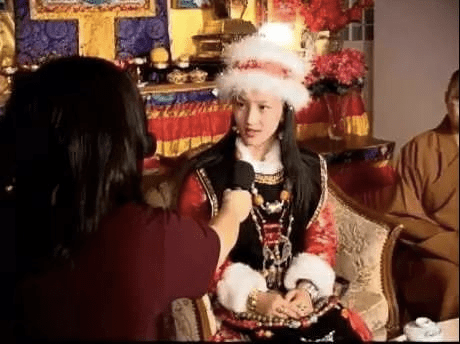
During the visit of a reporter on February 29, 2004, Jinba Pui Chu Yee Rinpoche made a prediction that she would become a world-class “Children’s artist” in just five months. The setting for the meeting was a solemn Buddhist mandala, and Jinba Rinpoche was dressed in traditional Tibetan Rinpoche’s robes, adorned with the seven treasures. Her appearance was slim and graceful, with a natural wisdom reflected in her features. Her sharp eyes exuded both compassion and wisdom.
During the interview, Jinba Rinpoche revealed that her father was none other than the great Dharma King (H.H. Dorje Chang Buddha III), who was not only a spiritual leader but also a talented artist. While Jinba Rinpoche had always been drawn to art, she had never attempted landscaping art before and was unfamiliar with the materials used in such work. Nevertheless, she expressed a strong desire to explore this art form and shared that her father would transmit the Manjushri wisdom and enlightenment dharma to her the day after the interview. With this newfound knowledge, Jinba Rinpoche aimed to publish a book of her landscaping art within five months. When asked about the content of the book, she confidently replied that it would feature a special collection of her own works. Her conviction and determination were evident.
When asked about the level of achievement she aimed for, Jinba Rinpoche, with the poise of a seasoned leader, declared that she aimed for nothing less than world-class status. This was no small feat, given that producing even a few works of landscaping art within five months was a world miracle that most people could hardly fathom, let alone publishing a book. The reporter was understandably curious about her confidence and asked how she could be so sure. Jinba Rinpoche replied that her father, the great artist and spiritual leader, was none other than the Vajra Dharma King, whom she held in the highest regard. She was certain that with his guidance and the teachings of the Tathagata Dharma, she could create stunning landscapes in no time. For her, making landscaping art was a piece of cake.
Despite Jinba Rinpoche’s young age, the reporter was struck by her gravitas and sincerity, leaving no room for doubt about the authenticity of her words. However, as a journalist, he had to ask the questions that the public might raise. Jinba Rinpoche responded with utmost solemnity, “Doubt is intrinsic to all sentient beings, for without doubt, what is sentience? As a Rinpoche, lying is not an option, for it would mean falling into hell. Why would one choose to fall into hell by lying? If I lie to others, I would deserve such a fate. As a Rinpoche, why would I want to end up in hell because of lying?” Her response not only demonstrated her commitment to honesty and integrity but also revealed her deep understanding of the Buddhist principles she espoused.
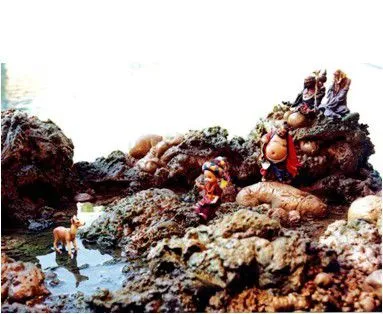
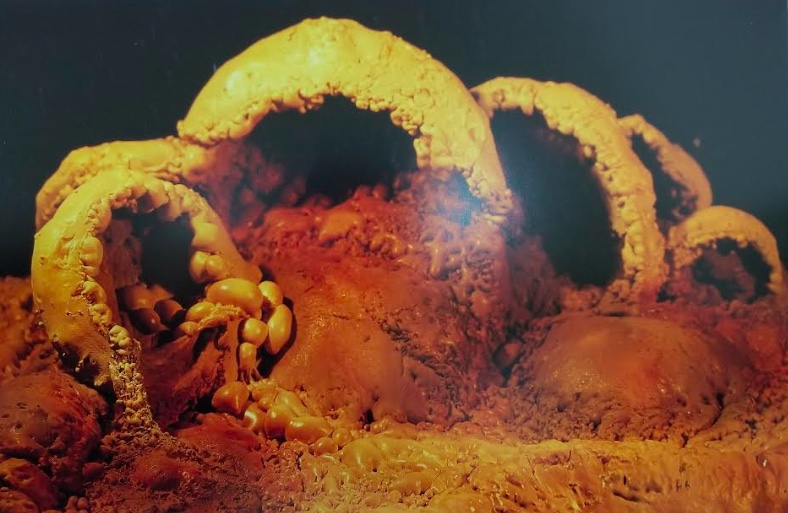
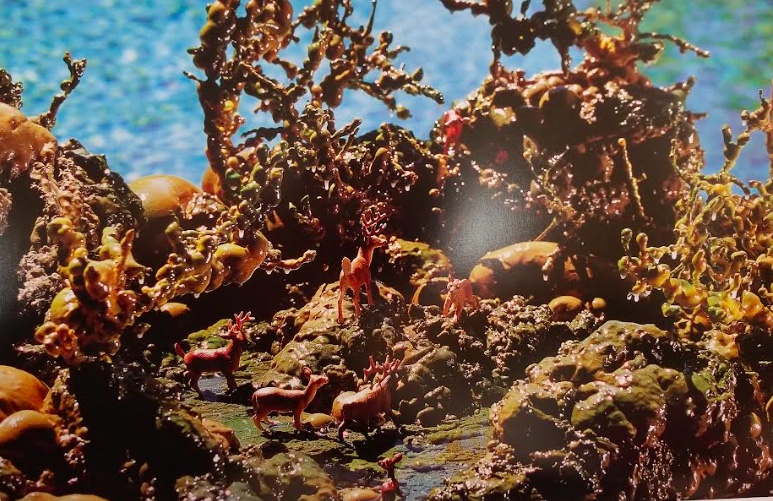
Her prediction of course came true. The New York Academy of Art evaluated her sculpture landscapes. On May 11, 2004, that Academy issued a certificate to Jinba Pui chu Yee signed by its Executive Director, Mr. Stephen Farthing. That certificate contained the following evaluation: “It have been a great pleasure for both e as Executive Director, and my Faculty at the New York Academy of Art, to get to know the artwork of such an internationally acclaimed artist as Ms. Pui Chu Yee. Her unique approach transports the viewer beyond taste and fantasy to a point where enchantment and contemporary art meet. Her work is a great achievement.”
She has published a book featuring a collection of her landscape compositions, which can be reviewed and purchased at the Hua Zang Si temple in San Francisco. Additionally, some of her artworks are on display in the grand hall of the temple.
Jinba Rinpoche creating art work with special vajra painting on her face
Tibet Plateau
Holy Saint
Mountains and Mirror lake
Signature created by Jinba Rinpoche
The Source and Flow of Life
This Is a Place by the Lake Where Wild Deer Gather
Swords man and Warrior Performs Prodigious Feats on a Cliff
(Reported from Los Angeles)Expounding the Absolute Truth Through the Heart Sutrais truly a supreme holy scripture. On March 7, 2014 CE, a dharma assembly of empowerment with this treasure book was held for the first time at the Holy Manifestation Temple in the United States of America. The treasure bookExpounding the Absolute Truth Through the Heart Sutra, the six great dharmas, holy mantras, and letters of petition to be chanted and practiced by the seven types of cultivators, and dharma water and willow branches were presented to the dharma rostrum for worshipping. Forty six (46) pieces of first-publishing stamping seals to be empowered by the dharma water were placed at the front.
Dharma King Gar Tongstan Ciren Gyatso escorted the purple-colored brass dharma bowl that he had beseeched in person from H.H. Dorje Chang Buddha III to the Holy Manifestation…
Faith is an important concept in Vajrayana or Esoteric Buddhism. It is especially important in the beginning, but it is an essential component in all stages of practice. When you begin to practice Buddhism, you may not understand the essence of the Dharma and thus cannot enter into true practice. As a result, you will not be able to experience any beneficial effects from your practice. You may not be able to acquiregood fortuneandwisdomor manifestsupernormal powersimmediately.
At this time, you must be careful not to commit the offense of giving rise to doubt about either your Vajra Master or the Dharma, since this will cause you to incur even more karmic obstacles and thus make it even more difficult to receive any benefits. Patience is very important at this stage in your practice. It is not uncommon for beginners to experiencekarmic retributionon this path as conditions from past activities…
by the International Buddhism Sangha Association and taken from the book H.H. Dorje Chang Buddha III:
Do Buddhists advocate supernatural powers? Actually, this is not a matter of advocating or not advocating. Rather, supernatural powers are that which everyone who is accomplished in the dharma possesses. Such powers are the manifestation of realization achieved through cultivation. They are phenomena that exist in the course of cultivation but are not the goal of cultivation, which is liberation from the cycle of birth and death. They are by-products that arise during one’s practice. These by-products called supernatural phenomena naturally exist in all liberating paths within the Buddha-dharma. Becoming attached to these by-products and regarding them as the goal is heretical supernatural powers. Applying these by-products in a free and unattached way and regarding them as illusory is treating supernatural powers based on the correct Buddha-dharma view.
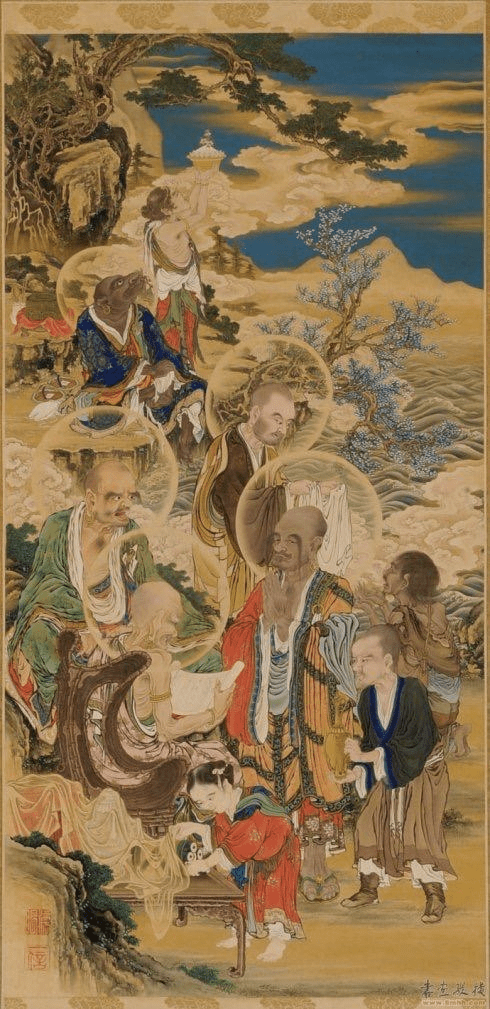
As one of the most important religions, Buddhism has profound impact of the Chinese culture and civilizations. Buddhist figures have also become common subjects for artists in the past. I like the massive paintings and sculptures of five hundred Arhats, it is really a brilliant page in Chinese art history.
Arhat Hall in LingYin Si Temple, HangZhou ZheJiang
Portion of Five hundred Arhats Painting
Portion of Five hundred Arhats Painting
Song Dynasty’s painting of Three Arhats is in Boston Art Museum collection
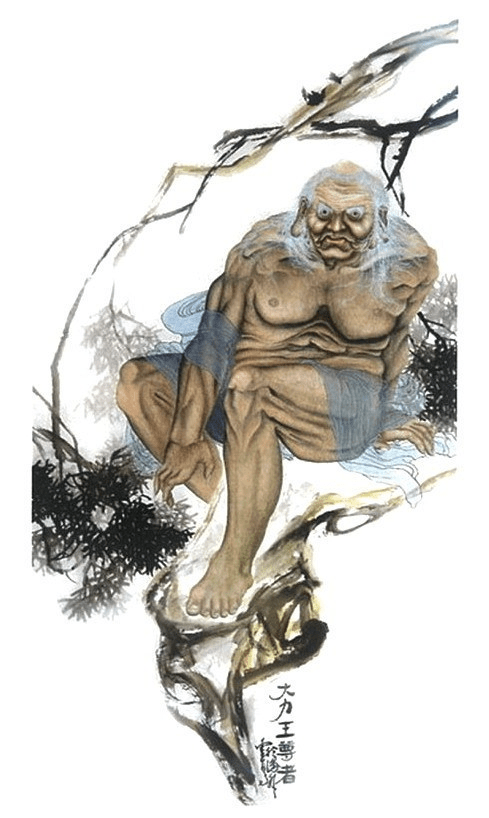
The world famous master of Buddhism and art, Master Wan Ko Yee (H.H. Dorje Chang Buddha III ) has also painted a few buddhist figure paintings. One of his painting “Venerable Da Li Won”, set the world record in Chinese art history of the highest selling price of paintings by a painter who is still alive. The painting “Venerable Da Li Won”, was sold at US$2,207,912.00 at year 2000.
Venerable Da Li Won
Venerable Da Li Won, an Arhat, normally is at the one hundred and eight-seventh position of the five hundred Arhat. He is a guardian deity of Buddhism who protects living beings and vanquishes demons. This painting has a noble and sincere expression, an appearance that transcends the mundane. One can easily see that He is not of this mortal world. The depiction of Him in this painting is extremely lifelike. The delicate lines outline the powerful muscles of Venerable Dali, the veins and blood vessels of the whole body are clearly visible. The thin yarns surrounding the waist are as thin as cicada wings. The artist’s meticulous skills are truly extraordinary and superb.
The whole work has a graceful arrangement and conveys a mind-lifting attractiveness. It may seem that the rock and spring branches were casually painted with a small number of brush strokes. Actually, vast experience and profound calligraphic prowess were applied to depict them. Only through skills applied with a completely unfettered hand and mind can one reach this state of mastery in which calligraphy and painting merge. Venerable DaLi is extremely awe-inspiring in both spirit and form. It is absolutely a master piece that combines meticulous brushwork and freehand brushwork.












 Peace LiLy