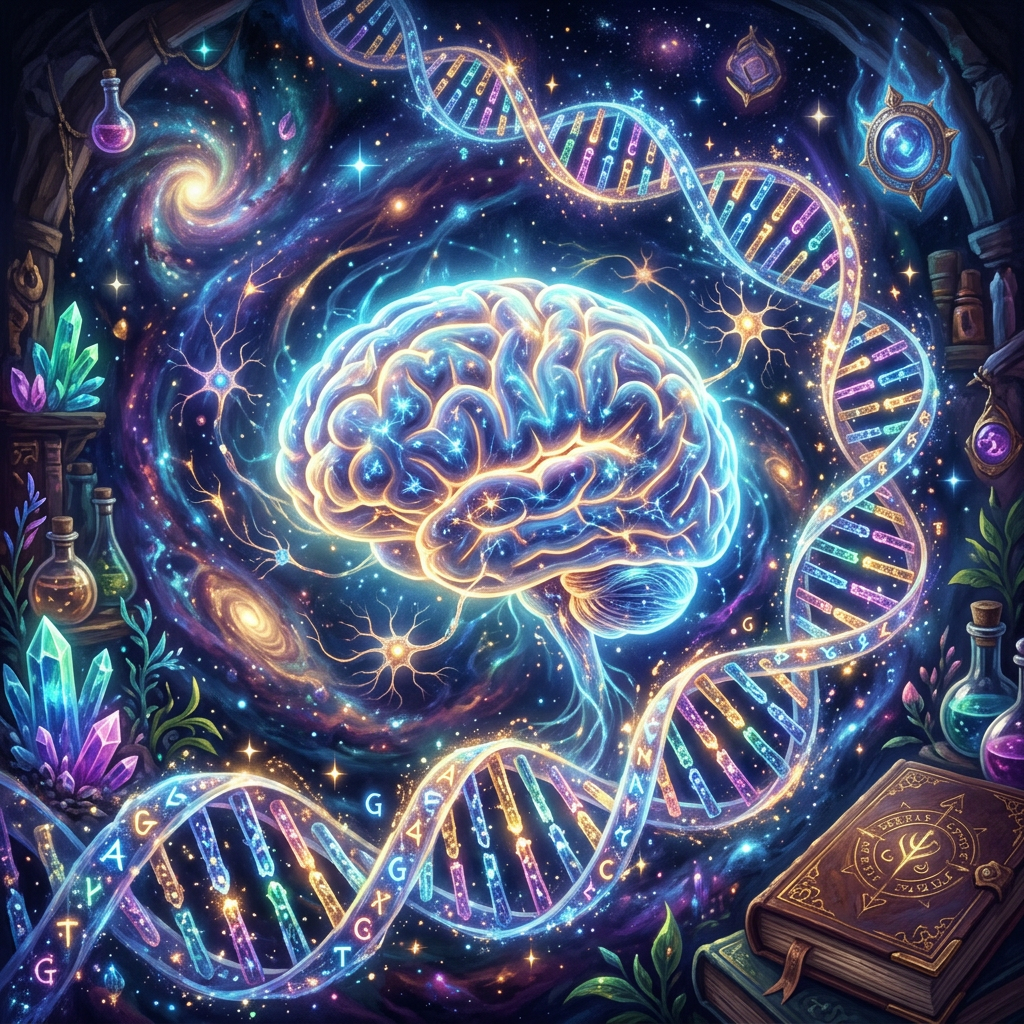
Have you ever wondered what truly separates the human mind from the rest of the animal kingdom? While we share roughly 99% of our DNA with our closest primate relatives, that remaining 1% holds the secrets to our extraordinary cognitive abilities, complex language, and problem-solving skills.
Recent evolutionary genetics research reveals that a few specific “human-only” genes act as master architects of our minds.
The Genetic Blueprint of Human Brainpower
Rather than building an entirely new brain from scratch, evolution used clever shortcuts—like gene duplications and tiny mutations—to supercharge human brain structure.
ARHGAP11B (The Neocortex Expander): Around 5 million years ago, a partial gene duplication created ARHGAP11B. Later, a single point mutation enabled this gene to dramatically multiply neural stem cells. This change triggered the expansion and signature folding of the human neocortex—the region responsible for high-level reasoning and language.
SRGAP2 (The Synapse Multiplier): This human-specific duplicated gene increases the number of connections (synapses) between neurons while slowing down their maturation. Prolonging this developmental window gives the brain years to build hyper-dense, complex neural networks.
NOTCH2NL (The Stem Cell Booster): Found exclusively in humans, these genes delay the differentiation of stem cells into neurons, allowing the brain to produce a far larger pool of cortical neurons during early development.
One of the most surprising insights from recent research is the role of neoteny—the slowing down of brain development. While a mouse brain matures in weeks, the human brain takes decades to fully develop.
Human-specific genes like SRGAP2 prolong the development of both neurons and microglia (the brain’s circuit-sculpting immune cells). By keeping the brain in a adaptable, learning-ready state for years, nature gives us the long runway needed to absorb culture, acquire language, and master complex skills.
Our cognitive edge didn’t require a total overhaul of the genome. Instead, a few duplicated genes and subtle mutations allowed the human brain to grow larger, form denser networks, and remain adaptable over a prolonged childhood.
What aspect of human brain evolution do you find most surprising—the rapid expansion of brain size or our unusually long developmental timeline?
This video explores evolutionary genetics and how key genetic changes shaped the unique features and complexity of the human brain.
Beyond the Truth: The Buddha’s Wisdom on Sacred Speech
In daily life, we frequently hear people defend sharp or hurtful remarks with a familiar defense: “I’m just speaking the truth.”
We often operate under the assumption that as long as our statements are factually accurate, we are justified in ignoring the timing, the setting, and the recipient’s emotional capacity. Yet in the Abhaya Sutta (Majjhima Nikaya 58) of the Pali Canon, the Buddha offers a radically different perspective on communication: the true value of speech extends far beyond mere factual accuracy.
The story begins with a trap. Nigantha Nataputta, leader of the Jains, sought to publicly corner the Buddha. He instructed Prince Abhaya to pose a carefully engineered dilemma:
“Would the Tathagata utter speech that is displeasing or disagreeable to others?”
It seemed like an inescapable box:
If the Buddha answered “Yes,” the prince would argue that he was no different from any ordinary person who hurls harsh words and causes distress.
If the Buddha answered “No,” the prince would counter by pointing to instances where the Buddha severely rebuked Devadatta—words that were undeniably painful for Devadatta to hear.
Confident in his trap, Nigantha Nataputta boasted that the question would stick in the Buddha’s throat like a barbed nut—impossible to swallow and impossible to spit out.
When Prince Abhaya hosted the Buddha for a meal the next day and posed the question, the Buddha quietly dismantled the binary trap: “There is no single, one-sided answer to this matter.”
The Buddha refused to play by a rigid, two-dimensional rule. Whether a Master speaks is never determined solely by whether the listener will find the words pleasant.
Having neutralized the debate tactic, the Buddha turned toward a young child sitting near the prince and offered a deeply human metaphor.
He asked the prince: “If this young child were to accidentally put a sharp piece of wood or a pebble into his mouth, what would you do?”
The prince replied without hesitation that he would immediately try to extract it. If necessary, he would hook his finger into the child’s mouth to drag it out—even if it meant causing pain or drawing blood—because the object had to come out.
When the Buddha asked why he would do such a thing, the prince’s answer was simple: “Because of compassion for the child.”
With this single image, the debate shifted entirely.
Some truths are uncomfortable to hear, much like removing a foreign object from a child’s mouth brings temporary pain. But the criterion for speaking is never immediate comfort; it is long-term welfare. A loving father reaches into his child’s mouth not to assert dominance, nor to punish, but because leaving the pebble inside causes far greater harm.
Through this parable, the Buddha established three essential checkpoints that every word must pass before it is spoken:
Truthfulness: Is it grounded in fact? Words that are false are never spoken.
Benefit: Is it genuinely useful? Even if a statement is 100% true, if it brings no constructive benefit to the listener, it remains unsaid.
Timeliness: Is this the right moment? Only when a statement is both true and beneficial will a wise speaker choose the appropriate time to speak it.
In the Buddha’s framework, truth is merely the entrance requirement. If a statement is factually correct but unhelpful, ill-timed, or purely divisive, silence is the highest wisdom.
Looking Inward: Winning vs. Healing
The contrast between the two parties in this sutta highlights two very different motivations for speaking:
The Debate Strategy: Designed to corner, crush, and silence the other person—driven by the desire to win.
The Buddha’s Response: Designed like a parent rescuing a child from danger—driven by the desire to heal.
This distinction invites us to examine our own hearts before we speak “harsh truths” or offer sharp criticism:
Are we speaking because we genuinely want to help the other person suffer less, or are we simply trying to prove ourselves right and dominate the conversation?
True goodwill allows for necessary firmness, but it must always rest upon the foundation of truth, benefit, and proper timing. Practicing the wisdom of Right Speech is not just about holding our tongue—it is about refining our intent, ensuring that every word we release carries gentle yet steadfast compassion.
There are many people who learn Buddhism, but the reasons they enter Buddhism vary greatly. Some seek spiritual faith to give their hearts a sense of comfort and support. Some do so for their health, while others pray to the Buddhas and Bodhisattvas for a happy family or a successful career. Of course, there are also those who enter Buddhism because they genuinely wish to understand the principles of Buddha Dharma, free themselves from the suffering of reincarnation, and benefit both themselves and others. Although people may have different reasons and purposes for entering Buddhism, they all come with the intention of learning Buddhism.
So, what led me to Buddhism?
Before I entered Buddhism, I knew virtually nothing about Buddhism. Yet I had always considered myself a believer in Buddhism simply because I occasionally visited temples to pay respect to the Buddhas. At that time, the little understanding I had of Buddhism was mixed with superstition.
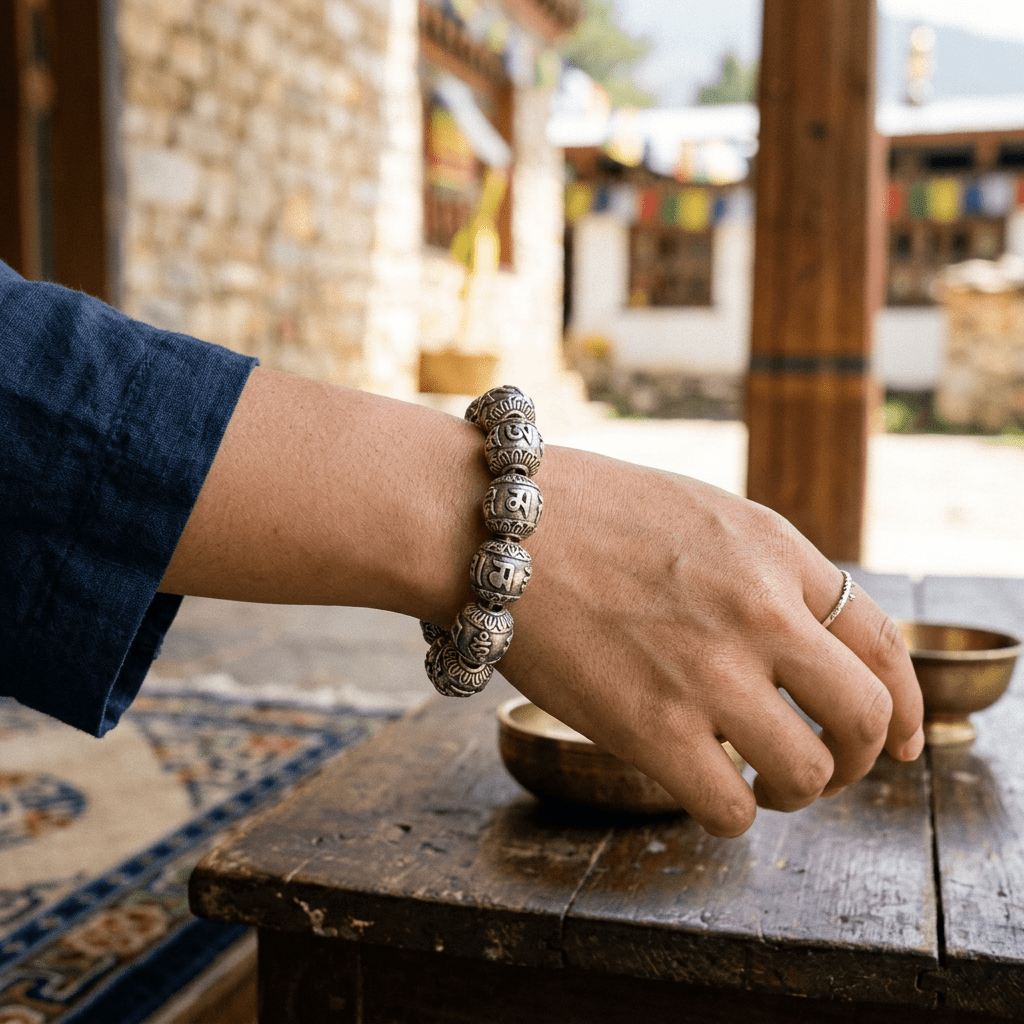
That changed in December 2017, when I traveled to Yunnan with some friends and bought a silver bracelet engraved with the Six-Syllable Great Bright Mantra.
After returning home, I searched online for information about the mantra, including how to recite it. That was when I first learned about reincarnation within the six realms and the different karmic consequences of good and evil deeds.
When I read descriptions of the suffering in the three lower realms, I was deeply shaken. I began thinking about the cats, dogs, mice, birds, fish, shrimp, flies, mosquitoes, and other living beings around us. They clearly possess awareness. If you strike or frighten them, they immediately try to escape. When I thought about the possibility that these beings could have been humans in previous lives who were subsequently reincarnated, I found it frightening. The thought of the hell realm and the realm of hungry ghosts was even more terrifying.
Then I thought about human existence itself, with all its worries and troubles, endless toil, deception, and conflict. It too seemed filled with suffering.
I felt deeply saddened and thought, How wonderful it would be if I could become a Buddha or Bodhisattva!
Right then, I made a decision: In this lifetime, I would earnestly learn Buddha Dharma and seek liberation. I did not want to continue revolving endlessly through the six realms of reincarnation, lifetime after lifetime. I did not want to simply drift through this existence. I wanted to end the cycle of birth and death and attain liberation.
And that was how my journey of learning Buddhism began.
Early the next morning, I went to the most renowned Buddhist temple in my area and asked where I could learn Buddha Dharma. As it happened, the temple offered Buddhist classes, so I enrolled immediately.
For some time afterward, I traveled back and forth between two large, historic, and well-known local temples. One identified with the Caodong school of Chan Buddhism, while the other followed the Tiantai school.
I attended classes on both days of every weekend. I recited the Heart Sutra, the Diamond Sutra, the Lotus Sutra, and the Amitabha Sutra, and participated in morning and evening services. Whenever I had time, I volunteered at the temples. I also listened to monastics at the temples and to various people regarded as eminent Buddhist masters online as they lectured on Buddhist sutras and teachings.
As I continued studying, however, many questions began to arise.
When I attended lectures on the Lotus Sutra, the masters at the temple were unable to explain many of the Dharma principles in depth. They simply copied passages from commentaries written by patriarchs and asked us to write them in our notebooks.
Whenever we asked what a particular Buddhist term meant or how we should understand a certain passage concerning Dharma principles, the masters would simply tell us, “Just write it down.” They were unable to provide a clear explanation.
I also listened online to a well-known Buddhist master lecture on the Heart Sutra and the Diamond Sutra. I listened carefully many times, yet the essential Dharma principles contained in those sutras still seemed obscure and confusing to me. I remained unable to truly understand prajna, emptiness, or the nature of our original state.
Then, in February 2018, a friend in Shenzhen learned that I was studying Buddhism and invited me to join a Buddhist study group organized by Dr. Xie, who worked in the medical field.
Dr. Xie frequently shared articles about the holy accomplishments of Namo H.H. Dorje Chang Buddha III.
I was astonished.
Could there really be a true Buddha living in this world?!
From the articles he shared, I read about numerous disciples of Namo H.H. Dorje Chang Buddha III who had attained accomplishments and liberation. I became deeply inspired and asked Dr. Xie:
“Doctor, are there books containing the H.H. Dorje Chang Budha’s teachings? Could you send me a few so that I can respectfully study them?”
Dr. Xie replied:
“Come and request them in person!”
The very next day, I bought a plane ticket and flew there.
Under Dr. Xie’s guidance, I went to the Buddhist practice center of a fellow practitioner who was a Rinpoche to listen to Dharma teachings.
It was a weekend, and many people had gathered to listen to the H.H. Dorje Chang Buddha III’s Dharma together. One recorded Dharma discourse was played twice.
The approachable and warm voice of Namo H.H. Dorje Chang Buddha III gave me an extraordinary feeling of closeness, almost like being reunited with a beloved family member after a long separation. The explanations were presented in such clear and accessible language that, to my surprise, even I could understand some of them!
I felt joyful and encouraged. During the group discussion afterward, I was even able to share a little of what I had understood.
After returning home, I flew there two more times to listen to Dharma teachings of H.H. Dorje Chang Buddha III. I also attended the Buddha Bathing Dharma Assembly in Hong Kong that May. Then, in June, I was fortunate enough to have an audience with Namo H.H. Dorje Chang Buddha III.
I will not elaborate here on the blessings I experienced. Instead, I would like to continue sharing my genuine experiences of learning Buddhism over these years.
After respectfully listening to the Dharma discourses of the Buddha, I came to understand many principles. In particular, I respectfully studied books in which the H.H. Dorje Chang Buddha III expounded prajna. The Buddha explained prajna in clear and accessible language and also taught us specific methods through which realization could be attained. He explained the relationship between cultivating oneself and practicing the Dharma and taught us how to cultivate ourselves.
These were things I had never learned at the local temples. Moreover, many of the questions that had previously puzzled me at those temples were answered through the Dharma discourses and writings of the H.H. Dorje Chang Buddha III.
At the same time, through studying the Dharma expounded by the H.H. Dorje Chang Buddha III, I came to understand that those who have not attained the level of a great Bodhisattva at the stage of non-retrogression or higher are not qualified to expound the Dharma, much less those so-called “eminent monks and virtuous masters” who possess no actual realization or accomplishment.
Without genuine realization, they either merely repeat the knowledge of others or recklessly expound teachings that can mislead practitioners. This can lead living beings toward erroneous views and misguided paths and may even sever their opportunities to develop wisdom and attain liberation.
Having previously experienced a form of Buddhism that consisted primarily of burning incense, paying respect to the Buddhas, reciting mantras and Buddha names, chanting sutras, and practicing Chan meditation—and having heard only superficial theories presented as Buddhist knowledge—I came to appreciate even more deeply just how difficult it is to encounter genuine Buddha Dharma.
The superficial theoretical knowledge taught by those so-called “eminent monks and virtuous masters” provides no genuine Buddha Dharma to practice, nor does it offer authentic inner-tantric initiations. Therefore, it cannot enable one to end the cycle of birth and death.
The difference between learning genuine Buddha Dharma and learning false or incomplete Buddha Dharma is truly beyond description.
I feel extraordinarily fortunate to have encountered genuine Buddha Dharma.
This is the story of how I entered Buddhism.
Dear friends, I do not know how you will feel after reading my story. Are you as fortunate as I have been?
If you are still going around in circles within a form of Buddhism that consists only of burning incense, paying respect to the Buddhas, reciting Buddha names, and chanting sutras—or if you are merely listening to lectures that sound plausible but do not convey the true Dharma—then quickly pray for the blessings of the Buddhas and Bodhisattvas so that you may soon encounter the true Dharma of the Tathagata.
Only by learning genuine Buddha Dharma can we receive the blessings of the Buddhas and Bodhisattvas and attain lasting happiness.
I also sincerely want to tell you this: How extraordinarily rare and precious it is for a Buddha to be living in this world. If you sincerely wish to learn Buddhism, you must not let such an opportunity pass you by. Otherwise, you may be left with profound regret and no opportunity to attain liberation.
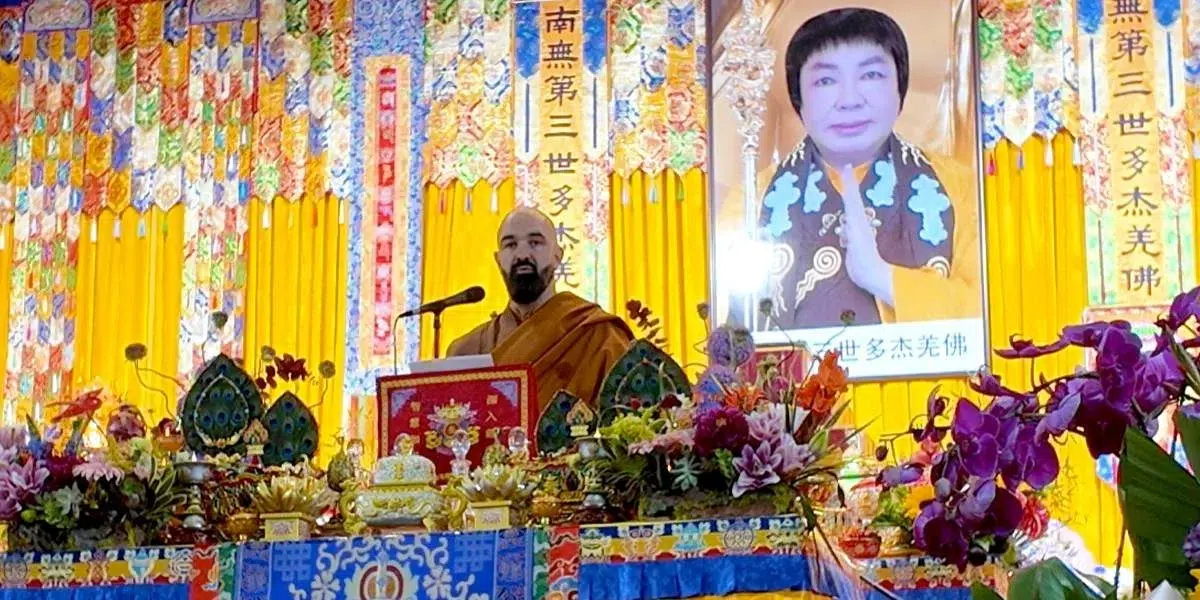
Photo Courtesy: Joyce Lee (Lotus Button Holy Guru Mozhi of the World Buddhism Association Headquarters delivered an opening speech at the Dharma Assembly)
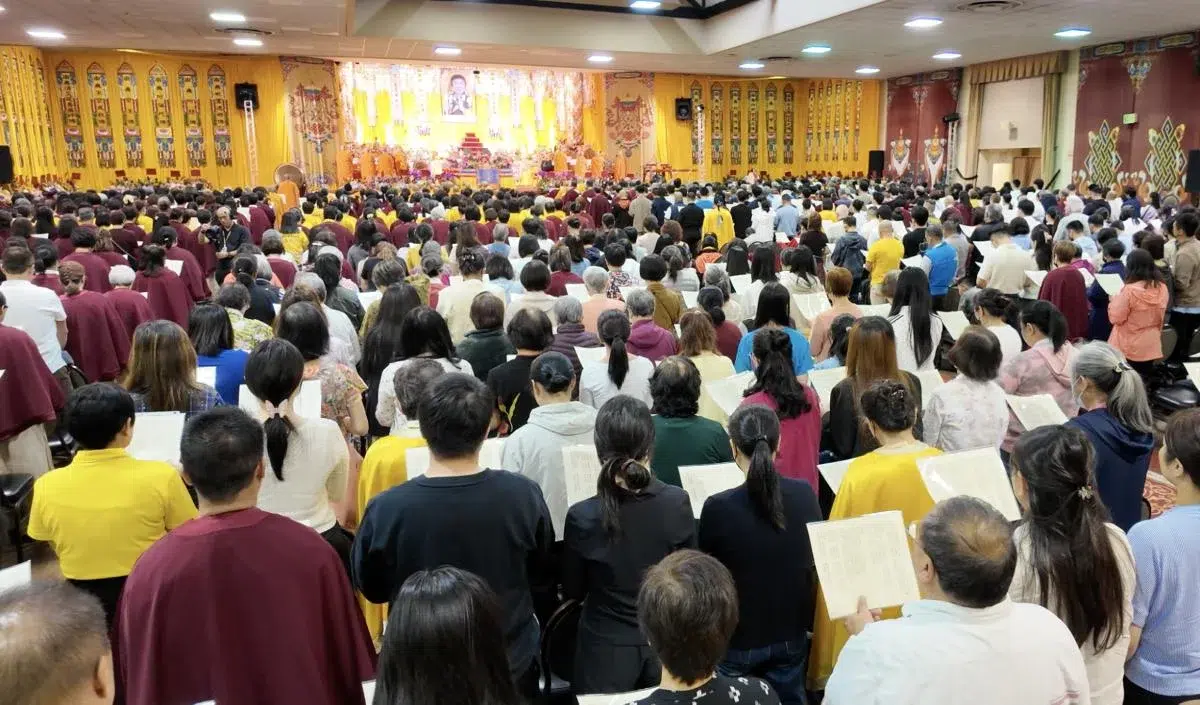
The Glendale Civic Auditorium became the center of an international Buddhist gathering as more than a thousand Dharma masters, rinpoches, and lay practitioners convened for a two-day Dharma Assembly honoring the Holy Birthday of H.H. Dorje Chang Buddha III. The event was jointly organized by the World Buddhism Association Headquarters, Holy Miracles Temple, Hua Zang Si, Benevolence Temple, and the Sanger Mission.
H.H. Dorje Chang Buddha III was recognized with the 2010 World Peace Prize Top-Honor Prize for humanitarian and peace-promoting contributions. Between 2023 and 2025, eleven volumes of the Namo Dorje Chang Buddha III Complete Sutra Collection were published, with four additional volumes released in 2026. The Sutra Collection encompasses the essence of the Tripitaka and esoteric Dharma, guiding practitioners toward liberation from the cycle of rebirth.
A Two-Day Assembly in Glendale
Photo Courtesy: Joyce Lee (More than a thousand Dharma masters, rinpoches, and lay practitioners convened for a two-day Dharma Assembly honoring the Holy Birthday of H.H. Dorje Chang Buddha III)
Lotus Button Holy Guru Mozhi of the World Buddhism Association Headquarters delivered an opening speech at the Dharma Assembly and emphasized that only right faith and correct views can keep practitioners from going astray in this Dharma-ending age. He urged Buddhists to rely on the Namo Dorje Chang Buddha III Complete Sutra Collection and to practice in accordance with the Dharma. He reminded attendees that while Buddhas and Bodhisattvas point living beings toward the path of liberation, genuine liberation ultimately depends upon one’s own practice and cultivation.
The Assembly has become an annual destination for Buddhist leaders, abbots, educators, and Buddhist practitioners from around the world to pay tribute to all the Buddhas and Bodhisattvas. It facilitates dialogue, learning, and collaboration across a range of Buddhist traditions, drawing participants who travel considerable distances to attend.
Commemorations Across the Country
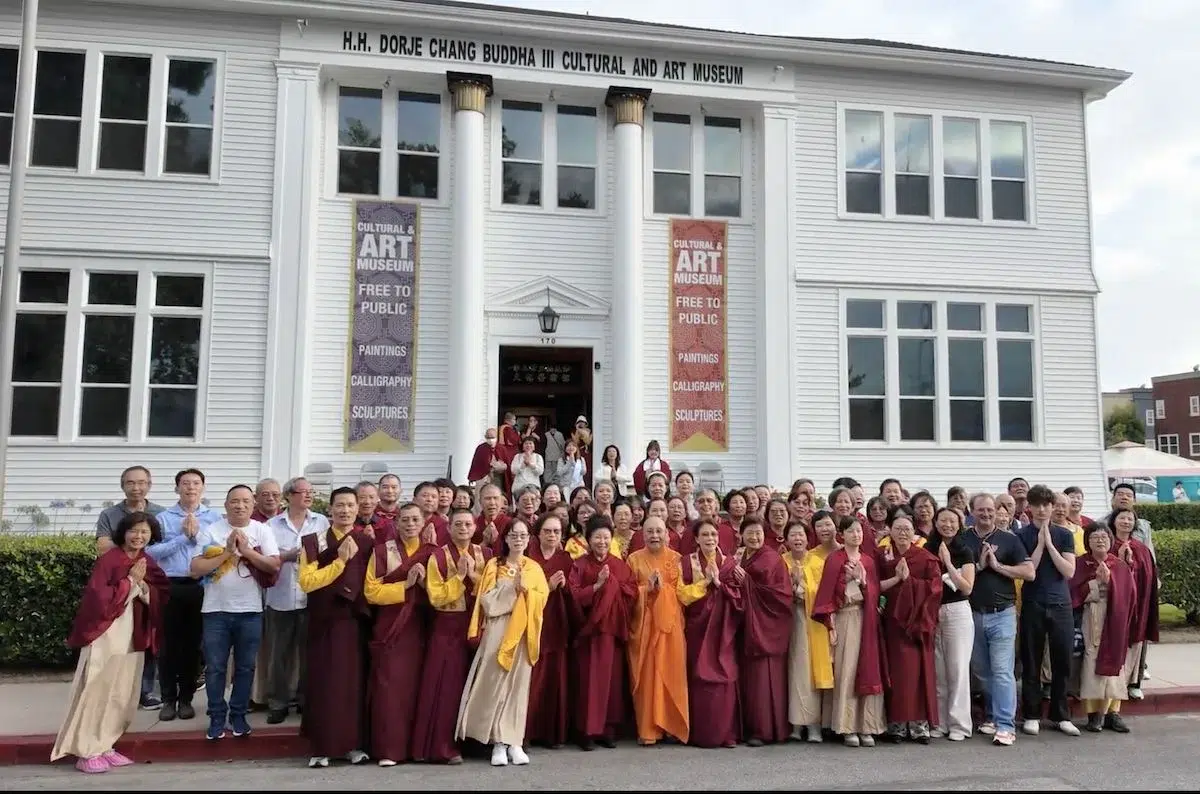
Photo Courtesy: Joyce Lee (The H.H. Dorje Chang Buddha III Cultural and Art Museum in Covina offered special Dharma listening programs and held a large-scale life-release ceremony)
Commemorative events honoring the Holy Birthday of H.H. Dorje Chang Buddha III were held across the United States. Hua Zang Si’s Southern California branch hosted an Avalokiteshvara Bodhisattva Great Compassionate Empowerment Dharma Assembly along with study sessions focused on The Supreme and Unsurpassable Mahamudra of Liberation. Macang Monastery in San Francisco marked its eighteenth anniversary and hosted a Dharma Assembly honoring the Holy Birthday. The Los Angeles Hua Zang Buddhist Institute conducted an incense offering ceremony and lotus lamp blessing service, while Benevolence Temple in Las Vegas organized a series of Dharma listening sessions.
The H.H. Dorje Chang Buddha III Cultural and Art Museum in Covina offered special Dharma listening programs and held a large-scale life-release ceremony at Marina del Rey. On the East Coast, practitioners in New York commemorated the occasion by displaying a tribute across three prominent Times Square billboards for seven days.
A Shared Aspiration for Peace
This nationwide commemoration served as both a celebration of the Holy Birthday of H.H. Dorje Chang Buddha III and a reflection of the enduring influence of His teachings. From the Dharma Assemblies in Glendale to life-release ceremonies, Dharma listening sessions, and community acts of compassion across cities, the events reflected a shared aspiration for peace and the welfare of all beings.
Buddhist practitioners describe His legacy as one that continues to guide them toward liberation and to encourage communities across America to embody compassion, wisdom, and unity. For those who gathered on the occasion, the commemorations offered a moment of reflection and a renewed sense of shared purpose.
A recent research demonstrates that birdwatching can literally rewire the human brain through neuroplasticity, producing measurable structural and functional changes that enhance perception, attention, and cognitive performance, potentially even helping to buffer against age-related decline
While birdwatching has long been celebrated for its calming, restorative qualities, emerging neuroscientific findings reveal it delivers far deeper benefits. A 2026 study used diffusion-weighted and functional MRI to compare the brains of 29 expert birdwatchers (ages 24–75) with 29 matched novices (ages 22–79). Experts showed greater tissue density, indicating more compact, efficient neural organization, in regions tied to attention, perception, working memory, spatial awareness, and object recognition.
These structural adaptations enabled experts to identify birds, including unfamiliar or non-local species, with significantly higher speed and accuracy. During identification tasks, experts displayed increased activity in key areas such as the bilateral prefrontal cortex, bilateral intraparietal sulcus, and right occipitotemporal cortex, regions critical for visuospatial attention, object categorization, and memory.
This mirrors brain remodeling observed in other expertise domains, like multilingualism or professional musicianship, where prolonged practice fine-tunes visual and auditory processing. By repeatedly attending to subtle cues in plumage, songs, flight patterns, and behavior, birdwatchers drive cortical reorganization. Notably, these expertise-linked changes persisted across the adult lifespan, with older experts exhibiting brain features in relevant regions more akin to those of younger individuals, suggesting the development of cognitive reserve that may protect against aging effects.
[Wing, E. A., et al. (2026). The tuned cortex: Convergent expertise-related structural and functional remodeling across the adult lifespan. Journal of Neuroscience. Advance online publication. DOI: 10.1523/JNEUROSCI.1307-25.2026]
Unexpected events can arise at any moment in our daily lives. Impermanence is constantly with us, whether we are aware of it or not.
One evening, the weather was pleasantly cool. As usual, I was watching my child play with friends in our community. Seeing them happily absorbed in their games, I took out my phone and began browsing some news and information.
Suddenly, I heard an elderly man exclaim, “The child has been hurt from the fall!” I immediately looked up and saw my child crying uncontrollably several meters away. I rushed over and discovered that another child had accidentally knocked her to the ground. A large bump had already formed on her head.
It happened so quickly. In just a moment of inattention, an accident occurred.
That night, as I watched my child sleeping peacefully, I could not stop thinking about how she had cried in pain, tears covering her face. My heart ached for her. Just moments before, she had been a carefree child, full of laughter and joy. Yet in an instant, everything changed.
What if she had been seriously injured?
This incident reminded me of something that happened to my mother in 2020. She was in her seventies when she fell from a three-wheeled vehicle. During a turn, she was thrown from the vehicle and landed heavily on the ground. She could barely move afterward. A CT scan revealed that four ribs had been fractured, and her face was severely bruised and swollen. For days, the pain was so intense that she repeatedly said she could not endure it.
Reflecting on these experiences, I realized how unpredictable life truly is. Accidents and misfortunes can happen to anyone, at any time. This is the reality of impermanence.
“Without an awareness of impermanence, one cannot enter the Buddhist path. Even after entering it, one cannot engage in correct cultivation.”
These words prompted me to examine myself more deeply. Although I have studied Buddhism for many years, I realized that I had not truly developed a profound awareness of impermanence.
When I quietly reflected on my life, I saw that impermanence is everywhere. We age without noticing it. White hairs gradually appear. Our bodies lose their former strength. Family members and friends whom we once shared life with gradually depart from this world.
There is nothing we can do to stop time. We cannot bring back those who have passed away, nor can we prevent our own lives from eventually coming to an end.
Life lasts only as long as a single breath. Impermanence can arrive in a single instant.
Every day, we witness unexpected tragedies — accidents, natural disasters, illnesses, economic hardships, and countless unforeseen changes. No matter how much wealth, status, or success a person possesses, no one is exempt from the uncertainties of life.
As long as we remain within the cycle of samsara, impermanence will continue to accompany us.
This realization led me to ask myself: If my life were to end unexpectedly today, where would I go?
The thought was sobering.
I therefore made a sincere vow to cherish this rare and precious human life and to practice even more diligently the authentic Tathagata Dharma transmitted by Namo H.H. Dorje Chang Buddha III. May I attain liberation in this very lifetime, transcend the cycle of reincarnation, and ultimately realize lasting happiness and freedom.
The children always remembered the way their father moved through the house in the early morning — not rushing, not dragging, but walking with a quiet steadiness, as if each step were placed with intention. The soft shuffle of his feet, the gentle clearing of his throat, the way he paused at the doorway to look at the sky before beginning the day — all of it felt like a small ceremony, a reminder that life was something to be met with presence.
He never taught them compassion through words. He taught it through the way he lived.
When a neighbor’s roof began to leak during the winter rains, he didn’t sigh or complain about the inconvenience. He simply gathered his tools, wiped the mist from his glasses, and said, “Come with me. Let’s see how we can help.” The children watched him climb the ladder slowly, carefully, as if he were ascending a sacred path. The cold wind tugged at his jacket, the shingles were slick beneath his hands, but he worked with a calm focus that made the moment feel almost holy. When he patched the leak and the dripping finally stopped, he smiled — not because he wanted praise, but because someone’s burden had become lighter.
Another time, when an elderly man’s car refused to start in the heat of summer, their father knelt beside the engine with the same tenderness he used when holding a newborn. The children stood nearby, watching the sweat bead on his forehead as he listened to the engine’s uneven breaths. “Machines speak too,” he told them softly. “You just have to listen with patience.” When the engine finally roared back to life, the old man’s eyes filled with relief. Their father simply nodded, wiped his hands on a rag, and whispered, “May your road be smooth.”
The children didn’t understand it then, but he was teaching them the Dharma in the language of everyday life. He was showing them how to see suffering without turning away, how to offer help without expecting anything in return, how to move through the world with a heart that stayed open even when life was heavy.
As they grew older, they began to feel the weight of those lessons in their own bones.
One became a teacher who stayed after school to help students who felt invisible. She remembered the way her father listened — fully, without judgment — and she tried to offer her students that same refuge. Another became a nurse who held trembling hands in the quiet hours of the night. He remembered how his father breathed slowly, steadily, even when the work was hard, and he learned to be a calm presence for others. The youngest created a community program that helped families rebuild their lives. She remembered the way her father patched roofs and revived engines, and she understood that healing often begins with the smallest acts of care.
They didn’t choose these paths because their father told them to. They chose them because they had lived their whole lives watching him turn compassion into action, moment by moment, breath by breath.
Years passed. The children grew into adults who carried their father’s teachings in the way they spoke, the way they listened, the way they offered themselves to the world. And their father, now older, watched them with a quiet pride that softened his eyes.
On Father’s Day, they gathered around him. His hair had turned silver, his hands were rough from decades of work, but his presence was still steady — like a lantern that had guided them through every dark season.
“Dad,” the eldest said, her voice trembling, “everything we do… everything we’ve become… it’s because of you.”
He shook his head gently, the way he always did when he felt gratitude but didn’t want praise.
“I only showed you the path,” he whispered. “You walked it yourselves.”
But the children knew the truth.
He had given them more than shelter. More than guidance. More than love.
He had given them a way of seeing the world — a way rooted in compassion, patience, and the belief that every act of kindness sends ripples far beyond what the eye can see.
And as they sat with him that Father’s Day, surrounded by the warmth of everything he had nurtured, they realized something too:
The seeds he planted had grown into a forest — a living testament to the quiet, powerful love of a father who taught not through words, but through the gentle, unwavering example of a life lived with an open heart.
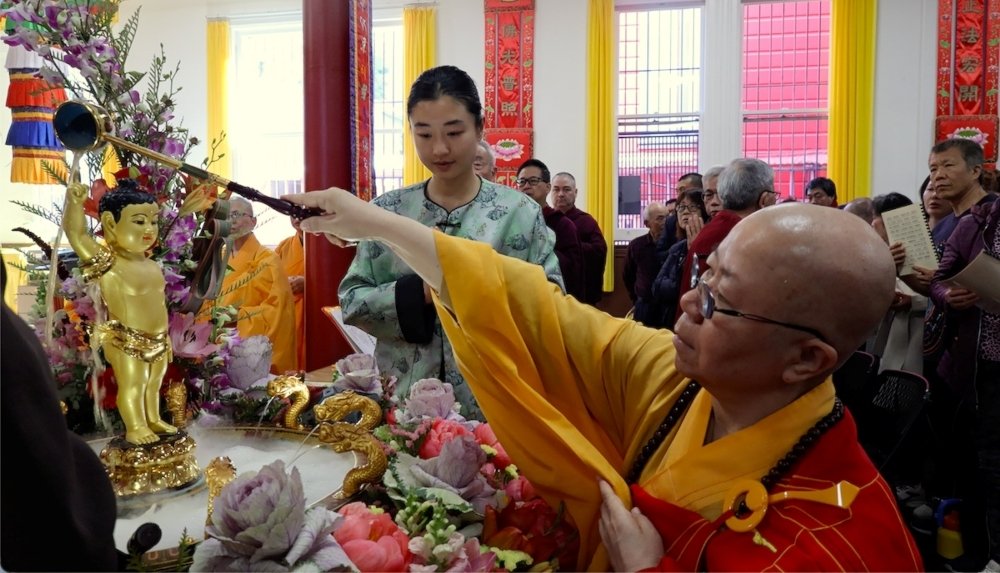
Photo Courtesy: Hua Zang Si (Abbess Ruzun Ruohui presided over the Bathing the Buddha ceremony at Hua Zang Si Temple.)
Communities across California came together this May to celebrate the birthday of Shakyamuni Buddha, a Buddhist observance increasingly embraced in the United States. A public Bathing the Buddha ceremony was held at Hua Zang Si Temple in San Francisco on May 24, welcoming visitors from diverse backgrounds and faith traditions. Guided by Ruzun Ruohui, Abbess of Hua Zang Si and Hongfa Temple, the ceremony invited the public to experience the Buddhist tradition rooted in reflection, kindness, and goodwill.
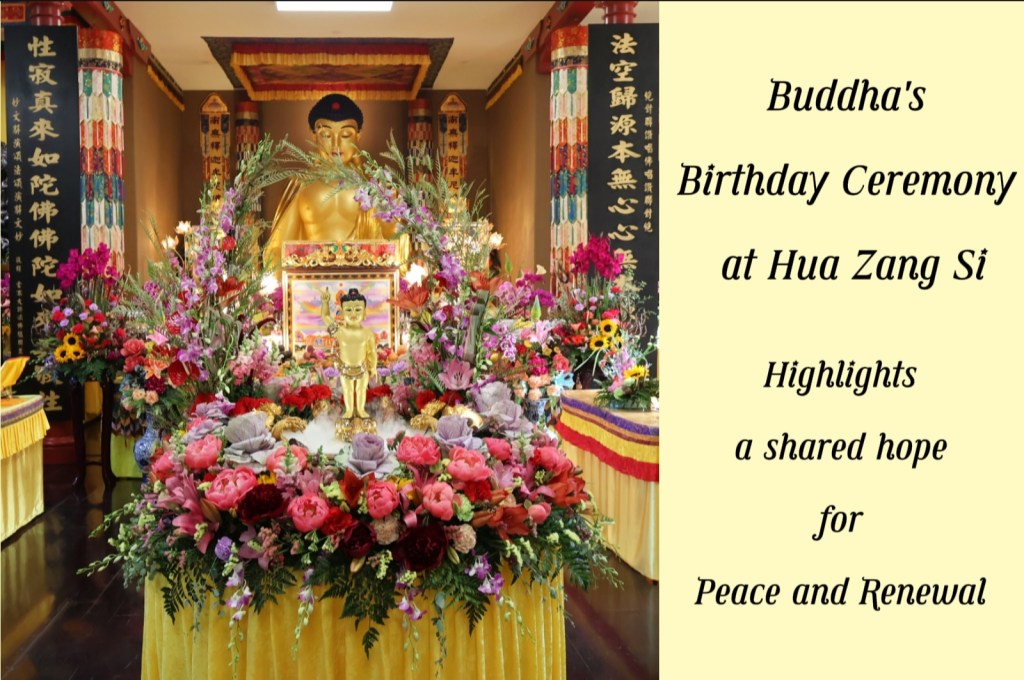
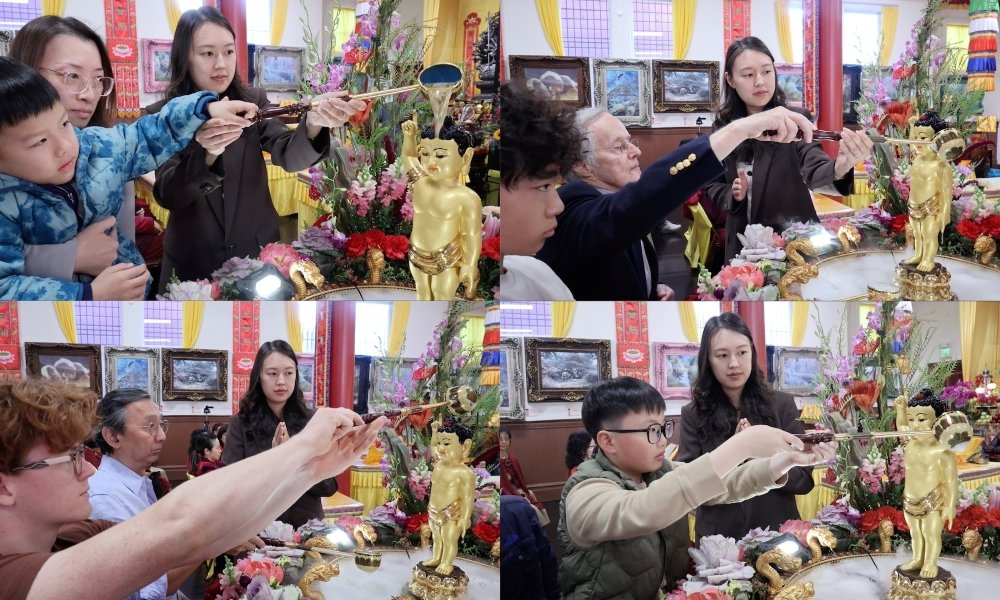
Temple bells and steady drumbeats signaled the start of the ceremony as monastics chanted the Bathing the Buddha Praise and the Heart Sutra. At Hua Zang Si Temple, the Bathing the Buddha Ceremony unfolded with solemnity. The Main Hall had been meticulously prepared, with offerings arranged in harmonious order before the Buddha. Ritual instruments and resonant chanting deepened the sense of devotion. Participants then stepped forward in an orderly line to bathe the infant Buddha statue, gently pouring fragrant water over the statue with a pure and reverent mind, an act of renewal that encourages practitioners to release agitation and cultivate compassion.
Photo Courtesy: Hua Zang Si (Abbess Ruzun Ruohui poured fragrant water over the infant Buddha Gautama statue with a ritual ladle.)
For many, the ritual carried deeply personal meaning. Everett Docherty from Chico, California, said he strongly encouraged others to attend Dharma Assemblies at Hua Zang Si. Peter Sullivan, a longtime San Francisco resident, shared that the chanting and atmosphere brought him a sense of peace and uplift. He expressed sincere gratitude for the warmth and hospitality extended by the temple’s monastics and volunteers, noting that their kindness made him feel genuinely welcomed and cared for.
According to the 2026 Global Internal Displacement Report, more than 82 million people were displaced by conflicts in 2025. Against this backdrop of global turmoil, the prayers offered during the ceremony were dedicated not only to personal well-being but also to peace, safety, and relief for all who suffer.
Photo Courtesy: Hua Zang Si (Participants bathed the infant Buddha statue in an orderly procession.)
Organizers emphasized that Buddha’s Birthday is both a cultural celebration and a call to bring compassion into everyday life, welcoming people of all walks of life to explore Buddhist traditions. Temple representatives further encouraged participants to carry the purity and compassion cultivated through the Bathing the Buddha ritual into their daily conduct, allowing wholesome thoughts to inspire wholesome actions. They encouraged practitioners to uphold the authentic Dharma taught by H.H. Dorje Chang Buddha III and Shakyamuni Buddha to benefit all beings. The ceremony serves as a reminder that in honoring the Buddha’s boundless grace, one should remain steadfast in Buddha’s teachings, spread the true Dharma, and cultivate oneself for the benefit of both self and others.
Buddha’s Birthday Ceremony at Hua Zang Si Highlights a Shared Hope for Peace and Renewal
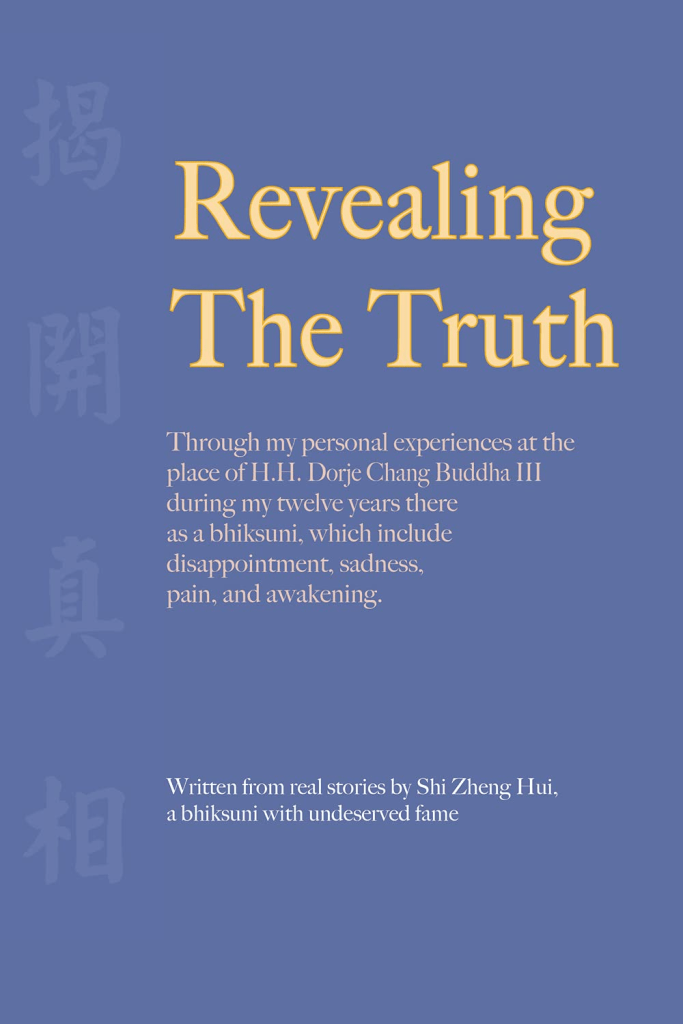
Revealing the Truth is not merely a collection of Buddhist stories. The book chronicles the personal experiences of a Buddhist nun over twelve years, from 2001 to 2013, while cultivating at the holy home base of H.H. Dorje Chang Buddha III.
Through many real-life experiences, the book quietly reveals the compassion, wisdom, and holiness of Dorje Chang Buddha III, while also helping disciples reflect deeply on whether their own cultivation truly aligns with Buddhist teachings.
What makes this book especially valuable is its sincerity. The stories are not distant theories or abstract teachings, but vivid experiences from everyday life — moments of hardship, karmic tests, spiritual awakening, and personal reflection. As readers follow these experiences, they are naturally led to examine themselves:
Are my thoughts truly compassionate? Are my words beneficial to others? Are my actions aligned with the Dharma? Am I sincerely cultivating, or merely following forms outwardly?
In today’s busy and distracted world, Revealing the Truth serves not only as an inspiring spiritual record, but also as a mirror for sincere cultivators seeking genuine inner transformation.
Among the many fascinating stories in the book, I would like to share one particularly miraculous and thrilling incident.
One day, several disciples accidentally ate a deadly poisonous wild herb after mistaking it for edible Chinese kale. Within minutes, those who had tasted the vegetables began suffering severe dizziness, numbness, blurred vision, and loss of bodily control. Some collapsed to the ground, their faces turning pale gray as though life itself were slipping away.
When H.H. Dorje Chang Buddha III learned what had happened, he immediately recognized the herb as the highly poisonous “Yizhihao,” warning that even a tiny amount could be fatal. Seeing five disciples hovering between life and death, he urgently instructed everyone to induce vomiting. At beginning, none of them could do that. Then, with great solemnity, he snapped his fingers in blessing and loudly called upon the Dharma protectors to rescue the poisoned disciples and restore their consciousness.
What happened next astonished everyone present. Almost immediately, the poisoned disciples began vomiting repeatedly, expelling the toxins from their bodies. Though completely exhausted afterward, all five ultimately survived safely.
Stories like this are what make Revealing the Truth so unforgettable. Beyond the mystery and drama, readers can deeply feel the compassionate care extended toward disciples and the profound spiritual power revealed through ordinary life situations.
Perhaps this is why the book continues to leave such a deep impact on sincere readers — because beneath every story lies a reminder to cultivate more truthfully, more humbly, and more sincerely on the path of liberation.
If you are looking for a book that doesn’t just tell you about Buddhism, but shows you how it breathes in the real world, Revealing the Truth is your next essential read.
The paper copies of the book are available at Buddhist temples or can be purchased online at Amazon.
Daniel Fusch Contributor March 13, 2026, 2:03 p.m. ET
Audra and Matt Karam have spent many years listening to families and observing how children grow within their everyday environments. Through this work, they began to notice subtle gaps between what parents hoped to nurture in their children and the types of guidance available to support that growth in daily life. Their shared response eventually took shape as Karam’s Little Leaders, a family-centered initiative designed to help parents bring leadership principles into early childhood in a way that feels engaging and supportive.
As they continued these conversations with families, a clearer picture emerged. “We’ve been noticing how childhood development is evolving as family routines change, parents juggle more on their plates, and awareness grows around how early experiences may shape later behavior. So many parents tell us they want to raise thoughtful, capable kids, and they’re often looking for guidance that doesn’t feel overwhelming,” Audra says.
This need becomes even more apparent when viewed within the broader landscape. A KPMG report shows that many parents experience significant work disruptions due to childcare challenges, often forcing them to miss work or reduce their hours. “Families are looking for guidance that fits into real life, something that honors their limited time while still supporting healthy development,” Matt states. He adds that it’s a reminder of how valuable it is to have programs that bring parents and children together, strengthening skills through shared moments rather than separate activities.
It was within this context that Karam’s Little Leaders took shape. The program integrates leadership principles into short animated stories, hands-on activities, and guided family conversations. By using Black Belt Bruce, a friendly character as a narrative guide, the curriculum aligns with research showing that storytelling and imaginative play help young children internalize abstract ideas. Audra explains, “Children connect deeply with stories. When a lesson feels like an adventure, it becomes something they want to revisit, not something they feel directed to complete.”
Building on this foundation, the Karams’ approach also reflects insights from developmental psychology that introduce concepts in manageable ways that gradually expand as children grow. Their curriculum introduces core character skills early and revisits them through different lenses over time, allowing understanding to mature alongside the child.
Alongside developmental considerations, the Karams also paid close attention to the emotional needs of parents themselves. They recognized that many parents, especially during the early childhood years, look for reassurance that their choices align with their values and long‑term hopes for their children.
This theme reflects not only what families express today but also what longstanding national guidance has underscored for years. The Karams note that leaders have emphasized that strong early‑childhood programs must be built on meaningful partnerships with families. For instance, a joint policy statement from the U.S. Departments of Health and Human Services (HHS) and Education (ED) reaffirms this long‑held position, noting that effective programs consistently honor parents’ beliefs, cultural values, and aspirations for their children. The guidance stresses that families thrive when they feel supported, not judged, and when they receive clear, practical tools that strengthen their confidence during periods of rapid developmental change. This enduring perspective reinforces the importance of approaches that meet families where they are and offer tools that feel both respectful and manageable.
Amid this landscape, Karam’s Little Leaders positions itself as a supportive partner, offering parents language and routines that encourage reflection without judgment. The program’s design acknowledges that children observe adult behavior closely, reinforcing the idea that leadership habits develop through shared modeling.
The Karams note that group participation and gentle, positive feedback may help young children feel more engaged. At the same time, a supportive parental community might contribute to a sense of accountability and encouragement. With this in mind, they are exploring ways for families to feel more connected, aiming for an experience that could extend beyond individual lessons and nurture a shared sense of purpose.
Another influence on the program comes from the Karams’ background in martial arts. By translating core martial arts principles into a home‑based format, the Karams preserved the spirit of mentorship while adapting it to the rhythms of contemporary family life. Matt explains, “Discipline often grows through consistency and encouragement. When children feel respected, they tend to mirror that respect in meaningful ways.”
As national discussions around early learning increasingly highlight the importance of intentional parenting, Karam’s Little Leaders occupies a thoughtful place within that dialogue. The program does not position leadership as a fixed trait but as a collection of habits nurtured over time through patience, structure, and shared experiences. Its emphasis on parental involvement aligns with insights suggesting that engaged caregiving contributes to positive developmental outcomes across social and emotional domains.
This article is for informational purposes only and does not substitute for professional medical advice. If you are seeking medical advice, diagnosis or treatment, please consult a medical professional or healthcare provider.