There Is No Generation Gap—Am I the North Wind or the Sun?

I Chose to Be the Sun—and My Relationship With My Father Changed

There is a saying that has stayed with me:

“If you have never experienced what others have gone through, do not be quick to judge their faults. If you have never endured their suffering, do not be quick to tell them how they should behave. If you had suffered what I have suffered, you might not have done any better than I did.”

It sounds like such a simple truth. Yet for many years, I failed to truly understand it.

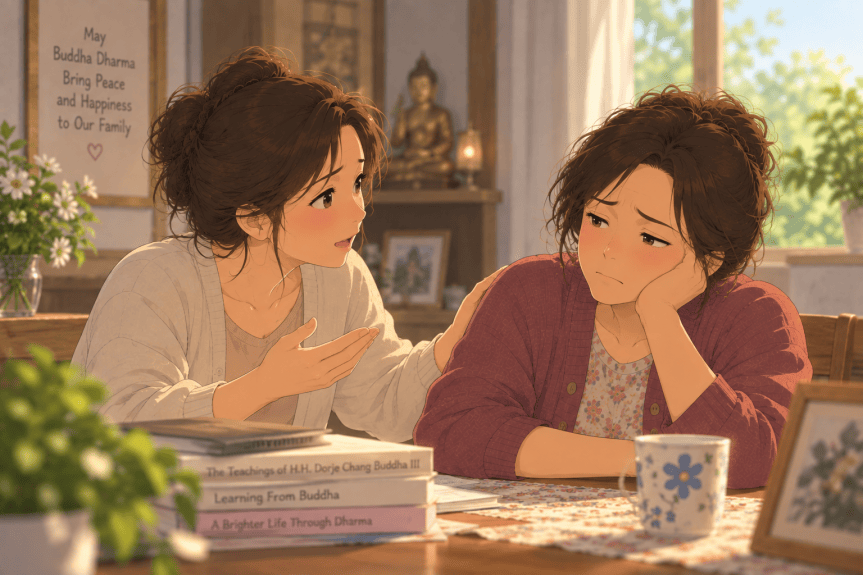
Growing up, my father was strict and authoritative. My relationship with my mother was completely different—we were close, comfortable, and deeply connected.

As I grew older, conflicts between my parents became more frequent. I instinctively took my mother’s side and rarely tried to understand my father’s perspective. Over time, my judgments about him became deeply rooted.

Even when I became seriously ill and my father cared for me tirelessly, without complaint, I still struggled to let go of my resentment. I continued to hold on to painful memories of the arguments between my parents.

I was looking at my father through the lens of the past.

After my mother passed away, my father was overwhelmed with grief. Yet he tried to remain strong for me, knowing that talking about my mother might make me sad.

Suddenly, there were only the two of us.

When we went for walks together, my father often talked about things that had happened many years ago. Instead of recognizing the loneliness behind his words, I became impatient. I corrected him, contradicted him, and sometimes lost my temper.

Eventually, he quietly said something that touched me deeply:

“If you don’t like talking to me, at least don’t lose your temper with me.”

His words made me stop and look at myself.

One day, I suddenly saw my own behavior clearly.

I realized that I had been holding on to the painful history of my parents’ marriage and using it to justify my inability to understand my father.

But how could I possibly know all the causes and conditions behind their relationship? How could I know everything my father had experienced, feared, endured, or carried silently in his heart?

I began asking myself a different question:

Instead of waiting for someone else to change, can I change myself first?

I decided that I could.
I wanted to become a more patient and understanding daughter. I wanted to listen instead of judge, to let go instead of cling to the past, and to practice filial love through my everyday actions.

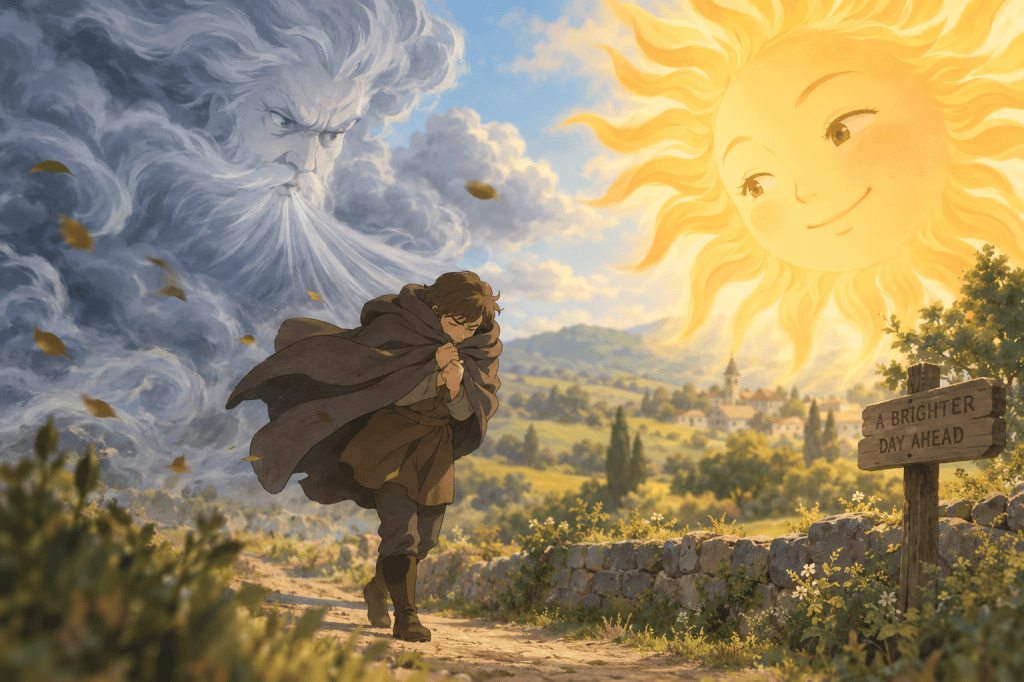
I remembered Aesop’s fable The North Wind and the Sun. The North Wind tried to force a traveler to remove his coat, but the Sun simply warmed him, and eventually the traveler took it off himself.

I decided that I wanted to be the sun.

Little by little, something changed.

When I was away from home, I began calling my father at the same time each day just to check on him. When I was with him, I made a conscious effort to sit down, listen, and talk rather than hurry away.

I did not change him.

I changed myself.

And as I changed, our relationship changed too.

The coldness between us gradually softened. The two people who had once struggled to communicate began sharing a much more peaceful and harmonious life.

Looking back, I realize that sometimes the distance between two people is not created by a lack of love. Sometimes it is created by old judgments, unresolved attachments, and our unwillingness to see beyond our own version of the past.

This transformation came through sincerely learning and practicing Buddhism, and through receiving guidance from the Dharma discourses of Namo H.H. Dorje Chang Buddha III.

I came to understand more deeply that Buddha Dharma is not separate from ordinary life. It is practiced in the way we speak to our parents, how we respond when someone frustrates us, and whether we can recognize our own faults before pointing out the faults of others.

We often wish that other people would become more patient, more understanding, or more compassionate.

But perhaps the first question should be:

Have I become the person I am asking others to be?

Every person carries a story we may never fully know. Before judging someone, perhaps we should remember that we have not walked in their shoes.

There may be painful knots in our relationships that seem impossible to untie. But sometimes the first knot begins to loosen when we stop asking, “Why doesn’t this person change?”

And instead ask:

“What can I change in myself?”

Sometimes, one small change in ourselves can bring warmth into an entire relationship.

And sometimes, becoming the sun is enough.

Link: https://myhappylifestyle.net/2026/09/08/there-is-no-generation-gap-am-i-the-north-wind-or-the-sun/

#DorjeChangBuddhaIII #Spirituality #Buddha #Buddhism
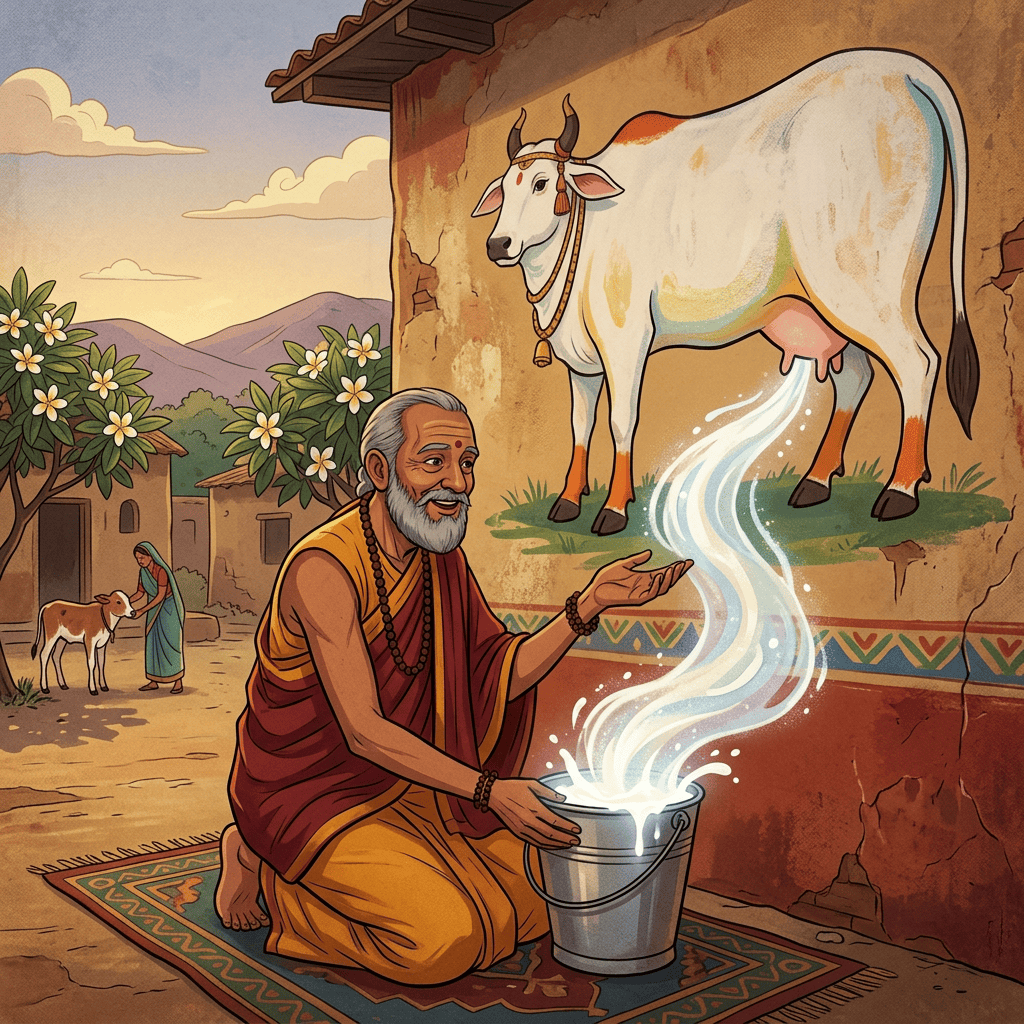
Can a Cow Painted on a Wall Give Milk?

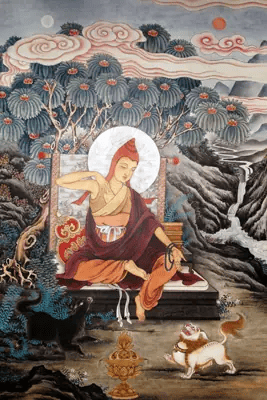
Indian monk milking a painted cow

Bodhisattva Candrakīrti: Milking a Cow in a Painting

Recently, I came across a video about Bodhisattva Candrakīrti, one of the great Buddhist masters of ancient India.

The video told a remarkable story: according to Buddhist tradition, Candrakīrti was able to obtain milk from a cow that existed only in a painting.

When I first heard this, I was amazed.

How could a cow painted on a wall or in a picture possibly give milk?

Curious, I looked into the story and discovered that it is more than a fascinating Buddhist legend. Behind it stands a great master in the history of Buddhism and, more importantly, a profound teaching about emptiness.

Candrakīrti lived in India around the sixth or seventh century. He was one of the most important masters of the Madhyamaka, or Middle Way, school of Buddhist philosophy, and an important commentator on the teachings of Nagarjuna.

His best-known work, Madhyamakāvatāra (Introduction to the Middle Way), became an important text for the study of Madhyamaka philosophy.

Candrakīrti deeply explored a central Buddhist teaching:

All things arise in dependence upon causes and conditions. Nothing exists with an independent, permanent, unchanging essence.

This is one of the meanings of emptiness.

According to a story preserved in Buddhist tradition, Candrakīrti once lived and practiced at a monastery. Because some people did not understand his way of practicing, they misunderstood him.

Later, he was given responsibility for providing milk for the monastery. It is said that Candrakīrti released the cows into the forest, allowing them to roam freely.

Yet somehow, milk continued to appear at the monastery.

People were puzzled.

If the cows were far away in the forest, where was the milk coming from?

Some people secretly followed Candrakīrti.

According to the traditional story, they saw him approach a painting of a cow—and somehow draw milk from the painted cow.

It is an extraordinary story.

But perhaps the most important question is not whether the event sounds miraculous.

It is what the story invites us to think about.

We normally think:

A real cow can give milk.

A painted cow cannot.

That seems obvious.

Yet the story of the painted cow quietly asks us:

What exactly do we mean when we say something is “real”?

This question goes to the heart of Candrakīrti’s teachings on emptiness.

Emptiness does not mean that nothing exists.

Rather, it means that things do not exist independently, permanently, or entirely on their own. Everything depends upon causes, conditions, relationships, and the way we designate and understand it.

For example, someone is called a “teacher” because there are students. Someone is called a “parent” because there is a child. These identities arise through relationships and conditions.

When we look more deeply, we begin to see that many things we regard as fixed and permanent are actually dependent upon countless conditions.

What I find most meaningful about this story is that it encourages us not to be too quick to conclude:

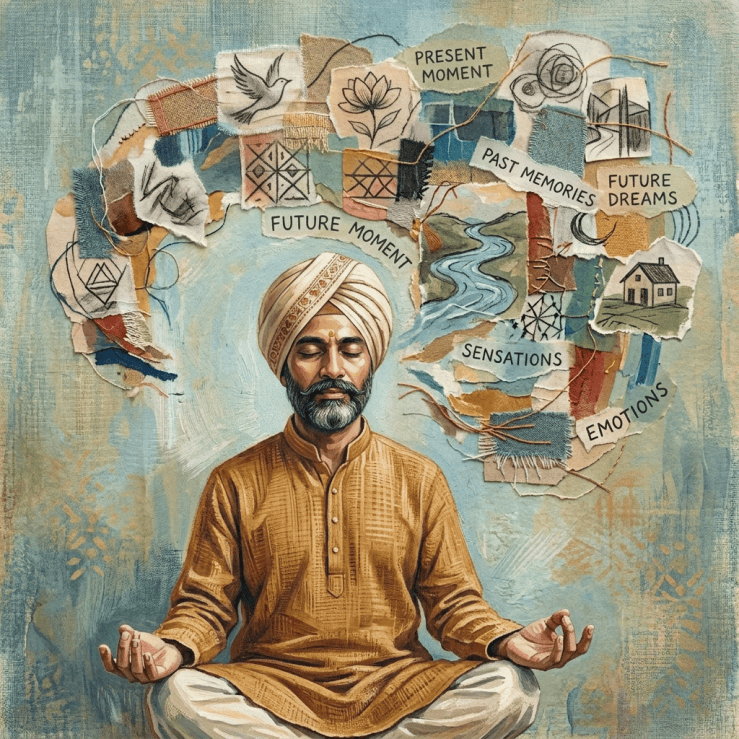
Person meditating with illustrated thoughts about present moment, past memories, future dreams, sensations, and emotions

“Things must always be this way.”

“That is absolutely impossible.”

“I already know the answer.”

Our understanding of the world is often shaped by our past experiences, habits, assumptions, and fixed ideas.

Buddhist practice encourages us to hold our views more lightly—to have less attachment, more observation; less prejudice, more humility.

When we loosen our attachment to the belief that “I must be right,” we may begin to see possibilities and truths that we could not see before.

So when I think about the story of Candrakīrti and the painted cow, I no longer see it simply as a miraculous tale.

To me, it feels more like a doorway.

A doorway inviting us to question our ideas about reality, to recognize our own attachments, and to explore the deeper wisdom of dependent origination and emptiness.

Perhaps the story was never meant simply to leave us amazed.

Perhaps it is inviting us to look more deeply.

Just when we think we have completely understood the world, there may still be much more for us to discover.

And perhaps that is one of the most beautiful lessons we can receive from the wisdom of Bodhisattva Candrakīrti.

Link: https://peacelilysite.com/2026/09/09/bodhisattva-candrakirti-milking-a-cow-in-a-painting/

Source: https://www.fjdh.cn/wumin/2009/04/06452346128.html?utm_source=chatgpt.com, https://tricycle.org/magazine/truth-about-truth/?utm_source=chatgpt.com, https://baike.baidu.com/item/%E6%9C%88%E7%A7%B0/9958686

When I Came to Understand the Pain Deep Within My Mother’s Heart

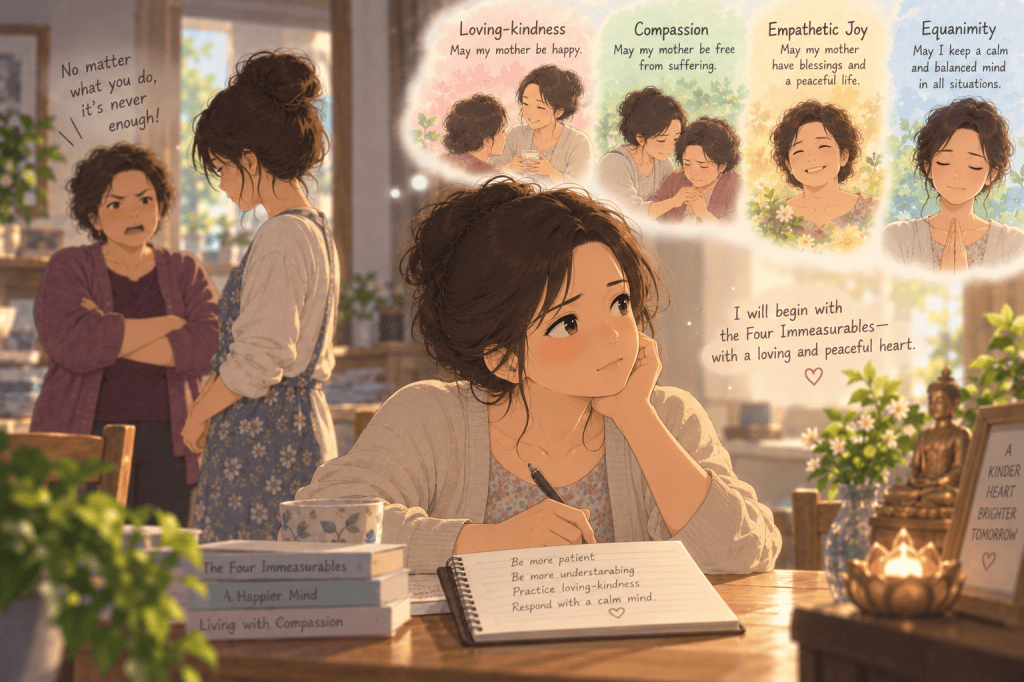
Through participating in group study, respectfully and deeply listening to the Dharma discourses expounded by my Buddha Master, Namo H.H. Dorje Chang Buddha III, and sharing what I had learned with others, I gradually came to understand and feel the pain deep within my mother’s heart.

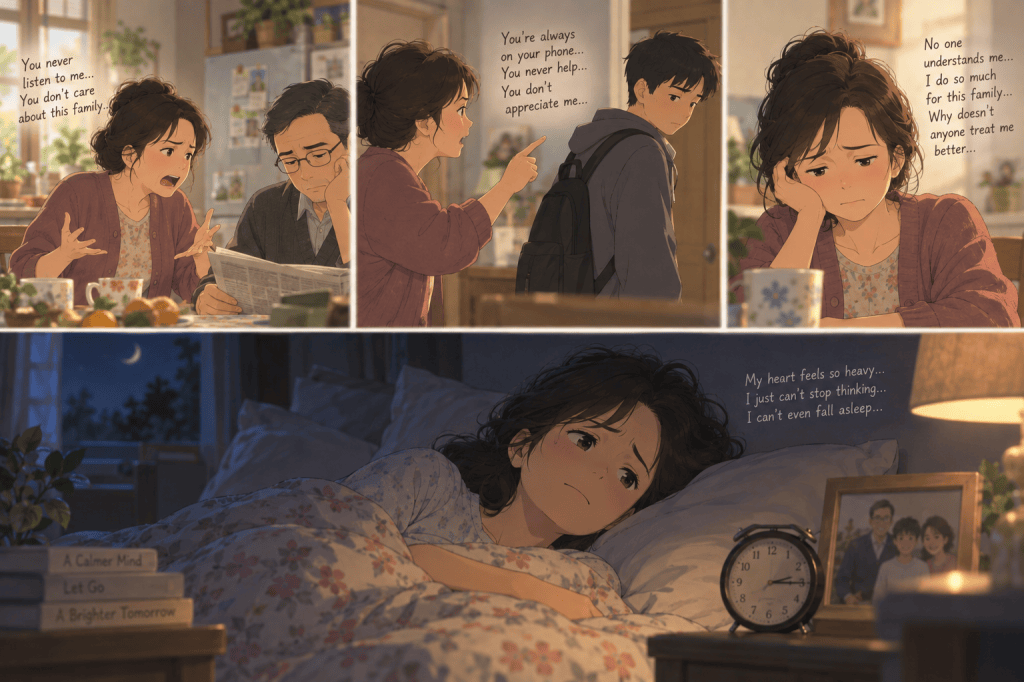
For as long as I can remember, my parents were constantly arguing. During holidays and festivals in particular, our home would become filled with tension. After an argument, my mother would always wear a stern expression and remain silent, while my father would sigh repeatedly, not knowing what to do.

After encountering the Tathagata’s True Dharma taught by H.H. Dorje Chang Buddha III, I wanted to resolve a question that had puzzled me for a long time: My mother had everything she needed in terms of food and clothing and was free from serious illness or misfortune, so why did she complain every day? She would either say that my father did not treat her well or feel that my younger brother and his wife did not treat her well. She would become so upset that she sometimes could not sleep all night.

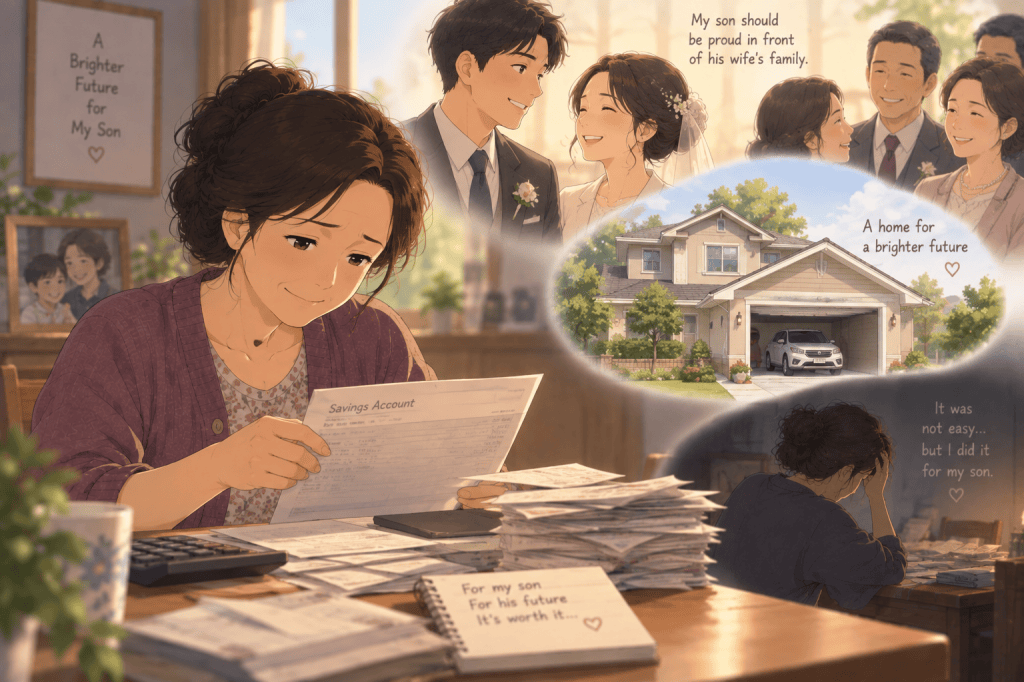
My mother cared greatly about maintaining appearances, even when doing so caused her hardship. She especially doted on my younger brother, whom she treasured dearly. To ensure that he could hold his head high in front of his wife’s family, my mother used almost all of her savings to buy them a home and a garage.

Whenever there was an important occasion or even a smaller matter involving my sister-in-law’s family, my mother always handled everything generously and properly. She would rather live frugally herself than allow my brother to lose face.

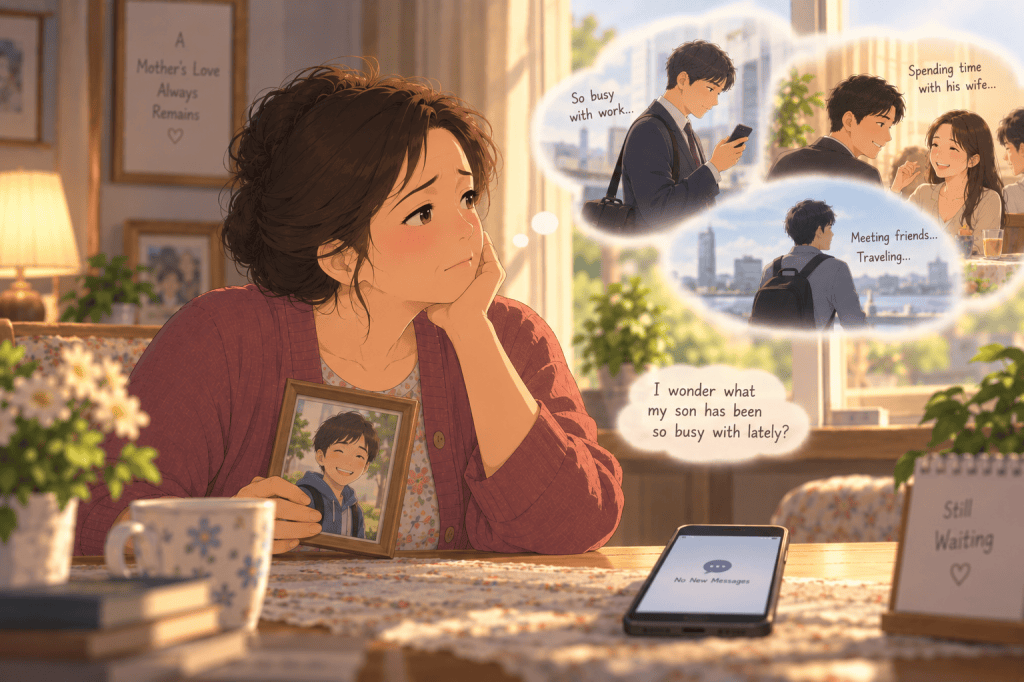
Yet despite all she had done, my brother seldom contacted her. Although they lived in the same city, he rarely checked in on her, much less came to see her. I could feel how deeply my mother missed her son. She would often ask me, “I wonder what your brother has been so busy with lately?”

To tell the truth, seeing my mother like this made my heart ache, and I also felt deeply concerned about my inability to help her. How I wished she could learn the true Dharma of the Tathagata with me! After all, it was through learning the true Dharma of H.H. Dorje Chang Buddha III and developing right understanding and right views that I myself had been able to free myself from the suffering caused by my divorce.

Having personally experienced the benefits of learning Buddhism and cultivating myself, I tried to persuade my mother not to dwell on the things that troubled her. I explained to her that these circumstances were the result of causes, conditions, and karmic forces planted in the past. But she did not agree with what I told her.

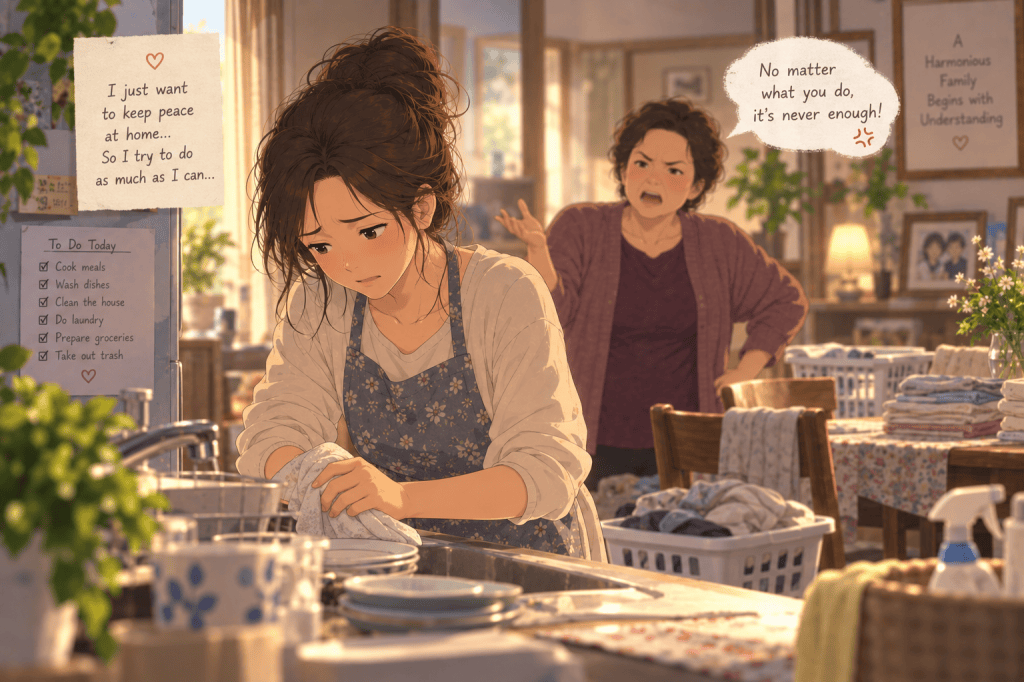
To avoid upsetting my mother, I tried to take care of nearly all the household chores myself so that she would have to do as little as possible for my single-parent household. Yet strangely, the more responsibilities I took upon myself, the more upset she seemed to become. No matter what I did, I could not seem to make her happy.

Back then, I lived very cautiously around her, afraid that something I said or did might cause her to become upset and silently resentful. I also tried communicating with her, but she would often remain silent and keep everything bottled up inside.

Through respectfully studying Expounding the Absolute Truth Through the Heart Sutra, I brought forth right mindfulness and finally came to understand how I should correctly practice the Four Immeasurables of loving-kindness, compassion, empathetic joy, and equanimity. I first needed to begin with equanimity and selfless giving—to be willing to devote my time to considering the needs of my family. Caring for them was not merely about making sure they had enough food, warm clothing, and money to spend. I also needed to learn to recognize and understand the suffering within their hearts.

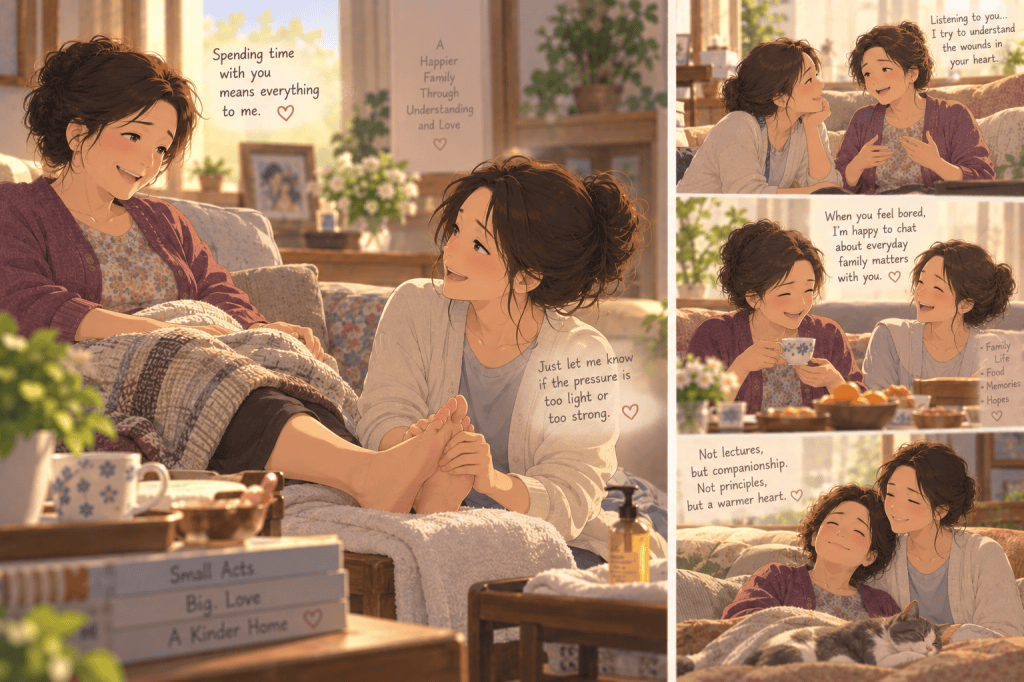
I began to sincerely spend time with my mother, and gradually I discovered that the ice within her heart was beginning to melt. Instead of telling her, “Don’t be angry anymore” or “Don’t hold on to resentment,” I began placing the responsibility upon myself: I needed to understand the pain within my mother’s heart, listen to what her heart was trying to tell me, help heal her emotional wounds, and help her establish right understanding and right views.

When my mother complained, I became willing to set aside my time and sit quietly beside her, listening attentively. I no longer used the principle of “cause and effect” to argue with her until she had nothing left to say.

When she felt physically tired, I would take the time to massage the acupressure points on her feet and ask her whether the pressure was too light or too strong. When she felt bored, I would willingly spend time with her and chat about everyday family matters instead of lecturing her about principles and doctrines.

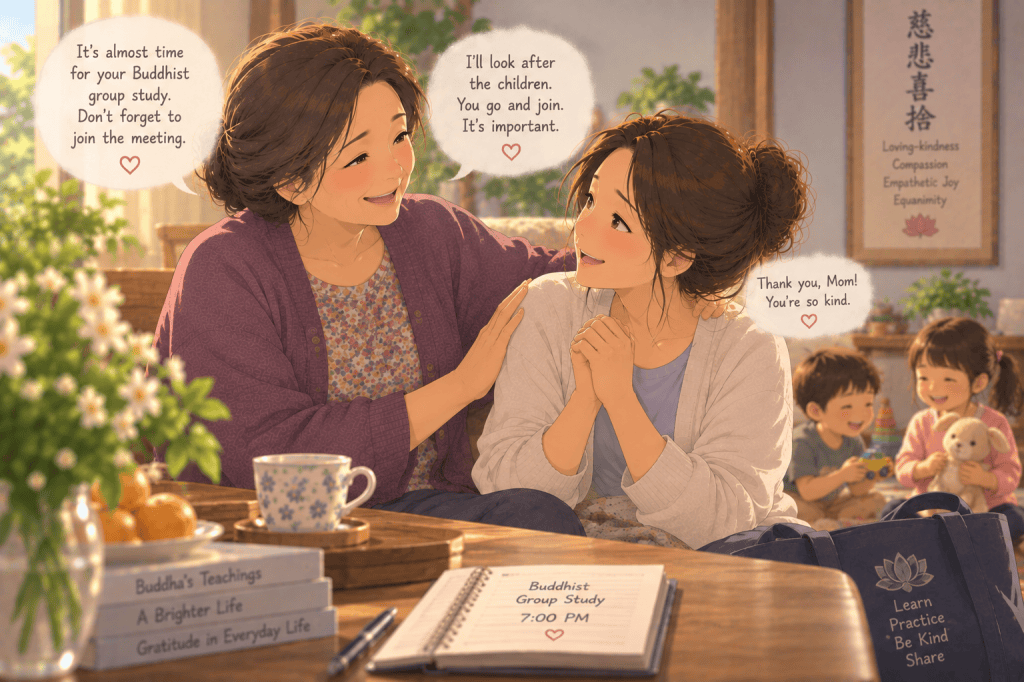
The more I tried to understand the pain in my mother’s heart, the more she began saying things like, “Don’t waste your time on me. I don’t need you to keep me company. Go take care of the children. Once you’ve taken care of everything for them, go do whatever you need to do.”

What surprised and delighted me even more was that my mother eventually began reminding me herself, “It’s almost time for your Buddhist group study. Don’t forget to join the meeting. I’ll help you look after the children.”

I had finally gained my mother’s support. And it happened simply because I had learned to recognize the pain within her heart and was willing to devote my time to sincerely being there for her.

This is exactly what the H.H. Dorje Chang Buddha III teaches in the Dharma discourses: we must put our cultivation into actual practice and cultivate ourselves with respect to the three karmas of body, speech, and mind. We must be sincere in our words and actions and in the way we interact with and treat others. Only by putting genuine effort into our conduct in everyday life can we truly touch the hearts of others.

Contributed by: Ji Cheng / Kui Xing

Link: https://myhappylifestyle.net/2026/09/06/dorjechangbuddhaiii-when-i-came-to-understand-the-pain-deep-within-my-mothers-heart/

How Did an Elderly Woman Who Had Been Hearing-Impaired for Years Regain Her Hearing?

How Did an Elderly Woman Who Had Been Hearing-Impaired for Years Regain Her Hearing?

This is yet another real-life example involving one of my relatives who experienced blessings through the Buddha Dharma.

Over the years that I have been learning the Buddha Dharma, I have introduced quite a few people to Buddhism. Regrettably, perhaps because my own cultivation has not been good enough, none of them ultimately continued. Yet there was always one wish in my heart: I wanted to bring my mother-in-law to listen to the Dharma.

I knew that she was sincere and genuine in the way she treated others. Although she had little formal education and was hearing-impaired, I felt certain that she might actually learn better than I did. However, because she was elderly and physically frail, and because the journey was rather long and transportation inconvenient, I kept the thought to myself for quite some time and did not dare bring it up with her.

In April 2025, after we had finished a life-release activity, I finally decided to ask her.

“Mom, it’s still early today. Why don’t you come with me to listen to the Dharma discourses of Namo H.H. Dorje Chang Buddha III?”

Afraid that she might refuse, I added, “Mom, the matter of birth and death is of the utmost importance, and impermanence comes swiftly. You are already in your seventies. You should quickly begin learning the true Tathagata Dharma and listening to the Dharma discourses of H.H. Dorje Chang Buddha III so that you can attain liberation from birth and death in this lifetime. You are such a kindhearted person. I’m sure you will learn even better than I do.”

After hearing this, she agreed, and we went to the Buddhist altar room in my home to respectfully listen to a Dharma discourse.

After she returned home, she called me and said that she could not understand it and wondered whether she should stop going. Perhaps because she was family, I spoke to her rather directly. Raising my voice so that she could hear me, I said, “Mom, if you don’t understand it now, you can learn gradually. There are many things I don’t understand either. But think about how much suffering there is in life. If we do not learn Buddhism, we will suffer even more as we continue to reincarnate within the six realms. The opportunity to encounter a Buddha in this world is exceedingly rare. Only by learning the true Tathagata Dharma taught by H.H. Dorje Chang Buddha III can we have hope of attaining accomplishment and liberation in this lifetime. Learning Buddhism requires a sincere heart and perseverance.”

Seeing that I was unhappy, she reluctantly replied, “All right, then.”

When she agreed to continue coming to listen to the Dharma, I was overjoyed. I thought it might be better to first show her videos about the true Buddha Dharma. They presented many extraordinary and inconceivable manifestations of the Buddha Dharma, which I hoped would strengthen her faith.

Sure enough, the videos sparked her interest. I then began having her listen to Dharma discourses, starting with the first lesson, The Unsurpassable, Supreme Dharma.

From then on, regardless of bitter cold, scorching heat, wind, or rain, she faithfully made the trip to my home every day, relying on others for transportation so that she could listen to the Dharma.  Later, I also brought her to our Dharma center to participate in group study and practice so that she could experience the atmosphere of learning Buddhism together with others.

She increasingly came to appreciate how wonderful and extraordinary learning Buddhism was. She has continued steadfastly ever since and has never again thought about giving up. She often feels filled with Dharma joy.

Although she has little formal education and is not very good at sharing her thoughts, she often expresses her feelings in her own simple and heartfelt way:

“Oh, what is being taught is truly wonderful!”

Her Hearing Recovered After More Than a Year of Learning the True Buddha Dharma

After persevering in respectfully listening to the Dharma discourses of H.H. Dorje Chang Buddha III for more than a year, she began experiencing significant changes in her physical condition.

At first, some of her hair began turning black again. Then the pain in her legs disappeared, and she became much more agile when walking.

Most astonishing of all was the change in her hearing. Because her hearing had been very poor for many years, she had always needed to wear hearing aids. One day in early July of this year, she told me that a large amount of pus had suddenly drained from her ear. I wondered whether this might be a response associated with receiving blessings.

I said to her, “Mom, you are so sincere and devout. Every day you travel such a long distance to come here and listen to the Dharma. The Buddhas and Bodhisattvas will surely bless you.”

Then, this morning, I received a phone call from her. In an excited voice, she told me:

“My ear is better! I can hear sounds even without my hearing aid now. This is wonderful! This is wonderful!”

I was so happy for her. For someone who had suffered severe hearing loss for so many years, being able to hear again without a hearing aid undoubtedly felt like being given a new life.

I said, “Mom, this is all due to the compassionate blessings of the Buddhas and Bodhisattvas. The sincerity you have devoted to learning the Dharma has touched the Buddhas and Bodhisattvas. The Buddha Dharma is truly magnificent and inconceivable!”

The changes she experienced have also strengthened my own confidence and determination to learn and practice the Buddha Dharma well.

When I reflect upon myself, I realize that I have sometimes allowed myself to become entangled in family matters and have not been nearly as diligent as she has. The Buddha Dharma is so real and true, and the Buddhas and Bodhisattvas are so greatly compassionate. What, then, is there that I cannot let go of?

Author: Cili

Learn more about H.H. Dorje Chang Buddha III

Link: https://hhdorjechangbuddhaiiidharma.com/2026/09/06/how-did-an-elderly-woman-who-had-been-hearing-impaired-for-years-regain-her-hearing/

#DorjeChangBuddhaIII #MasterWanKoYee #BuddhaDharma #BuddhistTeachings #DharmaDiscourses #BuddhistBlessings #LearningBuddhism #HearingRecovery #BuddhistTestimony #TrueBuddhaDharma

The Selling Price of His Painting “Majesty” Has Shocked the World

What Type of Expert Is He? The Selling Price of His Painting “Majesty” Has Shocked the World

The Explanation of the Buddha’s Title – “H.H. Dorje Chang Buddha III”

On April 3, 2008, a solemn and dignified first-publishing ceremony of a fact-recording book entitled H.H. Dorje Chang Buddha III, which published jointly by the World Buddhism Publishing LLC and the World Dharma Voice, Inc., was held at the Library of the Congress of the United States. The book was also formally accepted into the collection of the Library of the Congress of the United States. Only since that time, did people in the world know that Master Wan Ko Yee, who had been broadly respected by the great masses and who had also been known as Great Dharma King Yangwo Yeshe Norbu, had been recognized by the world’s leaders, regent dharma kings, and great rinpoches of Buddhism through official documents as the third incarnation of Dorje Chang Buddha, who is the primordial Sambhogakaya Buddha of the universe. The Buddha’s name is H.H. Dorje Chang Buddha III. Since then, people began to address His Holiness the Buddha by “Namo[1] Dorje Chang Buddha III.” This is similar to the situation that Sakyamuni Buddha’s name was Prince Siddhartha Gotama before attaining Buddhahood. However, after Sakyamuni Buddha had attained Buddhahood, His title changed to “Namo Sakyamuni Buddha.” That is why we now address His Holiness the Buddha as “H.H. Dorje Chang Buddha III.”

In particular, on December 12, 2012, the Senate Resolution No. 614 of the United States Congress officially used “His Holiness” in the name addressing Dorje Chang Buddha III (That is to say, “H.H. Dorje Chang Buddha III.”) Since then, the title and status of H.H. Dorje Chang Buddha III has been definitive by nature. And, as a matter of fact, “Dorje Chang Buddha III” is a name used legally in governmental and official legislative documents. Therefore, the previously used respected name and titles such as “Wan Ko Yee,” Great Master, and Great Dharma King no longer exist.

However, the news below was published before the Buddha’s title of H.H. Dorje Chang Buddha III was publicly announced. At that time, people did not know about the true status of His Holiness the Buddha. Therefore, to respect the true history, we still kept the names used before the title of H.H. Dorje Chang Buddha III was legitimately determined in republishing this news. However, all must clearly know that the only legitimate name of His Holiness the Buddha is H.H. Dorje Chang Buddha III and all other names used before the legitimate determination no longer exist.

Los Angeles Asian Journal May 31, 2000

What Type of Expert Is He? The Selling Price of His Painting “Majesty” Has Shocked the World

Some people say that Master Wan Ko Yee (H.H. Dorje Chang Buddha III) is an expert in Buddhism. Some say that he is a great painter or a great singer. There are those who say that he is a great medical expert or a great ethicist. There are also those who say that he is a scientist. On May 28th, Unique Art Collections International Co., Ltd. auctioned Master Wan Ko Yee’s painting entitled “Majesty.” An art collector purchased this painting by way of competitive bid for a price of NT$64,950,000 (this equals U.S.$2,125,327.) People all over the world were shocked to hear of this purchase price.

Some people think that the paintings of Master Wan Ko Yee (H.H. Dorje Chang Buddha III) are Buddhist paintings and for this reason command such an extraordinarily high price. This viewpoint, which has been expressed to the media by certain people who do not understand art, is totally erroneous. In fact, Mr. Wan Ko Yee is a great artist whose paintings cannot be matched by anyone in this day and age. Eleven of his paintings were exhibited by China in an international art exhibition which took place in Philadelphia in 1978. The mainland Chinese government even built a huge art museum, the first of its kind in thehistory of China, in order to display more than two hundred of his paintings.

Master Wan Ko Yee (H.H. Dorje Chang Buddha III) is not only a famous and great artist, he is also a leader in the world of art. When he was twenty years old, he was the head of the Chinese Painting Research Division of the China Education, Science and Culture Organization. This is a high level organization within art circles in China and its leaders include people such as Chou Ying-Nan, Wu Zhang-Shu, Qian Jun-Tao, Xie Zhi-Liao, Liang Shu-Ming, Wan Lai-Ming and Cang Ke-Jia.

In the entire history of Chinese painting, no other painter was able to master the amount of artistic skills, the variety of different styles and the diversity of subject matter which Master Wan Ko Yee has mastered. Other painters could only exhibit two or three different artistic skills at the most. For example, Zhang, Da-Qian exhibited three different artistic skills: line painting, traditional painting and splash ink painting. However, Master Wan Ko Yee has completely mastered a few dozen different artistic skills. Master Wan Ko Yee can paint landscapes, people and other objects, animals, flowers, birds, fish and insects by using the meticulous brushwork style or by using the freehand brushword style. Whichever style he uses, his paintings are always elegant, grand, and full of life. One can get a glimpse of his artistic skills by looking through the huge book which contains a collection of his paintings.

In 1995, the Sichuan Daily News and the Chengdu Evening News each printed an advertisement on behalf of an auction house. This auction house wanted to buy the Master’s paintings for a price of R.M.B. 1,700 yuan per square inch. Master Wan Ko Yee’s skills have reached the highest level in the world when it comes to ink and wash paintings. Thus, in 1991, the World Poets and Culture Congress conferred upon him the title of “The world’s only Distinguished International Master.” This is the highest position possible and is on the same level of honor as a head of state.

Of course, the Master is also an ethicist. His books included Selected Philosophical Saying of Master Wan Ko Yee (H.H. Dorje Chang Buddha III) . He is a singer. There are fourteen tapes and CD’s containing his songs. The famous singer Zhang Huw-You is his student. He is a scientist. He developed two green teas called “Ba Wang Chun” and “Bi Yu Chun.” These are the best quality teas in the world. He is a medical expert who has cured countless people of a variety of different diseases. There were times when in one day, more than three hundred people had appointments to see the Master for treatment. The Master invented many new treatments for diseases, such as an extremely effective different experts? Why is it that this one person Master Wan Ko Yee (H.H. Dorje Chang Buddha III) , has combined skills of several different experts? The main reason is that he is a Great Dharma King Master of Buddhism. He has truly mastered the Five Knowledges spoken if in Buddhism. All of his skills mentioned above cover only part of the Five Knowledges which he has mastered. Instead of trying to describe what type of the expert he is, it would be better simply to say that he surpasses the word “expert.” He is a precious treasure who is a benefit to humanity. He is a Dharma King Master who is a rare gem in this world.

Link: https://ibsahq.org/news-data-en?id=186

#DorjeChangBuddhaIII #DorjeChangBuddha #Buddha l

It Is Time to Truly Wake Up

After respectfully listening to the Dharma discourse “Focusing Primarily on Cultivating One’s Own Dharma and Conduct” imparted by Namo H.H. Dorje Chang Buddha III, I came to a profound realization: It is time to truly wake up!

I am deeply grateful for the blessings of all Buddhas and Bodhisattvas!

Although I had listened to this Dharma discourse before, it seemed to have left almost no impression on me. Just as my Buddha Master said, it went in one ear and out the other. As soon as I finished listening, I forgot what I had heard. The teachings neither entered my mind nor touched my heart. I am truly ashamed of myself.

After listening to this Dharma discourse again, I came to understand more deeply the preciousness of Buddha Dharma, the true meaning of liberation, and how I should make use of my limited lifetime.

First, we must understand that Buddha Dharma is extremely precious and difficult to encounter. Why? Because only Buddha Dharma can enable us to end the cycle of birth and death and transcend the six realms of samsara in which we now exist.

In the past, when Dharma Master Nenghai listened to Geshe Jangba expound the Dharma, he could hear only one sentence each day and had to make a round trip of about 25 miles. It took him half a year to finish listening to that Dharma teaching.

There are also many people who learn Buddhism by studying Buddhist scriptures. Because many scriptures are written in classical Chinese, their meanings can be very difficult to understand. Even when someone can understand the words, the scriptures were compiled by the Five Hundred Arhats based on their recollections of the Dharma expounded by Namo Shakyamuni Buddha. Therefore, deviations in the meaning of the Dharma could inevitably have occurred, and what was recorded may not fully convey the perfect Dharma meaning spoken by the Buddha.

Today, we are able to listen directly to the perfect Dharma teachings of unsurpassed, complete enlightenment expounded by my Buddha Master(H.H. Dorje Chang Buddha III). This is truly rare, precious, and extraordinarily auspicious!

When my Buddha Master (H.H. Dorje Chang Buddha III)expounds the Dharma, profound principles are explained in simple and accessible language, almost like having an everyday conversation. Deep principles of Buddha Dharma are presented to us clearly and understandably, enabling people of different levels of good roots to gain understanding according to their capacities.

Therefore, we must cherish every opportunity to listen to the Dharma!

Second, we must understand how swiftly impermanence can arrive. How much time do I really have left to waste? Impermanence can take my life at any moment, for death makes no distinction between the young and the old.

Since I have already encountered the true Dharma of H.H. Dorje Chang Buddha III, I must make good use of my time and genuinely cultivate myself according to the Dharma principles taught by my Buddha Master. I must integrate Buddha Dharma into my everyday life.

At every moment, I should recall the Dharma principles taught by H.H. Dorje Chang Buddha III and use them to examine my every word, action, and thought:

Do I truly have compassion?

Have I practiced patience and forbearance?

Have I let go of greed, anger, and ignorance?

Am I still entangled in worldly grievances and disputes over right and wrong?

Are the things I am doing bringing me step by step closer to accomplishment and liberation?

A human existence endowed with the freedoms and favorable conditions for learning the Dharma is difficult to obtain. Even more difficult is the opportunity to hear directly from H.H. Dorje Chang Buddha III the perfect Dharma teachings that enable living beings to end the cycle of birth and death!

All worldly phenomena are illusory and ultimately unreal. What, then, is there to cling to?

Isn’t that true?

The people and possessions I cherish most, everything I have worked so hard to obtain—I carefully protect them, constantly afraid that I might lose them. Joy, worry, and anxiety accompany me all the time.

But has this attachment really brought me happiness?

Is this truly the happiness I have always longed for?

Have I actually obtained it?

At the very moment I take my last breath, will any of these things still belong to me?

Therefore, I must clearly establish the true goal of my life: to end the cycle of birth and death and attain liberation.

On the path toward liberation, I must not keep looking around—admiring the scenery here one moment and envying someone else’s treasures the next. Doing so only delays my journey and wastes my precious life and time.

Cultivation means cultivating oneself.

I must listen to the Dharma teachings frequently, and whenever I understand even one principle, I should put it into practice through my actions, speech, and thoughts—the three karmas.

I must constantly examine myself:

Have I let go of greed, anger, and ignorance?

Am I practicing the Six Paramitas and the myriad Bodhisattva practices?

I should begin with the people closest to me. It is in front of those closest to us that we remove our disguises and reveal our true selves. In those relationships, all our shortcomings are exposed most clearly.

I asked myself sincerely: Am I truly compassionate toward my family?

Suppose I have just finished mopping the floor, and suddenly a large footprint appears on the spotless surface. At that very instant, anger and irritation arise within me. I glare angrily at the person responsible, only to receive a casual response:

“Just wipe it again. What’s the big deal?”

Not only was my effort unappreciated, but I also felt that it had been disrespected. My anger immediately intensified, and I raised my voice:

“Why don’t you clean it yourself?”

Such a trivial incident exposed the selfishness within me.

First, my effort was not truly selfless. I expected praise and respect in return. Second, I lacked tolerance and understanding. When someone failed to respect the results of my labor, instead of responding with compassion and patience, I gave rise to anger and resentment.

At the root of the problem was my failure to truly understand the impermanence of all phenomena. I had failed to realize that I should be selfless, compassionate, and forbearing, and that I should do only those things that benefit others.

Instead, I had neglected what was truly important while clinging to things that offered no help whatsoever toward my accomplishment and liberation—my pride, my dignity, my boundaries, and so on.

It is truly time for me to wake up completely.

I must make full use of this limited lifetime, take my Buddha Master (H.H. Dorje Chang Buddha III) as my role model, establish unwavering faith, rely upon correct understanding and correct views, and diligently cultivate my own conduct and practice my own Dharma.

I will strive to end the cycle of birth and death and attain liberation as soon as possible.

Written by: Qingxin
Edited by: Sayi

Learn more about H.H. Dorje Chang Buddha III

Link: https://dharma-hhdorjechangbuddhaiii.org/dorje-chang-buddha-iii-it-is-time-to-truly-wake-up/

#DorjeChangBuddhaIII #MasterWanKoYee #BuddhaDharma #BuddhistTeachings #Buddhism #BuddhistCultivation #DharmaTeachings #BuddhistPractice #SpiritualAwakening #BuddhistWisdom

An Awakening While Stopped at a Red Light

Sometimes, what suddenly wakes us up and brings clarity to our minds is not the sound of a temple bell. It can be something as ordinary as watching the countdown on a traffic light at an intersection.

That day, I was riding my scooter and stopped at a red light. I found myself staring at the numbers as they counted down, one second at a time…

Normally, those numbers simply tell us how many seconds we have to wait before moving on. But for some reason, at that moment, something gently struck me deep inside.

I suddenly realized: It wasn’t just the traffic light that was counting down. Our lives are counting down too.

Every time another second disappears from the display, one second of our own lives is gone as well.

We often talk about the Buddhist teaching of “impermanence.” We have heard countless times how swiftly life passes and how quickly circumstances can change. In His Dharma discourses, Namo H.H. Dorje Chang Buddha III has also compassionately reminded us time and again of how frightening impermanence can be and how it is constantly unfolding right before our eyes.

Yet this is simply how we human beings are. We may understand these teachings intellectually, but somehow they never seem to truly frighten us deep down.

We continue drifting through our days in a haze. We still lose our temper. We still tightly hold on to attachments, grudges, and conflicts that we cannot seem to let go of. We always think there is still plenty of time. We simply assume that when the sun rises tomorrow, we will still be here.

It often takes an ordinary, seemingly insignificant moment to suddenly wake us up:

From the day we were born, our lives have already been counting down.

Older generations often say that the frightening thing is not that we are slowly growing old, but that we do not even realize we are growing older day by day.

When today passes, one more day of our life is gone. When this second slips away, we will never be able to get it back again.

The Verse of Admonition by Samantabhadra Bodhisattva says:

“This day has already passed, and our lives have likewise diminished. Like fish in a shrinking pool of water, what joy can there be? We should diligently and vigorously cultivate ourselves, as urgently as if extinguishing a fire upon our heads. Be ever mindful of impermanence, and never give way to negligence.”

Every time I read this verse, it strikes me deeply.

Aren’t we just like fish in a pond whose water is slowly drying up? The water decreases day by day, yet we are still fighting fiercely with one another over a few pieces of fish food, completely forgetting that before long, when the water dries up, none of us can escape what follows.

When we look back carefully at all the noise and turmoil of this world—the pursuit of fame and personal gain, who wins and who loses—the things that once seemed unbearable, the things we thought we could never let go of, what do they amount to when we look back several years later?

They were little more than a dream from which we eventually awakened.

What truly matters in life has never been whether everything goes our way at this particular moment. What really matters is whether, during this lifetime, we have sincerely followed the Buddha’s teachings, whether we have earnestly cultivated ourselves, and whether we have worked toward freeing ourselves from the suffering of reincarnation.

If we can show others a little more compassion, then let us do so.

If we can lessen our attachments even a little, then let us loosen our grip.

If there is a good deed we can do today or a kind thought we can give rise to today, we should not put it off until tomorrow.

Because none of us knows what awaits us after the light turns green and we pass through this intersection.

At the next crossroads, will we simply continue along the familiar road we have traveled so many times before—or will we have reached the end of our journey in this life?

While we still have the strength, and while we still possess this precious human body, let us remind ourselves of this at every moment.

Do not wait until the light has gone out to regret having let this precious life pass by in vain.

—Buddhist disciple Gao Qiyuan
August 6, 2026

Learn more about H.H. Dorje Chang Buddha III

Link: https://hhdorjechangbuddhaiiidharma.com/2026/08/23/an-awakening-while-stopped-at-a-red-light/

#DorjeChangBuddhaIII #MasterWanKoYee #BuddhistTeachings #BuddhaDharma #BuddhistWisdom #Impermanence #Mindfulness #BuddhistPractice #SpiritualAwakening #Buddhism

Beyond Recognition: The True Measure of Wisdom and Compassion

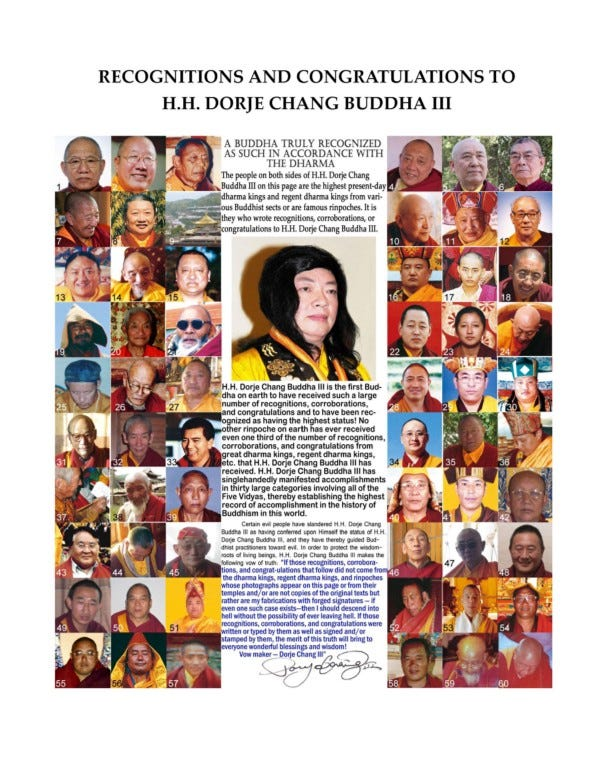
In Tibetan Buddhism, a single recognition certificate from a lineage or sect can establish the revered status of a Rinpoche. However, to be recognized as the genuine reincarnation of a Buddha requires formal confirmation from the grand Dharma Kings and supreme leaders across all different traditions.

Throughout Buddhist history, when a master reaches extraordinary spiritual attainment, they are acknowledged by multiple eminent monastics. Yet, H.H. Dorje Chang Buddha III stands unique: he has received formal recognition, corroboration, and congratulations from over 100 top Dharma Kings, Regent Dharma Kings, and leaders across every major Buddhist sect. He is the first person in recorded Buddhist history to receive such unanimous and overwhelming recognition.

These prominent spiritual leaders unanimously confirmed that H.H. Dorje Chang Buddha III is the physical reincarnation of the Primordial Buddha, Dorje Chang Buddha. Following a sacred tradition refined over more than a thousand years, this historic consensus points to a profound truth: as a Buddha embodies the ultimate height of wisdom, enlightenment, and spiritual perfection, H.H. Dorje Chang Buddha III represents the highest leader of Buddhism in our modern world.

Built on the Foundation of Compassion

Yet, for H.H. Dorje Chang Buddha III, titles, supreme status, and earthly accolades are secondary. Throughout his life, he has remained completely unaffected by global awards, fame, or even baseless slander. His primary focus has never been his exalted standing, but rather living out the heart of Buddha Dharma: causality, peace, harmony, and selfless compassion.

Rather than remaining on a pedestal, he steps into the world to quietly change lives through action:

  • Relief in Times of Crisis: In 2005, when Hurricane Katrina devastated the southern United States, H.H. Dorje Chang Buddha III donated 4.95 million original shares in a high-end art frame company—valued at $1.2 million—on behalf of his family to the United Relief Committee.
  • A Quiet Life of Service: Venerable Long Hui, former CEO of the United Relief Committee and previous abbess of Hua Zang Si Temple in San Francisco, once shared from her personal knowledge:“As the CEO of the United Relief Committee and the abbess of the temple, I must speak truthfully from my heart. In fact, the Master’s (H.H. Dorje Chang Buddha III) entire family consists of artists who rely on the income from their artistic creations to make a living. Yet for many years, they have consistently helped countless people, both inside and outside the temple. What I personally know of alone is substantial……”
  • Protecting Communities: At the onset of the COVID-19 pandemic, long before self-preservation became the norm, H.H. Dorje Chang Buddha III quietly led effort after effort, supplying crucial personal protective equipment (PPE) and supplies directly to local police departments, hospitals, and frontline institutions.

Living with utmost humility and simplicity, he has never sought material rewards or personal comfort. Instead, his life has been dedicated entirely to easing the suffering of others and sharing the pure Dharma that leads to genuine liberation.

A Touch that Ripples Across the World

True greatness is rarely found in loud titles or distant thrones. It is found in the quiet, steady warmth of a life offered entirely for the benefit of others.

When one person lights a lamp in the dark, its glow reaches far beyond the room where it stands. In the same way, every act of selfless giving, every teaching of peace, and every moment of unconditional compassion creates a gentle ripple across our shared world.

We may not all carry the grand weight of history or the honor of titles, but through his example, we are reminded of what truly matters: that the highest spiritual path is simply a heart wide enough to hold the world, hands willing to help without asking for anything in return, and a quiet commitment to leave every life we touch a little brighter than we found it.

Link:https://peacelilysite.com/2026/08/21/beyond-recognition-the-true-measure-of-wisdom-and-compassion/

Reference: https://spacecoastdaily.com/2021/12/h-h-dorje-chang-buddha-iii-teaching-people-to-attain-wisdom-through-compassion-especially-in-these-uncertain-times/

https://www.tpcdct.org/article/1687#detail

Before You Complain Today, Read This

Before You Complain Today, Read This

We often hear people complain that life is not going their way: their salary is not high enough, their house is not big enough, or their luck is not good enough. Their brows are furrowed as though the entire world were working against them. Yet, when we look carefully at their circumstances, their bodies are healthy, their families are safe, and they have food to eat and clothes to wear, we may wonder: Why are they filled with so much dissatisfaction?

Many people spend their lives taking their blessings for granted.

Human beings have a peculiar tendency: we quickly grow accustomed to what we possess yet remain constantly preoccupied with what we lack. When we are healthy, we rarely think of effortless breathing as a gift. Only when a cold leaves us congested do we understand how precious it is to breathe freely. When we are young, we seldom consider strong and agile legs a blessing. Only when our knees begin to ache do we miss the freedom of running.

Happiness is much the same. It quietly surrounds us and seems as natural as the air we breathe. Only after it is lost do we suddenly realize that it was there all along.

I once knew a friend who had just recovered from a serious illness. In the past, he often complained—about the demands of his job, his limited income, and the dullness of everyday life. Yet after leaving the hospital, he seemed like a different person. The morning sunlight moved him deeply. A simple bowl of plain rice porridge brought him contentment. The sound of his child’s laughter brought tears to his eyes.

He said:

“While I was lying in the hospital bed, I could think of nothing else. I only wanted to recover—to be able to walk normally and eat normally again. Now that I have regained these things, I finally understand that an ordinary life is the greatest blessing of all.”

This reminds me of a teaching given by Namo H.H. Dorje Chang Buddha III in Philosophical Sayings About Worldly Matters:

“A person not appreciative of the good life he is living is one who has forgotten his past miseries. A person in good health is not aware of its blessings until he loses it.”

This means that some people live amid blessings without recognizing them. Although their circumstances are good in many ways, they remain dissatisfied, finding fault with one thing after another. They are filled with complaints and self-pity.

The main reason is that they have become immersed in favorable conditions and have forgotten the existence of hardship. While enjoying happiness, they forget the difficulties they once endured. In the same way, strong and healthy people often fail to understand the suffering of illness. They neglect to protect their health and do not cherish their strong bodies. Only after falling ill—confined to bed, unable to move, and without an appetite—do they finally understand the joy and blessing of good health.

The Buddha has long revealed this truth to the world. Regrettably, not everyone has the good fortune to respectfully listen to the authentic Buddha Dharma personally taught by Namo H.H. Dorje Chang Buddha III. Many people pass through life in confusion and unawareness. Only when illness comes do they understand the value of health, and only after something is lost do they recognize the happiness they once possessed.

Those who fail to appreciate their blessings may not necessarily be ungrateful by nature. Perhaps they have simply forgotten that adversity exists. Having grown accustomed to favorable circumstances, they begin to regard them as something they are naturally entitled to. Having forgotten their former hardships, they become blind to the peace and stability before them.

It is like someone who has lived for so long in a room filled with orchids that they no longer notice the fragrance. In the same way, those who remain surrounded by happiness for too long may cease to recognize it.

In truth, happiness does not require luxurious clothing, fine food, fame, or worldly success. It is hidden within every ordinary day: waking in the morning without illness, having a home to return to at night, having food when hungry, clothing when cold, and someone to rely upon when weary.

May we all pause in our habit of complaining. Tonight, before going to sleep, take a moment to count what you possessed today: one easy breath, one warm meal, one word spoken and answered—and the opportunity to learn the authentic Buddha Dharma.

Then quietly remind yourself:

This, too, is a blessing.

Written by Yijie Xue

Learn more about H.H. Dorje Chang Buddha III

Link: https://hhdorjechangbuddhaiiidharma.com/2026/08/10/before-you-complain-today-read-this/

#DorjeChangBuddhaIII #MasterWanKoYee #BuddhistTeachings #BuddhaDharma #Gratitude #StopComplaining #Mindfulness #SpiritualGrowth #LifeLessons #BuddhistWisdom

Eternal Devotion and Ultimate Liberation: The Sacred Bond of Mahākāśyapa and Bhaddā Kapilānī

Couple kneeling and praying to Buddha statue in temple with monks in background

In the mundane world, the ultimate idea of romance is often expressed as “holding hands and growing old together.” However, in Buddhist scriptures, the story of Venerable Mahākāśyapa and Nun Bhaddā Kapilānī illuminates a love that far transcends worldly passion. It is a grand and heroic tale of two souls who guarded each other, practiced purity across lifetimes, and ultimately attained Arhatship together under the guidance of the Buddha, achieving true liberation from the cycle of birth and death.

Their karmic bond for liberation began in the distant era of Vipassī Buddha. At that time, there was a seven-jeweled stupa enshrined with the Buddha’s relics, but the gold leaf on the face of the Buddha statue had peeled off and fallen into disrepair. A poor young woman felt deep sorrow upon seeing this and vowed to restore the statue with gold leaf, though she lacked sufficient funds. Mahākāśyapa, who was a skilled goldsmith in that life, praised her noble vow and joined hands with her to complete the restoration. Through this magnificent merit, both of them radiated a purplish-golden light from their bodies for ninety-one kalpas (eons) that followed. Reborn repeatedly into noble families, they often married and continually supported each other on the path of spiritual practice.

In their final life during the time of Śākyamuni Buddha, Mahākāśyapa was born into a wealthy family in Magadha (named Pippali). From a young age, he felt a deep aversion to worldly desires and longed for spiritual truth, strongly resisting his parents’ pressure to marry. To delay the marriage, he cast a statue of a breathtakingly beautiful maiden out of pure gold and told his parents: “I will only marry if you can find a woman who looks exactly like this golden statue.” Unbeknownst to him, his parents sent searchers throughout the land, and in Vaiśālī, they found Bhaddā Kapilānī, whose beauty and grace surpassed even the golden statue itself.

On their wedding night, however, both newlyweds sat in deep sorrow. When they opened their hearts to each other, they realized that both harbored a profound wish to renounce the worldly life and practice the Dharma. Together, they made a silent pact: to remain husband and wife in name only, sleep in separate beds, and observe immaculate purity. They upheld this sacred vow quietly for twelve years.

After their parents passed away, Mahākāśyapa decided it was time to leave home in search of an enlightened master. Before departing, he promised Bhaddā: “When I find a true, fully enlightened master, I will return to bring you onto the path with me.” Shortly after, Mahākāśyapa met Śākyamuni Buddha at Rājagṛha. Moved by the Buddha’s supreme virtue, he was ordained and attained Arhatship in just eight days, eventually becoming the Buddha’s foremost disciple in “Dhūta (ascetic) practices.”

When the Buddha permitted the establishment of the Bhikṣuṇī (nun) order, Mahākāśyapa fulfilled his promise and helped Bhaddā enter the monastic order. After her ordination, Bhaddā’s celestial beauty initially brought unwanted gossip and rumors from the worldly public. Deeply humbled, she chose to stay indoors and practice with unwavering diligence day and night. Ultimately, she severed all afflictions and attained Arhatship. The Buddha himself praised Bhaddā Kapilānī as being foremost among his female disciples in the recollection of past lives (Divine Recollection).

Couple meditating on stone platform under glowing ancient arch in enchanted forest

💡 Inspirations for the Modern World

  • Elevating Attachment into Mutual Accomplishment:Worldly love often comes with possessiveness, control, and attachment, which inevitably lead to endless anxiety and bondage. The story of Mahākāśyapa and Bhaddā Kapilānī presents a higher realm of love: transforming affection into mutual support on the spiritual journey. True devotion lies in walking alongside one another toward awakening and ultimate freedom.
  • The Immutable Power of Purity and Precepts:In a world filled with temptation and distraction, their twelve-year commitment to pure celibacy demonstrates the profound strength of vows and moral discipline.
  • Wisdom in Facing Adversity and Criticism:When Bhaddā Kapilānī faced misunderstanding and rumors due to her appearance, she did not waste energy arguing or sinking into despair. Instead, she channeled the adversity into motivation for deeper practice. This teaches us that turning inward and practicing in quiet contemplation is the highest form of wisdom when overcoming life’s challenges.

The journey of Mahākāśyapa and Bhaddā Kapilānī breaks through conventional boundaries of love and marriage. In the realm of red dust, they were soulmates; on the path to liberation, they were noble companions. Their story is not only a legendary romance of quiet purity beyond life and death, but also a gentle beacon pointing toward clarity, wisdom, and liberation for anyone seeking a peaceful sanctuary for their soul.

Link:https://peacelilysite.com/2026/08/07/eternal-devotion-and-ultimate-liberation-the-sacred-bond-of-mahakasyapa-and-bhadda-kapilani/