The Science of Lying: Its Cognitive and Social Costs

Like Pinocchio, everyone sometimes tells a lie. Most people don’t lie often, science finds. But research shows that even small lies can take a toll on your brain. MALERAPASO / GETTY IMAGES

Even little fibs can have serious consequences — and some of them just might surprise you

Most of us have told a lie at one time or another. Some lies are harmful. Others, like small fibs to avoid hurting someone’s feelings, are mostly harmless. Some lies are even intended to protect others. But no matter the type of lie, it takes a surprising amount of brainpower to pull it off, which can be costly.

Lying requires significant mental effort. Imagine you’re late to class and decide to lie about why. You might say, “I had to stop by the library and pick up a book.” When your teacher asks, “The book I assigned last week?” you must quickly decide how to respond. You may say, “No, it was a different book,” and now you have to be ready with another title. This constant mental juggling uses up brainpower that could be spent on more important tasks.

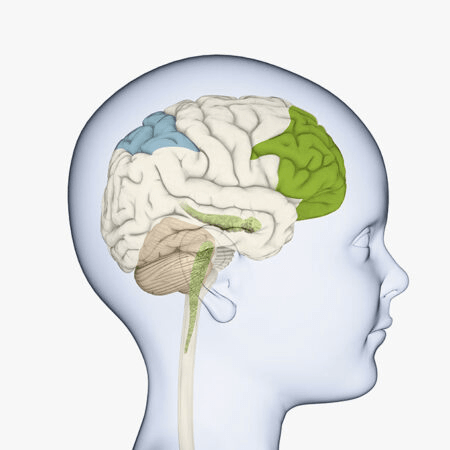
A lot of this mental work is done in the prefrontal cortex, the part of the brain responsible for working memory, planning, problem-solving, and self-control. Using these resources for lying means they are not available for other tasks, like solving math problems or remembering important facts.

Lying also has social consequences. People generally value honesty and don’t like liars. If people view you as untrustworthy, it can damage your relationships. Even well-intended lies, such as insincere compliments, can backfire. If your friends realize they can’t trust your compliments, those compliments become meaningless.

Most people don’t lie very much, says Timothy Levine, a psychologist at the University of Alabama at Birmingham who studies deception. His research shows that almost three-quarters of people rarely lie, and 90 percent of the lies they tell are “white lies.” However, Levine’s research also shows that while most people don’t lie often, a few lie a lot. The top one percent of liars, according to Levine, tell more than 15 lies per day. Some chronic liars are insecure. Others may lie about their accomplishments because they’re conceited or overly impressed with themselves. Still others lie to take advantage of people — perhaps even to cheat them or to steal from them.

The brain’s prefrontal cortex, behind the forehead (shown right, in darker green) isn’t fully mature until we are in our 20s. That’s a problem for adolescents. This part of the brain helps us understand risk. It’s also in charge of a lot of our higher-level thinking, such as planning and self-control.

DORLING KINDERSLEY/GETTY IMAGES PLUS

Lying is especially hard for young people because their prefrontal cortex is not fully developed until around age 25. This part of the brain helps with higher-level thinking, such as planning and self-control. When it’s busy with tasks related to lying, it has a harder time doing other important tasks.

Some lies never stop, like those told by spies or people hiding a difficult home life. Pretending to be something you’re not almost every hour of every day is mentally draining and can have long-lasting effects. Over time, this kind of lying uses up the brain resources needed for thinking and planning.

Most people value honesty, and research shows that honest people build social capital, or goodwill, within their communities. Trust is essential for healthy relationships and a well-functioning society.

Lying may seem easier in the short term, but it has significant cognitive and social costs. By striving to be honest, we can save mental energy and build stronger, more trusting relationships.

Neil Garrett, a neuroscientist at the University of East Anglia in Norwich, England, has studied how emotions affect our willingness to be dishonest. He points to a study where students were given a beta blocker, a medicine that dampens emotions. These students were more likely to cheat on an exam than those who didn’t receive the medicine, possibly because they felt less fear or anxiety about being dishonest.

Garrett and his team also examined the relationship between lying and activity in the amygdala, the part of the brain that processes emotions. They conducted an experiment where volunteers played a game to make money by lying to a partner. Brain scans showed that the amygdala was very active when participants first lied. However, as they continued to lie, activity in the amygdala decreased, and the participants lied even more. These findings were reported in Nature Neuroscience.

In one study, students were more likely to cheat on exams when they’d taken a drug that mutes emotions. ANDY SACKS/THE IMAGE BANK/GETTY IMAGES PLUS

Garrett suggests this brain effect might be similar to how our sense of smell adapts to strong odors. Initially, a strong smell is overwhelming, but after a while, we barely notice it. Emotions might work similarly; the more you lie, the less you feel the uncomfortable emotions like fear or guilt. In other words, lying becomes easier the more you do it.

Nearly all cultures value honesty, notes Victoria Talwar, a psychologist at McGill University in Montreal, Quebec. She suggests that creating a culture that reinforces the value of honesty can help. One strategy is to support friends while still being truthful. “When people’s friends are truthful with them,” she says, “it creates a culture of honesty among them,” which builds stronger friendships.

Jennifer Vendemia, a neuroscientist at the University of South Carolina, emphasizes that lying lessens when there are consequences for dishonesty. However, she adds that rewarding truth-telling is more effective than punishing lying. This is especially important when people share significant truths about themselves. “Being able to tell the truth to a friend is rewarding,” she says. “It feels good.”

Most people know that lying is generally bad and can have serious consequences. Science is now revealing how dishonesty impacts the brain and undermines the trust essential for strong relationships.

Link: https://peacelilysite.com/2024/06/13/the-science-of-lying-its-cognitive-and-social-costs/

Source: Lying won’t stretch your nose, but it will steal some brainpower by  Avery Elizabeth Hurt
https://www.snexplores.org/article/lying-brain-power-prefrontal-cortex-truth-telling

What Science Can Learn From Religion

by David DeSteno Feb. 2, 2019

Hostility toward spiritual traditions may be hampering empirical inquiry. Science and religion seem to be getting ever more tribal in their mutual recriminations, at least among hard-line advocates. While fundamentalist faiths cast science as a misguided or even malicious source of information, polemicizing scientists argue that religion isn’t just wrong or meaningless but also dangerous.

I am no apologist for religion. As a psychologist, I believe that the scientific method provides the best tools with which to unlock the secrets of human nature. But after decades spent trying to understand how our minds work, I’ve begun to worry that the divide between religious and scientific communities might not only be stoking needless hostility; it might also be slowing the process of scientific discovery itself.

Religious traditions offer a rich store of ideas about what human beings are like and how they can satisfy their deepest moral and social needs. For thousands of years, people have turned to spiritual leaders and religious communities for guidance about how to conduct themselves, how to coexist with other people, how to live meaningful and fulfilled lives — and how to accomplish this in the face of the many obstacles to doing so. The biologist Richard Dawkins, a vocal critic of religion, has said that in listening to and debating theologians, he has “never heard them say anything of the smallest use.” Yet it is hubristic to assume that religious thinkers who have grappled for centuries with the workings of the human mind have never discovered anything of interest to scientists studying human behavior.

Just as ancient doesn’t always mean wise, it doesn’t always mean foolish. The only way to determine which is the case is to put an idea — a hypothesis — to an empirical test. In my own work, I have repeatedly done so. I have found that religious ideas about human behavior and how to influence it, though never worthy of blind embrace, are sometimes vindicated by scientific examination.

Consider the challenge of getting people to act in virtuous ways. Every religion has its tools for doing this. Meditation, for example, is a Buddhist technique created to reduce suffering and enhance ethical behavior. Research from my own and others’ labs confirms that it does just that, even when meditation is taught and performed in a completely secular context, leading research participants to exhibit greater compassion in the face of suffering and to forgo vengeance in the face of insult.

Another religious tool is ritual, often characterized by the rigid following of repetitive actions or by engagement with others in synchronous movement or song. Here, too, an emerging body of research shows that ritualistic actions, even when stripped from a religious context, produce effects on the mind ranging from increased self-control to greater feelings of affiliation and empathy.

Ritual can also play a part in strengthening beliefs. Research on cognitive dissonance has shown that publicly stating beliefs that we don’t initially endorse leads to a psychological tension that is often remedied by altering our beliefs and behaviors to match our public pronouncements. Thus the religious practice of repeatedly stating beliefs as part of prayers — as in the Catholic Mass — may enhance devotion to a creed.

What findings like these suggest is that religions offer techniques — or “spiritual technologies,” in the words of Krista Tippett, the host of the radio show “On Being” — that help people endure difficulties, change their views or move them toward action. These techniques seem to work by nudging our behavior subconsciously. Ms. Tippett stresses that the specific religious traditions from which such techniques are borrowed should be understood and honored on their own terms. But when I spoke with her recently, she also agreed that the techniques might work even when separated from their religious trappings, as meditation and elements of ritual have been shown to do.

If this view is right, religion can offer tools to bolster secular interventions of many types, such as combating addiction, increasing exercise, saving money and encouraging people to help those in need. This possibility dovetails with a parallel body of research showing that by cultivating traditional religious virtues such as gratitude and kindness, people can also improve their ability to reach personal goals like financial and educational success.

When I broached this body of research with the cognitive scientist and religious skeptic Steven Pinker, he emphasized that it was by no means a vindication of religion as a whole. He made a point to differentiate between what he called religious practices and cultural practices, with religious ones being those more likely to have doubtful supernatural rationales (like using prayer to contact a deity for favors) and cultural ones having more practical justifications (like using ritual to foster connection and self-control).

While I can see Professor Pinker’s point — and I agree with him that religion as a whole must be judged by its full set of positive and negative effects — the dividing line between cultural and religious can be blurry. The Jewish practice of Shabbat, for instance, stems from a divine command for a day of rest and includes ritualistic actions and prayers. But it’s also a cultural practice in which people take time out from the daily grind to focus on family, friends and other things that matter more than work.

My purpose here isn’t to argue that religion is inherently good or bad. As with most social institutions, its value depends on the intentions of those using it. But even in cases where religion has been used to foment intergroup conflict, to justify invidious social hierarchies or to encourage the maintenance of false beliefs, studying how it manages to leverage the mechanisms of the mind to accomplish those nefarious goals can offer insights about ourselves — insights that could be used to understand and then combat such abuses in the future, whether perpetrated by religious or secular powers.

Science and religion do not need each other to function, but that doesn’t imply that they can’t benefit from each other. Rabbi Geoffrey Mitelman, the founding director of Sinai and Synapses, an organization that seeks to bridge the scientific and religious worlds, told me recently that science can help clergy better aid those they counsel by showing which types of social and behavioral practices are empirically most likely to foster their emotional, moral and spiritual goals.

A yearning for a science-religion synergy is growing in some circles. Ms. Tippett cites as an example the Formation Project, an initiative designed by a group of millennials who are looking to cultivate their inner lives and form a community by combining ideas from psychology and neuroscience with practices from ancient spiritual traditions.

In doing this, she points out, these young people are not blindly accepting any doctrine. They are asking questions and choosing what works based on evidence. In short, they are doing exactly what I think the communities of scientists and clergy need to do in a more rigorous way and on a much larger scale.

Will it work? That’s an empirical question. But if we choose not to investigate it, we’ll never know. And I suspect we’ll be the poorer for it.

What Science Can Learn From Religion

Link: https://peacelilysite.com/2023/06/23/what-science-can-learn-from-religion/

#SpiritualTechnologies #Ritual# Religion#Empathy #Self-control #Science #Meditation #Doctrine #clergy