Ancient Wisdom Meets Modern Fluid Dynamics: How Abdominal Breathing Literally Washes Waste From Your Brain

Remove extra people, keep only one person

Have you ever experienced that mid-afternoon wall? You’ve been sitting at your desk for three hours. You haven’t done any heavy lifting, yet your head feels like it’s filled with lead, your thinking slows to a crawl, and your focus completely evaporates.

We used to think the worst side effects of prolonged sitting were just weight gain, bad posture, or a sluggish metabolism. But a groundbreaking study published in the prestigious journal Nature Neuroscience has shattered that assumption, revealing a silent, terrifying reality: When you slump in an office chair with your core disengaged, your brain is quite literally marinating in its own cellular waste.

The human brain is an energy-hogging powerhouse. As long as you are alive, your neurons are firing wildly, producing vast amounts of metabolic waste—including amyloid-beta proteins, the primary culprits linked to Alzheimer’s disease.

But here is the catch: while every other organ in your body relies on the lymphatic system to flush out waste, the brain is sealed tight inside a rigid skull. It has no traditional lymphatic vessels. For decades, scientists believed the brain only did its heavy cleaning during deep sleep, when cerebrospinal fluid (CSF) rushes through like an automatic car wash. But this left a massive blind spot in medical science: If sleep is the only cleaning cycle, why do active people who exercise regularly have a drastically lower risk of cognitive decline and dementia—even if they get the exact same amount of sleep?

A cross-disciplinary team at Penn State University just found the missing puzzle piece.

Using high-resolution, two-photon microscopes focused on live mice, researchers witnessed something extraordinary.

They noticed that right before an animal moves—even if it is just preparing to stand up or take a single step—its core muscles, specifically the abdominal muscles, instinctively contract.

This seemingly minor “belly squeeze” is actually the trigger for a highly precise hydraulic clearing system.

When your abdominal muscles contract, they act like a powerful manual pump. They instantly force abdominal blood upward into the spinal venous plexus. That sudden pressure wave travels all the way up into the sealed skull. At that exact micro-second, the brain physically moves. With every single squeeze of your abdomen, the brain undergoes a tiny but distinct displacement inside the skull.

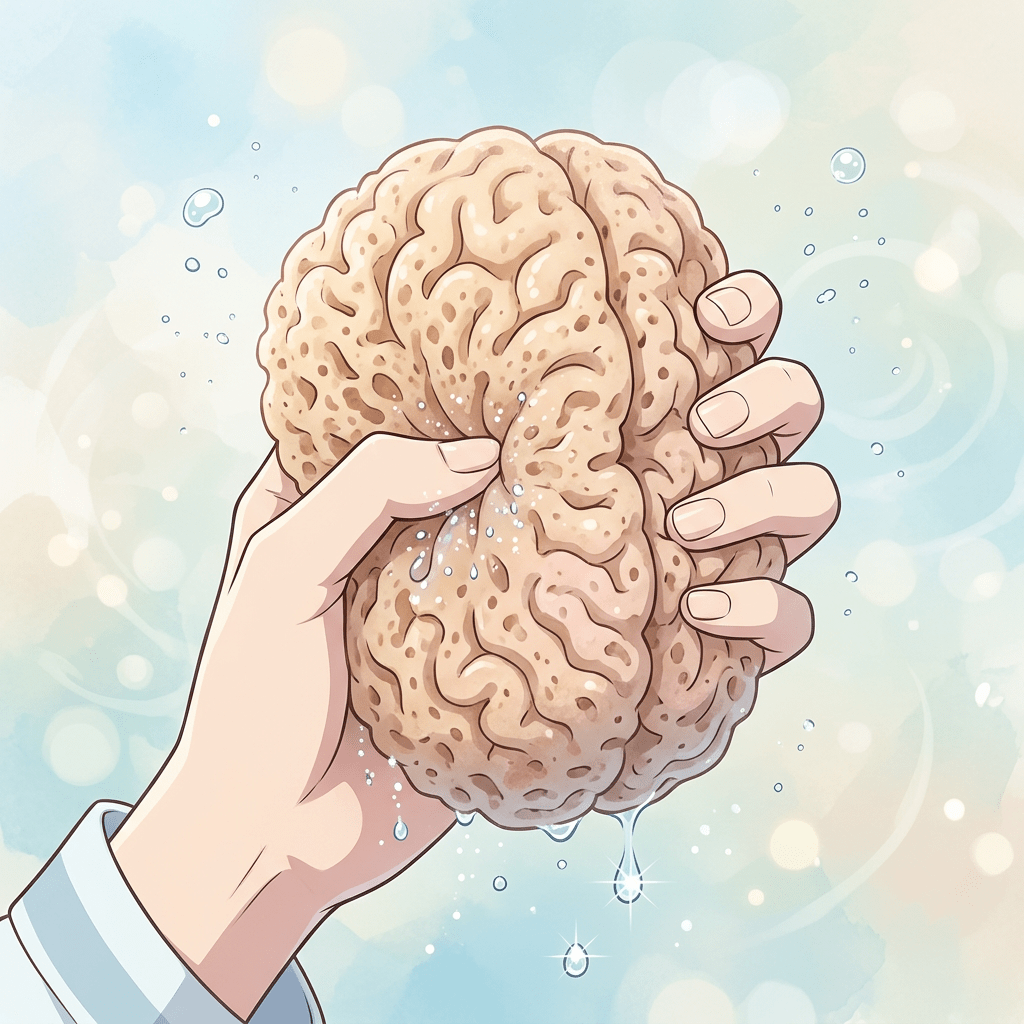
Brain as sponge being gently squeezed

Professor Francesco Costanzo, an expert in fluid mechanics involved in the study, offered a brilliant analogy:

“The structure of the brain is actually like a soft sponge soaked in water. How do you clean a dirty sponge? You don’t just let it sit in a bucket of water. You have to gently squeeze it.”

Every time your core contracts, it gently squeezes that “brain sponge.” This physical shift forces cerebrospinal fluid to rush through the brain’s intricate folds and crevices, flushing out the toxic metabolic waste that disrupts your neurons.

☯️ Ancient Mindfulness Meets Modern Science: The Power of the Belly

Reading this study, I got absolute goosebumps.

For thousands of years, Eastern traditional medicine and mindfulness practices (like Qi Gong and Tai Chi) have passionately advocated for “Abdominal Breathing” (diaphragmatic breathing) and centering one’s energy in the core (the Dan Tian).

Ancient masters didn’t have high-resolution microscopes or computer fluid modeling, yet they deeply understood the body’s mechanics. They knew that rhythmic, deep belly breathing regulates the body’s internal pressure and vital energy. Today, Western peak science has finally validated this ancient wisdom: Changes in abdominal pressure are the literal engine driving your brain’s daily cleaning cycle.

When we slouch in a chair for hours, our core muscles fall completely asleep. The hydraulic pump shuts down. The brain sponge just sits there, trapped in its own debris, quietly accumulating the tiny cellular triggers of neurodegeneration.

The best news from this research? You don’t need to run a ultramarathon or become an Olympic weightlifter to clear your head. The study emphasizes that even the slight core engagement required to stand up from a chair, or the natural core activation of walking, fires up the pump.

💡 My Quick Health Hack for Digital Workers: The next time you’ve been at your computer for too long and your brain feels foggy, don’t reach for another espresso. Try this Brain Reboot Routine:

  1. Get Up and Move: Walk to grab a glass of water. As you walk, consciously engage your core and feel your abdomen lightly pull inward.
  2. Do 3-5 Deep Abdominal Breaths: Inhale deeply, allowing your belly to expand outward. As you exhale, intentionally pull your lower abdomen tightly back toward your spine.
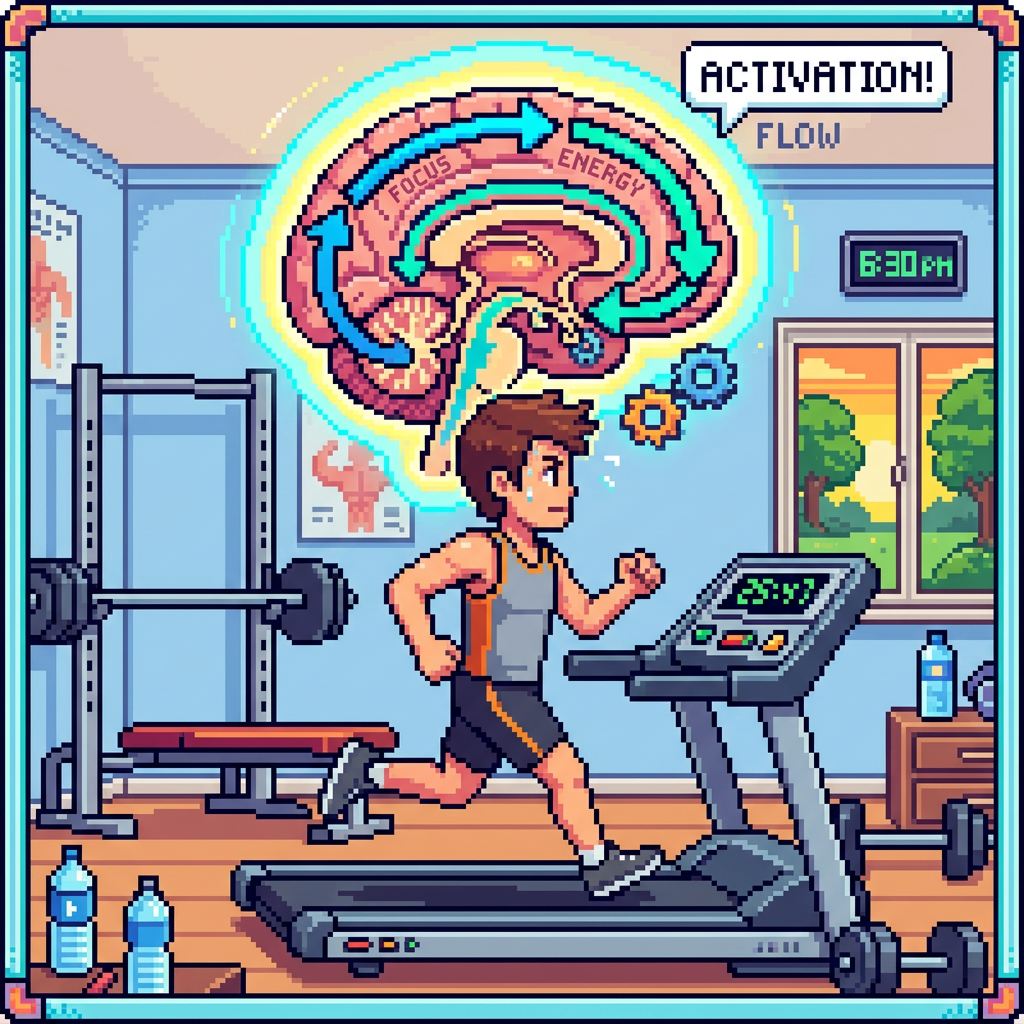
Person running on treadmill inside gym with brain activation and flow diagram

You aren’t doing this to sculpt six-pack abs; you are doing it to activate your internal hydraulic pump, gently shifting your brain inside your skull and flushing away hours of accumulated neurological fog.

True movement isn’t just about the muscles we can see in the mirror—it’s about driving the invisible cleaning pumps that keep our minds sharp.

Listen closely. Your brain is waiting for you to stand up. The next time you catch yourself staring blankly at your monitor, remind yourself: Time to get up and stretch—your brain is waiting for its shower.

Link:https://peacelilysite.com/2026/05/21/ancient-wisdom-meets-modern-fluid-dynamics-how-abdominal-breathing-literally-washes-waste-from-your-brain/

#BrainHealth #Neuroscience #Mindfulness #DiaphragmaticBreathing #HealthyLifestyle #NatureResearch #Biohacking #DeskJobHealth #BrainFog #AlzheimersPrevention

Why You Feel Better After You Pray: The Science Behind the “Quiet Heart”

You might not realize it, but this is the true power of prayer—it’s not just asking for blessings; it is awakening an internal system within you that says, “I can keep going.”

Every sincere moment of prayer leaves an imprint on the mind. This is not spiritual poetry or wishful thinking; it is a pattern repeatedly observed through MRI scans, neuroimaging, and psychological research. Each second spent in focused, quiet prayer is an opportunity to “turn on a light” in the brain—helping us become steadier, clearer, and more resilient.

Scientists were once skeptical. But the evidence surprised them.

When a person enters a state of deep, focused prayer, activity in the prefrontal cortex increases. This is the part of the brain responsible for attention, judgment, emotional regulation, and self-control—the “driver’s seat” of the mind. Prayer helps us return to that seat, especially when life feels overwhelming.

At the same time, activity in the amygdala—the brain’s alarm system—tends to decrease. This region governs fear, anxiety, and the fight-or-flight response. When it is overstimulated, we feel tense, reactive, and out of control. Prayer appears to gently quiet this system, creating inner space to breathe, reflect, and choose more wisely.

This is not merely a mental effect—it is a physical response of the nervous system.

Research also suggests that heartfelt prayer—prayer infused with sincerity and emotion—is especially powerful. Compared to mechanical repetition, it more strongly activates brain regions associated with language, empathy, connection, and self-awareness, including the temporoparietal junction, anterior cingulate cortex, and medial prefrontal cortex. These areas shape how we relate to ourselves, to others, and to life itself.

In simple terms, honest prayer becomes a process of emotional clearing and inner reorganization.

When practiced regularly, these brain responses do something remarkable: they form new neural pathways. Like carving a well-worn trail through a forest, prayer creates a reliable inner path—a place of stability we can return to during moments of fear, grief, or confusion. The more often we walk this path, the easier it becomes to find our way back to calm.

Prayer is not the same as meditation. While both reduce stress and sharpen focus, prayer carries an added element: relationship. Prayer involves trust, dialogue, and the felt sense that we are not alone. This activates neural systems related to connection, attachment, and belonging—deep human needs that meditation alone does not always engage.

This may explain why, at the edge of emotional collapse, a simple, sincere prayer can sometimes bring someone back from the brink. The problem may not disappear—but the mind, heart, and body momentarily realign. A quiet strength returns. I can get through this.

What Prayer Does—Inside and Out

  • Activates the Prefrontal Cortex
    Strengthens clarity, emotional balance, and self-control.
  • Calms the Amygdala
    Lowers fear and stress responses, restoring inner quiet.
  • Builds Emotional Resilience
    Repeated prayer forms neural pathways that support stability over time.
  • Fosters Connection and Trust
    Engages social and emotional brain systems through relationship and sincerity.

Sincere prayer may be one of the most gentle, natural, and powerful “built-in reset systems” we possess.

So when was the last time you prayed—not out of habit, but from the heart?
Have you ever noticed how your body softened afterward, how tension quietly released?

That wasn’t imagination.
That was your mind and nervous system responding to something deeply human—and deeply real.

Link:https://peacelilysite.com/2026/01/09/why-you-feel-better-after-you-pray-the-science-behind-the-quiet-heart/

When Your Brain’s Motivation System Gets Stuck — Rediscovering Energy Through “Slow Joy”

Lately, I’ve noticed how many people — friends, colleagues, even myself at times — feel drained and uninspired.
We wake up tired, scroll through our phones for quick hits of excitement, yet still feel empty inside.
It’s as if our inner engine has lost its spark.
But according to a 2025 review published in Trends in Neurosciences, there’s a scientific reason behind this: our brain’s dopamine release system may be getting stuck.

That could explain why so many of us today feel unmotivated or emotionally flat, even when life seems to be “going fine.”

Dopamine: Not Just the “Happy Chemical”

We often call dopamine the molecule of happiness, but that’s only part of the story.
In reality, dopamine isn’t what makes you happy — it’s what gets you moving toward happiness.

Dopamine creates a sense of anticipation — that spark of “I want to try,” the energy that propels us to start something new.
Whether you’re preparing for an exam, signing up for a new class, cleaning your room, or going for a run — it’s not satisfaction that moves you, but dopamine giving you direction and desire.

Think of dopamine as your internal GPS, guiding you toward what feels meaningful, hopeful, and worth pursuing.

Dopamine doesn’t just “fire” from one neuron to another like a light switch.
Recent discoveries show that the brain also uses something called “volume transmission” — a gradual release process, more like a sprinkler or diffuser that spreads dopamine through nearby areas, affecting your overall state of mind.

This helps explain a familiar modern phenomenon:
why short videos or instant rewards feel thrilling for a second — yet leave us empty moments later.
Meanwhile, the slow joys — exercising regularly, nurturing a hobby, cooking, gardening, or spending time with loved ones — bring calm, sustainable satisfaction.

Fast stimulation burns us out. Slow joy builds us up.

When the System Breaks Down, The Brain “Runs Out of FuelSeveral key proteins, such as VMAT2, SV2C, and α-synuclein, regulate how dopamine is stored and released.
They work like the warehouse managers of your brain, deciding when and how much dopamine to release, and whether there’s enough supply to restock.

When this system falters, it doesn’t just cause movement issues like Parkinson’s disease — it also leads to emotional flatness, loss of motivation, chronic fatigue, and social withdrawal.

This isn’t weakness or laziness. It’s your brain signaling that it’s running low on essential fuel.

Three Ways to Help Your Brain’s Motivation System Restart

1. Practice “Slow Joy” — Reconnect with Steady Dopamine Flow
Reduce dependence on instant stimuli like scrolling through social media or bingeing short videos.
These quick hits train your brain to expect constant flashes of excitement.

Instead, rediscover activities that bring gentle, lasting satisfaction: cooking, reading, painting, walking, gardening.
These are the true dopamine recharge stations of life.

2. Move Regularly — Activate Your Natural Dopamine Circuit
Moderate exercise — brisk walking, jogging, squats — done three times a week for 10–30 minutes can powerfully stimulate healthy dopamine pathways.
You don’t have to push to exhaustion; what matters is rhythm and consistency.
Your brain thrives on the expectation of movement, not punishment.

3. Nourish the System — Sleep, Nutrition, and Antioxidants
Sleep is when your brain restores neurotransmitters and regenerates vesicles for dopamine storage.
A lack of rest is like leaving your mental warehouse in chaos.

Eating antioxidant-rich foods such as berries, dark leafy greens, olive oil, and omega-3s helps reduce oxidative stress and support brain health.
Simple, consistent habits are the quiet repair crew your dopamine system needs.

Real vitality isn’t a burst of fireworks — it’s a steady inner light that guides us through our days.
Dopamine’s true gift isn’t the thrill of reward, but the strength to keep going.

When we gently adjust our daily rhythm, we can regain focus and energy without needing excessive caffeine or quick fixes.
We can once again feel that grounded sense of, I’m back on my path. From “Chasing Highs” to “Finding Rhythm.”

The Truth About Drugs and False Freedom

Recently, we’ve seen more tragic news about drug-related crimes.
This makes it even more urgent to talk about dopamine honestly.

Drugs artificially force the brain’s “stimulation gate” wide open — creating a short-lived high while devastating the system meant to sustain real joy.
People chasing that artificial rush often lose direction, harming themselves and others.

Drugs don’t create happiness — they destroy the very system that makes it possible.
That’s not freedom; it’s captivity disguised as pleasure.

When you feel tired, unmotivated, or emotionally numb, remember this:
You’re not lazy. You’re not broken.
Your brain simply needs care, rhythm, and nourishment.

We don’t need to be blinding LED lights burning out too soon.
We can be warm, steady lamps — quietly lighting our own path and bringing comfort to those around us.

Reference:
Redefining dopaminergic synapses beyond the classical paradigm, Trends in Neurosciences, 2025

Link:https://peacelilysite.com/2025/11/11/when-your-brains-motivation-system-gets-stuck-rediscovering-energy-through-slow-joy/

The Science of Lying: Its Cognitive and Social Costs

Like Pinocchio, everyone sometimes tells a lie. Most people don’t lie often, science finds. But research shows that even small lies can take a toll on your brain. MALERAPASO / GETTY IMAGES

Even little fibs can have serious consequences — and some of them just might surprise you

Most of us have told a lie at one time or another. Some lies are harmful. Others, like small fibs to avoid hurting someone’s feelings, are mostly harmless. Some lies are even intended to protect others. But no matter the type of lie, it takes a surprising amount of brainpower to pull it off, which can be costly.

Lying requires significant mental effort. Imagine you’re late to class and decide to lie about why. You might say, “I had to stop by the library and pick up a book.” When your teacher asks, “The book I assigned last week?” you must quickly decide how to respond. You may say, “No, it was a different book,” and now you have to be ready with another title. This constant mental juggling uses up brainpower that could be spent on more important tasks.

A lot of this mental work is done in the prefrontal cortex, the part of the brain responsible for working memory, planning, problem-solving, and self-control. Using these resources for lying means they are not available for other tasks, like solving math problems or remembering important facts.

Lying also has social consequences. People generally value honesty and don’t like liars. If people view you as untrustworthy, it can damage your relationships. Even well-intended lies, such as insincere compliments, can backfire. If your friends realize they can’t trust your compliments, those compliments become meaningless.

Most people don’t lie very much, says Timothy Levine, a psychologist at the University of Alabama at Birmingham who studies deception. His research shows that almost three-quarters of people rarely lie, and 90 percent of the lies they tell are “white lies.” However, Levine’s research also shows that while most people don’t lie often, a few lie a lot. The top one percent of liars, according to Levine, tell more than 15 lies per day. Some chronic liars are insecure. Others may lie about their accomplishments because they’re conceited or overly impressed with themselves. Still others lie to take advantage of people — perhaps even to cheat them or to steal from them.

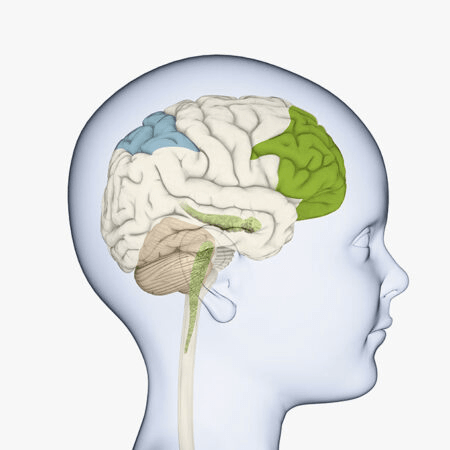
The brain’s prefrontal cortex, behind the forehead (shown right, in darker green) isn’t fully mature until we are in our 20s. That’s a problem for adolescents. This part of the brain helps us understand risk. It’s also in charge of a lot of our higher-level thinking, such as planning and self-control.

DORLING KINDERSLEY/GETTY IMAGES PLUS

Lying is especially hard for young people because their prefrontal cortex is not fully developed until around age 25. This part of the brain helps with higher-level thinking, such as planning and self-control. When it’s busy with tasks related to lying, it has a harder time doing other important tasks.

Some lies never stop, like those told by spies or people hiding a difficult home life. Pretending to be something you’re not almost every hour of every day is mentally draining and can have long-lasting effects. Over time, this kind of lying uses up the brain resources needed for thinking and planning.

Most people value honesty, and research shows that honest people build social capital, or goodwill, within their communities. Trust is essential for healthy relationships and a well-functioning society.

Lying may seem easier in the short term, but it has significant cognitive and social costs. By striving to be honest, we can save mental energy and build stronger, more trusting relationships.

Neil Garrett, a neuroscientist at the University of East Anglia in Norwich, England, has studied how emotions affect our willingness to be dishonest. He points to a study where students were given a beta blocker, a medicine that dampens emotions. These students were more likely to cheat on an exam than those who didn’t receive the medicine, possibly because they felt less fear or anxiety about being dishonest.

Garrett and his team also examined the relationship between lying and activity in the amygdala, the part of the brain that processes emotions. They conducted an experiment where volunteers played a game to make money by lying to a partner. Brain scans showed that the amygdala was very active when participants first lied. However, as they continued to lie, activity in the amygdala decreased, and the participants lied even more. These findings were reported in Nature Neuroscience.

In one study, students were more likely to cheat on exams when they’d taken a drug that mutes emotions. ANDY SACKS/THE IMAGE BANK/GETTY IMAGES PLUS

Garrett suggests this brain effect might be similar to how our sense of smell adapts to strong odors. Initially, a strong smell is overwhelming, but after a while, we barely notice it. Emotions might work similarly; the more you lie, the less you feel the uncomfortable emotions like fear or guilt. In other words, lying becomes easier the more you do it.

Nearly all cultures value honesty, notes Victoria Talwar, a psychologist at McGill University in Montreal, Quebec. She suggests that creating a culture that reinforces the value of honesty can help. One strategy is to support friends while still being truthful. “When people’s friends are truthful with them,” she says, “it creates a culture of honesty among them,” which builds stronger friendships.

Jennifer Vendemia, a neuroscientist at the University of South Carolina, emphasizes that lying lessens when there are consequences for dishonesty. However, she adds that rewarding truth-telling is more effective than punishing lying. This is especially important when people share significant truths about themselves. “Being able to tell the truth to a friend is rewarding,” she says. “It feels good.”

Most people know that lying is generally bad and can have serious consequences. Science is now revealing how dishonesty impacts the brain and undermines the trust essential for strong relationships.

Link: https://peacelilysite.com/2024/06/13/the-science-of-lying-its-cognitive-and-social-costs/

Source: Lying won’t stretch your nose, but it will steal some brainpower by  Avery Elizabeth Hurt
https://www.snexplores.org/article/lying-brain-power-prefrontal-cortex-truth-telling