From Grammar school to Middle school, my sister and I went to a Buddhism institute in Hong Kong. We had karmic affinity to Buddhism. Although at that time we were not familiar with or understood Buddhism, nor did we devote much time to study Buddhism. However, our heart gave rise to joyous feeling every Monday when we entered the main Buddha Hall to chant sutras.
Our karma brought us to Hua Zang Si and we have been studying Buddha dharma under the guidance of La Jian 2nd Long Hui Rinpoche. Hua Zang Si abides by H.H. Dorje Chang Buddha III and Sakyamuni Buddhas’ teaching without the slightest deviation. The Ones of Holy Virtuous Ones and our Master are our constant role models; they lead by example. Their conduct is guided by Buddhist precepts and teaching. Their conduct has taught us and encouraged us a great deal.
We have witnessed a myriad of holy phenomena. The most inspiring and most gratifying event was that at Hua Zang Si we found ourselves in the presence of H.H. Dorje Chang Buddha III, and had the opportunity to respectfully listen to Him expounding Buddha dharma and also received the Holy Water Sprinkle Initiation Empowerment from H.H. Dorje Chang Buddha III personally. All these experiences further our faith in our studying Buddha dharma and firming our resolve to cultivate ourselves to benefit living beings.
Since then we have being coming to Hua Zang Si on a frequent basis to respectfully listen to the Dharma Discourse expounded by H.H. Dorje Chang Buddha III, participate in every Dharma Assembly held at Hua Zang Si, take part in release lives dharma assemblies with jubilant heart and with the most sincere and pure heart we continue to participate in the weekly Meditation and Group Cultivation sessions at Hua Zang Si.
The Mediataion Session of Hua Zang Si is chaired by Gesang Yiqie Qupei Rinpoche. I have received tremendous benefits from attending the Meditation Sessions. It has allowed me to penetrate the truth of Buddha dharma, helped me to understand the philosophy of proper decorum to interact with others, taught me how to maintain a calm mental state by letting go of egotistic clinging. It also elucidated me regarding the corresponding benefit resulted from abiding precepts when we do our Buddha dharma practice. I have less and less scattered and idle thoughts. I am full of joy and I smile all the time. It has had a very positive impact on my daily routine and daily life. And I also discover those who are around me having also being influenced by my state of mind have also become positive and happy.
I remember during the mediation session on September 22, 2013, while paying attention to Gesang Yiqie Qupei Rinpoche’s dharma talk, I suddenly saw a ray of golden light appeared on the Rinpoche’s Certificate of Holy Virtue, right above her photo.
At that moment I did not believe my eyes, I turned around to investigate whether it was generated by the sun. I realized it was impossible for the Sun’s ray to reach that angle. I was stunned. Next moment it disappeared. Later on, however, the ray of light re-appeared. This time, two rays of golden light appeared and what resembled green leaf also accompanied the light. The scene is beautiful beyond words, and extremely auspicious. At that time I was so surprised and excited. I believe this verifies that the Buddhas and Bodhisattvas were conferring the Buddha dharma propagated by Hua Zang Si is the authentic Tathagata Buddha dharma.
This phenomenon absolutely took place. The appearance of Buddha light signifies the propagation of correct Buddha dharma. Amitabha!
A group of scientific researchers conducted an interesting psychological experiment called “The Scar Experiment.” They announced to participating volunteers that the purpose of the study was to observe how people responded to a stranger with a marred physical appearance, particularly a facial scar.
Using Hollywood makeup techniques, the scientists drew bloody and gruesome scars on each volunteer’s left cheek, and displayed the new “scar” to each participant using a small handheld mirror. After glancing at their marred image, the mirror was taken away. The researchers’ final step was to inform each volunteer that some finishing powder needed to be placed on his/her scar to prevent it from smearing. In reality, the researchers used a tissue to wipe off the scar. But the volunteers still believed they had the awful scars on their faces. Each individual was sent out into the waiting rooms of different medical offices with instructions to notice how strangers responded to their appearance.
At the appointed time, the ten volunteers returned to the scientific researchers and all shared the same report. In their encounters, they noticed that strangers were ruder to them, less kind and stared at their scars. In reality, their faces were no different compared to usual. They came to such a conclusion because their wrong self-conception influenced their judgement.
This is truly a thought-provoking experiment. Depending on how a person sees himself in his own mind, he will experience the same reaction from the outside world. At the same time, this experiment also testifies to a Western saying, “Others see you according to how you see yourself.” Is it not so?
Enlightenment: The world of one’s inner mind determines the vision one has. Only you can decide how others look at you.”
The United International World Buddhism Association Headquarters Announcement 20170105
A great holy virtuous one wrote the following edifying discourse. It is very precise and wonderful, and right to the point. The arguments are not common, proving Him as a Shangzun of Gold Button Level 3! This Headquarters now publishes the original text in the following.
I will say a few sentences today. Originally all the dharma affairs pertaining to the passing of the Senior Monk Yinhai were supposed to be handled with me in total charge and a few dharma brothers including Mozhi and Tongstan assisting me, but dharma brother Wangzha asked me to let him handle them. As such, dharma brother Wangzha wound up being in full responsibility for arranging the dharma affairs including the one hundred holy dharma assemblies.
A lot of people are making their separate praises about the passing of the holy monk Yinhai but what they say are only mundane arguments about the greatness of the sacred incident and do not mention the fundamentals. Even the World Buddhism Association Headquarters only talked about what transpired in the process of the holy state. Some even uttered absurdly: “How come I had never heard about this venerable holy one? There isn’t such a person, is there?” Well, there are a lot of highly capable persons that you have never heard about where H.H. Dorje Chang Buddha III is. For example, you don’t even know who I am! Do you know the names of every high-level person in the British royal family? How many are out there who have royal blood? How could you be qualified to know it if you don’t even have the composition of the royal blood!
Photo on the left was taken 11 hours after the Holy Monk entered nirvana, on the right was taken after 24 days
Some even denigrated the world’s top-level Holy Monk Yinhai (Shengzun) by calling him a great learned one, a high monk, a great virtuous one, one with great achievements, or dharma master. Some say: “…his body laid open for a month after his passing, without being frozen. It was open for the public to get close to and view and people could chant and prostrate to it. Not only it didn’t give out any fetid odor; it instead emitted light and sweet smell. The body became very hard, proving him to be a high monk of a generation…” That is enough of praise to a high monk of the usual but is not the right thing to say about Senior Monk Yinhai. The holy manifestation by Senior Monk Yinhai is unprecedented in history. Why did they must use the words for regular high monks!
There are even those who are so stupid to say: “If Senior Monk Yinhai is a holy monk, why did he need to rely on people practicing dharma and chanting?” I tell you very clearly. Those people who were chanting could not compare to a single hair of Senior Monk Yinhai’s. Their chanting Buddha’s name and the sutras are to accomplish their provisions on the path by using the blessings on site given by the senior monk. How could it possibly be that the senior monk would need the people of five dirtiness and stinky skins like you! On the days commemorating Shakyamuni Buddha, Amitabha Buddha, or Avalokiteshvara Bodhisattva for accomplishing enlightenment or obtaining nirvana, the ordinary people need to attend a grand dharma assembly where they can chant Buddha’s name, chant sutras, chant mantras, make offerings, return merits or pray. Would Buddha or Bodhisattva need those ordinary people to chant for them? Those common people get immense merits returned to them to enrich their provisions by practicing Dharma and returning merits to Buddha and Bodhisattvas on those holy days. In the Dharma Ritual of the Supreme GreatMaternal Buddha (Samu Baiching, 灑母白請), there is one sentence which must be said in the returning-the-merit part at the end: “I would like to return the merit of practicing this dharma to the Supreme Great Maternal Buddha.” Would the holiest Supreme Maternal Buddha with the wonderful enlightenment need the ordinary people to return their merit? So, for the same token, the senior monk is a supreme class holy monk in several thousand years. That is why those people chanting Buddha’s name and mantras could obtain the Initiation of Dharma Affinity by the Yidem (本尊法緣灌頂), which they couldn’t encounter in a hundred lifetimes of learning Buddhism, in such short holy dharma assemblies. That is the merit blessed and given to people by the hugely holy senior monk! Without the blessing by the senior monk on-site, you would not be qualified to receive the Initiation of Dharma Affinity by the Yidem, even if you were to hold several thousand dharma assemblies of the same kind. There are morning and evening chanting sessions at major temples, and there are a lot of people who have been to several thousand sessions of chanting or practicing. Why can they not get an initiation so high as this?
Those of you who practice Dharma, chant sutras, mantras, and Buddha names have less than one ten-thousandth of the merit compared to the senior monk. But because they practiced Dharma and made offerings on the holy day of the senior monk’s passing, they have received merits returned to them by the senior monk. What they received is tens of thousand times more than what they could get by chanting sutras and mantras, praising Buddha, or practicing Dharma in daily life. Only as such can you obtain the Initiation of Dharma Affinity by the Yidem, which you couldn’t encounter in hundreds of lifetimes.
Many said it correctly that the holy incidents by Senior Monk Yinhai cannot be completely described. But people do not know that Senior Monk Yinhai has only done one thing. That is, He told Buddhist disciples that, although Buddhism and Buddha Dharma have come to the very chaotic Dharma-ending Era and correct Buddha Dharmas have been lost, they still exist in the world as they always have. They were in the hands of the senior monk. But where did the senior monk’s Buddha Dharmas come from?
We offer the following three points for you to ponder deeply why Senior Monk Yinhai has only done one thing:
Senior Monk Yinhai proved to be a top-notch holy monk in the history of Buddhism;
Senior Monk Yinhai told us the pith of learning from Buddha and cultivating our deeds; and
Senior Monk Yinhai pointed out the source of the Dharmas for attaining his accomplishment.
Let’s talk about the first point. Over ten years ago, after the senior monk was persecuted to death but revived five days later by manifesting a holy miracle, the first sentence he said was: “You cannot have a slight bit of hurting behavior towards those who hurt me.” The senior monk only had the mind and deeds of great compassion and the Bodhi mind without any bit of hatred. When He passed away, He created a great miraculous transformation in his body, the first in the Buddhist history, ten days after his passing, changing from what used to be a bony, skinny and old face completely into one that was full, plump and majestic. Even the fingernails kept growing. The professional staff at the mortuary serving Senior Monk Yinhai witnessed it in person and testified to this unprecedented holy incident by the senior monk. With just this accomplishment, the senior monk is an unprecedented top-class number-one holy monk in the world.
Pitifully, his body had to be interred on the 32nd day, per the U.S. laws, with offerings made to.
Next, let’s talk about the second point. The verses which the senior monk gave Wangzha Shangzun says:
The holy and the sage have always been lonely since ancient times. Only the recluses could be known to the later generations. Do all good deeds, don’t do anything bad. Have great compassion, never become evil, never cheat I don’t belong to a sect. All my merits and good deeds converge into true Buddha Dharma. If you want to reach the apex of true Buddha Dharma Then take refuge in the Buddha’s School with me.
(The Buddha’s School is the religion of Buddhas in the ten directions and the true Buddhism transmitted by Shakyamuni Buddha. It is not the Buddhism that was altered by the different denominations in the later generations. The Buddha’s School directly comes from Buddha and is without any worldly lineage or divisional system.)
The senior monk tells us that cultivating deeds and learning from Buddha requires us to bury our fame and fortune, to abstain from doing bad deeds, and to do all good deeds. The best Buddha Dharma for cultivating deeds is the Supreme andUnsurpassed Mahamudra of Liberation. He led Wangzha Shangzun to pay homage to H.H. Dorje Chang Buddha III as the master and to learn Buddha Dharma from His Holiness. The meaning of that is very profound.
Now the third point. The senior monk is the great achiever of the combined practices of the Supreme andUnsurpassed Mahamudra of Liberation and the Great Compassionate and Wonderful Sea of the Red Avalokiteshvara Bodhisattva Dharma (大悲勝海紅觀音). The holy incidents before and after his passing proved to have broken the existing records of passing in the Buddhist history entirely. All the unprecedented, unthinkable, and world-shocking holy incidents by the senior monk came from the universal Dharma of Buddhas in the ten directions, which He had learned from H.H. Dorje Chang Buddha III. He realized these achievements by receiving the State Practice Initiation and the supreme Buddha Bestowing Holy Amrit Initiation from H.H. Dorje Chang Buddha III. He told Wangzha Shangzun: “If you want to reach the apex of true Buddha Dharma, then take refuge in the Buddha’s School with me.” That indicated that the source of his Dharma came from H.H. Dorje Chang Buddha III.
A lot of the disciples of H.H. Dorje Chang Buddha III are famous high monks or Great Virtuous Ones, who have attained significant achievements. Some passed in rainbow light; some obtained freedom from death and rebirth; some left shariras after cremation; some people’s flesh never decayed; and some went to look around in the World of Ultimate Bliss first, returned to this word before raising in passing. Except for Shakyamuni Buddha, there was not another past holy one in Buddhist history who had established so many precedences. Cases in point include: High Monk Tonghui, Great Master Qingding, Senior Monk Puguan, Senior Monk Guozhang, Senior Monk Wuming, Senior Monk Yizhao, Dharma King Daxila, the Laymen Wang Lingze, Cheng E-Fen, Hou Yushan, Tangxie Lehui, and Linliu Huixiu. Still, their achievements can not compare with the unparalleled worldly accomplishments by the Senior Monk Yinhai.
The Senior Monk Yinhai has proven that H.H. Dorje Chang Buddha III is the very source of the real, true Buddha Dharma in today’s world. There is not a second person who can stand close to His Holiness! The Buddhist Endeavors that H.H. Dorje Chang Buddha III has accomplished tell of a practical doer who openly and singly destroyed evil arguments and established correct Buddhism doctrines and one who benefited all living beings altruistically. That is why we say that the Senior Monk Yinhai proved the highest and supreme Buddha State of H.H. Dorje Chang Buddha III by manifesting his great achievements obtained from his practice and realization. We can know from it that the Senior Monk has made accomplishments no others can compare to in the Buddhist history by destroying evil masters and cheaters and establishing true Buddha Dharma. That is because he demonstrated the supremacy of H.H. Dorje Chang Buddha III with His tremendous achievements through learning the Buddha Dharma from H.H. Dorje Chang Buddha III. That is the one thing the Senior Monk has done!
A humbled practitioner of self-cultivation
The United International World Buddhism Association Headquarters March 1, 2017
In this world, there are many sacred places that Guanyin Bodhisattva saves sentient beings. Some people believe it, others do not. What I want to say is that whether you believe it or not, these sacred sites have really existed.
Every time I participate in the “Pumen Ping dharma convention”(the Universal Gate chapter of the Lotus Sutra), I read these two paragraphs, I would sob. Because my family of 38 people have personally experienced the salvation of Guanyin Bodhisattva.
Forty years ago, due to war turmoil and devastation, my brothers, cousins and 38 relatives escaped from the embankment of Vietnam. The evacuation team included babbling babies, silver-haired old men, and handsome young men.
My family and I were arranged on three small fishing boats, and the big boat that picked us up stopped at the bay. The boat had a small space, and two rows of people sat on their knees.
The waves were very big that day, the boat was swaying, and the people’s hearts were also upset. Suddenly, a big wave came and a row of people stood up in fright. The ship lost its balance instantly and it was about to be destroyed. At this very moment, some people shouted: “Quickly call on Guanyin Bodhisattva”!
And he took the lead in calling on: “Namo Guanyin Bodhisattva, Namo Guanyin Bodhisattva …”
I also called on” Namo Guanyin Bodhisattva “. Just one phrase, I choked into the sea water, sank into the water, and then I was about to drown, and called out loudly again. I could not swim. The water was suffocating me and my body floated. After so many ups and downs, a rope suddenly appeared in front of me, I grabbed the rope and I was rescued on to the ship.
Later, I learned that some people were covered with gold bars on their legs, and they were sinking before they could recite the “Guan Shi Yin Bodhisattva”, and 38 of our relatives and friends relied on the sacred name, the power of great compassion of “Guan Shi Yin Bodhisattva”, so we survived.
Avalokitasvara, Guan Shi Yin in Chinese, means the Perceiver of World’s Sounds. The Lotus Sutra says: “Perceiver of the World’s Sounds, heavenly voice, the voice of the sea’s tide—magnificent, rich and harmonious surpassing all worldly sounds.” The bodhisattva always help all beings in danger and distress and is willing to bear the pain of all beings. If we hold the bodhisattva in our hearts and call on her sincerely, she will always respond.
A mighty eagle with sharp claws, and cold eyes suddenly descended from the sky. A white-flowered snake wandering on an ancient tree, before it had time to react, the eagle’s deadly claws had already penetrated deep into its abdomen, the snake instinctively struggled and twisted. The eagle and the snake looked at each other, their eyes full of unprovoked anger and the horror of death. The eagle roared ferociously with its mouth open; the snake also spit out his venomous tongue… The atmosphere of the picture is terrifying, tense, bloody, it makes people shudder and thrill.
This is a real scene shown in the Chinese painting “Ying She Dou”. The shape of the picture is thick and powerful, the composition is full and atmospheric, the coloring is extremely simple but vivid. The eagle and the snake were painted with fine, meticulous brushwork. Looking at the eagle: the towering wings are like mountains painted with thick ink, with an overwhelming momentum, and the pure scorched royal black is full of mysterious power. The accompanying withered tree trunk was painted with bold, vigorous strokes in the freehand style. It has the charm of a casual style together with the scholarly air and graceful ancient look typical of engraved stone seals. Unaffected, seasoned, extraordinary artistic skills are embodied in an image that simple lacks any sign of mediocrity.
After viewing the painting, in addition to being shocked, one cannot help but ponder the inner meaning of the painting. From the perspective of aesthetics and art: this is a masterpiece of Chinese painting with the spirit of symbolism. In most of the cultures, eagle is often a symbol of justice and righteousness, snake usually represents greedy, evil and malignity. The two parts are constantly fighting in world, and also in our mind kingdom.
The western philosopher Nietzsche once put the eagle and the snake as specific artistic images in literary works. He designated the eagle as the exemplification of wisdom and spirit. The snake, a creature living in the dark, acts as a symbol of desire. In his view, spirit and desire cannot be separated from each other, and although they are opposite to each other, they also depend on each other. Spirit connects with reality through body, and body enhances its own value through spirit. The high-end spiritual pursuit cannot be accomplished without the practical materialistic aspects of life embodied by the snake. On the other hand, a purely materialistic life, a rejection of the eagle’s virtue and insight, will only result in spiritual stagnation. Only through the combination of the two can human civilization continue to develop.
“Ying She Dou” is a Chinese painting that uses objects to describe people. The artist is H.H. Dorje Chang Buddha III. As a Buddha, he knows all the concepts of Eastern and Western cultures as well as the living conditions of all living beings. And his concerns and compassions for the fate of all living beings are incomparable. The painting represents the truth that justice will eventually triumph over evil. We should use the spiritual wisdom to watch our thoughts, and guide our words and conducts. In this way, we can bring out our best to each other, and together we could make the world more brighter kinder and happier.
Lifting the Pestle onto the Platform is the most direct and explicit testing mechanism to verify the difference between true and false Buddha Dharma, or true and false holy ones.
H.H. Dorje Chang Buddha III‘s physique and physical strength are unparalleled in the world. On December 23, 2021, H.H. Dorje Chang Buddha III in Holy Miracle Temple lifted the 437.2-pound Hall Guarding Vajra Pestle with only four fingers and held it for more than 13 seconds. PoShan WanXiang TaiZun (TaiZun is the highest stage of Bodhisattva) asserted:”Before Maitreya Bodhisattva enters Buddhahood, no one could lift the Buddha’s pestle in this Saha world.”
The video below shows H.H. Dorje Chang Buddha III lifting the 437.2-pound Vajra Pestle, which even other strong men could not move.
Statement on a Pledge to Give an Award
Back to February 9, 2020, H.H. Dorje Chang Buddha III lifted 420 pound Supreme Holy Vajra Pestle. Tow disciples had made a ‘Statement on a Pledge to Give an Award’ on USA Today at March 27, 2020.
A Dharma Assembly for the “Lifting the Pestle onto the Platform” to assess realization power of Buddhist practitioners was held in the Grand Hall of Shakyamuni Buddha at the Holy Miracles Temples on February 9, 2020. We have personally attended the Dharma Assembly held for the exam, and also tried to lift the Supreme Holy Vajra Pestle. All the people there, including strongmen, took turn to show their physical power. Yet no one was able to lift the Supreme Holy Vajra Pestle at all.
To fulfill the criteria for “Lifting the Pestle onto the Platform,” one has to meet the standard of lifting his base weight, and then surpass that standard. One who surpasses his base weight standard by 10 levels, is a Grand Master of strength, World’s Strongest Man for Lifting the Pestle onto the Platform. Throughout world history, the highest level that any national-level or world-class strongmen, Great Bodhisattvas, or Tremendously Great Holy Gurus in any countries have bene able to attain was 30 levels above their own base weight standard On that day, the Holy Gurus set up a difficult situation that unexpectedly involved His Holiness Dorje Chang Buddha III in the resolving of the conundrum. Due to such a karmic condition, H.H. Dorje Chang Buddha III has set a world record after having lifted a 420-pound Vajra Pestle with one hand and held it for 13 seconds, surpassing His own base weight standard by 56 levels. It is simply impossible for any human beings or Holy Gurus to achieve that. That was a feat unprecedented in history. It clearly pointed to the fact that the intrinsic quality of His Holiness the Buddha is that of a true Buddha.
Yet H.H. Dorje Chang Buddha III said: “I am truly humbled. How could t be said that I have the power of the greatest enlightened Buddha? I am just an ordinary person. Although I did what I could to lift the Vajra Pestle, afterwards, my hand was sore, and my back was sore. This morning when I got up, I could hardly lift 100 catties (approximately 110 pounds). What does this say? I am simply an ordinary person just like everyone else. Many people can surpass their own standards by 56 levels.”
However, all of us are of the opinion that except for a true Buddha, no body else has such holy corporeity and holy physical power. No persons or Holy Gurus are able to surpass their base weight standards by 56 levels. We pledge that if anyone can lift a weight at the base standard correlating to his own age and body weight, and further surpass their own base standard by 56 levels to break the world record set by H.H. Dorje Chang Buddha III, we will award US$20 million to such as person who can break such a record. People from all over the world, regardless of their gender, race, or religious faith, are welcome to participate, and all will be treated equally. Show your power to get this award. We will fulfill what we pledge and we are willing to undertake the legal liability!
All are welcome to come to the Holy Miracles Temple in California in the United States and, with sincere respect and piety, lift the Supreme Holy Vajra Pestle that H.H. Dorje Chang Buddha III lifted and held for 13 seconds. We wish that this will bring you magnificent blessings and auspiciousness.
Attention: WE have officially entrusted Dharma Master Zhengrui Shi of the Holy Miracles Temple in California, United States, as our entrusted representative in this matter to handle all the procedures regarding “Lifting the Pestle onto the Platform” If anyone can lift the Pestle at a weight surpassing the base weight standard correlating to his own age and body weight by 57 levels and hold it for 13 seconds to break the world record set by H.H. Dorje Chang Buddha III, then we will execute our pledge and give out the award as per our statement above.
Mount Jiuhua (‘Nine Glorious Mountains’) is an important Buddhist site and natural scenic spot. It is one of the four famous Buddhist mountains, one of the first batch of 5A level scenic spots and one of the first batch of natural and cultural heritage sites in China. Mount Jiuhua is dedicated to Ksitigarbha (Chinese Pinyin: Dizang), a bodhisattva and protector of beings in hell realms according to Mahayana Buddhist tradition. At Mount Jiuhua you will emerge in the breathtaking nature scenery and profound Buddhist culture.
Mount Jiuhua was originally known as Jiuzi (Nine-Peak) Mountain. A legend says that Li Bai, the celebrated poet in the Tang Dynasty wrote of the mountain: ”Sailing down the Jiujiang River the other day, I saw the Jiuhua Peaks in the distance. Looking like a heavenly river hanging in heaven, Its green water embroidering cotton rose hibiscuses.“ After that the name changed from Jiuzi to Jiuhua.
Mount Jiuhua has been a Buddhist Holy Land with over 1600 In 401 AD in Eastern Jin Dynasty, the monk “Beidu” from old India came to Mount Jiuhua to build temples and preach Buddhism. In 719 AD, Kim Qiaoque, a Silla (today’s South Korea) prince came to Jiuhua Mountain and cultivated himself for 75 years. He died at 99 years old and his corporeal body stayed intact. Because he was very similar in appearance to Ksitigarbha Bodhisattva, the monks here believed Ksitigarbha Bodhisattva was reincarnated in him. Hence, Mount Jiuhua became the place to hold rites for Ksitigarbha Bodhisattva.
99-meter Statue of Ksitigarbha Bodhisattva
Jiuhua Mountain is reputed as “the First Mountain in Southeast China” with magnificent peaks, murdering streams, bizarre rocks, beautiful waterfalls, seclude caves, etc. Here are some most popular attractions where you can have a better understanding of Buddhism or feast your eyes on the spectacular natural landscape.
The Incarnation Grand Hall (肉身宝殿)
With about 1300 years’ history, the Incarnation Grand Hall is the burying place for Ksitigarbha Bodhisattva – Kim Qiaojue. Hence, the Incarnation Hall is also called Ksitigarbha Pagoda. The hall is built on a high terrace with stone pillars, red wall, iron tile, white marble and “The First Mountain in Southeast China” (东南第一山) inscribed on the front door. In the Hall, travelers can view the seven-story wooden Ksitigarbha Pagoda with white marble base. Inside the pagoda, you can worship the Ksitigarbha Bodhisattva with over 100 statues which is magnificent and solemn.
Incarnation Grand Hall Enshrines Flesh Body of Ksitigarbha
Unlike other Buddhist temples, there is a Taoist guardian as a Dharma protector in Mount Jiuhua. Skanda Bodhisattva is the chief protector of Shakyamuni Buddha, because Ksitigarbha Bodhisattva made a great vow :”If the hell is not empty, I swear not to become a Buddha”, that inspired Skanda Bodhisattva to come to protect the Dharma. But now in this Incarnation Grand Hall the Dharma guardian is the Taoist Wang Lingguan. There is a legendary story to explain why.
In ancient times, there was a great scholar who visited Jiuhua Mountain. He heard that the body of Ksitigarbha Bodhisattva was enshrined there. Because he did not believe in Buddhism, he wanted to see if that was true, so he used a needle to pinch Ksitigarbha Bodhisattva’s corporeal body. As soon as the needle went down, the blood flowed out, he was extremely shocked, and hurriedly fled away…
When Skanda Bodhisattva saw someone disrespectful to Ksitigarbha Bodhisattva, he wanted to punish him. Ksitigarbha Bodhisattva did not allow it, and said “Everything has cause and effect, so don’t harm him.” However Skanda Bodhisattva still used his vajra pestle to punish that scholar.
Ksitigarbha King Bodhisattva couldn’t bear it, so he drove Skanda Bodhisattva out of Jiuhua Mountain. Then the Taoist Wang Lingguan was called in as a Dharma protector temporarily.
Statue of Wang Lingguan
Zhiyuan Temple (祗园禅寺)
Located at the entrance of Jiuhua Street, Zhiyuan Temple, first built in Ming Dynasty, is listed as one of the Four Buddhist Temples of Mount Jiuhua. This temple is composed of nine separate buildings – Linggong Palace, Maitreya Palace, the Great Buddha’s Hall, Bright Lecture Hall, etc. All the structures are exquisite. Inside the Great Buddha’s Hall, travelers can see the 12-meter-high Buddhas – Sakyamuni Buddha, Amitabha Buddha and Bhaisajyaguru Buddha, moreover, you can see Manjusri Bodhisattva, Samantabhadra Bodhisattva, the Eighteen Arhats’ sitting statues. In the Depository of Buddhist Sutras, there is the precious “Tripitaka” (Qianlong Version), the only tripitaka in Chinese engraved by the official in Qing Dynasty. Walking around the temple, you can view a huge bronze cooking pot which can be used as cook for 1000 monks. If time permits, you can get up early to Zhiyuan Temple to catch the beautiful and misty morning glow.
Zhiyuan Temple – the Largest Temple of Mount Jiuhua
Heavenly Terrace Scenic Area (Tiantai Scenic Area, 天台景区)
Heavenly Terrace Scenic Area is another must-be-visited area of Mount Jiuhua. Both natural and cultural sights can be appreciated in this scenic area. Tiantai Temple (alt: 1306m ), located in the Tiantai Peak (also translated as Heavenly Terrace Temple), is the highest temple of Mount Jiuhua. It is believed that Ksitigarbha Bodhisattva once accommodated in the temple. Besides, there are many other worth-visiting attractions scattered from the foot to the summit of Tiantai Peak, such as Ancient Lecture Temple, Huiju Temple and various kinds of Buddhist Nun Communities… Shiwang Peak, the highest peak of the whole mountain, is also located in Heavenly Terrace Scenic Area.
The best season is after the snow in winter, when the sky is blue and the light clouds surround the Tiantai Temple, like a flash of Buddha’s light.
Tiantai Temple on the top of Tiantai Peak
Hiking Road in Mount Jiuhua
Flower Terrace Scenic Area (Huatai Terrace Scenic Area, 花台景区)
Having typical features of granite terrain, Flower Terrace Scenic Area has the most magnificent and beautiful natural landscape and is regarded as the most beautiful place in Jiuhua Mountain. If you are a nature lover or shutterbug, don’t miss Flower Terrace Scenic Area. There is no temple in Flower Terrace, but it has peaks with different posture everywhere. Since the road is quite dangerous and it needs 5-6 hours to hike the mountain, taking caber way is a great choice to save your energy and time. Recommended sights of Flower Terrace Scenic Area are Tianzhu Peak, Luohan Peak, Ksitigarbha Well, ksitigarbha Boots, Manjusri Cave, etc.
Bizarre Rocks
Flower Terrace Scenic Area
Mt. Jiuhuashan owns the feature of subtropical monsoon climate and alpine climate. It is moist and rains a lot on the mountain with an average rainfall of 2400 mm and an average temperature of 13.4℃. The weather changes very distinctly at a high elevation – spring comes late, summer is short, autumn comes early and winter is long.
In spring season, it is cloudy and foggy and travelers who reach the top of the mountain can enjoy the spectacular sea of clouds. Moreover, it is windy in May which lasts for about 20 days. During April to June, travelers can enjoy azalea, peach, Chinese rose, camellia, peony, Chinese herbaceous peony, like beautiful painting unfolding before your eyes. Summer is the best time to escape heat from bustling city and enjoy the cool of Mount Jiuhua which has an average temperature of 23.8℃. The autumn season in Mount Jiuhua has about only two months at Jiuhua Street and only one month at Tiantai Peak. In the middle of September, the whole mountain is turning into golden and red which makes it the best time to appreciate colorful leaves and flowers. From the middle of November to late March is the winter season with 36 days snow-capped days which could be the crystal palace over the mountain. Each season has its own features and the most recommended seasons are from the middle March to Middle November.
Mount Wutai or Wutaishan is one of the five Buddhist holy lands in the world and the four famous Buddhist Mountains in China. For super charming view and rich culture of Buddhism, Mount Wutai was listed as the World Heritage Site in 2009 and becomes the National AAAAA Tourist Attraction. With an altitude of 3061.1 m, Mount Wutai is called the “ridge of Shanxi”.
Mount Wutai is located in the northeast of Wutai County in Shanxi Province. Since the mountain has five terraces or said peaks, so it got the name of Wutai Shan, literally meaning Five Terraces Mountain. Visitors can admire this world only Bodhimanda of both Chinese and Tibetan Buddhism to feel the rich harmoniously mixed religious atmosphere. Moreover, the amazingly gorgeous scenery in Mount Wutai will completely satisfied the tourists.
As host to over 53 sacred monasteries, Mount Wutai is home to many of China’s most important monasteries and temples. Mount Wutai is one of the Four Sacred Mountains in Chinese Buddhism. Each of the mountains is viewed as the bodhimaṇḍa of one of the four great bodhisattvas. Wǔtái is the home of the Bodhisattva of wisdom, Mañjuśrī. Manjushri has been associated with Mount Wutai since ancient times.
Wutai was the first of the mountains to be identified and is often referred to as “first among the four great mountains”. Therefore, it is also known as “Golden WuTai “. It was identified on the basis of a passage in the Avataṃsaka Sūtra, which describes the abodes of many bodhisattvas. In this chapter, Manjushri is said to reside on a “clear cold mountain” in the northeast. This served as charter for the mountain’s identity and the inspiration for its nickname “Clear Cool Mountain”. Its annual average temperature is around -4℃ with high-moisture air.
The bodhisattva is believed to frequently appear on the mountain, taking the form of ordinary pilgrims, monks, or most often unusual five-colored clouds. It is recorded that Zen Buddhist Master Xu Yun encountered Manjushri Bodhisattvas near Mount Wutai. Master Xu Yun, one of the most influential Buddhist Masters of the late 19th and 20th centuries, embarked on a long spiritual journey to Mount Wutai. He is said to have bowed every three steps of the voyage. In total, it took him three years to reach the mountain, the distance was about three thousand kilometer. He encountered several disasters on his path, one time he drowned to death, and was saved by the Manjushri Boddhisttv, who disguised himself as a beggar. The Boddhisttva empowered him with the great Buddha Dharma.
Mount Wutai is home to some of the oldest wooden buildings in China that have survived since the era of the Tang Dynasty (618–907). This includes the main hall of Nanchan Temple and the East Hall of Foguang Temple, built in 782 and 857, respectively. They were discovered in 1937 and 1938 by a team of architectural historians including the prominent early 20th-century historian Liang Sicheng. The architectural designs of these buildings have since been studied by leading sinologists and experts in traditional Chinese architecture, such as Nancy Steinhardt. Steinhardt classified these buildings according to the hall types featured in the Yingzao Fashi Chinese building manual written in the 12th century.
Great White Pagoda
Situated in Tayuan Temple, the iconic building of Mount Wutai is the Great White Pagoda, with a height of 56.4 meters and a pure white body. It was first built in 1301 AD. There are more than 200 copper bells hanging on the top of the tower, and the sound is crisp when the wind blows. Inside the Great White Pagoda, there are many Buddha statues, and the most sacred thing is the carving footprint of Sakyamuni Buddha. Many monks and ordinary people come to bow in worship of them. There is a small white pagoda to the east of the white pagoda. According to legend, this pagoda contains the blond hair left by Manjushri Bodhisattva when he appeared, so it is also called the Manjusri hair tower. The Book Collection Pavilion is located on the north side of the Great White Pagoda.
Great White Pagoda
XianTong Temple
Xiantong Temple is the largest and oldest temple in Mount Wutai. It is also the earliest temple in China along with White Horse Temple in Luoyang. The temple is located in the central area of Mount Wutai. The Mahavira Hall of Xiantong Temple is the main place for Buddhist activities. The statues of Sakyamuni, Amitabha and Medicine Buddha are enshrined in the hall. The Infinite Hall is a brick structure, and there is a bronze-cast Pilu Buddha enshrined in the hall. There are no beams in the hall, and the shape is very unique and has high artistic value. The Bronze Hall is a bronze building with tens of thousands of small Buddha statues, which are rare copper cultural relics. In the bell tower in front of Xiantong Temple, there is the largest bronze bell on Mount Wutai, the Changming Bell. The surface of the bell is engraved with a Buddhist scripture in regular script with more than 10,000 characters.
Bronze Hall
Infinite Hall
Bodhisattva Peak Monastery
Bodhisattva Peak Monastery is the largest and most complete Tibetan Buddhist monastery in Mount Wutai. It is the main site of the Gelug Sect Religion Dharma Festival from the fourth to the fifteenth day of the sixth lunar month every year. During this time, you can see the grand occasion of the “suppressing demons” by the lamas. . There are Tianwang Hall, Sakyamuni Hall, and Bodhisattva Hall in the temple. Because the emperors of all dynasties have climbed the top of the Bodhisattva Peak, there are many steles and plaques inscribed by the kings in the temple. In the passage hall and the backyard of the east courtyard, there are two white marble steles with four prisms. The four sides of the stele are engraved with inscriptions written in four languages: Chinese, Mongolian, Manchu and Tibetan, all of which were handwritten by Emperor Kangxi of the Qing Dynasty.
From a legend, a son of Emperor Kangxi became a monk in Bodhisattva Peak Monastery and the emperor specially permitted the design with glazed tiles. All the buildings are designed with three colored glazed tiles.
East Terrace with 2795 m above the sea looks like a standing elephant in a distance. And this peak is the best place for viewing the sunrise and sea clouds. The best time for this extraordinary scenic observation is summer. On a warm sunny morning, the eastern sky appears like a sea, and at the end of the cloud sea, the flaming red rising sun spurts out and lights the sky into orange. That is really vigorous and beautiful!
Last weekend I visit my friends in Los Angeles. For lunch, we decided to go to a vegetarian buffet, the aptly named Sweet Veggie. It wasn’t fancy, but it was very clean and neat, with a warm and soft feeling. The food was absolutely delicious. I’d never seen so many vegetarian dishes! Turns out, the owner had a garden growing all the vegetables served in the restaurant. The best food comes from the freshest ingredients, after all.
Besides the welcoming mood and quality food, this charming little place had one more thing up its sleeves – or rather, on its tables. Under each glass table cover, there is a short story in both Chinese and English. They are all quite touching, and I think they are worth sharing.
If you read the front page story of the San Francisco Chronicle on Thursday, Dec 15, 2005, you would have read about a female humpback whale who had become entangled in a spider web of crab traps and lines.
The fifty-foot whale was weighted down by hundreds of pounds of traps that caused her to struggle to stay afloat. She also had hundreds of yards of line rope wrapped around her tail, her torso and a line tugging in her mouth.
A fisherman spotted her just east of the Farallone Islands (outside the Golden Gate) and radioed an environmental group for help. Within a few hours, the rescue team arrived and determined that she was so bad off, the only way to save her was to dive in and untangle her – a very dangerous proposition. One slap of the tail could kill a rescuer.
They worked for hours with curved knifes and eventually freed her. When she was free, the divers say she swam in what seemed like joyous circles. she then came back to each every diver, one at a time and nudged them, pushed them gently around – she thanked them. Some said it was the most incredibly beautiful experience of their lives. The guy who cut the rope out of her mouth says that her eye following him the whole time, and he will never be, and he will never be the same.
May you, and all those you love, be so blessed and fortunate and be surrounded by people who will help you get untangled from the things that are binding you. And, may you always know the joy of giving and receiving gratitude.
Once there were two brothers working and living together on their farm. The oldest one of them was married with a large family and the younger one was single. At the end of every day, the two brothers share everything equally, produce and profit and anything they get from the farm.
Then one day the younger brother said to himself, “it’s not fair that we should share equally the produce and the profit. I’m alone and my needs are simple.” So, each night he took a sack of grain from his bin and crept across the field between their houses, dumping it into his brother’s bin.
Meanwhile, the married brother said to himself, “it’s not fair that we should share the produce and the profit equally. After all, I’m married, and I have my wife and my children to look after me for years to come. And my brother has no one, and no one to take care of his future.” So each night he took a sack of grain and dumped into his single brother’s bin.
This continued for years and both of them were puzzled in light of the fact that their supply of grain never dwindled. Then at one very dark night the two brothers bumped into each other. Gradually it occurred to them what was going on. They dropped their sacks and hugged each other.
(Translated from the Chinese transcript issued by the Holy Miracles Temple on April 15, 2022)
H.E. Denma Tsemang
During the last few days, Buddhist disciples who have come to Holy Miracles Temple from all over the world, to attend the prayer Dharma assemblies at the Holy Miracles Temple, have gradually returned to their respective countries. Venerable Tsemang has met with some Buddhist disciples several times at their requests to address some of their concerns. Below is the summary of what Venerable Tsemang talked about during those meetings with some masters. Venerable Tsemang has reviewed the transcript and given the permission to release it to the public.
Today, I have made time to meet with all of you. Previously, throughout the duration of the prayer Dharma assemblies, some people wanted to talk to me about certain matters, but I declined most of their requests for a few reasons: Firstly, I am a living being filled with tremendous humility. Even though I have continually been learning, my cultivation is very poor, and I have no actualized realization power. I am unable to resolve many of your problems.
Secondly, I do not know most of you. In the past few years, most of the time when the Buddha Master was only giving audiences to Buddhist disciples, but not imparting Dharma, I was not present. They all know this. That was because I did not want to get to know people. I also have plenty of work to tend to. Therefore, I don’t know most people who attended the prayer Dharma assemblies at the Holy Miracles Temple this time.
Thirdly, I do not have enough time. I want to spend most of my time on the organization and translation of the audio recorded Dharmas imparted by His Holiness Dorje Chang Buddha III. This is a task that no one else can do on my behalf.
Another reason, frankly speaking, is that I am afraid that once you step outside the door, you will incorrectly relay to others what I have said, or even completely distort the meaning of what I said. That will cause problems. Just like some time ago when I openly spoke at the Holy Miracles Temple, once my words were disseminated by others on the Internet, the meaning was no longer the same. Most of the things they said were not what I meant. Some people even said things that were contrary to what I said.
That’s why you can see that I have brought an audio recorder today to record my own words. Why? If in the future you relay my meaning incorrectly, at least I will have evidence. At the same time, in the future, when I listen to it again, if I find anything that I said incorrectly, I will be able to tell you what was incorrect and make it right. This is because in any discussion involving knowledge and views about Buddha Dharma, we must be extremely serious and cautious, and cannot be in any way sloppy or careless.
I do know some of you who are here today, but I have not met most of you. I think perhaps I will first address some of your concerns by sharing some of my personal points of views for your reference. These are questions that many of you have asked. After I finish talking, if you have further questions, we can discuss them then. I would like to emphasize that I am a living being filled with humility. It was out of compassion that the Buddha allowed me to stay by His side and therefore I probably have had more opportunities than others in listening to teachings of the Buddha. I perhaps started learning from the Buddha a few years earlier than some other people.
That said, I cannot say that it means my points of views are correct. I am definitely not giving a Dharma discourse here. I have already said so many times on different occasions: I am not qualified to give a discourse on Dharma. What I am about to say is simply my thoughts and opinions, based on some personal experiences in learning from the Buddha and cultivating myself. They are for your reference only. If you think what I said has deviated from the teachings of the Buddha, you are welcome to point out what I have said incorrectly, so that I can make amends.
The first aspect is about a question that many of you, who are masters, have asked: what you should do when you return to where you came from. If I am to answer this question fully and in intricate detail, it is essentially about how we may attain accomplishment and liberation within this lifetime. If I am to talk about this briefly, it can also be very simple. It is simply about abiding by the precepts, cultivating ourselves, and practicing Dharma. I believe neither option of responding is what you want. Therefore, I have listed a few actual things that I will briefly talk about one by one.
1. Continue to chant Sutras, pray and beseech His Holiness the Buddha and Fomu, Holy Mother the Great Mahasattva, to return to the human world to save us living beings.
Why did the Buddha and Fomu, Holy Mother the Great Mahasattva, enter parinirvana? The fundamental reason is the dark karma of us living beings! That’s why every one of us must repent at any time, and not just pay lip service, but sincerely repent of all the sinful karma that we have committed during this lifetime and at this moment. Many people, when they repent, only habitually chant verses such as “I repent all dark karma stemming from greed, aversion and ignorance since beginningless time.” This kind of fake repentance is simply attributing our sins to what has happened in our past lives.
My point of view on this issue is exactly the opposite. It is precisely due to the positive karmic conditions we have accumulated since beginningless time that we have had the good fortune in this lifetime to follow and learn from His Holiness Dorje Chang Buddha III to cultivate ourselves. It is also precisely since we have not cultivated ourselves well during this lifetime up to now, that we still haven’t attained accomplishment and liberation. Therefore, to genuinely repent is to correct all our bad habits in this lifetime that do not accord with the teachings and admonition of the Buddha and enable ourselves to become a genuine cultivator.
The conditions of birth and death do not apply to a Buddha. When we, living beings, have good retribution, the Buddha appears in this world. When living beings no longer have such good fortune, the Buddha enters parinirvana. In the past, Ancient Buddhas did that, Namo Shakyamuni Buddha did that, and now His Holiness Dorje Chang Buddha III has also done the same.
I will tell you about an incident that I personally experienced. In January, 1996, I accompanied His Holiness Dorje Chang Buddha III and Fomu, Holy Mother the Great Mahasattva, to Shenzhen. Fellow Brother Li Dehe was the general manager of Luohu Hotel at the time. He set up a temporary mandala on the top floor of the hotel, the 16th floor, for the Buddha Master to impart Dharma and grant audiences to disciples. One day at noon, it was time to respectfully ask the Buddha Master and Fomu to have lunch. However, we could not find the Buddha Master anywhere. I went to the 16th floor mandala to look for the Buddha Master, but no one was there, it was empty. After a while, a fellow sister also went to the mandala to look for the Buddha Master, but nobody was there.
Shortly afterwards, fellow sister Liu Ge went to the mandala again and there was still nobody there. She did not leave the mandala immediately and was looking at her own reflection in the big mirror right next to the door, with her back toward the window. The glass window was sealed and could be seen from the reflection of the mirror. Suddenly, she saw from the mirror that a foot appeared through the window, then the Buddha Master stepped into the room from the sky through the window. Fellow sister Liu Ge was so startled that she screamed out loud. We ran over there immediately and found the Buddha Master seated at the mandala. Fellow sister Liu Ge then told us what had happened and everything she saw. The reason why I’m telling you this incident, putting it in mundane terms, is to say that the kind of holy power that the Buddha and Fomu, Holy Mother the Great Mahasattva, possess is not something we can comprehend at all. The only thing for us to do is to repent with utmost sincerity and invoke the Buddha and Fomu to return to this world and continue to teach us and save us.
2. Buddhist disciples should be compassionate, supportive, and helpful to each other. In particular, masters must guide your groups well, develop new people, and do not solicit people from other groups to join your group.
Buddha Master said this many times. Among us, Buddhist disciples are not supportive of each other and are far inferior to Christians in this aspect. Some people who have been learning from Buddha for a relatively longer time, or some people who wear rinpoche or acharya attires tend to always criticize others in a condescending manner. The root cause of such behavior is not having compassion. I hope that after you return to your own country, you will guide your group to treat each other as family, to help and support each other when facing adversities. When one person has difficulties, everyone should help this person and resolve the problem together. If you cannot even do this, yet you still claim to be cultivating yourself, and you still want to attain liberation, it will be simply impossible.
Do not form cliques or factions. This is something that Buddha Master greatly opposed. We are Buddhist disciples, we are cultivators. As Buddhist cultivators, we should be broad-minded, rather than furthering our narrow- mindedness while cultivating ourselves. As long as living beings are able to listen to the audio recorded Dharmas imparted by His Holiness Dorje Chang Buddha III, and are cultivating themselves, we should be happy for them regardless of where they listen to the audio recorded Dharmas and which group they join. Buddhist disciples are not anyone’s personal property.
3. We must earnestly and respectfully listen to the audio recorded Dharma Discourses imparted by His Holiness Dorje Chang Buddha III, because they are the source from which we obtain correct knowledge and views. I can even say that in this Dharma Degeneration Age, any Buddhist disciple wanting to attain accomplishment and liberation must listen to the audio recorded Dharmas imparted by His Holiness the Buddha. Whether you are a rinpoche, an acharya, or a master of Dharma listening sessions, your duty is to guide others to listen to the Discourses upon your own foundation of listening to audio recorded Dharma Discourses. This is most important. When you have done this well, your merit will grow.
In many audio recorded Dharma Discourses, His Holiness Dorje Chang Buddha III teaches us how to listen to Dharma in order to attain beneficial effects. Personally, I want to bring everyone’s attention to the following points: First, do not selectively listen to Dharma Discourses based on your personal preferences. We must listen to all the Dharma Discourses comprehensively. Second, when we have questions, we should seek answers to our questions in the Dharma Discourses. The purpose of listening to Dharma Discourses is to obtain correct knowledge and views to guide our cultivation, to resolve the issues we encounter in our daily lives, in our work, and in our cultivation. If someone says that they have not encountered any problems in their cultivation, they would be a Great Bodhisattva, I would congratulate them and learn from them. If that’s not the case, then their issue is so serious that they aren’t even aware of their own problems. Think about this: if they don’t have any problems, why would they still be an ordinary living being? Why are they still being transmigrated in samsara? This explains why these people have very serious problems, and they should make a sincere effort to listen to the audio recorded Dharmas imparted by the Buddha with great respect. You might think that listening to all the Dharma Discourses in a comprehensive manner is contradictory to trying to find answers from Dharma Discourses. They are, in fact, one and the same. If you try to do so conscientiously, you will realize it for yourselves.
4. Cultivating ourselves in a solid and practical manner is the foundation for attaining accomplishment and liberation. In my personal opinion, the most important reason His Holiness Dorje Chang Buddha III came to this world is to correct the many errors made by patriarchs, and to emphasize that cultivation is the foundation for attaining liberation. That’s why Buddha Master always admonishes us that we must cultivate ourselves. Buddha Master imparted many Dharmas on what we need to pay attention to when we cultivate ourselves. You can listen to the audio recorded Dharma Discourses and practice accordingly. What I must emphasize today is: As a Buddhist disciple, regardless of what title you have, whether you are a Dharma master, a rinpoche, an acharya, or a master of Dharma listening sessions, you must never make money through Buddhist disciples. In other words, if you sell products, conduct businesses through Buddhist disciples from your group or other groups, or make pretense that such practices are for everyone to build good fortune and wealth together, then you have already deviated from the correct path of learning from Buddha and cultivating yourself.
If you involve yourself in scams, such as fraudulent multi-level marketing schemes, the so-called “national asset projects !,” or any kind of illegal businesses explicitly forbidden by the government, then you are defrauding people and what you are doing is criminal.
This is extremely important! Buddha Master and Fomu, Holy Mother the Great Mahasattva, have always helped disciples, but have never conducted any businesses to make money through Buddhist disciples. Regardless of who, if anyone coerces Buddhist disciples to buy products or engage in multi-level marketing, Buddhist disciples should sever relations with them.
Some people might not be swindling others for money directly. They might build their fame in a dishonest manner and gather many followers first, before starting to deceive people to obtain money. For example, some people claim that in their dream, Buddha Master gave them holy amrita, and therefore, they can cure diseases very effectively. Some people claim that the Buddha and Fomu, Holy Mother the Great Mahasattva, have empowered them, and that’s why they can enter dhyāna while listening to audio recorded Dharma Discourses. Some even claim they can live without eating or drinking for months, and so on and so forth. Those people are all liars!
Announcements from the World Buddhism Association Headquarters have made it very clear: Only by using the 18 Dharmas that were publicly announced can the level of a person’s actualized realization power be determined. If you claim that you have actualized realization power, then contact the World Buddhism Association Headquarters and register to take the exam. The result will be publicly announced.
After you return to where you came from, not only must you make sure that you don’t deceive others, you must also prevent other Buddhist disciples from being cheated. If you know anyone who has deviated from the teachings of the Buddha and is defrauding others, you must report them to the Headquarters immediately. If there is a criminal conduct, you should report the culprits to the police directly, so that these perpetrators will be brought to justice. In the entire field of Buddhism in the world, only Namo His Holiness Dorje Chang Buddha III and the World Buddhism Association Headquarters have publicly denounced their Buddhist disciples, some of whom are masters, for conduct that does not accord with Dharma. Why? By following the teachings and precepts imparted by His Holiness Dorje Chang Buddha III and Namo Shakyamuni Buddha, the Headquarters handles matters in a fair and unbiased manner in accordance with Dharma.
5. All Buddhist disciples must obey the laws and regulations of their respective countries and regions. This is also critically important. As Buddhist disciples, our goal is to attain liberation, to save ourselves in order to save others. We do not get involved with politics. That said, regardless of which country you’re in, Buddhist disciples must obey the laws and regulations of their respective countries and regions. Different countries have different conditions, so naturally, there are different laws and stipulations. It is essential for a government to maintain order. Some time ago, a rinpoche told me that China currently does not allow people to learn Buddha Dharma imparted by Namo Dorje Chang Buddha III. I told this person that there is no such thing, based on four points:
1) The country’s constitution stipulates that its citizens have freedom of religion. There is no law or regulation forbidding people to learn Buddhism!
Therefore, we can openly learn from Buddha. We are upstanding Buddhist disciples, what do we need to be afraid of?
2) Buddhism was established by Namo Shakyamuni Buddha in India. Buddhism is a foreign religion in China. However, after more than 2000 years of being propagated in China, Buddhism has been integrated into and has become a part of the traditional Chinese culture. It is in Chinese language that Namo Dorje Chang Buddha III propagates the most authentic, profound, and incisive teachings of Buddhism, Buddha studies, and Buddha Dharma to the world. When Buddhist disciples around the world study Sutras and the audio recorded Dharmas imparted by Namo Dorje Chang Buddha III, not only can they learn the absolutely correct Buddhist teachings, they can also learn about and assimilate the essence of traditional Chinese and Han culture. This is a significant driving force in the promotion of Chinese and Han culture. What’s wrong with that?
3) Namo Dorje Chang Buddha III always teaches Buddhist disciples, through His Sutras and audio recorded Dharma Discourses, not to do anything evil, and do all kinds of good deeds, as well as to love, protect and help each other, to obey the law, respect the elderly, care for the young, care for each other, contribute to our country, and promote world peace. A true Buddhist disciple is therefore a good member of their family, an active member of society, and a good citizen of their country.
4) People who have fears in their mind can be categorized into two types: The first type subconsciously believes that learning from the Buddha is wrong and not permitted. If you think that way, why continue to learn from the Buddha? This type of people still wants to attain accomplishment through learning from the Buddha. Isn’t that ridiculous? The second type uses learning from Buddha as a tool to conduct business. Some even engage in illegal businesses, such as cryptocurrency and multi-level marketing forbidden by some governments. Some of them even defraud groups of people, and so on and so forth. These kinds of acts that promote chaos and disturb society are inherently illegal and should be forbidden.
If you are learning from the Buddha and not doing anything illegal, why would you be afraid?
6. Another one of your concerns is about how we can learn Dharma. Actually, the answer to this question is very simple. Once you have cultivated yourself well, the natural progression is for you to receive Buddha Dharma. If your conduct does not accord with Dharma, even if a Dharma had been transmitted to you, it would be futile. Namo Dorje Chang Buddha III told me about a person who repeatedly beseeched the Buddha to transmit Dharma to her. The Buddha was very compassionate and did transmit Dharma to her. After a while, she came to the Buddha and said that she was having a hard time making a living and needed to make some money before resuming her Dharma practice. Do you think the Dharma is of any use to her? Will the Yidam and Dharma Protectors still be there for her? In the face of true Buddha Dharma, we choose Dharma over our own lives, let alone a Dharma being transmitted personally by His Holiness Dorje Chang Buddha III. That’s why, this person has basically ruined that Dharma.
As you can see, cultivating ourselves and having correct knowledge and views are very important. They are the foundation of our Dharma practice. Once our foundation is well built, Buddhas and Bodhisattvas will know. The natural progression is that Dharma Kings and Great Holy Gurus will transmit Buddha Dharma to you. Also, I recommend that you directly study and practice the Supreme and Unsurpassable Mahamudra of Liberation. The Supreme and Unsurpassable Mahamudra of Liberation that combines cultivation practice with Dharma practice. It is the best way to practice. It would be best to have a Master transmit it to you, but if you don’t have a Master, you can also study and practice it yourself. You do not need anyone to transmit it to you. Anyone who steadfastly practices it in accordance with Dharma will attain accomplishment. His Holiness Dorje Chang Buddha III said so a long time ago.
7. Many people also asked about protecting Dharma. In fact, learning, protecting, and propagating Dharma are a trinity. We must first learn Buddha Dharma, and in the process of learning, we protect and support Buddha Dharma. Eventually, when we receive beneficial effects, we must propagate Dharma for more people to learn It. The Dharma Learning from Buddha imparted by His Holiness Dorje Chang Buddha III has been published into a book, as well as audio recorded Dharma Discourse CD’s, in which His Holiness the Buddha has spoken a great deal about protecting Dharma. Protecting Dharma is an integral part of our cultivation as Buddhist disciples. If a Buddhist disciple does not protect Dharma, they are no longer a Buddhist disciple!
About protecting Dharma, many people are easily confused about one thing: Protecting Dharma means protecting the Buddha and protecting Buddha Dharma, not protecting their own interest. They are completely different concepts. It means when the name of the Buddha is tarnished, or when Buddha Dharma is damaged, we come forward without any hesitation to refute evil demons. However, when our own reputation and interest are compromised, we must practice forbearance. This is the most important principle in our cultivation and in protecting Dharma. Yet these days, some people are doing exactly the opposite.
In today’s world, only the Buddha Dharma imparted by Namo Dorje Chang Buddha III can enable living beings to attain liberation. Sutras by Namo Shakyamuni Buddha have been tampered with by the descendants of the Demon King Mara. There are also translation errors. Some people also find it hard to understand ancient language. As a result, it becomes extremely difficult for average people to attain accomplishment through studying the Sutras of Namo Shakyamuni Buddha. Therefore, after you return home, you need to learn and promote the audio recorded Dharma Discourses and Sutras of Namo Dorje Chang Buddha III!
The second aspect is about an incident mentioned in the recent announcement issued by the World Buddhism Association Headquarters. It was originally a very simple matter. However, many people with incorrect knowledge and views have turned it into a very complicated matter.
About this matter, I must be the first to repent. I feel that it is due to my lacking virtue and abilities that such a situation had happened. Under whatever circumstances, having an altercation in the Grand Hall of Shakyamuni Buddha was an extremely evil and sinful behavior. The Holy Miracles Temple is the one and only temple in the world where Buddha once bestowed holy amrita, and where the Grand Hall of Shakyamuni Buddha is an Inner Tantric Mandala. Most importantly, His Holiness Dorje Chang Buddha III and Fomu, Holy Mother the Great Mahasattva, were still inside the Grand Hall when the altercation happened. Having an altercation and hitting people inside the Grand Hall is extremely disrespectful to His Holiness the Buddha and Fomu. That was terrible! I feel very sad. As a disciple, I was truly ashamed in front of the Buddha and Fomu!
Of course, what was being described in the Headquarters’ announcement was factual, and the Headquarters’ decision was indeed correct. Everyone should know that the Holy Gurus at the Headquarters would not err on causality, otherwise they would not have passed the holy exam nor become Holy Gurus! Therefore, if someone doubts the Holy Gurus at the Headquarters and choose rather to believe an ordinary person, I can only say that this kind of person is extremely ignorant. Perhaps they are by nature evil people with deliberate intentions to undermine Buddha Dharma! Think about this: If you don’t even understand such a simple question and such a basic concept, and you claim to be learning from Buddha to cultivate yourself, haven’t you learned all that in vain? Isn’t your learning from Buddha and cultivating yourself just a lie? Therefore, this incident reflects that some people’s knowledge and views are problematic, and I feel that I must talk about it briefly.
First, from this incident, we can see the difference between a real and an ingenuine cultivator. At the very least, as a person involved in the incident, regardless of whether you consider the Headquarters’ announcement factual, the first step you should take is to practice forbearance. This is the very least a cultivator should do. If you practice forbearance, then even if you have done wrong, you have now done the right thing. Because even though you have already done wrong, you are now practicing forbearance and cultivating yourself according to the teachings of the Buddha. If you do not practice forbearance, yet for the sake of saving face and preserving self-interests, and driven by your temper, you vent your grievances and want to deny your wrongdoing, then even if you did not participate in the altercation or hit people, you are now in the wrong, because you have deviated from practicing cultivation.
Not to mention you did indeed hit someone, and then lied about that on the Internet. Furthermore, during the Dharma assemblies, you said you repent your sinful karma in front of the Buddha and Fomu, yet afterwards, you brought chaos and hit people in the Grand Hall. Think about it: In doing so, aren’t you inflicting yourself with additional sins? How could you be so ignorant? From my personal point of view, this kind of sin cannot be resolved by repenting in the normal way. Do you know why? Because this is a direct offence against the Buddha and Fomu. Other than Buddhas, Equal Enlightenment Bodhisattvas, or Wondrous Enlightenment Bodhisattvas, any other Bodhisattvas will not and dare not accept her repentance.
The second point is about the issue of making vows. Many people said that she has already made a vow. Could the vow be false? These people don’t understand the meaning of making vows. Perhaps the person who made the vow doesn’t even understand the meaning. Buddha Master once talked about this, but I cannot remember whether it is in one of the audio recorded Dharma Discourses. I did personally hear the Buddha Master said this: Even if you are very sincere in making a vow, it usually takes 12 years for the consequence of the vow to manifest, as causality takes time to ripen.
Therefore, if a person vows that they didn’t do a certain thing, and that if they did, they will be hit by a car once they step outside the door, or they will immediately go bankrupt and die, or they will lose their job the next day, etc., these are not realistic vows. It is because this kind of vow will not come true immediately. Since many people do not understand this, they think that the person who made the vow must be speaking the truth. As a result, they have been deceived.
If you don’t believe me, we can do an experiment now. If one person here slaps the next person, then immediately make a vow saying that you have not slapped anyone, and if what you said is false, you will be hit by a car and die once you step outside the door. Let me tell you, when you go outside now, as long as you do not intentionally run into a car to be hit, you definitely will not be killed by a car. Even if you intentionally run into a car to be hit, you still might not die. In China, many people defraud people for money by pretending to be hit by other people’s cars. Those are real life examples. Have all those people been killed by cars?
Well, here comes the problem. We clearly saw you hitting someone on the spot, but you swore that you didn’t hit anyone. Yet when you stepped outside, you were not hit by a car and you did not die. Does it mean that your vow now proves that you did not hit anyone? Are we supposed to trust our eyes or your vow? In the past, when Buddhists made vows, they often bet themselves against “not attaining liberation.” “descending to hell after death,” or “falling into the three lower realms after death.” There are two conditions for making such oaths: First, it will definitely come true after a long period of time; secondly, not attaining accomplishment is the worst punishment for a cultivator.
That’s why, being extremely compassionate and could not bear to see anyone fall into the three lower realms, the Buddha Master later said: If someone makes a vow voluntarily, do not vow that you might “go to hell after death.” Rather, use words like “I will definitely be poverty-stricken in this lifetime, and my life will be miserable,” or “I will be sickness-ridden.” This kind of vow will definitively come true after a long period of time, especially if they are made in a temple or in the Grand Hall of Shakyamuni Buddha.
I will tell you another factual example. Once, there was a master, some of you here certainly know him. I won’t say his name. He once cheated money from people to buy a house for himself. When he came to the Buddha Master’s Vajra Mandala to seek an audience with the Buddha, the Buddha asked him about that, and he said he didn’t defraud anyone for money. He immediately made a vow in front of the Buddha: He vowed that if he cheated anyone for money, he would be hit by a car once he stepped outside the front gate. I was at the Vajra Mandala that day, and of course he wasn’t hit by a car. However, after this master returned to his own country, those who were deceived by him sued him. This case went to trial, it was proven that he did defraud quite a few people for money. This master was eventually sentenced to imprisonment. This is indeed a factual example of someone making a false vow. However, I would like to remind you that the law of causality never errs. Do you think there is no consequence for making a false vow? You will be reaping the corresponding outcome.
Third, many people say: “The Buddha and Fomu have always been so compassionate. When this kind of matter happens, They will definitely be merciful toward living beings. Why wasn’t the Headquarters being more compassionate and just criticize these people in private? Why did they have to issue a public announcement?” This kind of saying is extremely ridiculous. They basically don’t understand the principles of Buddha Dharma. They don’t understand what true compassion is. If I am to elaborate on this question, it will take too much time. I will only put forward a few questions for you to think about: Buddhas are the most compassionate beings throughout the universe, but why did Buddhas stipulate so many precepts as guidance, model, and restraint for Buddhists’ words and deeds? Did the Buddha want to deliberately torment Buddhists? The Buddhas are compassionate even toward evil demons, then why did They also transform into the Vajra Beings to eliminate the demons that harm living beings?
Do not equate being compassionate with being unprincipled. Do not equate being a compassionate person with an unprincipled person who just wants to be nice. Genuine loving-kindness and compassion are about how to protect living beings’ opportunity to attain wisdom, and what is truly beneficial to living beings to enable them to attain liberation and accomplishment. Further, are you already a Holy Guru or a Bodhisattva, or are you an ordinary being who is still learning from Buddha to cultivate yourself? You must understand that the Buddha being compassionate is what the Buddha does. As ordinary beings, we cannot assume the enlightenment state of the Buddha. As Buddhists, we must strictly abide by the precepts, otherwise we will only degenerate. Therefore, reflect upon this, then listen to the audio recorded Dharmas imparted by His Holiness Dorje Chang Buddha III. I believe you will understand why the Headquarters must issue the announcement, and why the Headquarters is truly compassionate in doing so.
Fourth, the announcement issued by the Headquarters is not just about those two people. Some people have equally serious problems. So, how should we treat those so-called Buddhists who do not follow the teachings of the Buddha, do not abide by the precepts, and obstinately do not admit their wrongdoing? Some people say that they are all our fellow Vajra brothers and sisters, and we are a family, so we need to support and help each other. Simply put, this is a wrong view! When the Namo World Honored Shakyamuni Buddha was asked this question before entering parinirvana, Shakyamuni Buddha taught: “Forsake them.” That means, Buddhists should stay far away from this kind of evil people, let them live and die on their own, and eventually receive their retribution from causality. Since we are ordinary people, we can’t afford to inflict ourselves with that kind of dark karma. Only great Buddhas and Bodhisattvas can edify these evil people. As living beings, we must stay far away from them. Therefore, the only thing we must do is to follow the teachings of the Buddha.
To those who say they are “Vajra brothers and sisters” I can only say that they really need to make good effort to listen to and learn from the audio recorded Dharma Discourses. This reminds me of some time ago, some people were burning Buddhist books, Buddha statues and audio recorded Dharma Discourse CD’s. Those people are no doubt evil demons. Yet, some other people still wanted to help those evil demons, and as a result, they got themselves stricken with dark karma. It can be said with certainty that eventually, these people will descend to hell along with those evil demons and they will undergo all kinds of sufferings. In the end, they will still need Buddhas and Bodhisattvas to save them.
From another perspective, let’s think about this: Why have so many people brought up so many questions? It is precisely because they have not made good effort to respectfully listen to the audio recorded Dharmas imparted by His Holiness Dorje Chang Buddha III. They have not made good effort to apply what the Buddha teaches in resolving problems they encounter in their daily lives and in their cultivation. The process involves listening, contemplating, practicing cultivation, and eventually attaining fruition. If you only listen, but do not contemplate, and do not practice cultivation, then of course you will not attain fruition! Therefore, I once again emphasize: It is very, extremely important that everyone respectfully listens to the Dharmas imparted by Namo Dorje Chang Buddha III! You must listen to them earnestly, not half-heartedly.
The third aspect is about the Office of His Holiness Dorje Chang Buddha III.
A few days ago, someone forwarded a question asking if the Office could still represent the Buddha now? Whatever motivated this person to ask such a question, I think it is a good question. Because, in the entire universe, no one can represent the Buddha. Only a Buddha can represent another Buddha, not even Bodhisattvas! In the past, the Office served the Buddha and handled many aspects of work on behalf of Namo Dorje Chang Buddha III. However, after the Buddha entered parinirvana, there is no longer the issue of representing the Buddha or not!
Other than praying for the return of the Buddha and Fomu to the human world as soon as possible, the main duty of the Office now is to organize and translate the audio recorded Dharmas imparted by His Holiness Dorje Chang Buddha III. This is for the benefit of all living beings. Going forward, generally speaking, the Office will only publish transcriptions and translations of newly released audio recorded Dharma Discourses and will not be issuing any other announcements. Everyone from the Office, including myself, have not and will not use the Office as a pretext to do anything unrelated to His Holiness Dorje Chang Buddha III; Namo Fomu, Holy Mother the Great Mahasattva; Buddha Dharma; or audio recorded Dharmas imparted by the Buddha. The Office will do our utmost to organize the audio recorded Dharmas imparted by the Buddha as soon as possible, so that everyone can respectfully listen to and learn from the teachings. The organizing of a recent set of audio recorded Dharma Discourses, Namo Dorje Chang Buddha III Imparts Dharma During a Trip in Response to the Karmic Conditions and Needs of Disciples is now complete, and the English translation is in progress. There are 15 chapters in total. These Dharma Discourses are very important. I hope you will respectfully request for these CD’s from the International Buddhist Sangha Association before you return to your cities or countries. After respectfully listening to them, you will understand a lot of truths.
For matters relating to Buddha Dharma, the Holy Gurus at the Headquarters will issue announcements. You must study and understand the announcements issued by the Headquarters with a serious attitude.
Finally, I will say this again: My personal level is poor, and my abilities are very limited. With great humility, what I said today is only from my own experience and thoughts, which I hope you may use as a reference. If you think what I said is wrong, it doesn’t matter. My only hope is that all people and all living beings can learn the Dharma of His Holiness Dorje Chang Buddha III and truly become liberated Holy Gurus, so that they can save more living beings.
Addendum: For English speakers, although this article references audio recordings and offers instructions on listening to Dharma Discourses, the same guidance and recommendations will apply to the English translations of Dharma Discourses that are published.



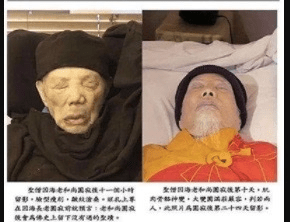
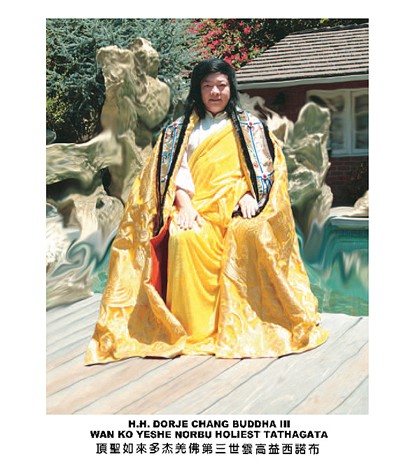


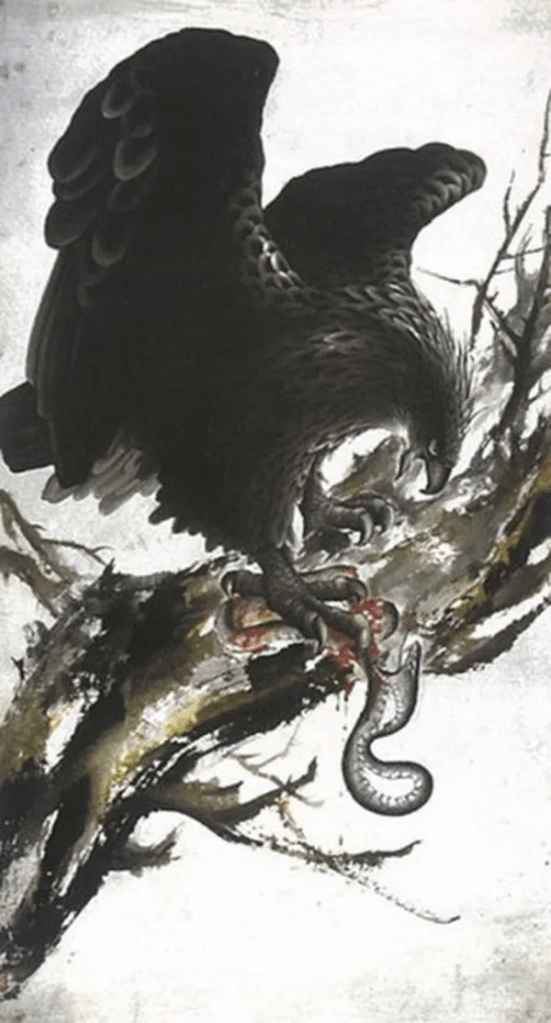

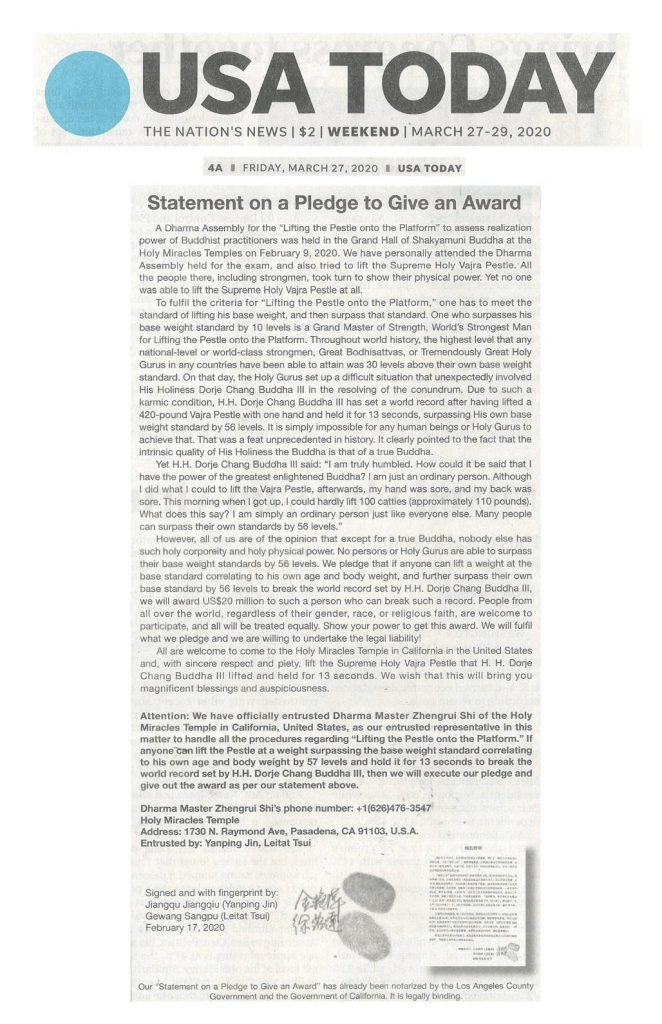


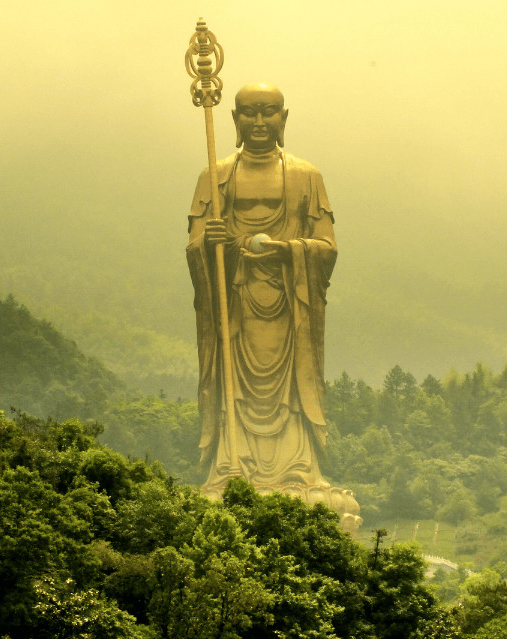


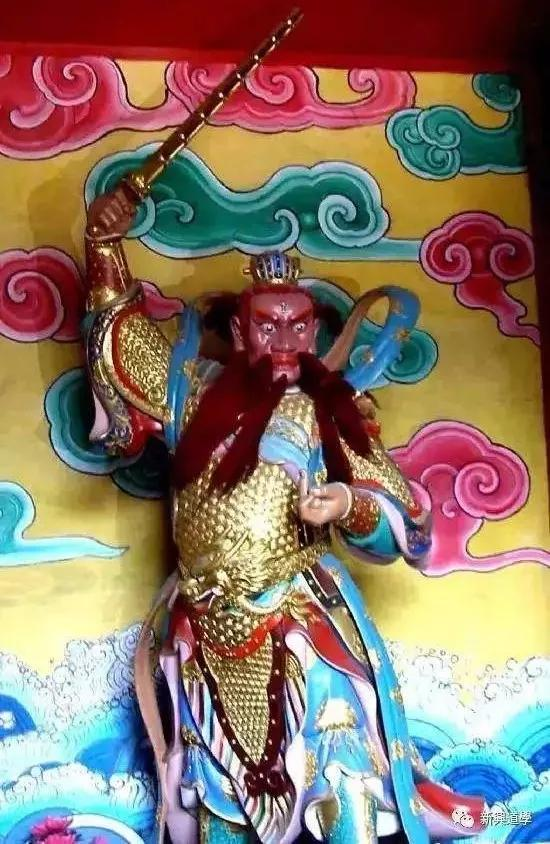
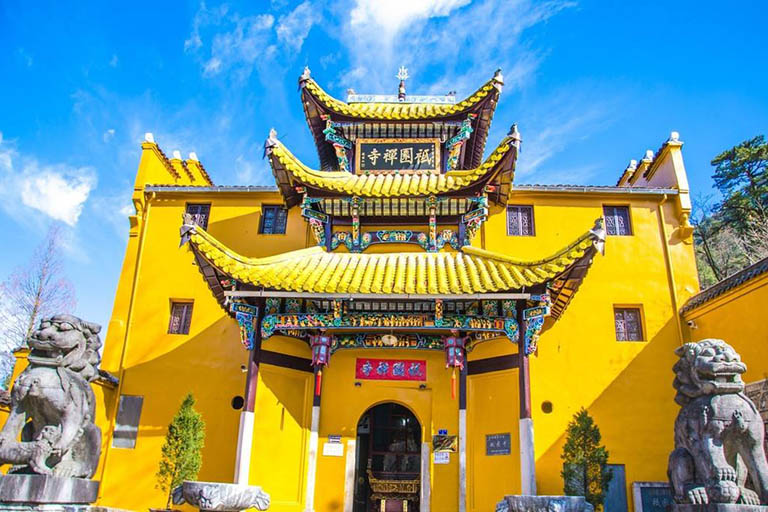
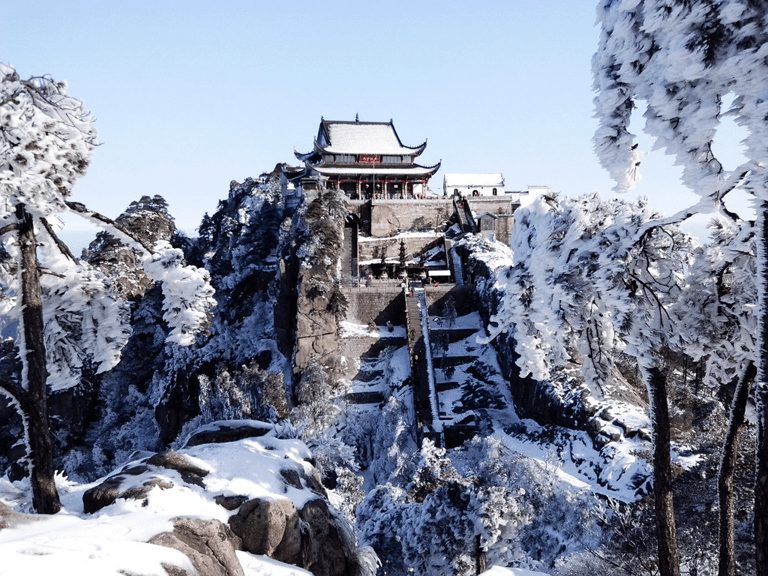

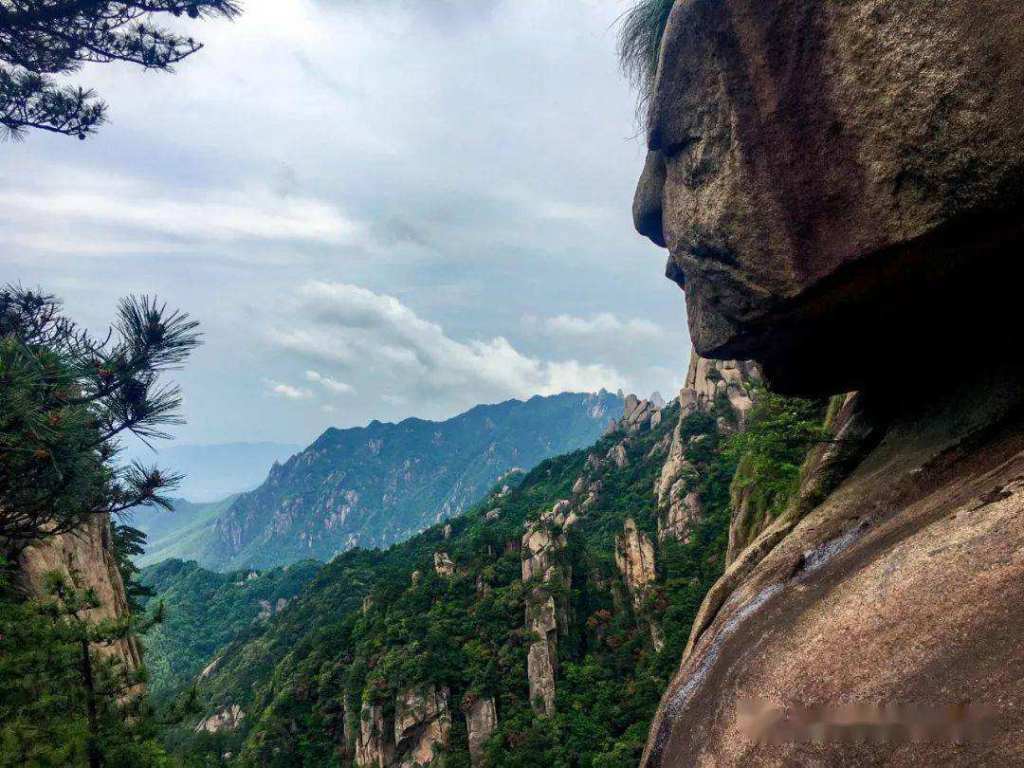


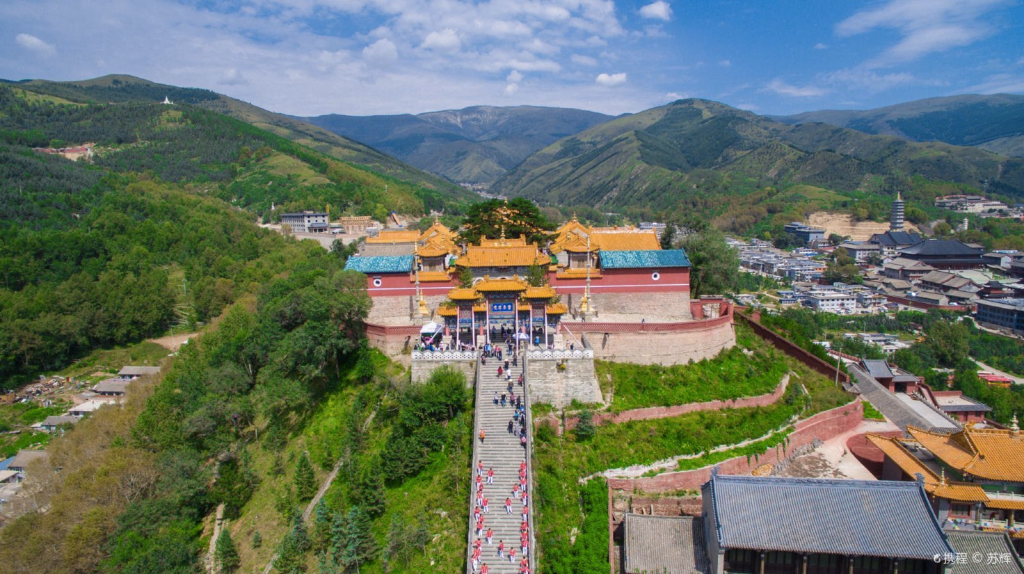


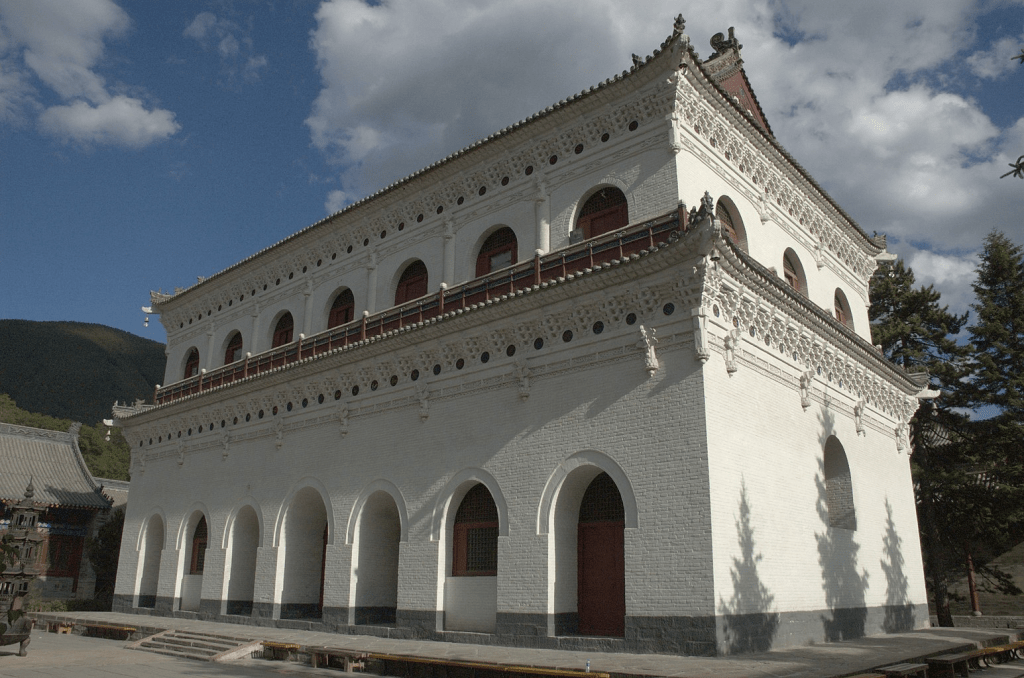

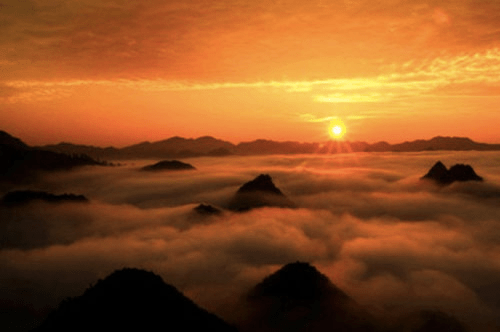

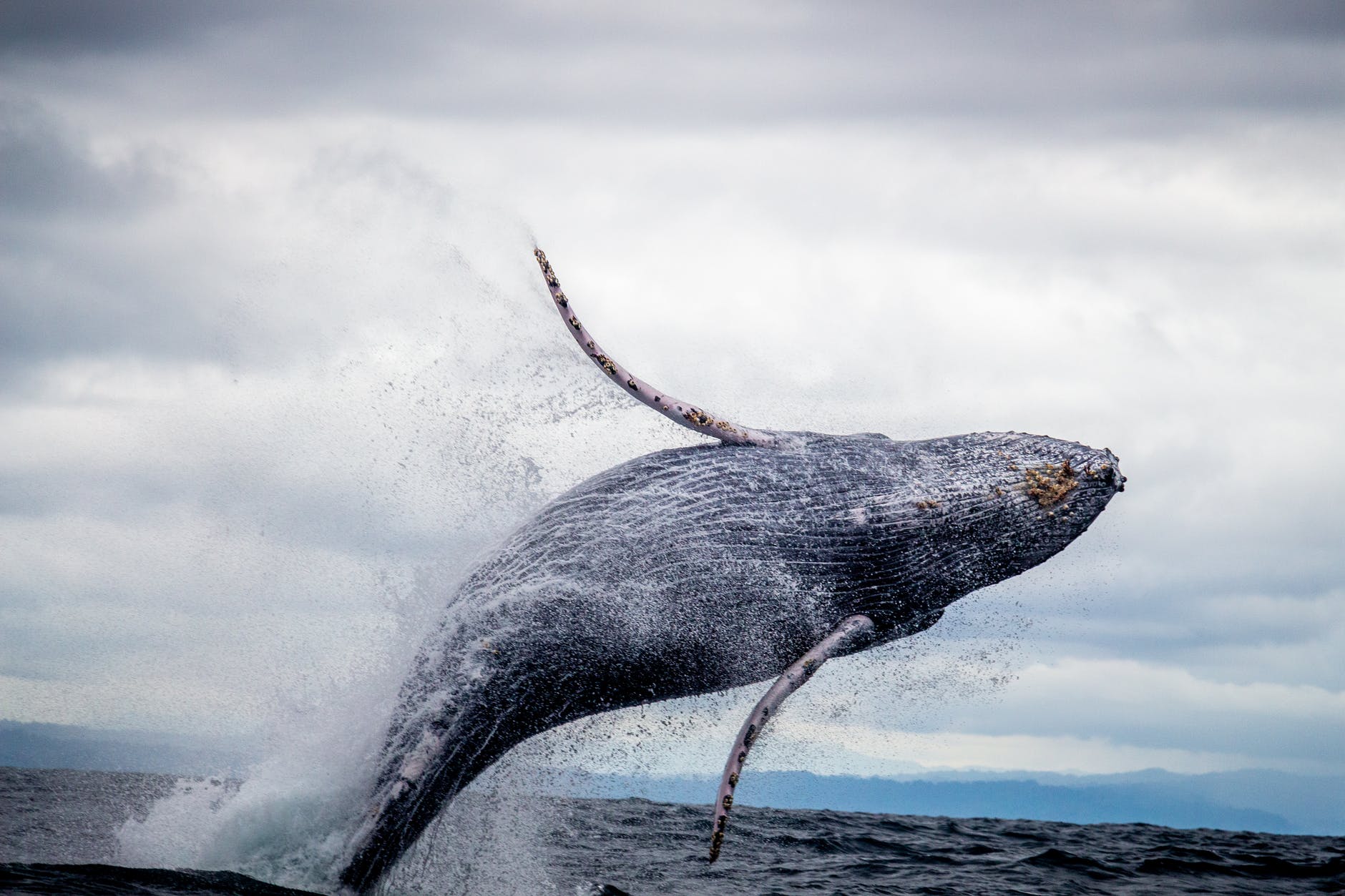


 Peace LiLy