Once upon a time, in the country of Gandhara in northern India, there was a city called Takkasila. In that city the Enlightenment Being was born as a certain calf. Since he was well bred for strength, he was bought by a high class rich man. He became very fond of the gentle animal, and called him ‘Delightful’. He took good care of him and fed him only the best.
When Delightful grew up into a big fine strong bull, he thought, “I was brought up by this generous man. He gave me such good food and constant care, even though sometimes there were difficulties. Now I am a big grown-up bull and there is no other bull who can pull as heavy a load as I can. Therefore, I would like to use my strength to give something in return to my master.”
So he said to the man, “Sir, please find some wealthy merchant who is proud of having many strong bulls. Challenge him by saying that your bull can pull one- hundred heavily loaded bullock carts.”
Following his advice, the high class rich man went to such a merchant and struck up a conversation. After a while, he brought up the idea of who had the strongest bull in the city.
The merchant said, “Many have bulls, but no one has any as strong as mine.” The rich man said, “Sir, I have a bull who can pull one hundred heavily loaded bullock carts.” “No, friend, how can there be such a bull? That is unbelievable!” said the merchant. The other replied, “I do have such a bull, and I am willing to make a bet.”
The merchant said, “I will bet a thousand gold coins that your bull cannot pull a hundred loaded bullock carts.” So the bet was made and they agreed on a date and time for the challenge.
The merchant attached together one-hundred big bullock carts. He filled them with sand and gravel to make them very heavy.
The high class rich man fed the finest rice to the bull called Delightful. He bathed him and decorated him and hung a beautiful garland of flowers around his neck.
Then he harnessed him to the first cart and climbed up onto it. Being so high class, he could not resist the urge to make himself seem very important. So he cracked a whip in the air, and yelled at the faithful bull, “Pull, you dumb animal! I command you to pull, you big dummy!”
The bull called Delightful thought, “This challenge was my idea. I have never done anything bad to my master, and yet he insults me with such hard and harsh words!” So he remained in his place and refused to pull the carts.
The merchant laughed and demanded his winnings from the bet. The high class rich man had to pay him the one thousand gold coins. He returned home and sat down, saddened by his lost bet, and embarrassed by the blow to his pride.
The bull called Delightful grazed peacefully on his way home. When he arrived, he saw his master sadly lying on his side. He asked, “Sir, why are you lying there like that? Are you sleeping? You look sad.” The man said, I lost a thousand gold coins because of you. With such a loss, how could I sleep?”
The bull replied. “Sir, you called me ‘dummy’. You even cracked a whip in the air over my head. In all my life, did I ever break anything, step on anything, make a mess in the wrong place, or behave like a ‘dummy’ in any way?” He answered, “No, my pet.”
The bull called Delightful said, “Then sir, why did you call me ‘dumb animal’, and insult me even in the presence of others? The fault is yours. I have done nothing wrong. But since I feel sorry for you, go again to the merchant and make the same bet for two thousand gold coins. And remember to use only the respectful words I deserve so well.”
Then the high class rich man went back to the merchant and made the bet for two-thousand gold coins. The merchant thought it would be easy money. Again he set up the one hundred heavily loaded bullock carts. Again the rich man fed and bathed the bull, and hung a garland of flowers around his neck.
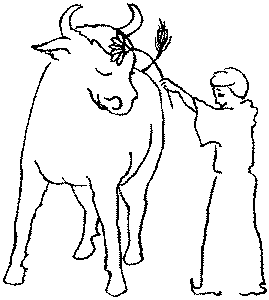
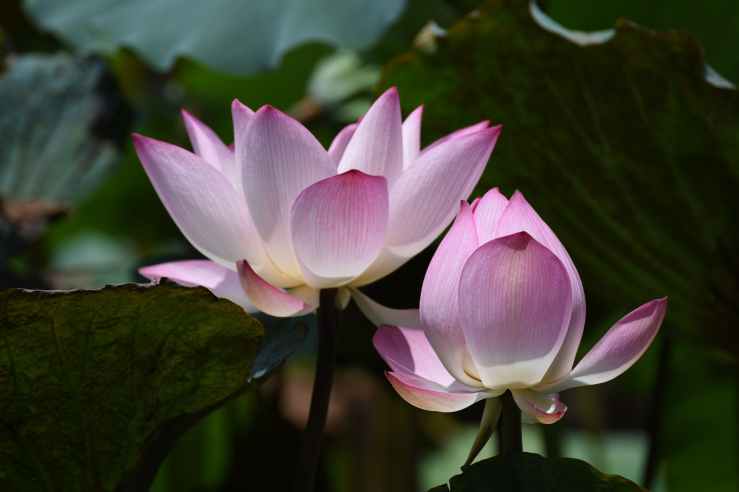
When all was ready, the rich man touched Delightful’s forehead with a lotus blossom, having given up the whip. Thinking of him as fondly as if he were his own child, he said, “My son, please do me the honour of pulling these one hundred bullock carts.”
Lo and behold, the wonderful bull pulled with all his might and dragged the heavy carts, until the last one stood in the place of the first.
The merchant, with his mouth hanging open in disbelief, had to pay the two thousand gold coins. The onlookers were so impressed that they honoured the bull called Delightful with gifts. But even more important to the high class rich man than his winnings, was his valuable lesson in humility and respect.
The moral is: Harsh words bring no reward. Respectful words bring honor to all.
Before the time of this story, people in Asia used to say that there would never be a time when an elephant and a dog would be friends. Elephants simply did not like dogs, and dogs were afraid of elephants.
When dogs are frightened by those who are bigger than they are, they often bark very loudly, to cover up their fear. When dogs used to do this when they saw elephants, the elephants would get annoyed and chase them. Elephants had no patience at all when it came to dogs. Even if a dog were quiet and still, any nearby elephant would automatically attack him. This is why everybody agreed that elephants and dogs were ‘natural enemies’, just like lions and tigers, or cats and mice.
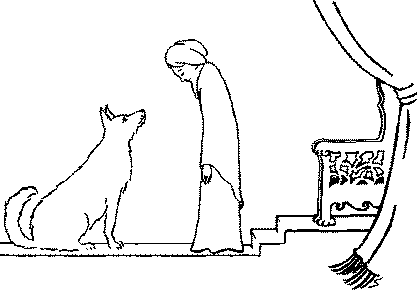
Once upon a time, there was a royal bull elephant, who was very well fed and cared for. In the neighbourhood of the elephant shed, there was a scrawny, poorly fed, stray dog. He was attracted by the smell of the rich sweet rice being fed to the royal elephant. So he began sneaking into the shed and eating the wonderful rice that fell from the elephant’s mouth. He liked it so much, that soon he would eat nowhere else. While enjoying his food, the big mighty elephant did not notice the tiny shy stray dog.
By eating such rich food, the once underfed dog gradually got bigger and stronger and became very handsome looking. The good-natured elephant began to notice him. Since the dog had gotten used to being around the elephant, he had lost his fear. So he did not bark at him. Because he was not annoyed by the friendly dog, the elephant gradually got used to him.
Slowly they became friendlier and friendlier with each other. Before long, neither would eat without the other, and they enjoyed spending their time together. When they played, the dog would grab the elephant’s heavy trunk, and the elephant would swing him forward and backward, from side to side, up and down, and even in circles! So it was that they became ‘best friends’, and wanted never to be separated.
Then one day a man from a remote village, who was visiting the city, passed by the elephant shed. He saw the frisky dog, who had become strong and beautiful. He bought him from the mahout, even though he didn’t really own him. He took him back to his home village, without anyone knowing where that was.
Of course, the royal bull elephant became very sad, since he missed his best friend the dog. He became so sad that he didn’t want to do anything, not even eat or drink or bathe. So the mahout had to report this to the king, although he said nothing about selling the friendly dog.
It just so happened that the king had an intelligent minister who was known for his understanding of animals. So he told him to go and find out the reason for the elephant’s condition.
The wise minister went to the elephant shed. He saw at once that the royal bull elephant was very sad. He thought, “This once happy elephant does not appear to be sick in any way. But I have seen this condition before, in men and animals alike. This elephant is grief-stricken, probably due to the loss of a very dear friend.”
Then he said to the guards and attendants, “I find no sickness. He seems to be grief-stricken due to the loss of a friend. Do you know if this elephant had a very close friendship with anyone?”
They told him how the royal elephant and the stray dog were best friends. “What happened to this stray dog?” asked the minister. He was taken by an unknown man,” they replied, “and we do not know where he is now.”
The minister returned to the king and said, “Your majesty, I am happy to say your elephant is not sick. As strange as it may sound, he became best friends with a stray dog! Since the dog has been taken away, the elephant is grief-stricken and does not feel like eating or drinking or bathing. This is my opinion.”
The king said, “Friendship is one of life’s most wonderful things. My minister, how can we bring back my elephant’s friend and make him happy again?”
“My lord,” replied the minister, “I suggest you make an official announcement, that whoever has the dog who used to live at the royal elephant shed, will be fined.”
This was done, and when the villager heard of it, he released the dog from his house. He was filled with great happiness and ran as fast as he could, straight back to his best friend, the royal bull elephant.
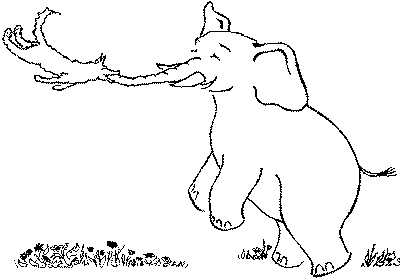
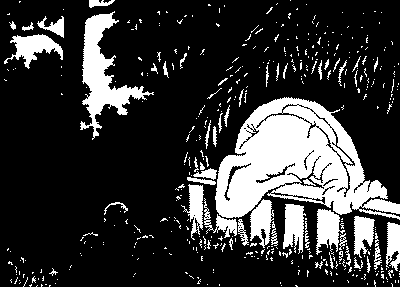
The elephant was so overjoyed, that he picked up his friend with his trunk and sat him on top of his head. The happy dog wagged his tail, while the elephant’s eyes sparkled with delight. They both lived happily ever after.
Meanwhile, the king was very pleased by his elephant’s full recovery. He was amazed that his minister seemed to be able to read the mind of an elephant. So he rewarded him appropriately.
The moral is: Even ‘natural enemies’ can become ‘best friends.’
Once upon a time there was a world famous teacher in Takkasila, in north-western India. He had 500 high class students who learned sacred teachings from him.
It just so happened that one of these high class students had been named ‘Bad’ by his parents. One day he thought, “When I am told, ‘Come Bad’, ‘Go Bad’, ‘Do this Bad’. it is not nice for me or others. It even sounds disgraceful and unlucky.”
So he went to the teacher and asked him to give him a more pleasant name, one that would bring good fortune rather than bad. The teacher said, “Go. my son, go wherever you like and find a more fortunate name. When you return, I will officially give you your new name.”
The young man named Bad left the city, and traveled from village to village until he came to a big city. A man had just died and Bad asked what his name was. People said. “His name was Alive.” “Alive also died?” asked Bad. The people answered, “Whether his name be Alive or whether it be Dead, in either case he must die. A name is merely a word used to recognize a person. Only a fool would not know this!” After hearing this, Bad no longer felt badly about his own name – but he didn’t feel good about it either.
As he continued on his way into the city, a debt-slave girl was being beaten by her masters in the street. He asked, “Why is she being beaten?” He was told, “Because she is a slave until she pays a loan debt to her masters. She has come home from working, with no wages to pay as interest on her debt.” “And what is her name?” he asked. “Her name is Rich.” they said. “By her name she is Rich. but she has no money even to pay interest?” asked Bad. They said, ‘Whether her name be Rich or whether it be Poor, in either case she has no money. A name is merely a word used to recognize a person. Only a fool would not know this!” After hearing this, Bad became even less interested in changing his name.
After leaving the city, along the roadside he met a man who had lost his way. He asked him, “What is your name? ” He replied, ‘My name is Tourguide.” “You mean to say that even a Tourguide has gotten lost?” asked Bad. Then the man said, “Whether my name be Tourguide or whether it be Tourist, in either case I have lost my way. A name is merely a word used to recognize a person. Only a fool would not know this!”
Now completely satisfied with his own name, Bad returned to his teacher.
The world famous teacher of Takkasila asked him, “How are you, my son? Have you found a good name?” He answered, “Sir, those named Alive and Dead both die, Rich and Poor may be penniless, Tourguide and Tourist can get lost. Now I know that a name is merely a word used to recognize a person. The name does not make things happen, only deeds do. So I’m satisfied with my name. There’s no point in changing it.”
The teacher summarized the lesson his pupil had learned this way – “By seeing Alive as dead, Rich as poor, Tourguide as lost, Bad has accepted himself.”
The moral is: “A rose by any other name would smell as sweet.”
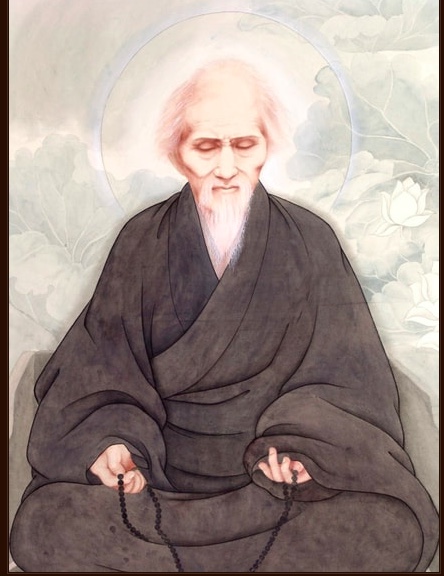
Master Xu Yun was a renowned Zen Buddhist Holy monk, and was one of the most influential Buddhist Masters of the late 19th and 20th centuries.
Master Xu Yun renounced himself at nineteen years old, and passed away when he was one hundred and twenty years old. He had hundreds of thousands of disciples and a great many legendary stories. One time he tamed a general in Yunnan province using his extraordinary wisdom and bravery.
Master Xu Yun
General Li Genyuan was the commander of the Yunnan New Army at that time. He had studied overseas in Germany before returning to China and was a young and energetic general. He regarded himself a strong believer of science and perceived Buddhism as superstition. He wanted very much to have Buddhism removed. Because of that, he came up with the excuse that there were tens of thousands of monks in Mount Jizhu and they might organize armed resistance. Therefore, he personally led his troops to Mount Jizhu. On their way, the several thousands of officers and soldiers were demolishing temples and arresting monks.
When Elder Monk Xu Yun, abbot of Zhu Sheng Temple in Mount Jizhu, heard about this, he decided to come down from the mountain in person to persuade Li Genyuan to stop. When Li Genyuan saw this thin yet spirited elder monk who had his long beard hanging down, noticing Xu Yun’s uncommon grace and peaceful and calm manner, he was spontaneously startled, “Oh! This is Xu Yun. He does have a little uncommon demeanor!”
Li Genyuan harshly shouted, “I want to catch you. Now you even dare send yourself to me! Maybe you label yourself as not fearing death. Let me ask you, how many lives do you have?”
Xu Yun kept his head up and replied calmly, “Great Commander, I, Xu Yun, have only one life. Also, I am not any hero or brave man who does not fear death. I am just a monastic person. Today, I do not shy away from your killing weapons and risk my death to meet you, Great Commander. My purpose is to beseech an order from you, Great Commander, to save Buddhism. I ask you, Great Commander, to immediately stop demolishing temples and destroying Buddhism.”
“Are you really not afraid of death?” Li Genyuan had a cold smile.
Xu Yun did not have the slightest fear on his face and smiled gently and calmly, “I, Xu Yun, have made up my determination to die for Buddhism long ago. If, before my death, you, Great Commander, can give me an opportunity to state my cause clearly and stop doing damages to Buddhism in the future, I am willing to die.”
Li Genyuan spoke coldly, “You answer me first. You kept saying wanting to die for Buddhism and tell me not to destroy Buddhism. Let me ask you. What benefit does Buddhism have?”
Xu Yun replied with a smile, “The Buddha established Buddhism to advocate great love and great compassion, serve the world and benefit the population, and broadly save living beings from suffering and hardship. Buddhism persuade and transform people in the world to do goodness and remove evil, cultivate conduct and virtue, and save oneself as well as others. Buddhism first teaches people to cure their minds. The mind is the source and origin of all afflictions. Once the origin is correct, all things can be in serenity and peace will be everywhere. The world will be calm and peaceful.”
Li Genyuan’s face turned a little milder, “I admit that you have good eloquence of debate. However, what is the use of these statues sculpted with mud and carved from wood? These statues lead people into superstition for nothing!”
Xu Yun stated calmly, solemnly, and respectfully, “The Buddha spoke about the appearance of Buddha-dharma. The appearance is to express the dharma. Not expressing with appearance, the dharma cannot be publicized. The Buddha statues made of sculptures are to symbolize the Buddha’s solemn elegance and loving compassion, to let people generate homage, confidence, and respectful fear from viewing. Without respectful fear in mind, people will do all kinds of malicious acts, thereby creating calamities and upheavals. Even if we just talk about customs in the world, examples are Confucius’ statue in his temple at Mount Ni, an ancient person named Ding Lan carved wood statues of his parents to repent for not being filial enough earlier, worshipping ancestors in ancestral temples by all clans in China, and bronze statues seen in all Western countries. All are for the purpose of letting people view and generate respect and faith. Buddha statues are sculpted with mud and carved from wood. However, what we respect and pay homage to are not the materials of earth and wood. Rather, we respect and pay homage to the symbolized Buddhas and Bodhisattvas with great love and great compassion. As a result, thoughts of all kinds can develop in the mind to induce us to save ourselves and save others. The enthusiasm of respect and faith arises from seeing Buddha statues. The merit and effect are inconceivable!”
Li Genyuan nodded, “It does sound reasonable, hearing what you said. However, my mind does not submit to that. You monks talk about cause and effect and talk about samsara (transmigration). These superstitious views and concepts are elusive without bases in science. I studied science and military in the West. I despise these old superstitions the most. That is why I am determined to uproot them. I would like to hear how you can skillfully argue about that.”
Xu Yun smiled, “First, I need to explain what superstition is. The so-called superstition refers to blindly following and obeying without clearly understanding the truth and knowing the ultimate reason and, moreover, without distinguishing good or bad and upright from evil. Examples are, killing people to sacrifice for evil deities, slaughtering cattle, sheep, chicken, duck, or other lives to worship ghosts and gods, presenting gold and silver to bribe and beg ghosts and gods for blessing wealth, engaging in sexual misconduct to please demonic ghosts and demonic deities, using ghosts and deities as excuses to raise money with selfish purposes, mocking ghosts and deities to carry out despicably intolerable malicious conduct or direct people to do things violating loyalty, trust, and benevolence, teaching people to steal, rape, and kill, teaching people to commit fraud and extortion, and encouraging cruelty and disorder. All acts of these types belong to superstition! If a faith teaches people with loyalty, filial act, benevolence, and love, advocates faith, trust, and peace, praise and spread etiquette, firmly cultivate humility, promote great love and great compassion of Buddhism, broadly save living beings to leave suffering and hardship to arrive at bliss and peace, teach people in the world to help and support each other with loving compassion, use loving compassion, benevolence, and virtue to teach and transform the world, pursue goodness and break away from malicious deeds, and take refuge in correct teaching and abandon evil dogmas, how can superstition come from such correct faith and correct wisdom?”
Li Genyuan quietly listened and the cruel and offending expression on his face gradually disappeared. He said, “Elder Monk, these statements are truly reasonable! However, you did not explain cause and effect and samsara clearly. These do not agree with science!”
Xu Yun said, “The so-called science is the accumulation and investigation of the wisdom and knowledge of humanity. The approach is inheriting from the past and developing the future, knowing the past to probe the future, and using what is known to investigate and validate the unknown. The learning from such investigation and validation never stops or stays at the same place. People must quest and probe incessantly. Only that is the true spirit of science! The scientific knowledge at the current time is of course greatly advanced from that of the ancient and middle ages. However, does that mean there is nothing unknown already? Does that mean we have completely understood all subtleties and secrets of the universe?”
Li Genyuan said, “Of course we have not been able to do that yet.”
Xu Yun smiled, “Sutras of Buddhism already studied the genuine knowledge exhaustively several thousand years ago. It has been known that the universe never ends through all lifetimes. Matters in existence will annihilate and will be reborn after annihilation, in different shape and state. It is just a process of transforming between different form bodies. On the other hand, only in the current era, Western scientists stated the law of matter’s conservation. Buddhist sutras stated the world’s continuity and living beings’ continuity long ago. These agree completely with the law of physics of the universe. Why do you say the concept of samsara is not scientific?”
Li Genyuan asked, “What do these have to do with samsara and cause and effect?”
Xu Yun said, “The law of cause and effect is the law and principle governing the cycle of the universe! All things must first have the causes of birth and annihilation and then have the consequences. This is the cycle from the law of cause and effect! All sentient beings have wisdom and power of consciousness. After the death of the physical body, the power of consciousness still exists, which is the soul that worldly people talk about. A person who cultivates, practices, and carries out good conduct has a concentrated mind and calmed spirit and knows to go toward goodness and avoid calamity by instinct. Focusing the mind to chant Amitabha Buddha’s name will let one to know about going to the World of Ultimate Bliss. If this person practices good conduct, Buddhas and Bodhisattvas will naturally come to receive him. Conversely, if a person has done a lot of malicious acts and evil deeds and has a surly, hostile, and unkind mind nature, then his conscience is closed and his wisdom is also all lost. That means his power of consciousness and soul also got lost. Moreover, because he does not know chanting the Buddha’s name, he will naturally devolve. With a muddled head and not knowing the direction, he can only follow his karmas to transmigrate and cannot get out. Consequently, he has to suffer life after life and also has to pay back for his earlier malicious acts. This is the law and principle of the universe. Things all have coming and going and undergo the never-ending cycle. What is unscientific in the law of cause and effect and samsara?”
Hearing this, Li Genyuan was horrified. He was sweating all over but felt chilling to the bone. He was extremely moved and said sincerely, “Elder Master Xu, hearing this speech from you is more beneficial than studying in school for ten years to me, your disciple! I, your disciple, studied overseas in the West and only learned some skin-deep and hair-thin science. I really do not know the profound principles of the universe and even absurdly wanted to destroy Buddhism! From listening to your teaching and discourse, I am now completely clear. I ask you, Elder Master Xu, to allow me to take refuge before you to become a Buddhist disciple!”
Xu Yun smiled, “Great Commander, please get up. Since you, Great Commander, have become clear and have the determination to believe in Buddhism, this shows you, Great Commander, still has a very deep root of goodness and can realize the truth quickly. However, please first develop more opportunities to get close to Buddha-dharma and let real faith develop in your mind and become firm and unmovable, the matter of taking refuge can be talked about after that.”
Li Genyuan immediately said, “Elder Master Xu, please do not call me, your disciple, great commander anymore. Even though you, Elder Master Xu, do not want to accept me as your disciple today, I, your disciple, have already submitted to you in my mind. Please call me by name directly.”
In that evening, Li Genyuan gave the order to light up candles to talk with Xu Yun at night about the principles of Buddhism. From the clear manifestation of the law of cause and effect to the inter-webbed net of karmas, consequences of karmas and karmic conditions, the continuity of the world, the continuity of living beings, and other fundamental principles of Buddhism, and to the profound axioms in Buddhist sutras, Xu Yun introduced the profundity of the universe. Li Genyuan was completely convinced and had full admiration. They spoke until after midnight and were very high-spirited.
Li Genyuan sighed, “Without hearing Elder Master Xu’s earnest teaching and explanation today, I really do not know the fact that the principles of Buddhism and Buddha-dharma are so broad, great, and profound. I now have the complete faith and submission! I am determined to take refuge in Buddha-dharma.”
The next morning, Li Genyuan personally guarded Xu Yun to return to the temple. Wearing his military uniform indicating a general’s rank, Li Genyuan led the horse in person. Xu Yun, who was 72 years old, was sitting on the horse. They slowly walked to the temple’s gate. Behind them were several dozens of horse-riding guarding officers. With the shining Sun, golden light appeared from the mountain. Starting from the mountain top and coming downward, trees and grasses were covered with golden color. The scene of the entire mountain shining golden light was extremely splendid and solemn.
Once upon a time the Bodhisattva – the Enlightenment Being – was born into a high class family in northern India. When he grew up he gave up the ordinary desires of the everyday world and became a holy man. He went to the Himalayan Mountains where 500 other holy men became his followers.
He meditated throughout his long life. He gained supernatural powers – like flying through the air and understanding people’s thoughts without their speaking. These special powers impressed his 500 followers greatly.
One rainy season, the chief follower took 250 of the holy men into the hill country villages to collect salt and other necessities. It just so happened that this was the time when the master was about to die. The 250 who were still by his side realized this. So they asked him, “Oh most holy one, in your long life practicing goodness and meditation, what was your greatest achievement?”
Having difficulty speaking as he was dying, the last words of the Enlightenment Being were, “No Thing.” Then he was reborn in a heaven world.
Expecting to hear about some fantastic magical power, the 250 followers were disappointed. They said to each other. “After a long life practicing goodness and meditation. our poor master has achieved ‘nothing’.” Since they considered him a failure, they burned his body with no special ceremony, honors, or even respect.
When the chief follower returned he asked, “Where is the holy one?” “He has died,” they told him. “Did you ask him about his greatest achievement?” “Of course we did,” they answered. “And what did he say?” asked the chief follower. “He said he achieved ‘nothing’,” they replied, “so we didn’t celebrate his funeral with any special honors.”
Then the chief follower said, “You brothers did not understand the meaning of the teacher’s words. He achieved the great knowledge of ‘No Thing’. He realized that the names of things are not what they are. There is what there is, without being called ‘this thing’ or ‘that thing’. There is no ‘Thing’.” In this way the chief follower explained the wonderful achievement of their great master, but they still did not understand.
Meanwhile, from his heaven world, the reborn Enlightenment Being saw that his former chief follower’s words were not accepted. So he left the heaven world and appeared floating in the air above his former followers’ monastery. In praise of the chief follower’s wisdom he said, “The one who hears the Truth and understands automatically, is far better off than a hundred fools who spend a hundred years thinking and thinking and thinking.”
By preaching in this way, the Great Being encouraged the 500 holy men to continue seeking Truth. After lives spent in serious meditation, all 500 died and were reborn in the same heaven world with their former master.
At the time of the ancient living Buddha, there was an old beggar woman called by the name “Relying on Joy.” She would watch the kings, prince, and common peoples make offerings to the Buddha and his disciples. There was nothing she would have liked more than to be able to do the same. One day she went out begging, but at the end of a whole day all she had was one small coin. She took it to the oil-merchant to try to buy some oil. He told her that she could not possibly buy anything with so little money. But when he heard that she wanted the oil to make an offering to Buddha, he took pity on her and gave her the oil she wanted.
The beggar woman took the oil to the monastery, where she lit a lamp. She placed it before the Buddha, and made this wish: “I have nothing to offer but this tiny lamp. But through this offering, in the future may I be blessed with the lamp of wisdom. May I free all beings from their darkness. May I purify all their obstructions and lead them to enlightenment.” Over time that night, the oil on all the other lamps went out. But the beggar woman’s lamp was still burning at dawn, when the Buddha’s disciple Maudgalyayana came to collect all the lamps. When he saw that one was still alight, full of oil and with a new wick, he thought: “ There is no reason why this lamp should still be burning in the day time.” And he tried to blow it out.
But it kept on burning. He tried to snuff it out with his fingers, but it stayed alight. He tried to smother it with his robe, but it still burned on. The Buddha had been watching all along, and said: “ Maudgalyayana, do you want to put out that lamp? You cannot. You cannot even move it, let alone put it out. If you were to pour the water from all of the oceans of this world over this lamp, it still wouldn’t go out. The water in all the rivers and lakes of the world could not extinguish it. Why? Because this lamp was offered with devotion and with purity of heart and mind. And that motivation has made it of tremendous benefit.” When the Buddha had said this, the beggar woman approached him, and he made a prophesy that in the future she would become a perfect buddha, called: “Light of the Lamp.”
In our own lives, we must remember that it is the source of our motivation that determines the significance of our deeds. After all, it is easier for a rich man to give than for a poor man to give the same amount. It is difficult to give something of immense value, or if that something is everything you have, just to help someone who is more in need. You can help someone, but maybe in the back of your mind you are thinking: If I help him, I will reap some benefits from this myself. Or you can help someone, knowing that you are giving your time, energy or possessions without any expectation of benefiting yourself. The latter should be our motivation. Remember: it is not only actions that demonstrate the good that we do, but the motivation behind our actions.
Once upon time, the King of Benares had a royal bull elephant who was kind, patient and harmless. Along with his sweet disposition, he had a lovely gentle face. So he was affectionately known as ‘Ladyface’.
One night, a gang of robbers met together just outside the elephant shed. In the darkness they talked about their plans for robbing people. They spoke of beating and killing, and bragged that they had given up ordinary goodness so they would have no pity on their victims. They used rough he-man type gutter language, intended to scare people and show how tough they were.
Since the nights were quiet, Ladyface had nothing else to do but listen to all these terrible plans and violent rough talk. He listened carefully and, as elephants do, remembered it all. Having been brought up to obey and respect human beings, he thought these men were also to be obeyed and respected, even as teachers.
After this went on for several nights, Ladyface decided that the correct thing to do was to become rough and cruel. This usually happens to one who associates with those of a low-minded cruel nature. It happens especially to a gentle one who wishes to please others.
A ‘mahout’ is what the Indians call the special trainer and caretaker of a particular elephant. They are usually very close. Early one morning, Ladyface’s mahout came to see him as usual. The elephant, his mind filled with the night’s robber-talk, suddenly attacked his mahout. He picked him up in his trunk, squeezed the breath out of him, and smashed him to the ground, killing him instantly. Then he picked up two other attendants, one after another, and killed them just as ferociously.
Word spread quickly through the city that the once adored Ladyface had suddenly gone mad and become a frightening man-killer. The people ran to the king for help.
It just so happened that the king had an intelligent minister who was known for his understanding of animals. So he called for him and asked him to go and determine what sickness or other condition had caused his favorite elephant to become so insanely violent.
This minister was the Bodhisatta, the Enlightenment Being. Arriving at the elephant shed, he spoke gentle soothing words to Ladyface, and calmed him down. He examined him and found him in perfect physical health. As he spoke kindly to Ladyface, he noticed that the elephant perked up his ears and paid very close attention. It was almost as if the poor animal were starved for the sound of gentle words. So the understanding minister figured out that the elephant must have been hearing the violent words or seeing the violent actions of those he mistook for teachers.
He asked the elephant guards, “Have you seen anyone hanging around this elephant shed, at night or any other time?” “Yes, minister,” they replied, “for the last couple of weeks a gang of robbers has been meeting here. We were afraid to do anything, since they were such mean rough characters. Ladyface could hear their every word.”
The minister returned immediately to the king. He said, “My lord king, your favourite elephant, Ladyface, is in perfect physical health. I have discovered that it was by hearing the rough and vulgar talk of thieves during many nights, that he has learned to be violent and cruel. Unwholesome associations often lead to unwholesome thoughts and actions.”
The king asked, “What is to be done?” The minister said, “Well my lord, now we must reverse the process. We must send wise men and monks, who have a high-minded kind nature, to spend just as many nights outside the elephant shed. There they should talk of the value of ordinary goodness and patience, leading to compassion, loving-kindness and harmlessness.”
So it was carried out. For several nights the kind wise ones spoke of those wonderful qualities. They used only gentle and refined language, intended to bring peacefulness and comfort to others.
Lo and behold, hearing this pleasant conversation for several nights, Ladyface the bull elephant became even more peaceful and pleasant than before!
Seeing this total change, the minister reported it to the king, saying, “My lord, Ladyface is now even more harmless and sweet than before. Now he is as gentle as a lamb!”
The king said, “It is wonderful indeed that such a madly violent elephant can be changed by associating with wise men and monks.” He was amazed that his minister seemed to be able to read the mind of an elephant. So he rewarded him appropriately.
The moral is: As rough talk infects with violence, so do gentle words heal with harmlessness.
Buddhist Tales for Young and Old, volume 1, Prince Goodspeaker, Stories 1-50
Once upon a time, in a kingdom in India, the finest of the royal horses was taken down to the river to be bathed. The grooms took him to the same shallow pool where they always washed him.
However, just before they arrived, a filthy dirty horse had been washed in the same spot. He had been caught in the countryside and had never had a good bath in all his life.
The fine royal horse sniffed the air. He knew right away that some filthy wild horse had bathed there and fouled the water. So he was disgusted and refused to be washed at that place.
The grooms tried their best to get him into the water, but could do nothing with him. So they went to the king and complained that the fine well-trained royal stallion had suddenly become stubborn and unmanageable.
It just so happened that the king had an intelligent minister who was known for his understanding of animals. So he called for him and said, “Please go and see what has happened to my number one horse. Find out if he is sick or what is the reason he refuses to be bathed. Of all my horses, I thought this one was of such high quality that he would never let himself sink into dirtiness. There must be something wrong.”
The minister went down to the riverside bathing pool immediately. He found that the stately horse was not sick, but in perfect health. He noticed also that he was deliberately breathing as little as possible. So he sniffed the air and smelled a slight foul odour. Investigating further, he found that it came from the unclean water in the bathing pool. So he figured out that another very dirty horse must have been washed there, and that the king’s horse was too fond of cleanliness to bathe in dirty water.
The minister asked the horse grooms, “Has any other horse been bathed at this spot today?” “Yes,” they replied, “before we arrived, a dirty wild horse was bathed here.” The minister told them, “My dear grooms, this is a fine royal horse who loves cleanliness. He does not wish to bathe in dirty water. So the thing to do is to take him up river, where the water is fresh and clean, and wash him there.”
They followed his instructions, and the royal horse was pleased to bathe in the new place.
The minister returned to the king and told what had happened. Then he said, “You were correct your majesty, this fine horse was indeed of such high quality that he would not let himself sink into dirtiness!”
The king was amazed that his minister seemed to be able to read the mind of a horse. So he rewarded him appropriately.
Buddhist Tales for Young and Old, volume 1, Prince Goodspeaker, Stories 1-50
Once upon a time, King Brahmadatta ruled in Benares, in northern India. He had a mighty horse, who had been born in the land of Sindh, in the Indus River valley of western India. Indeed, this horse was the Enlightenment Being.
As well as being big and strong, he was very intelligent and wise. When he was still young, people noticed that he always seemed to know what his rider wanted before being told. So he was called Knowing-one.
He was considered the greatest of the royal horses and was given the very best of everything. His stall was decorated and was always kept clean and beautiful. Horses are usually faithful to their masters. Knowing-one was especially loyal and was grateful for how well the king cared for him. Of all the royal horses, Knowing-one was also the bravest. So the king respected and trusted him.
It came to pass that seven neighbouring kings joined together to make war on King Brahmadatta. Each king brought four great armies — an elephant cavalry, a horse cavalry, a chariot brigade and ranks of foot soldiers. Together the seven kings, with all their armies, surrounded the city of Benares.
King Brahmadatta assembled his ministers and advisers to make plans for defending the kingdom. They advised him, “Do not surrender. We must fight to protect our high positions. But you should not risk your royal person in the beginning. Instead, send out the champion of all the knights to represent you on the battlefield. If he fails, only then must you yourself go.”
So the king called the champion to him and asked, “Can you be victorious over these seven kings?” The knight replied, “If you permit me to ride out on the bravest and wisest, the great horse Knowing-one, only then can I win the battle.” The king agreed and said, “My champion, it is up to you and Knowing-one to save the country in its time of danger. Take with you whatever you need.”
The champion knight went to the royal stables. He ordered that Knowing-one be well fed and dressed in protective armor, with all the finest trimmings. Then he bowed respectfully and climbed into the beautiful saddle.
Knowing-one knew the situation. He thought, “These seven kings have come to attack my country and my king, who feeds and cares for and trusts me. Not only the seven kings, but also their large and powerful armies threaten my king and all in Benares. I cannot let them win. But I also cannot permit the champion knight to kill those kings. Then I too would share in the unwholesome action of taking the lives of others, in order to win an ordinary victory. Instead, I will teach a new way. I will capture all seven kings without killing anyone. That would be a truly great victory!”
Then the Knowing-one spoke to his rider. “Sir knight, let us win this battle in a new way, without destroying life. You must only capture each king, one at a time, and remain firmly on my back. Let me find the true course through the many armies. Watch me as you ride, and I will show you the courage that goes beyond the old way, the killing way!”
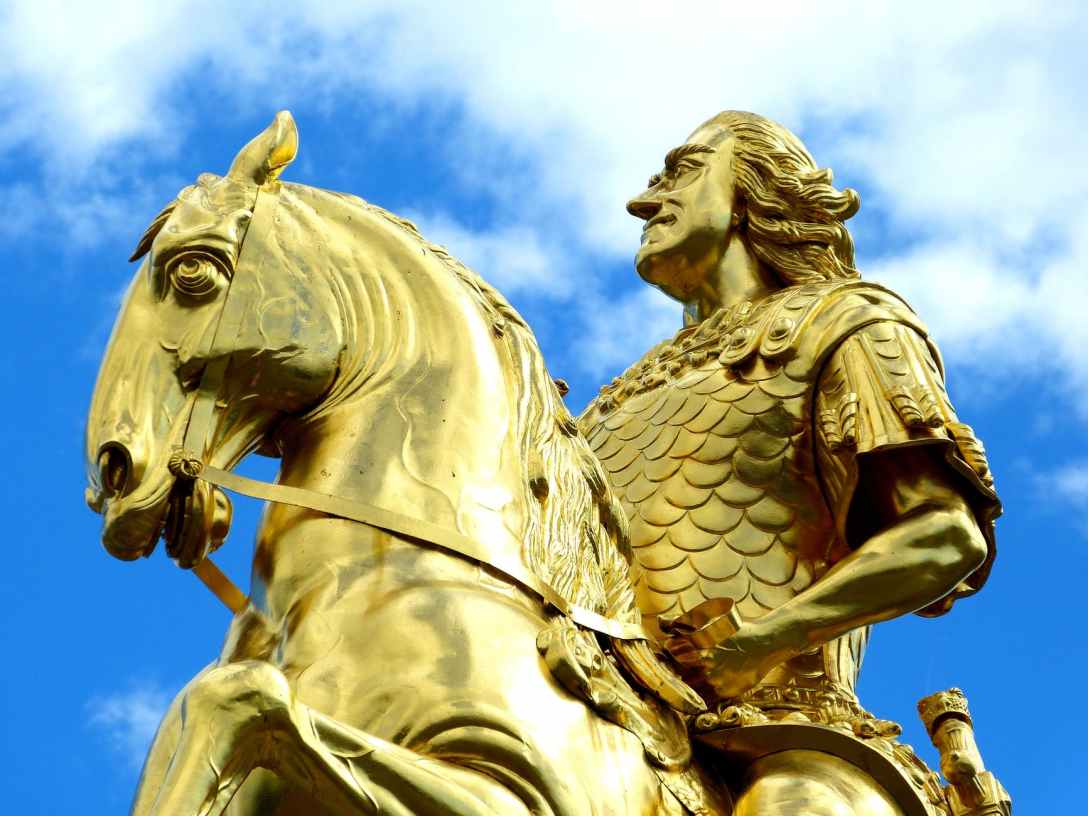
As he spoke of ‘a new way’, and ‘the true course’, and ‘the courage that goes beyond’, it seemed the noble steed became larger than life. He reared up majestically on his powerful hind legs, and looked down on all the armies surrounding the city. The eyes of all were drawn to this magnificent one. The earth trembled as his front hoofs returned to the ground and he charged into the midst of the four armies of the first king. He seemed to have the speed of lightning, the might of a hundred elephants, and the glorious confidence of one from some other world.
The elephants could remember no such horse as this, and so the elephant cavalry retreated in fear. The horses knew that this their relative was the worthy master of them all, and so the horse cavalry and the chariot brigade stood still and bowed as the Great Being passed. And the ranks of foot-soldiers scattered like flies before a strong wind.
The first king hardly knew what had happened, before he was easily captured and brought back into the city of Benares. And so too with the second, third, fourth and fifth kings.
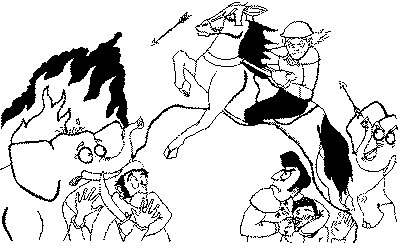
In the same way the sixth king was captured. But one of his loyal bodyguards leaped out from hiding and thrust his sword deep into the side of the brave Knowing-one. With blood streaming from the wound, he carried the champion knight and the captured sixth king back to the city.
When the knight saw the terrible wound, he suddenly became afraid to ride the weakened Knowing-one against the seventh king. So he began to dress in armour another powerful war horse, who was really just as big as Knowing-one.
Seeing this, though suffering in great pain from his deadly wound, Knowing-one thought, “This champion knight has lost his courage so quickly. He has not understood the true nature of my power — the knowledge that true peace is only won by peaceful means. He tries to defeat the seventh king and his armies in the ordinary way, riding an ordinary horse.
“After taking the first step of giving up the killing of living beings, I cannot stop part way. My great effort to teach a new way would disappear like a line drawn in water!”
The great horse Knowing-one spoke to the champion knight. “Sir knight, the seventh king and his armies are the mightiest of all. Riding an ordinary horse, even if you slaughter a thousand men and animals, you will be defeated. I, of the mighty tribe of Sindh horses, the one called Knowing-one, only I can pass through them harming none, and bring back the seventh king alive!”
The champion knight regained his courage. The brave horse struggled to his feet, in great pain. While the blood continued to flow, he reared and charged through the four armies, and the knight brought back the last of the seven warlike kings. Again all those in his path were spared from harm. Seeing their seven kings in captivity, all the armies laid down their weapons and asked for peace.
Realizing that the great horse Knowing-one would not live through the night, King Brahmadatta went to see him. He had raised him from a colt, so he loved him. When he saw that he was dying, his eyes filled with tears.
Knowing-one said, “My lord king, I have served you well. And I have gone beyond and shown a new way. Now you must grant my last request. You must not kill these seven kings, even though they have wronged you. For a bloody victory sows the seeds of the next war. Forgive their attack on you, let them return to their kingdoms, and may you all live in peace from now on.
“Whatever reward you would give to me, give instead to the champion knight. Do only wholesome deeds, be generous, honour the Truth, and kill no living being. Rule with justice and compassion.”
Then he closed his eyes and breathed his last. The king burst into tears, and all mourned his passing. With the highest honours, they burned the body of the great horse Knowing-one — the Enlightenment Being.
King Brahmadatta had the seven kings brought before him. They too honored the great one, who had defeated their vast armies without spilling a drop of blood, except his own. In his memory they made peace, and never again did these seven kings and Brahmadatta make war on each other.
The moral is: True peace is only won by peaceful means.
Once upon time, the King of Benares went to his pleasure garden in his fancy decorated chariot. He loved this chariot, mostly because of the rich hand-worked leather belts and straps.
On this occasion, he stayed in his pleasure garden all day long and into the evening. It was late when he finally got back to the palace. So the chariot was left outside in the compound all night, instead of being locked up properly.
During the night it rained heavily, and the leather got wet, swelled up, became soft, and gave off an odour. The pampered palace dogs smelled the delicious leather scent and came down into the compound. They chewed off and devoured the soft wet chariot straps. Before daybreak, they returned unseen to their places in the palace.
When the king woke up and came down, he saw that the leather had been chewed off and eaten by dogs. He called the servants and demanded to know how this happened.
Since they were supposed to watch the palace dogs, the servants were afraid to blame them. Instead, they made up a story that stray dogs, the mutts and mongrels of the city, had come into the grounds through sewers and storm drains. They were the ones who had eaten the fancy leather.
The king flew into a terrible rage. He was so overcome by anger that he decided to take vengeance against all dogs. So he decreed that whenever anyone in the city saw a dog, he was to kill him or her at once!
The people began killing dogs. The dogs could not understand why suddenly they were being killed. Later that day, they learned of the king’s decree. They became very frightened and retreated to the cemetery just outside the city. This was where their leader lived, the Dog King Silver.
Silver was king not because he was the biggest or strongest or toughest. He was average in size, with sleek silver fur, sparkling black eyes and alert pointed ears. He walked with great dignity, that brought admiration and respect from men as well as dogs. In his long life he had learned much, and was able to concentrate his mind on what is most important. So he became the wisest of all the dogs, as well as the one who cared most for the others. Those were the reasons he was king of the dogs.
In the cemetery, the dogs were in a panic. They were frightened to death. The Dog King Silver asked them why this was. They told him all about the chariot straps and the king’s decree, and the people killing them whenever they saw them.
King Silver knew there was no way to get into the well-guarded palace grounds. So he understood that the leather must have been eaten by the dogs living inside the palace.
He thought, “We dogs know that, no matter how different we may appear, somehow we are all related. So now I must make my greatest effort to save the lives of all these poor dogs, my relatives. There is no one to save them but me.”
He comforted them by saying, “Do not be afraid. I will save you all. Stay here in the cemetery and don’t go into the city. I will tell the King of Benares who are the thieves and who are the innocent. The truth will save us all.”
Before setting out, he went to a different part of the cemetery to be alone. Having practiced goodness all his life, and trained his mind, he now concentrated very hard and filled his mind with feelings of loving-kindness. He thought, “May all dogs be well and happy, and may all dogs be safe. I go to the palace for the sake of dogs and men alike. No one shall attack or harm me.”
Then the Dog King Silver began walking slowly through the streets of Benares. Because his mind was focused, he had no fear. Because of his long life of goodness, he walked with a calm dignity that demanded respect. And because of the warm glow of loving-kindness that all the people sensed, no one felt the rising of anger or any intention to harm him. Instead, they marvelled as the Great Being passed, and wondered how it could be so!
It was as if the whole city were entranced. With no obstruction, the Dog King Silver walked right past the palace guards, into the royal hall of justice, and sat down calmly underneath the king’s throne itself! The King of Benares was impressed by such courage and dignity. So when servants came to remove the dog, he ordered them to let him remain.
Then the Dog King Silver came out from under the throne and faced the mighty King of Benares. He bowed respectfully and asked, “Your majesty, was it you who ordered that all the dogs of the city should be killed?” “It was I,” replied the king. “What crime did the dogs commit?” asked the dog king. “Dogs ate my rich beautiful chariot leather and straps.” “Do you know which dogs did this?” asked King Silver. “No one knows,” said the King of Benares.
“My lord,” said the dog, “for a king such as you, who wishes to be righteous, is it right to have all dogs killed in the place of the few guilty ones? Does this do justice to the innocent ones?” The king replied, as if it made perfect sense to him, “Since I do not know which dogs destroyed my leather, only by ordering the killing of all dogs can I be sure of punishing the guilty. The king must have justice!”
The Dog King Silver paused for a moment, before challenging the king with the crucial question – “My lord king, is it a fact that you have ordered all dogs to be killed, or are there some who are not to be killed?” The king suddenly became a little uneasy as he was forced to admit, before his whole court, “It is true that most dogs are to be killed, but not all. The fine pure-breeds of my palace are to be spared.”
Then the dog king said, “My lord, before you said that all dogs were to be killed, in order to insure that the guilty would be punished. Now you say that your own palace dogs are to be spared. This shows that you have gone wrong in the way of prejudice. For a king who wishes to be righteous, it is wrong to favor some over others. The king’s justice must be unbiased, like an honest scale. Although you have decreed an impartial death to all dogs, in fact this is only the slaughter of poor dogs. Your rich palace dogs are unjustly saved, while the poor are wrongly killed!”
Recognizing the truth of the dog king’s words, the King of Benares asked, “Are you wise enough to know which dogs ate my leather straps and belts?” “Yes my lord, I do know,” said he, “it could only be your own favorite palace dogs, and I can prove it.” “Do so,” said the king.
The dog king asked to have the palace pets brought into the hall of justice. He asked for a mixture of buttermilk and grass, and for the dogs to be made to eat it. Lo and behold, when this was done they vomited up partly digested pieces of the king’s leather straps!
Then the Dog King Silver said, “My lord, no poor dogs from the city can enter the well-guarded palace compound. You were blinded by prejudice. It is your dogs who are the guilty ones. Nevertheless, to kill any living being is an unwholesome thing to do. This is because of what we dogs know, but men do not seem to know – that somehow all life is related, so all living beings deserve the same respect as relatives.”
The whole court was amazed by what had just taken place. The King of Benares was suddenly overcome by a rare feeling of humility. He bowed before the dog king and said, “Oh great king of dogs, I have never seen anyone such as you, one who combines perfect wisdom with great compassion. Truly, your justice is supreme. I offer my throne and the kingdom of Benares to you!”
The Enlightenment Being replied, “Arise my lord, I have no desire for a human crown. If you wish to show your respect for me, you should be a just and merciful ruler. It would help if you begin to purify your mind by practising the ‘Five Training Steps’. These are to give up entirely the five unwholesome actions: destroying life, taking what is not given, sexual wrong-doing, speaking falsely, and drunkenness.”
The king followed the teachings of the wise dog king. He ruled with great respect for all living beings. He ordered that whenever he ate, all dogs, those of the palace and those of the city, were to be fed as well. This was the beginning of the faithfulness between dogs and men that has lasted to this day.
The moral is: Prejudice leads to injustice, wisdom leads to justice.