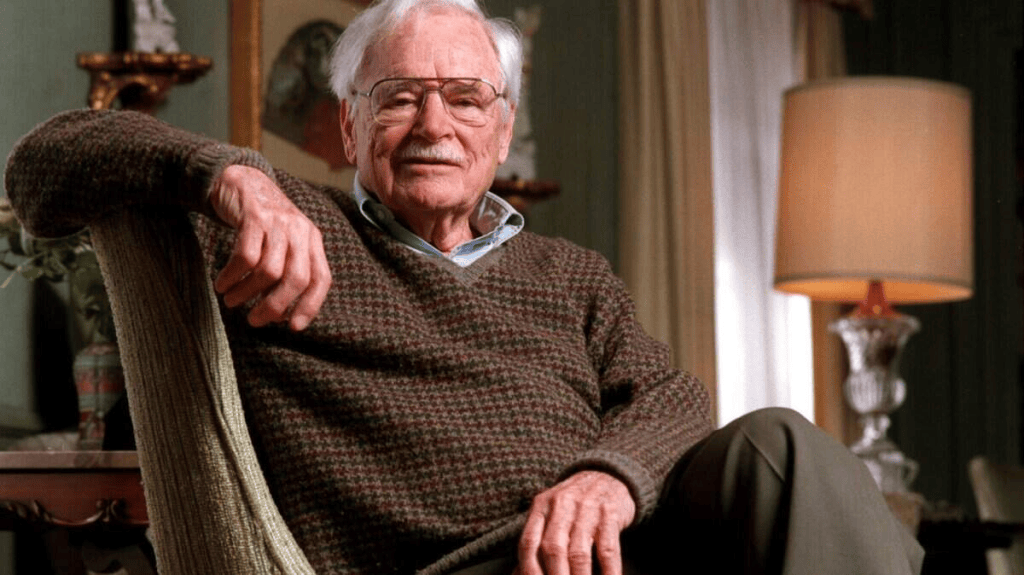
He Lost His Father at 8. What a 109-Year-Old Doctor Taught Us About Life

Charlie White was retired in 1997 when this photo was taken, but he still practiced medicine a bit, flying to Haiti on a medical mission. “It’s a doctor’s fundamental dedication to take care of people whether we get paid or not,” he told The Star at the time. Jeff Roberson The Kansas City Star


The remarkable story of Dr. Charlie White and the courage to keep moving forward

What does it take to live well—not simply to live a long life, but to remain hopeful, curious, and strong through difficult times?

Dr. Charlie White lived to be 109 years old. He experienced more than a century of enormous changes, but what fascinates me most about his life is not his age. It is how he faced adversity.

When Charlie was only eight years old, his father died suddenly in a tragic elevator accident. His father was just 42. Charlie’s mother was left a widow with five children and no job or obvious means of support. Charlie’s mother turned their home into a boardinghouse to make ends meet. She expected her children to help and gradually taught them to become independent and responsible for their own lives. Charlie later remembered that his mother had essentially put “the responsibility of life” on them. Because she believed they could manage, they learned to believe in themselves.

Something else important happened during those difficult years. Among the people who stayed in their home were medical missionaries. Meeting them helped inspire Charlie to become a doctor.

He did not allow the loss of his father to become the definition of his life.

Instead, he continued his education, entered medicine, and eventually built not one but two medical careers. He lived through the Great Depression, two world wars, enormous changes in medicine, personal losses, and many other challenges.

What strikes me most about Charlie’s story is that resilience did not mean that life stopped hurting. It meant that he continued to participate in life after the hurt.

He learned to adapt.

When medicine changed, he changed with it. When opportunities were lost, he looked for new ones. When he made mistakes, he did not seem to spend his life regretting them. He remained curious about what could come next. His biographer, David Von Drehle, described him not simply as a survivor, but as someone who learned how to thrive through change.
Sometimes we misunderstand resilience.

Being resilient does not mean that we never feel sad, afraid, or discouraged. It means that pain does not have to become the end of our story.

We may lose someone we love.

We may fail.

Our plans may suddenly change.

Someone may disappoint us.

Life may take us in a direction we never expected.

We cannot always choose the circumstances. But we can ask:

What can I do now?

That simple question can give us the strength to take the next step.

Adaptability Is a Form of Wisdom

Charlie lived through a world that changed almost beyond recognition.

Yet he continued to learn and adapt.

This is something we all need today.

The world changes quickly. Technology changes. Our circumstances change. Our bodies change. Relationships change. Sometimes even our dreams change.

Adaptability does not mean abandoning our values.

It means learning how to carry our values into new circumstances.

We can remain kind while adapting.

We can remain honest while adapting.
We can remain hopeful while adapting.

Charlie lived for 109 years, but longevity itself was not his greatest lesson.

A meaningful life is not measured only by the number of years we receive.

It is measured by how we use those years.

Can we continue learning?

Can we forgive?

Can we help others?

Can we remain curious?

Can we appreciate what we have?

Can we face uncertainty without giving up hope?

Charlie understood that life would never be perfect. Yet he continued to meet it with optimism and openness.

Perhaps that is why his story speaks to me.

When something painful happens, we can allow ourselves to grieve—but still move forward.

When circumstances change, we can adapt without losing ourselves.
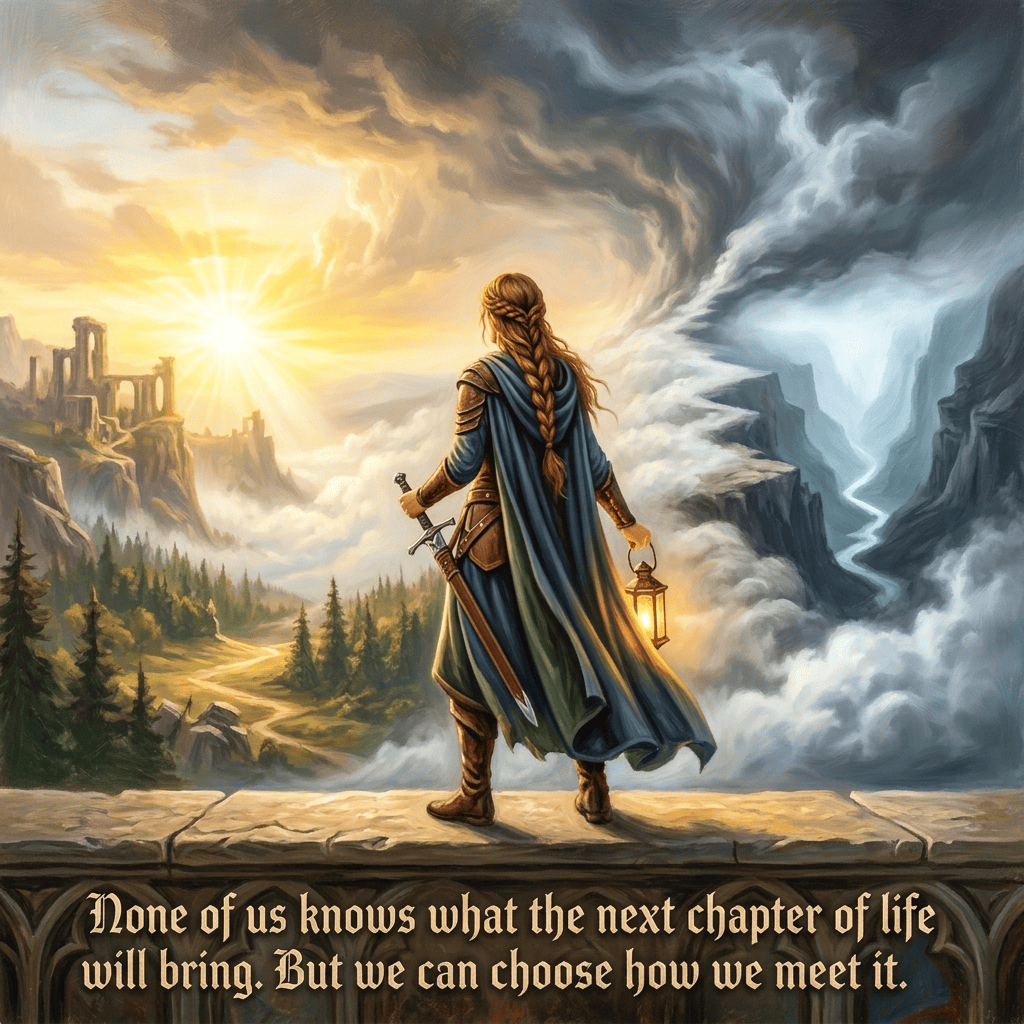
Braided warrior with sword and lantern overlooking ruins beneath storm clouds; text: "None of us knows what the next chapter of life will bring. But we can choose how we meet it."

When we make mistakes, we can learn rather than remain trapped in regret.

When tomorrow is uncertain, we can still choose hope.

Dr. Charlie White could not choose what happened to him when he was eight years old.

But he could choose what he did with the life that followed.

And perhaps that is the deepest lesson of his 109 years:

We cannot always choose what happens to us.
But we can choose how we meet what happens.

Sometimes, that choice becomes the beginning of our greatest strength.

Link:https://peacelilysite.com/2026/09/16/he-lost-his-father-at-8-what-a-109-year-old-doctor-taught-us-about-life/

Source: https://www.kansascity.com/news/local/article275107916.html
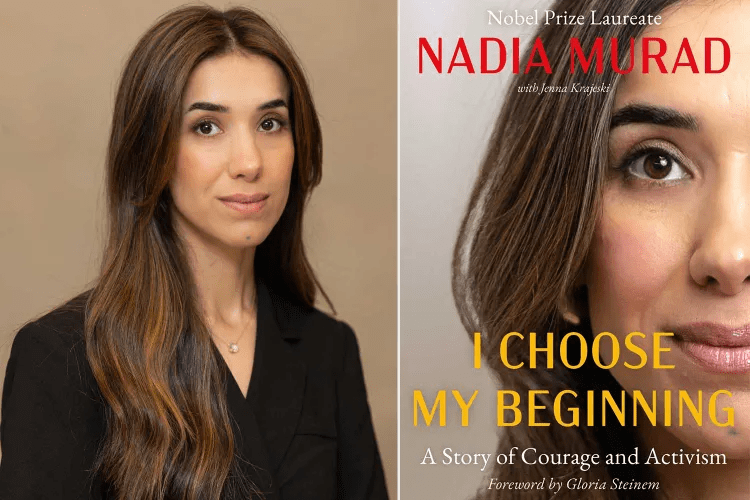
From Tragedy to Hope: A Nobel Peace Laureate’s Journey

Nadia Murad: One Woman’s Courage Can Change the World

In a world often shaken by violence and injustice, the story of Nadia Murad reminds us that even in the darkest moments, the human spirit can rise with extraordinary courage.

Murad was born in a small Yazidi village in northern Iraq. Like many young women, she once dreamed of living a quiet and simple life. She hoped to open a beauty salon in her hometown and build a peaceful future with her family.

But in 2014, her life was shattered when the extremist group Islamic State of Iraq and Syria (ISIS) attacked her village. Many members of her family were killed, and she, along with thousands of Yazidi women and girls, was captured and subjected to unspeakable violence.

After months of captivity, Murad managed to escape. Her survival alone was extraordinary, but what she chose to do next required even greater courage.

Rather than remain silent, she decided to tell the world what had happened. Speaking before global leaders at the United Nations, she courageously shared her story and spoke on behalf of thousands of victims who could not speak for themselves.

As she once said:

“I want to be the last girl in the world with a story like mine.”

These simple but powerful words express her deepest mission—to ensure that no other woman or girl must endure the suffering she experienced.

Murad continued her advocacy for survivors of human trafficking and wartime sexual violence, calling on the world to pursue justice and accountability. Her bravery and determination were recognized globally when she was awarded the Nobel Peace Prize in 2018.

Yet Murad’s work has never been about personal recognition. Her goal has always been to restore dignity and hope to those whose lives have been torn apart by violence.

In another moving statement, she said:

“There is no greater honor than being able to speak on behalf of those who have been silenced.”

Her life demonstrates how even the deepest suffering can be transformed into compassion and purpose. Instead of allowing pain to define her, she chose to turn her experience into a force for justice and healing.

Murad also reminds the world that silence allows injustice to continue:

“If the world had listened earlier, perhaps this tragedy could have been avoided.”

Her words challenge us all—not only to listen, but to act.

Today, Nadia Murad’s voice has become a symbol of resilience, courage, and hope. From a small village in Iraq to the global stage, she has shown that one person’s courage can awaken the conscience of humanity. Her story is not only a testimony of survival—it is a call for compassion.

From a deeper spiritual perspective, her journey also reminds us of the universal law of cause and effect—what many traditions call karma. Violence, hatred, and cruelty create suffering that ripples across generations, while compassion, courage, and moral responsibility create healing and hope. When individuals like Nadia Murad choose truth over silence and compassion over hatred, they help restore moral balance in the world. Her courage encourages each of us to cultivate kindness, protect the vulnerable, and act with integrity in our own lives. In this way, even small acts of compassion can become powerful seeds of positive karma, helping to guide humanity toward a more peaceful and just future.

Link:https://peacelilysite.com/2026/03/08/from-tragedy-to-hope-a-nobel-peace-laureates-journey/

The Great Horse Knowing-One [Courage]

The Great Horse Knowing-One [Courage]

Buddhist Tales for Young and Old, volume 1, Prince Goodspeaker, Stories 1-50

Once upon a time, King Brahmadatta ruled in Benares, in northern India. He had a mighty horse, who had been born in the land of Sindh, in the Indus River valley of western India. Indeed, this horse was the Enlightenment Being.

As well as being big and strong, he was very intelligent and wise. When he was still young, people noticed that he always seemed to know what his rider wanted before being told. So he was called Knowing-one.

He was considered the greatest of the royal horses and was given the very best of everything. His stall was decorated and was always kept clean and beautiful. Horses are usually faithful to their masters. Knowing-one was especially loyal and was grateful for how well the king cared for him. Of all the royal horses, Knowing-one was also the bravest. So the king respected and trusted him.

It came to pass that seven neighbouring kings joined together to make war on King Brahmadatta. Each king brought four great armies — an elephant cavalry, a horse cavalry, a chariot brigade and ranks of foot soldiers. Together the seven kings, with all their armies, surrounded the city of Benares.

King Brahmadatta assembled his ministers and advisers to make plans for defending the kingdom. They advised him, “Do not surrender. We must fight to protect our high positions. But you should not risk your royal person in the beginning. Instead, send out the champion of all the knights to represent you on the battlefield. If he fails, only then must you yourself go.”

So the king called the champion to him and asked, “Can you be victorious over these seven kings?” The knight replied, “If you permit me to ride out on the bravest and wisest, the great horse Knowing-one, only then can I win the battle.” The king agreed and said, “My champion, it is up to you and Knowing-one to save the country in its time of danger. Take with you whatever you need.”

The champion knight went to the royal stables. He ordered that Knowing-one be well fed and dressed in protective armor, with all the finest trimmings. Then he bowed respectfully and climbed into the beautiful saddle.

Knowing-one knew the situation. He thought, “These seven kings have come to attack my country and my king, who feeds and cares for and trusts me. Not only the seven kings, but also their large and powerful armies threaten my king and all in Benares. I cannot let them win. But I also cannot permit the champion knight to kill those kings. Then I too would share in the unwholesome action of taking the lives of others, in order to win an ordinary victory. Instead, I will teach a new way. I will capture all seven kings without killing anyone. That would be a truly great victory!”

Then the Knowing-one spoke to his rider. “Sir knight, let us win this battle in a new way, without destroying life. You must only capture each king, one at a time, and remain firmly on my back. Let me find the true course through the many armies. Watch me as you ride, and I will show you the courage that goes beyond the old way, the killing way!”

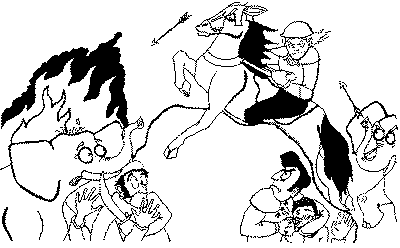
As he spoke of ‘a new way’, and ‘the true course’, and ‘the courage that goes beyond’, it seemed the noble steed became larger than life. He reared up majestically on his powerful hind legs, and looked down on all the armies surrounding the city. The eyes of all were drawn to this magnificent one. The earth trembled as his front hoofs returned to the ground and he charged into the midst of the four armies of the first king. He seemed to have the speed of lightning, the might of a hundred elephants, and the glorious confidence of one from some other world.

The elephants could remember no such horse as this, and so the elephant cavalry retreated in fear. The horses knew that this their relative was the worthy master of them all, and so the horse cavalry and the chariot brigade stood still and bowed as the Great Being passed. And the ranks of foot-soldiers scattered like flies before a strong wind.

The first king hardly knew what had happened, before he was easily captured and brought back into the city of Benares. And so too with the second, third, fourth and fifth kings.

In the same way the sixth king was captured. But one of his loyal bodyguards leaped out from hiding and thrust his sword deep into the side of the brave Knowing-one. With blood streaming from the wound, he carried the champion knight and the captured sixth king back to the city.

When the knight saw the terrible wound, he suddenly became afraid to ride the weakened Knowing-one against the seventh king. So he began to dress in armour another powerful war horse, who was really just as big as Knowing-one.

Seeing this, though suffering in great pain from his deadly wound, Knowing-one thought, “This champion knight has lost his courage so quickly. He has not understood the true nature of my power — the knowledge that true peace is only won by peaceful means. He tries to defeat the seventh king and his armies in the ordinary way, riding an ordinary horse.

“After taking the first step of giving up the killing of living beings, I cannot stop part way. My great effort to teach a new way would disappear like a line drawn in water!”

The great horse Knowing-one spoke to the champion knight. “Sir knight, the seventh king and his armies are the mightiest of all. Riding an ordinary horse, even if you slaughter a thousand men and animals, you will be defeated. I, of the mighty tribe of Sindh horses, the one called Knowing-one, only I can pass through them harming none, and bring back the seventh king alive!”

The champion knight regained his courage. The brave horse struggled to his feet, in great pain. While the blood continued to flow, he reared and charged through the four armies, and the knight brought back the last of the seven warlike kings. Again all those in his path were spared from harm. Seeing their seven kings in captivity, all the armies laid down their weapons and asked for peace.

Realizing that the great horse Knowing-one would not live through the night, King Brahmadatta went to see him. He had raised him from a colt, so he loved him. When he saw that he was dying, his eyes filled with tears.

Knowing-one said, “My lord king, I have served you well. And I have gone beyond and shown a new way. Now you must grant my last request. You must not kill these seven kings, even though they have wronged you. For a bloody victory sows the seeds of the next war. Forgive their attack on you, let them return to their kingdoms, and may you all live in peace from now on.

“Whatever reward you would give to me, give instead to the champion knight. Do only wholesome deeds, be generous, honour the Truth, and kill no living being. Rule with justice and compassion.”

Then he closed his eyes and breathed his last. The king burst into tears, and all mourned his passing. With the highest honours, they burned the body of the great horse Knowing-one — the Enlightenment Being.

King Brahmadatta had the seven kings brought before him. They too honored the great one, who had defeated their vast armies without spilling a drop of blood, except his own. In his memory they made peace, and never again did these seven kings and Brahmadatta make war on each other.

The moral is: True peace is only won by peaceful means.

The Great Horse Knowing-One [Courage]

Link: https://peacelilysite.com/2022/05/03/the-great-horse-knowing-one-courage/

INTERPRETER’S INTRODUCTION – BUDDHIST TALES FOR YOUNG AND OLD, VOLUME 1, STORIES 1-50

#Buddhisttalesforyoungandold #Buddhiststories #storiesforkids #moralstories #Buddha #Jatakastories #PansiyaPanasJataka