How Karam’s Little Leaders Shapes Early Leadership Through Intentional Family Engagement

Daniel Fusch Contributor March 13, 2026, 2:03 p.m. ET

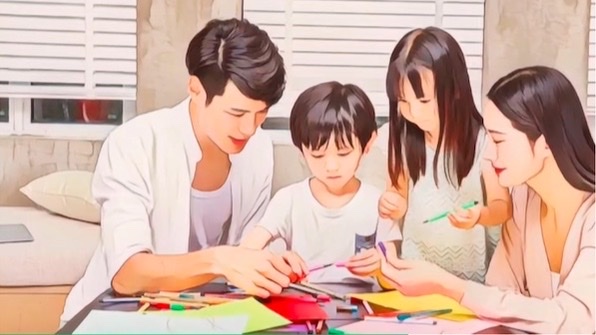
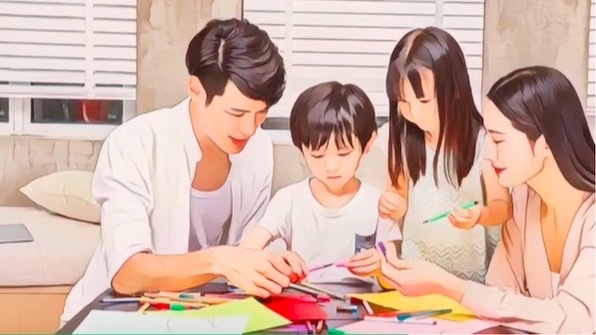
Audra and Matt Karam have spent many years listening to families and observing how children grow within their everyday environments. Through this work, they began to notice subtle gaps between what parents hoped to nurture in their children and the types of guidance available to support that growth in daily life. Their shared response eventually took shape as Karam’s Little Leaders, a family-centered initiative designed to help parents bring leadership principles into early childhood in a way that feels engaging and supportive.

As they continued these conversations with families, a clearer picture emerged. “We’ve been noticing how childhood development is evolving as family routines change, parents juggle more on their plates, and awareness grows around how early experiences may shape later behavior. So many parents tell us they want to raise thoughtful, capable kids, and they’re often looking for guidance that doesn’t feel overwhelming,” Audra says. 

This need becomes even more apparent when viewed within the broader landscape. A KPMG report shows that many parents experience significant work disruptions due to childcare challenges, often forcing them to miss work or reduce their hours. “Families are looking for guidance that fits into real life, something that honors their limited time while still supporting healthy development,” Matt states. He adds that it’s a reminder of how valuable it is to have programs that bring parents and children together, strengthening skills through shared moments rather than separate activities.

It was within this context that Karam’s Little Leaders took shape. The program integrates leadership principles into short animated stories, hands-on activities, and guided family conversations. By using Black Belt Bruce, a friendly character as a narrative guide, the curriculum aligns with research showing that storytelling and imaginative play help young children internalize abstract ideas. Audra explains, “Children connect deeply with stories. When a lesson feels like an adventure, it becomes something they want to revisit, not something they feel directed to complete.”

Building on this foundation, the Karams’ approach also reflects insights from developmental psychology that introduce concepts in manageable ways that gradually expand as children grow. Their curriculum introduces core character skills early and revisits them through different lenses over time, allowing understanding to mature alongside the child. 

Alongside developmental considerations, the Karams also paid close attention to the emotional needs of parents themselves. They recognized that many parents, especially during the early childhood years, look for reassurance that their choices align with their values and long‑term hopes for their children.

This theme reflects not only what families express today but also what longstanding national guidance has underscored for years. The Karams note that leaders have emphasized that strong early‑childhood programs must be built on meaningful partnerships with families. For instance, a joint policy statement from the U.S. Departments of Health and Human Services (HHS) and Education (ED) reaffirms this long‑held position, noting that effective programs consistently honor parents’ beliefs, cultural values, and aspirations for their children. The guidance stresses that families thrive when they feel supported, not judged, and when they receive clear, practical tools that strengthen their confidence during periods of rapid developmental change. This enduring perspective reinforces the importance of approaches that meet families where they are and offer tools that feel both respectful and manageable.

Black Belt Bruce

Amid this landscape, Karam’s Little Leaders positions itself as a supportive partner, offering parents language and routines that encourage reflection without judgment. The program’s design acknowledges that children observe adult behavior closely, reinforcing the idea that leadership habits develop through shared modeling.

The Karams note that group participation and gentle, positive feedback may help young children feel more engaged. At the same time, a supportive parental community might contribute to a sense of accountability and encouragement. With this in mind, they are exploring ways for families to feel more connected, aiming for an experience that could extend beyond individual lessons and nurture a shared sense of purpose.

Another influence on the program comes from the Karams’ background in martial arts. By translating core martial arts principles into a home‑based format, the Karams preserved the spirit of mentorship while adapting it to the rhythms of contemporary family life. Matt explains, “Discipline often grows through consistency and encouragement. When children feel respected, they tend to mirror that respect in meaningful ways.”

As national discussions around early learning increasingly highlight the importance of intentional parenting, Karam’s Little Leaders occupies a thoughtful place within that dialogue. The program does not position leadership as a fixed trait but as a collection of habits nurtured over time through patience, structure, and shared experiences. Its emphasis on parental involvement aligns with insights suggesting that engaged caregiving contributes to positive developmental outcomes across social and emotional domains.

This article is for informational purposes only and does not substitute for professional medical advice. If you are seeking medical advice, diagnosis or treatment, please consult a medical professional or healthcare provider.

Link:https://www.usatoday.com/story/special/contributor-content/2026/03/13/how-karams-little-leaders-shapes-early-leadership-through-intentional-family-engagement/89139779007/

Raising Successful Kids

I’ve studied over 200 kids—here are 6 ‘magic phrases’ that make children listen to their parents

Reem Raouda, Contributor Published Sun, Aug 31 20259:35 AM EDT

d3sign | Getty

Parents are constantly searching for ways to get their kids to listen. But a lot of us focus too much on trying to get them to obey in the moment, rather than building genuine long-term cooperation.

I’ve studied over 200 parent-child relationships, and I’m a mother myself. I’ve learned that kids listen best when they feel connected. A big part of that is emotional safety: knowing they are respected and have the freedom to express their feelings.

Here are six magic phrases that calm a child’s nervous system and make cooperation feel natural, which is the real secret to getting them to listen.

1. ‘I believe you.’

The moment kids feel doubted (“Did you really mean to do that?”), their defenses go up. They shift from connection into self-protection.

Belief defuses shame and creates safety. When a child feels safe, they can actually hear you.

Example:

Child: “I didn’t spill the juice on purpose!”

Parent: “I believe you. Let’s clean it up together.”

You’re addressing the behavior without getting into an argument.

2. ‘Let’s figure this out together.’

The situation often turns into a standoff when there’s a parent just barking orders. But when kids help solve the problem, they’re more likely to stick to the solution.

Example:

Child refuses to clean up toys.

Parent: “I see you don’t want to clean everything now. Let’s figure this out together. What’s the first step?”

You’re still holding the boundary while preventing power struggles.

3. ‘You can feel this. I’m right here.’

When kids are overwhelmed, they’re in survival mode and logic doesn’t land. Their nervous system is in fight-or-flight, and they need help regulating their emotions. This phrase validates their feelings and assures them they’re not alone, which helps them reset.

Example:

Preschooler has a meltdown when their tower of blocks fall. Instead of “Stop crying, you’re overreacting,” say: “You can feel this. I’m right here.”

You’re letting the wave of emotions pass until they’re ready to re-engage.

4. ‘I’m listening. Tell me what’s going on.’

Before a child will listen to you, they need to feel heard. This simple shift of giving attention before demanding it dissolves resistance. When kids feel understood, they stop trying to push back.

Example:

Child: “I’m never playing with my brother again!”

Parent: “I’m listening. Tell me what’s going on.”

Now you’re uncovering the deeper hurt behind the anger, and that’s the part you can address to help repair both the relationship and the behavior.

5. ‘I hear you. I’m on your side.’

Many meltdowns escalate because kids feel misunderstood or in conflict with the very person they need most. This phrase instantly shifts you from adversary to ally, lowering defenses and opening the door to problem-solving.

Example:

Child: “This homework is stupid! I’m not doing it.”

Parent: “I hear you. I’m on your side. Let’s find a way to make this easier.”

Knowing you’re there to help changes the tone entirely. They’ll be far more likely to meet you halfway.

6. ‘I’ve got you, no matter what.’

Mistakes can trigger shame. But when kids hear this phrase, they learn that love isn’t conditional on performance or perfection.

Example:

Your child breaks a classmate’s project and calls you in tears.

Instead of lecturing, you say: “I’ve got you, no matter what. We’ll make it right together.”

That’s the difference between fear-based compliance and real accountability.  

I always tell parents that if their default is yelling or threatening, then no “magic phrase” will undo the deeper pattern. But when you regularly protect your child’s dignity, make them feel safe, and follow through on boundaries, listening becomes the natural outcome.

Source: https://www.cnbc.com/2025/08/31/child-psychologist-parents-who-raise-kids-who-listen-use-6-magic-phrases.html

Link:https://peacelilysite.com/2025/09/10/raising-successful-kids/

Thirty Million Words: How a Parent’s Voice Shapes a Child’s Future

“Imagine a child’s brain as a garden. Every word you speak is like a drop of water nurturing growth.”

One cold winter morning in 1995 at a Chicago hospital, Dr. Dana Suskind, a cochlear implant surgeon, held the small hand of a boy who had just undergone surgery. Technically, the boy could now hear. Yet weeks passed, and he still didn’t speak a word. Dr. Suskind wondered—what was missing? She discovered that while technology could restore hearing, it could not replace something even more vital: the daily language environment a child grows up in. Without rich and loving conversation, the boy’s world remained silent in a deeper sense.

This experience led Dr. Suskind to research the profound role parents play in shaping their children’s language and cognitive development. She founded the Thirty Million Words (TMW) initiative, inspired by a groundbreaking 1995 study by child development researchers Betty Hart and Todd Risley. Hart and Risley discovered a striking reality: by the age of three, children from higher-income families had heard about thirty million more words than children from lower-income families.

From birth to age three, a child’s brain forms 1 million neural connections every second. Every conversation is brain-building—especially when it’s warm, eye-to-eye, and responsive.

Quantity matters—more words create more neural connections.

Quality matters more—it’s not just talking to a child, but engaging with them in responsive conversations.

Children who heard more words also experienced more encouraging interactions, richer vocabulary, and emotionally supportive tones from their parents. Meanwhile, children who heard fewer words were often exposed to more negative or directive language (“Stop that!” “Don’t do this!”) and fewer warm, conversational exchanges. By the time these children entered school, the gap had already set the stage for differences in learning, confidence, and future opportunities.

Dr. Suskind’s TMW initiative encourages parents to intentionally fill their children’s early years with abundant, meaningful, and loving conversation. She emphasizes the Three T’s:

  1. Tune In – Notice what your child is focused on and talk about it.
  2. Talk More – Use a rich variety of words to describe, explain, and explore the world together.
  3. Take Turns – Engage in back-and-forth conversation, even before your child can speak words.

For example:

  • Instead of saying, “Don’t touch that!” try: “That’s sharp, sweetie. Let’s find something safer to play with.”
  • Instead of a quick “Good job,” you might say: “I love how you stacked those blocks so high! You worked so carefully.”
  • During a walk, point to things you see—“Look at that big red leaf!”—and let your child respond, even with just a gesture or sound.

But there’s another crucial element—how you speak. A gentle tone, warm facial expressions, and genuine interest create an emotional space where a child feels safe and valued. Neuroscience shows that when a child feels emotionally secure, their brain is more receptive to learning and language development.

Dr. Suskind’s work reminds us that parents are a child’s first and most influential teachers—not because of expensive toys or formal lessons, but because of the warmth, curiosity, and attention they share through conversation.

You don’t need a degree or a script. Your voice, attention, and curiosity are enough. Whether in the supermarket, on a walk, or during bedtime, every exchange plants seeds for your child’s future thinking, confidence, and empathy.

The goal isn’t to force constant chatter but to weave language naturally into your shared life—reading together before bed, singing songs in the car, talking about the day while cooking dinner. Over time, these small, daily moments accumulate into millions of words, building both vocabulary and a deep sense of connection.

The Thirty Million Words message is clear: Every word you speak to your child is a gift that shapes their mind and heart.

Because one day, those little ears won’t just remember the words you spoke—they’ll carry the mindset, resilience, and love you planted with them.

Link: https://peacelilysite.com/2025/08/14/thirty-million-words-how-a-parents-voice-shapes-a-childs-future/