The Power of Faith and Compassion: How a Heartfelt Connection Brought Hope to an Autistic Child

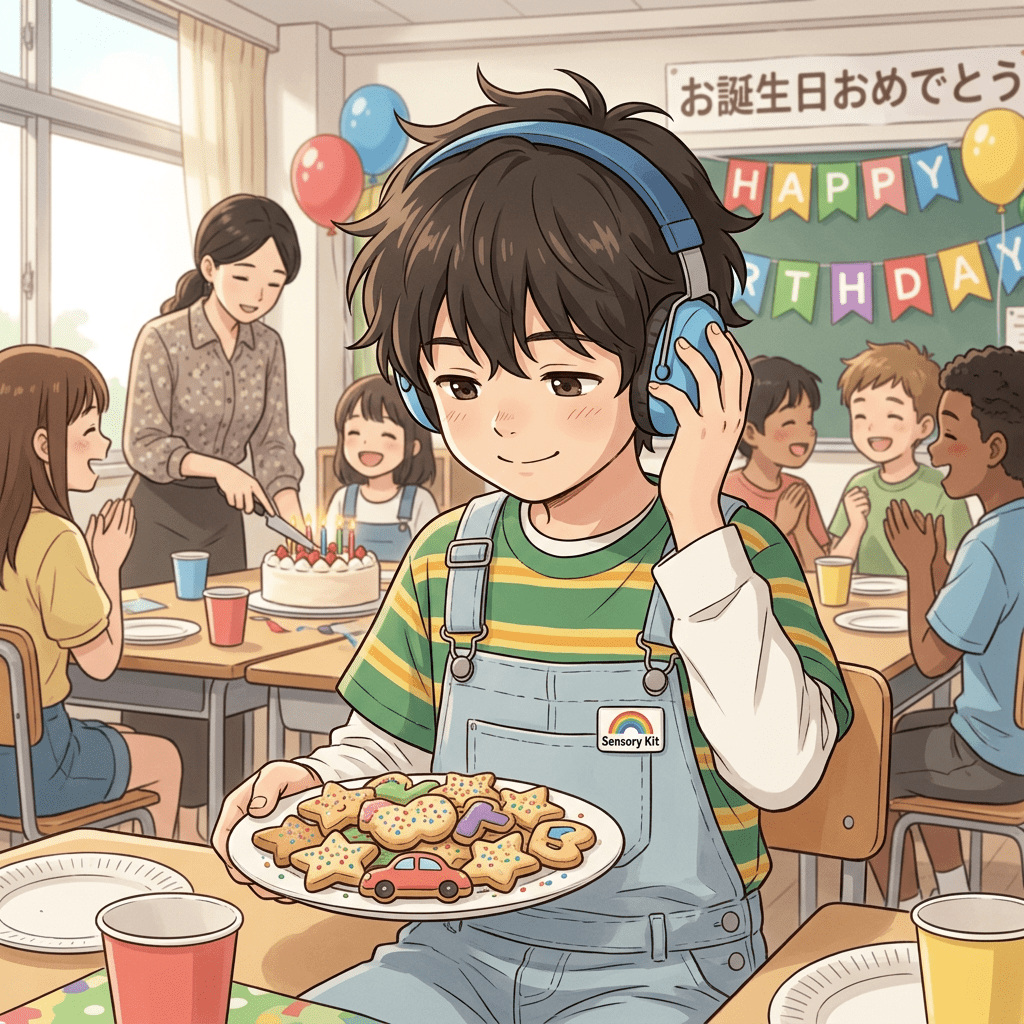
Child with headphones holding a plate of decorated cookies at a birthday party in a classroom

A small act of kindness in my daughter’s classroom became the start of an extraordinary, life-changing journey.

It all began on the day my daughter brought home birthday cookies shared by her classmate, Little Bi, who has autism. As a mother, looking at the food colorings listed on the ingredient label sparked a gentle concern in me, knowing how sensitive a special child’s nervous system can be to artificial additives. I passed along a friendly note through their teacher. I never imagined that this simple act of care would build a deep bridge between our two families.

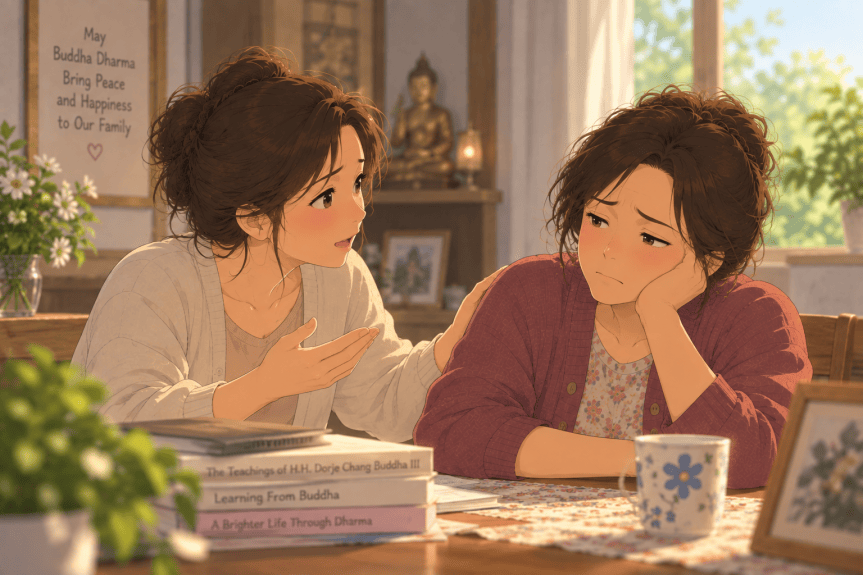
When I first met Little Bi’s mother, I could feel the deep exhaustion and anxiety she was carrying. Five-year-old Little Bi lived inside his own quiet world and had never spoken a word. To help him, his parents had sought every medical opinion and explored every avenue available. Seeing a mother willing to try absolutely anything to reach her child touched my heart profoundly.

As a practicing Buddhist following the authentic teachings of H.H. Dorje Chang Buddha III, I have personally experienced the transformative power and blessings of the Dharma. Coupled with my professional background in medical nutrition, I believed that Little Bi’s path forward required caring for both his physical body and his spiritual well-being.

With deep empathy, I shared a three-part approach with his mother:

  1. Building Faith and Receiving BlessingsI encouraged her to chant the Six-Syllable Mantra (Om Mani Padme Hum), recite the Sutra Spoken by the Buddha on the Healing of Diseases, and introduce blessed Holy Water from Dharma assemblies, allowing the child to grow enveloped in the compassionate vows of the Buddhas and Bodhisattvas.
  2. Nutritional and Physical SupportFrom a nutritional science perspective, I suggested supplementing his diet with calcium, magnesium, and probiotics to help stabilize his gut health and nervous system.
  3. Early Intervention and Creative OutletsCombining music therapy with psychological guidance to help unleash his hidden talents and foster communication.

During this period, I also dedicated the merits from my own recitation of the Water Repentance Sutra to Little Bi, praying that his obstacles would be cleared.

Through persistent effort, maternal devotion, and the compassionate blessings of the Buddhas and Bodhisattvas—including the Vajra Pole blessings during the New Year assembly—the seed we planted bloomed into something truly miraculous.

Recently, Little Bi’s mother reached out to me, her voice trembling with emotion: “Little Bi spoke!”

Not only did he clearly call out to his grandmother, but on Mother’s Day, he looked at his mom and uttered the words she had longed to hear for years: “I love you, Mom.”

In that single moment, years of heartache, tears, and exhaustion melted into pure gratitude. Even his early intervention therapists were amazed by his remarkable progress, highlighting his wonderful talent for music and reassuring his mother that his silence is now a thing of the past.

A child sitting cross-legged with glowing hands around their head and shoulders, surrounded by a magical forest and ancient ruins

Little Bi’s amazing transformation reminded me of a profound truth: when we reach out with genuine compassion, we can illuminate even the darkest corners of another person’s world.

Practicing Buddhism is far more than reciting scriptures—it is about putting wisdom and compassion into practice in our daily lives. May this story bring warmth, comfort, and renewed hope to every parent navigating challenges with their children.

Link:https://peacelilysite.com/2026/07/24/the-power-of-faith-and-compassion-how-a-heartfelt-connection-brought-hope-to-an-autistic-child/

The Day a Tiny Dove Saved Our Lives: Why Every Act of Kindness Returns to Us

Have you ever wondered if the tiny, seemingly insignificant kind choices we make in our daily lives actually matter? I used to think of the saying “Do not look down upon a tiny good deed, thinking it is of no use” as just a pleasant piece of ancient moral advice.

That was until a rainy afternoon in May, when a single act of compassion became the only reason my husband and I survived a catastrophic accident.

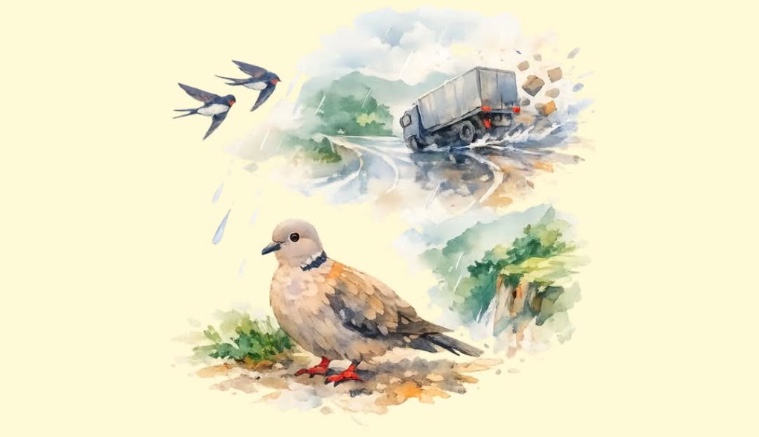
It was a drizzly May afternoon. My husband and I were driving to the countryside to deliver fresh cherries to my mother. The rain swept gently across the windshield as swallows dipped and glided low over the road. Watching them, I quietly reminded myself to drive slowly—I didn’t want to hurt any of these precious little creatures.

Suddenly, a grey spotted dove appeared right in the middle of the road.

Usually, wild animals will instinctively scatter or fly away when they sense an approaching vehicle. But this dove was different. Even as the shadow of our car drew close, it continued to stroll leisurely along the asphalt, completely unbothered and showing no intention of dodging.

Instead of honking or rushing, I gently pressed the brakes. We sat in silence, waiting patiently as the little bird took its sweet time, ambling step by step toward the roadside. Watching its cute, bobbing silhouette, my husband and I looked at each other and smiled. We shared the same unspoken belief: all living beings are equal, animals are our companions on this Earth, and we must never harm a vulnerable life.

We had no idea that those brief seconds we spent waiting for the dove would save us from absolute disaster.

Shortly after the dove cleared the road, we began driving up a sloping hill. Out of nowhere, a massive, ten-meter-long cargo truck appeared from the opposite direction.

Because of the slick, rain-soaked road, the truck driver hit the brakes too hard. In an instant, the heavy vehicle lost control. The massive trailer began to fishtail violently, swinging outward like an unbroken stallion. The giant iron rear of the truck swept directly into our lane, accompanied by a shower of flying debris and rain. It was a terrifying sight.

Our car is a tiny Wuling Mini EV—lightweight, compact, and fragile. To our left was a steep mountain wall; to our right, a sheer cliff. If that heavy, high-speed truck bed made contact with us, our tiny car would have been instantly crushed and sent hurtling over the edge of the cliff.

I gripped the steering wheel as my mind went completely blank. Beside me, my husband froze in terror. We watched the massive steel wall of the truck sweeping toward us, completely helpless as the cold fear of death enveloped us.

Right at that split second—at the absolute boundary between life and death—something miraculous happened.

The violently fishtailing truck suddenly seemed to correct itself. With a massive lurch, it snapped back into its own lane. Carrying its remaining momentum, the giant vehicle brushed past our car with mere inches to spare, stabilized, and quietly rolled away into the rainy mist.

The heart-stopping crisis had arrived without warning, and it vanished just as miraculously.

For a long time, my husband and I sat frozen in the car. Neither of us could utter a single word. Our hearts hammered violently against our ribs. My palms were drenched in cold sweat, and my legs trembled so hard I couldn’t even press the gas pedal. After what felt like an eternity, we finally turned to look at each other. In our panicked, wide-eyed stares, we both realized just how close we had come to dying.

As the adrenaline began to fade, a profound realization washed over me.

If we hadn’t listened to our hearts and paused for that tiny dove, our car would have traveled just a few dozen meters further up the road. We would have been positioned exactly at the fatal bend at the exact millisecond the truck lost control. There would have been absolutely no way to survive.

That slow, stubborn little dove, in its own unique way, had held us back just long enough to shield us from a catastrophic tragedy.

A glowing girl in a blue dress protecting a small village under a magical dome during a storm

An ancient proverb says:

“If a person loves kindness, though fortune may not have arrived yet, disaster is already far away.”

Experiencing this brush with death made me truly understand the depth of those words. Every kind thought we harbor and every gentle deed we perform plants a seed. We may not see them grow immediately, but they accumulate.

The quiet kindness we put out into the world acts like a small, steady lantern in the dark. When we least expect it—when we face unforeseen dangers or find ourselves standing on the edge of an abyss—that accumulated goodwill quietly steps in to protect us, shielding us from the disasters we never saw coming.

All blessings begin with a kind heart. To live with compassion is to carry the greatest shield of all.

Link:https://peacelilysite.com/2026/07/17/the-day-a-tiny-dove-saved-our-lives-why-every-act-of-kindness-returns-to-us/

Source :https://www.facebook.com/story.php?story_fbid=pfbid027E5vXivbEB83pWyWkwyQEXHCz5LH1K8HY3wa17MXDgwnC6VJoi6c1Ps41wPG5tT1l&id=100087521855455&mibextid=wwXIfr&_rdr

A Mother’s Unwavering Love: At 45, She Unexpectedly Became Pregnant and Defied Pressure to Give Birth to Her Second Child


A Mother’s Unwavering Love: At 45, She Unexpectedly Became Pregnant and Defied Pressure to Give Birth to Her Second Child

A Mother’s Unwavering Love: At 45, She Unexpectedly Became Pregnant and Defied Pressure to Give Birth to Her Second Child

Editor’s Note:  This article is dedicated to Mother’s Day. The author is a 47-year-old mother whose eldest son is already 20 years old. Two years ago, after unexpectedly becoming pregnant with a second child, she firmly chose to give birth despite her husband’s threats of divorce, opposition from family members, and the risks associated with advanced maternal age. How did she maintain such a moving and unwavering maternal love? What gave her the strength to stand against worldly pressures?


I. I Planned to Become a Nun, but Unexpectedly Became Pregnant

“If you insist on keeping this baby, then let’s get divorced! The older child stays with me, and you can raise the second child by yourself!”

My husband nearly shouted those words at me.

“Please,” I replied through tears, “the baby is perfectly healthy. Please give this child a chance to be born and live.”

That evening, after dinner, we once again argued fiercely about whether I should keep or abort this unexpected pregnancy. My husband presented every possible reason why we should not have a second child. Whether through persuasion or pressure, his goal was the same: he was determined that I terminate the pregnancy.

At that point, the “uninvited guest” in my womb was exactly three months old.

I call the baby an “uninvited guest” because I had already made up my mind to become a nun.

One day in 2017, I attended a Dharma listening session at a Buddhist center and respectfully listened to the Dharma discourses of H.H.  Dorje Chang Buddha III. That gathering opened a completely new chapter in my life.

I subsequently took refuge in the Three Jewels. Through continuously listening to the Buddha’s Dharma discourses and studying Buddhist teachings, I gradually understood the true direction of my life and became determined to cultivate diligently. Eventually, I developed the aspiration to renounce worldly life and even completed an application to enter monastic life.

A few days after submitting the application, on December 8, 2018, I suddenly felt weak and nauseated. When I went to the hospital for an examination, the doctor informed me that I was pregnant.

It was completely unexpected.

Shock, confusion, struggle, disappointment—my emotions surged all at once. I had no idea what to do.

Had I not been studying Buddhism, I might have simply chosen abortion as many women do when they do not want a child. But as a Buddhist disciple, I had come to understand the law of cause and effect and the preciousness of obtaining a human birth.

How could I harm my own child and deprive a soul of the opportunity to be reborn as a human being?

Most importantly, I had already resolved to become a nun. Yet now this “uninvited guest” had arrived. Surely I could not enter monastic life while carrying a child.

Would I spend the rest of my life occupied with the responsibilities of family life?

Soon I came to accept the situation. This was karmic affinity—something beyond my control. I decided to follow the natural course of events.

While silently reciting the holy name of Namo Avalokitesvara Bodhisattva, I underwent an ultrasound examination. The baby was healthy and developing normally.

The doctor said, “At your age, becoming pregnant is not easy. I’ll prescribe medication to help stabilize the pregnancy. If you don’t intend to keep the baby, you should schedule the procedure soon. You’re already nearly two months pregnant.”

His words only strengthened my determination to give birth.


II. “I Will Protect This Child with My Life”

Both my husband and I had health issues. It had not been easy raising our first son, who was already in high school. My husband had long opposed the idea of having another child, so I initially concealed the pregnancy from him.

However, he soon found out.

Our household erupted into turmoil.

Whether during meals, before bed, or through messages on WeChat, he constantly urged me to undergo an abortion. We argued repeatedly. He even accused me of being selfish.

I felt helpless and dreaded going home. I tried to avoid seeing him whenever possible.

The only place where I found peace was at the Buddhist center, listening to the Dharma discourses of  H.H. Dorje Chang Buddha III  and reciting the holy name of Namo Avalokitesvara Bodhisattva. Whenever I bowed before the Buddha or looked upon the image of Avalokitesvara Bodhisattva, I would burst into tears uncontrollably.

My husband then organized a family gathering and invited my siblings to persuade me to abandon the pregnancy.

Everyone expressed their opinions. Alone, I found myself debating against the entire family.

Then my husband delivered what he believed was the ultimate threat:

“If you insist on giving birth, then you’re on your own. We’ll get divorced. I’ll only take responsibility for our older child.”

Without hesitation, I replied:

“I will take full responsibility for whatever happens. Even if I become a beggar, I will raise this child. If anyone tries to take this child away, I will protect him or her with my life.”

I cried and ran outside.

In late December 2018, my husband placed a divorce agreement and our marriage certificate in front of me and demanded that I sign.

I faced the most difficult decision of my life:

Should I choose my child or my marriage?

Should I raise an infant alone, or maintain our family of three and continue our comfortable life together?

I did not sign the agreement.

Instead, I wrote a will.

As an older expectant mother, I knew there were risks associated with childbirth. I carefully arranged my affairs and entrusted a Dharma sister with the responsibility of raising the child if something happened to me. I hoped she would one day bring the child to pay respects to the Buddha. If that became impossible, I requested that a temple care for the child.

By continuously listening to the Buddha’s Dharma teachings, I gained a deeper understanding of karma and causality. I firmly believed that if I sincerely practiced according to Buddhist principles, the future would not be as bleak as I feared.

Kneeling before the Buddha altar, I made a solemn vow:

No matter how difficult the future became, I would not abort this child. Even if my own life were at risk, I would give birth. I prayed for the blessings of the Buddhas and Bodhisattvas to protect both myself and my child.


III. Upholding Buddhist Principles Brings the Best Outcome

Life is often full of unexpected turns.

On New Year’s Day 2019, my son returned home from school and accidentally discovered the unsigned divorce agreement on my bedside table.

Without hesitation, he tore it up.

Before returning to school, he secretly wrote a letter to his father and slipped it into his coat pocket.

When I later read the letter, I broke down in tears.

My son recalled how hard our family had worked to raise him, how loving his parents once were, and how much his mother had sacrificed. He even included a cherished family photograph.

After reading the letter, my husband’s attitude gradually softened.

When an ultrasound later confirmed that the baby was a healthy girl, the entire family rejoiced. My husband’s family had always hoped for a daughter.

From that moment onward, everyone’s attitude changed dramatically. Instead of opposition, they began showing genuine care and support.

Throughout the pregnancy, I continued attending Dharma study sessions, participating in Buddhist activities, and praying to Namo Avalokitesvara Bodhisattva. I also engaged in acts of merit such as life release, offering lamps, making offerings to the Buddha and Sangha, and reciting the Universal Gate Chapter of the Lotus Sutra.

Although I was considered an older expectant mother, my pregnancy progressed remarkably well.

On July 4, 2020, while lying on the operating table, I focused wholeheartedly on reciting the holy name of Namo Avalokitesvara Bodhisattva.

The cesarean section proceeded smoothly and without complications.

A healthy baby girl weighing 6.8 pounds was born.

Family and friends waiting outside the operating room were overjoyed.

My first cesarean section had been extremely difficult, with serious complications for both mother and child. Yet this time, I was able to get out of bed and walk the very next day.

When I returned to work after maternity leave, my colleagues remarked that I looked unchanged despite having given birth and joked that I had gained the perfect blessing—a son and a daughter.

I proudly replied:

“Of course it’s different when one has the blessings of the Buddhas and Bodhisattvas.”

And that is exactly how it felt.

Today, my daughter is nearly two years old.

Time and again, circumstances have unfolded in the best possible way. Relatives unexpectedly appeared when childcare help was needed. Teachers made special accommodations for her. She became beloved by classmates and teachers alike.

Everything seemed to fall naturally into place.

Only a few days after her birth, my husband was recommended for a local leadership development position. Friends congratulated him on receiving two blessings at once.

The storms that once threatened our family have long since passed.

Our family of four now enjoys a harmonious and happy life together.

Through this experience, I came to understand the true meaning of perseverance.

A mother’s willingness to protect her child, no matter the hardship or sacrifice, is perseverance.

A Buddhist disciple’s commitment to cherish all life and uphold the principle of “Refrain from all evil and practice all good” despite difficulties and humiliation is also perseverance.

People often ask me what gave me the strength to remain steadfast.

I can only say that beyond the power of maternal love, there was also the power of Buddha Dharma.

As Mother’s Day approaches, I hope that all parents may find the courage to uphold what is right and allow those karmically connected children who come into this world the precious opportunity of human life.

As long as we uphold wholesome causes and conditions, no obstacle is impossible to overcome.

Written by:  Ye Mingzhu
Edited by:  Lamp Before the Buddha (Fo Qian Deng)

Learn more about H.H. Dorje Chang Buddha III

Link:https://hhdorjechangbuddhaiiidharma.com/2026/07/05/a-mothers-unwavering-love-at-45-she-unexpectedly-became-pregnant-and-defied-pressure-to-give-birth-to-her-second-child/

#DorjeChangBuddhaIII  #MasterWanKoYee  #BuddhaDharma #BuddhistTeachings #Compassion #MaternalLove #ProtectLife #MothersDay #Karma #Avalokitesvara

The Quiet Path of My Father

Man walking barefoot indoors holding steaming coffee cup at sunrise

The children always remembered the way their father moved through the house in the early morning — not rushing, not dragging, but walking with a quiet steadiness, as if each step were placed with intention. The soft shuffle of his feet, the gentle clearing of his throat, the way he paused at the doorway to look at the sky before beginning the day — all of it felt like a small ceremony, a reminder that life was something to be met with presence.

He never taught them compassion through words. He taught it through the way he lived.

When a neighbor’s roof began to leak during the winter rains, he didn’t sigh or complain about the inconvenience. He simply gathered his tools, wiped the mist from his glasses, and said, “Come with me. Let’s see how we can help.” The children watched him climb the ladder slowly, carefully, as if he were ascending a sacred path. The cold wind tugged at his jacket, the shingles were slick beneath his hands, but he worked with a calm focus that made the moment feel almost holy. When he patched the leak and the dripping finally stopped, he smiled — not because he wanted praise, but because someone’s burden had become lighter.

Man sweating while fixing car engine with tools, children looking concerned

Another time, when an elderly man’s car refused to start in the heat of summer, their father knelt beside the engine with the same tenderness he used when holding a newborn. The children stood nearby, watching the sweat bead on his forehead as he listened to the engine’s uneven breaths. “Machines speak too,” he told them softly. “You just have to listen with patience.” When the engine finally roared back to life, the old man’s eyes filled with relief. Their father simply nodded, wiped his hands on a rag, and whispered, “May your road be smooth.”

The children didn’t understand it then, but he was teaching them the Dharma in the language of everyday life. He was showing them how to see suffering without turning away, how to offer help without expecting anything in return, how to move through the world with a heart that stayed open even when life was heavy.

As they grew older, they began to feel the weight of those lessons in their own bones.

One became a teacher who stayed after school to help students who felt invisible. She remembered the way her father listened — fully, without judgment — and she tried to offer her students that same refuge. Another became a nurse who held trembling hands in the quiet hours of the night. He remembered how his father breathed slowly, steadily, even when the work was hard, and he learned to be a calm presence for others. The youngest created a community program that helped families rebuild their lives. She remembered the way her father patched roofs and revived engines, and she understood that healing often begins with the smallest acts of care.

They didn’t choose these paths because their father told them to. They chose them because they had lived their whole lives watching him turn compassion into action, moment by moment, breath by breath.

Years passed. The children grew into adults who carried their father’s teachings in the way they spoke, the way they listened, the way they offered themselves to the world. And their father, now older, watched them with a quiet pride that softened his eyes.

On Father’s Day, they gathered around him. His hair had turned silver, his hands were rough from decades of work, but his presence was still steady — like a lantern that had guided them through every dark season.

“Dad,” the eldest said, her voice trembling, “everything we do… everything we’ve become… it’s because of you.”

He shook his head gently, the way he always did when he felt gratitude but didn’t want praise.

“I only showed you the path,” he whispered. “You walked it yourselves.”

But the children knew the truth.

He had given them more than shelter. More than guidance. More than love.

He had given them a way of seeing the world — a way rooted in compassion, patience, and the belief that every act of kindness sends ripples far beyond what the eye can see.

And as they sat with him that Father’s Day, surrounded by the warmth of everything he had nurtured, they realized something too:

The seeds he planted had grown into a forest — a living testament to the quiet, powerful love of a father who taught not through words, but through the gentle, unwavering example of a life lived with an open heart.

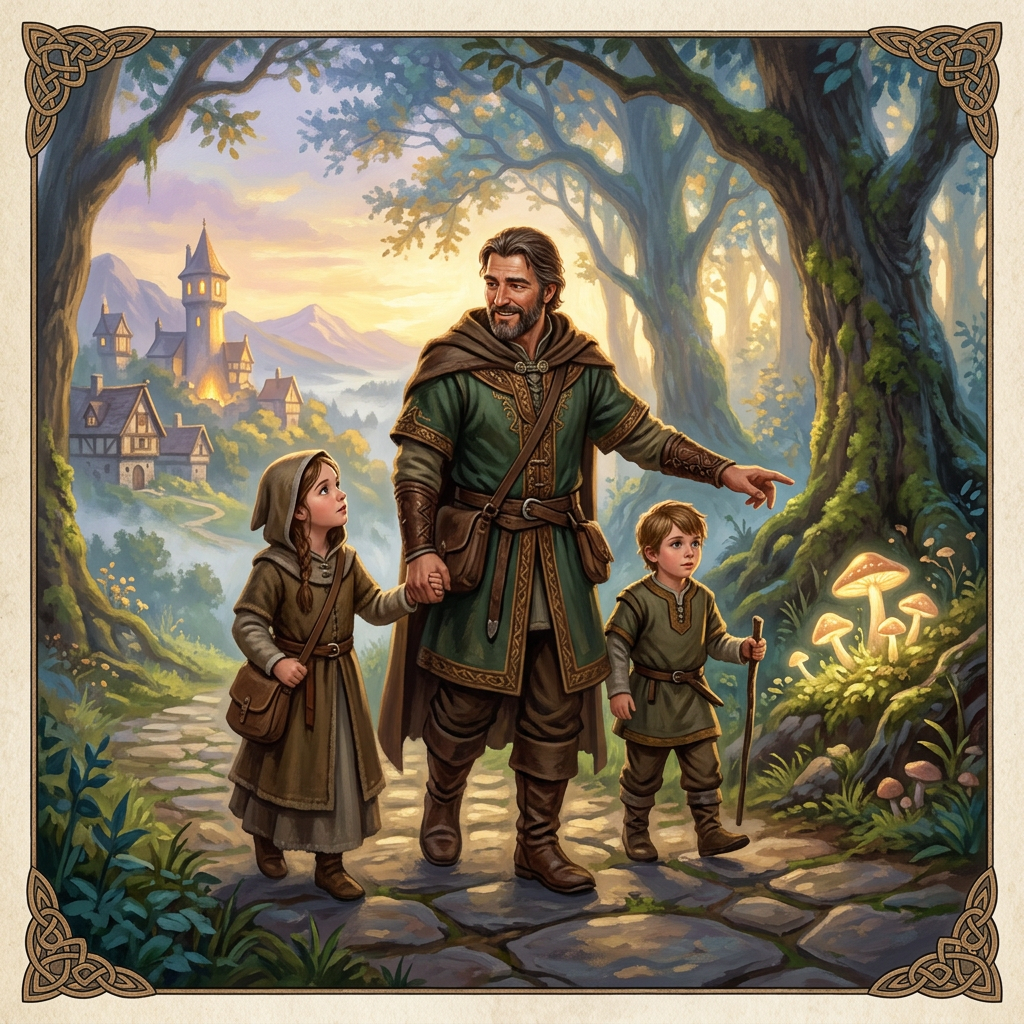
A man with two children walking on a forest path glowing mushrooms lighting the way

Link: https://wisdomtea.org/2026/06/18/the-quiet-path-of-my-father/

The Power of a “Positive Prophecy”: Why Your Child Will Live Up to Your Expectations

As parents, how often do we catch ourselves saying things like: “Why are you being so lazy?” “Look at your cousin, why can’t you be more like them?” “If you keep acting like this, you’ll never amount to anything.”

We often mistakenly believe that harsh criticism will motivate a child to change. But psychological reality shows us the exact opposite: children almost always grow into the exact labels their parents and teachers place on them.

If we want our children to break barriers and achieve great things, we must stop raising them in an environment of constant negative feedback. Instead, we need to understand the life-altering power of a “positive prophecy.”

“One of America’s great scientists” – one of several Carver-centric posters by C. H. Alston, this one referencing the World War II effort (c. 1943)

To understand how a single person’s belief can reshape a child’s destiny, we don’t need to look at internet fables—we only need to look at the historical reality of Dr. George Washington Carver.

Born into slavery in Missouri during the American Civil War, George faced an unimaginable start to life. He was a frail, sickly child, orphaned at a tender age, and growing up in an era rife with brutal systemic oppression. In the eyes of the world at that time, his future was virtually nonexistent.

But George was an exception. He didn’t just survive; he became one of the greatest agricultural scientists, inventors, and educators in American history, ultimately advising presidents and transforming the agricultural economy of the American South.

What pushed a young boy from the absolute margins of society to the heights of global respect? It wasn’t just luck. It was the unwavering, positive expectations of the adults who raised and taught him.

After slavery was abolished, the couple who had previously owned George’s mother, Moses and Susan Carver, chose to keep George and his brother on their farm. Instead of treating him as an afterthought, Susan Carver noticed something extraordinary in the frail boy: an insatiable curiosity for nature and a brilliant mind.

Susan gave him a positive identity. She didn’t see a sickly orphan; she saw a gifted child. She taught him to read, nurtured his love for plants, and constantly reinforced the idea that his mind was a precious tool meant for great things.

Later, when George walked miles to attend a school for Black children, a midwife named Mariah Watkins took him in. Seeing his determination, Mariah looked at him and delivered a powerful prophecy that George carried for the rest of his life:

“You must learn all you can, and then go back out into the world and give your learning back to our people.”

These weren’t just empty words of praise. They were high-specification “identity anchors.” They gave George a banner to march under. From that point forward, he didn’t view himself as a victim of his circumstances; he viewed himself as a custodian of knowledge with a grand purpose. He held himself to the standard of the brilliant educator they promised he would be, eventually becoming the first Black student and faculty member at Iowa State Agricultural College.

What George Washington Carver experienced is a phenomenon heavily documented in modern psychology known as the Pygmalion Effect (or the Expectation Effect). When a caregiver or educator holds high expectations for a child and communicates them through positive reinforcement, the child subconsciously alters their behavior, self-image, and effort to meet that expectation.

Famous education expert Karl Witte famously noted: “Every child is a genius.” He firmly believed that the method of education is paramount. With the right approach, an ordinary child can achieve extraordinary things.

Psychological and statistical data strongly back this up:

Studies in early childhood development show that children with severe, unfixable intellectual disabilities make up only about 1.07% of the population, while highly precocious children make up about 0.03%.

This means that roughly 98% of children are born with perfectly healthy, fully capable intellectual baselines!

The gap that widens between children as they grow is rarely a matter of raw genetic IQ. Instead, it is a question of motivation, mindset, and confidence. And the primary fuel for a child’s confidence is the reflection they see of themselves in their parents’ eyes.

How can today’s parents apply the lessons of Dr. Carver’s life and cognitive psychology to raise thriving children?

1. Shift from “Flaw-Finding” to “Gold-Digging”

If you look at your child and constantly notice their messiness, their loud voice, or their stubbornness, you will naturally project an aura of disappointment. You must train yourself to see the gold hidden in the dirt. Is your child stubborn? Reframe it: “You have incredible persistence; you don’t give up easily.” Is your child loud and disruptive? Reframe it: “You have a powerful presence and great leadership energy.”

2. Give High-Specification “Identity Labels”

Stop using generic insults like “lazy” or “clumsy.” Instead, anchor your child with a noble identity based on their actions. When your child carefully builds a Lego set, say: “I can see how deeply you focus; you have the mind of a meticulous engineer.” When they share a toy, tell them: “You have a deeply generous heart; you are a natural caretaker.” Give them a noble banner, and they will naturally straighten their backs to carry it.

3. Translate Expectations into Inner Standards

The power of Susan Carver and Mariah Watkins’ encouragement wasn’t just that it made George feel good—it changed his daily self-discipline. True positive reinforcement encourages a child to hold themselves to a higher standard. Help your child understand: “Because you are a capable, intelligent person, we are going to practice managing your time and respecting others the way great people do.”

A child sitting cross-legged with glowing hands around their head and shoulders, surrounded by a magical forest and ancient ruins

Every child enters this world as a blank canvas of infinite potential. Whether they become someone who drifts aimlessly through life or someone who stands tall and alters history depends entirely on the blueprint drawn for them by the people they trust the most.

As parents, let us put away our critical, depreciating lenses. Let us irrigate our homes with trust and empower our children with genuine, high expectations.

Remember: When your educational method shifts from criticism to profound belief, your child will finally have the freedom to become the genius they were born to be.

#ParentingWisdom #PositiveReinforcement #FamilyEducation #PygmalionEffect #GeorgeWashingtonCarver #RaiseAGenius #MindsetShift

Link:https://peacelilysite.com/2026/05/30/the-power-of-a-positive-prophecy-why-your-child-will-live-up-to-your-expectations/

How Karam’s Little Leaders Shapes Early Leadership Through Intentional Family Engagement

Daniel Fusch Contributor March 13, 2026, 2:03 p.m. ET

Audra and Matt Karam have spent many years listening to families and observing how children grow within their everyday environments. Through this work, they began to notice subtle gaps between what parents hoped to nurture in their children and the types of guidance available to support that growth in daily life. Their shared response eventually took shape as Karam’s Little Leaders, a family-centered initiative designed to help parents bring leadership principles into early childhood in a way that feels engaging and supportive.

As they continued these conversations with families, a clearer picture emerged. “We’ve been noticing how childhood development is evolving as family routines change, parents juggle more on their plates, and awareness grows around how early experiences may shape later behavior. So many parents tell us they want to raise thoughtful, capable kids, and they’re often looking for guidance that doesn’t feel overwhelming,” Audra says. 

This need becomes even more apparent when viewed within the broader landscape. A KPMG report shows that many parents experience significant work disruptions due to childcare challenges, often forcing them to miss work or reduce their hours. “Families are looking for guidance that fits into real life, something that honors their limited time while still supporting healthy development,” Matt states. He adds that it’s a reminder of how valuable it is to have programs that bring parents and children together, strengthening skills through shared moments rather than separate activities.

It was within this context that Karam’s Little Leaders took shape. The program integrates leadership principles into short animated stories, hands-on activities, and guided family conversations. By using Black Belt Bruce, a friendly character as a narrative guide, the curriculum aligns with research showing that storytelling and imaginative play help young children internalize abstract ideas. Audra explains, “Children connect deeply with stories. When a lesson feels like an adventure, it becomes something they want to revisit, not something they feel directed to complete.”

Building on this foundation, the Karams’ approach also reflects insights from developmental psychology that introduce concepts in manageable ways that gradually expand as children grow. Their curriculum introduces core character skills early and revisits them through different lenses over time, allowing understanding to mature alongside the child. 

Alongside developmental considerations, the Karams also paid close attention to the emotional needs of parents themselves. They recognized that many parents, especially during the early childhood years, look for reassurance that their choices align with their values and long‑term hopes for their children.

This theme reflects not only what families express today but also what longstanding national guidance has underscored for years. The Karams note that leaders have emphasized that strong early‑childhood programs must be built on meaningful partnerships with families. For instance, a joint policy statement from the U.S. Departments of Health and Human Services (HHS) and Education (ED) reaffirms this long‑held position, noting that effective programs consistently honor parents’ beliefs, cultural values, and aspirations for their children. The guidance stresses that families thrive when they feel supported, not judged, and when they receive clear, practical tools that strengthen their confidence during periods of rapid developmental change. This enduring perspective reinforces the importance of approaches that meet families where they are and offer tools that feel both respectful and manageable.

Black Belt Bruce

Amid this landscape, Karam’s Little Leaders positions itself as a supportive partner, offering parents language and routines that encourage reflection without judgment. The program’s design acknowledges that children observe adult behavior closely, reinforcing the idea that leadership habits develop through shared modeling.

The Karams note that group participation and gentle, positive feedback may help young children feel more engaged. At the same time, a supportive parental community might contribute to a sense of accountability and encouragement. With this in mind, they are exploring ways for families to feel more connected, aiming for an experience that could extend beyond individual lessons and nurture a shared sense of purpose.

Another influence on the program comes from the Karams’ background in martial arts. By translating core martial arts principles into a home‑based format, the Karams preserved the spirit of mentorship while adapting it to the rhythms of contemporary family life. Matt explains, “Discipline often grows through consistency and encouragement. When children feel respected, they tend to mirror that respect in meaningful ways.”

As national discussions around early learning increasingly highlight the importance of intentional parenting, Karam’s Little Leaders occupies a thoughtful place within that dialogue. The program does not position leadership as a fixed trait but as a collection of habits nurtured over time through patience, structure, and shared experiences. Its emphasis on parental involvement aligns with insights suggesting that engaged caregiving contributes to positive developmental outcomes across social and emotional domains.

This article is for informational purposes only and does not substitute for professional medical advice. If you are seeking medical advice, diagnosis or treatment, please consult a medical professional or healthcare provider.

Link:https://www.usatoday.com/story/special/contributor-content/2026/03/13/how-karams-little-leaders-shapes-early-leadership-through-intentional-family-engagement/89139779007/

Looking for Love? Two Very Good Reasons to Be Single

by Nanice Ellis

It is fairly easy to see that society defines us by our relationship status, with those being in committed relationships having more status than those who are single. Friends, family, culture, society, TV, and, even Facebook posts, all tell us that we should be part of a couple.

If I’m honest, I have to admit that I bought into this hook, line and sinker; from the age of fourteen on, there was always a guy in my life. Like most people, having a relationship was of utmost importance, and, as a result, I often compromised other areas of my life. If I wasn’t in some sort of relationship, I felt empty inside, which only reinforced the hunt for Mr. Right.


I was on a perpetual roller coaster ride of seeking, finding, questioning and ultimately, letting go. There was a great deal of heartache and pain on the downside of this endless relationship ride, resulting in two failed marriages, and I don’t know how many “dead-end” relationships.

Sacred Singlehood

Biologically, we need partnership in order to procreate and keep the species going, but with 7 billion people on the planet, I don’t believe this is still the motivation for “needing to be” in a relationship. If we are truthful, our drive to be in relationships is more about personal habit, societal pressure and, yes, the dreaded fear of being alone topping this list.

Many of us even stay in relationships, well past their expiration date, because we think that we won’t find someone “better” and because we are growing older, we are even more afraid to risk being alone.

About ten years ago, I did something I thought I would never do. After a tumultuous break-up, I made a conscious choice to be single. At first, it was quite difficult being single; my relationship-addicted mind still searched for potential partners, but the greater part of me said, “No, not now.” It took me about a year to make peace with being single but even longer to discover the treasures of what I have come to call “Sacred Singlehood.”

Now, this isn’t an advertisement to choose singlehood over couple-hood. I certainly don’t know what is best for anyone, other than myself, but, this is an invitation to give yourself permission to consider who you might be (or become) all by yourself – without a partner.

What if it was okay to be alone, and, at least, for a little while, you gave up the search?

Whether you are experiencing a break-up, thinking about ending a relationship, or searching for that new one, consider that the relationship that you most desire, and the one that can bring you the most joy and fulfillment is with yourself.

Maybe you want a good reason for being single; well, how about two?

Being Single: Reason #1

Become Empowered, Explore Opportunities and Create an Amazing Life!

If you go from being in a relationship to mourning the end of a relationship to looking for a new relationship, where is the time and space for self-exploration?

Having the courage to be single allows you to create sacred space where you get to know yourself and you become your own best friend; from this space of growing confidence and security, you can go past your comfort zone, explore new ideas, travel to interesting places, create masterpieces, develop spiritual connection, take care of your body and mind, and maybe, even heal or strengthen relationships with your children, siblings, parents or friends.

Imagine giving yourself the time and space for emotional, mental, physical and spiritual healing or alignment. This might mean healing beliefs that don’t support you, claiming your unconditional worth and stepping into your intrinsic power. How wise and powerful might you become on a solo journey?

I can’t tell you what would have unfolded in these past ten years, if I had been in a relationship, but, I can tell you that during these sacred years, I experienced tremendous personal growth, spiritual awakening and creative inspiration that resulted in the publishing of several books. As I uncovered who I really am, and I discovered my self-made place in the world, I fell in love with me. Equally as important, my relationship with each of children drastically improved; because there was no longer someone else in the mix trying to influence my radical parenting style, I was free to parent in my own unique way. For this reason alone, my choice to be single was phenomenal.

When you give yourself the gift of being single, it can be the most sacred experience of your life.

Being Single: Reason #2

Meet Your Soul Mate by becoming the perfect partner for your perfect partner.

What if you took the time to really get to know yourself in order to become the person who can attract your ideal mate? Consider that any partner that you attract before you grow into your best self is very different than the partner you will attract from your highest and best self. Mr. Right can’t show up, if you are not yet Ms. Right and vice versa.

Law of Attraction
Maybe we keep meeting the “wrong person” because we don’t measure up to our wants and desires in a partner. In other words, if you desire a partner who is open, honest and communicative, you must be open, honest and communicative. If you desire a partner who is in great shape, spontaneous and adventurous, you must be in great shape, spontaneous and adventurous.

In the quest for your perfect partner, you must be his/her perfect partner. This means that in order to attract your ideal mate, you must really know yourself and be true to your dreams and desires.

It is helpful to make a list of the qualities and attributes that you desire in a partner and rate yourself accordingly. If you don’t score high in each of those same qualities/attributes, according to the law of attraction, you are not yet a perfect match.

In order for the law of attraction to work in relationships, you must become that which you desire in another. Instead of jumping into a new relationship, imagine taking the time to develop these desired qualities and attributes, so that you can become the perfect partner for your perfect partner.

Heal Emotional Wounds
If you keep ending up in relationships where you feel abandoned, misunderstood or unappreciated, chances are, there are some emotional wounds that require healing. If you want to be in an emotionally healthy relationship, you must be emotionally healthy. Being single offers you the time and energy required to heal past wounds, allowing you to align with an emotionally healthy partner.

Afraid of Being Alone
I am going to guess that your perfect partner isn’t afraid of being alone, so, if you want to meet him/her, it is probably necessary to heal any fears of being alone – because, no doubt, you will attract potential partners who align with your fears. This means that if you are afraid of being alone, you will attract someone who is also afraid of being alone, or you will attract someone who will trigger your fear of being alone. If you do not want to attract a relationship based on this fear, it is essential that you fearlessly embrace singlehood.

Filling that Empty Space
Many of us desire a partner to fill the empty space, but it never works because the only one who can ever fill your empty space is you. Being single allows you the opportunity to find yourself and experience fulfillment. Once you fill that space with yourself, you will be a perfect match for a man/woman who is whole, conscious and empowered.

The Desire for Love
Okay, it’s normal to desire a relationship so that we feel loved, but, oftentimes, our relationships leave us feeling unloved. If you want to experience love in a relationship, it is important to take time alone in order to learn to love yourself unconditionally. Your unconditional self-love has the power to attract a partner who also loves him/herself unconditionally and together you can experience unconditional love for each other. This is the foundation for the loving relationship you seek.

Whether you are looking to find yourself or you are seeking a soul mate, being single may hold the answers.

The Point of Sacred Singlehood

The point of Sacred Singlehood is not to be single forever, unless that is what you choose, but, rather to become the highest version of you, who is emotionally secure, confident and free to express uninhibited authenticity, and, then, if you choose to share your life with another, you can attract your ideal partner, who is also consciously authentic, and together you can experience an enlightened paradigm of partnership that is truly amazing.

There is something so beautiful and transformative about being single, and, if I had missed it, I might have missed myself entirely. I am so grateful to my past self for making the courageous decision, and sticking to it.

Whatever your reasons to explore being single, Sacred Singlehood offers a Golden Opportunity where you can become the Real You and create the life you most desire.

About the Author:

As a Conscious Creation Coach since 1997, Nanice teaches mastery level manifestation skills, and, as a result, her powerful coaching style is often referred to as the “Nanice Effect.” Bridging the gap from imagination to realization, Nanice coaches people to live their true dreams. Nanice is the author of several inspirational books including, “Is There a White Elephant in Your Way? – a comprehensive guidebook to awakening and self-empowerment.” Sign up for Nanice’s Free 7 Part Awakening Series. To find out more, please visit www.Nanice.com.

Link:https://peacelilysite.com/2026/01/27/looking-for-love-two-very-good-reasons-to-be-single/

Source: https://www.beinghappybuddha.com/blogs/insights/looking-for-love-two-very-good-reasons-to-be-single

My Father Before Me — The Unspoken Bond Between Fathers and Sons

There are few relationships as powerful—and as quietly transformative—as the one between a father and a son. Yet in modern life, it’s often overlooked. We talk about mothers and children, but the emotional depth between fathers and sons remains one of the least explored terrains of the human heart.

In My Father Before Me: How Fathers and Sons Influence Each Other Throughout Their Lives, psychoanalyst Michael J. Diamond takes us into that emotional landscape with remarkable sensitivity. Through vivid stories, psychological insight, and tender reflection, he reveals how fathers and sons shape, challenge, and heal each other across a lifetime.

Most people think of fatherhood as a one-directional journey: the father influences the son. But Diamond turns that idea around. He shows that the father–son relationship is mutual, not hierarchical.

A father helps mold his son—but the son also transforms the father. Each becomes a mirror for the other’s hopes, fears, and hidden strengths.

Diamond writes about how fatherhood can awaken parts of a man he never knew existed. When a son is born, the father doesn’t just gain a child—he also gains a deeper understanding of himself. The baby’s presence demands patience, tenderness, and emotional openness. In nurturing another, the father learns to nurture himself.

Moments That Change Everything

Diamond fills the book with moving, relatable stories that show this mutual transformation.

One story tells of a man who, having grown up with a distant father, vows to be emotionally present for his own son. Yet when his son enters adolescence and begins to push back, the man feels rejected and hurt—just as he once felt with his own father. Through reflection, he realizes that this is his chance to break the cycle: to stay connected even when it’s uncomfortable. In doing so, both he and his son begin to heal wounds that stretch back generations.

In another example, a father describes watching his young son struggle to build a toy tower. His first instinct is to step in and fix it, but he resists. Instead, he watches quietly, offering small words of encouragement. When the tower finally stands, he sees not just his son’s triumph—but his own growth in learning to let go.

These moments, Diamond suggests, are not small. They are the foundation of how love, trust, and resilience are built between generations.

The Phases of the Father–Son Journey

Diamond explores how this relationship evolves through every stage of life:

  • Early Childhood: The father is a protector and guide, introducing the child to the outside world. But he also begins to sense his son’s individuality—someone both familiar and mysterious.
  • Adolescence: As the son seeks independence, conflict can arise. Here the father’s challenge is to stay connected without controlling—to allow the son to become his own person.
  • Adulthood: When the son grows up, both men must renegotiate their roles. Often, the adult son begins to understand his father with new empathy, and the father learns to accept his son as an equal.
  • Later Years: In time, roles may reverse—the son becomes the caregiver, the listener, the one offering strength. This reversal, Diamond suggests, completes the circle of life.

Through each phase, fathers and sons are constantly exchanging something precious: understanding, forgiveness, and love.

Redefining Masculinity

A core theme in My Father Before Me is emotional honesty. Diamond challenges old stereotypes of men as stoic and distant. True masculinity, he argues, is not about dominance or silence—it’s about being open, authentic, and emotionally present.

When a father shows vulnerability, it doesn’t make him weak—it makes him real. And when a son witnesses that authenticity, he learns that being a man means embracing both strength and tenderness.

In one memorable story, a son recalls seeing his father cry for the first time—after the death of the grandfather. “That day,” he says, “I stopped fearing emotion. I realized that love and grief are part of the same heart.”

A Relationship That Never Stops Evolving

Even when fathers and sons grow older, the dialogue between them continues. Diamond describes adult sons helping aging fathers find meaning and dignity in later life. Some reconcile after years of distance. Others simply learn to say what was once left unsaid: “I love you,” “I understand you,” or even “I forgive you.”

These late-life moments, he writes, can be profoundly healing. They remind us that it is never too late to reach across the years—to understand, to listen, and to love.

A Mirror for All of Us

Whether you’re a father, a son, or simply someone reflecting on your family history, My Father Before Me offers both insight and comfort. It reminds us that every father carries the echoes of his own father within him—and that every son, in turn, shapes what fatherhood will mean for the next generation.

Ultimately, Diamond’s message is one of hope: that through empathy, self-awareness, and courage, fathers and sons can support each other’s growth, forgive each other’s shortcomings, and honor the love that lies beneath it all.

Link:https://peacelilysite.com/2025/10/29/my-father-before-me-the-unspoken-bond-between-fathers-and-sons/

The Lesson of the Apple: How a Mother’s Words Shape a Child’s Life

“A mother’s words can build a child—or break one.”

Recently, while reading a Chinese book on child education, I came across a story that deeply touched my heart. It perfectly illustrates how a mother’s attitude and behavior can influence a child’s entire life. I’d love to share this story with all mothers, as a gentle reminder of the quiet power we hold in shaping our children’s hearts and minds.


🍏 Two Letters, Two Lives

A famous American psychologist once conducted a fascinating study on the lifelong effects of early education. He selected 50 successful people from various fields—leaders, professionals, innovators—and 50 people with criminal records. He wrote to each of them, asking the same question:

“What influence did your mother have on you?”

Two of the replies left a lasting impression on him.
One came from a prominent White House official, the other from a prison inmate.
Surprisingly, both men spoke about the same childhood memory—their mother dividing apples.


🍎 The Prisoner’s Story: The Day He Learned to Lie

The prisoner wrote:

“When I was a child, my mother once brought home several apples—red, green, big, and small.
I immediately wanted the biggest, reddest one. Before I could speak, my little brother shouted, ‘I want the big one!’

My mother frowned and scolded him: ‘A good boy should learn to give the best to others.’

I quickly changed my words and said, ‘Mom, I’ll take the smallest one. Let my brother have the big one.’

My mother smiled proudly, kissed me on the cheek, and rewarded me with the biggest, reddest apple.”

He ended his letter with heartbreakingly honest words:

“That day, I learned that lying could bring rewards.
Later, I learned to cheat, to steal, to fight—anything to get what I wanted.
Today, I am in prison because of the lesson I learned that day.”

🍏 The White House Official’s Story: The Value of Effort

The second letter came from a White House official:

“When I was young, my mother brought home several apples, all different sizes. My brothers and I argued over who would get the biggest one.

Mother held up the largest apple and said, ‘Everyone wants the best, and that’s normal. So let’s have a little contest: I’ll divide the lawn into three sections. Whoever trims their section the fastest and neatest gets the big apple.’

We raced to finish, and I won the apple.”

He continued:

“From that day on, my mother taught us this simple but powerful truth:
If you want the best, you must earn it.

Everything good in our home had to be earned through effort and fairness. She lived by this principle herself. That’s how I learned discipline, persistence, and integrity—lessons that shaped my entire life.”

🌱 A Mother’s Words Are Seeds in a Child’s Heart

Both mothers divided apples.
Both children learned a lesson.
But one learned deception—while the other learned effort.

A mother’s reaction in a single moment, her tone of voice, or even a casual reward can plant seeds deep in a child’s heart.
Those seeds may grow into honesty and strength—or into cunning and selfishness.

Children mirror their mothers.
The way a mother faces life—whether with truth or pretense, effort or avoidance—becomes the way her child faces the world.

Education doesn’t always happen in grand lessons or classrooms.
Sometimes, it happens in small, everyday choices—like how we divide an apple, handle conflict, or teach fairness.

A wise mother uses love and insight to guide her child to understand that:

  • Honesty is more precious than cunning,
  • Effort is more reliable than shortcuts,
  • Sharing brings deeper joy than possessing.

These values, taught through simple acts, become the foundation of a child’s character.

Photo by Ivan Samkov on Pexels.com

A mother’s way of teaching doesn’t just shape a child’s childhood—it molds their destiny.
Every look, every word, every reaction writes silently into a child’s heart the story of who they will become.

May all mothers guide their children with both love and wisdom,
so that the lessons we leave behind are those of kindness, courage, and truth.

Because sometimes, all it takes is one apple—and one mother’s choice—to change a life forever.

Link:https://peacelilysite.com/2025/10/27/the-lesson-of-the-apple-how-a-mothers-words-shape-a-childs-life/

Raising Successful Kids

I’ve studied over 200 kids—here are 6 ‘magic phrases’ that make children listen to their parents

Reem Raouda, Contributor Published Sun, Aug 31 20259:35 AM EDT

d3sign | Getty

Parents are constantly searching for ways to get their kids to listen. But a lot of us focus too much on trying to get them to obey in the moment, rather than building genuine long-term cooperation.

I’ve studied over 200 parent-child relationships, and I’m a mother myself. I’ve learned that kids listen best when they feel connected. A big part of that is emotional safety: knowing they are respected and have the freedom to express their feelings.

Here are six magic phrases that calm a child’s nervous system and make cooperation feel natural, which is the real secret to getting them to listen.

1. ‘I believe you.’

The moment kids feel doubted (“Did you really mean to do that?”), their defenses go up. They shift from connection into self-protection.

Belief defuses shame and creates safety. When a child feels safe, they can actually hear you.

Example:

Child: “I didn’t spill the juice on purpose!”

Parent: “I believe you. Let’s clean it up together.”

You’re addressing the behavior without getting into an argument.

2. ‘Let’s figure this out together.’

The situation often turns into a standoff when there’s a parent just barking orders. But when kids help solve the problem, they’re more likely to stick to the solution.

Example:

Child refuses to clean up toys.

Parent: “I see you don’t want to clean everything now. Let’s figure this out together. What’s the first step?”

You’re still holding the boundary while preventing power struggles.

3. ‘You can feel this. I’m right here.’

When kids are overwhelmed, they’re in survival mode and logic doesn’t land. Their nervous system is in fight-or-flight, and they need help regulating their emotions. This phrase validates their feelings and assures them they’re not alone, which helps them reset.

Example:

Preschooler has a meltdown when their tower of blocks fall. Instead of “Stop crying, you’re overreacting,” say: “You can feel this. I’m right here.”

You’re letting the wave of emotions pass until they’re ready to re-engage.

4. ‘I’m listening. Tell me what’s going on.’

Before a child will listen to you, they need to feel heard. This simple shift of giving attention before demanding it dissolves resistance. When kids feel understood, they stop trying to push back.

Example:

Child: “I’m never playing with my brother again!”

Parent: “I’m listening. Tell me what’s going on.”

Now you’re uncovering the deeper hurt behind the anger, and that’s the part you can address to help repair both the relationship and the behavior.

5. ‘I hear you. I’m on your side.’

Many meltdowns escalate because kids feel misunderstood or in conflict with the very person they need most. This phrase instantly shifts you from adversary to ally, lowering defenses and opening the door to problem-solving.

Example:

Child: “This homework is stupid! I’m not doing it.”

Parent: “I hear you. I’m on your side. Let’s find a way to make this easier.”

Knowing you’re there to help changes the tone entirely. They’ll be far more likely to meet you halfway.

6. ‘I’ve got you, no matter what.’

Mistakes can trigger shame. But when kids hear this phrase, they learn that love isn’t conditional on performance or perfection.

Example:

Your child breaks a classmate’s project and calls you in tears.

Instead of lecturing, you say: “I’ve got you, no matter what. We’ll make it right together.”

That’s the difference between fear-based compliance and real accountability.  

I always tell parents that if their default is yelling or threatening, then no “magic phrase” will undo the deeper pattern. But when you regularly protect your child’s dignity, make them feel safe, and follow through on boundaries, listening becomes the natural outcome.

Source: https://www.cnbc.com/2025/08/31/child-psychologist-parents-who-raise-kids-who-listen-use-6-magic-phrases.html

Link:https://peacelilysite.com/2025/09/10/raising-successful-kids/