The Butterfly and the Struggle: A Lesson in Growth

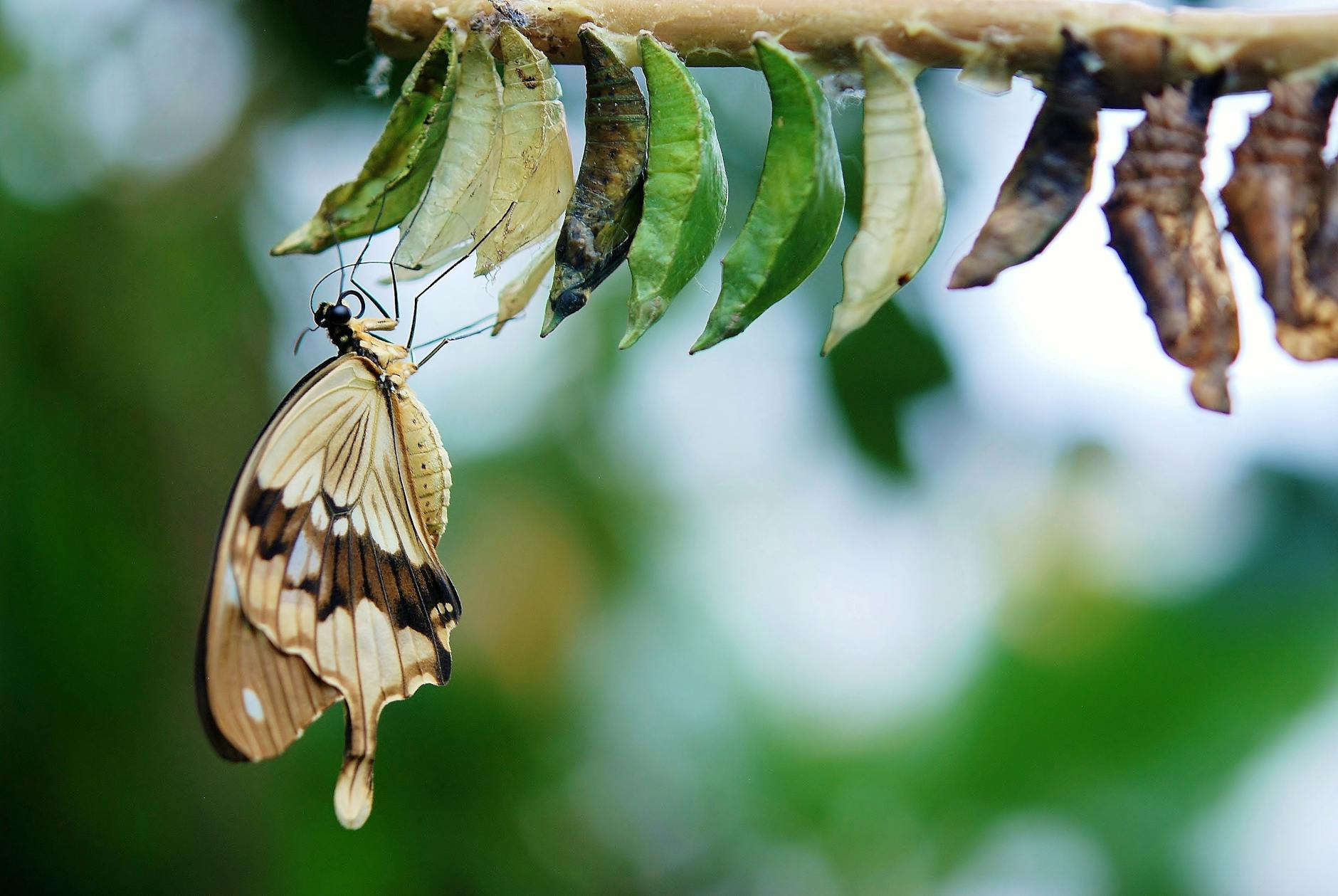
Photo by Pixabay on Pexels.com

One day, someone stumbled upon a butterfly chrysalis. Fascinated by nature’s beauty, he decided to observe it closely. A few days later, he noticed a small hole had appeared in the chrysalis. Intrigued, he paused to watch what would unfold.

Over the course of several hours, he witnessed the butterfly inside struggling with its tiny body, trying to squeeze through the small opening. Despite its best efforts, there seemed to be no progress. The butterfly appeared exhausted, unable to break free.

Nature, however, has a marvelous design. The butterfly’s “struggle” to emerge from the chrysalis is not a mere obstacle—it is a vital process. This challenge prepares the butterfly, equipping it with the strength and resilience it needs to soar into the skies.

Struggles in life are not meant to break us but to build us. If life allowed us to move through everything effortlessly, we might never grow stronger or discover our true potential. Challenges shape our character, nurture our perseverance, and enable us to achieve heights we never imagined.

So when we face hardships or setbacks, we should view them as opportunities for growth. These trials may be Heaven’s way of strengthening us, of preparing us to spread our wings and fly.

A Well-Intentioned Mistake

The man, moved by the butterfly’s apparent struggle, decided to help. He took a pair of scissors and carefully cut open the chrysalis, making it easier for the butterfly to emerge. As expected, the butterfly slipped out effortlessly.

However, something was amiss. The butterfly’s body was swollen and bloated, and its wings were small and weak. The man continued to watch, believing the wings would expand and the body would shrink in time. But this never happened.

For the rest of its life, the butterfly dragged its heavy body and fragile wings, unable to take flight. It remained grounded, never experiencing the freedom of soaring through the air.

What the kind-hearted man did not understand was that the butterfly needed to struggle. The act of squeezing through the small opening in the chrysalis forces fluid from the butterfly’s body into its wings, giving them the strength and nourishment required for flight. Without this critical process, the butterfly could not develop the ability to fly.

Embracing Life’s Challenges

This story serves as a powerful metaphor for our own lives. Just as the butterfly’s struggle is essential for its transformation, our struggles are necessary for our growth. Avoiding hardship may provide temporary relief, but it robs us of the opportunity to become stronger and more resilient.

In raising children, this lesson is particularly important. As parents or guardians, we must resist the urge to shield them from every difficulty. It is natural to want to protect them, but overprotection can hinder their growth. By allowing them to face challenges and learn from their struggles, we give them the tools they need to navigate life’s complexities.

So, the next time you encounter a challenge, remember the butterfly. Embrace the struggle, knowing that it is shaping you into someone stronger, wiser, and ready to take flight.

Link:https://peacelilysite.com/2024/12/27/the-butterfly-and-the-struggle-a-lesson-in-growth/

The Art of Graceful Living: Lessons from Yang Jiang on Simplicity and Inner Peace

Yang Jiang, my favorite contemporary female writer, lived a life intertwined with the turbulence of her times, yet she remained as pure and free as a cloud in the sky. Her works not only reveal the beauty of literature but also inspire us on how to maintain inner peace and composure amidst the chaos of the world.

Yang Jiang’s translation of the poem, “I compete with no one, and I disdain competing with anyone; I warm my hands by the fire of life, and when it dims, I am ready to go,” reflects her entire life. In her quiet dignity and grace, she transformed the hardships of life into something serene and beautiful, never letting bitterness take root.

Her unassuming nature is perhaps her most remarkable quality. While many chase after fame and recognition, Yang Jiang focused purely on her love for knowledge. Her reading, writing, and translation work were not for the sake of recognition, but for the joy of learning. In her essay “The Invisibility Cloak,” she explains that humility is the best protection in a complicated world. By not seeking heights, one doesn’t fear falling; by avoiding ambition, one retains a sense of innocence and inner calm. Yang Jiang embodied this wisdom throughout her life. During the Cultural Revolution, when she was assigned the humbling task of cleaning toilets, she used the opportunity to find freedom in adversity, relishing the quiet moments to read and reflect.

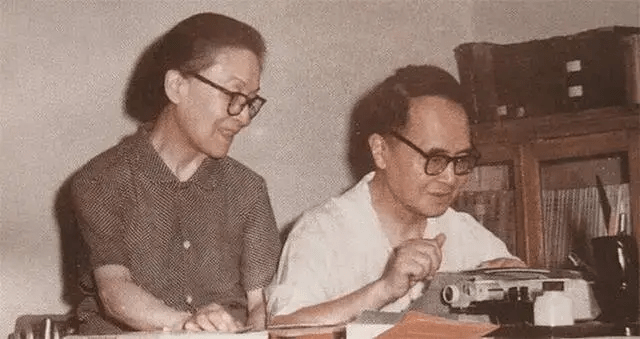
Yang Jiang and her husband Qian ZhongShu

“Simple living and a noble soul are the highest realms of life,” she once said. This was not just a belief but a guiding principle for Yang Jiang. She valued her time deeply, distancing herself from superficial socializing and instead focusing on self-cultivation. Together with her husband, Qian Zhongshu, they shared a simple, intellectual life, each respecting the other’s need for space and quiet to work. After her husband’s passing, Yang Jiang withdrew even further from the world, spending her days immersed in writing and editing.

At the age of 92, Yang Jiang published her essay collection We Three, which received widespread acclaim. Even at the age of 103, she was still active in compiling and publishing The Complete Works of Yang Jiang, a reflection of her lifelong dedication to literature.

It was her ability to remove herself from the distractions of life that allowed her to create works of such lasting value.

Her translation of the eight-volume Don Quixote, once the best-selling Chinese version, drew criticism at one point as a “negative example.” Many writers rushed to her defense, but Yang Jiang responded with characteristic humility: “I sincerely declare that I am a humble translator. I have revised my translation over and over, and still feel it’s not good enough. I hope the experts will offer their guidance.” Her modesty and openness to improvement reflect the calm confidence she carried throughout her life.

In her book Walking on the Edge of Life, she wrote, “We once yearned for the waves of fate, only to realize in the end that the most beautiful scenery in life is the inner calm and composure.” This sentence captures the essence of her wisdom. She knew that, amid the noise and complexity of the outside world, it is the peace we cultivate within that is the most precious.

Yang Jiang rarely wore makeup, preferring to show her natural face to the world. This was not just about simplicity in appearance but about a deeper confidence and acceptance of her true self. She believed that external beauty was far less important than the richness of one’s inner life. As she wisely said, “A woman’s greatest strength is not how beautifully she dresses, but the ability to make herself happy no matter what happens.”

Through her life, Yang Jiang has shown us that even in the face of life’s greatest challenges, it is possible to maintain elegance and beauty by nurturing simplicity and inner richness. Her wisdom and grace continue to inspire us to live with quiet strength, away from the distractions of the world, focused on what truly matters.

Link: https://peacelilysite.com/2024/10/03/the-art-of-graceful-living-lessons-from-yang-jiang-on-simplicity-and-inner-peace/

#YangJiang #QianZhongShu #WeThree #WalkingontheEdgeofLife #InnerPeace #Wisdom #Simplicity