When Noise Becomes Blindness

Wizard at desk surrounded by books, scrolls, potions, and magical screens displaying symbols and star constellations

The most dangerous thing is not that we are surrounded by falsehood, but that we slowly lose our desire to seek what is true.

In 1906, Hannah Arendt was born into a world that would soon reveal both the brilliance and the fragility of human society. She later witnessed how a highly educated and cultured nation could slowly lose its clarity, drifting into confusion and darkness.

In her important work, The Origins of Totalitarianism, she reflected on a troubling question:
How do people lose their ability to see what is right in front of them?

Her answer was not simple, but one part stands out quietly and powerfully—when truth becomes unstable, people begin to lose their ability to think clearly.

Today, we may not live in the same world she did, but in some ways, her observations feel closer than ever.

Every day, information rushes toward us from all directions. News, opinions, arguments, videos, headlines—especially on platforms like Facebook, X, and TikTok. Everything moves quickly. Everything competes for attention.

At first, we try to follow.
We read. We watch. We react.

But slowly, something changes.

The more we see, the less certain we feel.
The more voices we hear, the harder it becomes to know which one is true.
Contradictions pile up. Emotions rise. Clarity fades.

And without noticing it, we grow tired.

Not physically tired—but mentally tired.

When the mind is tired, it stops asking questions.
It stops examining.
It stops distinguishing.

We begin to accept things without really understanding them.
Or we reject everything, thinking, “Maybe nothing is true anyway.”

This is a quiet kind of blindness.

Not because we cannot see,
but because we no longer take the time to look carefully.

In her later essay, Truth and Politics, Arendt warned that when truth is constantly distorted, it does more than mislead—it weakens our trust in truth itself. And when that trust fades, something deeper begins to erode: our sense of judgment, responsibility, and even compassion.

This is not a distant problem.
It is something we face every day.

So what can we do?

Perhaps the answer is simpler than we expect, but not easier.

We pause.

We step back from the noise, even for a moment.
We resist the urge to react immediately.
We allow ourselves time to think.

Not quick thinking,
but careful thinking.

We ask:
Is this true?
What is the source?
Am I reacting, or am I understanding?

And just as importantly, we question even the ideas we already agree with.

Real thinking is not comfortable.
It requires patience.
It requires honesty.
Sometimes, it requires us to admit we were wrong.

But this quiet effort is what keeps the mind alive.

In a world filled with endless information, the greatest danger is not that we are misinformed.
It is that we stop thinking altogether.

So, in the midst of all the noise, we can choose something different.

To slow down.
To look carefully.
To think clearly.

And in doing so, we begin to see again.

#OriginsofTotalitarianism#HannahArendt #Germany #TruthandPolitics #Philosophy

Link:https://peacelilysite.com/2026/05/05/when-noise-becomes-blindness/

Awakening Life in the Deep: An Appreciation of Deep Sea Purple Moss

Among many spiritually expressive works of art, Deep Sea Purple Moss stands out for its simplicity and depth, offering viewers a striking, almost visceral impact. This Western-style painting by H.H. Dorje Chang Buddha III may appear abstract at first glance, yet it carries profound reflections on life and inner awakening.

The entire composition is built from just three colors—black, white, and purple—yet it reveals remarkable layers and tension. The black areas resemble a boundless deep sea, mysterious and unfathomable, as if there is no visible end. This depth evokes a sense of stillness infused with latent power. This “black” not only represents the unknown world but also symbolizes the unpredictable circumstances and challenges we encounter in life.

In contrast, the white surges forward like rolling waves, powerful and unstoppable. It breaks the silence of the black, injecting movement and dramatic force into the scene. These waves seem to echo life’s turbulence—the sudden changes, hardships, and trials that compel us to confront reality head-on.

Most captivating is the vibrant touch of purple. Like sea moss growing in the depths, it persists between waves and currents, embodying a resilient and vigorous life force. Here, purple is more than a visual accent; it becomes a symbol—of endurance, of hope, and of life’s ability to thrive even in adversity.

As we contemplate this painting, we begin to see that it is not merely a depiction of the sea, but a reflection of life itself. The black deep sea represents the environment we live in; the white waves, the challenges we must face; and the purple “moss” represents who we are.

In an ever-changing world, we cannot choose every circumstance, but we can choose how we respond. Just like the purple life form in the painting that continues to grow amid stormy waters, we too must learn to adapt, to temper ourselves through trials, and to seek upward strength even in difficult situations.

With its minimalist form, this work conveys a profound truth: true growth is not gained in calm waters, but forged in the midst of surging waves.

Perhaps, the next time we face the “great waves” in our own lives, we may remember this purple moss in the deep sea—growing upward, even in the darkest depths.

Link:https://peacelilysite.com/2026/04/30/awakening-life-in-the-deep-an-appreciation-of-deep-sea-purple-moss/

The Water-Splashing Festival: Where Tradition, Faith, and Renewal Meet

Every year in mid-April, the streets of Xishuangbanna and Dehong in Yunnan, China transform into a vast ocean of water.

To many, the Water-Splashing Festival is simply a joyful, all-out “water fight.” But what is often overlooked is that this grand celebration does not begin with noise or excitement—it begins with a single, quiet drop of perfumed water falling gently on the shoulder of a Buddha statue.

Today, let us step into Sangken Bimai—the New Year shared by the Dai, De’ang, and Blang peoples—and discover how traditional Chinese folk customs and Buddhist culture come together, blending seamlessly through the gentle yet powerful symbolism of water.

“Sangken Bimai” in the Dai language means “the turning of the New Year.” Its roots trace back to Sankranti, a Sanskrit term meaning “transition” or “passage,” tied to ancient Indian calendrical and religious traditions. With the spread of Theravada Buddhism, this observance took root across Southwest China and Southeast Asia, gradually evolving into a festival rich in both spiritual and cultural meaning.

Before the streets erupt in splashing water, every temple begins with a solemn and tranquil ritual: bathing the Buddha.

Devotees gather fresh flowers, soak their petals in clean water, and create a lightly scented infusion. One by one, they approach the Buddha statue, gently pouring the water over it with branches or cupped hands, symbolically washing away dust.

In this moment, there is no noise—only reverence.

This act is not merely an offering of respect to the Buddha; it is also a ritual of inner purification. It represents washing away the greed, anger, and ignorance accumulated over the past year, allowing the heart to return to clarity and light as the new year begins.

The Water-Splashing Festival typically lasts three to four days. While details vary by region, the structure follows a meaningful progression—from letting go of the old, through transition, to welcoming the new.

Day One: Farewell to the Old Year
This day resembles New Year’s Eve.

Along the Lancang River, dragon boats race across the water, sending waves splashing into the air. “Rising rockets”—traditional homemade fireworks—shoot skyward, carrying people’s wishes with them. Dressed in festive attire, people gather at lively markets filled with laughter and celebration, bidding farewell to the passing year.

Day Two: The Day Between Time
This is a deeply symbolic day—belonging neither to the old year nor yet to the new.

People building and decorating sand pagodas with flags and flowers on a beach during a festival

People visit temples to build sand stupas, shaping fine white sand into small pagodas adorned with colorful flags and flowers. Each grain of sand represents a good deed or kind thought.

This act of merit-making expresses hopes for favorable weather, peace, and stability in the coming year.

Day Three: Blessing and Rebirth Through Water
The first day of the New Year begins again with the Buddha-bathing ritual, followed by the festival’s most exuberant moment—water splashing.

For elders, water is gently poured over the shoulders as a sign of respect and blessing. Among peers and younger generations, however, the mood shifts into joyful abandon—buckets, basins, and water guns come into play, and laughter fills the air.

The more water, the deeper the blessing.

At this point, water is no longer just water—it becomes a tangible expression of good fortune and joy, symbolizing the washing away of the past and the arrival of new life.

A Celebration of Culture and Spirit

The Water-Splashing Festival is not only a holiday—it is a vibrant expression of culture.

The rhythmic beat of elephant-foot drums echoes like thunder, while the graceful peacock dance reflects harmony between humans and nature. As night falls, people release floating lanterns onto rivers and send sky lanterns drifting into the night, symbolizing the release of misfortune and the rising of hope.

IP上海 代傲辰 图

In these moments—both dynamic and still—people express reverence for nature and heartfelt wishes for the future.

One Drop of Water, A Shared Cultural World

This festival does not belong to Yunnan alone.

Across Southeast Asia, it appears under different names, yet carries the same cultural essence.

In Thailand, Songkran is not only about water—it is a time of gratitude and family connection. Younger generations gently pour scented water over the hands of elders to receive blessings, while also participating in merit-making rituals such as building sand stupas. Bright floral shirts have become a modern symbol of the celebration.

In Myanmar, the festival—known as Thingyan—has an especially strong spiritual atmosphere. Many people observe periods of fasting, visit temples, or even temporarily ordain as monks to welcome the New Year with purity and reflection. Traditional foods, such as soaked rice infused with fragrant water, are prepared, while large city celebrations feature grand stages where water is sprayed over joyful crowds.

Though names and customs vary, they all trace back to the same origin—Sankranti, marking not only the passage of time, but the renewal of life.

From the valleys of Yunnan to the cities of Southeast Asia, this single drop of water travels across geography and culture, quietly connecting the entire region.

It begins in stillness before the Buddha, and flows into laughter among people.
It symbolizes both letting go and renewal—purification and blessing.

What makes the Water-Splashing Festival so moving is not merely its liveliness, but what it reveals:

Even in the simplicity of everyday life, people continue to express kindness, cherish life, and hold hope for the future in the gentlest of ways.

A drop of water falling on the Buddha’s shoulder is an act of practice.
A splash of water shared among people is a blessing.

And when that water flows through the heart, perhaps what is truly cleansed…is ourselves.

Link:https://peacelilysite.com/2026/04/30/the-water-splashing-festival-where-tradition-faith-and-renewal-meet/

A Golden Bowl and an Awakened Heart — A Story of Awareness and Transformation

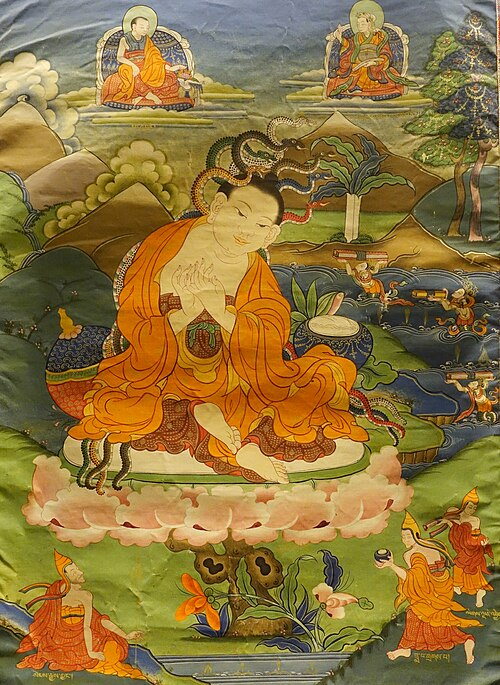
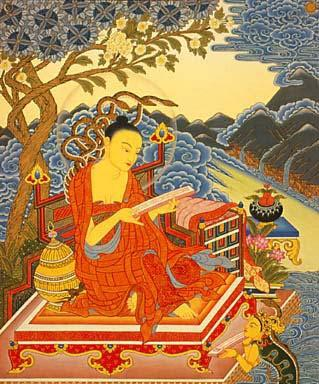
Nāgārjuna was a great Buddhist master from ancient India, widely respected as a profound philosopher and teacher who illuminated the path of wisdom and emptiness. Known for his deep insight and compassionate guidance, he helped many turn their minds toward awakening.

There is a story often told about him:

Nāgārjuna lived a simple and pure life, traveling from place to place, guiding others with wisdom.

One day, he arrived in a prosperous kingdom. The queen, a devoted follower of the Dharma, was overjoyed to hear of his visit. She had a beautiful golden bowl specially made, inlaid with precious jewels, and offered it to him with great respect.

When Nāgārjuna entered the city on his alms round, the queen personally presented the golden bowl. He accepted it calmly, without excitement or attachment, just as he would accept any ordinary offering.

Carrying the bowl, he quietly left the city and returned to a dilapidated hut where he was staying.

A thief saw everything.

He thought to himself, “Such a valuable bowl in the hands of a man who lives with nothing—how long can he keep it? If someone is going to take it, why not me?”

So he followed Nāgārjuna in secret.

As night fell, Nāgārjuna returned to his crumbling shelter. There were no doors, no roof—hardly a place anyone would visit.

The thief hid nearby, waiting for the right moment, planning to act once the master fell asleep.

After finishing a simple meal, Nāgārjuna gently placed the golden bowl outside, in a visible spot, and then sat down quietly.

The thief was stunned. He had not expected this.

After hesitating, he stepped forward and asked softly, “Aren’t you afraid someone will take your bowl?”

Nāgārjuna looked at him calmly and said, “Since you are already here, why hide? If you need it, you may take it.”

The thief was taken aback and found himself unable to reach for it.

“Do you not know how valuable this is?” he asked.

Nāgārjuna smiled gently. “If the mind is bound by it, even something precious becomes a burden. If the mind is not attached, even something simple is enough.”

The thief fell silent for a long moment, then said, “If you can see a golden bowl this way, then what you have must be far more valuable. Can you teach me?”

Nāgārjuna nodded. “Yes. But first, you must learn to observe your own mind.”

“How do I do that?” the thief asked.

“When a thought arises—whether of desire, grasping, or wanting to take something—simply be aware of it clearly. Do not follow it, do not suppress it, do not act on it. Just see it as it is.”

“That sounds easy,” the thief said.

“It sounds easy,” Nāgārjuna replied, “but it is not.”

The thief agreed to try.

Person meditating with illustrated thoughts about present moment, past memories, future dreams, sensations, and emotions

When he next attempted to steal, he began to watch his own thoughts. Yet each time he clearly saw the moment of greed arise, something within him shifted. His hand could no longer move forward.

Again and again, he tried—but whenever awareness was present, the urge lost its force.

After some time, he returned to Nāgārjuna, empty-handed.

“I can no longer steal,” he said quietly. “The moment I truly see my thoughts, the desire disappears.”

Nāgārjuna looked at him and said, “It is not that you have lost something. It is that you have begun to see clearly.”

Tears filled the thief’s eyes. “I once believed that gaining more would bring satisfaction. Now I see that when the mind becomes still, the peace and ease I feel are greater than any wealth.”

He knelt and said, “Please allow me to follow you and learn.”

Nāgārjuna replied, “The moment you are willing to face your own mind, your practice has already begun.”

This story has been passed down not to suggest that one should ignore right and wrong, but to remind us:

True transformation does not come from force, but from clear awareness.
True letting go is not merely giving things up, but releasing attachment in the heart.

When we begin to truly see our own minds, many attachments naturally fall away. And perhaps, the real turning point begins the moment we are willing to truly see ourselves.

Link:https://peacelilysite.com/2026/04/27/a-golden-bowl-and-an-awakened-heart-a-story-of-awareness-and-transformation/

When Anger Wears the Mask of “Protecting the Dharma” — A Reflection on My Practice

After years of practice, we often believe we are walking the right path. We may even feel completely confident in our own “devotion.” Yet sometimes, in a single moment, a line of true Dharma strikes like thunder—and we suddenly realize that all along, we have only been practicing on the surface.

Recently, while listening to Fundamental Dharma Expounded in the East, Volume 8 by Namo Dorje Chang Buddha III, I was deeply shaken. In the teaching, a disciple shared her confusion: she was extremely respectful toward the Buddhas, Bodhisattvas, and her guru, yet her practice did not truly resonate, and she gained no real benefit. In particular, whenever she saw others showing disrespect or even slandering the Buddhas and Bodhisattvas, her heart would fill with anger and aversion.

The Buddha’s teaching was like a clear mirror. It revealed not only her blind spot, but also something hidden deep within my own heart.

The Buddha compassionately taught that when facing the ignorance and slander of others, a practitioner should not give rise to anger, but to compassion.

When we see someone slandering the Buddhas and Bodhisattvas out of ignorance, we should think: “Because of her ignorance, she may fall into suffering. Her pain is also my responsibility.” This willingness to take others’ suffering as one’s own is the heart of a Bodhisattva.

Not only that—we should quietly pray for them, wishing that they awaken as soon as possible. We may even make this vow: “I must attain realization as quickly as I can, so I can help liberate her. Otherwise, how could she endure the suffering of lower realms?”

The Buddha gave the example of King Kali cutting the body. When Śākyamuni Buddha was subjected to extreme physical harm, there was not the slightest hatred in his heart. Instead, he vowed that after attaining Buddhahood, he would be the first to liberate that very person. This state—where there is no separation between self and others—is true great compassion, the genuine expression of the Four Immeasurables.

Multi-generational family sharing food and laughter at dinner table

As I listened, I broke into a cold sweat. I was reminded of something that happened in 2025, when I returned to my hometown to visit family.

At a family gathering, my cousin’s husband was filled with anger. He had suffered a stroke and complained that he had never done anything bad in his life, yet had not been protected. My cousin, who has faith in Buddhism—perhaps more from a wish for protection—kept a statue of Guanyin at home. After recovering, he angrily threw the statue onto the ground.

In that moment, a surge of anger rose within me. I felt this was a serious insult to the Buddhas and Bodhisattvas. I argued with him fiercely, my heart filled with resentment. I even thought to myself, “For someone like you, I will never dedicate blessings or prayers again.” After that, I have not contacted with them again.

What is more unsettling is that, at the time, I even felt a subtle sense of righteousness—as if I were “protecting the Dharma,” as if I were standing on principle.

Only after hearing this teaching did I truly see clearly: my anger was not for the sake of the Dharma—it came from my attachment to self.

To “protect the Dharma” without compassion is already to go astray.
The moment I gave rise to anger, refused to communicate, and gave up caring for them, I had already lost the four limitless states of mind. As the Buddha taught, if we turn away from someone, they are more likely to fall. What I thought was “holding my ground” was actually pushing away someone who needed help.

That was merely futile practice.
My mouth recited sutras and mantras, but my heart built a wall of resentment. Outwardly respectful, inwardly hardened—how could such practice bring any true benefit?

Worse still, it was faulty practice.
Facing others with anger creates no merit—it only accumulates karma.

This teaching helped me see the deepest blind spot in my practice.

I came to understand that the essence of practice is not how devout we appear on the outside, but this: when we encounter misunderstanding, slander, or ignorance, what arises in our heart—fire, or light?

Now, I feel both shame and gratitude. Shame for my ignorance and attachment, and deep gratitude for the Buddha’s teaching, which allowed me to turn back in time.

In my heart, I have quietly repented to my cousin’s husband. I have also begun again to pray for them, wishing that they may be free from suffering and awaken soon.

Practice is, in truth, a long process of “tearing down walls”—walls built from self-attachment, prejudice, and emotional reactions.

May we all, guided by the true Dharma, cleanse the dust from our hearts and cultivate a mind that is truly soft and vast—a heart that sees all beings as our own family.

Link:https://peacelilysite.com/2026/04/24/when-anger-wears-the-mask-of-protecting-the-dharma-a-reflection-on-my-practice/

The Blue Blood That Quietly Protects Us: A Lesson in Gratitude and Reverence

Healthcare worker giving vaccine injection to a hesitant child with mother supporting

There are lives in this world that support us in ways we rarely see, rarely think about, and almost never repay.

Each time we receive a vaccine, an IV drip, or undergo surgery safely, free from dangerous infection, we often feel gratitude toward medicine, toward doctors, toward science. Yet behind all of this, there has long been a silent contributor—ancient, resilient, and unknown to most.

The horseshoe crab.

Older than the dinosaurs by more than two hundred million years, these humble creatures have lived quietly along the shores of our planet, long before human beings ever appeared. While civilizations rose and fell, while continents shifted and climates changed, they endured—unchanged, steady, almost timeless.

And yet, in modern times, their lives became deeply intertwined with ours.

Their blue blood, colored by copper instead of iron, carries within it a remarkable biological defense system. Scientists discovered that the blood of horseshoe crabs contains a substance known as Limulus Amebocyte Lysate (LAL). What makes LAL extraordinary is its ability to detect bacterial endotoxins—harmful components from certain bacteria that can cause severe, even life-threatening reactions in humans.

When LAL encounters these toxins, it immediately forms a clot. This rapid response acts like a natural alarm system. In laboratories, even the tiniest trace of contamination in vaccines, injectable drugs, or medical equipment can be detected using this reaction. Before any medicine enters the human body, it must pass this test.

In this way, the horseshoe crab’s blood has quietly protected millions of lives. It has helped ensure that what is meant to heal does not instead harm.

They have been, in a very real sense, silent guardians of human health.

And yet, how often have we paused to thank them?

For decades, countless horseshoe crabs have been taken from the ocean, their blood carefully drawn, and then returned. Though efforts are made to minimize harm, the process is stressful, and not all survive. Their contribution has been largely unseen, unrecognized, and without voice.

Horseshoe crabs glowing and swimming underwater near ancient ruins with colorful coral and fish

Only in recent years has science developed synthetic alternatives, allowing this ancient species a chance to rest, to recover, and perhaps to continue their long journey on Earth with less human burden.

But beyond science, this story invites us into something deeper.

In Buddhist teaching, we are reminded that all beings are not separate from us. Across beginningless time, every living being has, in one way or another, been our parent, our relative, our companion in the vast cycle of existence. Though forms change, though appearances differ, the essence of life remains interconnected.

When we look at a small, unfamiliar creature, we may see something distant, something unrelated to ourselves. But in truth, the web of life is far more intimate than we imagine.

Who can say, in the endless turning of time, how many lives have supported ours?

Who can know how many unseen acts have allowed us to live safely, to grow, to continue?

The horseshoe crab does not know our names. It does not act with intention to help us as we understand it. And yet, through the natural unfolding of causes and conditions, it has become a protector of human life.

This alone is enough to awaken a quiet sense of gratitude.

Perhaps the deeper lesson is not only about one species, but about how we see the world itself.

If even a creature we rarely notice can play such an essential role in our survival, then how many other beings—seen and unseen—are supporting us at every moment?

The food we eat.
The air we breathe.
The countless forms of life that sustain ecosystems and maintain balance.

When we begin to reflect in this way, something within us softens.

Indifference becomes awareness.
Awareness deepens into respect.
And respect quietly transforms into gratitude.

To live with this understanding is to walk more gently upon this Earth.

It is to recognize that we are not isolated individuals, but participants in a vast and living network of interdependence.

And perhaps, in this recognition, a simple aspiration arises:

To harm less.
To care more.
To honor life in all its forms.

Because we never truly know—
which life is supporting ours,
which being is protecting us,
which silent presence is helping us continue on our path.

And in that not knowing, there is something profoundly beautiful.

A reason to be humble.
A reason to be grateful.
A reason to treat every life… with reverence.

Link:https://peacelilysite.com/2026/04/16/the-blue-blood-that-quietly-protects-us-a-lesson-in-gratitude-and-reverence/

The Wisdom in Our Hands: A Simple Path to a Clear Mind

Can doing the dishes help prevent memory loss?

In an age of endless scrolling and effortless convenience, we rarely stop to consider a quiet truth: our bodies were never designed for stillness without purpose.

A Chinese traditional doctor once shared a piece of advice with a patient who feared memory loss in old age. It was not a prescription. It was not a costly treatment. It was simply this:

“If you want to protect your brain, use your hands. Start by washing dishes every day.”

At first, it may sound almost too simple—perhaps even surprising. But both ancient wisdom and modern science seem to gently point in the same direction.

Neon cortical homunculus diagram with labeled body parts and brain connections

Neuroscience reveals that within our brain lies a remarkable structure known as the cortical homunculus—a “map” of the body drawn across the surface of the brain. Discovered by Wilder Penfield, this map shows that not all parts of the body are represented equally. The hands—especially the fingers and thumbs—occupy an unusually large area, as do the lips and mouth. These are the parts we use most delicately, most precisely, and most meaningfully to interact with the world.

Every time we use our hands—washing dishes, preparing food, writing, gardening—we are not just completing a task. We are activating the brain. We are strengthening neural pathways. We are maintaining coordination, attention, and awareness. In a very real sense, we are keeping the mind alive through the body.

And yet, in modern life, much of our time is spent swiping screens. Our hands move, but only in the smallest, most repetitive ways. Our eyes are active, but our bodies remain still. Our minds are filled, but not always nourished. Convenience has brought comfort, but it has also quietly taken away many opportunities to truly use ourselves. And when we stop using what we were given, we slowly lose it.

In Chinese wisdom, there is a simple yet profound saying: “大道至简”—the Great Way is simple. The path to health, clarity, and longevity is often not hidden in complexity, but revealed in the ordinary. Perhaps the protection we seek for our memory is not only found in medicine, but in movement; not only in supplements, but in simple, mindful actions.

To wash a dish.
To knead dough.
To tend a garden.
To write a note by hand.

These are not small things. They are quiet acts of preservation.

Our body is not just a vessel—it is an extraordinary, living system designed for engagement. When we use it fully, it supports us. When we neglect it, it slowly fades.

So perhaps we can begin, not with something grand, but with something simple: use your hands, move your body, and be present in small actions. Because sometimes, the most profound care we can offer ourselves… is already within reach.

Link:https://peacelilysite.com/2026/04/15/the-wisdom-in-our-hands-a-simple-path-to-a-clear-mind/

Where Compassion Lands: The Silent Rescue of a Hive

Two beekeepers in protective suits collecting honey from a large hanging hive at sunset

When a Home Was Lost, Compassion Found a Way—A Quiet Act That Redefined the Value of Every Living Being

There are moments in life when compassion is no longer an idea, but a living force—quiet, unwavering, and profoundly transformative.

This is the story of such a moment.

Shared by lay practitioner Qi Pengzhi(戚鹏直), it recounts an act of extraordinary care by Namo Dorje Chang Buddha III and Namo Yuhua Shouzhi Wang Buddha Mother—an act not directed toward kings or crowds, but toward a fragile colony of bees, hidden on the rooftop of an ordinary home.

It was 2011, a year marked by an unexpected turning point. The house in which they resided had been sold, and the new owner intended to demolish it. Time was short. Departure was inevitable.

And yet, above their heads, life was quietly unfolding.

A vast hive of bees had taken refuge beneath the roof—thousands of tiny lives bound together in delicate harmony. To most, this would have been an inconvenience, perhaps even a nuisance. The simplest solution, as suggested by the landlord, was extermination.

But compassion does not choose the convenient path.

“Under no circumstances should they be harmed,” came the firm and gentle instruction. “Their lives are no different from ours.”

In that moment, the fate of the hive was no longer incidental—it became a responsibility.

What followed was not a symbolic gesture, but a meticulous and determined effort. Beekeeping specialists were consulted. Plans were drawn. A new hive was carefully constructed in advance, shaped not by haste but by respect for the natural rhythms of the bees.

Time pressed on. The day of relocation arrived.

There is a quiet tension in handling something so easily broken. Bees do not understand human urgency; they respond only to the subtle language of instinct and survival. At the heart of their world lies the queen—without her, the colony dissolves into silence.

So every movement mattered.

The disciples stood watch as professionals gently removed the hive from the rooftop. No detail was overlooked. No life dismissed as insignificant. It was a scene both practical and deeply reverent—an unspoken recognition that even the smallest existence carries its own dignity.

Yet the journey did not end with removal.

True compassion does not abandon halfway.

They followed the bees—literally—escorting them to their new home. The destination was a secluded mountainside, where wildflowers stretched across the land and human disturbance faded into absence. It was a place where life could continue as it was meant to: freely, quietly, and whole.

Only after ensuring the bees were safely settled did they return.

What remains is not merely the memory of an act, but the echo of its meaning.

Knight resting against a maiden inside a glowing magical shield protecting them from dark and fiery creatures

In an age where humanity grapples with ecological imbalance, the significance of such care becomes ever more apparent. Bees, as science now repeatedly reminds us, are vital to the continuity of life. Their silent labor sustains ecosystems, nourishes crops, and binds the intricate web of nature together.

To protect them is, in truth, to protect ourselves.

And yet, beyond science, there is a deeper understanding—one that transcends utility.

It is the recognition that life, in all its forms, is not hierarchical but shared.

That the boundary between “us” and “them” is far thinner than we imagine.

That a single act of protection, offered without condition, can restore a fragment of harmony to a fractured world.

Perhaps true compassion is not measured by grand gestures, but by the willingness to pause… to notice… and to protect even that which the world has overlooked.

On a rooftop, in a fleeting moment before demolition, a choice was made.

Not to destroy—but to preserve.

Not to disregard—but to honor.

And in that choice, something far greater than a hive was saved.

This post is translated and edited from Interview with a Buddhist Disciple (64): AM1300 Chinese Radio Station – Exclusive Interview with U.S. Layman Qi Pengzhi 《佛弟子訪談(六十四):AM1300中文廣播電臺-專訪美國 戚朋直居士》 by Linda Chang. For original records, please click here.

Click here to Wikitia page on H.H. Dorje Chang Buddha III that list major accomplishments and teachings with links.

Link:https://peacelilysite.com/2026/04/09/where-compassion-lands-the-silent-rescue-of-a-hive/

I willingly accept the karmic retribution of cause and effect for everything I have stated

Longzhi Danbei Nima Rinpoche

A Personal Account of Extraordinary Events

The return of H.H. Dorje Chang Buddha III, Yun Gao Yixi Nuo Bu, to this world is widely recognized. His supreme moral virtue and mastery of the Five Vidyas are unparalleled—there is no second holy being who can be compared to Him. This is something well known to many.

As for the extraordinary spiritual states that people often find astonishing, such manifestations occur frequently in His presence. Those of us who have served closely around H.H. Dorje Chang Buddha III have witnessed so much that, over time, we have almost grown accustomed to these sacred phenomena—perhaps even somewhat numb to them.

However, the two events I wish to share here are not significant simply because I personally experienced them. Rather, they are directly connected to the karmic blessings of all sentient beings in this world.

The First Event: A Mysterious Earthquake

The first incident took place on the afternoon of July 30, 1999, at around 4:00 PM.

Due to changing circumstances, H.H. Dorje Chang Buddha III decided to leave China. At that time, the departure could not be made public, so I was the only one accompanying Him. We stood outside the South Entrance of Meijing Building in Luohu District, Shenzhen, waiting for a car to take Him to the airport.

Suddenly, I felt my body shake. Behind me, the thirty-story building began to sway. Even the heavy streetlights fixed onto the granite base rattled loudly, their glass covers clattering continuously for dozens of seconds.

I immediately realized that the earth was trembling—an earthquake. Yet my heart felt heavy, and I remained silent.

After a moment, H.H. Dorje Chang Buddha III asked calmly,
“Was that the earth shaking?”

I simply replied, “Yes.”

His expression remained composed. He clearly understood that the buildings would not collapse, for this was no ordinary earthquake—it arose from a profound karmic cause connected to the Dharma.

According to the scriptures, the earth trembles only when a Buddha descends into the world or enters parinirvana. At that time, however, I did not fully comprehend the deeper significance of what had occurred.

Only later did I come to realize:
beings in the Western world were about to receive great blessings—they would have the opportunity to encounter the true Dharma.

The Second Event: A Manifestation Beyond Imagination

The second event occurred on the very day I first paid homage to H.H. Dorje Chang Buddha III.

Beginning that day, a grand Dharma assembly was held over many consecutive days. During this assembly, H.H. Dorje Chang Buddha III expounded profound teachings, including “Debates Between Monastics and Laypeople” and “What I Have Seen and Reflected Upon,” addressing beings of different capacities and karmic conditions.

Before the teachings began, an elderly practitioner, Huang Huibang, shared his personal experience of receiving blessings from the Buddha that very day.

Huang Huibang was a highly respected figure in China, formerly serving as Vice Chairman of the Jiangxi Buddhist Association, and was often referred to as the “Living Buddha of Jiangxi.”

From a young age, while studying in Japan, he encountered Buddhism and devoted himself wholeheartedly to its practice. For over seventy years, he maintained a vegetarian lifestyle and rarely parted from the scriptures. His lifelong dedication and sincerity were deeply moving.

Even at nearly ninety years old, he traveled alone to Tibet in search of the Dharma. The revered master Jigme Phuntsok was profoundly touched by his devotion and told him:

“Your roots of virtue are exceedingly deep. You should go and study higher Dharma under H.H. Dorje Chang Buddha III.”

He then informed him where to find the Buddha.

Huang Huibang recounted that on that day, he personally partook of sacred offerings bestowed through H.H. Dorje Chang Buddha III. He was also told that his wish could be fulfilled—that he could behold a Buddha.

Yet at the moment when this was about to happen, Huang Huibang hesitated and said he would rather see a Dharma protector instead.

At that instant, H.H. Dorje Chang Buddha III casually called out.

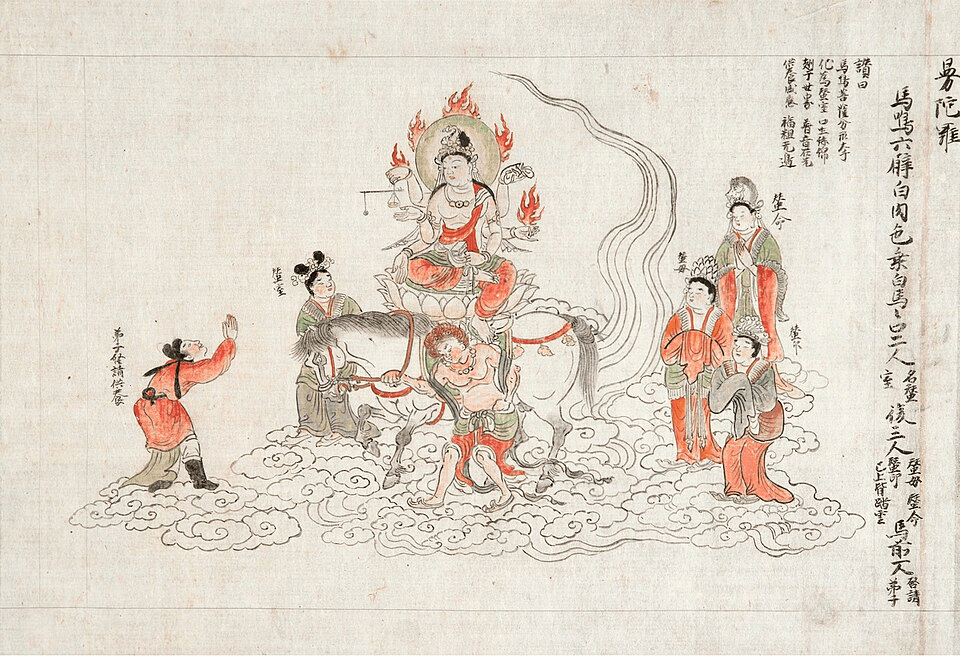
Mahakala Vaja Protector

Suddenly, a Dharma protector appeared out of thin air—towering like an iron pillar, clad in black armor, with a thunderous roar. The sheer presence overwhelmed Huang Huibang, and he fell backward onto the ground before he could react. (A recording of Huang Huibang recounting this event exists.)

One may ask: who could summon such a being with a single call?

Only a Buddha possesses such majestic power and virtue.

A Solemn Affirmation

These two events are entirely true.

If I have spoken falsely to deceive others, may I bear all negative consequences. But if what I have shared is true, then may all be auspicious, and may all beings have the opportunity to hear the true Dharma of H.H. Dorje Chang Buddha III, increasing in both merit and wisdom, and ultimately attaining liberation.

Disciple of the Buddha: Longzhi Danbei Nima
November 15, 2007

This article has been translated from Chinese by Linda Chang for your reference. Please click https://changhuaxxx.blogspot.com/2017/06/blog-post_0.html to view the original Chinese version.

Link:https://peacelilysite.com/2026/03/27/i-willingly-accept-the-karmic-retribution-of-cause-and-effect-for-everything-i-have-stated/

A Bucket of Water, A Lifetime of Karma: A Story of Cause and Effect

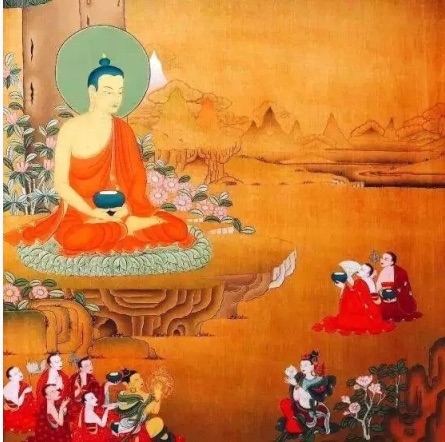
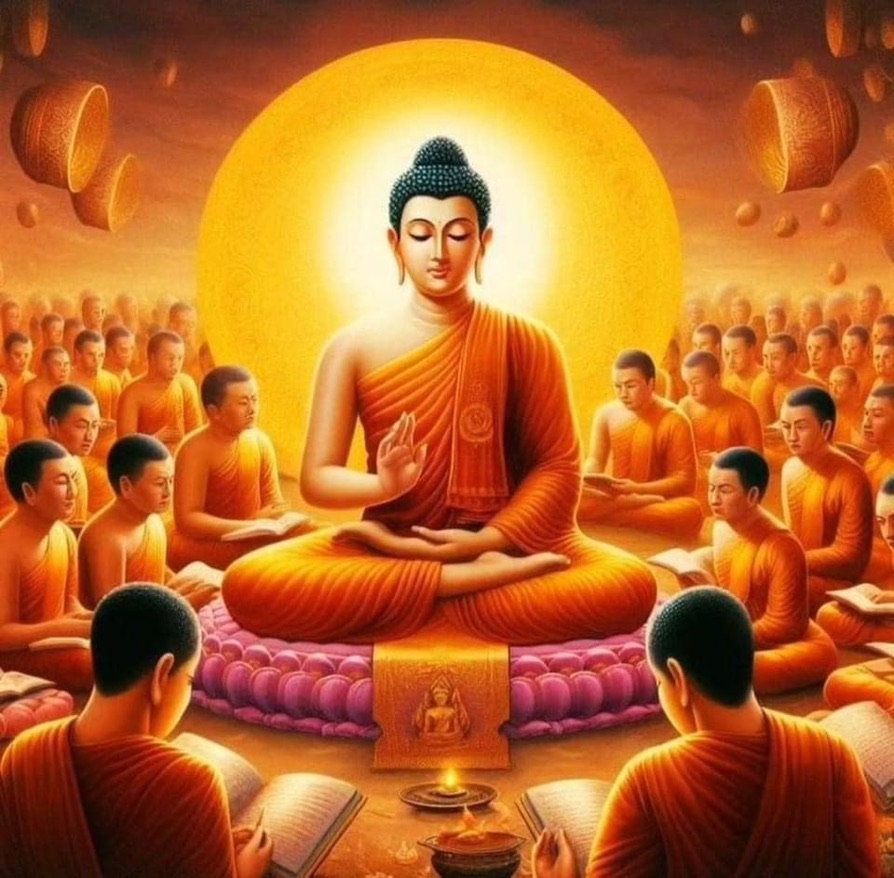
During the time of Shakyamuni Buddha, there was a day when the Buddha was giving teachings to his disciples. In the middle of the discourse, he suddenly turned to Ananda and said:

“Take a bucket and go to a small village about five miles ahead. There, you will find an elderly woman washing clothes by a well. Ask her for a bucket of water—and remember to be polite and kind.”

Ananda respectfully nodded and set off with confidence. Such a simple task, he thought. Surely, it would be completed without difficulty.

When Ananda arrived at the village, he indeed found a gray-haired elderly woman by the well. With sincerity and respect, he bowed and said:

“Dear elder, may I please have a bucket of water?”

To his surprise, the woman looked up at him with irritation. Her expression hardened, and she replied sharply:

“No! This well is only for the people of this village. Outsiders are not allowed to use it!”

No matter how politely Ananda pleaded, she refused. Helpless, he returned empty-handed.

Back before the Buddha, Ananda recounted everything that had happened. The Buddha simply nodded and asked him to sit down. Then he turned to another disciple—Sariputra—and gave him the same instruction.

A Completely Different Outcome

Sariputra walked the same path and arrived at the same village. The same elderly woman was still there, washing clothes by the well.

He approached her with equal politeness:

“Dear elder, may I ask for a bucket of water?”

This time, something remarkable happened.

The woman looked up—and her face lit up with warmth and joy, as if she had just met a long-lost relative.

“Of course! Of course!” she said happily. “Come, let me draw the water for you.”

Not only did she fill a bucket for him, but she also insisted he wait. She hurried home and brought back some food, urging him to take it along for his journey.

Sariputra returned with a full bucket—and a heart full of wonder.

The disciples were puzzled. How could the same request, from two equally respectful monks, lead to such completely different outcomes?

They turned to the Buddha and asked for an explanation.


The Buddha revealed:

“In a distant past life, this elderly woman had been reborn as a mouse. One day, she died by the roadside, her body exposed under the burning sun.

At that time, Ananda was a traveling merchant. When he saw the dead mouse, he felt disgust and turned away, covering his nose as he passed.

Sariputra, on the other hand, was a scholar on his way to an important examination. When he saw the same mouse, he felt compassion. He gently covered the body with some earth, offering it a small act of dignity.

After countless lifetimes, the causes they planted ripened into the results you see today.”

This story reveals a profound truth:

Even the smallest thought—whether of kindness or indifference—can plant seeds that shape our future.

Ananda did not commit a great wrong; he simply turned away in aversion. Sariputra did not perform a grand act; he simply offered a moment of compassion. Yet the results, across time, were vastly different.

If such a small moment can create such powerful consequences, how much more impact do our daily actions have?

Every word we speak, every thought we nurture, every action we take—these are all seeds of karma.

To harm others is to plant suffering for ourselves.
To act with kindness is to cultivate blessings we may one day receive.

In our daily lives, we may not notice the immediate results of our actions. But the law of cause and effect is always at work—quietly, patiently, unfailingly.

So let us remember:

  • Avoid harming others
  • Practice kindness whenever possible
  • Build connections rooted in goodwill

Because even a single moment of compassion…
may one day return to us as unexpected grace.

Link:https://peacelilysite.com/2026/03/26/a-bucket-of-water-a-lifetime-of-karma-a-story-of-cause-and-effect/