When Noise Becomes Blindness

Wizard at desk surrounded by books, scrolls, potions, and magical screens displaying symbols and star constellations

The most dangerous thing is not that we are surrounded by falsehood, but that we slowly lose our desire to seek what is true.

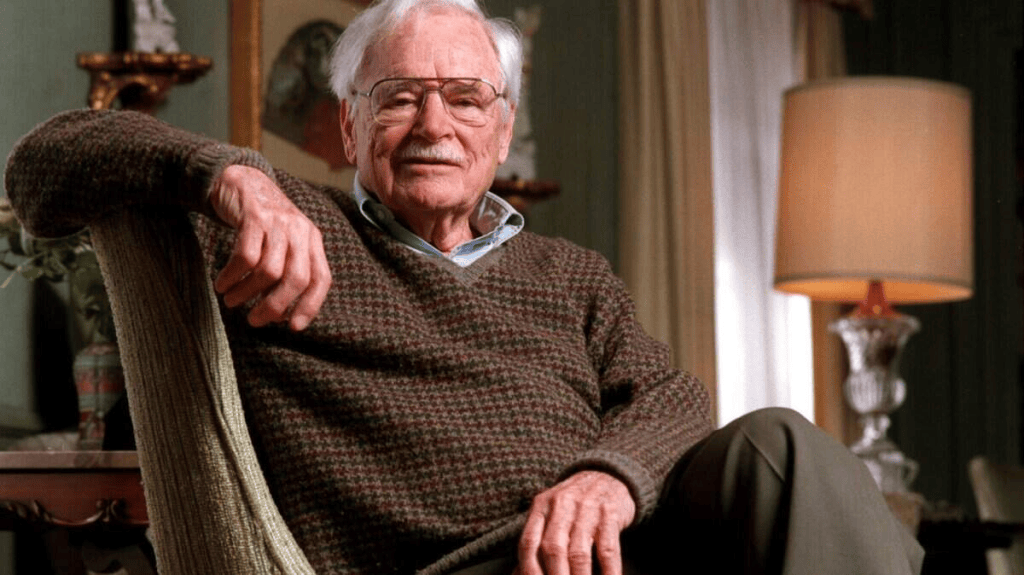
In 1906, Hannah Arendt was born into a world that would soon reveal both the brilliance and the fragility of human society. She later witnessed how a highly educated and cultured nation could slowly lose its clarity, drifting into confusion and darkness.

In her important work, The Origins of Totalitarianism, she reflected on a troubling question:
How do people lose their ability to see what is right in front of them?

Her answer was not simple, but one part stands out quietly and powerfully—when truth becomes unstable, people begin to lose their ability to think clearly.

Today, we may not live in the same world she did, but in some ways, her observations feel closer than ever.

Every day, information rushes toward us from all directions. News, opinions, arguments, videos, headlines—especially on platforms like Facebook, X, and TikTok. Everything moves quickly. Everything competes for attention.

At first, we try to follow.
We read. We watch. We react.

But slowly, something changes.

The more we see, the less certain we feel.
The more voices we hear, the harder it becomes to know which one is true.
Contradictions pile up. Emotions rise. Clarity fades.

And without noticing it, we grow tired.

Not physically tired—but mentally tired.

When the mind is tired, it stops asking questions.
It stops examining.
It stops distinguishing.

We begin to accept things without really understanding them.
Or we reject everything, thinking, “Maybe nothing is true anyway.”

This is a quiet kind of blindness.

Not because we cannot see,
but because we no longer take the time to look carefully.

In her later essay, Truth and Politics, Arendt warned that when truth is constantly distorted, it does more than mislead—it weakens our trust in truth itself. And when that trust fades, something deeper begins to erode: our sense of judgment, responsibility, and even compassion.

This is not a distant problem.
It is something we face every day.

So what can we do?

Perhaps the answer is simpler than we expect, but not easier.

We pause.

We step back from the noise, even for a moment.
We resist the urge to react immediately.
We allow ourselves time to think.

Not quick thinking,
but careful thinking.

We ask:
Is this true?
What is the source?
Am I reacting, or am I understanding?

And just as importantly, we question even the ideas we already agree with.

Real thinking is not comfortable.
It requires patience.
It requires honesty.
Sometimes, it requires us to admit we were wrong.

But this quiet effort is what keeps the mind alive.

In a world filled with endless information, the greatest danger is not that we are misinformed.
It is that we stop thinking altogether.

So, in the midst of all the noise, we can choose something different.

To slow down.
To look carefully.
To think clearly.

And in doing so, we begin to see again.

#OriginsofTotalitarianism#HannahArendt #Germany #TruthandPolitics #Philosophy

Link:https://peacelilysite.com/2026/05/05/when-noise-becomes-blindness/

No One to Blame: Understanding the Root of Anger

When Anger Has Nowhere to Stay

In our daily lives, anger often appears without invitation. A single word, a small inconvenience, or an unmet expectation can stir something deep within us. Before we realize it, the mind is no longer calm, and the heart feels as though it is burning.

There was once a woman who had a very bad temper. She often got angry over small things. Afterward, she would regret it. She knew her anger hurt others, and she truly wanted to change. But when anger came, she felt she could not control it.

One day, a friend told her, “There is a wise monk nearby. Maybe he can help you.”
So she decided to go.

When she met the monk, she told him everything—how easily she lost her temper, how much pain it caused, and how helpless she felt. She hoped he would give her some advice.

Elder woman talking to a Buddhist monk inside a temple with statues and worshippers in the background

The monk listened quietly. When she finished, he said nothing. He simply led her to a small room, stepped outside, and closed the door.

Soon she realized—the door was locked.

At first, she was confused. Then she became angry.

“I came here for help, and he locks me in?” she thought.

The room was dark and cold. The more she thought about it, the angrier she became. She started shouting, knocking on the door, and scolding the monk loudly.

But there was no answer.

No matter how much she shouted, the monk did not respond.

After a long time, she became tired. Her voice grew quiet.

Then the monk asked from outside, “Are you still angry?”

She said, “I’m angry at myself! Why did I come here?”

The monk replied, “If you cannot forgive yourself, how will you forgive others?” Then he left.

The room became quiet again.

After some time, the monk returned and asked, “Are you still angry?”

She said, “No, I’m not angry anymore.”

“Why?” he asked.

She said, “What’s the use of being angry? I’m still stuck in this dark, cold room.”

Her anger had weakened, but it was still there.

Later, when the monk asked again, she said, “I’m not angry anymore, because you are not worth my anger.”

The monk said, “The root of your anger is still there. You have not let it go.”

His words stayed in her mind.

After a long silence, she asked, “Can you tell me—what is anger?”

This time, the monk came to the door. He did not speak. He simply poured the tea in his cup onto the ground.

The woman watched quietly.

Suddenly, she understood.

“If I do not get angry, where does anger come from?” she thought.
“If my mind is clear, what is there to be angry about?”

At that moment, she saw the truth: anger does not come from others. It comes from our own mind.

From the teaching of Gautama Buddha, we learn that anger arises when the mind is not open—when we hold on too tightly to our own thoughts, feelings, and expectations.

If we do not hold onto anger, it cannot stay.

In our daily life, anger often feels very real. We think others cause it. But if we look carefully, we see that it begins inside us.

When anger comes, we can pause and ask:
Why am I reacting this way?
What am I holding onto?
Can I let it go?

If we become more patient, more tolerant, and more willing to step back, anger will slowly lose its power.

Letting go of anger does not make us weak. It frees us.

When we put down the fire in our heart, we will see that things are not as bad as we thought. Other people are not as terrible as we imagined.

In the end, the lesson is simple:

If we do not create anger, it has nowhere to stay.

Link:https://peacelilysite.com/2026/04/21/no-one-to-blame-understanding-the-root-of-anger/

The Doctor Who Chose Compassion Over Wealth

A quiet light in a noisy world

In a modest clinic in Tanta, there once sat a doctor whose life quietly redefined the meaning of success. His name was Mohamed Mashally, but to thousands of ordinary people, he was simply known as the doctor who would never turn them away.

For more than half a century, Dr. Mashally devoted himself to serving those who had nowhere else to go. While many pursue medicine as a path toward status or financial security, he chose a different road—one shaped by compassion, humility, and an unwavering sense of responsibility to others.

His clinic was simple, almost unremarkable. Yet outside its doors, long lines would form each day. Patients came not only because his fees were extraordinarily low—sometimes less than the cost of a meal—but because they knew they would be treated with dignity. And for those who could not pay at all, he quietly asked for nothing.

Behind this life of selfless service was a moment of deep sorrow that transformed his heart. Early in his career, Dr. Mashally treated a young boy suffering from diabetes. The child’s family could not afford the medicine he needed. When the boy passed away, it left a lasting imprint on the young doctor’s soul. From that day forward, he made a silent vow: no one should lose their life simply because they are poor.

And so, he began a lifelong practice of giving.

He worked long hours each day, often seeing patient after patient without rest. Opportunities came—offers to move to wealthier places, chances to build a more comfortable life—but he declined them all. He believed that his place was among those who needed him most.

Even when people, moved by his story, tried to offer him financial help, he would gently refuse. “Give it to the poor,” he would say. For him, kindness was not something to be redirected—it was something to be lived.

In a world often driven by gain and recognition, Dr. Mashally remained rooted in something deeper. He did not seek fame, yet his story spread across countries. He did not chase wealth, yet he became rich in something far more enduring—the gratitude of countless lives he touched.

When he passed away in 2020, many mourned not just a doctor, but a rare kind of human being—one who embodied the quiet truth that compassion, when practiced sincerely, becomes a force that transforms the world.

His life leaves us with a gentle but profound question:

What does it mean to truly succeed?

Perhaps success is not found in how much we accumulate, but in how much we are willing to give. Not in recognition, but in sincerity. Not in grand gestures, but in the small, consistent acts of care that ripple outward in ways we may never fully see.

Like a lamp that asks for no reward, yet brings light to all who pass by, Dr. Mashally’s life reminds us that each of us, in our own way, has the ability to ease suffering and bring warmth into the lives of others.

And sometimes, the greatest legacy we can leave behind is simply this:

That because we lived, someone else suffered a little less.

Link:https://peacelilysite.com/2026/04/20/the-doctor-who-chose-compassion-over-wealth/

Beyond Achievement: Designing a Life Where Success Deepens Joy

In our culture, success is often seen as the ultimate destination—the long-awaited moment when effort finally blossoms into happiness. We are taught to dream, to strive, and to believe that once we reach our goals, fulfillment will naturally follow. Yet, both modern science and lived experience are beginning to tell a more nuanced story.

In recent years, research in neuroscience and psychology has revealed a quiet paradox: achieving our most cherished goals does not always bring lasting happiness. The brain’s reward system, driven by dopamine, is designed primarily for anticipation rather than arrival. It fuels the excitement of pursuit—the late nights, the hopeful striving, the vision of what could be. But once the goal is reached, that surge of motivation fades, and the emotional intensity often drops.

At the same time, psychologists describe a phenomenon known as hedonic adaptation—our tendency to quickly return to a baseline level of happiness even after major positive events. The dream job becomes routine. The long-awaited achievement becomes part of everyday life. What once felt extraordinary quietly becomes ordinary.

For some, this transition is subtle. For others, it can feel like an unexpected emptiness—a sense of “What now?” after the finish line has been crossed.

But this discovery is not discouraging. In fact, it is deeply illuminating.

It reminds us that the human mind is intricate, and happiness is more than just accomplishment. Success, by itself, is not designed to sustain joy—it is only one part of a much larger inner landscape.

True fulfillment begins when we understand this hidden pattern and learn to work with it, rather than against it.

A meaningful life is not built solely on reaching goals, but on what those goals serve. When ambition is guided by purpose—when our efforts contribute to something beyond personal gain—success no longer feels like an ending. Instead, it becomes a doorway.

This is why acts of kindness, compassion, and contribution carry such enduring power. Unlike fleeting achievements, they create a sense of connection and meaning that the mind does not easily adapt away from. They anchor us in something deeper than momentary reward.

Imagine a different way of living:

A life where ambition and inner well-being are not in conflict, but in harmony.
A life where achieving a dream does not leave a void, but opens a new horizon of purpose.
A life where each success is not a final destination, but a step toward greater understanding, compassion, and joy.

By understanding the brain’s hidden responses, we gain the ability to design such a life. We begin to see that fulfillment is not something waiting at the end of achievement—it is something woven into the journey itself.

In this light, success becomes more than personal victory. It becomes an opportunity to deepen meaning, to expand the heart, and to align our outer accomplishments with our inner growth.

Perhaps lasting happiness has never been about reaching the summit.

Perhaps it is about learning how to walk the path—with awareness, purpose, and a quiet, enduring sense of joy.

Link:https://peacelilysite.com/2026/03/19/beyond-achievement-designing-a-life-where-success-deepens-joy/

A Hopeful Skeptic

By Jamil Zaki

According to an ancient myth, hope arrived on earth as part of a curse. Prometheus stole fire from the gods, and Zeus avenged the theft with a “gift.” He commanded Hephaestus to mold the first woman, Pandora, and presented her to Prometheus’s brother. Pandora, in turn, was given a clay jar—which Zeus told her never to open. Curiosity got the better of her, she lifted the lid, and out flew all the world’s ills: sickness and famine for our bodies, spite and envy for our minds, war for our cities. Realizing her mistake, Pandora slammed the jar shut, leaving only hope trapped inside.

But what was it doing there in the first place, alongside our miseries? Some people believe hope was the jar’s only good, and trapping it further doomed us. Others think it fits in perfectly with the other curses. The philosopher Friedrich Nietzsche called hope “the most evil of evils because it prolongs man’s torment.” You might agree. Hope has been typecast as delusional and even toxic—causing people to ignore their problems and the world’s.

Scientists think of hope differently. The psychologist Richard Lazarus wrote, “To hope is to believe that something positive, which does not presently apply to one’s life, could still materialize.” In other words, hope is a response to problems, not an evasion of them. If optimism tells us things will get better, hope tells us they could. Optimism is idealistic; hope is practical. It gives people a glimpse of a better world and pushes them to fight for it.

Any of us can practice hope. [My friend] Emile did. He saw the same world most of us do, but instead of retreating into cynicism, he chose to work for peace, build community, and live his principles. To me and many who knew him, Emile’s positivity seemed supernatural. Temperament, experience, will, or some alchemy of all three graced him with a mind and a heart many of us could learn from. Through dozens of tearful, grateful conversations, I gained a deeper understanding of who Emile was and how he got that way. Emile pursued peace the way doctors pursue healing. If illnesses are aberrations in the body’s function, Emile saw conflict and cruelty as diseases of social health. He and his colleagues diagnosed the triggers that inspire hatred, and then designed psychological treatments to reduce conflict and build compassion.

One powerful tool he used to fight cynicism was skepticism: a reluctance to believe claims without evidence. Cynicism and skepticism are often confused for each other, but they couldn’t be more different. Cynicism is a lack of faith in people; skepticism is a lack of faith in our assumptions. Cynics imagine humanity is awful; skeptics gather information about who they can trust. They hold on to beliefs lightly and learn quickly. Emile was a hopeful skeptic, combining his love of humanity with a precise, curious mind.

This mindset presents us with an alternative to cynicism. As a culture, we are so focused on greed, hatred, and dishonesty that humanity has become criminally underrated. In study after study, most people fail to realize how generous, trustworthy, and open-minded others really are. The average person underestimates the average person.

If you’re anything like the average person, this hides some good news: People are probably better than you think. By leaning into skepticism—paying close attention rather than jumping to conclusions—you might discover pleasant surprises everywhere. As research makes clear, hope is not a naive way of approaching the world. It is an accurate response to the best data available. This is a sort of hope even cynics can embrace, and a chance to escape the mental traps that have ensnared so many of us.

Cynicism often boils down to a lack of good evidence. Being less cynical, then, is simply a matter of noticing more precisely. I hope we can witness the good in others and work toward the world most of us want. The cynical voice inside each of us claims that we already know everything about people. But humanity is far more beautiful and complex than a cynic imagines, the future far more mysterious than they know. Cynicism is a dirty pair of glasses more of us put on each year. But we can take them off. We might be astonished by what we find.

Link:https://peacelilysite.com/2026/02/28/a-hopeful-skeptic/

Source: https://www.awakin.org/v2/read/search.php

Building a World That Works for Everyone

Inspired by Buckminster Fuller

“It is now highly feasible to take care of everybody on Earth at a ‘higher standard of living’ than any have ever known. It no longer has to be you or me. Selfishness is unnecessary and henceforth unrationalizable as mandated by survival.”
— Buckminster Fuller

These words, spoken decades ago, feel more relevant today than ever before.

We live in a time of extraordinary technological advancement. We can communicate instantly across continents. We can grow food more efficiently than at any other time in history. We have the scientific knowledge and global infrastructure necessary to ensure that every human being has access to clean water, nourishment, shelter, education, and healthcare.

And yet, division persists. Scarcity thinking dominates. Nations compete. Individuals hoard. Systems prioritize profit over people.

Buckminster Fuller saw clearly what many still struggle to accept: the world already has enough. The issue is not capacity—it is consciousness.

For centuries, humanity operated under survival-based thinking. Resources seemed limited. Expansion required conquest. Security demanded competition. But Fuller argued that we have entered a new era—an era where cooperation is not only morally preferable, but practically possible.

Today, it is technologically feasible to care for everyone on Earth. Renewable energy can power entire regions. Regenerative agriculture can restore depleted soil. Global collaboration can solve complex problems faster than any single nation working alone.

What prevents us from realizing this potential is not a lack of tools—it is a lack of shared vision.

To build a world that works for everyone, we must shift from isolation to interconnection.

Every action we take ripples outward. The food we purchase affects farmers and ecosystems. The words we speak shape emotional climates. The values we teach our children become the architecture of tomorrow’s society.

A conscious world begins with conscious individuals.

It begins when we recognize that no one truly thrives while others suffer. It begins when we see that compassion is not weakness—it is intelligent design for humanity’s future.

Fuller’s statement—“It no longer has to be you or me”—is revolutionary. For much of history, survival appeared to demand winners and losers. But in a globally connected civilization, that paradigm is outdated.

Environmental collapse in one region affects the whole planet. Economic instability spreads across borders. Violence anywhere diminishes humanity everywhere.

Likewise, innovation anywhere uplifts humanity everywhere. Kindness anywhere restores hope everywhere.

The future no longer belongs to competition alone. It belongs to collaboration.

Our mission to cultivate a more conscious, interconnected world is not idealistic—it is realistic.

It asks us to:

  • Think beyond personal gain.
  • Support systems that uplift the many, not just the few.
  • Practice compassion in daily life.
  • Align innovation with wisdom.
  • Remember that humanity shares one home.

The tools are here. The knowledge is here. The opportunity is here.

What remains is our collective choice.

Will we cling to outdated models of fear and separation?
Or will we step into the maturity of cooperation and shared flourishing?

Buckminster Fuller believed humanity was capable of making that leap. The question now is whether we are ready to live up to that possibility.

The future is not something that happens to us.
It is something we consciously create—together.

Link:https://peacelilysite.com/2026/02/26/building-a-world-that-works-for-everyone/

Looking for Love? Two Very Good Reasons to Be Single

by Nanice Ellis

It is fairly easy to see that society defines us by our relationship status, with those being in committed relationships having more status than those who are single. Friends, family, culture, society, TV, and, even Facebook posts, all tell us that we should be part of a couple.

If I’m honest, I have to admit that I bought into this hook, line and sinker; from the age of fourteen on, there was always a guy in my life. Like most people, having a relationship was of utmost importance, and, as a result, I often compromised other areas of my life. If I wasn’t in some sort of relationship, I felt empty inside, which only reinforced the hunt for Mr. Right.


I was on a perpetual roller coaster ride of seeking, finding, questioning and ultimately, letting go. There was a great deal of heartache and pain on the downside of this endless relationship ride, resulting in two failed marriages, and I don’t know how many “dead-end” relationships.

Sacred Singlehood

Biologically, we need partnership in order to procreate and keep the species going, but with 7 billion people on the planet, I don’t believe this is still the motivation for “needing to be” in a relationship. If we are truthful, our drive to be in relationships is more about personal habit, societal pressure and, yes, the dreaded fear of being alone topping this list.

Many of us even stay in relationships, well past their expiration date, because we think that we won’t find someone “better” and because we are growing older, we are even more afraid to risk being alone.

About ten years ago, I did something I thought I would never do. After a tumultuous break-up, I made a conscious choice to be single. At first, it was quite difficult being single; my relationship-addicted mind still searched for potential partners, but the greater part of me said, “No, not now.” It took me about a year to make peace with being single but even longer to discover the treasures of what I have come to call “Sacred Singlehood.”

Now, this isn’t an advertisement to choose singlehood over couple-hood. I certainly don’t know what is best for anyone, other than myself, but, this is an invitation to give yourself permission to consider who you might be (or become) all by yourself – without a partner.

What if it was okay to be alone, and, at least, for a little while, you gave up the search?

Whether you are experiencing a break-up, thinking about ending a relationship, or searching for that new one, consider that the relationship that you most desire, and the one that can bring you the most joy and fulfillment is with yourself.

Maybe you want a good reason for being single; well, how about two?

Being Single: Reason #1

Become Empowered, Explore Opportunities and Create an Amazing Life!

If you go from being in a relationship to mourning the end of a relationship to looking for a new relationship, where is the time and space for self-exploration?

Having the courage to be single allows you to create sacred space where you get to know yourself and you become your own best friend; from this space of growing confidence and security, you can go past your comfort zone, explore new ideas, travel to interesting places, create masterpieces, develop spiritual connection, take care of your body and mind, and maybe, even heal or strengthen relationships with your children, siblings, parents or friends.

Imagine giving yourself the time and space for emotional, mental, physical and spiritual healing or alignment. This might mean healing beliefs that don’t support you, claiming your unconditional worth and stepping into your intrinsic power. How wise and powerful might you become on a solo journey?

I can’t tell you what would have unfolded in these past ten years, if I had been in a relationship, but, I can tell you that during these sacred years, I experienced tremendous personal growth, spiritual awakening and creative inspiration that resulted in the publishing of several books. As I uncovered who I really am, and I discovered my self-made place in the world, I fell in love with me. Equally as important, my relationship with each of children drastically improved; because there was no longer someone else in the mix trying to influence my radical parenting style, I was free to parent in my own unique way. For this reason alone, my choice to be single was phenomenal.

When you give yourself the gift of being single, it can be the most sacred experience of your life.

Being Single: Reason #2

Meet Your Soul Mate by becoming the perfect partner for your perfect partner.

What if you took the time to really get to know yourself in order to become the person who can attract your ideal mate? Consider that any partner that you attract before you grow into your best self is very different than the partner you will attract from your highest and best self. Mr. Right can’t show up, if you are not yet Ms. Right and vice versa.

Law of Attraction
Maybe we keep meeting the “wrong person” because we don’t measure up to our wants and desires in a partner. In other words, if you desire a partner who is open, honest and communicative, you must be open, honest and communicative. If you desire a partner who is in great shape, spontaneous and adventurous, you must be in great shape, spontaneous and adventurous.

In the quest for your perfect partner, you must be his/her perfect partner. This means that in order to attract your ideal mate, you must really know yourself and be true to your dreams and desires.
It is helpful to make a list of the qualities and attributes that you desire in a partner and rate yourself accordingly. If you don’t score high in each of those same qualities/attributes, according to the law of attraction, you are not yet a perfect match.

In order for the law of attraction to work in relationships, you must become that which you desire in another. Instead of jumping into a new relationship, imagine taking the time to develop these desired qualities and attributes, so that you can become the perfect partner for your perfect partner.

Heal Emotional Wounds
If you keep ending up in relationships where you feel abandoned, misunderstood or unappreciated, chances are, there are some emotional wounds that require healing. If you want to be in an emotionally healthy relationship, you must be emotionally healthy. Being single offers you the time and energy required to heal past wounds, allowing you to align with an emotionally healthy partner.

Afraid of Being Alone
I am going to guess that your perfect partner isn’t afraid of being alone, so, if you want to meet him/her, it is probably necessary to heal any fears of being alone – because, no doubt, you will attract potential partners who align with your fears. This means that if you are afraid of being alone, you will attract someone who is also afraid of being alone, or you will attract someone who will trigger your fear of being alone. If you do not want to attract a relationship based on this fear, it is essential that you fearlessly embrace singlehood.

Filling that Empty Space
Many of us desire a partner to fill the empty space, but it never works because the only one who can ever fill your empty space is you. Being single allows you the opportunity to find yourself and experience fulfillment. Once you fill that space with yourself, you will be a perfect match for a man/woman who is whole, conscious and empowered.

The Desire for Love
Okay, it’s normal to desire a relationship so that we feel loved, but, oftentimes, our relationships leave us feeling unloved. If you want to experience love in a relationship, it is important to take time alone in order to learn to love yourself unconditionally. Your unconditional self-love has the power to attract a partner who also loves him/herself unconditionally and together you can experience unconditional love for each other. This is the foundation for the loving relationship you seek.

Whether you are looking to find yourself or you are seeking a soul mate, being single may hold the answers.

The Point of Sacred Singlehood

The point of Sacred Singlehood is not to be single forever, unless that is what you choose, but, rather to become the highest version of you, who is emotionally secure, confident and free to express uninhibited authenticity, and, then, if you choose to share your life with another, you can attract your ideal partner, who is also consciously authentic, and together you can experience an enlightened paradigm of partnership that is truly amazing.

There is something so beautiful and transformative about being single, and, if I had missed it, I might have missed myself entirely. I am so grateful to my past self for making the courageous decision, and sticking to it.

Whatever your reasons to explore being single, Sacred Singlehood offers a Golden Opportunity where you can become the Real You and create the life you most desire.

About the Author:

As a Conscious Creation Coach since 1997, Nanice teaches mastery level manifestation skills, and, as a result, her powerful coaching style is often referred to as the “Nanice Effect.” Bridging the gap from imagination to realization, Nanice coaches people to live their true dreams. Nanice is the author of several inspirational books including, “Is There a White Elephant in Your Way? – a comprehensive guidebook to awakening and self-empowerment.” Sign up for Nanice’s Free 7 Part Awakening Series. To find out more, please visit www.Nanice.com.

Link:https://peacelilysite.com/2026/01/27/looking-for-love-two-very-good-reasons-to-be-single/

Source: https://www.beinghappybuddha.com/blogs/insights/looking-for-love-two-very-good-reasons-to-be-single

The Way of the Peaceful Warrior

On meeting conflict without losing ourselves

There are moments in life when, despite our best intentions and most sincere efforts, things still feel profoundly unfair. Right and wrong seem reversed. The ground beneath us shifts, and our inner balance begins to tilt toward chaos. In those moments, our first instinct is often to react—to defend, to argue, to strike back.

Before you do, pause.

Take a breath.
Return to your body.
Listen to what is happening beneath the noise.

When we step into conflict fueled by “righteous anger,” wounded pride, or a desire for revenge, we rarely restore balance. More often, we simply exchange one form of turmoil for another. Peace quietly slips away.

Holding onto resentment or remaining lodged in the role of the victim keeps us circling the same pain, replaying the same arguments, long after the moment has passed. Whether we choose to walk away with a clear conscience or feel called to stand up for what feels just, one truth remains: every action—and every silence—creates ripples. They shape who we are becoming and touch the lives of those around us.

At first glance, the phrase Peaceful Warrior seems contradictory. Yet a life rooted in peace and integrity demands precisely this paradox.

To be peaceful does not mean to be passive.
To be a warrior does not mean to be aggressive.

True strength lies in seeing beyond illusion and surface drama. It lies in choosing awareness over reflex, clarity over emotional momentum. A Peaceful Warrior does not drift from one reaction to the next; they choose their response with care.

Such a warrior knows how to step back and observe themselves in the heat of the moment. They are capable of decisive action, but their actions are guided by wisdom and oriented toward the greater good. Only genuine courage allows us to respond from the heart, rather than from outdated conditioning and habitual fear.

The next time you find yourself facing opposition, remember this: you can remain present. You can maintain your inner edge without surrendering to fear or hostility. You can stand firmly without hardening your heart.

You can be a Peaceful Warrior.

When life confronts us with injustice, it becomes a quiet test of our spiritual maturity. These reflections may help illuminate the path:

1. Discern Reaction from Response
A reaction is automatic—rooted in survival, memory, and past wounds. A response is conscious, grounded in the present moment. When you feel that surge of heat in your chest, pause and ask: Is this my deeper wisdom speaking, or is it my ego defending its image?

2. Release Attachment to Outcomes
The Bhagavad Gita teaches action without attachment to results. Spiritually, this means doing what is right not for victory or validation, but because it aligns with truth. When the need to “win” dissolves, a quieter, more enduring power emerges—one that cannot be taken from you.

3. Receive the Mirror
Those who unsettle us most often reveal where we are still tender or unhealed. This does not excuse harmful behavior, but it offers insight. Let the discomfort become a question: What within me is asking for strength, clarity, or compassion?

Link: https://peacelilysite.com/2026/01/16/the-way-of-the-peaceful-warrior/

𝕸𝖊𝖒𝖊𝖓𝖙𝖔 𝕸𝖔𝖗𝖎

𝔏𝔦𝔳𝔢 𝔈𝔞𝔠𝔥 𝔇𝔞𝔶 𝔴𝔦𝔱𝔥 𝔓𝔲𝔯𝔭𝔬𝔰𝔢

By 𝐑𝐌𝐒

The hourglass of every life is filled with grains of sand

And through the narrow neck of time our memories all land

Each grain a special yesteryear each grain a dream that’s passed

Lifelong castles built with care in hopes that they would last

Our trips around the dazzling sun are all too precious few

Whether they count twenty-one or even ninety-two

So live your life with purpose and seize each fleeting day

And heed the Good Book’s verses before life slips away

When all of today’s tomorrows have turned to yesterdays

And you add up the joys and sorrows that you faced along the way

In pursuit of life’s bright rainbows and the dreams you dared to dream

The brilliant shooting star shows beyond the moonlit beams

Don’t lose sight of the treasures from which you’d never part

The things that can’t be measured except within your heart

That offer your life meaning and lasting legacy

Your inspiration for dreaming for all the world to see

And as you bid this world adieu and say your last goodbyes

Get showered with the “I love yous” and head toward Heaven’s prize

Take a look around you and count yourself as blessed

For all that you’ve held onto that’s brought you happiness

Your life on Earth will carry on within the hearts and souls

Of the many lives you’ve met along this long and rocky road

From mountains high to ocean shores your journey here is done

So let your wings toward Heaven soar to that home beyond the sun!

“The years of our life are . . . soon gone, and we fly away . . . So teach us to number our days that we may get a heart of wisdom.” ~~ Psalm 90:10, 12 (ESV)

“Let us prepare our minds as if we’d come to the very end of life. Let us postpone nothing. Let us balance life’s books each day.” ~~ Seneca (First Century)

Link:https://peacelilysite.com/2025/12/12/%f0%9d%95%b8%f0%9d%96%8a%f0%9d%96%92%f0%9d%96%8a%f0%9d%96%93%f0%9d%96%99%f0%9d%96%94-%f0%9d%95%b8%f0%9d%96%94%f0%9d%96%97%f0%9d%96%8e/

Source:https://vocal.media/poets/memento-mori-bm2th0nqo

One Page at a Time: Reclaiming Our Minds in the Age of Endless Screens

In today’s world, our phones are never more than an arm’s length away, and our minds rarely get a moment of true rest. We scroll without thinking, click without choosing, and consume without noticing. But deep inside, many of us feel the same quiet truth—we are losing ourselves in the noise. This post is a small reminder that peace, clarity, and spiritual nourishment are still possible, if we begin to consciously take back our attention.

Instagram Reels, YouTube Shorts, Facebook browsing—what starts as a quick check so easily becomes an hour of mindless scrolling. It’s almost frightening how fast time disappears. Even without TikTok, I can feel the pull of the algorithm shaping my habits, my attention, even my thoughts.

Of course, technology brings wonderful conveniences. We can speak with loved ones across the world instantly, save treasured memories, learn anything we want, and make life easier in countless ways. But lately, I’ve realized something important:

I’m exhausted. Mentally, emotionally, spiritually.

My attention span is scattered. Silence feels uncomfortable. I reach for my phone without thinking. And I’ve begun to wonder—is this what addiction feels like? Knowing you don’t need it, yet still reaching for it anyway?

We all know we’re on our screens too much.
But knowing doesn’t free us.
Conscious action does.

The Real Cost: What Screen Time Is Stealing From You

This isn’t just about an hour lost to Instagram; it’s about the erosion of the most vital parts of our lives. The time we spend staring into a screen is time actively taken away from meaningful, real-world engagement.

Screen time is truly troubling our lives right now:

  • We have less time to exercise. The energy required for a twenty-minute workout is often sacrificed for twenty minutes of passive scrolling on the couch.
  • We have less time to play with kids. Those precious, unrepeatable moments of building a fort or kicking a ball are missed because we’re “just checking” a notification.
  • We have less time to talk to our parents/partners. Authentic, present conversation is replaced by parallel consumption, sitting next to a loved one while both are immersed in separate digital worlds.
  • We have less time for deep, restorative sleep. The blue light, the stimulating content, and the mental chatter we absorb right before bed actively hijack our ability to rest.

A Spiritual Perspective: Why Screen Addiction Makes Us Unhappy

In Buddhism and many spiritual traditions, the mind is described as a lake.
When the surface is constantly stirred—by notifications, news, entertainment—it becomes muddy. We can no longer see clearly. Wisdom, compassion, and calmness all sink beneath the surface.

Excessive screen time:

  • scatters the mind through endless stimulation
  • drains our life-force through constant comparison and craving
  • steals the quiet moments where insight and peace are born
  • pulls us away from real presence—real people, real breath, real living

Spiritual masters remind us:
“Where your attention goes, your life goes.”
If our attention is constantly fragmented, our life becomes fragmented too.

Actionable Suggestions to Reduce Phone & Social Media Time:

StrategyHow It Works
The Friction FolderMove all tempting social media/entertainment apps into one folder on the very last page of your phone screen. This adds just enough friction to make you pause before opening.
Grayscale ModeSwitch your phone display to black and white. Color is a primary driver of attention and addiction; removing it makes the screen less stimulating and less fun to look at.
Set App LimitsUse your phone’s built-in Screen Time settings to put a hard limit (e.g., 30 minutes) on all social media apps. Once you hit it, the app locks for the day.
The “Phone Bed”Designate a charging spot outside your bedroom. Use a traditional alarm clock. Your bedroom should be a sanctuary for sleep and connection, not consumption.
The “Purpose-First” RuleBefore you unlock your phone, state out loud (or in your mind) what you are picking it up to do (“I am checking the weather,” “I am calling Mom”). Complete the task and immediately lock the screen.

Mindful Practices I’m Recommending:

These are small, spiritual steps to reclaim your mind:

  • Put the phone out of sight. What the eyes don’t see, the mind doesn’t crave.
  • Create “sacred screen-free hours.” Mornings or evenings where the mind can rest—like offering ourselves a daily meditation.
  • Return to the breath whenever the urge to scroll pops up. One breath. One pause. One moment of awareness.
  • Read again—slowly, intentionally. A physical book becomes a refuge, a temple for the mind.
  • Replace noise with mindfulness. Walk without headphones. Eat without a screen. Let silence become a friend again.
  • Remind yourself of impermanence. Every moment spent scrolling is a moment of life we never get back.

Little by little, I’m learning to soften the grip that screens have over me.
Not by force, but by nurturing something deeper—presence, clarity, and spiritual freedom.

Do One thing mindfully and intentionally at a time. It’s time to be truly alive again.

Link:https://peacelilysite.com/2025/12/04/one-page-at-a-time-reclaiming-our-minds-in-the-age-of-endless-screens/

Source: https://vocal.media/humans/call-of-the-child