
The Tears of a Mother Fox
This is a true story, personally recounted by a monk.

He said that before he became a monk, he was a hunter, specializing in capturing foxes. One day, he caught a large fox as soon as he left home. After skinning it for its valuable fur, he left the animal—still barely alive—hidden in the grass.
By evening, when the hunter returned to retrieve the fox, it was gone. Looking more carefully, he noticed faint traces of blood on the ground, leading toward a small cave nearby.
Peering inside, he was stunned by what he saw: the fox, in excruciating pain and skinned alive, had struggled back to its den. Why?
When the hunter dragged out the now lifeless body, he discovered two tiny, blind cubs tightly suckling their dead mother’s withered breast.
The sight struck him to his very core. Never before had he realized that animals, too, share the same bonds of maternal love as humans. Even in her dying moments, the mother fox had thought only of feeding her children, afraid they would go hungry. At that realization, an overwhelming wave of grief, shame, and remorse consumed him. He was devastated, unable to forgive himself.
From that moment, he laid down his weapons, abandoned hunting, and chose the path of monastic life.
Many years later, whenever this monk recalled that experience, his eyes would still well up with tears.
The Selfless Leap: A Lesson from the Bharal
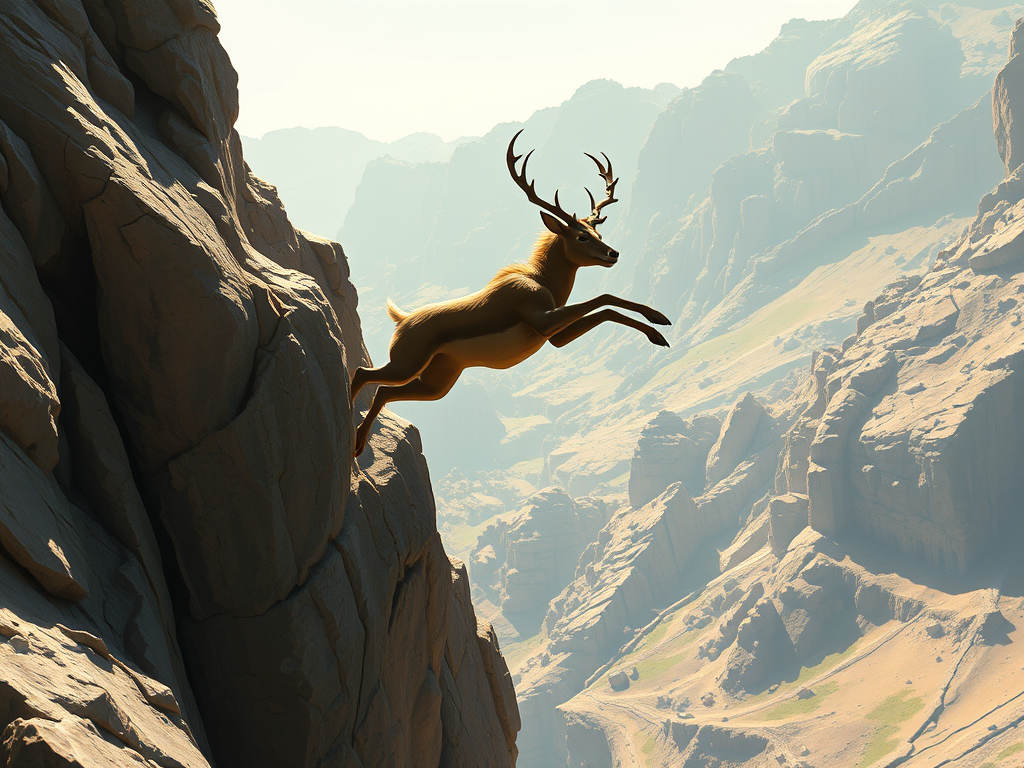
There are moments in life when a single experience reshapes the way we see the world forever. The extraordinary sacrifice of animals that opened a hunter’s heart and made him vow never again to take a life.
It happened during a hunt many years ago. Our party had driven a herd of more than sixty bharal—also known as blue sheep—to the edge of a cliff on Mount Bulang. The plan was cruel but simple: trap them on the precipice, and force them to fall to their deaths so we wouldn’t waste bullets.
The herd panicked, but then something astonishing happened. At the sound of a cry from a large male, the bharal divided themselves into two groups—young and old. Out of the elders stepped a weathered male, his horns broken, his face lined with age. He bleated once, and a half-grown bharal emerged from the younger group to join him.
Together they approached the cliff’s edge, then charged forward. The young one leapt first, soaring into the abyss, but it quickly began to fall. At that very moment, the old male followed, placing himself directly beneath the younger in midair. The youth’s hooves struck the elder’s back, using it as a springboard for a second leap. Miraculously, it landed safely on the opposite cliff.
The old one, having given all he had, plummeted to his death.
And then, pair after pair followed. The sky above the gorge was filled with arcs of courage—each elder laying down its life so a younger one might live. By the end, countless old bharal lay broken on the rocks, but the youth had crossed to safety.
I was stunned beyond words. At the edge of extinction, this herd had discovered a way to save itself—by sacrificing half to preserve half. But what shook me even more was not the strategy itself, but the spirit behind it. These elders did not resist, did not hesitate. They walked calmly toward death, offering their bodies so their children might have a future.
In that moment, my heart broke open. I realized that animals, too, embody wisdom, love, and a willingness to sacrifice that rivals, and perhaps even surpasses, our own. I could no longer see them as mere prey. That day, I made a vow: I would never again take life.
✨ The story of the bharal is more than just a tale of survival. It is a mirror for us as human beings. Would we, when faced with the survival of our families, communities, or world, have the courage to lay ourselves down for the next generation? Would we live not only for ourselves, but for those who come after us?
The bharal taught me that true strength is not in holding on, but in letting go—for love. And from that lesson, my heart turned toward compassion.

 Peace LiLy