Nancy Fraser
One American, One Yuan, and a Village Built on Compassion
Sometimes, a story comes along that quietly restores our faith in humanity.
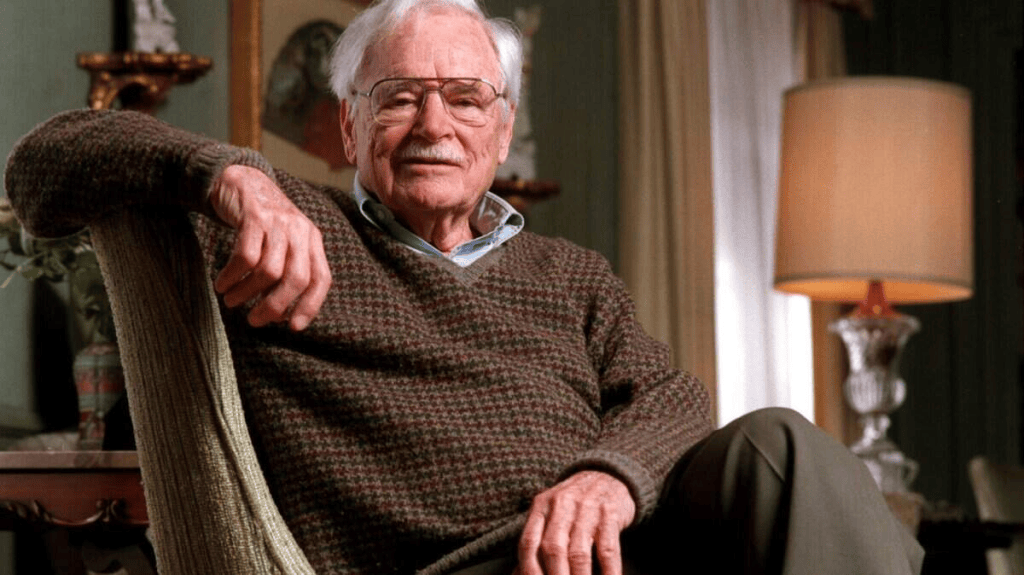
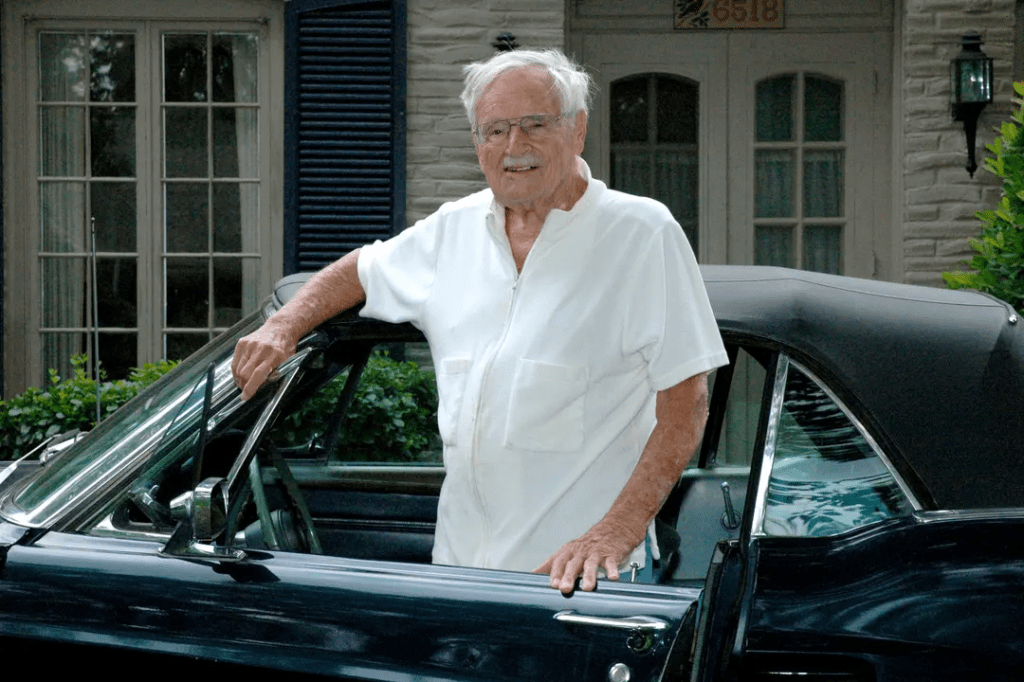
The story of Tim Baker, an American who devoted much of his life to caring for abandoned and disabled children in China, is one of those stories.
He first came to China as a teacher.
But in 1991, while volunteering at a children’s welfare institution, he encountered children who had been abandoned because of illness or disability. He and his wife, Pam, eventually adopted several Chinese children themselves.
They could have stopped there.
Instead, they chose to do more.
In 1995, Tim left his teaching position and founded the Philip Hayden Foundation in memory of his friend Philip Hayden. What began as a small effort gradually grew into a much larger mission to provide medical care, a home, and hope for children who had nowhere else to go.
A Piece of Land for One Yuan
As more children came into their care, Tim and Pam dreamed of building a permanent home where the children could grow up with dignity, safety, and a sense of family.
In 2002, the local government in Dawang Guzhuang, Tianjin, offered land for the project at the symbolic price of one yuan per mu. Reports describe the land as roughly 30–33 mu. Tim was reportedly so surprised that he asked more than once whether they really meant one yuan.
That land eventually became Shepherd’s Field Children’s Village, or “牧羊地儿童村.”
The name itself is beautiful.
Before the children’s village was built, the land had been used by local villagers as a place to graze sheep.
A former pasture would become a home for children who had been abandoned.
And the story did not stop with the land.
People began to help.
Companies donated materials. Professionals offered their skills. Others provided equipment, construction support, and financial assistance. What one family had started slowly became a community of compassion.
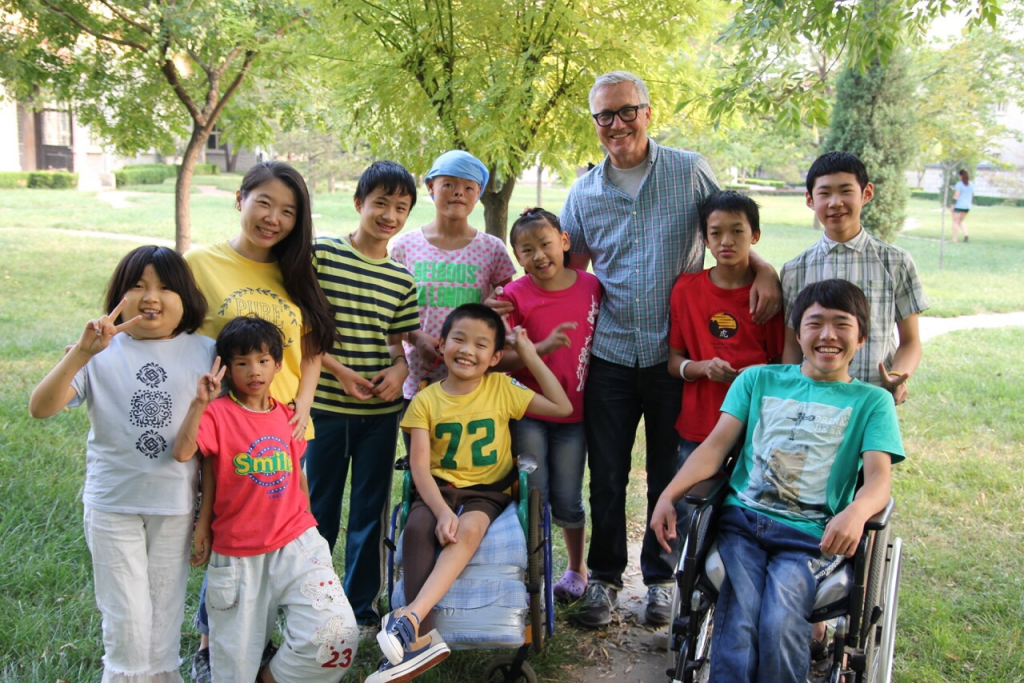
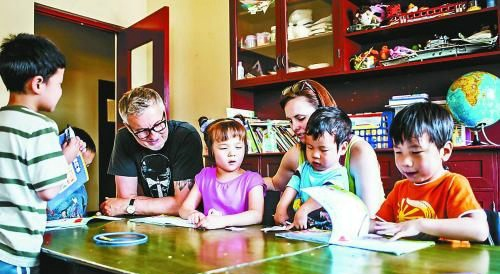
Perhaps the most touching part of Tim’s story is not the buildings or the numbers.
It is the children.
Tim once described how children often arrived with the sadness of abandonment written on their faces. But after receiving care and affection, something began to change.
Their eyes began to shine.
That simple image says so much.
Sometimes a child does not need someone to change the whole world.
They need someone to stay.
Someone to hold them.
Someone to feed them.
Someone to take them to the doctor.
Someone to tell them, through actions rather than words:
“You matter. You are not forgotten.”
In Buddhism, compassion—慈悲 (cí bēi)—is much more than feeling sorry for someone who is suffering.
Compassion begins when we recognize another being’s suffering and allow that suffering to touch our heart.
But true compassion does not stop with feeling.
It moves us toward action.
We ask:
“What can I do to help?”
This is why compassion is so closely connected with loving-kindness, wisdom, and action in Buddhist practice.
We may not be able to remove all suffering from the world. But we can lessen suffering where we are.
We can offer food to someone who is hungry.
Comfort someone who is lonely.
Care for a sick person.
Protect an animal.
Forgive instead of causing more hurt.
Or simply remain beside someone who is going through a difficult time.
Compassion does not always require extraordinary ability.
Sometimes it requires only that we do not turn away.

Tim was American.
The children were Chinese.
Their languages, cultures, and backgrounds were different.
But when a child is suffering, these differences become very small.
A hungry child does not ask where you were born.
A frightened child does not ask what language you speak.
A child simply needs love.
That is why stories like this are so important.
Our world often reminds us of everything that separates people.
But compassion reminds us of something deeper:
We are human before we are anything else.
What makes this story even more beautiful is that Tim and Pam did not do everything alone.
Their compassion inspired other people to participate.
One person donated.
Another volunteered.
Someone else offered professional skills.
Another opened a door.
Little by little, many small acts of kindness became something much larger.
This is how goodness spreads.
One person lights a candle, and another person uses that light to light another.
We may not be able to build a children’s village.
We may not be able to care for thousands of children.
But we can still participate in this chain of kindness.
We can help a neighbor.
Visit someone who is lonely.
Donate what we can.
Volunteer our time.
Care for an abandoned animal.
Speak gently when anger would be easier.
Notice someone who needs help instead of walking past.
These acts may seem small.
But we never know how far kindness will travel.
When I read stories like Tim Baker’s, I am reminded that there is still enormous goodness in this world.
There are people who quietly give without asking for recognition.
We do not have to change the whole world to make the world a better place.

We can begin with one person.
One child.
One animal.
One neighbor.
One act of kindness.
And perhaps that small light will reach someone else—and inspire them to pass it on.
Love does not become smaller when we give it away.
It becomes larger.
Perhaps this is what true compassion looks like—not asking, “What can I gain?” but quietly asking, “What can I do?”
May the kindness we receive become the kindness we give.
May compassion cross every border.
And may each of us, in our own small way, become a light for someone else.
Source: https://chinasource.org/articles/wendy-blazes-a-trail/, https://www.npr.org/2003/09/11/1427329/a-village-for-chinese-orphans