I Chose to Be the Sun—and My Relationship With My Father Changed
There is a saying that has stayed with me:
“If you have never experienced what others have gone through, do not be quick to judge their faults. If you have never endured their suffering, do not be quick to tell them how they should behave. If you had suffered what I have suffered, you might not have done any better than I did.”
It sounds like such a simple truth. Yet for many years, I failed to truly understand it.
Growing up, my father was strict and authoritative. My relationship with my mother was completely different—we were close, comfortable, and deeply connected.
As I grew older, conflicts between my parents became more frequent. I instinctively took my mother’s side and rarely tried to understand my father’s perspective. Over time, my judgments about him became deeply rooted.
Even when I became seriously ill and my father cared for me tirelessly, without complaint, I still struggled to let go of my resentment. I continued to hold on to painful memories of the arguments between my parents.
I was looking at my father through the lens of the past.
After my mother passed away, my father was overwhelmed with grief. Yet he tried to remain strong for me, knowing that talking about my mother might make me sad.
Suddenly, there were only the two of us.
When we went for walks together, my father often talked about things that had happened many years ago. Instead of recognizing the loneliness behind his words, I became impatient. I corrected him, contradicted him, and sometimes lost my temper.
Eventually, he quietly said something that touched me deeply:
“If you don’t like talking to me, at least don’t lose your temper with me.”
His words made me stop and look at myself.
One day, I suddenly saw my own behavior clearly.
I realized that I had been holding on to the painful history of my parents’ marriage and using it to justify my inability to understand my father.
But how could I possibly know all the causes and conditions behind their relationship? How could I know everything my father had experienced, feared, endured, or carried silently in his heart?
I began asking myself a different question:
Instead of waiting for someone else to change, can I change myself first?
I decided that I could.
I wanted to become a more patient and understanding daughter. I wanted to listen instead of judge, to let go instead of cling to the past, and to practice filial love through my everyday actions.
I remembered Aesop’s fable The North Wind and the Sun. The North Wind tried to force a traveler to remove his coat, but the Sun simply warmed him, and eventually the traveler took it off himself.
I decided that I wanted to be the sun.
Little by little, something changed.
When I was away from home, I began calling my father at the same time each day just to check on him. When I was with him, I made a conscious effort to sit down, listen, and talk rather than hurry away.
I did not change him.
I changed myself.
And as I changed, our relationship changed too.
The coldness between us gradually softened. The two people who had once struggled to communicate began sharing a much more peaceful and harmonious life.
Looking back, I realize that sometimes the distance between two people is not created by a lack of love. Sometimes it is created by old judgments, unresolved attachments, and our unwillingness to see beyond our own version of the past.
This transformation came through sincerely learning and practicing Buddhism, and through receiving guidance from the Dharma discourses of Namo H.H. Dorje Chang Buddha III.
I came to understand more deeply that Buddha Dharma is not separate from ordinary life. It is practiced in the way we speak to our parents, how we respond when someone frustrates us, and whether we can recognize our own faults before pointing out the faults of others.
We often wish that other people would become more patient, more understanding, or more compassionate.
But perhaps the first question should be:
Have I become the person I am asking others to be?
Every person carries a story we may never fully know. Before judging someone, perhaps we should remember that we have not walked in their shoes.
There may be painful knots in our relationships that seem impossible to untie. But sometimes the first knot begins to loosen when we stop asking, “Why doesn’t this person change?”
And instead ask:
“What can I change in myself?”
Sometimes, one small change in ourselves can bring warmth into an entire relationship.
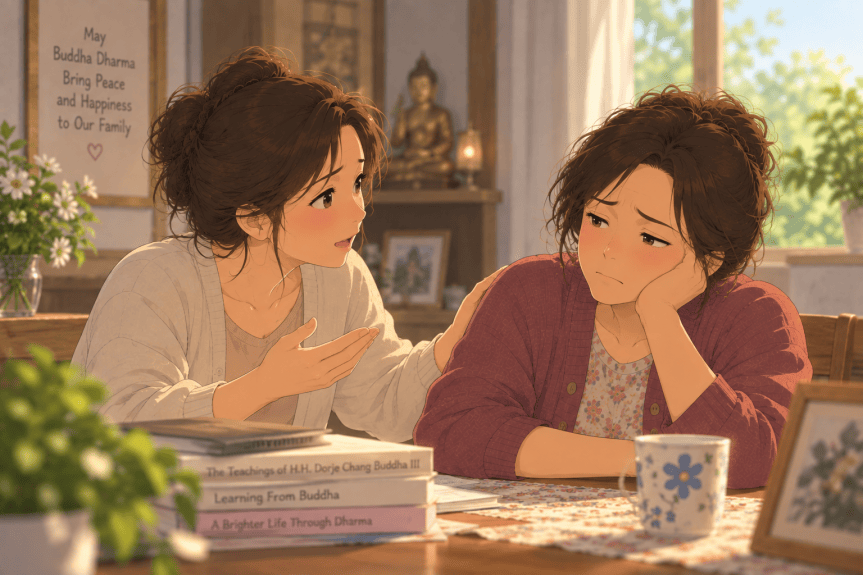
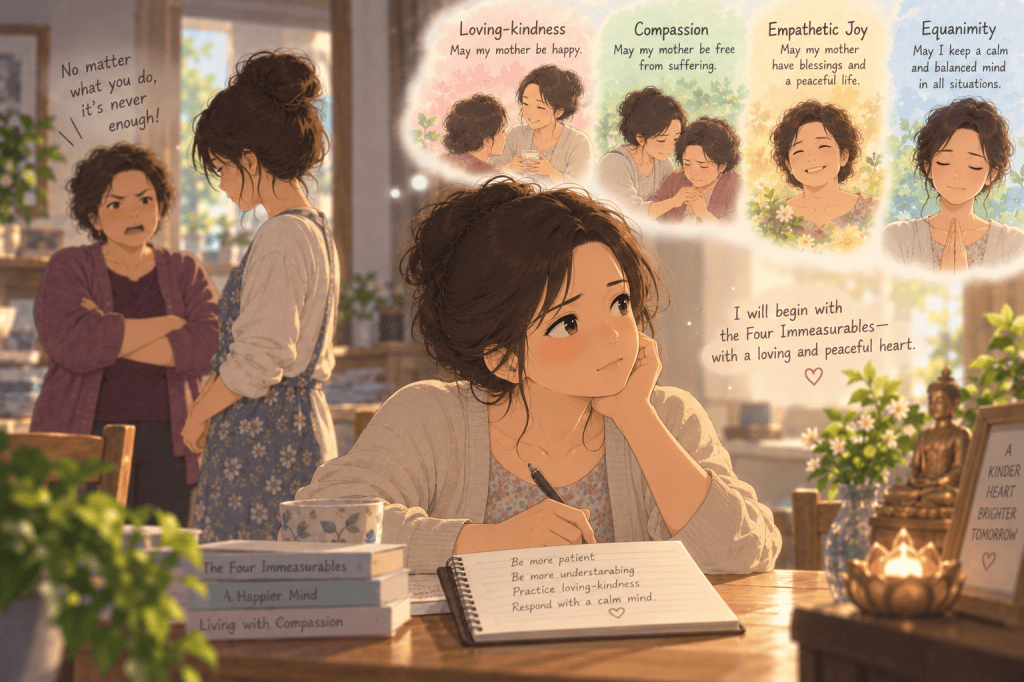
Through participating in group study, respectfully and deeply listening to the Dharma discourses expounded by my Buddha Master, Namo H.H. Dorje Chang Buddha III, and sharing what I had learned with others, I gradually came to understand and feel the pain deep within my mother’s heart.
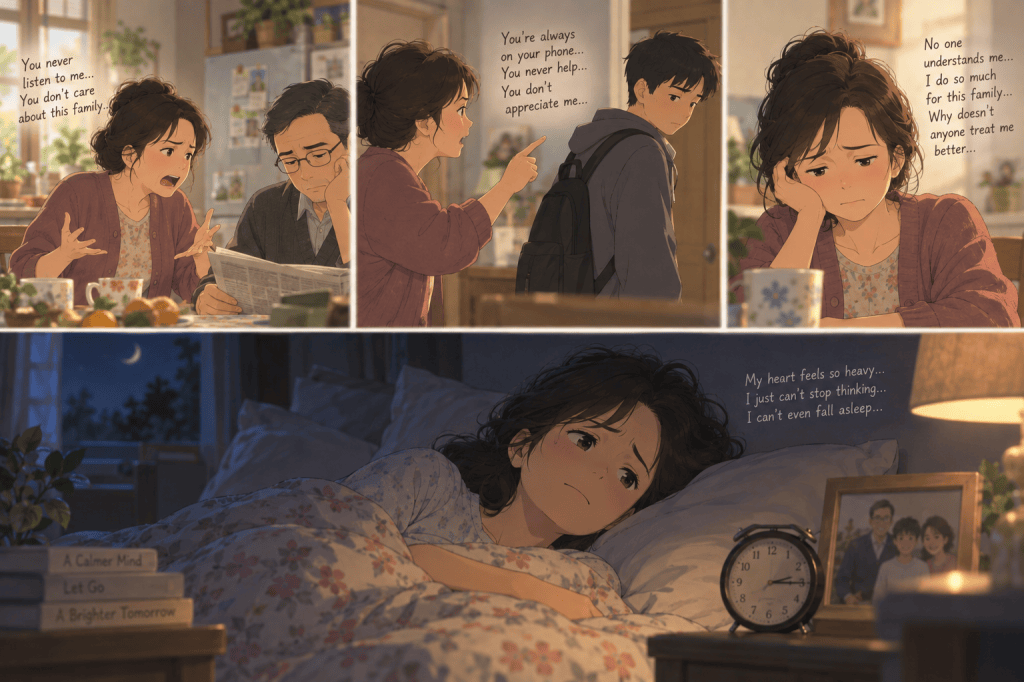
For as long as I can remember, my parents were constantly arguing. During holidays and festivals in particular, our home would become filled with tension. After an argument, my mother would always wear a stern expression and remain silent, while my father would sigh repeatedly, not knowing what to do.
After encountering the Tathagata’s True Dharma taught by H.H. Dorje Chang Buddha III, I wanted to resolve a question that had puzzled me for a long time: My mother had everything she needed in terms of food and clothing and was free from serious illness or misfortune, so why did she complain every day? She would either say that my father did not treat her well or feel that my younger brother and his wife did not treat her well. She would become so upset that she sometimes could not sleep all night.
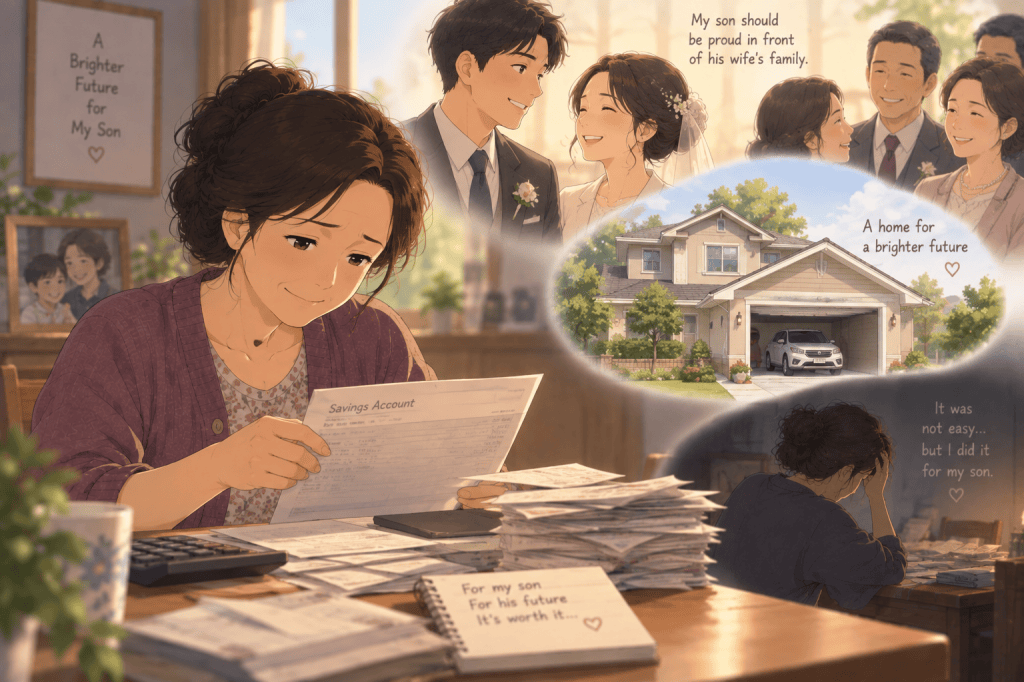
My mother cared greatly about maintaining appearances, even when doing so caused her hardship. She especially doted on my younger brother, whom she treasured dearly. To ensure that he could hold his head high in front of his wife’s family, my mother used almost all of her savings to buy them a home and a garage.
Whenever there was an important occasion or even a smaller matter involving my sister-in-law’s family, my mother always handled everything generously and properly. She would rather live frugally herself than allow my brother to lose face.
Yet despite all she had done, my brother seldom contacted her. Although they lived in the same city, he rarely checked in on her, much less came to see her. I could feel how deeply my mother missed her son. She would often ask me, “I wonder what your brother has been so busy with lately?”
To tell the truth, seeing my mother like this made my heart ache, and I also felt deeply concerned about my inability to help her. How I wished she could learn the true Dharma of the Tathagata with me! After all, it was through learning the true Dharma of H.H. Dorje Chang Buddha III and developing right understanding and right views that I myself had been able to free myself from the suffering caused by my divorce.
Having personally experienced the benefits of learning Buddhism and cultivating myself, I tried to persuade my mother not to dwell on the things that troubled her. I explained to her that these circumstances were the result of causes, conditions, and karmic forces planted in the past. But she did not agree with what I told her.
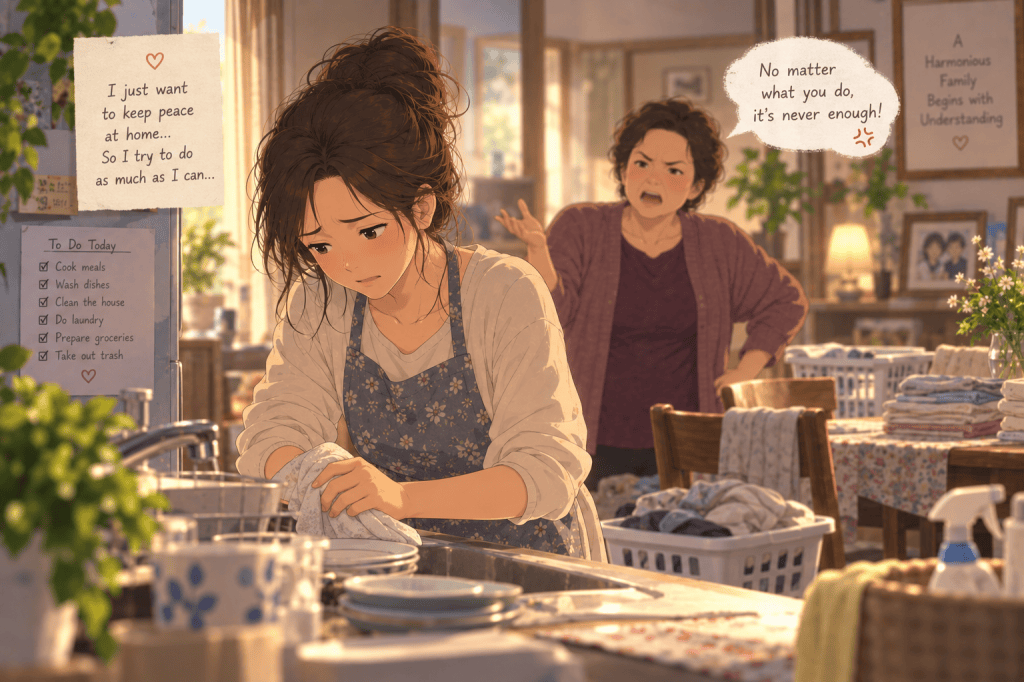
To avoid upsetting my mother, I tried to take care of nearly all the household chores myself so that she would have to do as little as possible for my single-parent household. Yet strangely, the more responsibilities I took upon myself, the more upset she seemed to become. No matter what I did, I could not seem to make her happy.
Back then, I lived very cautiously around her, afraid that something I said or did might cause her to become upset and silently resentful. I also tried communicating with her, but she would often remain silent and keep everything bottled up inside.
Through respectfully studying Expounding the Absolute Truth Through the Heart Sutra, I brought forth right mindfulness and finally came to understand how I should correctly practice the Four Immeasurables of loving-kindness, compassion, empathetic joy, and equanimity. I first needed to begin with equanimity and selfless giving—to be willing to devote my time to considering the needs of my family. Caring for them was not merely about making sure they had enough food, warm clothing, and money to spend. I also needed to learn to recognize and understand the suffering within their hearts.
I began to sincerely spend time with my mother, and gradually I discovered that the ice within her heart was beginning to melt. Instead of telling her, “Don’t be angry anymore” or “Don’t hold on to resentment,” I began placing the responsibility upon myself: I needed to understand the pain within my mother’s heart, listen to what her heart was trying to tell me, help heal her emotional wounds, and help her establish right understanding and right views.
When my mother complained, I became willing to set aside my time and sit quietly beside her, listening attentively. I no longer used the principle of “cause and effect” to argue with her until she had nothing left to say.
When she felt physically tired, I would take the time to massage the acupressure points on her feet and ask her whether the pressure was too light or too strong. When she felt bored, I would willingly spend time with her and chat about everyday family matters instead of lecturing her about principles and doctrines.
The more I tried to understand the pain in my mother’s heart, the more she began saying things like, “Don’t waste your time on me. I don’t need you to keep me company. Go take care of the children. Once you’ve taken care of everything for them, go do whatever you need to do.”
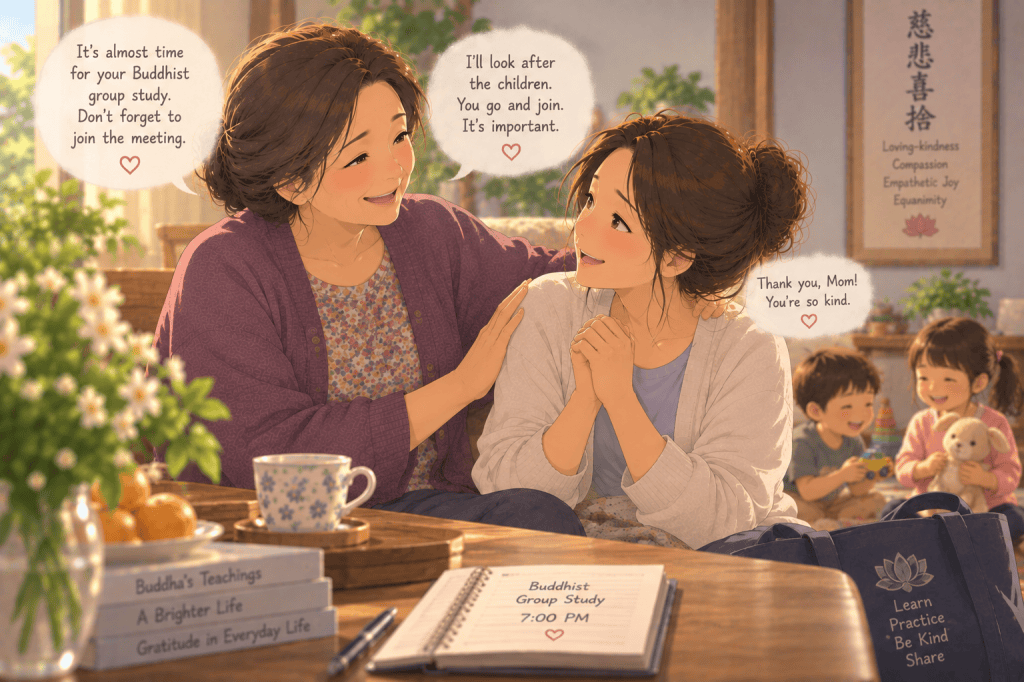
What surprised and delighted me even more was that my mother eventually began reminding me herself, “It’s almost time for your Buddhist group study. Don’t forget to join the meeting. I’ll help you look after the children.”
I had finally gained my mother’s support. And it happened simply because I had learned to recognize the pain within her heart and was willing to devote my time to sincerely being there for her.
This is exactly what the H.H. Dorje Chang Buddha III teaches in the Dharma discourses: we must put our cultivation into actual practice and cultivate ourselves with respect to the three karmas of body, speech, and mind. We must be sincere in our words and actions and in the way we interact with and treat others. Only by putting genuine effort into our conduct in everyday life can we truly touch the hearts of others.
“The higher we soar, the smaller we appear to those who cannot fly.”
— Friedrich Nietzsche
There is a unique kind of solitude in life. It isn’t about being alone in a room; it’s the quiet distance that opens up when you start to grow, change, and chase your dreams—only to realize that fewer people truly understand where you are heading.
1. Everyone Views the World from Their Own Height
In early life, fitting in is effortless. We like what others like, go where others go, and rarely question what a “correct” life looks like.
But the moment you start asking, “What do I truly want?” your world shifts. You stop blindly following the crowd. You learn new skills, explore unfamiliar paths, and build your own value system.
Nietzsche used flight as a metaphor for perspective:
From the ground, looking up shows one view of the sky.
From the clouds, looking down reveals a vast, entirely different landscape.
When you push past your former boundaries, your reality transforms. Difficulties that once terrified you become minor milestones. Dreams that felt impossible turn into daily life. The world didn’t change overnight—you did.
2. Growth Means Saying Goodbye to Old Layers
Real growth isn’t about fitting someone else’s template; it’s about discovering who you genuinely are. As you step into your purpose, people around you might feel uneasy. They might ask:
“Why are you doing this?”
“Wasn’t life fine before?”
“Why make things so hard on yourself?”
These questions often stem from care or anxiety, but mostly from a lack of shared context. They haven’t walked your path, so they cannot see the horizon you see. Not being understood doesn’t mean you are on the wrong track.
3. Don’t Give Up Your Sky Just Because Others Can’t See It
One of the greatest tragedies is abandoning a personal dream to keep others comfortable.
People forgo learning because someone said, “Isn’t it too late for that?”
People abandon ventures because someone warned, “That’s too risky.”
People stay stuck because they fear being judged.
Others can offer opinions, but they cannot live your life or carry your regrets. When faced with doubt, the essential question isn’t “Will they understand?” but rather: “If I don’t try now, will I regret it years from today?”
4. Flying High Is Not About Being “Better” Than Anyone
Rising higher isn’t a competition, nor is it proof that you are superior. If your self-worth depends on outshining others, true peace will always remain out of reach.
Genuine maturity arrives when you no longer rely on external validation. You know why you work hard. You know who you want to become. You accept that some will support you and others won’t—and you continue walking forward with a peaceful mind. That is real freedom.
As your priorities evolve, your inner circle may shrink. Friendships change, conversations drift, and quiet moments of reading or reflection become preferred over noise.
This isn’t a flaw; it’s a seasonal shift. Some people are meant to share a specific chapter—a childhood, a hard period, or a shared project. Cherish those who walk beside you, and offer quiet blessings to those who drift away.
5. True Height Reflects a Wider Heart
A truly elevated mind never looks down on those still on the ground. Everyone moves at their own pace and lives by their own context.
Consider a tree: it does not mock the grass below simply because it reaches toward the sun. It merely focuses on growing, absorbing light, and enduring storms. True elevation isn’t about stepping over others—it’s about expanding your own capacity for empathy and humility.
If you are quietly working to improve yourself, pursuing an unconventional dream, or taking a path few around you recognize: give yourself patience.
Absence of applause does not mean your effort is meaningless.
Lack of visibility from others does not mean your destination isn’t real.
At the same time, stay grounded. Conviction is not stubbornness. Listen gracefully to feedback, adapt when reality requires it, and refine your direction as you learn.
Life is a long flight. Sometimes we fly low, close to the familiar. Other times, we climb into clearer, wider skies. As you ascend, the crowd may thin out, but your world expands.
You don’t need to fly higher than anyone else.
You only need to fly a little further than the person you were yesterday.
When you finally reach the sky you’ve been reaching for, remember: what matters most isn’t how small you look from below, but the vast, beautiful world you can finally see.
Debra Stangl and Richard Kepple understand that relationships are not failing because love is gone. For many, unresolved emotional wounds, nervous system patterns, and unmet emotional needs often lead people to unconsciously repeat unhealthy relationship patterns, which ultimately lead them down complex paths that silently sabotage the connection underneath the surface.
Debra spent 20 years as a divorce attorney before realizing that most people didn’t want a divorce, but instead, wanted the fighting and emotional pain to stop. As someone who witnessed people go through two or even three divorces over a period of several years, she realized that these people were marrying the same person over and over again—they just had a different name.
After a life-changing awakening in Sedona in 1999, Debra left her law career behind, and after immersing herself in her own healing and transformation, she founded Sedona Soul Adventures in 2002.
Richard transitioned from his previous work in Silicon Valley startups and technology, and a stroke reshaped his understanding of healing, relationships, and purpose.
Upon marrying in 2017, Debra and Richard combined their unique backgrounds in emotional healing, neuroscience, spirituality, and nervous system awareness to create their High-Vibe System™, which aims to reshape how couples understand what’s happening beneath their recurring conflicts.
As part of the High-Vibe System, Debra and Richard developed the Nurturing Needs framework to help couples understand not just how each person experiences love uniquely, but also what creates emotional safety and connection, along with what causes emotional shutdown and disconnection.
“People don’t just learn relationship theory; they experience transformation through real partnership,” the pair shares.
With work that is informed through their professional backgrounds, but also by the healing transformation within their own marriage, Debra and Richard aim to help people understand that conscious relationships require a commitment to ongoing healing, emotional honesty, vulnerability, and growth, which shapes the way people live not just their lives alone, but also with their partner.
Sedona Soul Adventures has been providing transformational retreats for individuals and couples for over two decades. With their team of over 50 Master Practitioners, they have helped thousands of individuals and couples heal from their emotional pain, reconnect deeply with themselves and their partners, and transform their lives and relationships.
Debra and Richard’s new book, High-Vibe Relationship, blends neuroscience, energy healing, and awareness to help couples and individuals get to the root of their problems, understand what fuels past traumas, and solve them in the present for a sustainable future.
“We believe people are not broken, and most relationships are not failing because love is gone,” the team shares. “More often, people are carrying unresolved emotional pain, nervous system patterns, protective behaviors, and unmet emotional needs – what we call ‘gunk’ – that quietly sabotages connection beneath the surface.”
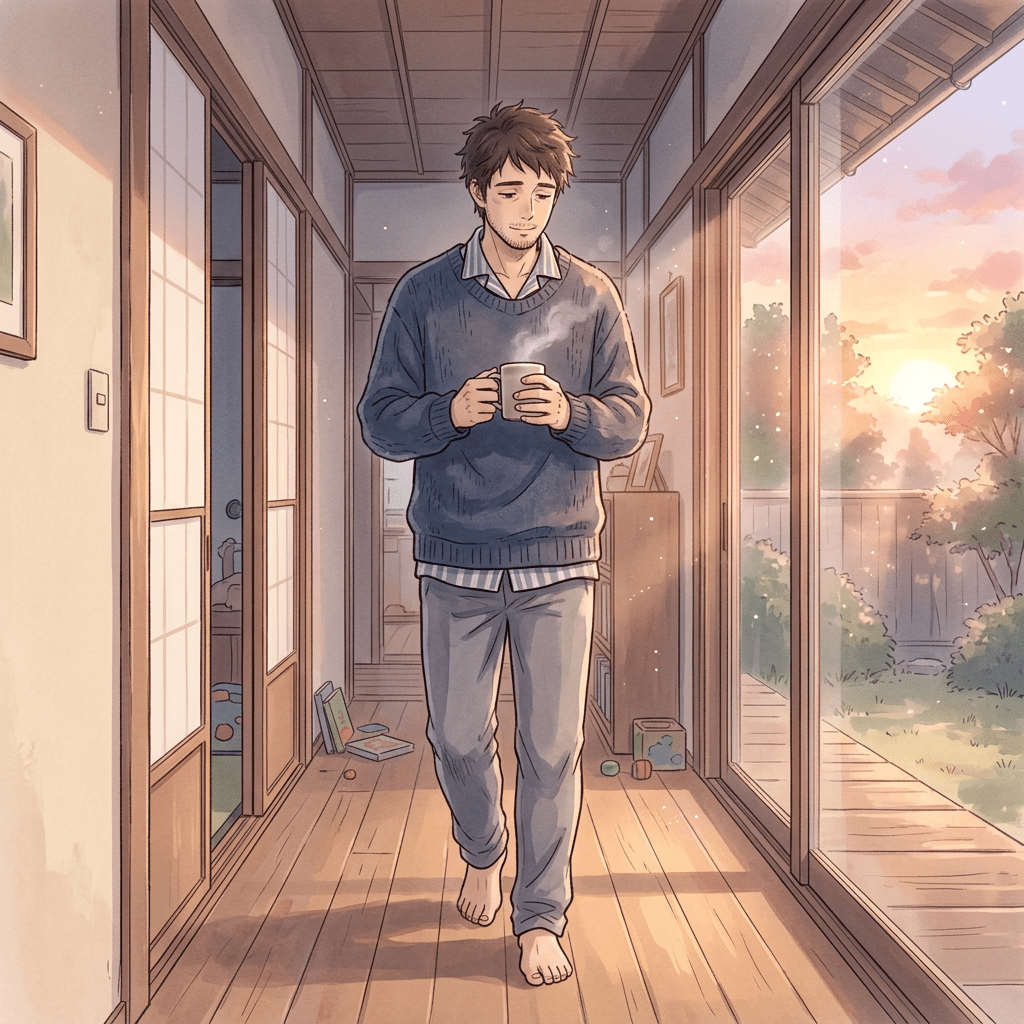
The children always remembered the way their father moved through the house in the early morning — not rushing, not dragging, but walking with a quiet steadiness, as if each step were placed with intention. The soft shuffle of his feet, the gentle clearing of his throat, the way he paused at the doorway to look at the sky before beginning the day — all of it felt like a small ceremony, a reminder that life was something to be met with presence.
He never taught them compassion through words. He taught it through the way he lived.
When a neighbor’s roof began to leak during the winter rains, he didn’t sigh or complain about the inconvenience. He simply gathered his tools, wiped the mist from his glasses, and said, “Come with me. Let’s see how we can help.” The children watched him climb the ladder slowly, carefully, as if he were ascending a sacred path. The cold wind tugged at his jacket, the shingles were slick beneath his hands, but he worked with a calm focus that made the moment feel almost holy. When he patched the leak and the dripping finally stopped, he smiled — not because he wanted praise, but because someone’s burden had become lighter.
Another time, when an elderly man’s car refused to start in the heat of summer, their father knelt beside the engine with the same tenderness he used when holding a newborn. The children stood nearby, watching the sweat bead on his forehead as he listened to the engine’s uneven breaths. “Machines speak too,” he told them softly. “You just have to listen with patience.” When the engine finally roared back to life, the old man’s eyes filled with relief. Their father simply nodded, wiped his hands on a rag, and whispered, “May your road be smooth.”
The children didn’t understand it then, but he was teaching them the Dharma in the language of everyday life. He was showing them how to see suffering without turning away, how to offer help without expecting anything in return, how to move through the world with a heart that stayed open even when life was heavy.
As they grew older, they began to feel the weight of those lessons in their own bones.
One became a teacher who stayed after school to help students who felt invisible. She remembered the way her father listened — fully, without judgment — and she tried to offer her students that same refuge. Another became a nurse who held trembling hands in the quiet hours of the night. He remembered how his father breathed slowly, steadily, even when the work was hard, and he learned to be a calm presence for others. The youngest created a community program that helped families rebuild their lives. She remembered the way her father patched roofs and revived engines, and she understood that healing often begins with the smallest acts of care.
They didn’t choose these paths because their father told them to. They chose them because they had lived their whole lives watching him turn compassion into action, moment by moment, breath by breath.
Years passed. The children grew into adults who carried their father’s teachings in the way they spoke, the way they listened, the way they offered themselves to the world. And their father, now older, watched them with a quiet pride that softened his eyes.
On Father’s Day, they gathered around him. His hair had turned silver, his hands were rough from decades of work, but his presence was still steady — like a lantern that had guided them through every dark season.
“Dad,” the eldest said, her voice trembling, “everything we do… everything we’ve become… it’s because of you.”
He shook his head gently, the way he always did when he felt gratitude but didn’t want praise.
“I only showed you the path,” he whispered. “You walked it yourselves.”
But the children knew the truth.
He had given them more than shelter. More than guidance. More than love.
He had given them a way of seeing the world — a way rooted in compassion, patience, and the belief that every act of kindness sends ripples far beyond what the eye can see.
And as they sat with him that Father’s Day, surrounded by the warmth of everything he had nurtured, they realized something too:
The seeds he planted had grown into a forest — a living testament to the quiet, powerful love of a father who taught not through words, but through the gentle, unwavering example of a life lived with an open heart.
This week is National Volunteer Week, April 19th-25th, a time to recognize those who quietly give their time, energy, and care to others.
In many ways, volunteering is not about doing something extraordinary. It is about doing small things, with a sincere heart, again and again.
Some people offer food. Some offer time. Some offer skills. Some simply offer presence.
These actions may seem simple, but they carry great meaning.
When we think of service, we may remember people like Mohamed Mashally, who spent his life caring for those who could not afford treatment. He did not seek recognition. He simply did what he felt was right.
His life reminds us that helping others does not always require great resources. What matters most is the heart behind the action.
From the teaching of Gautama Buddha, we learn that true giving is not measured by how much we give, but by the intention within. A small act, done with kindness and sincerity, can have a lasting impact.
During this week, we may ask ourselves a simple question:
In our daily life, how can we help others, even in a small way?
It may be offering a kind word. It may be listening with patience. It may be giving time to someone in need.
These small actions are like seeds. When planted with care, they grow in ways we may not immediately see.
Volunteering is not only about helping others—it also changes our own mind. When we focus less on ourselves and more on the well-being of others, the heart becomes softer, more open, and more at peace.
In a busy world, it is easy to think that we do not have enough time. But often, it is not about having more time—it is about using a little time with sincerity.
This National Volunteer Week, we do not need to do something grand.
We can begin with something simple.
A small act of kindness. A moment of patience. A quiet willingness to help.
And from there, something meaningful can grow.
Because sometimes, the most powerful offering is not something big—
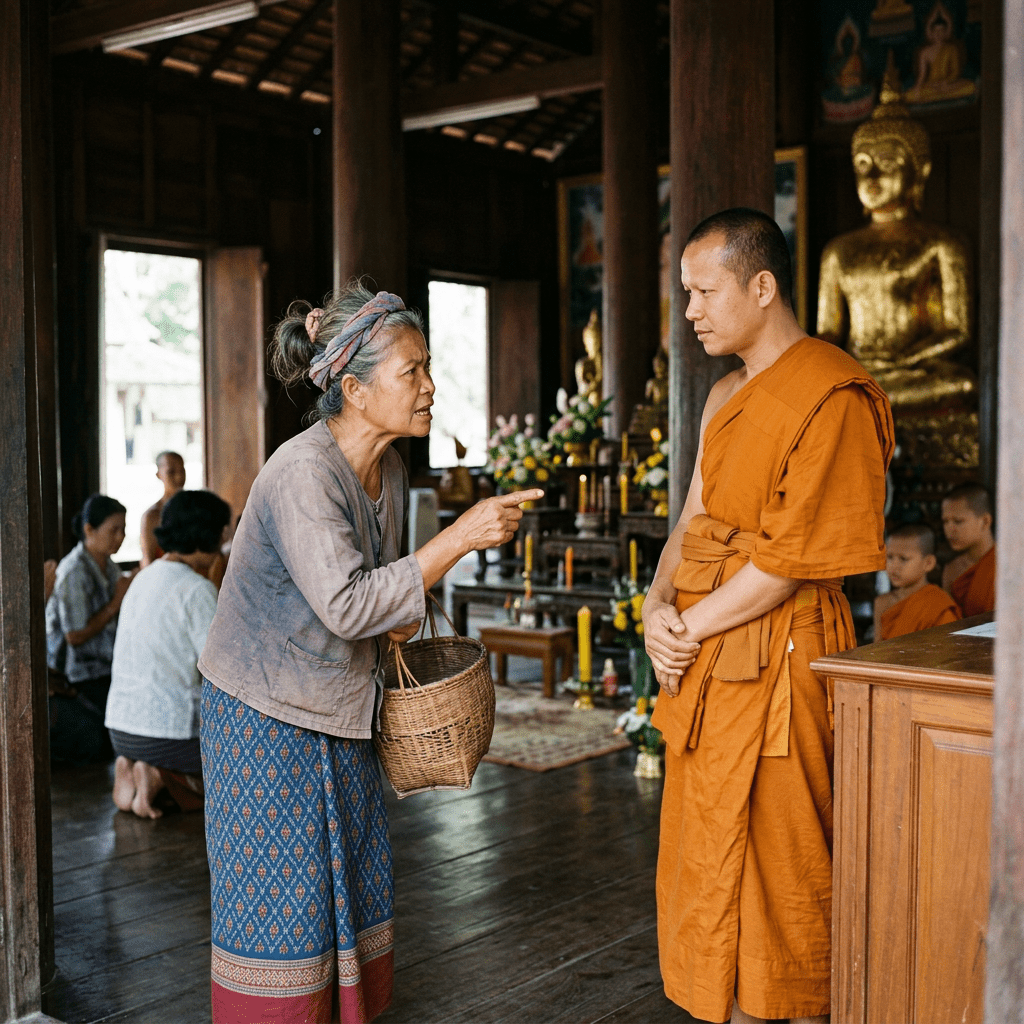
In our daily lives, anger often appears without invitation. A single word, a small inconvenience, or an unmet expectation can stir something deep within us. Before we realize it, the mind is no longer calm, and the heart feels as though it is burning.
There was once a woman who had a very bad temper. She often got angry over small things. Afterward, she would regret it. She knew her anger hurt others, and she truly wanted to change. But when anger came, she felt she could not control it.
One day, a friend told her, “There is a wise monk nearby. Maybe he can help you.” So she decided to go.
When she met the monk, she told him everything—how easily she lost her temper, how much pain it caused, and how helpless she felt. She hoped he would give her some advice.
The monk listened quietly. When she finished, he said nothing. He simply led her to a small room, stepped outside, and closed the door.
Soon she realized—the door was locked.
At first, she was confused. Then she became angry.
“I came here for help, and he locks me in?” she thought.
The room was dark and cold. The more she thought about it, the angrier she became. She started shouting, knocking on the door, and scolding the monk loudly.
But there was no answer.
No matter how much she shouted, the monk did not respond.
After a long time, she became tired. Her voice grew quiet.
Then the monk asked from outside, “Are you still angry?”
She said, “I’m angry at myself! Why did I come here?”
The monk replied, “If you cannot forgive yourself, how will you forgive others?” Then he left.
The room became quiet again.
After some time, the monk returned and asked, “Are you still angry?”
She said, “No, I’m not angry anymore.”
“Why?” he asked.
She said, “What’s the use of being angry? I’m still stuck in this dark, cold room.”
Her anger had weakened, but it was still there.
Later, when the monk asked again, she said, “I’m not angry anymore, because you are not worth my anger.”
The monk said, “The root of your anger is still there. You have not let it go.”
His words stayed in her mind.
After a long silence, she asked, “Can you tell me—what is anger?”
This time, the monk came to the door. He did not speak. He simply poured the tea in his cup onto the ground.
The woman watched quietly.
Suddenly, she understood.
“If I do not get angry, where does anger come from?” she thought. “If my mind is clear, what is there to be angry about?”
At that moment, she saw the truth: anger does not come from others. It comes from our own mind.
From the teaching of Gautama Buddha, we learn that anger arises when the mind is not open—when we hold on too tightly to our own thoughts, feelings, and expectations.
If we do not hold onto anger, it cannot stay.
In our daily life, anger often feels very real. We think others cause it. But if we look carefully, we see that it begins inside us.
When anger comes, we can pause and ask: Why am I reacting this way? What am I holding onto? Can I let it go?
If we become more patient, more tolerant, and more willing to step back, anger will slowly lose its power.
Letting go of anger does not make us weak. It frees us.
When we put down the fire in our heart, we will see that things are not as bad as we thought. Other people are not as terrible as we imagined.
In the end, the lesson is simple:
If we do not create anger, it has nowhere to stay.
It is fairly easy to see that society defines us by our relationship status, with those being in committed relationships having more status than those who are single. Friends, family, culture, society, TV, and, even Facebook posts, all tell us that we should be part of a couple.
If I’m honest, I have to admit that I bought into this hook, line and sinker; from the age of fourteen on, there was always a guy in my life. Like most people, having a relationship was of utmost importance, and, as a result, I often compromised other areas of my life. If I wasn’t in some sort of relationship, I felt empty inside, which only reinforced the hunt for Mr. Right.
I was on a perpetual roller coaster ride of seeking, finding, questioning and ultimately, letting go. There was a great deal of heartache and pain on the downside of this endless relationship ride, resulting in two failed marriages, and I don’t know how many “dead-end” relationships.
Sacred Singlehood
Biologically, we need partnership in order to procreate and keep the species going, but with 7 billion people on the planet, I don’t believe this is still the motivation for “needing to be” in a relationship. If we are truthful, our drive to be in relationships is more about personal habit, societal pressure and, yes, the dreaded fear of being alone topping this list.
Many of us even stay in relationships, well past their expiration date, because we think that we won’t find someone “better” and because we are growing older, we are even more afraid to risk being alone.
About ten years ago, I did something I thought I would never do. After a tumultuous break-up, I made a conscious choice to be single. At first, it was quite difficult being single; my relationship-addicted mind still searched for potential partners, but the greater part of me said, “No, not now.” It took me about a year to make peace with being single but even longer to discover the treasures of what I have come to call “Sacred Singlehood.”
Now, this isn’t an advertisement to choose singlehood over couple-hood. I certainly don’t know what is best for anyone, other than myself, but, this is an invitation to give yourself permission to consider who you might be (or become) all by yourself – without a partner.
What if it was okay to be alone, and, at least, for a little while, you gave up the search?
Whether you are experiencing a break-up, thinking about ending a relationship, or searching for that new one, consider that the relationship that you most desire, and the one that can bring you the most joy and fulfillment is with yourself.
Maybe you want a good reason for being single; well, how about two?
Being Single: Reason #1
Become Empowered, Explore Opportunities and Create an Amazing Life!
If you go from being in a relationship to mourning the end of a relationship to looking for a new relationship, where is the time and space for self-exploration?
Having the courage to be single allows you to create sacred space where you get to know yourself and you become your own best friend; from this space of growing confidence and security, you can go past your comfort zone, explore new ideas, travel to interesting places, create masterpieces, develop spiritual connection, take care of your body and mind, and maybe, even heal or strengthen relationships with your children, siblings, parents or friends.
Imagine giving yourself the time and space for emotional, mental, physical and spiritual healing or alignment. This might mean healing beliefs that don’t support you, claiming your unconditional worth and stepping into your intrinsic power. How wise and powerful might you become on a solo journey?
I can’t tell you what would have unfolded in these past ten years, if I had been in a relationship, but, I can tell you that during these sacred years, I experienced tremendous personal growth, spiritual awakening and creative inspiration that resulted in the publishing of several books. As I uncovered who I really am, and I discovered my self-made place in the world, I fell in love with me. Equally as important, my relationship with each of children drastically improved; because there was no longer someone else in the mix trying to influence my radical parenting style, I was free to parent in my own unique way. For this reason alone, my choice to be single was phenomenal.
When you give yourself the gift of being single, it can be the most sacred experience of your life.
Being Single: Reason #2
Meet Your Soul Mate by becoming the perfect partner for your perfect partner.
What if you took the time to really get to know yourself in order to become the person who can attract your ideal mate? Consider that any partner that you attract before you grow into your best self is very different than the partner you will attract from your highest and best self. Mr. Right can’t show up, if you are not yet Ms. Right and vice versa.
Law of Attraction Maybe we keep meeting the “wrong person” because we don’t measure up to our wants and desires in a partner. In other words, if you desire a partner who is open, honest and communicative, you must be open, honest and communicative. If you desire a partner who is in great shape, spontaneous and adventurous, you must be in great shape, spontaneous and adventurous.
In the quest for your perfect partner, you must be his/her perfect partner. This means that in order to attract your ideal mate, you must really know yourself and be true to your dreams and desires.
It is helpful to make a list of the qualities and attributes that you desire in a partner and rate yourself accordingly. If you don’t score high in each of those same qualities/attributes, according to the law of attraction, you are not yet a perfect match.
In order for the law of attraction to work in relationships, you must become that which you desire in another. Instead of jumping into a new relationship, imagine taking the time to develop these desired qualities and attributes, so that you can become the perfect partner for your perfect partner.
Heal Emotional Wounds If you keep ending up in relationships where you feel abandoned, misunderstood or unappreciated, chances are, there are some emotional wounds that require healing. If you want to be in an emotionally healthy relationship, you must be emotionally healthy. Being single offers you the time and energy required to heal past wounds, allowing you to align with an emotionally healthy partner.
Afraid of Being Alone I am going to guess that your perfect partner isn’t afraid of being alone, so, if you want to meet him/her, it is probably necessary to heal any fears of being alone – because, no doubt, you will attract potential partners who align with your fears. This means that if you are afraid of being alone, you will attract someone who is also afraid of being alone, or you will attract someone who will trigger your fear of being alone. If you do not want to attract a relationship based on this fear, it is essential that you fearlessly embrace singlehood.
Filling that Empty Space Many of us desire a partner to fill the empty space, but it never works because the only one who can ever fill your empty space is you. Being single allows you the opportunity to find yourself and experience fulfillment. Once you fill that space with yourself, you will be a perfect match for a man/woman who is whole, conscious and empowered.
The Desire for Love Okay, it’s normal to desire a relationship so that we feel loved, but, oftentimes, our relationships leave us feeling unloved. If you want to experience love in a relationship, it is important to take time alone in order to learn to love yourself unconditionally. Your unconditional self-love has the power to attract a partner who also loves him/herself unconditionally and together you can experience unconditional love for each other. This is the foundation for the loving relationship you seek.
Whether you are looking to find yourself or you are seeking a soul mate, being single may hold the answers.
The Point of Sacred Singlehood
The point of Sacred Singlehood is not to be single forever, unless that is what you choose, but, rather to become the highest version of you, who is emotionally secure, confident and free to express uninhibited authenticity, and, then, if you choose to share your life with another, you can attract your ideal partner, who is also consciously authentic, and together you can experience an enlightened paradigm of partnership that is truly amazing.
There is something so beautiful and transformative about being single, and, if I had missed it, I might have missed myself entirely. I am so grateful to my past self for making the courageous decision, and sticking to it.
Whatever your reasons to explore being single, Sacred Singlehood offers a Golden Opportunity where you can become the Real You and create the life you most desire.
About the Author:
As a Conscious Creation Coach since 1997, Nanice teaches mastery level manifestation skills, and, as a result, her powerful coaching style is often referred to as the “Nanice Effect.” Bridging the gap from imagination to realization, Nanice coaches people to live their true dreams. Nanice is the author of several inspirational books including, “Is There a White Elephant in Your Way? – a comprehensive guidebook to awakening and self-empowerment.” Sign up for Nanice’s Free 7 Part Awakening Series. To find out more, please visit www.Nanice.com.
We spend so much of our lives chasing happiness. We look for it in career promotions, new gadgets, or the perfect vacation. Yet the joy we seek often feels fleeting. What if the real secret sauce to a happy life isn’t something you buy or achieve—but something you give?
In her widely shared TEDx talk, “How to Be Happy Every Day: It Will Change the World,” Jacqueline Way offers a beautifully simple, yet world-altering insight: doing one small good deed each day can transform your brain, your life, and ultimately, the world.
The Science Behind the “Helper’s High”
Jacqueline’s message isn’t just uplifting—it’s grounded in science. When we perform acts of kindness, our bodies respond in powerful ways.
Giving triggers the release of a natural blend of “happiness chemicals”:
Dopamine, which creates feelings of reward and joy
Oxytocin, often called the “love hormone,” which reduces stress and supports heart health
Serotonin, which stabilizes mood and promotes a sense of calm and well-being
In other words, when you give, you’re not just helping someone else—you are literally rewiring your brain for happiness.
At the heart of Jacqueline Way’s message is a practice so simple it’s easy to overlook:
Do one little good thing every day.
It doesn’t need to be dramatic or time-consuming. A good deed might look like:
Offering a sincere smile or kind word
Helping a neighbor with a small task
Picking up litter along your path
Donating items you no longer use
Listening fully to someone who needs to be heard
What matters most is intention. When kindness becomes a daily habit rather than an occasional gesture, happiness stops being accidental—it becomes natural.
A single act of kindness never ends with the giver. It travels outward. One person’s generosity inspires another. Slowly and quietly, hearts soften, trust grows, and perspectives shift.
Jacqueline Way reminds us that changing the world doesn’t require grand gestures or heroic efforts. It begins with ordinary people choosing compassion in everyday moments. When kindness becomes a way of life, happiness expands—not only within us, but all around us.
How to Start Your Own Happiness Practice
If you’re longing for more joy and connection, you don’t have to wait for the “right” moment. You can begin today. Here are three simple ways to practice the daily give:
1. Look for the Micro-Give Kindness doesn’t require money or planning. Hold the door open, write a thoughtful message, or leave a positive review for a local business.
2. Make It a Family Habit Inspired by Jacqueline and her son, turn giving into a shared ritual. Ask at dinner, “What was your give today?” It nurtures empathy and helps everyone focus on the good.
3. Notice the Shift Pause and observe how you feel after giving. That warmth in your chest? That quiet lift in your mood? That’s happiness growing in real time.
Jacqueline Way reminds us that we are not powerless in the face of the world’s challenges. Each of us carries the ability to make life kinder, lighter, and more meaningful—one day at a time.
When you choose to give, you stop chasing happiness and start creating it.
And when enough of us do that, every day, the world truly begins to change.
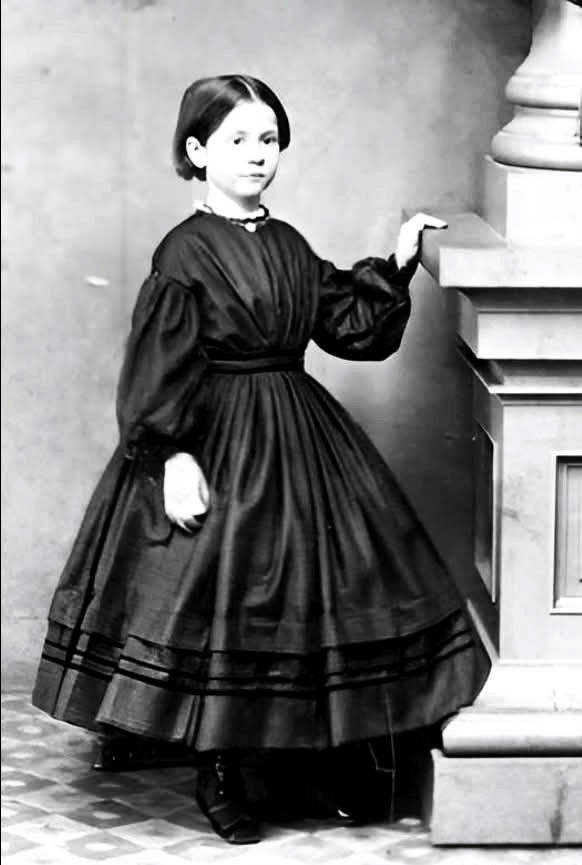
She was eight years old when her father gambled her away in a card game. Her older sister had three hours to win her back before the debt collector came.
Deadwood, Dakota Territory. 1877. A place where law came slow, danger came fast, and survival belonged to the ruthless.
Thomas Garrett had lost everything—his mining stake, his wages, his self-respect—and now, in a drunken haze at the Gem Saloon, he’d lost something far worse:
his daughter.
The man who won her was Bullock— not the sheriff, but a labor trafficker who “supplied” children to mining camps. Kids as young as six spent twelve-hour days sorting ore until their lungs failed or their fingers gave out. Most didn’t live past fourteen.
Thomas signed the paper without hesitation. Bullock would collect little Emma at noon.
When fifteen-year-old Sarah came home from the laundry and learned what her father had done, she didn’t cry. Didn’t scream. Didn’t fall apart.
She simply asked, “When?”
“Tomorrow. Noon.”
Three hours until dawn. Three hours to save her sister.
And Sarah had something her father never had:
clarity.
She knew Bullock.
Everyone did. A cruel man who hid behind paperwork and respectability.
He’d made her father sign a contract— which meant it could be challenged.
And Deadwood had something else:
A new federal judge who’d publicly declared that parents could not use their children to pay debts.
Sarah didn’t sleep. She didn’t blink.
At dawn she was already standing in the courthouse, breathless, determined.
The clerk tried to dismiss her— fifteen-year-old girls didn’t talk law.
But Sarah did.
Because before drink ruined him, her father had been a clerk… and she’d read every law book he left lying around.
She laid out the case with the precision of a trained lawyer:
The contract violated territorial labor laws.
It constituted debt bondage of a minor.
Thomas Garrett was legally incapacitated due to intoxication.
The clerk stared. Then nodded.
He woke the judge.
Judge Isaac Parker—who would one day be known as the “Hanging Judge”—read the contract, listened to Sarah, and did something extraordinary:
He issued an emergency injunction, blocking the transfer and summoning both Bullock and Thomas Garrett to court that afternoon.
When Bullock arrived at the Garrett cabin at noon, two men at his back, he found Sarah waiting on the porch.
Not shaking.
Not pleading.
Holding a federal court order in her hand.
Bullock turned red with fury but wasn’t stupid enough to defy a judge.
At the hearing, Judge Parker didn’t hesitate.
He voided the contract. Declared it an illegal attempt to traffic a minor. Warned Bullock that any further attempt to collect “payment” would end with him in chains.
Then he turned to Thomas Garrett.
A father who gambled his children away forfeits the right to be a father.
Parker stripped him of parental rights and— in a move that shocked the entire Dakota Territory— appointed fifteen-year-old Sarah as her sister’s legal guardian.
But victory didn’t fill their stomachs.
Sarah now had an eight-year-old to raise, no money, no home, and only her laundry work to survive.
What she did next became legend.
She went to five different businesswomen in Deadwood— laundry owners, seamstresses, boarding house keepers— and proposed a deal:
“I’ll work for reduced wages. You house and feed my sister and me. I’ll take the hardest jobs and the longest hours.”
Four said no.
The fifth— a widow named Martha Bullock (no relation to the trafficker)— said yes.
For the next three years, Sarah worked sixteen-hour days. Emma went to school— Sarah insisted on it.
She saved every coin.
By 1880, she’d saved enough to lease a small building and open her own laundry.
By 1882, she owned it.
She employed six women. Paid fair wages. Offered housing to those in need.
Emma, thirteen, kept the books.
When Emma turned eighteen, Sarah paid— entirely from her business profits— for her to attend normal school and become a teacher.
Emma later became a school principal and one of the fiercest advocates for child labor reform in the state.
Sarah never married.
“I raised one child already,” she’d say with a half-smile. “Did a better job than most with half the resources.”
She ran her business until 1910, providing work for over a hundred women across three decades.
Emma retired as the first female superintendent in her county.
When Sarah died in 1923, her obituary mentioned her “successful business career.”
Emma told the real story:
A fifteen-year-old girl who had three hours, a law book, and the unwavering conviction that her sister’s life was not for sale.
Judge Parker later said:
“Justice isn’t only about punishing the guilty. Sometimes it’s about recognizing competence where no one else looks for it.”
The line between tragedy and triumph is thin. Sometimes it’s nothing more than a teenage girl who refuses to accept that her sister can be traded like poker chips—
and who’s smart enough to find the one legal lever that can stop it.
Sarah Garrett didn’t have money. Didn’t have weapons. Didn’t have allies.
She had time running out. A mind trained by desperation. And love hard enough to fight the world.