Embracing the Spirit of Christmas

A Reflection on the 1914 Christmas Truce

In the midst of the First World War, a remarkable event occurred that transcended the boundaries of conflict and highlighted the true essence of Christmas – the Christmas Truce of 1914. As we celebrate this joyous season, it’s essential to reflect on the lessons of compassion, love, and humanity that emerged during that extraordinary moment in history.

“It will be over by Christmas.” This false assurance echoed among the 60 million soldiers sent to the battlefront, exposing the grim reality that war does not adhere to predetermined timelines. The soldiers found themselves entrenched along the Western Front, living in harsh conditions, mere meters away from their adversaries.

Despite the hostility of war, the spirit of Christmas prevailed on that fateful Christmas Eve. German troops, unwrapping gifts from home and lighting lanterns along their trenches, initiated a surprising turn of events. Carol singing broke out, and soon British and French troops joined in, bridging the gap between enemies.

As Christmas morning dawned, a temporary ceasefire was proposed, and soldiers from both sides cautiously ventured into no man’s land. Greetings, well wishes, and even gifts were exchanged. Spontaneous football matches broke out, demonstrating a shared humanity that transcended the barriers of war.

The Truce of 1914 was not an isolated incident; it was a series of truces involving over 100,000 soldiers across the British-held area of the Western Front. The scale of these impromptu ceasefires is a testament to the universal longing for peace, even in the midst of one of the deadliest conflicts in history. Spontaneous football matches broke out, transforming caps and jackets into makeshift goal posts. Corporal John Ferguson vividly described the scene: “What a sight – little groups of Germans and British extending almost the length of our front! Out of the darkness we could hear laughter and see lighted matches, a German lighting a Scotchman’s cigarette and vice versa, exchanging cigarettes and souvenirs.”

Reflecting on the teachings of Jesus, who implored his disciples to love their neighbors, it becomes apparent that the message transcends religious boundaries. In times of war fueled by religious differences, it is crucial to remember that faith should serve as a source of inspiration for compassion, love, and kindness, irrespective of one’s beliefs.

Similarly, the teachings of Shakyamuni Buddha echo through time, emphasizing the compatibility and mutual respect among religions. The contemporary Buddha, H.H. Dorje Chang Buddha III, extends this ethos by acknowledging figures like Jesus Christ as great holy beings. In his Dharma discourses, His Holiness emphasizes the imperative for all Buddhist disciples: “When encountering living beings, regardless of whether they are handicapped, deficient, sick, or healthy, treat them all equally as family members…” His Holiness further calls for global cooperation, transcending religious, cultural, and national boundaries. He underscores the importance of treating each other as dear relatives, emphasizing a collective effort necessary for the peace and auspiciousness of the world.

As we celebrate Christmas today, let us draw inspiration from the Christmas Truce of 1914. In a world where conflicts persist, particularly in places like Gaza, may we strive for peace, understanding, and empathy. Let the spirit of Christmas be a beacon of hope, guiding us towards a future where love triumphs over hatred, and unity prevails over division.

The Christmas Truce of 1914 serves as a timeless reminder that even in the darkest of times, the light of humanity can shine through. As we gather with loved ones during this festive season, may we carry the spirit of Christmas within our hearts and work towards a world where the message of love and peace prevails.

Embracing the Spirit of Christmas: A Reflection on the 1914 Christmas Truce

Link:https://peacelilysite.com/2023/12/20/embracing-the-spirit-of-christmas/

#SpiritofChristmas #Christmas #ChristmasTruce #WorldWarI #Peace#Compassion #Religion #History

Source: https://www.visionofhumanity.org/the-christmas-truce/#:~:text=As%20the%20German%20soldiers%20lit,were%20communicated%20between%20the%20trenches.

The First Sign of Civilization: Healing Broken Bones

In our quest to understand the origins of civilization, we often associate it with technological advancements, architectural marvels, or complex social structures. However, renowned anthropologist Margaret Mead presented a profound perspective on the matter. When asked about the first sign of civilization in a culture, Mead shared an unexpected answer that challenged conventional wisdom. She believed that the first evidence of civilization lies not in material objects but in the compassionate act of healing a broken femur.

In the animal kingdom, the inability to run, defend oneself, or access vital resources due to a broken leg can be a death sentence. Animals, being driven primarily by instinct, have limited capacity for compassion and assistance. Consequently, when a leg is fractured, survival becomes nearly impossible. Mead’s contrasting observation highlights the crucial distinction between human and animal behavior.

When a human being sustains a broken femur, the healing process takes time, care, and attention. It is during this period that the true essence of civilization emerges. The act of staying with the injured person, binding their wound, providing support, and ensuring their safety exemplifies the depth of human compassion and the development of a nurturing society. It is in these moments that the potential for humanity’s collective progress is realized.

Photo by Sarwer e Kainat Welfare on Pexels.com

Empathy lies at the core of our ability to serve others. It is our capacity to understand and share the feelings of another that allows us to extend a helping hand. Mead’s observation reminds us of the inherent empathy ingrained within our species. When we see someone in pain, our natural inclination is to offer assistance, whether through physical aid, emotional support, or simply being present. It is through the act of serving others that we tap into our highest human potential.

Acts of service have far-reaching consequences beyond the immediate impact on the individual being helped. When we extend kindness and support to others, we inspire a chain reaction of goodwill and compassion. Small acts of service can ignite a spark within others, motivating them to pay it forward. This ripple effect spreads throughout communities, strengthening social bonds and fostering a collective spirit of unity and care.

In Mead’s view, civilization begins with the act of helping someone through difficulty. It is through these acts of kindness, empathy, and service that we create a society marked by progress and interconnectedness. Civilization is not solely defined by technological advancements or material achievements but rather by the quality of human relationships and our commitment to supporting one another.

Margaret Mead’s perspective on the first sign of civilization challenges conventional notions and invites us to reflect on our values as a society. True civilization is not measured solely by material progress, but by our capacity to care for and uplift one another. By embracing our innate empathy and engaging in acts of service, we foster a civilization rooted in compassion, unity, and collective growth. Let us remember that we are at our best when we serve others, and through our actions, we can shape a more civilized and harmonious world.

The First Sign of Civilization: Healing Broken Bones

Link: https://peacelilysite.com/2023/06/22/the-first-sign-of-civilization-healing-broken-bones/

#Anthropologist #MargaretMead #Civilization#Healing #BrokenBones #Empathy #Help#Compassion

Why Kumarajiva Swallowed Needles

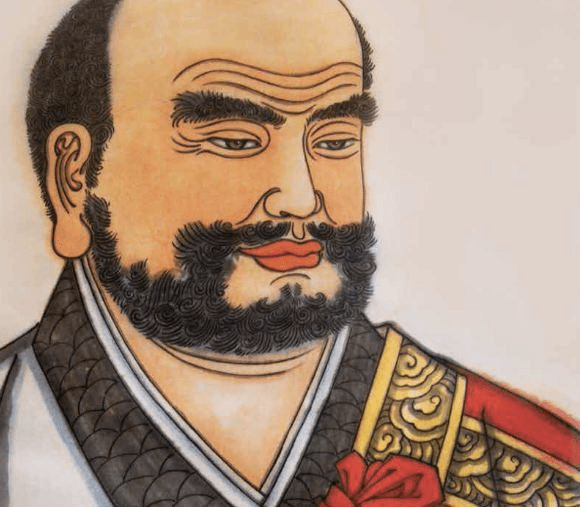
Great Master Kumarajiva

Once, I had the privilege of listening to a pre-recorded dharma discourse by the esteemed H.H.  Dorje Chang Buddha III. During this enlightening session, His Holiness shared a captivating story that left a profound impact on my mind. It was the tale of Kumarajiva, a legendary figure who demonstrated his profound inner realization by consuming needles. Intrigued by this extraordinary account, I felt compelled to delve further into the remarkable life of Kumarajiva.

Kumārajīva was a Buddhist monk, scholar, missionary and translator from the Kingdom of Kucha (present-day Aksu Prefecture, Xinjiang, China). Kumārajīva is seen as one of the greatest translators of Chinese Buddhism. According to Lu Cheng, Kumarajiva’s translations are “unparalleled either in terms of translation technique or degree of fidelity”.

Kumārajīva settled in Chang’an during the Sixteen Kingdoms era. He is mostly remembered for the prolific translation of Buddhist texts written in Sanskrit to Chinese he carried out during his later life.

At Chang’an, Kumārajīva was immediately introduced to the emperor Yao Xing, the court, and the Buddhist leaders. He was hailed as a great master from the Western regions, and immediately took up a very high position in Chinese Buddhist circles of the time, being given the title of National Teacher. Yao Xing looked upon him as his own teacher, and many young and old Chinese Buddhists flocked to him, learning both from his direct teachings and through his translation bureau activities.

Kumārajīva appeared to have a major influence on Emperor Yao Xing’s actions later on, as he avoided actions that may lead to many deaths, while trying to act gently toward his enemies. At his request, Kumārajīva translated many sutras into Chinese. Yao Xing also built many towers and temples. 

Yao Hsing was so impressed with Kumarajiva’s political acumen, intellectual talent and spiritual depth that he was impelled to try a eugenic experiment. He insisted that Kumarajiva move out of the monastic community into a private house staffed by female attendants. Yao Hsing believed that the offspring of Kumarajiva and carefully selected maidens would be as brilliant and talented as their father. Although Kumarajiva was repelled by the experiment, he refused to jeopardize the welfare of the translation centre by refusing to obey his emperor. He complied with Yao Hsing’s orders but was concerned about the effect his actions might have on the monastic community. He likened himself to a lotus growing out of the mud and enjoined the monks to attend to the lotus and ignore the mud.

However, it is widely understood that monks are expected to adhere strictly to the rules and precepts, diligently purifying their bodies and minds while maintaining purity in their six senses. Deviating from these principles, particularly by engaging closely with women and disregarding the precepts, can hinder the attainment of positive outcomes. Consequently, doubts began to arise among the Sangha regarding Kumarajiva’s integrity, leading to a decline in the commitment of some disciples to uphold the essential Buddhist rules.

When Kumarajiva became aware of the troubling trend spreading among the monks, he could not afford to be complacent. In response, he summoned all his disciples to gather before him, determined to address the issue head-on.

Before the perplexed audience, Kumarajiva unveiled a bowl filled with silver needles, their sharpness and gleaming appearance catching everyone’s attention. The monks were left wondering about the purpose behind Kumarajiva’s display.

In a solemn tone, Kumarajiva addressed his disciples, saying, “Not every monk is qualified to enter into worldly attachments and establish households. If you can swallow these silver needles as I do, then I will consider granting you permission to marry and have children. However, if you are unable to do so, you must never attempt to follow in my footsteps.”

Having spoken these words, Kumarajiva proceeded to place each silver needle into his mouth, consuming the entire bowl with a composed ease. The supernatural power exhibited by Kumarajiva left the assembled monks awe-struck, their eyes widened in astonishment. In the end, they were all convinced by Kumarajiva’s demonstration, believing him to be the true successor endorsed by the Buddha.

With this act, Kumarajiva showcased the potency of the correct Buddha Dharma. Consequently, no one dared to criticize him from that point forward. Instead, they committed themselves to diligent practice, upholding the precepts, engaging in self-cultivation, and abandoning any fantasies of pursuing worldly desires.

The community perceived Kumarajiva’s actions as an exemplification of self-sacrifice in the pursuit of the Bodhisattva Ideal, despite the disappointment he experienced due to the children of Yao Hsing’s experiment falling short of his grand expectations.

Why Kumarajiva Swallowed Needles

Link: https://peacelilysite.com/2023/05/11/why-kumarajiva-swallowed-needles/

#DorjeChangBuddhaIII#HHDorjeChangBuddhaIII #Kumarajiva #Buddhist #BuddhaDharma #SwallowNeedles #ChangAnChina #YaoxingEmperor #KuchaKingdom #InnerRealization #BuddhistPower #Monk

Source: https://en.wikipedia.org/wiki/Kum%C4%81raj%C4%ABva, https://www.tsemrinpoche.com/tsem-tulku-rinpoche/great-lamas-masters/kumarajiva-the-great-translator-from-kucha.htmlhttps://khyentsefoundation.org/the-life-and-legacy-of-kumarajiva/https://japanesemythology.wordpress.com/study-notes-the-influence-of-kumaraju-kumarajiva-upon-japan/

A Small Kind Act, A Big Impact to the World

A small kind act, A big impact to the world

An old Chinese saying goes: Do not fail to do good no matter how petty the deed; do not engage in evil no matter how trivial the deed. Kindness has the power to bring happiness, peace and good fortune. The heroic Army General Eisenhower’s story is a great testimony of this ancient and eternal  law: what goes around comes around.

How one small act of kindness, changed the path of history! The historic victory of World War II might have had to have been rewritten, if it was without this single good deed, performed by a single man, the heroic Army General, Eisenhower.

Photo by Adam Grabek on Pexels.com

One day, during the horrific throngs of World War II, Lieutenant General Dwight David Eisenhower of the Allied Forces was returning to France, to attend an emergency military conference.

That day, the snow was dense, the air was cold. And his car was urgently speeding to its destination. On the dimly lit path, Eisenhower suddenly saw an old couple sitting at the side of the road, shivering in the freezing cold.

Mr. Eisenhower immediately stopped the car and told the officer beside him to get out of the car and speak with them. An officer, another passenger in the car, immediately argued that, “General, we must be on time for the meeting at the Head office, please leave it to the local police.” Eisenhower knew that his concern for their punctuality was just an excuse not to help.

The General, however, was resolved to get out of the car at once to attend to the desperate elderly couple. He said to his staff, “If we wait for the local police to come, they will be dead before the police arrive!”

He found out that they were on the way to visit their son in Paris. But their car had broken down in the middle of their journey. In the thick snow they could not see anyone to ask for help from; they did not know what to do.

After learning of their plight, Mr. Eisenhower, without any hesitation, immediately invited them to get into the car. He offered them the gracious favor of delivering them to their son’s home in Paris, before heading back to the Head Office himself.

At the time, Eisenhower, the commander of the Allied Forces offered this kindness merely out of his own good will, disregarding his position as well as any complication that could affect the mission he was shouldering.

However, the intelligence received after that night, shocked everybody in the car, especially the officer who had tried to prevent the detour.

It turned out, that Nazi snipers had been placed along their route in an attempt to ambush and assassinate them on their way to Head Office.

Hitler was certain that, that day would have been the last day of the Allied commander, but his plan failed unexpectedly, which made him suspicious of the gathered intelligence. Hitler was unaware that it was the rescue of the elderly couple that had led Eisenhower to take another route.

34th President of the United States, Dwight D. Eisenhower. (Wikipedia/ James Anthony Wills)

Historians have commented that Eisenhower’s good deed that day saved him, almost certainly, from an assassination. Without his moral actions, the history of the World War II might have been quite different indeed.

It is in the small kindnesses that we show to one another, that may appear small and insignificant at first, that we find the truth of our fate. Within these actions, lies the power to write and rewrite history.

According to traditional culture, the more consideration we show for others and the stronger the goodwill we have towards them, the better our destiny, and the more blessings we have bestowed upon us.

A small kind act, A big impact to the world

Link: https://peacelilysite.com/2022/03/11/a-small-kind-act-a-big-impact-to-the-world/

Source: How one small act of kindness, changed the path of history https://thebl.com/culture/world-culture/how-one-small-act-of-kindness-changed-the-path-of-history.html

#Moral#Gooddeed#Kindness#History#Eisenhower#PresidentoftheUnitedStates#Assassination#WorldWarII