The Ultimate Croatian Summer 2026 Itinerary of ‘Must-Do’ Experiences

Courtesy of Boris Kacan / Korcula Tourist Board

By Malana VanTyler Contributor May 21, 2026, 5:14 p.m. ET

Summer 2026 is the year to go deeper into Croatia than most travelers ever do, reaching destinations and experiences sometimes left under the radar. Most first-timers land in Dubrovnik, work their way up the coast, and leave wondering what they missed. The answer is usually everything inland and everything that does not show up on a standard ten-day package. This itinerary is an insider’s handbook on experiences, locations, and sceneries a seasoned Croatia traveler would recommend. From music festivals and Michelin star restaurants, to vitality islands, medieval stone towns, and 3000-year-old palaces. Croatia is more than just a single destination. There are at least ten distinct ones, and this is where to start.

Drink Wine in a Roman Palace in Split

Courtesy of Split and Dalmatia County Tourist Board

The journey begins the moment you land in Split, now reachable on a direct flight from New York. Here, waking up inside a Roman emperor’s palace is not history. It is just Tuesday. The palace Diocletian built here in 305 AD became what the city is today. Sipping local wine perched on 1,700-year-old walls is not a novelty here; it is just a Tuesday, and the city is so diverse that there’s something for everyone who visits. From climbing Marjan hill in the morning and afternoons on the waterfront promenade watching the sunset, to staying for the evening when the city shifts into the slow pace that Dalmatians call pomalo.  Every island on this itinerary leaves from here, which means Split is not just a stop. It is the center of gravity of the entire Dalmatian coast.

Seasoned traveler’s advice: Climb Marjan Hill. Use it as your base for the islands.

Live Island Life at Its Finest in Korčula Town

Courtesy of Andro Tasovac / Korcula Tourist Board

From Split, a ferry southeast through the Dalmatian islands brings you to Korčula, a medieval town located on a narrow stone peninsula that some historians argue was the birthplace of Marco Polo. Step outside the old town walls and within ten minutes you’ll be met with beaches and coves with some of the clearest water on the Dalmatian coast. The island’s gems are Posip and Grk, two white wines indigenous to the island, with Grk believed to be one of the oldest grape varieties in Croatia. On summer evenings, the Moreska, a sword dance performed here continuously since the 17th century, plays out in the open squares by torchlight. An island that delivers medieval architecture, exceptional wine, and some of the clearest water on the Dalmatian coast, and somehow still hasn’t made it onto everyone’s list. That’s exactly why it’s on this one.

Seasoned traveler’s advice: Rent a bike, find a beach, try the Posip.

Experience the Art of the Adriatic Day at Carpe Diem Beach, Hvar

Courtesy of Carpe Diem Beach

The ferry from Korčula to Hvar takes less than an hour. From Hvar town, a boat across the channel brings you to Carpe Diem Beach, a pine-covered cove in the Pakleni Islands that almost everyone who wants to visit Croatia has on their bucket list. Crystal-clear water, a pool above the open Adriatic, nets suspended over the sea. Arrive in the morning for the stillness of it. By afternoon, the sun is down, the crowd has found its way in, and the cove has become something else entirely. The kitchen runs all day, Mediterranean dishes and fresh sushi from lunch through the long Adriatic evening. As the sun drops over the Pakleni Islands, the energy is at its peak, and this pine-covered cove in the middle of the Adriatic becomes the exact center of the Mediterranean summer.

Seasoned traveler’s advice: Get on the first boat from Hvar to enjoy the day to the fullest.

Eat Above the Adriatic with Dinner in the Sky, Dubrovnik

Courtesy of Dinner in the Sky

Take a ferry south, and within a few hours, Dubrovnik appears on the horizon. View from a distance is one thing. From fifty meters above the Adriatic, with the old city walls below you and the open sea stretching in every direction, it is something else entirely. Dinner in the Sky puts a dining table up there, with a chef, a three-course menu of Croatian specialties, and a platform that rotates to catch every angle of the coast. The moment it lifts, and the city drops away, is one of those travel experiences that is genuinely difficult to prepare for. The food is serious, the wine is local, and what started as an unlikely concept has quietly become one of the hardest reservations to get on the entire Dalmatian coast. Some experiences build expectation. This one lives up to it.

Seasoned traveler’s advice: Book the sunset slot. It sells out weeks in advance.

Claim Your Own Island with Master Charter

Courtesy of Master Charter

After Dubrovnik, the journey north is best made by water. The Croatian archipelago is expansive, which is where the Master Charter comes in. Since 2006, the company has been building bespoke sailing itineraries along the Croatian coast. Their expertise lies in matching small groups to handpicked vessels from a fleet. There’s something for everyone, from traditional wooden gulets to luxury motor sailers and beyond. Several captains own the yacht they sail, a rarity in the charter industry, ensuring every detail of the trip (and the stay) gets the attention it deserves. Sun decks, jacuzzis, water toys, and cabins all come as the finishing touches that make going ashore feel like a step down. Out here, with the right crew and the right vessel, a Master Charter voyage is the difference between seeing Croatia and understanding it.

Seasoned traveler’s advice: Book well ahead. The best yachts go early.

Find Yourself on Lošinj, Croatia’s Island of Vitality

Courtesy of Hrvoje Serdar / Mali Lošinj Tourist Board

Before you know it, the sail brings you to the island of Lošinj. To pine-scented air, clean enough to feel like a treatment in itself. Sea so clear the seabed is visible from the surface. A town where food comes with a philosophy– the Taste of Vitality. Seasonal and nutrient-rich, prepared with wellbeing and health in mind. Mali Lošinj has been doing vitality before it became a lifestyle industry. The island sits in the Kvarner Bay, surrounded by one of the cleanest seas in Europe, and 220 kilometers of hiking and cycling trails through pine forests to hidden coves. Options here are endless. Sail, dive, do SUP yoga at sunrise, or simply sit in the pine forest and breathe. Mali Lošinj is a place where rest, movement, nature, and food work together in perfect balance. An island where vitality comes naturally.

Seasoned traveler’s advice: Extend your stay. Come with no agenda.

Dine at a Three Michelin Star Destination at Hotel Grand Park, Rovinj

Courtesy of Grand Park Hotel Rovinj

A short journey away stands the Istrian coast, home of truffles, olives, and wine, with the same seriousness as Tuscany. Rovinj is unique, and Grand Park Hotel Rovinj gives reason to make it a dedicated stop. The hotel sits above the sea at the edge of the Golden Cape forest park, looking out across the Adriatic from one of the finest positions on the Istrian coast. The hotel’s been featured on the World’s 50 Best Hotels 2025 list, and the dining alone justifies it. Rovinj carries more Michelin stars than any other destination in Croatia, and three of them are inside this hotel: Agli Amici Rovinj holds two, Cap Aureo one. Few hotels in Europe can claim a world-ranked address, three Michelin stars, and a view like this. Grand Park earns every night you give it.

Seasoned traveler’s advice: Book a table at one of the Michelin-star restaurants even if you are not staying overnight.

See the Show of the Summer at INmusic Festival, Zagreb

Courtesy of INmusic festival

Reaching Zagreb in June means one thing. For twenty years, Lake Jarun has hosted INmusic, and the festival earned its place on the European calendar edition by edition. A lake island inside a capital city. Stages facing the water. The Zagreb skyline in the background. This year’s lineup for the 20th anniversary is the strongest the festival has put together. It’s a true gem– a mix of global headliners and emerging European acts reflecting what INmusic has always been about. An immersive, laid-back escape, whose two decades of cultural weight are hard to overstate. Zagreb takes its summers seriously, and INmusic’s the reason June belongs to the city. Tens of thousands of people gathering on a lake island in the heart of the capital. A lineup that raises the bar every year. Taken together, it makes INmusic one of Europe’s must-visit festivals, shaping the summer cultural calendar.

Seasoned traveler’s advice: Find accommodation well in advance or opt for on-site camping. 

Walk Across the Water at Plitvice Lakes National Park

Courtesy of National Park Plitvice Lakes Archive

Plitvice Lakes National Park is one of Croatia’s most visited destinations, and it belongs on every itinerary that touches more than just the coast. Located two hours from Zagreb, this national park covers nearly 300 square kilometers of forested karst terrain. What you see is unique– 16 crystalline lakes connected by more than 90 cascades and waterfalls spill over travertine barriers that have been accumulating for millennia. It’s a perfect weekend getaway with an on-site hotel within the National Park and charming restaurants showcasing the local gourmet specialties. It’s been a UNESCO World Heritage Site since 1979, and for a reason. Plitvice stops people in a way that very few places in Europe still can. The water, the color, the scale of it. Some landscapes simply speak for themselves.

Seasoned traveler’s advice: Visit May through September. Book tickets in advance.

Taste the Region at Korak Winery, Plešivica

Courtesy of Korak Winery

From Plitvice back to Zagreb, take a detour to Plešivica, a wine region that Croatians have been calling their Champagne for decades, and Korak Winery is the reason to stop. Their philosophy, heritage and authenticity; all bottled into small batches of premium organic wines. Five generations of hands-on family stewardship, and each member takes a hands-on approach. Josip is the enologist. Vera leads the service, awarded Michelin Best Service 2025. Bernard takes charge of the kitchen. What he built goes beyond a winery restaurant. He cooks the land around him, sourcing from local growers, hunters, and foragers as the season dictates, an approach that earned Korak a Michelin Green star alongside its one Michelin star for cuisine. The eight-course tasting menu, paired with estate wines, makes this detour feel like the whole point of the trip. 

Seasoned traveler’s advice: Take the winery tour and book the restaurant in advance.

Make It Count

Croatia rewards the traveler who plans ahead. The best restaurants fill up weeks in advance. The national park requires timed entry in summer. The distances are short, the people are welcoming, and a country that runs from the mountains of the interior to the islands of the southern Adriatic can be covered in ten days without feeling rushed. Start in Split. Work your way through the islands, up the coast, through the lakes, and into Zagreb just in time for the most anticipated festival in the region. Croatia has a way of filling every day of a trip and leaving you with a list of reasons to come back.

Link:https://peacelilysite.com/2026/05/22/the-ultimate-croatian-summer-2026-itinerary-of-must-do-experiences/

Source: https://www.usatoday.com/story/special/contributor-content/2026/05/21/the-ultimate-croatian-summer-2026-itinerary-of-must-do-experiences/90202255007/

When Noise Becomes Blindness

Wizard at desk surrounded by books, scrolls, potions, and magical screens displaying symbols and star constellations

The most dangerous thing is not that we are surrounded by falsehood, but that we slowly lose our desire to seek what is true.

In 1906, Hannah Arendt was born into a world that would soon reveal both the brilliance and the fragility of human society. She later witnessed how a highly educated and cultured nation could slowly lose its clarity, drifting into confusion and darkness.

In her important work, The Origins of Totalitarianism, she reflected on a troubling question:
How do people lose their ability to see what is right in front of them?

Her answer was not simple, but one part stands out quietly and powerfully—when truth becomes unstable, people begin to lose their ability to think clearly.

Today, we may not live in the same world she did, but in some ways, her observations feel closer than ever.

Every day, information rushes toward us from all directions. News, opinions, arguments, videos, headlines—especially on platforms like Facebook, X, and TikTok. Everything moves quickly. Everything competes for attention.

At first, we try to follow.
We read. We watch. We react.

But slowly, something changes.

The more we see, the less certain we feel.
The more voices we hear, the harder it becomes to know which one is true.
Contradictions pile up. Emotions rise. Clarity fades.

And without noticing it, we grow tired.

Not physically tired—but mentally tired.

When the mind is tired, it stops asking questions.
It stops examining.
It stops distinguishing.

We begin to accept things without really understanding them.
Or we reject everything, thinking, “Maybe nothing is true anyway.”

This is a quiet kind of blindness.

Not because we cannot see,
but because we no longer take the time to look carefully.

In her later essay, Truth and Politics, Arendt warned that when truth is constantly distorted, it does more than mislead—it weakens our trust in truth itself. And when that trust fades, something deeper begins to erode: our sense of judgment, responsibility, and even compassion.

This is not a distant problem.
It is something we face every day.

So what can we do?

Perhaps the answer is simpler than we expect, but not easier.

We pause.

We step back from the noise, even for a moment.
We resist the urge to react immediately.
We allow ourselves time to think.

Not quick thinking,
but careful thinking.

We ask:
Is this true?
What is the source?
Am I reacting, or am I understanding?

And just as importantly, we question even the ideas we already agree with.

Real thinking is not comfortable.
It requires patience.
It requires honesty.
Sometimes, it requires us to admit we were wrong.

But this quiet effort is what keeps the mind alive.

In a world filled with endless information, the greatest danger is not that we are misinformed.
It is that we stop thinking altogether.

So, in the midst of all the noise, we can choose something different.

To slow down.
To look carefully.
To think clearly.

And in doing so, we begin to see again.

#OriginsofTotalitarianism#HannahArendt #Germany #TruthandPolitics #Philosophy

Link:https://peacelilysite.com/2026/05/05/when-noise-becomes-blindness/

The Ancient Marvel That Still Breathes: Understanding Dujiangyan

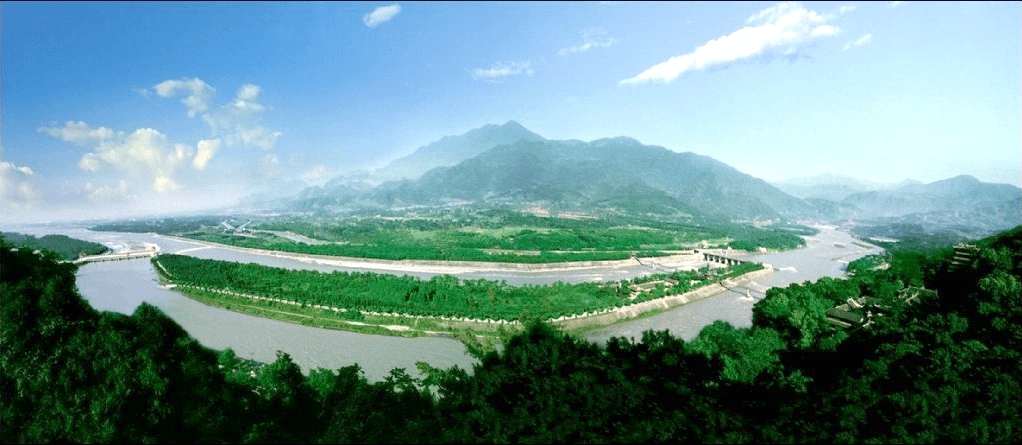
While many ancient wonders exist only as weathered ruins—silent witnesses to lost civilizations—Dujiangyan Irrigation System is something entirely different. It is not a relic of the past, but a living, breathing masterpiece.

Built around 256 BC by the visionary engineer Li Bing, this extraordinary irrigation system continues to do exactly what it was designed to do over two millennia ago: tame the waters of the Min River, prevent catastrophic floods, and nourish vast stretches of fertile land across the Chengdu Plain.

What makes Dujiangyan truly astonishing is not just its longevity—but its philosophy. It achieves perfect water control without a single dam.

Modern engineering often seeks to conquer nature with towering concrete barriers. Dujiangyan, by contrast, embodies a radically different idea: harmony over control.

Rather than blocking the river, the system gently guides it—using the river’s own energy to regulate itself through three elegantly designed components:

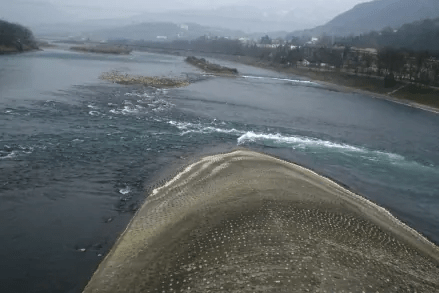
  • Yuzui (Fish’s Mouth Levee): A natural divider that splits the river into inner and outer channels.
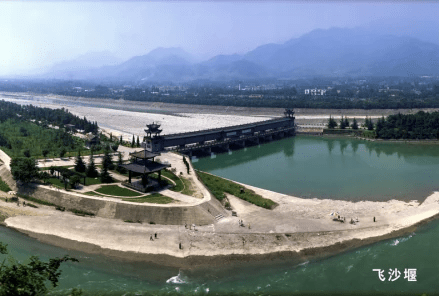
  • Feishayan (Flying Sands Weir): A clever spillway that uses the river’s force to flush away excess water and sediment.
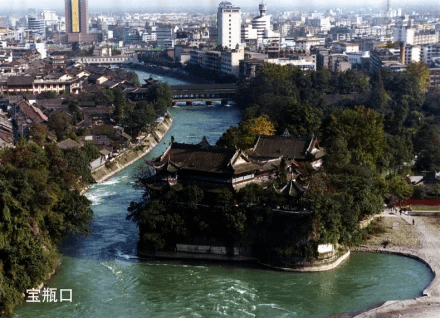
  • Baopingkou (Precious Bottle Neck): A narrow opening carved through the mountain, acting like a natural valve to control water flow.
Fish’s Mouth Levee

Flying Sands Weir

Baopingkou

Together, these elements form a system that feels less like machinery and more like a living organism—responsive, adaptive, and enduring.

The “Four-Six” Rule: Nature’s Invisible Hand

At the heart of Dujiangyan lies one of its most brilliant innovations: the Four-Six Divide (四六分水)—a subtle yet powerful hydraulic principle.

Through careful shaping of the riverbed, Li Bing created an automatic system that adjusts itself with the seasons:

  • In the dry spring months, the deeper Inner River naturally draws in about 60% of the water, ensuring that farmlands receive the nourishment they need.
  • During the summer floods, the wider Outer River takes over, diverting roughly 60% of the surging waters away from populated areas.

No gates. No sensors. No human intervention.

Just the quiet intelligence of design aligned with nature.

The result is nothing short of extraordinary: a self-regulating system that protects against both drought and disaster.

Why It Still Thrives After 2,200 Years

It is rare—almost unimaginable—for a piece of infrastructure this ancient to remain central to modern life. Yet Dujiangyan continues to serve as the lifeline of the Chengdu Plain.

Its enduring relevance lies in principles that feel strikingly modern:

  • Sustainability: Instead of fighting sediment buildup, the system uses the “Flying Sands” technique to naturally flush out the majority of silt, keeping waterways clear.
  • Ecological Harmony: Without a massive dam or reservoir, the river remains alive—fish migrate freely, and ecosystems flourish undisturbed.
  • Living Tradition: The annual practice of Zhuoshui—a deep cleaning of the riverbed—continues today, blending ancient ritual with contemporary science.

Li Bing’s guiding philosophy was deceptively simple:
“Deepen the channel, keep the dykes low.”

Yet within these words lies a profound truth—one that extends far beyond water management.

By respecting the natural flow rather than resisting it, he created a system that has outlasted kingdoms, revolutions, and the passage of time itself.

Recognized today as a UNESCO World Heritage Site, Dujiangyan stands as a quiet but powerful reminder:

Sometimes, the most advanced solutions are not those that overpower nature—but those that understand it.

And perhaps, in a world still learning to balance progress with sustainability, this ancient marvel is not just a story of the past—but a guide for the future.

Link:https://peacelilysite.com/2026/03/19/the-ancient-marvel-that-still-breathes-understanding-dujiangyan/

The Poetry Hidden in Chinese Names

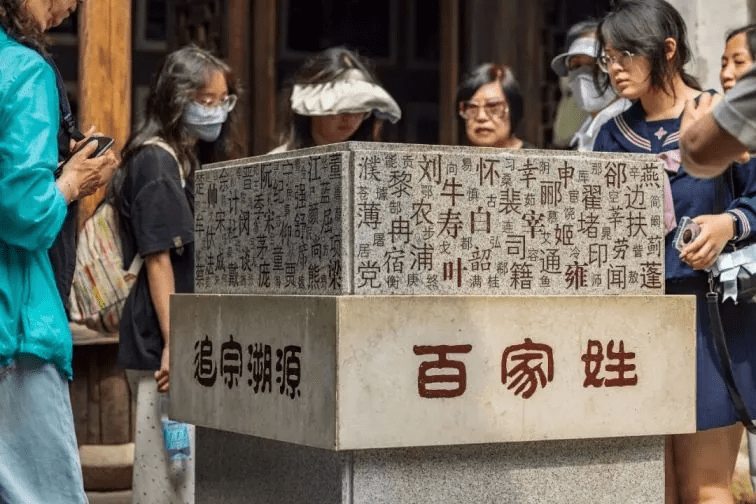
Chinese characters are more than just written symbols—they are small works of art shaped by thousands of years of history. Each character carries meaning, imagery, and often a quiet sense of poetry. A single word can evoke light, wind, mountains, or virtue. When these characters come together to form a person’s name, they become something even more meaningful: a reflection of family hopes, cultural heritage, and the beauty of language itself.

A name often carries the very first blessing from parents and the hopes a family places upon the future.

Imagine traveling back in time to ancient China. If you walked up to Liu Bei (刘备)and casually called him “Liu Bei,” he might pause in surprise—or even consider it somewhat impolite. In traditional Chinese culture, a name was never just a label. It was a symbol of lineage and family, a part of life’s rituals, and perhaps the first gentle poem parents wrote for their child.

A name may consist of only a few characters, yet within it often lies thousands of years of cultural tradition and human warmth.

Surnames and Clan Names: An Ancient Way of Asking “Who Am I?”

Today, we simply combine a surname and given name to form what we call a “full name.” But in ancient China, particularly before the Qin dynasty, “xing” (姓) and “shi” (氏) were two different concepts.

The surname (xing) was primarily used to distinguish marriage relations. The earliest Chinese surnames—such as Ji, Jiang, Si, and Ying—often contained the “female” radical in their characters. This reflected the legacy of a matrilineal society. The principle was simple: people with the same surname were considered to share blood ties, so marriage between them was forbidden.

The clan name (shi), on the other hand, represented social status. Only those who held land, titles, or significant achievements were granted a clan name. In other words, the surname represented lineage, while the clan name reflected rank and honor.

A fascinating example is the famous reformer Shang Yang (商殃) of the Warring States period. He was not originally called “Shang Yang.” His ancestral surname was Ji, and his clan name was Gongsun because he descended from the royal family of the State of Wei. Early in life he was known as Gongsun Yang. Later, after helping transform the State of Qin through sweeping reforms, he was granted the territory of Shang and the title “Lord of Shang.” From then on, people began calling him Shang Yang.

Looking back at history, one might smile at an interesting truth:
In ancient times, many people changed their names not to hide who they were—but because life had elevated them to a new chapter.

The Courtesy Name: A Rite of Adulthood

In ancient China, a person often had more than one name. In addition to their given name (ming), they also received a courtesy name (zi).

The given name was mostly used within the family, especially by elders. The courtesy name, however, was the name used in society by peers and acquaintances.

Receiving a courtesy name meant that a person had reached adulthood and should be treated with respect.

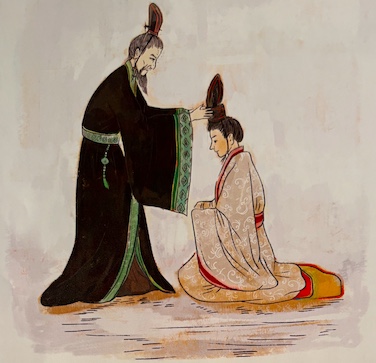
For men, this moment came at the age of twenty during the “capping ceremony” (冠礼). In this solemn ritual, elders placed a ceremonial cap on the young man and bestowed upon him his courtesy name. From that day forward, he was no longer the boy running through village fields with childhood nicknames like “Little Dog” or “Iron Egg,” but a recognized adult in society.

For women, adulthood was marked by the hairpin ceremony (笄礼) at around fifteen. After this ceremony, a young woman could wear her hair pinned up with a hairpin, signifying that she had reached marriageable age.

This is where the classical phrase “waiting in the boudoir for one’s courtesy name” (待字闺中) comes from—describing a young woman who has received her courtesy name and awaits the next chapter of life.

These rituals made the transition into adulthood both solemn and graceful.

Chinese culture often reveals its subtle wisdom in the relationship between a person’s given name and courtesy name.

The great strategist Zhuge Liang (诸葛亮)was known by the courtesy name Kongming(孔明).
The character Liang means “bright,” and Ming also means “light” or “clarity.” Together they form a beautiful echo—brightness upon brightness.

The legendary general Zhao Yun (赵云)had the courtesy name Zilong(子龙). Ancient Chinese sayings describe the natural harmony between elements: “Clouds follow the dragon, and the wind follows the tiger.” With “cloud” in his given name and “dragon” in his courtesy name, the combination evokes an image of heroic power moving through the skies.

Then there is the great Song dynasty writer Su Shi(苏轼), whose courtesy name was Zizhan(子瞻). The character Shi refers to a horizontal bar at the front of an ancient carriage—something modest in appearance yet essential for support. Zhan means “to look forward into the distance.” One suggests quiet steadiness; the other, far-reaching vision. Together they reflect the balance of humility and aspiration in his life.

Through these pairings, we can glimpse the hopes of parents and elders, as well as the refined and poetic sensibilities of traditional Chinese culture.

Of course, not every ancient name was elegant or poetic. Some carried a touch of everyday humor.

The ruler Duke Cheng of Jin was said to have the name Heitun(黑臀), meaning “Black Hips,” supposedly because he had a dark birthmark on his body.

Another ruler, Duke Zhuang of Zheng, was named Wusheng(晤生), meaning “born with difficulty,” referring to a difficult birth.

If children today were given such names, they might have a few serious conversations with their parents!

On the other hand, some names sounded incredibly powerful. The king King Wu of Qin was named Ying Dang. In ancient Chinese, the character “Dang” suggested sweeping across lands and conquering territories—a name filled with ambition and authority.

Sometimes a name was lofty and ceremonial; sometimes it simply reflected the humor of daily life.

From ancient tribal totems to the familiar Hundred Family Surnames, Chinese names carry thousands of years of cultural memory.

Today, we no longer perform capping ceremonies or hairpin ceremonies, and few people receive courtesy names. Yet when a new child enters the world, parents still open dictionaries, carefully weighing every sound and every meaning before choosing a name.

In that moment, tradition quietly continues.

As an old Chinese poem says:

“A heart’s great aspirations may remain unopened,
yet spring winds return again and again in dreams.”

A name may consist of only a few characters, but it carries a family’s blessing, the imprint of history, and the gentlest hopes for the future.

It is the very first gift a person receives in life.

Link:https://peacelilysite.com/2026/03/15/the-poetry-hidden-in-chinese-names/

Compassion Is Stronger Than Violence

“In a gentle way, you can shake the world.”
— Mahatma Gandhi

A Reflection Inspired by Gandhi and Buddhist Wisdom

Throughout history, great spiritual teachers have reminded humanity that true strength does not come from violence, but from compassion. One of the most powerful voices for this truth was Mahatma Gandhi, whose philosophy of nonviolence transformed not only India’s independence movement but also the moral thinking of the modern world.

Gandhi believed deeply that responding to hatred with hatred only multiplies suffering. One of his most famous reminders is:

“An eye for an eye only ends up making the whole world blind.”

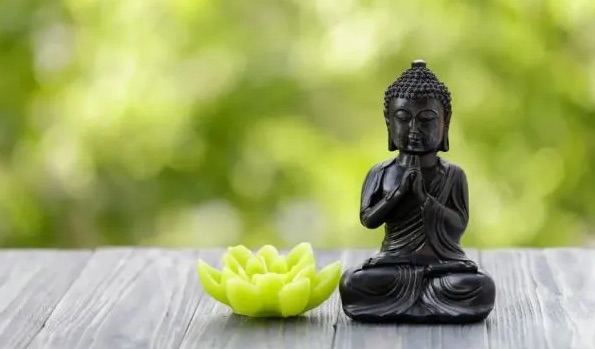
These words echo a truth that has been taught for thousands of years in Buddhist philosophy. The teachings of Gautama Buddha emphasize that violence and anger inevitably create more suffering through the universal law of cause and effect, often described as karma.

When people act with hatred, harmful consequences naturally follow. But when people act with compassion, patience, and kindness, they plant seeds of peace that can transform the future.

Gandhi understood this deeply. He once said:

“Non-violence is the greatest force at the disposal of mankind.”

At first glance, nonviolence may seem passive or weak. Yet both Gandhi and Buddhist teachings reveal the opposite: choosing compassion when faced with anger requires tremendous inner strength. It means resisting the instinct to retaliate and instead responding with wisdom and humanity.

Another powerful statement from Gandhi reminds us of this inner strength:

“The weak can never forgive. Forgiveness is the attribute of the strong.”

In Buddhist practice, forgiveness and compassion are essential qualities for spiritual growth. When we release anger and cultivate compassion, we stop feeding the cycle of negative karma. Instead, we create positive causes that lead to harmony and healing.

The world today often appears filled with conflict, division, and hostility. Yet the teachings of Gandhi and the Buddha remind us that lasting peace cannot be built through force. Peace grows from the transformation of the human heart.

Every act of kindness, every moment of patience, and every compassionate choice becomes a small but powerful step toward a more peaceful world.

Gandhi expressed this hopeful vision beautifully:

“Where there is love there is life.”

His words remind us that true change does not always come from power or domination. Often, it begins quietly—with compassion, moral courage, and the determination to do what is right.

When we choose compassion over anger, forgiveness over revenge, and wisdom over violence, we participate in a timeless spiritual truth: good causes create good results. In this way, every compassionate action becomes a seed of positive karma that can gradually transform both our own lives and the world around us.

And perhaps this is the deepest lesson shared by both Gandhi and the Buddha:
compassion may appear gentle, but in the end, it is stronger than violence.

In recent days, my heart has been unsettled by the wars, conflicts, and endless scandals that seem to surround our world. In such turbulent times, the gentle wisdom of Gandhi becomes like a quiet lamp in the darkness, calming my mind and reminding me to return to inner peace.

I make a sincere vow to guard the peace within my own heart and not allow anger or despair to take root. Instead, I choose to pray for those who are suffering and to let the love and compassion within me flow outward. My voice may be small in this vast world, but I believe that every sincere prayer carries its own power, and the divine will surely hear it.

May the blessings of all the divine beings in the universe embrace this world. May compassion arise in human hearts, hatred dissolve, and may peace and harmony gently return to our shared home.

Link:https://peacelilysite.com/2026/03/11/compassion-is-stronger-than-violence/

Why You Feel Better After You Pray: The Science Behind the “Quiet Heart”

You might not realize it, but this is the true power of prayer—it’s not just asking for blessings; it is awakening an internal system within you that says, “I can keep going.”

Every sincere moment of prayer leaves an imprint on the mind. This is not spiritual poetry or wishful thinking; it is a pattern repeatedly observed through MRI scans, neuroimaging, and psychological research. Each second spent in focused, quiet prayer is an opportunity to “turn on a light” in the brain—helping us become steadier, clearer, and more resilient.

Scientists were once skeptical. But the evidence surprised them.

When a person enters a state of deep, focused prayer, activity in the prefrontal cortex increases. This is the part of the brain responsible for attention, judgment, emotional regulation, and self-control—the “driver’s seat” of the mind. Prayer helps us return to that seat, especially when life feels overwhelming.

At the same time, activity in the amygdala—the brain’s alarm system—tends to decrease. This region governs fear, anxiety, and the fight-or-flight response. When it is overstimulated, we feel tense, reactive, and out of control. Prayer appears to gently quiet this system, creating inner space to breathe, reflect, and choose more wisely.

This is not merely a mental effect—it is a physical response of the nervous system.

Research also suggests that heartfelt prayer—prayer infused with sincerity and emotion—is especially powerful. Compared to mechanical repetition, it more strongly activates brain regions associated with language, empathy, connection, and self-awareness, including the temporoparietal junction, anterior cingulate cortex, and medial prefrontal cortex. These areas shape how we relate to ourselves, to others, and to life itself.

In simple terms, honest prayer becomes a process of emotional clearing and inner reorganization.

When practiced regularly, these brain responses do something remarkable: they form new neural pathways. Like carving a well-worn trail through a forest, prayer creates a reliable inner path—a place of stability we can return to during moments of fear, grief, or confusion. The more often we walk this path, the easier it becomes to find our way back to calm.

Prayer is not the same as meditation. While both reduce stress and sharpen focus, prayer carries an added element: relationship. Prayer involves trust, dialogue, and the felt sense that we are not alone. This activates neural systems related to connection, attachment, and belonging—deep human needs that meditation alone does not always engage.

This may explain why, at the edge of emotional collapse, a simple, sincere prayer can sometimes bring someone back from the brink. The problem may not disappear—but the mind, heart, and body momentarily realign. A quiet strength returns. I can get through this.

What Prayer Does—Inside and Out

  • Activates the Prefrontal Cortex
    Strengthens clarity, emotional balance, and self-control.
  • Calms the Amygdala
    Lowers fear and stress responses, restoring inner quiet.
  • Builds Emotional Resilience
    Repeated prayer forms neural pathways that support stability over time.
  • Fosters Connection and Trust
    Engages social and emotional brain systems through relationship and sincerity.

Sincere prayer may be one of the most gentle, natural, and powerful “built-in reset systems” we possess.

So when was the last time you prayed—not out of habit, but from the heart?
Have you ever noticed how your body softened afterward, how tension quietly released?

That wasn’t imagination.
That was your mind and nervous system responding to something deeply human—and deeply real.

Link:https://peacelilysite.com/2026/01/09/why-you-feel-better-after-you-pray-the-science-behind-the-quiet-heart/

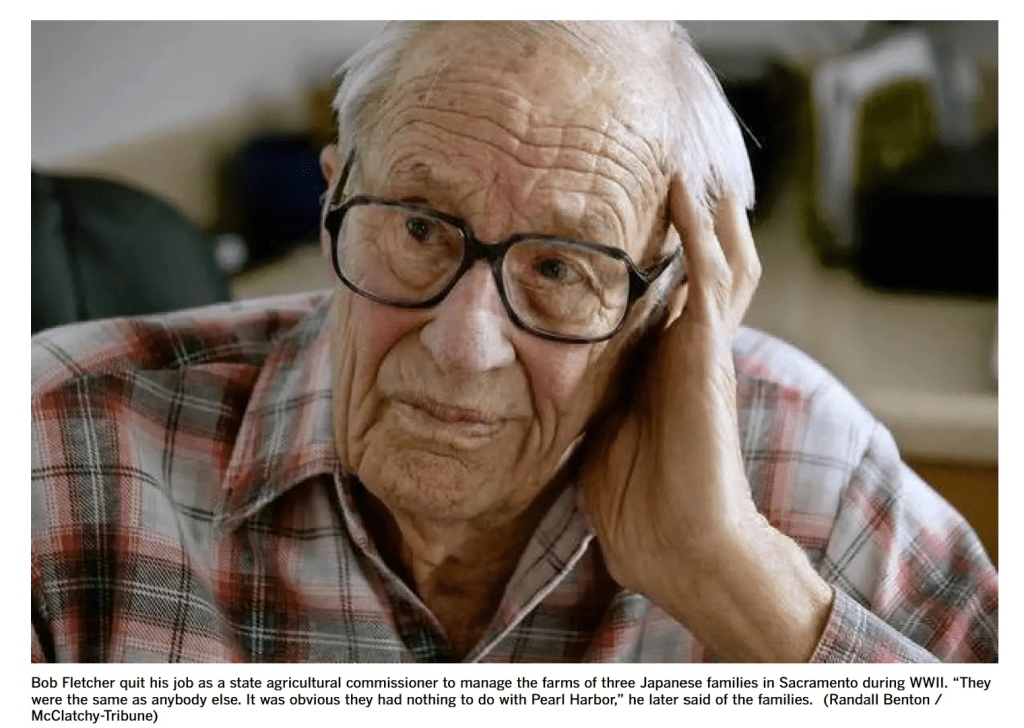
The Man Who Saved 90 Acres: Why Bob Fletcher’s Integrity Still Matters Today

In the middle of a storm, most people look for shelter. But a rare few choose to stand in the rain to keep someone else’s home from washing away.

In 1942, the United States was a place of fear and suspicion. Following the attack on Pearl Harbor, Executive Order 9066 forced thousands of Japanese-American citizens into internment camps. They were given just days to pack what they could carry, leaving behind their businesses, their homes, and their life’s work.

In Florin, California, most people looked away as their neighbors were taken. But an agricultural inspector named Bob Fletcher did something different. He stepped forward.

Note 1

Bob Fletcher was 31 years old when his neighbors—the Tsukamoto, Nitta, and Okamoto families—were ordered to leave. They were strawberry and grape farmers who faced losing everything to foreclosure.

They asked Bob if he would manage their farms while they were gone. Bob didn’t just say yes; he quit his stable job with the state to become a full-time farmer for people who weren’t even allowed to be there.

For three years, Bob worked 18-hour days. He managed 90 acres of flame tokay grapes across three different farms.

The Cost of Doing the Right Thing

Doing the “right thing” is rarely easy. Bob wasn’t seen as a hero by his community at the time. He was called names, shunned by neighbors, and at one point, someone even fired a shot into the barn where he was working.

But Bob had a quiet, iron-clad integrity. He lived in the migrant bunkhouses rather than the families’ main homes. He paid their mortgages, their taxes, and their bills. When the families finally returned in 1945, they didn’t return to ruins—they returned to thriving farms and a bank account full of the profits Bob had saved for them.

Bob Fletcher lived to be 101 years old. For decades, he deflected praise, often saying:

“I don’t know about being a hero. I just did what I thought was right.”

His life leaves us with enduring lessons:

Integrity is a verb.
It is not what we believe in private, but what we practice when no one is watching—and when it costs us something.

One person is enough.
Bob couldn’t stop a national injustice, but he saved three families. Sometimes protecting one corner of the world is exactly what we are called to do.

Moral courage is quiet.
It doesn’t announce itself. Sometimes it looks like long days, dirty hands, and the refusal to surrender compassion to fear.

We may not be living through a world war, but we all face moments where it is easier to go along with the crowd than to stand up for a neighbor. Bob Fletcher’s life asks us: Who are we looking out for? What are we willing to protect?

Link:https://peacelilysite.com/2026/01/05/the-man-who-saved-90-acres-why-bob-fletchers-integrity-still-matters-today/

Note 1 : Photo By Unknown Author – Original publication: LegacyImmediate source: https://www.legacy.com/us/obituaries/sacbee/name/robert-fletcher-obituary?id=11367093, Fair use, https://en.wikipedia.org/w/index.php?curid=69402868

Walking for Peace, Step by Step

The Buddhist monks from the Huong Dao Vipassana Bhavana Center in Fort Worth, who are undertaking a 2,300 mile pilgrimage of Walk for Peace, arrive for a welcome ceremony at Hong Kong City Mall in Houston Friday, Nov. 14, 2025. Houston Chronicle/Hearst Newspapers via Getty Images

In a world that often feels rushed, divided, and relentlessly loud, there is something quietly revolutionary about the act of walking.

Recently, a group of Buddhist monks began a long, demanding pilgrimage across the United States. Their mission is simple yet profound: to promote peace. Their journey began in Fort Worth, Texas, on October 26. Since then, they have faced the literal “wear and tear” of the road, including a harrowing incident where two monks were injured after a truck struck their escort vehicle.

Yet, they did not stop.

With perseverance and a calm, unshakable resolve, the group of two dozen monks has reached Georgia. They are still moving, one step at a time, toward their final destination in Washington, D.C. Their pace is slow, deliberate, and intentional—and that may be exactly what our world needs right now.

Buddhism has a long history of “engaged mindfulness”—the idea that compassion isn’t just felt in meditation, but lived in the world. These monks are not just praying for peace; they are embodying it.

As they navigate highways and back roads, they offer a living reminder that peace isn’t a destination we reach once and for all. It is a practice. It is something we choose moment by moment, breath by breath, step by step.

Watching their progress brings me back to a book I read nearly 30 years ago: Peace Pilgrim.

I remember being deeply moved by her story—how she walked across countries carrying almost nothing, guided by the conviction that peace begins within the individual. At the time, I wished I could have met her in person, just to thank her for the way her simplicity and courage planted a seed in my heart.

Though she is gone, her spirit feels remarkably present today. I see her legacy in the orange robes of these monks as they crest the hills of the American South.

Monks rest at Hong Kong City Mall in Houston Friday, Nov. 14, 2025. Melissa Phillip/Houston Chronicle via Getty Images

Igniting Kindness, One Heart at a Time

There is something profoundly moving about a walking pilgrimage in the age of instant communication. There are no hashtags here. No viral outrage. Just human beings placing one foot in front of the other, trusting that their presence alone can soften the world.

And it works.

Along the way, the “ordinary” world reacts. Drivers slow down. Strangers stop to ask questions. People offer water, a meal, or a simple smile. In these small, unscripted exchanges, something gentle is awakened. We are reminded that beneath our political and social differences, we all share a basic human longing for safety, understanding, and harmony.

The monks may be the ones doing the walking, but the kindness they ignite along the way belongs to all of us. As they recently shared on their Facebook page:

“We do not walk alone. We walk together with every person whose heart has opened to peace, whose spirit has chosen kindness, whose daily life has become a garden where understanding grows.”

A group of Buddhist Monks and several hundred local community members take part in the Walk for Peace in Montgomery, Ala., on Tuesday December 23, 2025. The Monks are walking from Texas to Washington, D.C. to promote peace and compassion.

https://www.usatoday.com/picture-gallery/news/2025/12/23/buddhist-monk-walk-for-peace-passes-through-montgomery/87897028007/

Most of us cannot drop everything to walk across a continent. But all of us can “walk for peace” in the geography of our own lives.

  • We can pause before we react in anger.
  • We can choose compassion over the reflex of judgment.
  • We can listen more deeply than we speak.

Watching these monks continue their journey despite injury and uncertainty reminds me that peace isn’t achieved through grand, sweeping gestures. It is built patiently through humility and love.

Step by step.

May their walk remind us to slow down, to soften our hearts, and to keep moving—together—toward a more peaceful world.

Photos from https://www.nbcdfw.com/news/national-international/buddhist-monks-peace-walk-thousands-follow-on-social-media/3962302/ and https://www.usatoday.com/picture-gallery/news/2025/12/23/buddhist-monk-walk-for-peace-passes-through-montgomery/87897028007/

Link:https://peacelilysite.com/2026/01/01/walking-for-peace-step-by-step/

Xiaoxitian Temple: A Masterpiece Carved into the Mountain

Xiaoxitian, originally known as Qianfo’an (The Hermitage of a Thousand Buddhas), was founded in the second year of the Chongzhen reign of the Ming Dynasty (1629). It stands atop Phoenix Mountain, about one kilometer west of Xixian County in Linfen, Shanxi Province.

Built entirely in harmony with the mountain, the temple unfolds in layers, as if it had grown naturally from the slope itself. Stone steps lead visitors upward, passing through courtyards divided by arched cave-like gateways. The upper, middle, and front courtyards are connected yet distinct, creating a spatial rhythm that is winding, intimate, and quietly profound. As one walks through the complex, footsteps instinctively slow, and time itself seems to soften.

The architecture of Xiaoxitian is restrained rather than ostentatious, yet its mastery reveals itself everywhere. Painted beams are elegant and dignified, and many of the halls are ingeniously built as two-story structures, creating a rich sense of vertical space within the limited mountain terrain. The bell and drum towers stand in stillness, inviting the imagination to wander back to an age when morning bells and evening drums echoed through the valley.

Stepping into the Mahavira Hall is a moment of sudden awe. Nearly the entire interior is filled with suspended polychrome sculptures—more than 1,900 figures, layered from floor to ceiling. From towering Buddhas over three meters high to figures no larger than a thumb, the sculptures are densely arranged yet never chaotic, solemn yet vibrantly alive. In that instant, one understands why Xiaoxitian is revered as the “Museum of Chinese Hanging Sculpture Art.”

Unlike many Buddhist temples that draw attention primarily to their principal Buddhas, the Mahavira Hall at Xiaoxitian is celebrated for the immersive world it creates as a whole. At its core stand the Medicine Buddha, Amitabha, Shakyamuni, Vairocana, and Maitreya, but surrounding them unfolds an entire celestial realm: the Ten Great Disciples, six young novices, the Ten Wisdom Kings, the Six Desire Heavens, and countless heavenly musicians dancing through the air.

Most unforgettable are the celestial musicians suspended within the tiered “sky pavilions” above the altars. Their figures are light and graceful, sleeves flowing as if caught in an eternal breeze, frozen in a moment of unending heavenly music. Some play the pipa, others hold flutes, while some seem to dance midair. One pipa-playing figure, leaning slightly forward with fingers poised on the strings, radiates such focus and elegance that one can almost hear the melody drifting across centuries.

Looking up toward the roof, the tri-colored glazed chiwen ornaments—yellow, green, and blue—gleam softly in the light. Their refined brilliance reflects the unmistakable aesthetic of the Ming Dynasty. Here, architecture, sculpture, and color merge seamlessly, and one forgets that this is a mountain temple at all. It feels instead like stepping into a floating Buddha realm, suspended between earth and sky.

That these sculptures have survived nearly four hundred years in such vivid detail inspires deep reverence. They represent not only the pinnacle of craftsmanship, but also a profound devotion—to faith, to beauty, and to a harmonious vision of the cosmos.

Perhaps what truly moves the heart at Xiaoxitian is not only the astonishing number of its hanging sculptures or the rare Ming Yongle Northern Buddhist Canon once preserved here, but something more enduring: a spiritual presence that has remained vibrant across centuries. It quietly reminds us that beyond the noise of the modern world, there still exists a place of serenity and dignity—carefully upheld by time itself.

Link:https://peacelilysite.com/2025/12/17/xiaoxitian-temple-a-masterpiece-carved-into-the-mountain/

A fifteen-year-old girl who had three hours, a law book, and the unwavering conviction that her sister’s life was not for sale

From : Gistreel Lifestyle. Liberia Online

She was eight years old when her father gambled her away in a card game.
Her older sister had three hours to win her back before the debt collector came.

Deadwood, Dakota Territory. 1877.
A place where law came slow, danger came fast, and survival belonged to the ruthless.

Thomas Garrett had lost everything—his mining stake, his wages, his self-respect—and now, in a drunken haze at the Gem Saloon, he’d lost something far worse:

his daughter.

The man who won her was Bullock—
not the sheriff, but a labor trafficker who “supplied” children to mining camps.
Kids as young as six spent twelve-hour days sorting ore until their lungs failed or their fingers gave out.
Most didn’t live past fourteen.

Thomas signed the paper without hesitation.
Bullock would collect little Emma at noon.

When fifteen-year-old Sarah came home from the laundry and learned what her father had done, she didn’t cry.
Didn’t scream.
Didn’t fall apart.

She simply asked, “When?”

“Tomorrow. Noon.”

Three hours until dawn.
Three hours to save her sister.

And Sarah had something her father never had:

clarity.

She knew Bullock.

Everyone did.
A cruel man who hid behind paperwork and respectability.

He’d made her father sign a contract—
which meant it could be challenged.

And Deadwood had something else:

A new federal judge who’d publicly declared that parents could not use their children to pay debts.

Sarah didn’t sleep.
She didn’t blink.

At dawn she was already standing in the courthouse, breathless, determined.

The clerk tried to dismiss her—
fifteen-year-old girls didn’t talk law.

But Sarah did.

Because before drink ruined him, her father had been a clerk…
and she’d read every law book he left lying around.

She laid out the case with the precision of a trained lawyer:

The contract violated territorial labor laws.

It constituted debt bondage of a minor.

Thomas Garrett was legally incapacitated due to intoxication.

The clerk stared. Then nodded.

He woke the judge.

Judge Isaac Parker—who would one day be known as the “Hanging Judge”—read the contract, listened to Sarah, and did something extraordinary:

He issued an emergency injunction, blocking the transfer and summoning both Bullock and Thomas Garrett to court that afternoon.

When Bullock arrived at the Garrett cabin at noon, two men at his back, he found Sarah waiting on the porch.

Not shaking.

Not pleading.

Holding a federal court order in her hand.

Bullock turned red with fury but wasn’t stupid enough to defy a judge.

At the hearing, Judge Parker didn’t hesitate.

He voided the contract.
Declared it an illegal attempt to traffic a minor.
Warned Bullock that any further attempt to collect “payment” would end with him in chains.

Then he turned to Thomas Garrett.

A father who gambled his children away forfeits the right to be a father.

Parker stripped him of parental rights and—
in a move that shocked the entire Dakota Territory—
appointed fifteen-year-old Sarah as her sister’s legal guardian.

But victory didn’t fill their stomachs.

Sarah now had an eight-year-old to raise,
no money,
no home,
and only her laundry work to survive.

What she did next became legend.

She went to five different businesswomen in Deadwood—
laundry owners, seamstresses, boarding house keepers—
and proposed a deal:

“I’ll work for reduced wages.
You house and feed my sister and me.
I’ll take the hardest jobs and the longest hours.”

Four said no.

The fifth—
a widow named Martha Bullock (no relation to the trafficker)—
said yes.

For the next three years, Sarah worked sixteen-hour days.
Emma went to school—
Sarah insisted on it.

She saved every coin.

By 1880, she’d saved enough to lease a small building and open her own laundry.

By 1882, she owned it.

She employed six women.
Paid fair wages.
Offered housing to those in need.

Emma, thirteen, kept the books.

When Emma turned eighteen, Sarah paid—
entirely from her business profits—
for her to attend normal school and become a teacher.

Emma later became a school principal
and one of the fiercest advocates for child labor reform in the state.

Sarah never married.

“I raised one child already,” she’d say with a half-smile.
“Did a better job than most with half the resources.”

She ran her business until 1910, providing work for over a hundred women across three decades.

Emma retired as the first female superintendent in her county.

When Sarah died in 1923, her obituary mentioned her “successful business career.”

Emma told the real story:

A fifteen-year-old girl who had three hours, a law book, and the unwavering conviction that her sister’s life was not for sale.

Judge Parker later said:

“Justice isn’t only about punishing the guilty.
Sometimes it’s about recognizing competence where no one else looks for it.”

The line between tragedy and triumph is thin.
Sometimes it’s nothing more than a teenage girl
who refuses to accept that her sister can be traded like poker chips—

and who’s smart enough to find the one legal lever that can stop it.

Sarah Garrett didn’t have money.
Didn’t have weapons.
Didn’t have allies.

She had time running out.
A mind trained by desperation.
And love hard enough to fight the world.

And that was enough.

Source: https://www.facebook.com/photo.php?fbid=866624929388914&set=a.764395932945148&type=3&mibextid=wwXIfr