
The Extraordinary Journey of Losang Phuntsok Rinpoche
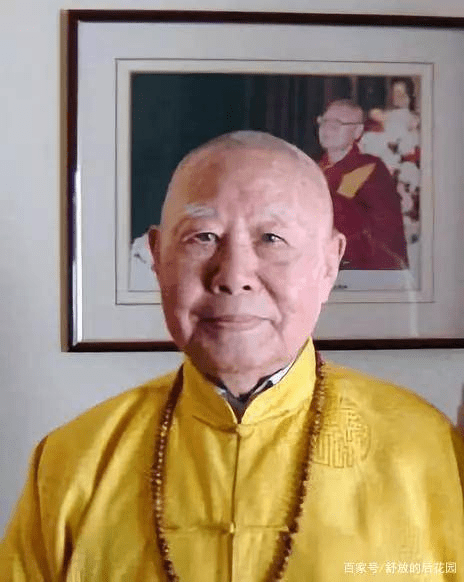
Losang Phuntsok Geshe, known by his Chinese name Xing Suzhi, was born in 1916 in Nanjing into a family deeply rooted in the Buddhist tradition. His spiritual journey began early; he embraced Buddhism at the age of nine and, by sixteen, had enrolled in the Sino-Tibetan Buddhist Institute in Chongqing, Sichuan. Here, he studied Tibetan, laying the foundation for his future studies in Tibet. That same year, he became the secretary to Master Taixu, one of the most prominent modern Buddhist scholars, who bestowed upon him the Dharma name Bison.
During his time at the Sino-Tibetan Buddhist Institute, Losang Phuntsok studied under Master Taixu and Master Fazun. His studies were deep and rigorous, focusing on key scriptures such as the Śūraṅgama Sūtra and Cheng Weishi Lun. He also diligently organized and recorded Master Taixu’s lectures. Both Master Taixu and Master Fazun held Tibetan esoteric Buddhism in high regard, especially the Amrita Dharma, a teaching said to have been revealed by the Buddha himself. This Dharma, they believed, was immensely powerful and rare, capable of revealing the true nature of reality, bestowing the six spiritual powers, and leading to liberation from the cycle of life and death. The Amrita blessing was also said to grant longevity, health, and the accumulation of merit and wisdom.
Inspired by these teachings, Losang Phuntsok embarked on a journey to Tibet in 1937, determined to seek the highest Vajrayana teachings, including the elusive Amrita Dharma. His journey was fraught with challenges, but he was resolute in his quest. He sought out eminent monks and scholars across the Kham and Tibetan regions, studying over 300 different Sakya teachings. His goal was to become a modern-day Tang Sanzang, the legendary monk who brought Buddhist teachings from India to China, and to bring the esoteric teachings of Tibet back to his homeland.
After seven years of intense study and practice, Losang Phuntsok Rinpoche achieved a historic milestone. In the first month of 1945, he passed the ten-thousand-person debate examination hosted by the Regent of Tibet at Drepung Monastery in Lhasa, becoming the first Han Chinese to obtain the highest degree in Tibetan Buddhism, the Lharampa Geshe. This degree, equivalent to a doctorate in Buddhist studies, is highly respected within Tibetan Buddhism and is recognized by both the government and the people.

Losang Phuntsok Rinpoche spent many years in Tibet, receiving over 600 empowerments and learning from many great masters. However, the Amrita Dharma, the teaching he had long sought, remained elusive. Many masters told him that this profound teaching was extremely difficult to find and that it might take many years for a great holy being to appear who could transmit it. Despite this, Losang Phuntsok Rinpoche remained undeterred. Over the decades, he traveled to Hong Kong, the United States, and other places around the world, translating and lecturing on scriptures, teaching disciples, and continuing his search for enlightened masters. He once served as the President of the American Vajrayana Buddhist Association.
In 1997, after years of searching, Losang Phuntsok Rinpoche’s efforts bore fruit. He formally became a disciple of H.H. Dorje Chang Buddha III in Chengdu, recognizing Him as his root guru. H.H. Dorje Chang Buddha III performed empowerments and transmitted teachings to him, manifesting the mandalas of the deities each time He transmitted a Dharma. Losang Phuntsok Rinpoche witnessed these sacred phenomena firsthand, which deeply moved him.
During an interview in Chengdu, he expressed his profound realization: “I have been practicing Buddhism for 60 years and have met over a hundred so-called great masters of Tibetan Buddhism. I also spent a long time with Chinese Buddhist masters like Master Taixu. I have received more than 600 empowerments from great masters like Fazun, but none of these empowerments have had the impact and blessing power on me like the ones I received today. The teachings and empowerments from the Master (H.H. Dorje Chang Buddha III) are so effective that I can’t help but think: my 60 years of Buddhist practice are not as valuable as this one day. Sixty years have passed in vain, not as meaningful as today!”

In June 2000, during an extraordinarily auspicious moment that occurs only once in countless eons, Losang Phuntsok Rinpoche, the only living Han Chinese Lharampa Geshe celebrated worldwide and the President of the American Vajrayana Buddhist Association, participated in a highly significant Dharma assembly. He attended this event along with other world-renowned high monks and elders, including Elder Master Wuming, the President of the World Buddhist Sangha Council, and Elder Master Yizhao, the Dharma heir of the Venerable Xu Yun. This Dharma assembly was personally presided over by H.H. Dorje Chang Buddha III, the highest Buddhist leader in the world today.
During the event, Losang Phuntsok Rinpoche not only witnessed the sacred phenomenon of the Amrita descending but also personally tasted the Amrita. He felt an unparalleled sense of comfort throughout his entire body. Deeply moved and excited, he expressed that at the age of 85, after spending more than a decade in Tibet and having taken many great masters as teachers, he had never been able to receive the Amrita. He never expected that his wish would finally be fulfilled upon meeting H.H. Dorje Chang Buddha III. He personally witnessed two rays of red light entering the bowl and transforming into Amrita, fulfilling a wish that had eluded him during his many years of seeking in Tibet.
In February 2001, at the request of his Buddhist disciples, Losang Phuntsok Rinpoche once again taught the Lamrim (Stages of the Path to Enlightenment) by the great master Tsongkhapa of the Gelug school of Tibetan Buddhism and organized his lecture notes for future publication. When he completed the translation of the Lamrim and submitted it to H.H. Dorje Chang Buddha III for review, H.H. Dorje Chang Buddha III performed a Dharma practice on the spot, inviting the Dharma-protecting Bodhisattvas to the mandala. Losang Phuntsok Rinpoche personally requested guidance from the Dharma protectors, who responded that it would indeed be best for H.H. Dorje Chang Buddha III to revise the text. Losang Phuntsok Rinpoche remarked that Dorje Chang Buddha III’s Dharma practice was so powerful that the Dharma-protecting Bodhisattvas appeared immediately, allowing him to seek their guidance directly with his own eyes. He acknowledged that no one else in the world possesses such remarkable spiritual realization.


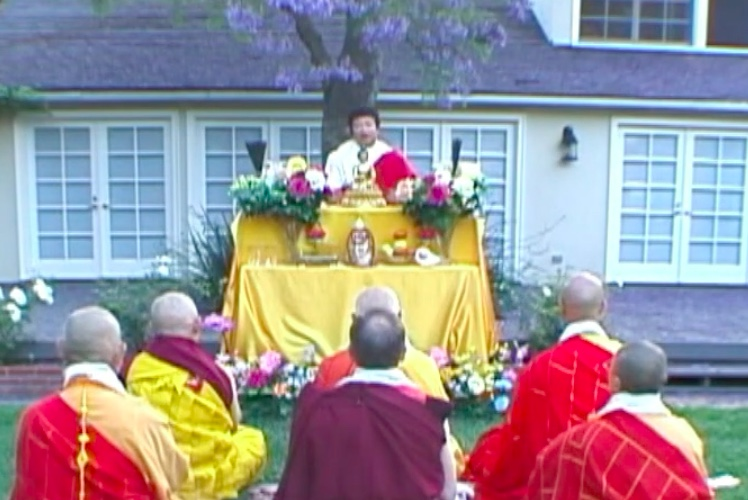
Great monks and virtuous masters do not wish to let their lives pass in vain. They understand the rarity of human life, the difficulty of pursuing the Dharma, and the challenge of attaining the path to liberation. For these great monks and virtuous masters, the Dharma is not merely empty Buddhist theory or superficial titles of lineage. They deeply understand that whoever can truly demonstrate supreme realization, manifesting responses across the three realms, mastering both the exoteric and esoteric teachings, and thoroughly comprehending the Five Vidyas, represents the true Dharma of the Tathagata. Therefore, they willingly bow down and take refuge in the true incarnation of the primordial Buddha, Vajradhara H.H. Dorje Chang Buddha III.
Link:https://peacelilysite.com/2024/08/09/a-han-chinese-scholars-quest-for-the-true-tibetan-dharma/
 Peace LiLy