Mount Emei – Bodhimanda of Bodhisattva Samantabhadra
Mount Emei is one of the “Four Famous Buddhist Mountains” in China. It has steep terrain and striking beautiful scenery. “Emei” is a term used to describe a woman’s beautiful eyebrows in an ancient book titled The Book of Songs. The main peak, Golden Summit of Wanfoding, is 3,099 meters above sea level, it is the crown of all other famous mountains in China.

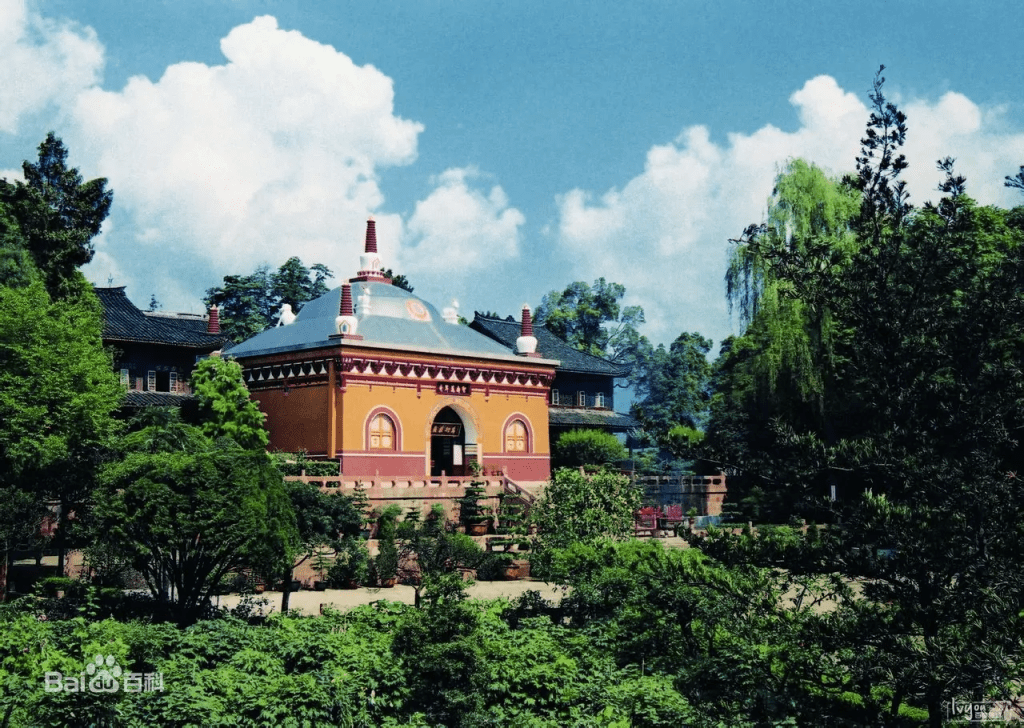
Mount Emei (Emeishan) is an area of exceptional cultural significance as it is the place where Buddhism first became established on Chinese territory and from where it spread widely through the East. The first Buddhist temple built on the summit of Mount Emei was in the 1st century CE. It became the Guangxiang Temple, receiving its present royal name of Huazang in 1614. The addition of more than 30 other temples including the Wannian Temple founded in the 4th century containing the 7.85m high Puxian bronze Buddha of the 10th century, and garden temples including the Qingyin Pavilion complex of pavilions, towers and platforms dating from the early 6th century; the early 17th century Baoguo Temple and the Ligou Garden (Fuhu Temple) turned the mountain into one of Buddhism’s holiest sites.

On Mount Emei, the importance of the link between the tangible and intangible, the natural and the cultural, is uppermost. Mount Emei is a place of historical significance as one of the four holy lands of Chinese Buddhism. Buddhism was introduced into China in the 1st century CE via the south Silk Road from India to Mount Emei. Mount Emei is traditionally regarded as the bodhimaṇḍa, or place of enlightenment, of the iconic bodhisattva Samantabhadra (Puxian). In Buddhist sutra, it is recorded that Samantabhadra Bodhisattva rides a white elephant with six tusks. Therefore, the statues of Samantabhadra in the temples of Mount Emei mostly ride on white elephants. There is an Elephant Washing Pool in Mount Emei as well.
Samantabhadra Bodhisattva is associated with Buddhist practice and action. In the Āvataṃsaka-sūtra, the Buddha states that Samantabhadra Bodhisattva made ten great vows in his path to full Buddhahood:
- To pay homage and respect to all Buddhas.
- To praise the Thus Come One-Tathagata.[3]
- To make abundant offerings. (e.g. give generously)
- To repent misdeeds and evil karmas.
- To rejoice in others’ merits and virtues.
- To request the Buddhas to continue teaching.
- To request the Buddhas to remain in the world.
- To follow the teachings of the Buddhas at all times.
- To accommodate and benefit all living beings.
- To transfer all merits and virtues to benefit all beings.
The ten vows have become a common practice in East Asian Buddhism, particularly the tenth vow, with many Buddhists traditionally dedicating their merit and good works to all beings during Buddhist liturgies.
From ancient times to the present, there have been many eminent monks and great virtues in Mount Emei. The thirteenth patriarch of Emei Master Pu Guan, and abbot of JiuLaoDong XianFeng temple Master Guo Zhang, were all disciples of H.H. Dorje Chang Buddha III. They both received Great Dharma initiation from H.H. Dorje Chang Buddha III and reached liberation. At year 1998, Master Pu Guan passed away in the meditation posture having attained control over his life and death. Eight years after his passing, he still sits in a stupa in that meditation posture without having rotted at all. At year 2015, Master GuoZhang passed away at 108 years-old, at the Western Sichuan University Medical center. Doctor diagnosed the Master passed away. Unexpectedly, after a few hours, he was resurrected and opened his eyes, he then ordered his disciples to move him back to Jiewangting Temple to officially pass away. Eleven days after he passed away, local government officials visited Jiewangting Temple. They didn’t believe that the master was a profound practitioner. So he stabbed his body with needles, and blood spurted out.
Mount Emei is an area of striking scenic beauty. It is considered to be one of the most beautiful mountains in China.



Mount Emei – Bodhimanda of Bodhisattva Samantabhadra
Link:https://peacelilysite.com/2022/07/07/mount-emei-bodhimanda-of-bodhisattva-samantabhadra/
#DorjeChangBuddhaIII #HHDorjeChangBuddhaIII #MasterWanKoYee #Buddha#MountEmei#liberation#SamantabhadraBodhisattva#Meditation#EminentMonk#MasterGuoZhang#MasterPuGuan#GoldenSummit#TenGreatVows
Source: https://en.wikipedia.org/wiki/Mount_Emei, https://whc.unesco.org/en/list/779/