The Power of Karma: The Story of Princess Shanguang’s Virtuous Deeds

During the time of Shakyamuni Buddha, King Prasenajit and his queen were devoted disciples of the Buddha. They had a beloved daughter named Shanguang, who was compassionate, kind-hearted, graceful, intelligent, gentle, and exceptionally wise. Despite her royal status, Shanguang remained humble and approachable, never flaunting her nobility, which earned her the love and admiration of the entire kingdom. The king and queen cherished their beautiful daughter, treating her like a precious gem.

One day, while walking in the royal garden with her father, King Prasenajit said, “Shanguang, the blessings you enjoy today are because of me, your father, the king.”

Shanguang gently replied, “That is not true, Father. My blessings come from my own virtuous deeds and karmic causes, not because of your royal status.”

This exchange occurred three times, with Shanguang steadfast in her belief. Her conviction angered the king, who felt she was ungrateful. Determined to test her, he thought, “I will see if she can enjoy the blessings of a princess on her own!”

The king ordered his servants to find a beggar from the streets and betrothed Shanguang to him. Without complaint, Shanguang removed her fine silk robes and precious jewelry, dressed in coarse clothing, and left with the beggar.

The beggar, who had long lost both parents and wandered alone, was astonished that a princess would marry him. When they returned to his old home, the house was dilapidated, with collapsed walls and overgrown weeds, except for one small patch where no grass grew.

Shanguang instructed her husband to dig at the bare spot. To their amazement, they unearthed a vast treasure of gold and silver. Astonishingly, wherever Shanguang bought land, gold was discovered beneath it. Using these treasures, she built a palace as grand and magnificent as the royal palace itself.

After some time, the king’s anger subsided, and he began to miss his daughter. Curious to see how she was living, he visited her new home. To his astonishment, he saw a palace even more splendid than his own, with countless servants attending to her needs. He was left speechless.

Shanguang explained to her father, “The blessings I enjoy in this life are the result of my past virtuous deeds.”

Perplexed, the king sought answers from the Buddha, asking, “What virtuous deeds did Shanguang perform in her past that she was born into royalty, married a poor beggar, yet still enjoys such wealth and prosperity?”

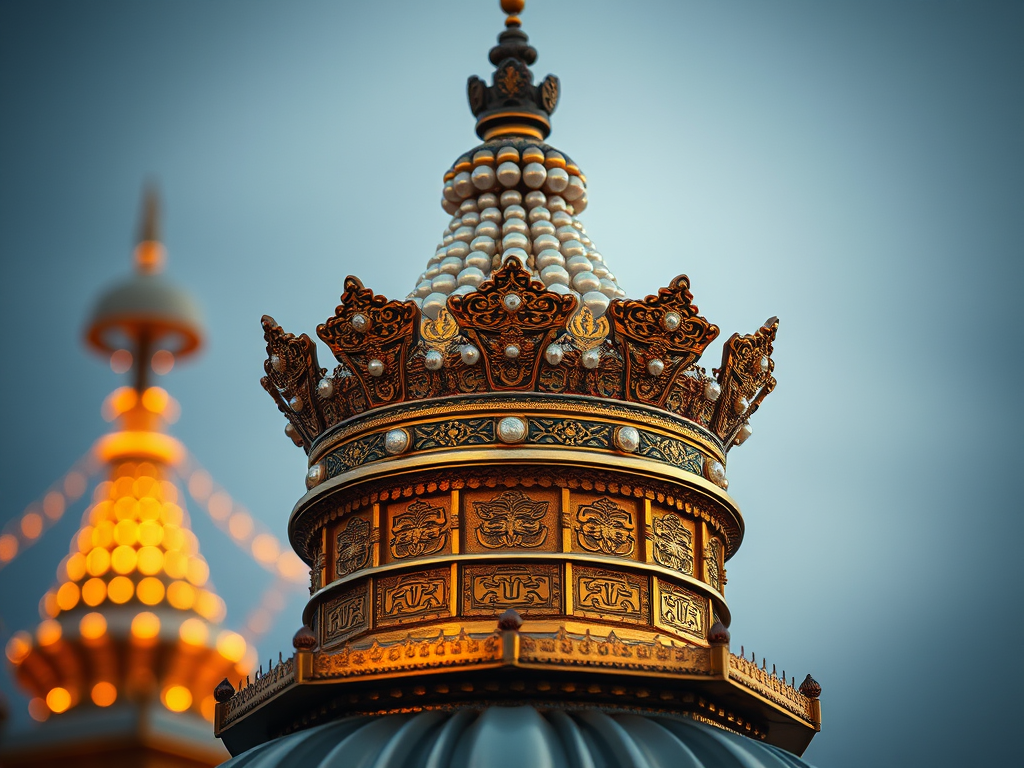
The Buddha revealed, “Ninety-one eons ago, during the time of Vipashyin Buddha, a king built a stupa to enshrine the Buddha’s relics after His nirvana. The king’s queen made an offering of a magnificent pearl crown, placing it atop the stupa. The radiant jewels on the crown illuminated all directions. That queen was Shanguang in a past life.
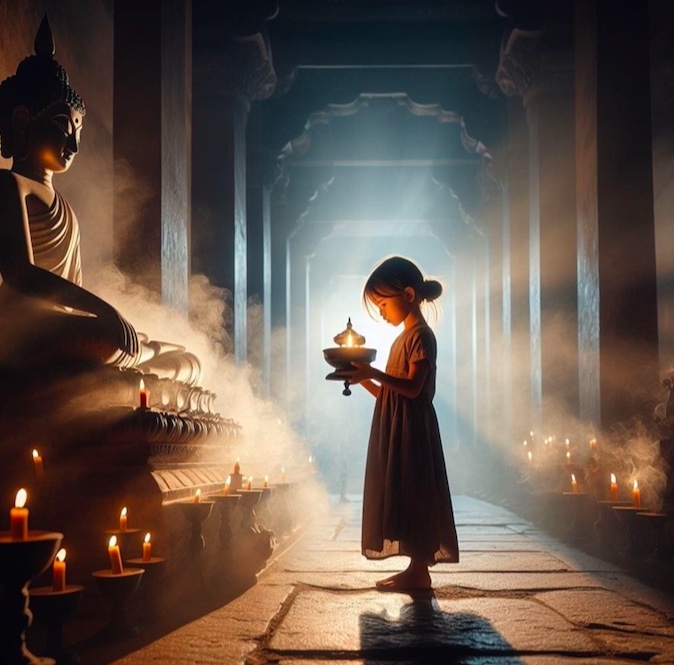
Later, during the time of Kashyapa Buddha, Shanguang again performed virtuous deeds by preparing heavenly offerings and the finest food for the Buddha. However, her husband at the time tried to discourage her. Shanguang replied, ‘Please do not stop me. Allow me the opportunity to make offerings to Kashyapa Buddha so I may experience peace and happiness in both body and mind.’ Her sincerity moved her husband, and they made the offerings together.

The beggar she married in this life was that same husband from her past. Because he once tried to prevent Shanguang’s offerings, he faces poverty in this life. However, since he later supported her, he now shares in her accumulated blessings, enjoying prosperity through her merits.

This story illustrates the infallible law of cause and effect. Good and bad karmic actions bring precise results. The blessings one rightfully earns cannot be taken away by others, and blessings not belonging to you cannot be forced into your life. Even the most elaborate schemes can fail, as a single disaster can reduce one to poverty again. Therefore, cultivating virtue and performing good deeds is truly the most rewarding ‘investment’ one can make.
Link:https://peacelilysite.com/2025/01/16/the-power-of-karma-the-story-of-princess-shanguangs-virtuous-deeds/

Journey to Tranquility: Exploring the Wonders of Usnisa Palace at Niushoushan

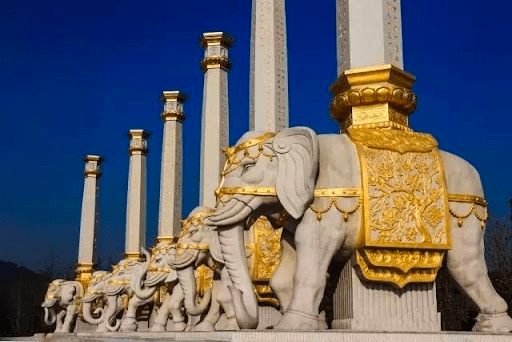
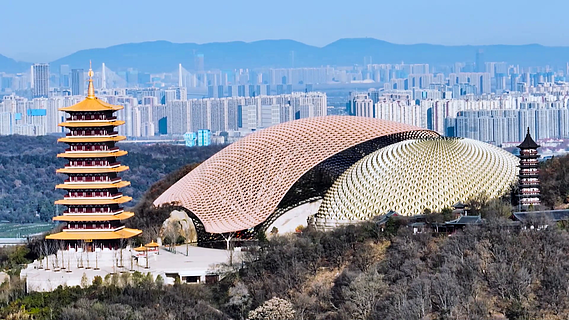
The Usnisa Palace, also known as Foding Palace, is situated in the Niushoushan Cultural Tourism Zone, Jiangning District, Nanjing City. This architectural marvel, characterized by its deep pit structure, serves as the long-term sanctuary for the Foding relic bone. Spanning 220 meters in length, 160 meters in width, and towering at an overall height of 89.3 meters, with a total building area of approximately 136,000 square meters, the palace is a testament to grandeur. The external space is subdivided into three components: the large dome, small dome, and Foding cliff. Internally, it comprises nine layers – three above ground and six underground – housing the Zen Grand View, Relic Hall, and Relic Treasury. Foding Palace not only serves as the primary repository for the Buddha’s crown relic bones and a place of worship for believers but also functions as a cultural exhibition space showcasing relic culture and global Buddhist culture through various artistic mediums.

Niushoushan stands as one of China’s renowned Buddhist mountains and is the birthplace of Niutou Zen Buddhism, a significant sect of Chinese Zen Buddhism. It houses the world’s only Buddha’s Parietal Relic – the skull of Shakyamuni. This complete skull, with a circumference of 35 cm and a diameter of 10 cm, is adorned with yellow-and-black hues and features clear hair holes distributed throughout.

The Buddha’s Parietal Relic was unearthed in the Ashoka Pagoda within the underground palace of Bao’en Temple in Qinhuai District, Nanjing. It stands as the sole surviving true parietal relic of the Buddha globally.

The external space is ingeniously divided into three sections: the large dome, small dome, and Buddha Grottoes. The large dome, shaped like a Buddha’s cassock and stretching 120 meters in length, covers the small dome palace, symbolizing the boundless blessings of the Buddha. The small dome, resembling the Buddha’s hair bun, is composed of thousands of small units, representing the offerings made by thousands of believers. The base of the small dome takes the form of a lotus throne, featuring 56 flying Bodhi gates symbolizing Buddha’s infinite wisdom and 56 cloud gate wishful pillars symbolizing good luck and fortune.

Usnisa Palace : Large Dome and Small Dome

Within Foding Palace, the design deviates from a singular dome to an atrium-style space connecting upper and lower levels directly. The central reclining statue of the Buddha in Nirvana is a captivating focal point, visible from various angles. Using the four sights of birth, old age, sickness, and death, the Buddha imparts guidance and enlightenment to sentient beings. In Buddhism, “Nirvana” signifies a state of eternal and serene tranquility without birth or death. As the Buddha speaks, heavenly beings scatter flowers. Tradition holds that in the Buddha’s pure land, day and night witness the auspicious occurrence of raining flowers. During the Buddha’s Nirvana, offerings such as incense, flowers, and precious banners are made.

Upon entering Foding Palace, visitors traverse a long corridor adorned with paintings depicting sacred scenes. Four small palaces within the passage illustrate wonders of the four natural elements: earth, fire, water, and wind. The journey provides an opportunity to contemplate the painted stories of the Buddha’s eightfold path to enlightenment, featuring extraordinary phenomena related to earth and fire, such as thousands of small Buddha niches and a thousand heart lamps.

To approach Foding Palace, one ascends using a water elevator, marking the third wonder – the purification of the three realms through water. Depicting these natural phenomena through a meditative design, the top floor of Foding Palace awaits, featuring a towering space and exquisite dome. The celestial ambiance, with stars seemingly within reach, fosters a sense of unity between heaven and earth. This intentional design aims to allow individuals to grasp Buddhist stories and appreciate nature’s wonders before encountering the Buddha’s relic. This preparatory “journey” facilitates entry into Foding Palace with a tranquil and peaceful mindset, reminiscent of a meditative experience.

The internal space encompasses nine floors – three above ground and six underground – housing the Zen Grand View, Relic Hall, and Relic Palace.

Relic Hall

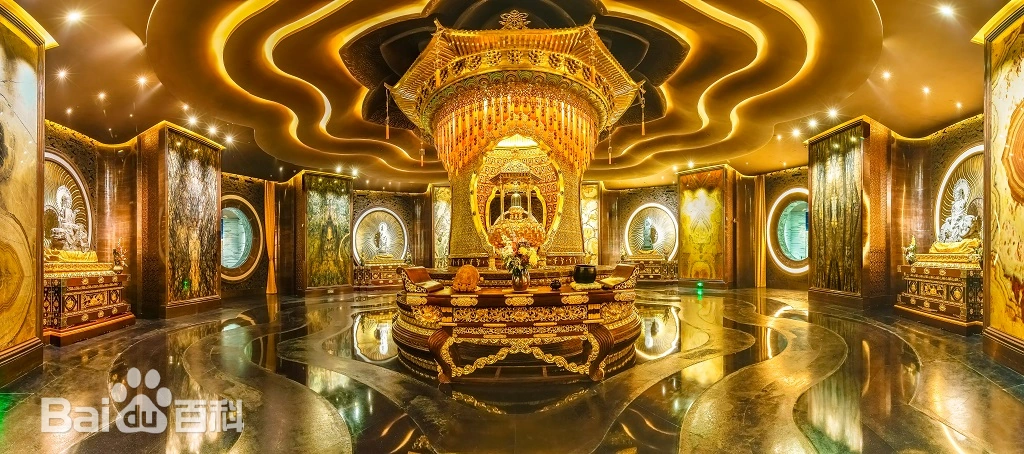
The Relic Hall comprises the Thousands Buddhas Hall and the Ten Thousands Buddha Corridor. The Thousand Buddhas Hall, adorned in red, yellow, and dark gold, features a vault-shaped layout corresponding to the Hua Zang Buddhist World. The central focus is the 21.8-meter-high Relic Pagoda, imitating the Ashoka Pagoda where the Buddha’s Parietal Relic was found. The Ten Thousands Buddha Corridor spans the 3rd, 4th, and 5th underground floors, showcasing Chinese Buddhism culture, seven-sided lacquer paintings depicting Indian Buddhist teachings, and Buddha’s relic and relic culture, including videos, porcelain paintings, ancient pagodas, and historical relics.

Thousand Buddha Hall
Ten Thousands Buddha Corridor

Relic Palace

Also known as the Buddha’s Treasure Palace, the Relic Palace exudes a solemn and mysterious atmosphere with its dark color scheme. It serves as a sacred space for housing the Buddha’s Parietal Relic and a place for Buddhist worship and meditation. At its center is the 7-meter-high Relic Treasure Pagoda adorned with exquisite golden decoration. Inside the pagoda is a hexagonal and intricate lotus stupa, housing the sealed glass box containing the Buddha’s Parietal Relic. The pagoda is equipped with fireproof and explosion-proof features, along with a constant temperature and humidity system to ensure the optimal environment for the relic. Surrounding the relic pagoda are eight unparalleled marble mosaics depicting the life of the Buddha.

Corridor of the Relic Palace
Relic Palace

Zen Grand View

The Zen Grand View spans 112 meters from north to south and 62 meters from east to west, with a total height of 46.5 meters. Its oval shape encompasses an area exceeding 6000 square meters, with a core focus on Zen culture. Comprising Buddha’s Birth, Buddha’s Enlightenment, and the Lotus Theater in the middle, the Zen Grand View narrates the life story of the Buddha.

Lotus Buddha Theatre – Not-to-miss Visual Feast

The Lotus Buddha Theatre hosts a daily “Song of the Lotus Buddha” Zen Buddhism culture ceremony and stage multimedia show from 10:00 to 11:30 in the morning and from 13:30 to 15:00 in the afternoon. This 30-minute visual feast combines ceremonial performance with burning lamps, praying, offering flowers to the Buddha, large-scale dancing, and more. During the performance, the Sleeping Buddha descends slowly from the air, accompanied by a rising stage, actors, and 16-meter-high lotus petals. The Sleeping Buddha, a copper statue of Sakyamuni, with a length of 7.5 meters and a surface made of white marble, can rotate 360 degrees, expressing the Buddha’s peaceful moment of Nirvana.

Lotus Buddha Theatre

Journey to Tranquility: Exploring the Wonders of Usnisa Palace at Niushoushan

Link:https://peacelilysite.com/2024/01/19/journey-to-tranquility-exploring-the-wonders-of-usnisa-palace-at-niushoushan/

#UsnisaPalace #Buddha #Travel #Nanjing #TravelChina #Lotus #BuddhaRelic #ZenBuddhism

Source: https://www.chinadiscovery.com/jiangsu/nanjing/niushoushan.html, https://baike.baidu.com/item/%E4%BD%9B%E9%A1%B6%E5%AE%AB/18723834