A Quiet Afternoon with Art: Discovering Inspiration at the Triton Museum of Art

Recently, I had the opportunity to visit the Triton Museum of Art, a cultural gem nestled in the heart of Santa Clara, California. Surrounded by a peaceful park, the museum offers a quiet and welcoming space where visitors can slow down, reflect, and experience the beauty and creativity of contemporary art.

Founded in 1965, the Triton Museum has long been dedicated to showcasing artists connected to California and beyond. What I appreciate most about this museum is its openness—it is free to the public, making art accessible to everyone in the community. Walking through the galleries, one can feel how art becomes a bridge connecting cultures, ideas, and human experiences.

Encountering the Art of Emanuel Harris‑Sintamarian

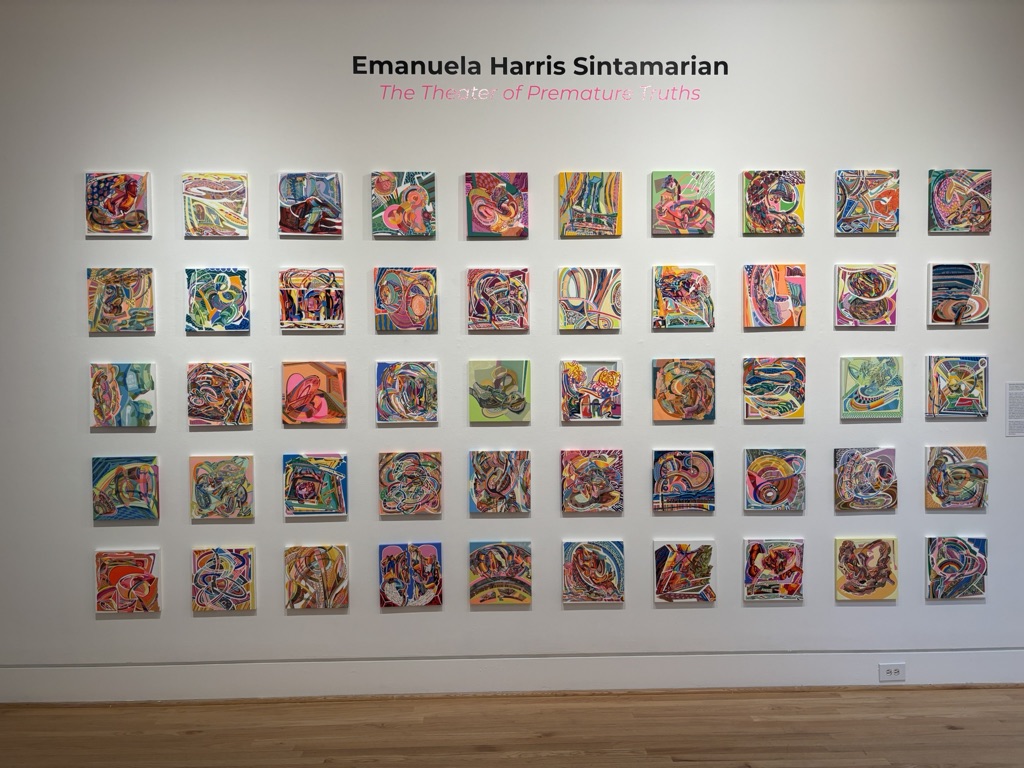
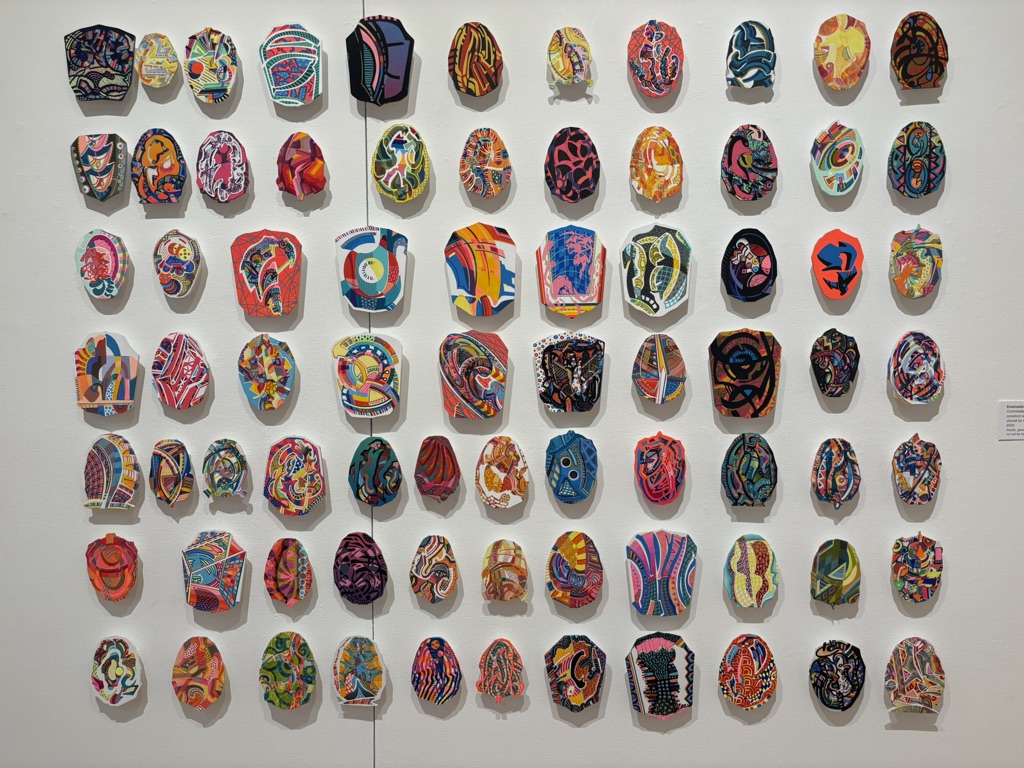
During my visit, one exhibition that particularly captured my attention featured the work of Romanian artist Emanuel Harris‑Sintamarian. His paintings immediately drew me in with their unique textures, layered compositions, and deeply expressive forms.

There is something both mysterious and meditative about his work. The colors and shapes seem to flow organically across the canvas, inviting viewers to pause and explore their own interpretations. Rather than presenting a straightforward image, his art feels like a visual journey—one that encourages contemplation and emotional reflection.

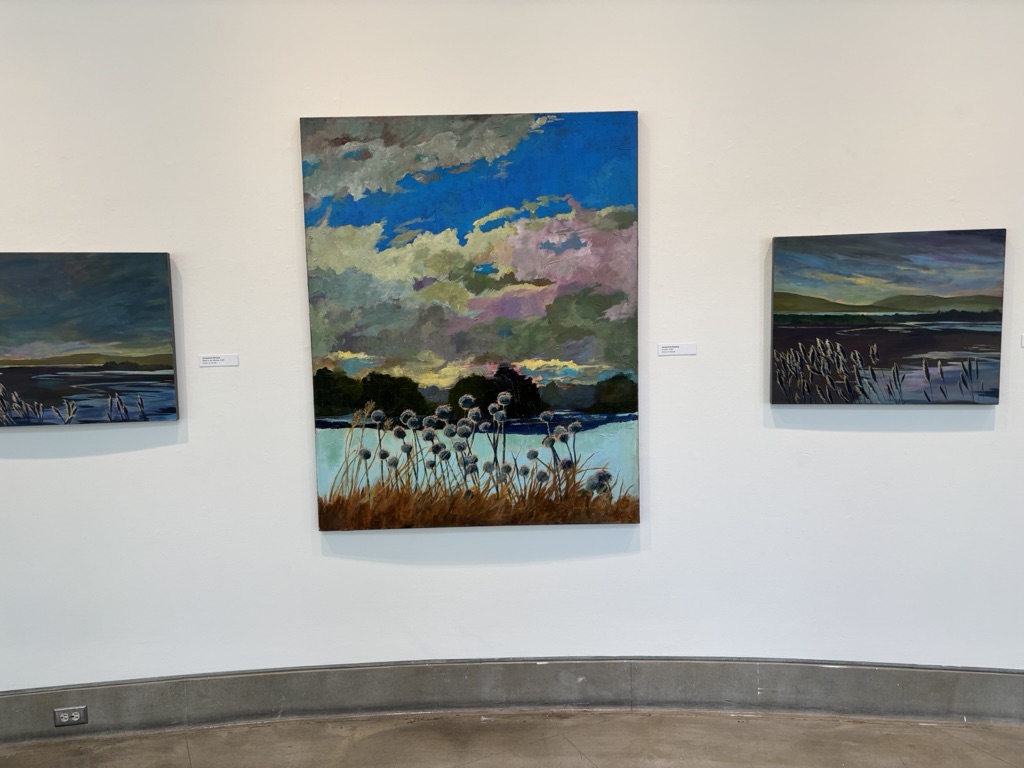
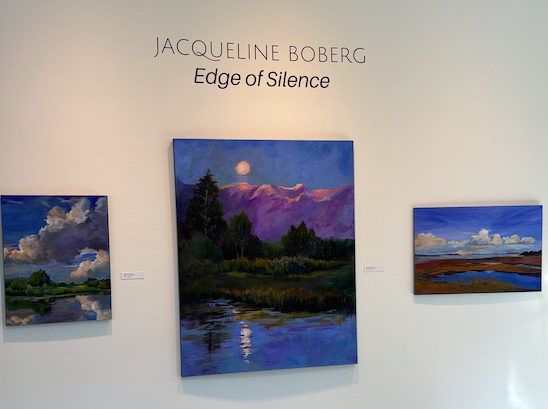
During my visit, I took several photos of the exhibition that I would like to share here. These images capture only a small glimpse of the atmosphere inside the gallery, but they reflect the creativity and thoughtful spirit of the artists on display.
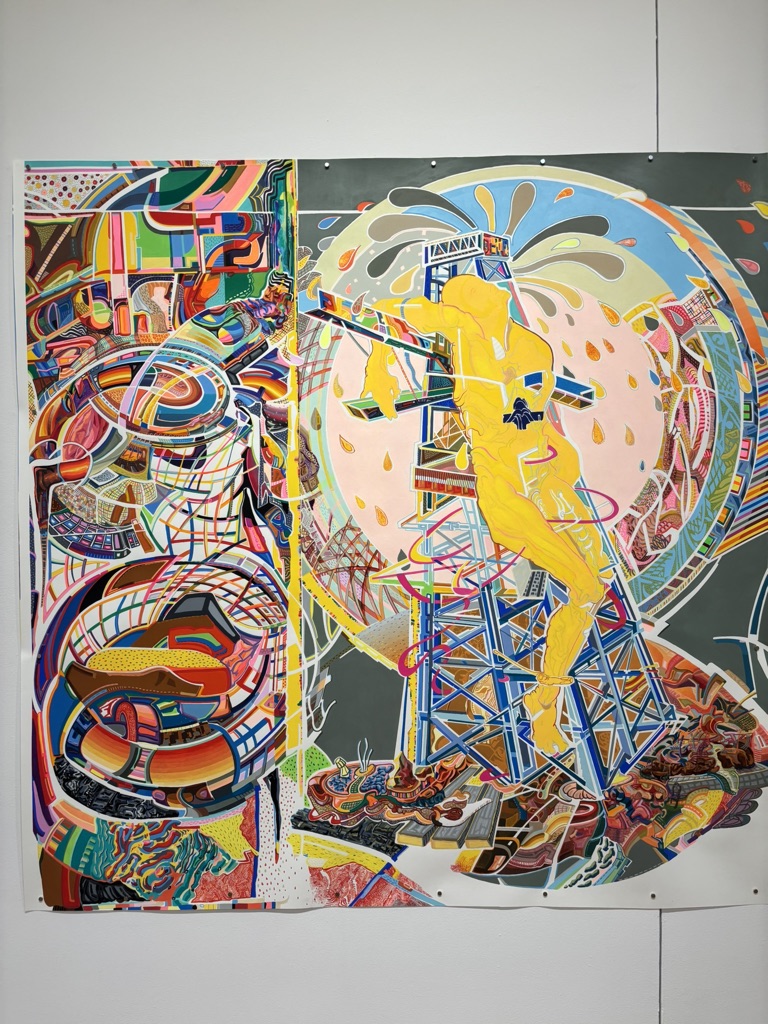
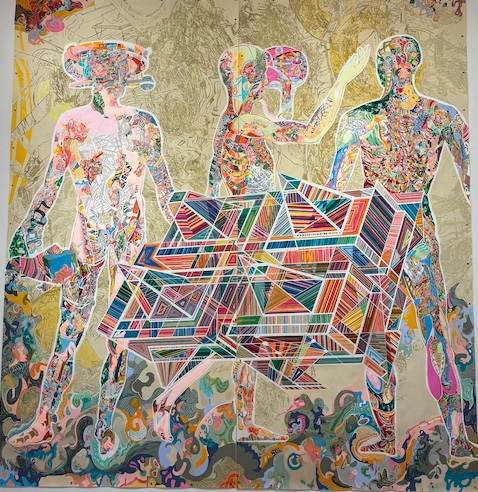
Jesus, Popcorn and other details
2024
Acrylic, gouache on paper
In Jesus, Popcorn and Other Details, I
bring the sacred into direct contact with
systems of spectacle, labor, and
consumption. Jesus is not placed above the
world, but embedded within it – caught in
scaffolding, color, and movement – where
belief collides with industry and visual
excess. Popcorn becomes both image and
metaphor, standing in for abundance,
distraction, and the way meaning is
consumed, repeated, and ritualized
I intentionally built a dense, restless
composition that resists hierarchy or
stillness, reflecting how faith, entertainment,
and production compete for attention in
contemporary life. Rather than offering
reverence or critique alone, the painting
holds these tensions in place, asking the
viewer to sit inside the noise and consider
where meaning survives.
Link:https://peacelilysite.com/2026/03/14/a-quiet-afternoon-with-art-discovering-inspiration-at-the-triton-museum-of-art/

A Tribute to the Artistic Brilliance

Professor Yu Hua Shouzhi Wang stands as a towering figure in the world of art, celebrated as the only artist in Asia to receive the prestigious title of International First-Class Artist. Her unparalleled achievements span an extraordinary range of artistic styles and subjects. Whether she’s creating landscapes, portraying flora and fauna, rendering animals and insects, or crafting intricate sculptures, Professor Wang’s creations are nothing short of masterpieces. Effortlessly bridging traditional Chinese painting with Western art, hyperrealism with surreal abstraction, she has achieved a level of artistic excellence that places her at the very pinnacle of her field.

One of Professor Wang’s most captivating works, Sparrows Singing on a Willow Tree, exemplifies her genius and profound connection with nature. The painting captures the graceful elegance of weeping willows, their slender branches gently drooping in an intricate, harmonious interplay. The composition exudes simplicity and refinement, with minimalistic lines that evoke the profound idea that “silence speaks louder than words.”

Despite its restrained use of color, this piece immerses the viewer in a vibrant world of subtlety and depth. The willow leaves are rendered in soft shades of pale yellow, light green, and muted ink tones, each leaf imbued with a carefree vitality. So vivid and dynamic are these details that one can almost sense the crisp freshness of the air. The leaves alone expand the painting’s spatial and emotional dimensions, drawing the viewer into an almost otherworldly tranquility. As one takes in the whole composition, it becomes evident that this work is rich in artistic flavor and showcases transcendent mastery of brushwork and ink technique.

On the right side of the painting, a lively gathering of sparrows perches on the willow branches. Each sparrow’s unique posture and expression are brought to life with remarkable precision, transforming them into endearing characters within the scene. They appear as if they are animated notes of a melody, harmonizing with the natural setting, or perhaps a group of playful children savoring their carefree moments after school. This idyllic scene evokes a serene joy and simplicity that resonates deeply with viewers.

Adding to the painting’s charm is a long inscription on the left side, written in elegant calligraphy: “Sketching in the garden at home.” This thoughtful addition not only complements the willow tree but also enhances the overall vitality of the piece. It provides insight into the painting’s creation—the place, and artist’s signature—and demonstrates Professor Wang’s extraordinary calligraphic skill. The inscription enriches the work’s narrative and aesthetic harmony, making it a testament to her multifaceted artistry.

Through this painting, it is clear that Professor Wang’s love for life and her compassionate nature are woven into every brushstroke. One can almost envision her peaceful afternoons spent in her garden, observing the interplay between the willow tree and the sparrows. The joyful spirit of the birds, carefree and unrestrained, reflects the tender care and connection Professor Wang shares with the natural world. A particularly charming detail is a small sparrow spreading its wings and gazing downward, as if greeting the artist or playfully seeking attention. The scene radiates a sense of love, harmony, and mutual understanding between the artist and her surroundings.

Sparrows Singing on a Willow Tree stands as a testament to Professor Wang’s exceptional artistry. The work is elegant and transcendent, with lifelike birds and an ethereal atmosphere that captivate the heart. From mood to color, composition to emotional resonance, the painting embodies her unique artistic style and extraordinary mastery. It is a work that not only delights the eyes but also uplifts the spirit, leaving an indelible impression on all who behold it.

Link:https://peacelilysite.com/2024/12/19/a-tribute-to-the-artistic-brilliance/