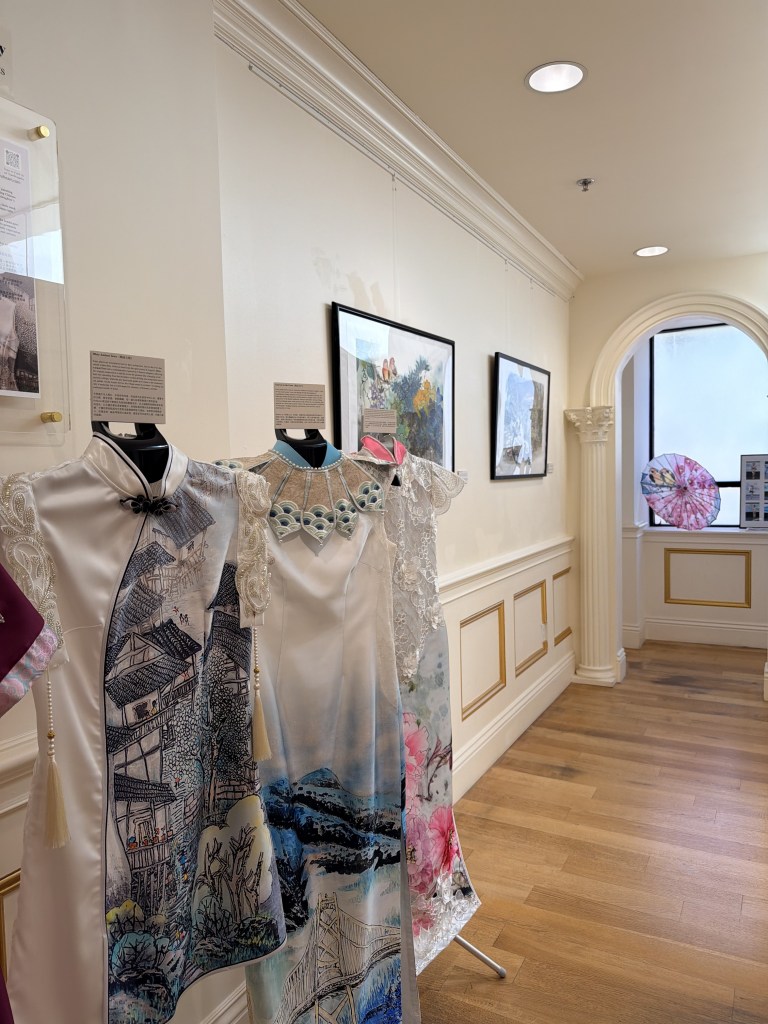
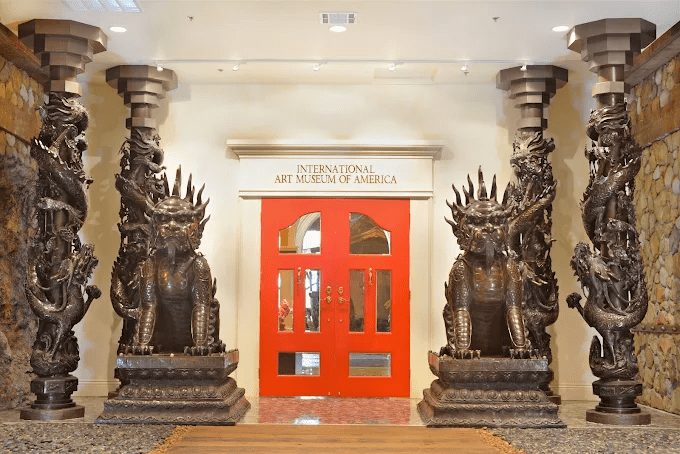
If you are looking for an inspiring cultural experience in San Francisco this summer, make sure to visit the International Art Museum of America. Their newest exhibition, Eastern Charm Awakens: Where Art Meets Silk, offers a breathtaking look at creativity, tradition, and the powerful bond between mother and daughter.
Exhibition Dates: July 18 – August 2, 2026
Location: International Art Museum of America, San Francisco
A Unique Mother-Daughter Collaboration
At the heart of Eastern Charm Awakens is a rare and extraordinary creative dialogue between Yuan Yuan (Rebecca) Xu and her daughter, Angela Tse.
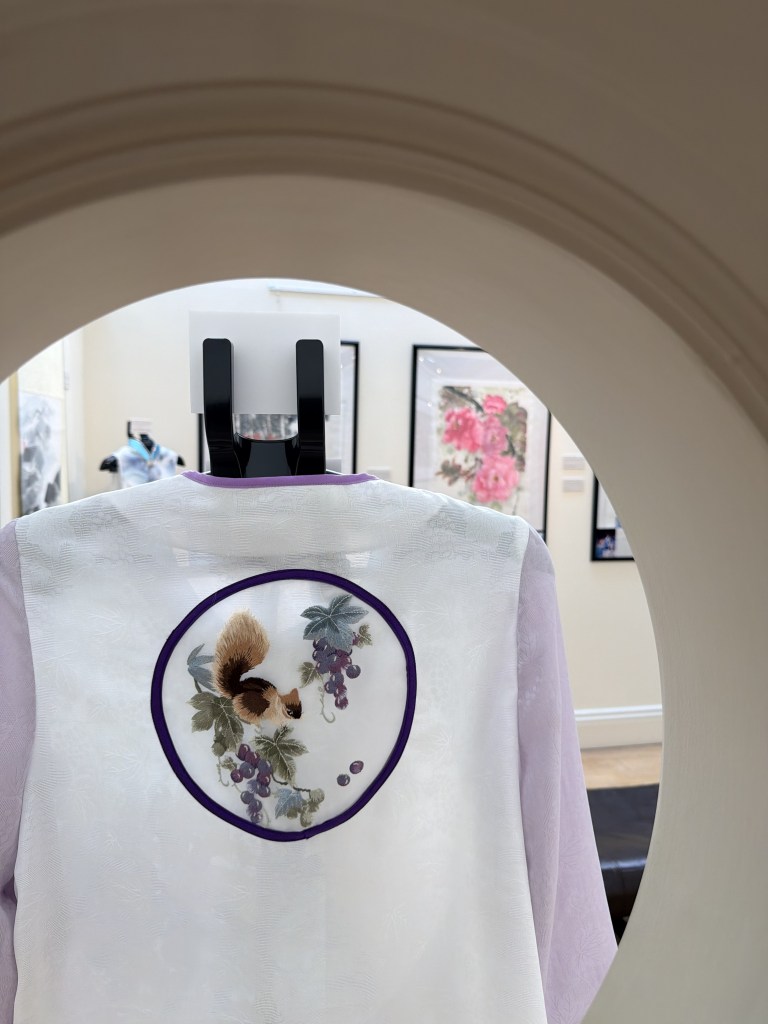
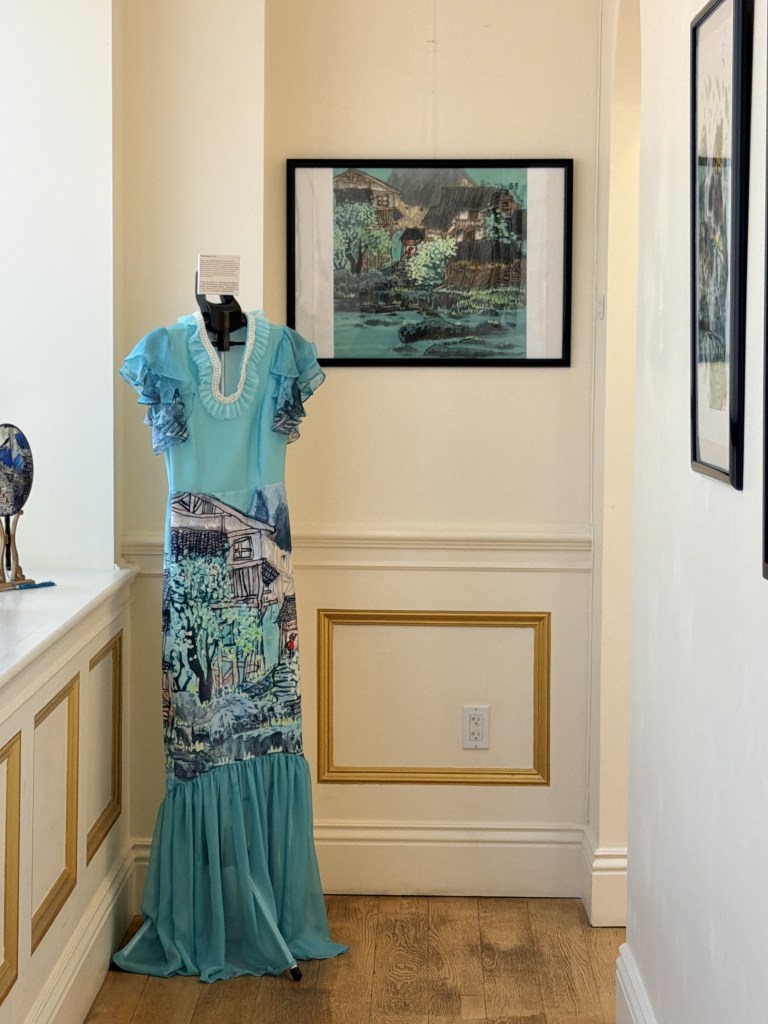
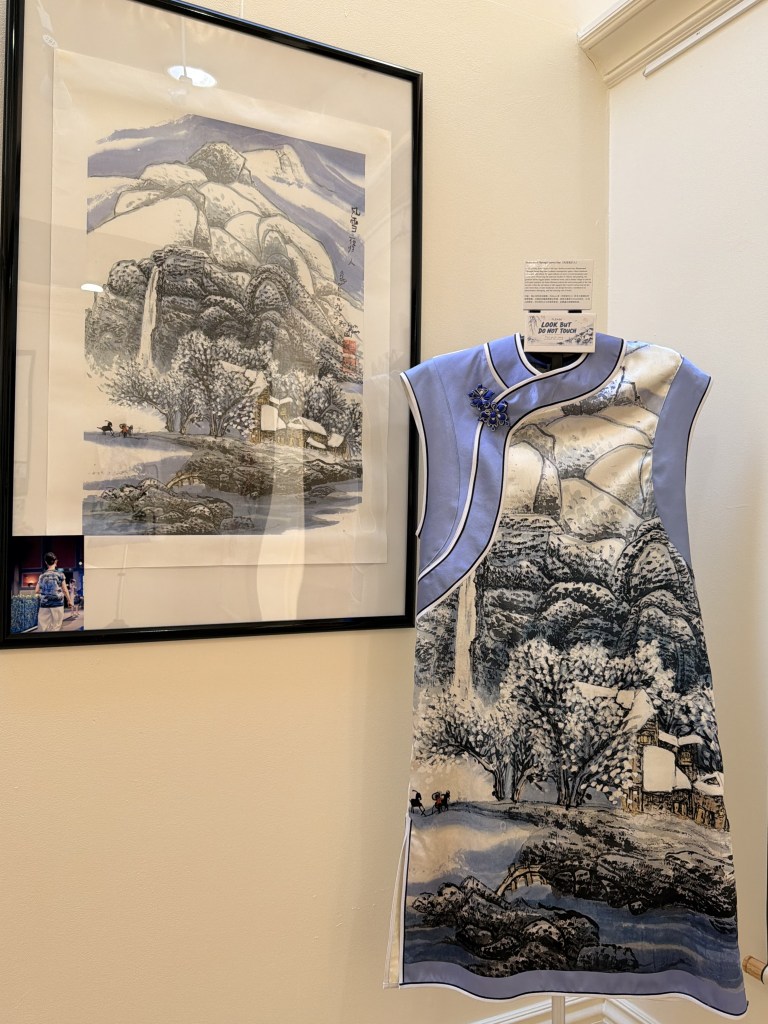
Despite being only 10 years old, Angela is an exceptional talent whose detailed Chinese brush paintings capture depth, beauty, and traditional technique far beyond her years. Inspired by her daughter’s artwork, Xu Yuan Yuan—a multitalented, interdisciplinary fashion designer—has translated Angela’s painted brushstrokes directly into intricate, wearable fashion.
Walking through the gallery, visitors are treated to a dynamic side-by-side experience:
Traditional Chinese Aesthetics: Angela’s fine brushwork grounds the exhibit in rich cultural heritage.
Contemporary Fashion: Yuan Yuan’s garments take elements, motifs, and colors from those paintings, turning two-dimensional art into fluid movement, luxurious textures, and living forms.
This seamless blend transforms static artwork into a tactile, lived experience—showing how ancient artistic traditions can continually inspire modern design.
Whether you are a lover of fine arts, fashion design, or simply looking to experience a touching story of intergenerational talent, Eastern Charm Awakens is not to be missed.
Be sure to stop by before August 2, 2026, to immerse yourself in this magical synthesis of silk, ink, and vision!
The International Art Museum of America has been named Best Museum and Best Art Gallery in SFGATE’s Best of Bay Area 2026, as well as a finalist for Best Event Space/Venue. The museum itself is well worth a visit anytime.
Artworks of His Holiness Dorje Chang Buddha III and Professor Yuhua Shouzhi Wang enable the next generation to comprehend the essence of art from different cultures
SAN FRANCISCO – On November 2,2019 the Provost of the New York Academy of Art, Peter Drake, led 15 Master’s students to the International Art Museum of America (IAMA) in San Francisco and conducted a class on site. When the group was copying original works of world class artists such as those of His Holiness Dorje Chang Buddha III and Professor Yuhua Shouzhi Wang, they praised the art profusely.
Matthew Kuan, the President of the International Art Museum of America in San Francisco, welcomed the visiting group. Loretta Huang, Director of Museum Operations, and staff introduced artworks in each gallery to the visitors. The President of World Journal San Francisco Ken Lo came to meet members of the group including Peter Drake. Lo also acclaimed the Museum’s collection and exhibition program.
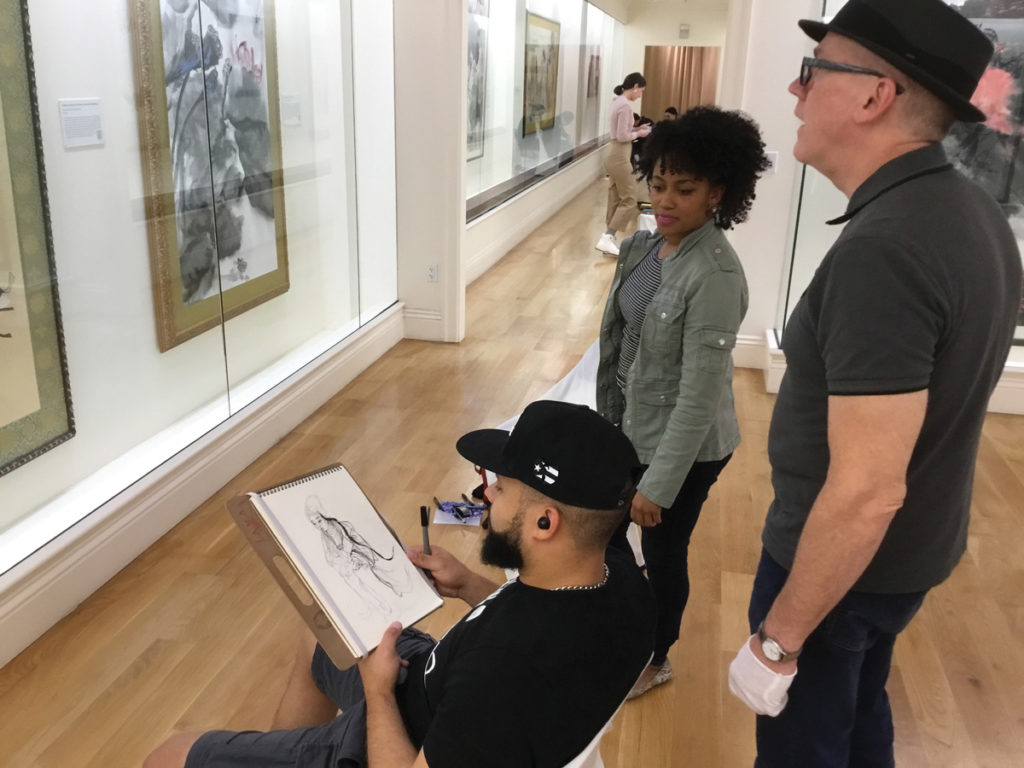
Provost of the New York Art Academy Peter Drake gave instructions to Master’s students about how to copy the artworks
Drake had visited the International Art Museum of America before and was amazed by the artworks exhibited there. In this trip, he personally led 15 students to study the artworks by copying them. He said that this was the first time these students had ever been to the IAMA in San Francisco.
Amy Hughes is a Master’s student from the U.K. and has been living and studying in New York for five years. She specializes in the study of oil painting. She said that this visit had enabled her to truly comprehend the essence of art from different cultures. She is especially impressed by the expansiveness and profundity of Han Chinese culture.
Dongqin Fang is a 2019 Master’s degree graduate and a teaching assistant at the New York Academy of Art specializing in oil painting and sculpture. He expressed being truly shocked by the large number of original paintings by top Chinese artists at the International Art Museum of America in San Francisco, and that he has gained a lot from being there. He said this is also the first time he ever looked at Yun sculptures created by H.H. Dorje Chang Buddha III at a close distance. To him, those sculptures exude a mystique that feels like “heavenly bliss.”
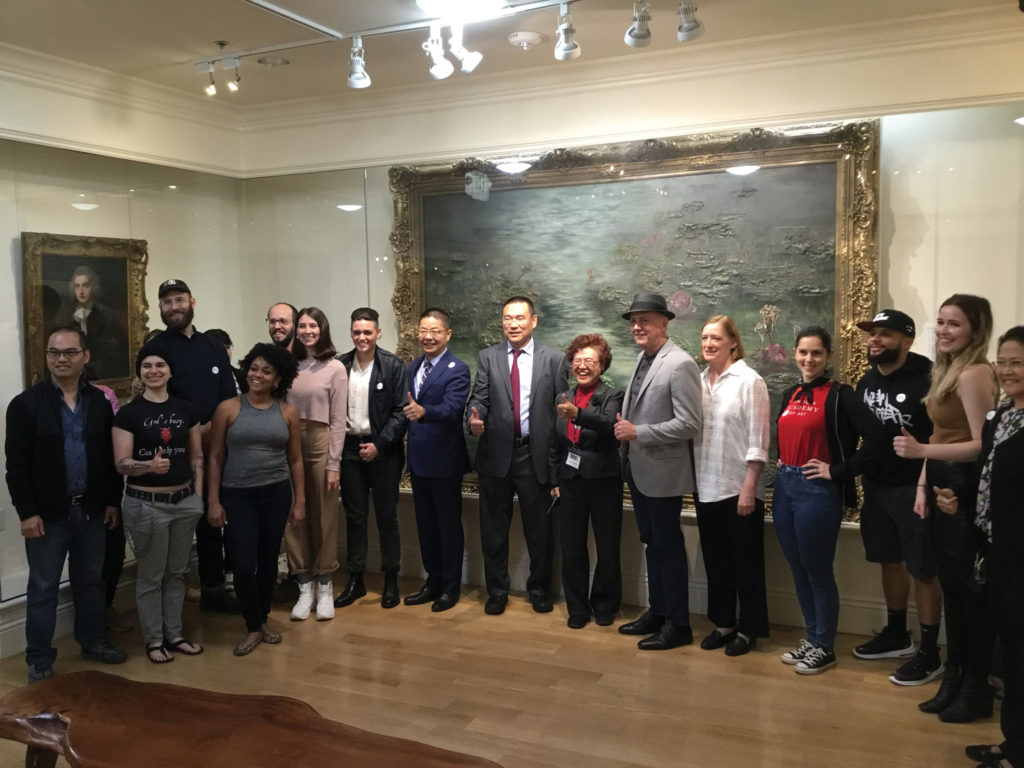
The Provost of the New York Art Academy PeterDrake lead Master’s students to copy the art exhibits; the group is deeply impressed by the exquisite artworks in the International Art Museum of America.They took a group photo in front of the painting Misty Appeal of a Dilapidated Pond.
Out of approximately 250 artworks exhibited in the International Art Museum of America, more than 100 of them are on loan from H.H. Dorje Chang Buddha III whose works have repeatedly achieved the highest prices at art auctions, beyond those ever reached by any living artists.
The art pieces that caught everyone’s attention are the rare world treasures of Yun sculptures exhibited in the Treasure Room, including A Pillar Holding Up Heaven, and another work esteemed to be “miraculously divine artistry of Buddha” within which mist was carved to become an actual part of the artwork. Yun sculpture is uniquely originated by H.H. Dorje Chang Buddha III. It embodies a multi-dimensional sense of space; its beauty transcends natural scenery, and its colors are more exquisite than those of natural rock formations. Inside the stone cave of the Yun sculpture, one can see richly magnificent colors as if they were intrinsically part of the art, with no trace of rendering. From the carving knife comes the melting cave with enigmatic and miraculous scenery. Auspicious clouds and natural mist float inside the melting cave of the artwork and do not dissipate, exuding the sense of an otherworldly paradise.
H.H. Dorje Chang Buddha III originated 16 unique and unprecedented painting styles. Exquisite works of art created by His Holiness the Buddha capture the quintessence of art and culture. They encompass Chinese ink painting, Western oil painting, sculpture, calligraphy, stone and bronze inscription, poetry, verse, song, ode, colorfully painted tile and other media. In His Holiness’s paintings, subject matters include landscape, flower, bird, animal, fish, insect, and human figures. The range of profound techniques include traditional Chinese painting methods such as meticulous style, freestyle, and ink wash; as well as Western painting styles such as figurative, abstract, impressionist, and line drawing.
Recently, when paintings of Professor Yuhua Shouzhi Wang were exhibited at the Louvre Museum in Paris, they stunned the European art world. Professor Wang’s art has attained the highest state of artistry and accomplishment. Experts in the field of art all held her paintings in high esteem. One of Professor Yuhua Shouzhi Wang’s small paintings Pomegranates in a Basket realized a top auction price of US$1.27 million in the Spring auction at the Gianguan Auction House in New York on March 13 of this year. It clearly shows that the art of Professor Yuhua Shouzhi Wang is recognized by art collectors and people of foresight alike.
Loretta Huang, Director of Museum Operations at the International Art Museum of America in San Francisco said that levels of artistic creation in painting can be categorized in four classes. First is the Class of Proficiency where one’s sketching skill achieves resemblance of form. Second is the Class of Wonderment in which the paintings are wondrously beautiful. Third is the Class of Divinity where both form and spirit are fully enlivened. Fourth is the Class of Ease where the artist possesses extraordinary skill and is able to paint anything at will to accomplish a magnificent masterpiece. The art of the Honorary Lifetime President of the Museum, Professor Yuhua Shouzhi Wang, is of the Class of Ease, a Class that few Chinese artists have ever achieved. The artistry of Professor Yuhua Shouzhi Wang is esteemed to be of the same standing as Western painters such as Cezanne and Gauguin.
Loretta Huang said that in addition to exhibiting the art of H.H. Dorje Chang Buddha III and Professor Yuhua Shouzhi Wang, the International Art Museum of America also showcases works by renowned artists including Wu Changshuo, Qi Baishi, Huang Binhong, Pan Tianshou, Fu Baoshi, Xu Beihong, Li Keran, Zhang Daqian, Yun Shouping, and others; as well as authentic calligraphic art by the Emperor Yongzheng. What differentiates IAMA from many other museums is the eminence of the artworks it exhibits.
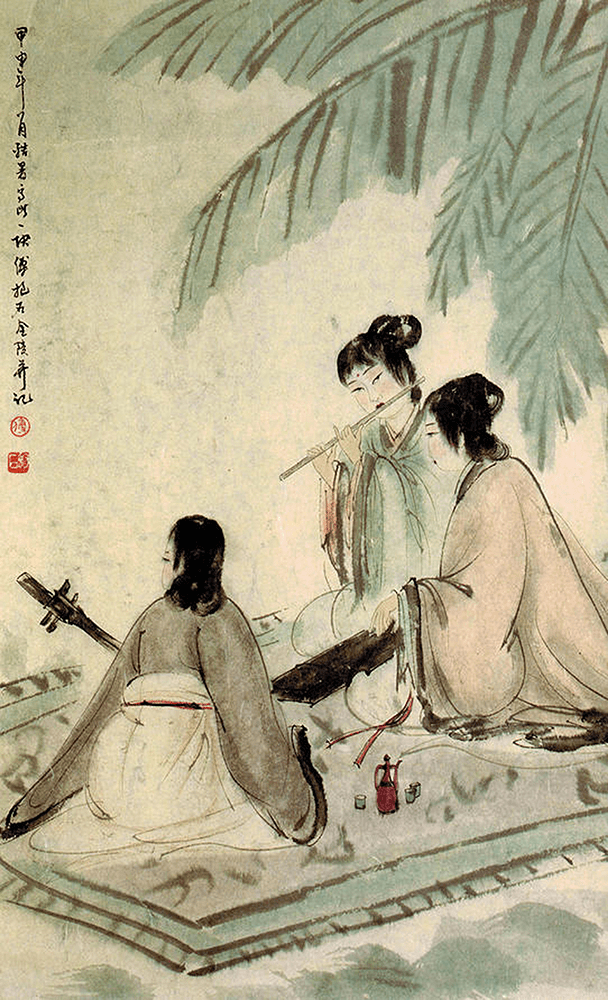
Three musicians by Fu Baoshi
The International Art Museum of America in San Francisco holds three criteria for artworks to be admitted for exhibition: First, the works of the artist must be collected by at least two world famous art museums. Second, the auction price of the artist’s works must exceed US$200,000 per square foot. Third, the artist must have substantial influence or status in the world, such as being director of a museum or provost of an art academy.
Rare Opportunity to Copy Original Artwork, Everyone Puts their Heart and Soul to Study
The Provost of the New York Academy of Art, Peter Drake, led 15 graduate students in a 3-hour Master Class at the International Art Museum of America in San Francisco to study the artworks by copying them on site.
The collection of the International Art Museum of America includes many original artworks. Students and members of the faculty from the New York Academy of Art especially cherished the opportunity to study on site. After everyone toured the Museum, each selected a different ink painting and sketched it in great detail to explore the wondrousness embedded in the brushwork.
The Han Chinese culture goes back to an ancient origin and will continues to flourish for a long time. Chinese painting and calligraphy make up a major part of such culture. There is a big difference between appreciating and copying art. Appreciating is skimming the surface; only through copying can one engage in an in-depth study of the works.
Qindong Fang, a student of Chinese ethnicity, said it awed him that some of his fellow American students could actually copy Chinese calligraphy, and Museum staff members of different ethnicities could even read what they copied. Through copying, he said, his fellow students could gain better knowledge of the culture of Chinese painting and calligraphy, and explore in-depth the 16 unique painting styles originated by H.H. Dorje Chang Buddha III; and this has been a wonderful learning experience.
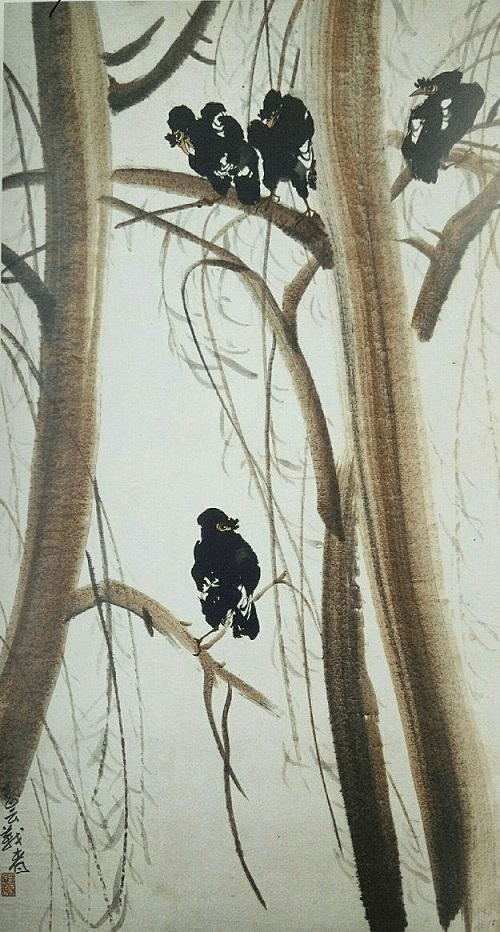
Some paintings do not rely on complexity to move us. With only a few deliberate strokes, they unfold a world full of life. This fresh and tranquil ink painting is one such work. Quiet and unassuming, it reveals a profound artistic tension and depth within simplicity and stillness.
The composition is anchored by three strong yet supple ink lines. Their texture is rich and full, their force penetrating the paper. They resemble trees, yet are not trees—more like structural forms that divide the flat surface into a grid of interwoven spaces. Within these spaces, branches stretch and intersect, while willow-like lines sway gently, creating a rhythmic sense of motion.
What is most remarkable, however, lies in what is not painted.
The empty spaces are far from void; they are charged with meaning. In these areas of intentional absence, the viewer’s imagination is invited to wander. As the saying goes, “where nothing is painted, there lies the true realm of the painting.” The composition, in its entirety, feels almost like a montage—a sequence of visual moments carefully arranged. From this minimal structure emerges a surprisingly rich and intriguing visual experience.
Bringing the scene to life are several mynah birds, rendered in bold, expressive ink. These small creatures become the focal point of the painting.
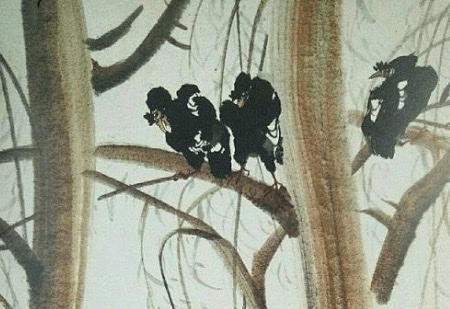
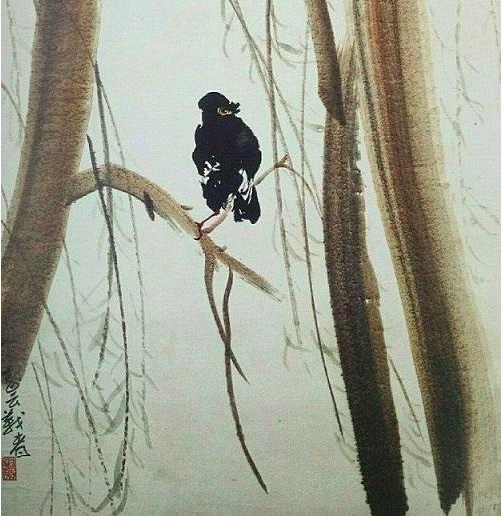
They are divided into three groups, each occupying different sections of the grid. In a small triangular space near the top, three birds gather closely together. The density of life within such a confined area creates an immediate visual tension. In contrast, a large quadrilateral space in the lower middle is occupied by just a single bird, as if it has claimed the entire openness for itself—perhaps even becoming the quiet center of the composition.
Then there is a particularly playful detail: a bird in the upper right seems to occupy the intersection of four spaces at once. Though not placed at the center, it establishes its own presence, as if declaring that even at the edge, one can still become a focal point.
These birds preen their feathers, tilt their heads, hum softly, and seem to communicate with one another. Bathed in a sense of freshness, they revel in the gentle beauty of spring, fully immersed in a life of ease and freedom. The entire painting begins to resemble a small, self-contained paradise.
This delightful and imaginative work is created by H.H. Dorje Chang Buddha III. Art, at its highest level, is not merely a display of technique—it is a reflection of the inner world. A truly great work reveals the artist’s state of mind and spiritual depth.
In this painting, what we witness is not only mastery of brush and ink, but also a sense of calm, freedom, and purity—a state of being that transcends complexity and returns to essence.
The diverse artistic creations of H.H. Dorje Chang Buddha III stand as enduring treasures of human civilization. And this seemingly simple piece gently reminds us:
In a world of endless complexity, true beauty often resides in simplicity— and true freedom may be found in the space between what is left unpainted.
Recently, I had the opportunity to visit the Triton Museum of Art, a cultural gem nestled in the heart of Santa Clara, California. Surrounded by a peaceful park, the museum offers a quiet and welcoming space where visitors can slow down, reflect, and experience the beauty and creativity of contemporary art.
Founded in 1965, the Triton Museum has long been dedicated to showcasing artists connected to California and beyond. What I appreciate most about this museum is its openness—it is free to the public, making art accessible to everyone in the community. Walking through the galleries, one can feel how art becomes a bridge connecting cultures, ideas, and human experiences.
Encountering the Art of Emanuel Harris‑Sintamarian
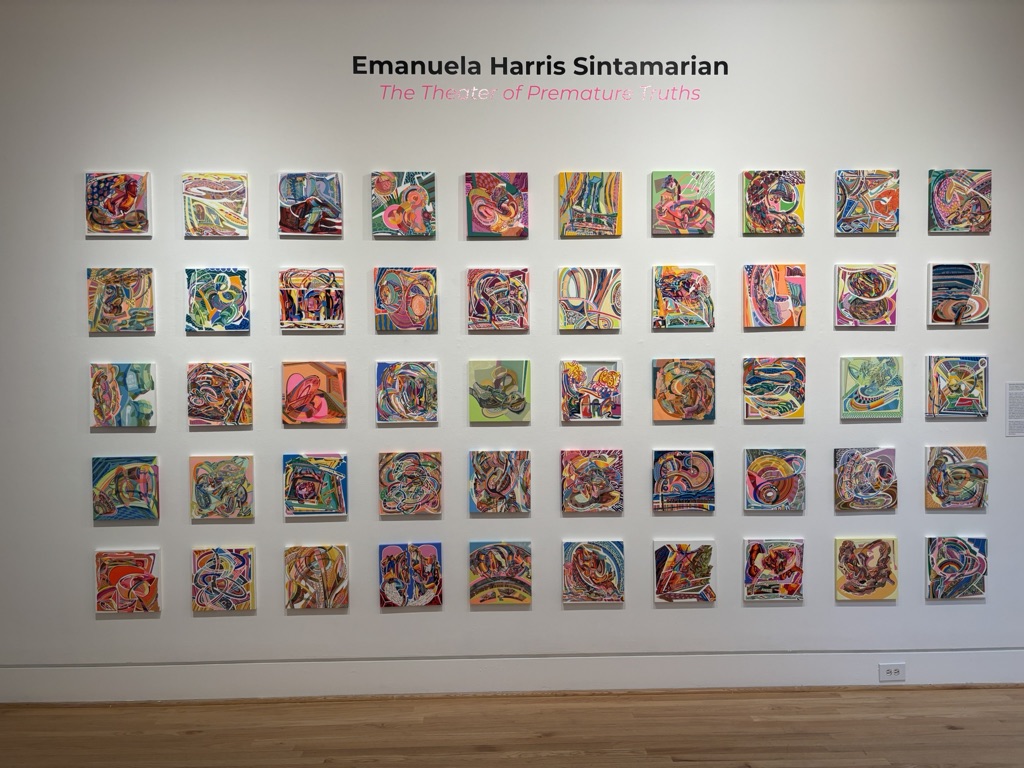
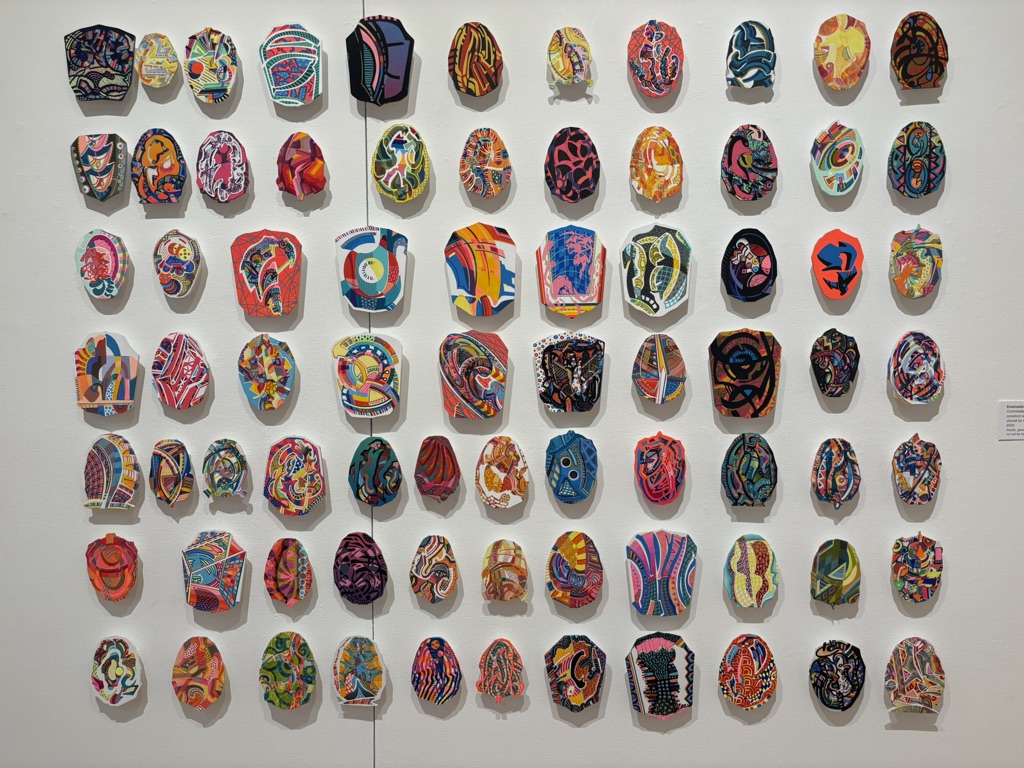
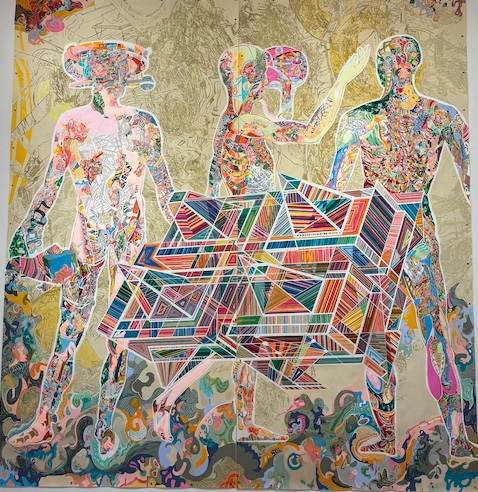
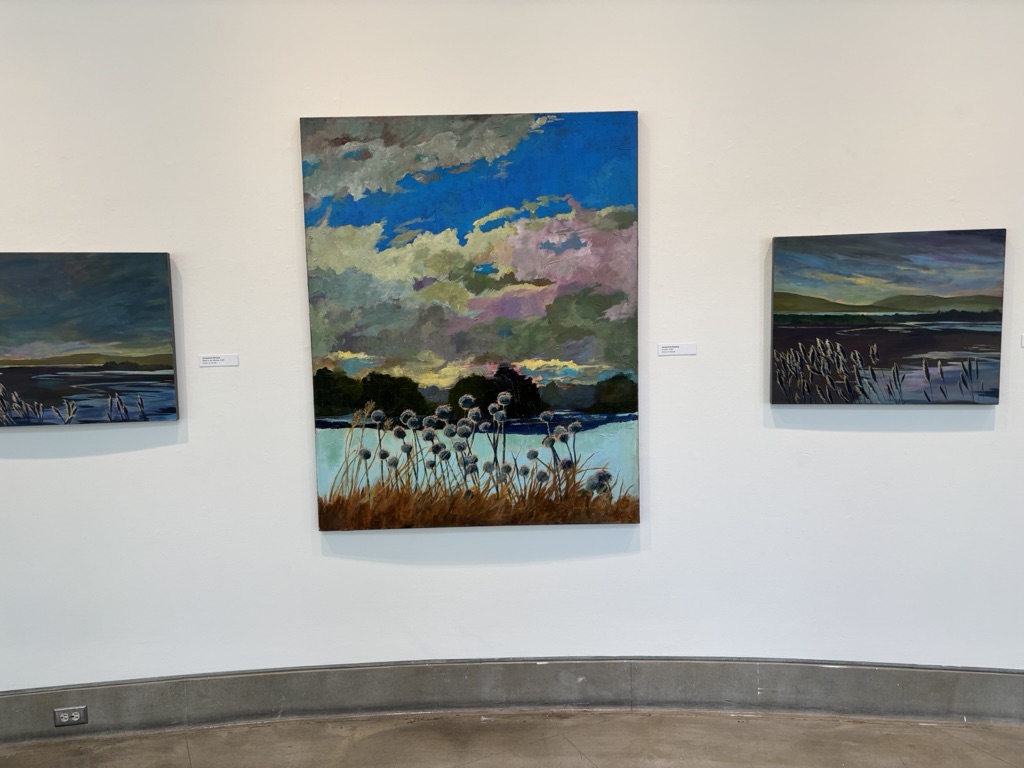
During my visit, one exhibition that particularly captured my attention featured the work of Romanian artist Emanuel Harris‑Sintamarian. His paintings immediately drew me in with their unique textures, layered compositions, and deeply expressive forms.
There is something both mysterious and meditative about his work. The colors and shapes seem to flow organically across the canvas, inviting viewers to pause and explore their own interpretations. Rather than presenting a straightforward image, his art feels like a visual journey—one that encourages contemplation and emotional reflection.
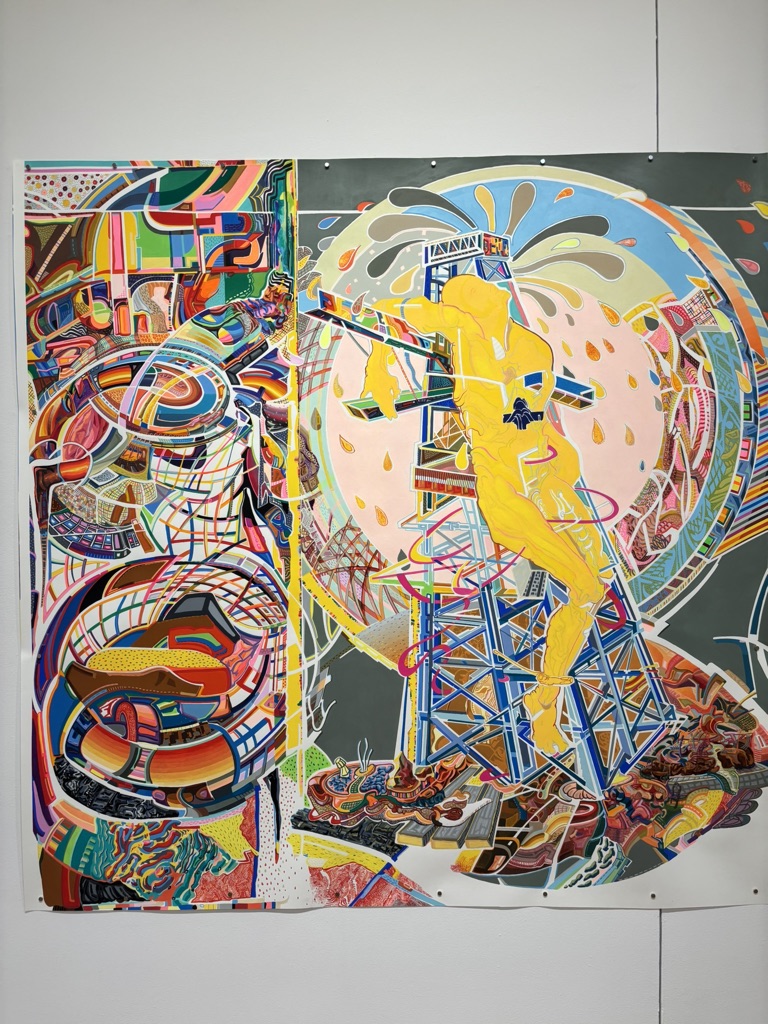
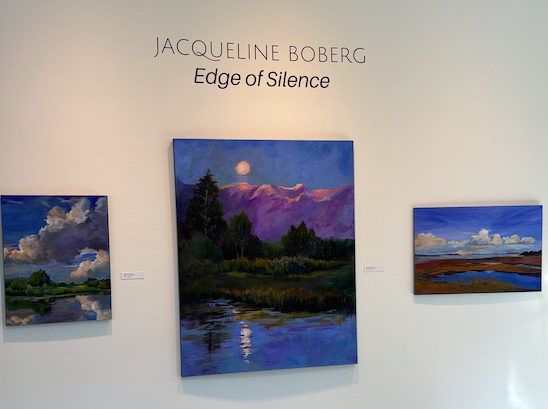
During my visit, I took several photos of the exhibition that I would like to share here. These images capture only a small glimpse of the atmosphere inside the gallery, but they reflect the creativity and thoughtful spirit of the artists on display.
Jesus, Popcorn and other details 2024 Acrylic, gouache on paper In Jesus, Popcorn and Other Details, I bring the sacred into direct contact with systems of spectacle, labor, and consumption. Jesus is not placed above the world, but embedded within it – caught in scaffolding, color, and movement – where belief collides with industry and visual excess. Popcorn becomes both image and metaphor, standing in for abundance, distraction, and the way meaning is consumed, repeated, and ritualized I intentionally built a dense, restless composition that resists hierarchy or stillness, reflecting how faith, entertainment, and production compete for attention in contemporary life. Rather than offering reverence or critique alone, the painting holds these tensions in place, asking the viewer to sit inside the noise and consider where meaning survives.
Professor Yu Hua Shouzhi Wang stands as a towering figure in the world of art, celebrated as the only artist in Asia to receive the prestigious title of International First-Class Artist. Her unparalleled achievements span an extraordinary range of artistic styles and subjects. Whether she’s creating landscapes, portraying flora and fauna, rendering animals and insects, or crafting intricate sculptures, Professor Wang’s creations are nothing short of masterpieces. Effortlessly bridging traditional Chinese painting with Western art, hyperrealism with surreal abstraction, she has achieved a level of artistic excellence that places her at the very pinnacle of her field.
One of Professor Wang’s most captivating works, Sparrows Singing on a Willow Tree, exemplifies her genius and profound connection with nature. The painting captures the graceful elegance of weeping willows, their slender branches gently drooping in an intricate, harmonious interplay. The composition exudes simplicity and refinement, with minimalistic lines that evoke the profound idea that “silence speaks louder than words.”
Despite its restrained use of color, this piece immerses the viewer in a vibrant world of subtlety and depth. The willow leaves are rendered in soft shades of pale yellow, light green, and muted ink tones, each leaf imbued with a carefree vitality. So vivid and dynamic are these details that one can almost sense the crisp freshness of the air. The leaves alone expand the painting’s spatial and emotional dimensions, drawing the viewer into an almost otherworldly tranquility. As one takes in the whole composition, it becomes evident that this work is rich in artistic flavor and showcases transcendent mastery of brushwork and ink technique.
On the right side of the painting, a lively gathering of sparrows perches on the willow branches. Each sparrow’s unique posture and expression are brought to life with remarkable precision, transforming them into endearing characters within the scene. They appear as if they are animated notes of a melody, harmonizing with the natural setting, or perhaps a group of playful children savoring their carefree moments after school. This idyllic scene evokes a serene joy and simplicity that resonates deeply with viewers.
Adding to the painting’s charm is a long inscription on the left side, written in elegant calligraphy: “Sketching in the garden at home.” This thoughtful addition not only complements the willow tree but also enhances the overall vitality of the piece. It provides insight into the painting’s creation—the place, and artist’s signature—and demonstrates Professor Wang’s extraordinary calligraphic skill. The inscription enriches the work’s narrative and aesthetic harmony, making it a testament to her multifaceted artistry.
Through this painting, it is clear that Professor Wang’s love for life and her compassionate nature are woven into every brushstroke. One can almost envision her peaceful afternoons spent in her garden, observing the interplay between the willow tree and the sparrows. The joyful spirit of the birds, carefree and unrestrained, reflects the tender care and connection Professor Wang shares with the natural world. A particularly charming detail is a small sparrow spreading its wings and gazing downward, as if greeting the artist or playfully seeking attention. The scene radiates a sense of love, harmony, and mutual understanding between the artist and her surroundings.
Sparrows Singing on a Willow Tree stands as a testament to Professor Wang’s exceptional artistry. The work is elegant and transcendent, with lifelike birds and an ethereal atmosphere that captivate the heart. From mood to color, composition to emotional resonance, the painting embodies her unique artistic style and extraordinary mastery. It is a work that not only delights the eyes but also uplifts the spirit, leaving an indelible impression on all who behold it.






 Peace LiLy