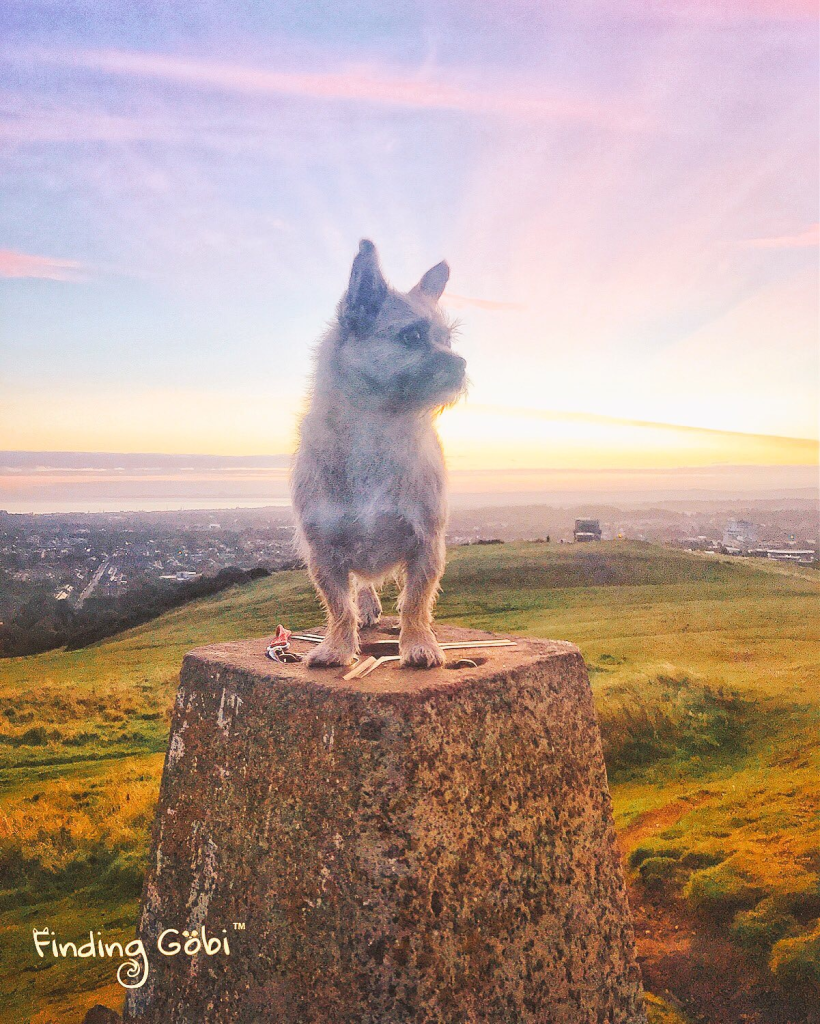
You would never imagine that an ordinary stray dog from China could become a spiritual icon for people all over the world. Its story was written into a book, translated into 20 languages, and sold globally. Hollywood even bought the film rights, and one day it will be made into a movie. Countless celebrities and business leaders have posed for photos with it, and even the Queen of England once held it in her arms.
So what made this little dog so extraordinary? Everything began with what seemed like a random “accident.”

It was the summer of 2016 in Xinjiang, during a grueling ultra-marathon held once every three years. The main character of the story, British athlete Dion Leonard, was among the participants. Under the scorching sun—temperatures soaring above 40°C—runners had to trek 300 kilometers across desert and Gobi terrain. It was a challenge that tested both physical strength and willpower.
To conserve energy, Dion carried only a little bread and water. After walking all day, he finally stopped to rest for the night. That’s when a starving stray dog approached him, wagging its tail with all its might. Moved by the little dog’s cuteness, Dion shared some of his precious food.
He didn’t know it then, but that small act of kindness tied their destinies together. From the next day onward, the dog refused to leave his side. That’s when Dion realized it had no owner. Since the race was long and lonely, he welcomed this unexpected companion.
Day after day, the dog kept up with Dion. Whenever exhaustion hit him, just looking at the panting, tail-wagging little dog filled him with strength again. “If this tiny creature has the endurance to keep going, then so must I,” Dion thought. He named the dog Gobi, after the desert where they met. They shared food by day and huddled together by night. Through hardship, man and dog forged a bond of deep friendship.
Can you imagine—a stray dog becoming a global hero, its story turned into a bestselling book and a movie? That’s exactly what happened.
But during the race, Gobi could only run 150 kilometers before collapsing from exhaustion in the scorching desert. The organizers rescued and treated the little dog, who then waited faithfully at the finish line each day for Dion to return. Without Gobi, Dion felt alone again—but now he had something to fight for. His longing to see his companion pushed him to finish the final 150 kilometers in just three days, earning him a silver medal—the best result of his career. But instead of basking in the honor, his first joy was reuniting with Gobi.

The race organizers were so moved by their bond that they even awarded Gobi her own silver medal. Dion, who had once lost a beloved dog years earlier, felt this meeting was destiny. He resolved to adopt Gobi and bring her home to the UK.
From a stray with no future, Gobi suddenly became a beloved star dog, cherished by a marathon champion. Dion spared a lot of effort and about several thousand dollars to secure the adoption, leaving Gobi in a friend’s care in Xinjiang while he flew back to the UK to handle the paperwork. But just when everything was ready and Dion was eagerly awaiting Gobi’s arrival, disaster struck—Gobi went missing.

Panicked, Dion flew back to China and printed thousands of flyers to search for his companion. By then, their story had already gone viral. Media outlets reported it widely, and Gobi became a symbol of hope, inspiring people everywhere. When word spread that the famous little dog was lost, locals poured into the streets to help search, forming teams day and night, while countless netizens spread the news online.
Dion chased down every lead, refusing to give up. Finally, following a clue that others thought worthless, he found Gobi—injured and weary, but alive. The little dog had clearly suffered, but this time, Dion promised, she would never be alone again.
This reunion made Gobi even more famous. After full medical care and recovery, Dion finally brought her home to Scotland.
To honor their extraordinary bond, Dion turned from athlete to author, writing Finding Gobi. The book became an international sensation, translated into 20 languages and sold worldwide. Hollywood bought the rights to make it into a film. Together, Dion and Gobi traveled the globe, giving talks, meeting celebrities, and even winning the “Most Inspiring Animal Award.” Gobi’s journey reached its peak when the Queen of England herself held her in her arms.

What began with a stray dog’s trust and loyalty turned into a man’s promise and responsibility—together creating a heartwarming story that touched the whole world. Gobi found a loving home, Dion discovered renewed strength and joy, and both became better versions of themselves.







 Peace LiLy