Have you ever experienced that mid-afternoon wall? You’ve been sitting at your desk for three hours. You haven’t done any heavy lifting, yet your head feels like it’s filled with lead, your thinking slows to a crawl, and your focus completely evaporates.
We used to think the worst side effects of prolonged sitting were just weight gain, bad posture, or a sluggish metabolism. But a groundbreaking study published in the prestigious journal Nature Neuroscience has shattered that assumption, revealing a silent, terrifying reality: When you slump in an office chair with your core disengaged, your brain is quite literally marinating in its own cellular waste.
The human brain is an energy-hogging powerhouse. As long as you are alive, your neurons are firing wildly, producing vast amounts of metabolic waste—including amyloid-beta proteins, the primary culprits linked to Alzheimer’s disease.
But here is the catch: while every other organ in your body relies on the lymphatic system to flush out waste, the brain is sealed tight inside a rigid skull. It has no traditional lymphatic vessels. For decades, scientists believed the brain only did its heavy cleaning during deep sleep, when cerebrospinal fluid (CSF) rushes through like an automatic car wash. But this left a massive blind spot in medical science: If sleep is the only cleaning cycle, why do active people who exercise regularly have a drastically lower risk of cognitive decline and dementia—even if they get the exact same amount of sleep?
A cross-disciplinary team at Penn State University just found the missing puzzle piece.
Using high-resolution, two-photon microscopes focused on live mice, researchers witnessed something extraordinary.
They noticed that right before an animal moves—even if it is just preparing to stand up or take a single step—its core muscles, specifically the abdominal muscles, instinctively contract.
This seemingly minor “belly squeeze” is actually the trigger for a highly precise hydraulic clearing system.
When your abdominal muscles contract, they act like a powerful manual pump. They instantly force abdominal blood upward into the spinal venous plexus. That sudden pressure wave travels all the way up into the sealed skull. At that exact micro-second, the brain physically moves. With every single squeeze of your abdomen, the brain undergoes a tiny but distinct displacement inside the skull.
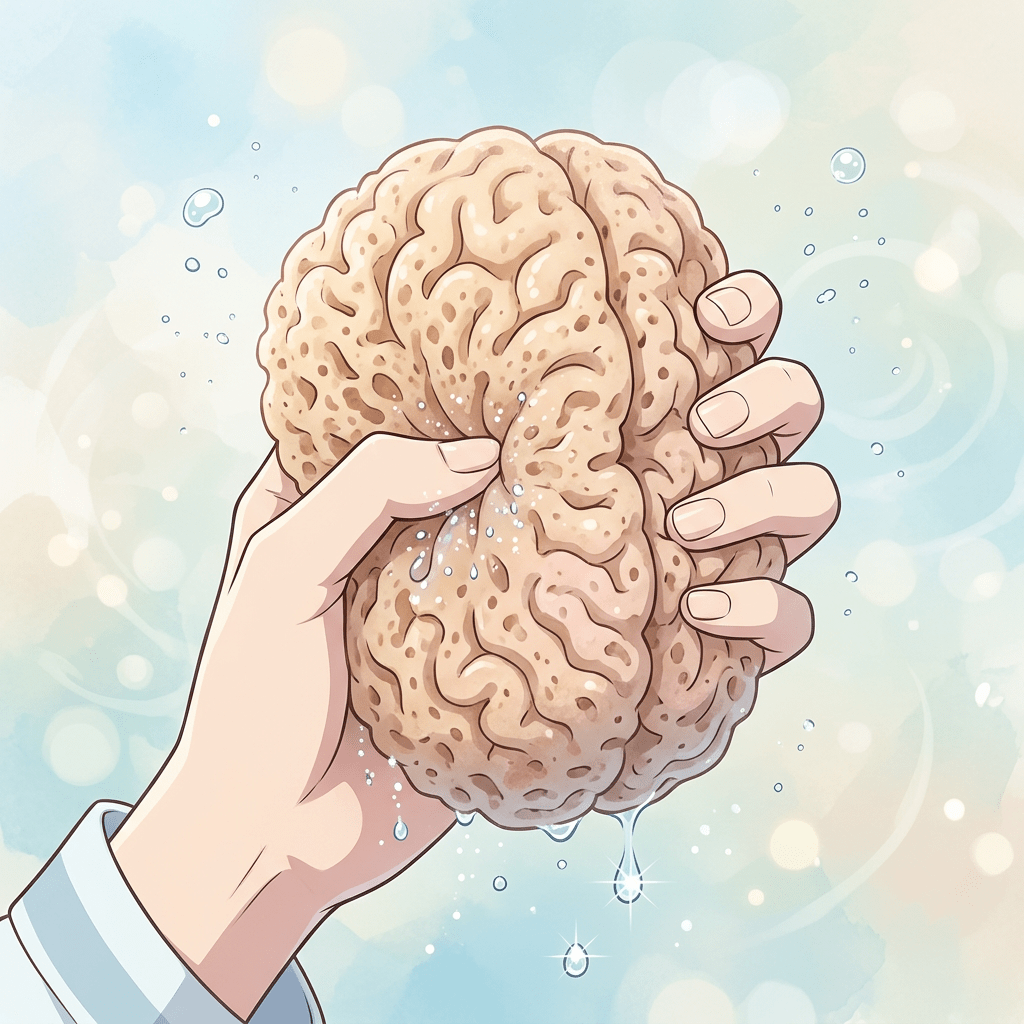
Professor Francesco Costanzo, an expert in fluid mechanics involved in the study, offered a brilliant analogy:
“The structure of the brain is actually like a soft sponge soaked in water. How do you clean a dirty sponge? You don’t just let it sit in a bucket of water. You have to gently squeeze it.”
Every time your core contracts, it gently squeezes that “brain sponge.” This physical shift forces cerebrospinal fluid to rush through the brain’s intricate folds and crevices, flushing out the toxic metabolic waste that disrupts your neurons.
☯️ Ancient Mindfulness Meets Modern Science: The Power of the Belly
Reading this study, I got absolute goosebumps.
For thousands of years, Eastern traditional medicine and mindfulness practices (like Qi Gong and Tai Chi) have passionately advocated for “Abdominal Breathing” (diaphragmatic breathing) and centering one’s energy in the core (the Dan Tian).
Ancient masters didn’t have high-resolution microscopes or computer fluid modeling, yet they deeply understood the body’s mechanics. They knew that rhythmic, deep belly breathing regulates the body’s internal pressure and vital energy. Today, Western peak science has finally validated this ancient wisdom: Changes in abdominal pressure are the literal engine driving your brain’s daily cleaning cycle.
When we slouch in a chair for hours, our core muscles fall completely asleep. The hydraulic pump shuts down. The brain sponge just sits there, trapped in its own debris, quietly accumulating the tiny cellular triggers of neurodegeneration.
The best news from this research? You don’t need to run a ultramarathon or become an Olympic weightlifter to clear your head. The study emphasizes that even the slight core engagement required to stand up from a chair, or the natural core activation of walking, fires up the pump.
💡 My Quick Health Hack for Digital Workers: The next time you’ve been at your computer for too long and your brain feels foggy, don’t reach for another espresso. Try this Brain Reboot Routine:
- Get Up and Move: Walk to grab a glass of water. As you walk, consciously engage your core and feel your abdomen lightly pull inward.
- Do 3-5 Deep Abdominal Breaths: Inhale deeply, allowing your belly to expand outward. As you exhale, intentionally pull your lower abdomen tightly back toward your spine.
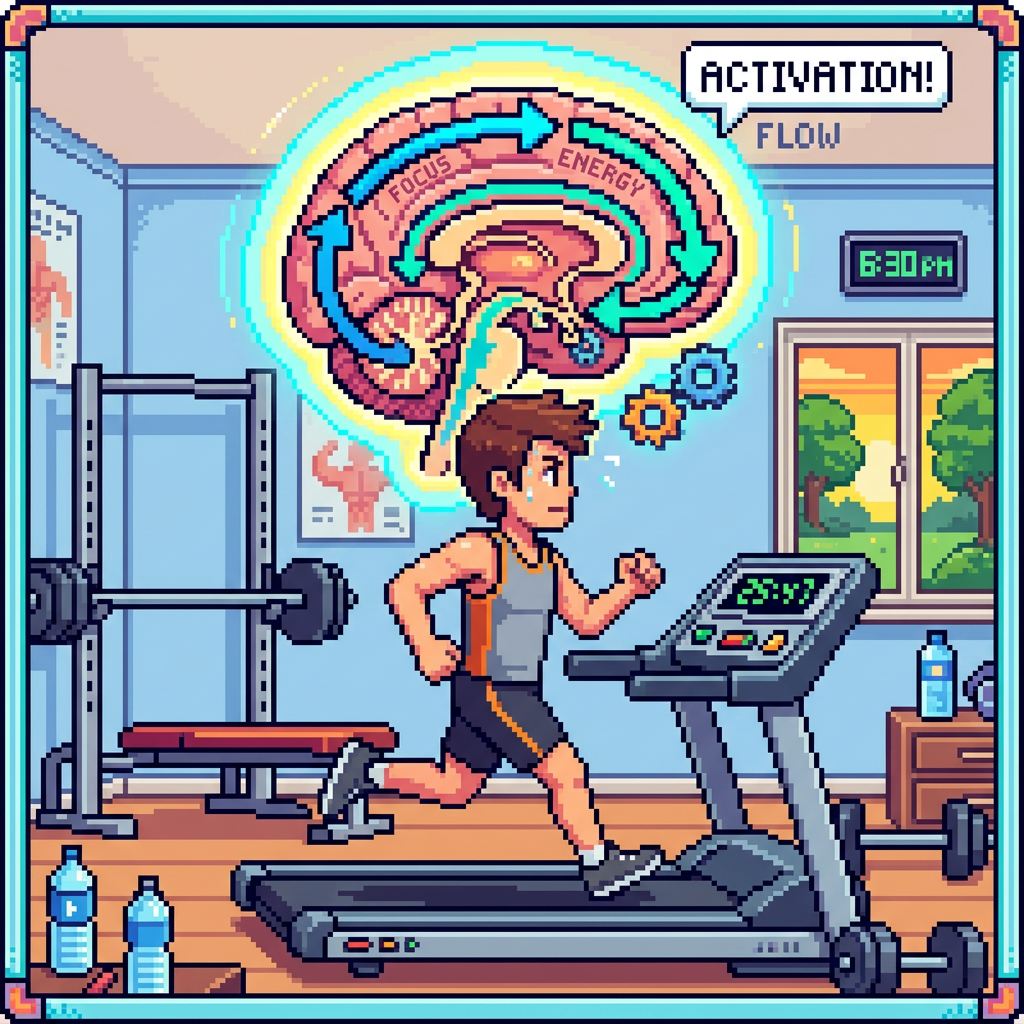
You aren’t doing this to sculpt six-pack abs; you are doing it to activate your internal hydraulic pump, gently shifting your brain inside your skull and flushing away hours of accumulated neurological fog.
True movement isn’t just about the muscles we can see in the mirror—it’s about driving the invisible cleaning pumps that keep our minds sharp.
Listen closely. Your brain is waiting for you to stand up. The next time you catch yourself staring blankly at your monitor, remind yourself: Time to get up and stretch—your brain is waiting for its shower.
#BrainHealth #Neuroscience #Mindfulness #DiaphragmaticBreathing #HealthyLifestyle #NatureResearch #Biohacking #DeskJobHealth #BrainFog #AlzheimersPrevention