From an early age, many of us were taught by our parents about the importance of developing good habits. Going to bed early, exercising regularly, reading books, and avoiding harmful behaviors were all encouraged as foundations for a healthy and fulfilling life.
Yet, as adults, we often struggle to maintain these good habits. We make ambitious New Year’s resolutions, promise ourselves to exercise for an hour every day, read one book every week, or completely change our lifestyles overnight. Unfortunately, our enthusiasm often fades, and before long, we return to our old routines.
What if the secret to changing our lives isn’t doing more, but starting smaller?
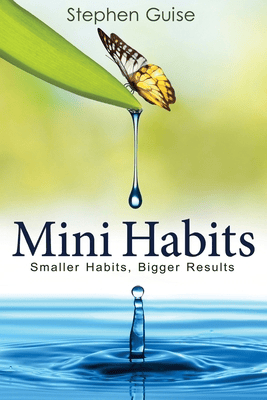
In his book Mini Habits, author Stephen Guise introduces a simple but powerful idea: Instead of setting ambitious goals that require enormous motivation, begin with actions so small that they are almost impossible to resist.
For example:
- Instead of exercising for one hour, do just one push-up or one sit-up a day.
- Instead of reading one book a week, read just one page a day.
- Instead of meditating for thirty minutes, sit quietly for one minute.
- Instead of writing a thousand words, write just one sentence.
- Instead of walking five miles, start by walking for five minutes.
These actions may seem insignificant, but their real purpose is not the immediate result. Their purpose is to establish consistency.
Once you complete one push-up, you may naturally feel like doing five more. After reading one page, you may become interested in reading an entire chapter.
But even if you stop after that one small action, you have still succeeded. You have kept your promise to yourself.
This is the beauty of tiny habits: You don’t have to depend on motivation, which naturally rises and falls. You simply make the starting point so easy that there is little resistance.
Over time, these small actions can become part of your daily routine. What once required effort may eventually become something you do naturally.
How to Build Good Habits That Last
Here are five practical ways to get started:
1. Start Smaller Than You Think You Should
Don’t overwhelm yourself with ambitious expectations. If you want to exercise, begin with one push-up. If you want to read more, start with one page. Your first goal is simply to show up every day.
2. Connect a New Habit to an Existing Routine
One of the easiest ways to remember a new behavior is to attach it to something you already do.
For example:
- After brushing your teeth, do one sit-up.
- After drinking your morning coffee, read one page.
- Before going to bed, spend one minute reflecting on the day.
Your existing routine becomes a natural reminder for the new habit.
3. Make It Easy and Convenient
If you want to exercise in the morning, prepare your workout clothes the night before. If you want to read more, keep a book beside your bed or on your dining table.
The easier an action is to begin, the more likely you are to repeat it.
4. Focus on Consistency, Not Perfection
You don’t need to be perfect. There will be days when you are tired, busy, or simply not in the mood.
Don’t let one missed day become an excuse to give up entirely. Simply return to your routine the next day.
Building a lasting habit is more important than achieving a perfect record.
5. Celebrate Every Small Achievement
Give yourself credit for every small step. Completing one push-up may not transform your body, and reading one page may not make you an expert, but each action represents a small victory.
Over time, these victories build confidence and strengthen your belief that you can change.
The Connection Between Habits and Buddhist Teachings
Interestingly, the importance of small, repeated actions is also deeply connected to Buddhist teachings.
Buddhism emphasizes that our thoughts, words, and actions shape our character and influence our future. Repeatedly allowing anger, jealousy, greed, or resentment to dominate our minds can strengthen these negative tendencies.
On the other hand, regularly practicing generosity, patience, gratitude, and compassion gradually helps cultivate a more peaceful and wholesome mind.
We don’t become compassionate simply by wishing to be compassionate. We become compassionate by repeatedly choosing to understand others, offering help when possible, and treating people with kindness.
The same principle applies to spiritual cultivation. We don’t become wiser or more peaceful overnight. It takes daily effort, mindfulness, and consistent practice.
Even a few minutes of meditation, one sincere act of kindness, or one moment of controlling our anger can become a meaningful step toward personal transformation.
In this sense, cultivating good habits is not only about improving our physical health or productivity. It is also about shaping the kind of person we wish to become.

We often underestimate the power of small actions because we cannot immediately see their results.
Think about how a tree grows. It begins with a tiny seed, hidden beneath the soil. Day after day, it receives sunlight and water. Its roots slowly deepen, and eventually, it grows into something strong and beautiful.
Our habits work in much the same way.
One page a day can lead to hundreds of pages in a year. One small exercise can establish the foundation of a healthier lifestyle. One moment of patience can prevent an argument. One act of kindness may brighten someone else’s entire day.
We don’t need to transform our lives in one day. We only need to make a small, positive choice today and repeat it tomorrow.
Perhaps the greatest secret of personal growth is this:
Don’t wait until you have enough motivation to make a big change. Start with one small action today.
One page. One push-up. One kind word. One good thought.
Small actions, repeated consistently, can lead to extraordinary changes.
And sometimes, the smallest beginning can become the turning point of an entire life.