Bill Porter’s Chinese Culture Journey “Orchid in the Empty Valley”

Bill Porter’s Chinese Culture Journey “Orchid in the Empty Valley”

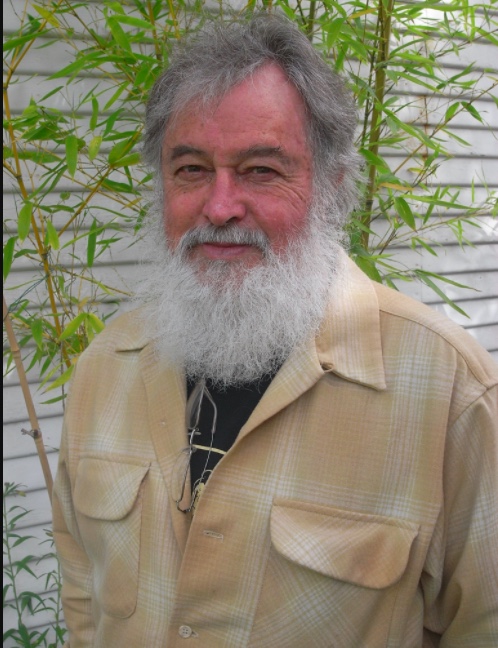
This interesting old American man has no Chinese ancestry, but he loves Chinese traditional culture deeply.
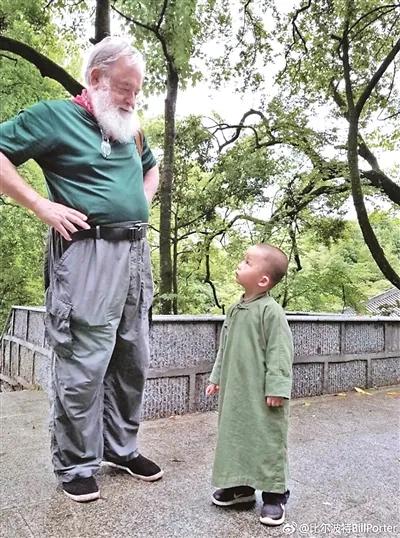
Those foreigners who have no Chinese ancestry but have a Chinese heart

He is the author of “The Orchid in the Empty Valley”, Bill Porter, an American writer who is influenced by Buddhist classics and obsessed with Chinese culture. He has visited China many times, lived a simple life in temples, and looked for a place for hermits and eminent monks. Be the Chinese Taiwanese wife of Zhuangzi’s research.

He also tried to pursue the ideal world in the minds of Chinese people for thousands of years-Peach Blossom Spring.
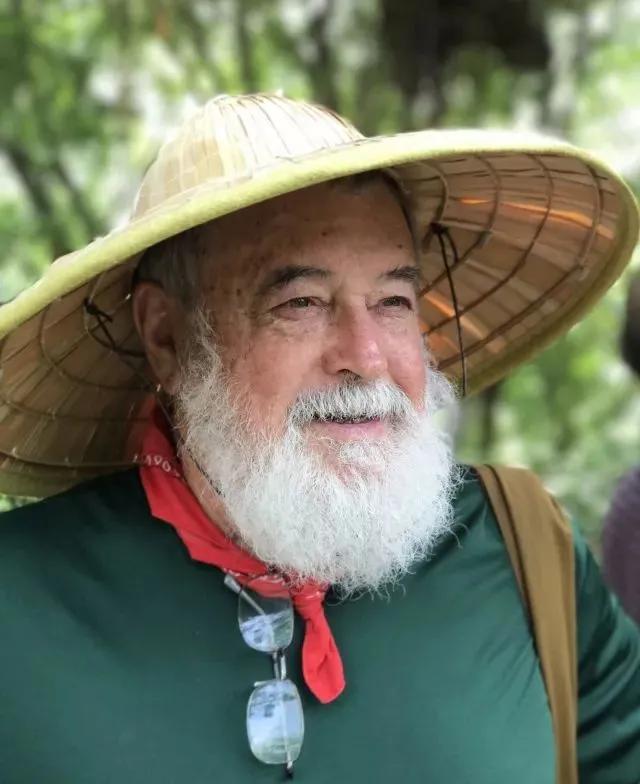
Those foreigners who have no Chinese ancestry but have a Chinese heart

Published a series of books expounding Chinese culture in China and the United States: “The Orchid in the Empty Valley”, “Looking for People”, “The Heart Sutra” interpretation, etc. He also translated and published “Hanshan Poems”, “Shiwushan Residence Poems” and poetry by Wei Yingwu and Liu Zongyuan.

Bill Porter is a particularly interesting old urchin. He returned to China to follow in the footsteps of  Su Shi and Tao Yuanming and wrote “Yi Nian Tao Hua Yuan”. When he flew over the sky over my hometown Leizhou Peninsula, he opened the collection of Dongpo poems and began to recite. Because Su Dongpo was demoted to stay in Leizhou Peninsula for too long and left a poem.
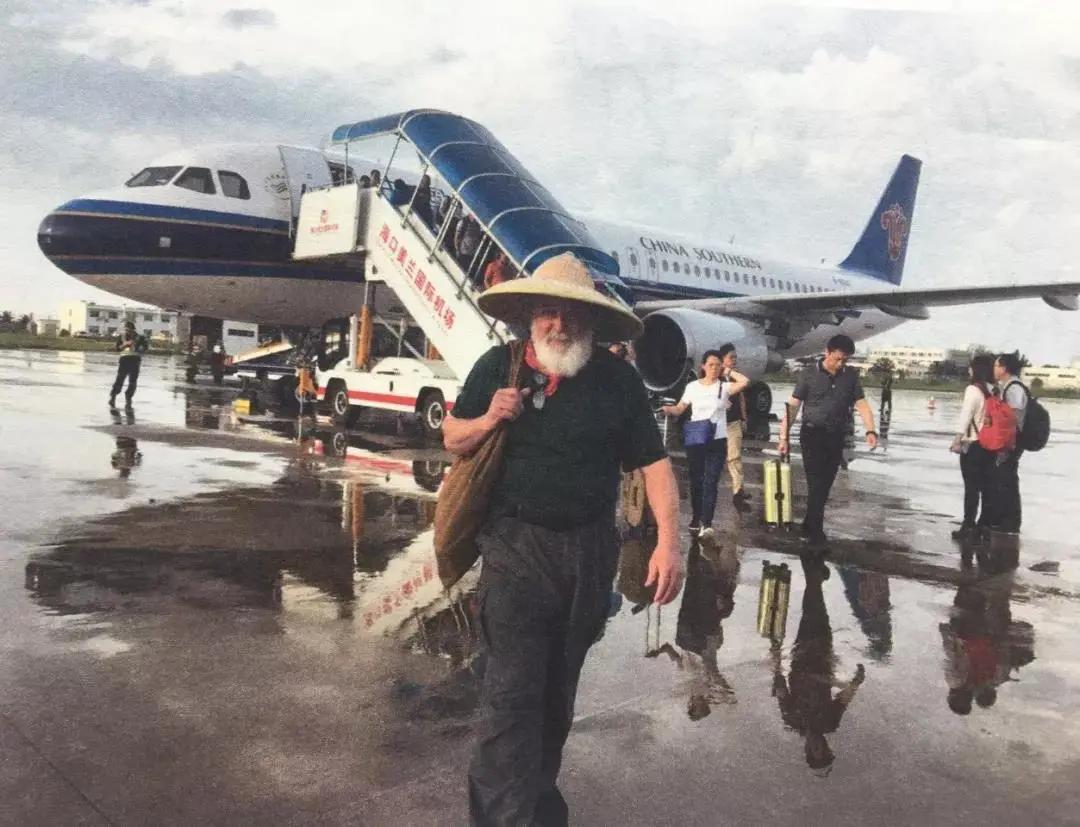
Those foreigners who have no Chinese ancestry but have a Chinese heart

“The Orchid in the Empty Valley”, published in 2008, records his journey of searching for a Chinese hermit in Zhongnan Mountain, which has gained widespread attention for cutting into the most secret part of Chinese culture. He felt that “hermits are doctors in Chinese religion.”

Begin to visit the former residences and cemeteries of 41 ancient Chinese poets in 2012. Along the way, he always took two precious bottles of whiskey and three wine glasses, and he reverently served a glass in front of each poet’s grave.
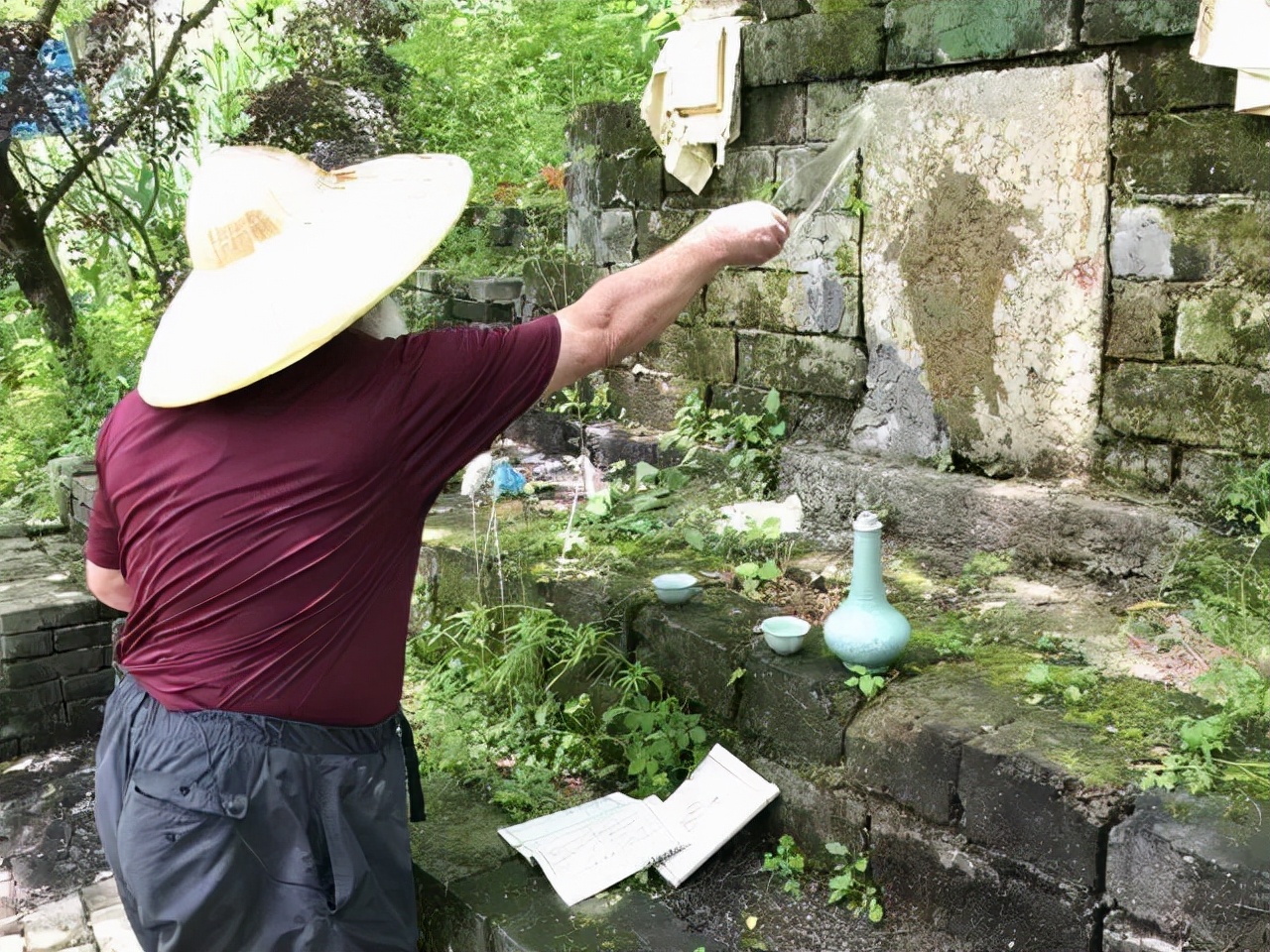
Those foreigners who have no Chinese ancestry but have a Chinese heart

The old naughty boy Bill Porter thought that when he traveled through time and space in front of the tomb and was drinking with the greatest poets in this land, he seemed to have met each other in the air. I remembered that my friend Yun called drinking “liquid meditation”. , Very advanced.
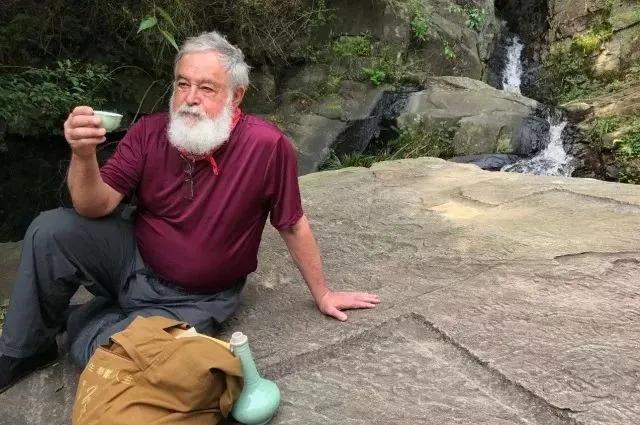
Those foreigners who have no Chinese ancestry but have a Chinese heart

Bill Porter also hopes that after reading his book, Chinese readers can try to experience this kind of travel to find heroes in their own culture.

Poems translated by Bill Porter:

(One)

I built my hut beside a path but I hear neither cart nor horse

you ask how can this be when the mind travels so does the place

picking chrysanthemums by the eastern fence I lose myself in the hill to the south

the mountain air the sunset light birds flying home together

in this there is a truth I’d explain if I could remember the words.

(Two)

People ask the way to Cold Mountain

but roads don’t reach Cold Mountain

in summer the ice doesn’t melt

sunny days the fog is too dense

so how did someone like me arrive

our minds are not the same

if they were the same

you would be here

Bill Porter’s Chinese Culture Journey “Orchid in the Empty Valley”

Link: https://peacelilysite.com/2022/04/19/bill-porters-chinese-culture-journey-orchid-in-the-empty-valley/

Source: https://inf.news/en/sport/3bfa5db8c428c68fee85641698e41364.html

#CultureExchange#ChineseTraditionalCulture

Zen Baggage : A Pilgrimage to China

Zen Baggage: A Pilgrimage to China by Bill Porter

Posted: July 2, 2010 | Author:Roy Hamric

You wonder how a book like Zen Baggage could be written. First, who would have guessed that China’s legendary Zen temples would rise from the ashes of the Cultural Revolution and prosper in the new century? And second, what Western writer could pull off a history of Zen in China and then go on to paint a vivid picture of contemporary life in China’s most legendary Zen temples and monasteries?

Bill Porter in Port Townsend (2010). Photograph by Julie Anand

The only writer I know who could do that justice is Bill Porter, also known as Red Pine, the éminence grise of translators and commentators on Zen and Taoist poetry and texts. In this latest, most personal, travel book, Porter is back on the fertile ground he covered so well in Road to Heaven: Encounters with Chinese Hermits.

Thanks to that book, we know that Taoist hermits continued to practice and live in their remote huts in the Chungnan Mountains throughout the era of China’s Red Guards.  The book was a revelation to Westerners and it seems to have fascinated many Chinese as well: the Chinese translation is now in its sixth printing under the title Hidden Orchids of Deserted Valleys.

Porter makes it clear that the average Chinese doesn’t quite know what to make of the legendary Zen temples and monasteries that have become heavily visited pit stops on a sort of Zen Tourist Highway running from Beijing to Hong Kong. Most of the temples are thriving: attracting more monks, building academies, expanding zendos, and refurbishing, enlarging, and promoting themselves in close—maybe too close—cooperation with the Chinese authorities, all under the auspices of a program that seems more intent upon raking in tourists’ money than in preserving the cultural legacy of Zen. The current government’s new relationship with Zen temples seems to be motivated in part by a desire to be more respectful and tolerant than the Communist regimes of the past, and its view that Zen is a non-threatening, home-grown, institution that promotes responsibility and discipline.

Zen being Zen, the abbots of these ancient temples are only too happy to accept whatever benefits accrue from the government’s new view of things. They remember all too well the days when monks were rounded up and abused, and temples were gutted or shut. Now abbots can easily meet the government’s modest expectations while also scooping up hoards of badly needed yuan from the bus loads of Chinese tourists who flock to the temples’ trinket shops to buy T-shirts, tea sets and kitschy souvenirs. The money is wisely used to build sub-temples in remote locations where monks can practice without being put on public view.

Porter’s personality comes through vividly in Zen Baggage, and it contains sketches of his earlier life in Taiwan, his frequent travels to China, and, most revealingly, his on-the-road personae as he makes his six-week, 2,500-mile, temple-hopping pilgrimage, which was largely a catch-up journey to supplement his many previous visits. He is on intimate terms with many of the temple abbots and others that he meets on his trip. In contrast, in Road to Heaven, during his forays into the rugged Chungnan Mountains (home of the hermits), he was on new ground ferreting out the names of hermits and the mountains where they were living, and then he tracked them down. What was most surprising about his first encounters with these Taoist solitaries, both men and women, is how seldom they showed surprise at the appearance of this bearded foreigner–if, indeed, they perceived him as a foreigner.  He seemed to have been expected.

Zen Baggage is soaked in wisdom so subtle it is almost invisible. I was three-quarters of the way into it, for example, when I realized I’d easily absorbed a chronology of the major Chinese Zen patriarchs along with the distinctive swerves and turns that collectively make up Zen’s birth, its crucial philosophical debates, its divisions, its flowering in the sixth century, its slow decline, and its diffusion in the world.

Porter’s personal Taoist/Zen style of travel gives his journey an interesting edge. Whether he’s interviewing the abbot of a legendary temple or eating sweet cakes at a truck stop, he lashes it all together in a bundle of concrete details that help illuminate the tales, metaphysics, koans, and esoterica of early Zen. He has read so deeply in Zen, Taoism and Buddhism that he could be the abbot of any of these legendary temples––to the benefit of the temples and monks––but it’s clear that most, if not all, of the abbots and monks he talked with would laugh at such a suggestion. Throughout Asia, Zen too often remains the “property” of individual countries, whereas in the West it’s readily perceived as open to all equally. In all his encounters, you get the feeling that in only a few cases was there a true meeting of minds. Many Chinese sized Porter up as just another Westerner who spoke good Chinese, and had no knowledge of his translation work or of his life (not that he cared), and most probably weren’t interested anyway. The prevailing orthodoxy seemed to be: “We’re the only ones who can translate the texts, who understand Zen––Westerners can’t get it.”  But as history reminds us, Buddhism is international: the Chinese texts the abbots depend upon were carried back to China from India by Chinese pilgrims and translated from Sanskrit and other languages.  In Porter’s many trips to China over the past two decades, we have an apposite addition to the history of Buddhism: a Western pilgrim who traveled to the East to get Chinese texts to translate into English.

On this latest trip, he bounced down China’s buzzing highways in buses to report to the world (or the English-speaking West), on what grew from those early Chinese translations into Zen. This recounting of how Zen was born and thrived in China (for a while), then died out, and is now being reborn closes China’s Buddhist/Zen circle, for the time being at least.

Along with his translations (11 so far), Porter’s two travel books are singular achievements that break new ground in our understanding of Zen and Taoism in contemporary China. My guess is that we can expect more travel books from him that will flesh out the on-the-ground story of Zen and Taoism, and that they will showcase his two greatest assets as a writer: his independence as a scholar and his practical knowledge of whatever he calls his personal blending of Taoism and Zen.

The travel books most closely resemble the work of his mentor John Blofeld (1913-1987), the British writer and translator of Buddhist texts, who gave Porter  the encouragement that led to his first translation in 1983, Cold Mountain Poems. Like Blofeld,  Porter uses his unique skills as a translator and his talents as a travel writer to bring to life Buddhism’s past and present.

Zen Baggage: A Pilgrimage to China by Bill Porter

LInk: https://peacelilysite.com/2022/04/10/zen-baggage-a-pilgrimage-to-china/

Source: https://royhamric.com/2010/07/02/zen-baggage-by-bill-porter-red-pine/

#Translater#Sinologist#BillPorter#CultureExchange#China#ZenBuddhism#Travel#Pilgrimage#Buddhism#China#Taoism

Secretary Carlos Gutierrez: International Businessman, U.S Former Secretary of Commerce, and Cuban Refugee

I was born in Cuba and left with my parents when I was six years old. When I arrived in America, I didn’t even know how to say “yes”. We stayed at this little hotel in Miami and I remember one of the people working at the hotel was teaching me English. I started school and still didn’t speak much English, but knew I had to learn. It’s like when you’re thrown into a pool and forced to swim so that you don’t drown. Though I was young, what I do remember from our arrival is that people were overwhelmingly welcoming. I felt that people had empathy for us and they sympathized with our struggles. That is so much more powerful than some of the dismissive rhetoric that goes on now in the United States because it gives you as a refugee a sense of loyalty to the country and its people.

After staying in Miami, my family moved to New York where we became U.S. Citizens. My father got a job in Mexico, so that’s where we landed next. I attended Junior and Senior High School there and started my career in Mexico selling cereal out of a truck. I worked my way up over 30 years; it wasn’t easy, but it worked for me. One time, after I had managed Kellogg in Mexico for a while. I was talking to my boss and explained that I had been doing a good job and wanted to get transferred. He responded “Sure, where?” and I said I wanted to go to an Anglo Market. The Anglo Markets were the big, sophisticated cereal markets- UK, USA, Canada, Australia. He kept trying to ask me why I wanted to do that. Why wouldn’t I want to be head of Latin America? Eventually, I understood what he was asking: You really think that a Latino can lead Non-Latinos? This bothered me, but that was the general mindset at the time. If you’re Latin, you lead your Latin people but don’t try to cross markets.

Some other major obstacles I faced growing up were culture and language. A big cultural shock was what kids ate for lunch. I didn’t know what a peanut butter and jelly sandwich was but everybody else had one. Other kids found things we did at home strange, especially when they heard me speak the language with my parents. I’ve seen how these barriers affect the lives of other immigrants and refugees in America. Coming to a new county, you have to get used to a totally new world and over time, you do. The idea that refugees and immigrants don’t assimilate is crazy. It suggests that the people claiming such don’t have confidence in the country and the power of our society.

Later in life, I remember sitting around off-site and discussing work/life balance with colleagues. One guy said, if you want to leave work for a given reason, you’re able to but it’s your responsibility to tell your boss. Right then, it hit me. Even though I had been in the company for twenty years, maybe longer, I never asked my boss if I could take time to attend things like my son’s Little League games because the stereotype of Cubans was that all we wanted to do was play Baseball. So, I never gave myself the luxury of saying “Hey, my kid has a game, I’m leaving.” I probably don’t realize how often I have catered to the misconceptions of others in order to hide these stereotypes.

Starting early in my career, I was given the opportunity to manage the Mexico subsidiary of Kellogg Company and we turned it around. That was my first general management job and it gave my name a little more visibility throughout the company. I would say the biggest accomplishment was really changing the strategy and making the company’s business model viable again because it had the most impact on the people involved. They picked me, so I did what I had to do to achieve that goal. I think success is what gives you a sense of accomplishment. At one time in this country, success itself was measured by money. I don’t think that’s entirely true anymore, though it is one of the factors. The real measure of success is doing something that you love. What made me successful and gave me energy was probably, to be frank, the fear of failure. It’s easy to say that it was the excitement of success, but it was more-so the fear that Americans who didn’t believe this refugee could make it would be proven right. So, if other people in the office worked 12 hours, I worked. This is the drive that helped me become the youngest CEO in Kellogg’s 100-year history.

Refugees growing up must ALWAYS think long-term. The idea is that it’s rough today but 10 or 20 years from now, it’s going to be fine because that’s the future you’re actively working towards. It’s also important that you look at the short-term and figure out what you have to do to get there. So, there may be the struggle of 18-hour days but also the ever-present dream that this is all going to pay-off. In terms of empowering refugees as Americans, what I would tell people is to be kind. You have no idea how far kindness to a refugee goes. Good morning, welcome, how are you, good to see you… Especially in the workplace. Oftentimes, there may be someone who is an immigrant or refugee, documented or not, and when you walk in a room, nobody ever looks at them. It’s like they’re there but they’re not. Since 9/11, this narrative of compassion has gone downhill. Shaking someone’s hand, looking them in the eyes, and acknowledging that they’re there can make a world of difference. In work settings, give immigrants opportunities and responsibility but also provide a level of protection because it’s inevitable that not everyone is going to be so kind. I wish we could make everyone think “Oh my gosh, this country actually wants and welcomes me.” Looking back on the impact that kindness, respect, and the feeling that people welcomed me had on myself and my family, I know I want us to have that effect on all refugees.

Photo by Pixabay on Pexels.com

Currently, I’m Co-Chair of Albright Stonebridge Group, a global business strategy firm. I also sit on boards, councils, committees, and the like. My goal is to make a contribution in the relations between the US and Cuba. I discovered this aspiration when I went back for the Embassy Opening in 2015. I hadn’t returned to Cuba since I first left at age six. Since then, I’ve been back almost 20 times and I can’t get enough. Home is where the heart is, and I know that’s my place of birth. Every time I get off the plane, I feel the sense that I was born there and belong; it just feels natural. It’s a bit of an abstract goal but something I continue to strive for daily.

Author:  • Mohamed Malim November 13, 2019 

Source : https://epimonia.com/blogs/refugee-stories/secretary-carlos-gutierrez-international-businessman-u-s-former-secretary-of-commerce-and-cuban-refugee

To Live, To Dance, To Translate

CAFA Lecture Bill Porter: To Live, To Dance, To Translate

TEXT:Sue Wang    DATE:2014.6.19

Bill Porter assumes the pen name Red Pine for his translation work. He was born in Los Angeles in 1943, grew up in the Idaho Panhandle, served a tour of duty in the US Army, graduated from the University of California with a degree in anthropology, and attended graduate school at Columbia University. Uninspired by the prospect of an academic career, he dropped out of Columbia and moved to a Buddhist monastery in Taiwan. After four years with the monks and nuns, he struck out on his own and eventually found work at English-language radio stations in Taiwan and Hong Kong, where he interviewed local dignitaries and produced more than a thousand programs about his travels in China. His translations have been honored with a number of awards, including two NEA translation fellowships, a PEN Translation Prize, and the inaugural Asian Literature Award of the American Literary Translators Association. He was awarded a Guggenheim Fellowship to support work on a book based on a pilgrimage to the graves and homes of China’s greatest poets of the past, which was published under the title Finding Them Gone in January of 2016. More recently, Porter received the 2018 Thornton Wilder Prize for Translation bestowed by the American Academy of Arts and Letters. He lives in Port Townsend, Washington.

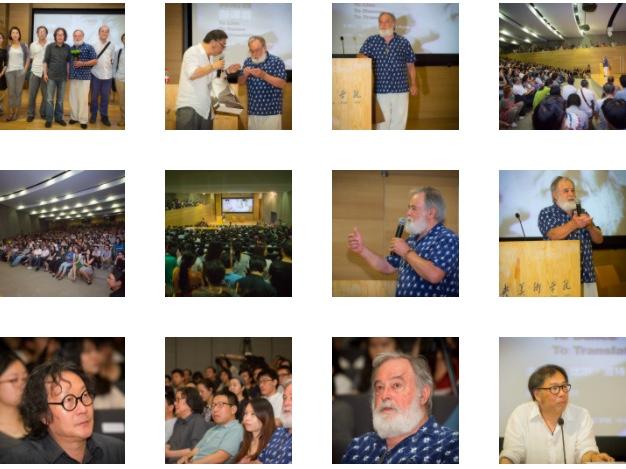
At 6:30 pm on June 12, 2014, the American writer, translator and Sinologist Bill Porter gave a lecture entitled “To Live, To Dance, To Translate” at the Auditorium of the CAFA (Central Academe of Fine Art) Art Museum. The lecture was jointly organized by the School of Humanities, CAFA, and CAFA Art Museum, the poet Xichuan presided over the lecture, and honoured guests included Xu Bing, Vice President of CAFA, Yu Fan, Jiang Jie, teachers of the Department of Sculpture, and poets Zhai Yongming, Ouyang Jianghe, etc., were also presentat the lecture.

Host Xichuan initially told the audience of his experience of his meeting with Bill Porter, whose pen name was Red Pine, his publications of the Chinese edition included “Road to Heaven”, “Zen Baggage”, “The Tour of Yellow River”, “Reading the Heart Sutra”, “Finding Tao in China”, “Silk Road”, etc.; his English translations include “Tao Te Ching”, “One Thousand Poems”, “Cold Mountain Poems”, “In Such Hard Times: The Poetry of Wei Ying-wu”, etc. Xichuan said Bill Poter’s translation was distinctive and creative which also made a contribution to English poetry itself, and he called Bill Porter immortal.

Bill Porter gave a lecture starting from his childhood experiences. He was born into a rich family, but he felt rich people had a deceptive smiling face, so they weren’t “real people”. Instead, he thought the “real people” were the servants of his family. At the age of 15, his parents divorced, and his father soon became bankrupt which made him relaxed and happy. It also made him clear that money was not the target he pursued in his life.

In 1972 Porter went to the Fo Kwang Shan Buddhist monastery in Taiwan, to concentrate on studying Zen. During this period of practice, Bill learned and translated Chinese, and he thought through translating, he would be able to learn another foreign language. In addition, this experience brought him freedom which was the biggest harvest for him, because he found that, although he could learn a lot of knowledge at Columbia University, it seemed like“delusions”, his thinking was controlled by the system. But the practice in the temple helped him depose the “delusion”, and obtain freedom.

In 1989, funded by Wang Wenyang, the son of a rich man in Taiwan, Bill was able to travel in China, and he started an historical record looking for hermits in the Zhongnan Mountains, combining the experience and the historical anecdotes, he wrote a book Road to Heaven. In 2012, at 69, Bill began the last trip – “finding them gone”. This time, along the Yellow River and the Yangtze River, he followed the footprints of 36 poets including Chen Zi-ang, Cao Zhi, Ruan Ji, Ouyang Xiu, Su Dongpo, Li Qingzhao, Bai Juyi and was able to have a dialogue with them across time and space.

In the lecture, Bill Porter wittily told the story of his learning Chinese and practicing in the mountains, engaging in translation for almost 40 years, his discovery that translating was the best way to understand a culture. For Bill, translation was a kind of “dance”, and moreover, the dance relied on Chinese culture. He took the translating process as the metaphor of the story Jiang Ziya Fishing, sometimes he spends a lot of time on the translation, waiting for inspiration through meditation, and with the help of others’ strength.

In the following Q & A, Bill Porter shared the harvest on the road of translation, the feeling of China, and the understanding of Zen. Bill said there wasn’t any correct or wrong translation, as there wasn’t any perfect “dance”, but one needed to see the inner heart, because translation was a performing art which allowed the pursuit of your own happiness. Bill was like a practicing person, he thought Zen had no thought, and the so-called“enlightenment” was also a kind of delusion.

After the end of the lecture, Xichuan gave some small gifts to Bill on behalf of CAFAM, and he himself gave a set of ancient coins of the Tang Dynasty to Bill Porter.

Text: Ye Yuanfeng, translated by Chen Peihua and edited by Sue/CAFA ART INFO

Photo: Hu Zhiheng, Quan Jing/CAFA ART INFO

CAFA Lecture Bill Porter: To Live, To Dance, To Translate

Link:https://peacelilysite.com/2022/04/02/to-live-to-dance-to-translate/

Source: https://cafa.com.cn/en/news/details/8322914

#CAFA#Translater#Sinologist#BillPorter#CultureExchange#China

Short Stories With Deep Meanings

Short Stories With Deep Meanings

Photo by Shane Kell on Pexels.com

Birdsnest

In the Tang Dynasty, there was a peculiar Zen master. He didn’t even have a Dharma name, and his practice was very special. He did not live in a temple. He settled himself in an awning like a bird nest on the top of a pine tree.  People called him “the Zen Master of the Birdsnest”. Many visitors hiked to the remote forest to seek the monk’s wise advices. 

Bai Juyi, was a very famous Chinese poet, also a high level officer at that time. One time, Bai Juyi traveled long distance to visit the Zen Master. He asked Zen Master Birdsnest, “Can you tell me what is the most important thing the Buddha ever said?”

      The Zen master replied, “Don’t do any bad things, and do all the good things.”

      Bai Juyi thought this answer is far too simple, he sneered, “Even a three-year-old can say this.”

      Zen Master Birdsnest said: “Although a three-year-old child can say it, but an eighty-year-old man still finds it very difficult to do it.”

Photo by PhotoMIX Company on Pexels.com

Determination

Master Qinluan was a famous Japanese Zen master. At the age of nine, he made up his mind to become a monk and asked Zen Master Cizhen to shave his ordination for him. Zen Master Cizhen asked him, “Why do you want to become a monk when you are so young?” Qinluan said: “Although I am only nine years old, my parents have both died. I don’t understand why people must die. Why must I be separated from my parents? Therefore, I must become a monk and explore these truths.”

Zen Master Cizhen said: “Very well. I’m willing to accept you as a disciple. However, it’s too late today, so I’ll shave you tomorrow morning.” Qin Luan said, “Master! Although you said that you will shave me early tomorrow morning, I am still young and ignorant. I can’t guarantee whether my determination to become a monk will last until tomorrow. Besides, Master, you are so old, you can’t guarantee that you will even wake up tomorrow morning!” After listening this words, Zen Master Cizhen was surprisingly happy, and said joyfully, “Yes! What you said is absolutely right. Now I will shave for you!”

Three Moves by Mencius’s Mother

Mencius, was a famous scholar well-known for his erudition. He was one of the greatest representatives of Confucianism in ancient China.

He had a great mother, who really focused on education. Once his family lived near a graveyard when he was a child. Therefore, he often played near the grave and imitated people’s crying or digging the tombs. When his mother saw this, she said: “It’s not a good place for a child to live in.”

His mother moved the family to a house near a market. Soon Mencius began  to amused himself by imitating peddler’s hawking and bargaining. His mother found this place still not good for a child to live in. She decided to move away again.

At last they settled down near a school. Mencius quickly began copying the students’ reading and writing. He also took pleasure by imitating the sacrificial rites on ceremony and formalities of  courtesy. He became more polite and hardworking. Then his mother said: this is a good place for a child !.

Short Stories With Deep Meanings

Link: https://peacelilysite.com/2022/03/25/short-stories-with-deep-meanings/

#MonkBirdnest#Buddhism#BaiJuyi#Mencius#Confucianism