The Double Ninth Festival: A Celebration of Longevity, Family, and Filial Piety

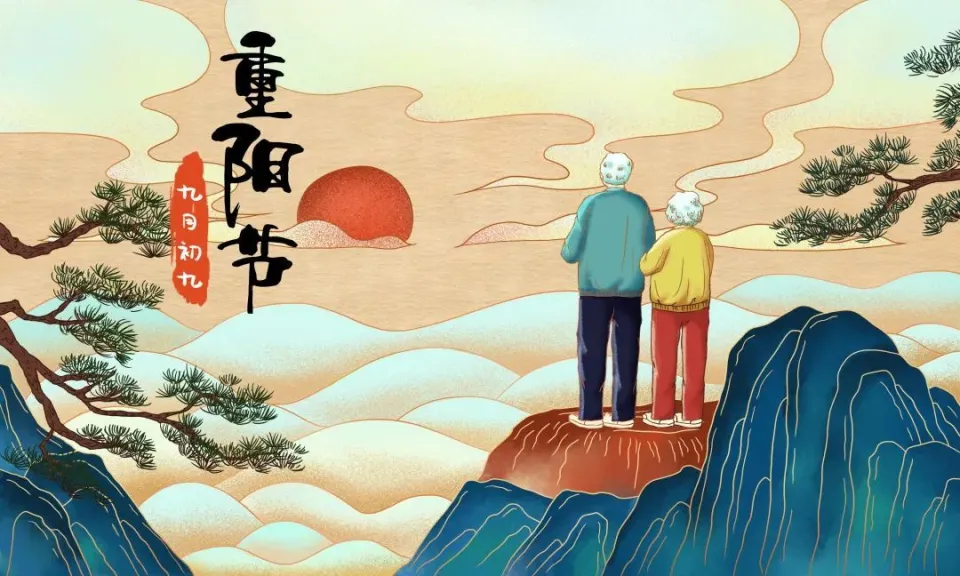
The Double Ninth Festival, also known as Chongyang Festival, falls on the ninth day of the ninth lunar month each year. In 2024, this special day is observed on October 10th. In ancient Chinese philosophy, as referenced in the I Ching, the number “nine” is considered a yang number, symbolizing strength and vitality. The festival’s name, “Double Ninth” or “Chongyang,” refers to the doubling of this powerful number, representing longevity and blessings.

The pronunciation of “九九” (jiǔ jiǔ) sounds similar to “久久,” which means “long-lasting.” On this day, as autumn unfolds with its vivid hues, people gather to hike, enjoy the red cornelian cherries in bloom, eat Chongyang cakes, and drink Chongyang wine, all while offering prayers for well-being and longevity. The number nine, being the highest single-digit odd number, is symbolic of long life, carrying with it the wishes of good health and longevity for the elderly. As time passes and human lives inevitably age, nature remains timeless, and we all must face the farewells that are a part of life.

Chongyang Festival is one of China’s most significant traditional holidays, and over the centuries, its customs have continued to thrive. People climb to high places to seek blessings, enjoy autumn scenery, appreciate chrysanthemums, and wear cornelian cherry (茱萸) as part of the ancient traditions. The festival has also become China’s officially designated Senior Citizens’ Day, a reflection of the nation’s cultural emphasis on honoring the elderly, with filial piety at the heart of the celebrations. The deep respect for elders, a core Chinese value, is encapsulated in the tradition of (xiào), which has remained unchanged through the ages.

Historical records of Chongyang customs date back to Lüshi Chunqiu, and by the Han dynasty, it became common for people to wear cornelian cherries and drink chrysanthemum wine during the festival in hopes of promoting longevity. The chrysanthemum, admired for its elegance and resilience to frost, has long symbolized the virtuous gentleman in Chinese culture. During Chongyang, chrysanthemums bloom in abundance, and the festival would be incomplete without them. As the saying goes, “Without chrysanthemums, there is no Chongyang.” Ancient people lit chrysanthemum lanterns, decorated the streets with flower displays, and gathered to admire the blossoms in the evening, adding a special charm to the festival.
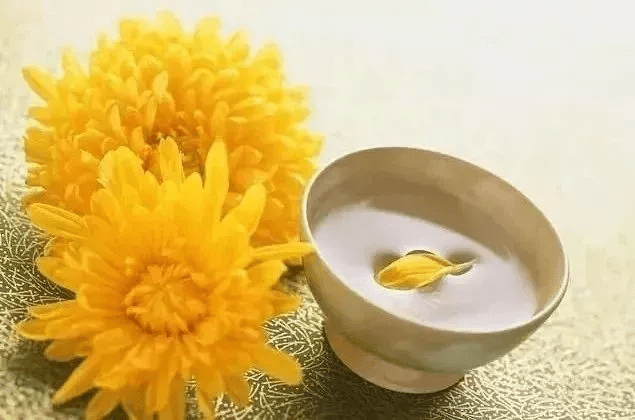
Tao Yuanming, one of China’s most beloved poets, wrote in the preface to Leisure at the Ninth Day: “In my leisure, I cherish the name of the Double Ninth Festival. With the garden full of chrysanthemums, I long for the wine but find none; so I simply sip the nine flowers in their essence.”

This imagery beautifully captures the festival spirit of sipping wine infused with chrysanthemum petals, a practice believed to preserve health and vitality. Wine has always been a key part of festive celebrations, and during Chongyang, chrysanthemum wine is essential. This traditional drink is believed to ward off misfortune and bring longevity.

The festival’s atmosphere is enhanced by the vibrant scenery of autumn. As the hills are covered in yellow flowers, one can imagine the joy of gathering with friends, sharing a drink, and admiring the beauty of chrysanthemums. This sense of togetherness is echoed in the works of Tang dynasty poet Meng Haoran, who described the simple pleasures of sitting with old friends by the window, drinking wine, and chatting while watching the lush vegetable garden outside. Such moments, rich in warmth and simplicity, remind us of the importance of human connection and the passage of time.

A key custom during Chongyang is wearing cornelian cherry. This tradition was especially popular during the Tang dynasty, as people believed that wearing these fruits could protect them from misfortune.

Cornelian cherries were worn on the head, the arm, or carried in sachets, serving as symbols of protection and unity among family and friends. The poet Wang Wei famously captured this sentiment in his poem Thinking of My Brothers on the Double Ninth:

“Alone, a stranger in a foreign land,
I long for my kin on every holiday.
I know my brothers are climbing high with cornelian cherries,
But there is one less person among them.”

His words reflect the deep homesickness and yearning for family, feelings that resonate with many who are far from home during important festivals.

Flower Cakes

Another significant tradition is eating flower cakes during Chongyang. The word “糕” (cake) sounds like “高” (high), and eating these cakes symbolizes the desire for life to “rise to new heights.” On the morning of Chongyang, mothers place small cakes on their children’s foreheads while whispering prayers for their health and safety, a heartwarming expression of parental love.

As autumn progresses and the white dew turns to frost, people celebrate the Double Ninth Festival by eating flower cakes, climbing to high places, and admiring the red leaves that blanket the hills. These simple yet profound traditions deepen the connection to nature and soften the heart’s longing for home.

The Chongyang Festival is not just a time to honor the elderly but also a celebration of the timeless values of family, respect, and filial piety. As families gather to enjoy the view from high hills and savor these precious moments together, they strengthen the bonds of kinship, appreciating the blessings of health, longevity, and the beauty of life’s passing seasons.

Link: https://peacelilysite.com/2024/10/11/the-double-ninth-festival-a-celebration-of-longevity-family-and-filial-piety/

Photos From: https://news.qq.com/rain/a/20241011A03NUI00

Exploring the Significance of Qingming Festival

Discovering Chinese Traditional Culture

April 5th, or April 4th in leap years, marks the Qingming Festival in China. This festival is a nostalgic occasion, harmonizing solemn remembrance with a celebration of nature through outings and reveling in the spring scenery. It stands as a festival steeped in cultural heritage, seamlessly combining the solemnity of honoring ancestors with the delight of outdoor activities.

Originating from ancient rituals of tomb-sweeping by emperors and officials, Qingming Festival dates back over 2,500 years to the Zhou Dynasty. Initially named after a solar term, it evolved into a day for commemorating ancestors, closely linked to the Cold Food Festival.

The Cold Food Festival typically falls 105 days after the winter solstice. Legend has it that its origin dates back to the Spring and Autumn Period when Prince Chong’er of the state of Jin was on the run, exhausted and starving. Finding himself in a desolate area with no one around, his loyal servant Jie Zitui cut a piece of flesh from his own leg and cooked it into a soup to feed Chong’er. After Chong’er ascended to the throne as Duke Wen of Jin, Jie Zitui chose to live in seclusion with his mother rather than seek rewards. Duke Wen repeatedly tried to persuade him to return, even resorting to burning down the mountains surrounding his hideout, hoping to force him out. Tragically, Jie Zitui and his mother perished in the fire, unmoved by Duke Wen’s efforts. Overwhelmed with grief, Duke Wen declared this day as the Cold Food Festival in honor of Jie Zitui’s sacrifice.

Qingming Festival, a day for ancestral worship, embodies moral beliefs, poetic sentiments, and genuine emotions. It is an expression of filial piety and remembrance towards ancestors, a cultural tradition emphasizing reverence and familial bonds. It serves as a poignant reminder of our roots and a moment to express gratitude.

The act of ancestral worship symbolizes not belief in spirits, but faith in the enduring love of our loved ones. Therefore, their memories remain etched in our hearts, and our gestures of respect hold profound significance.

Death merely transitions life’s state; it does not sever our connection with loved ones. Through this annual ritual, we learn to remember and let go, finding solace in expressions of love. Qingming Festival encompasses grief, remembrance, responsibility, and gratitude, serving as a cornerstone of familial and national heritage.

Qingming ancestral rites reflect traditional Chinese values of filial piety and ancestor reverence, rooted in Confucian ethics. This moral compass guides contemporary attitudes of respect, gratitude, and harmony with nature, embodying the essence of Confucian teachings.

Moreover, Qingming customs extend beyond tomb-sweeping to include outdoor activities such as spring outings. As nature rejuvenates during this season, families venture into the countryside to enjoy the blossoming scenery, fostering a sense of harmony with the natural world.

During Qingming, planting trees has become a common tradition, stemming from the practice of wearing willow sprigs. Legend has it that the tree from which Jie Zitui made his sacrifice revived, leading to the tradition of planting willow trees during Qingming.

Another customary delight during Qingming Festival is Qingtuan, or green rice balls, a delicacy with a sweet and fragrant taste. Made from glutinous rice flour mixed with mugwort juice, stuffed with fillings like red bean paste or sesame, these green dumplings symbolize renewal and abundance.

In essence, Qingming Festival embodies the essence of Chinese civilization, honoring our ancestors, nurturing familial bonds, and fostering harmony with nature. It serves as a testament to our cultural heritage and a reminder of the values that bind us as a people.

Link:https://peacelilysite.com/2024/04/05/exploring-the-significance-of-qingming-festival/

Source: http://m.xinhuanet.com/jl/2019-04/05/c_1124329263.htm, http://news.enorth.com.cn/system/2022/04/05/052503270.shtml, https://www.ahjzu.edu.cn/jwjc/2020/0402/c8861a142385/pagem.htm

A Thanksgiving Reflection: Gratitude towards Our Parents

Embracing Filial Piety in a Modern World

In this season of gratitude, as we gather around tables adorned with festive feasts, it’s an opportune moment to reflect on the essence of filial piety, a cornerstone of Chinese culture. While tradition emphasizes putting parents first, the landscape of communication between generations has evolved, presenting new challenges.

In our pursuit of modernity, we often find a widening gap in understanding between parents and their children. This Thanksgiving, let’s draw inspiration from the timeless wisdom of Socrates, the ancient Greek philosopher.

Once Socrates noticed that Lamprocles was increasingly irritable with Xanthippe, his mother. Recognizing the need for a heart-to-heart conversation, Socrates decided to employ the Socratic method to enhance his son’s relationship with her.

Socrates initiated the dialogue by asking Lamprocles about the meaning of the term “ungrateful.” Lamprocles responded, noting that someone is considered ungrateful if they fail to express gratitude despite being treated well. Establishing this as common ground, Socrates delved deeper, questioning whether ingratitude might be acceptable towards enemies but not friends. Lamprocles rejected this notion, asserting that regardless of friendship or enmity, gratitude should be shown to anyone who has done a favor.

Photo by Berendey_Ivanov / Andrey_Kobysnyn on Pexels.com

Socrates then redirected the conversation toward the unparalleled favor bestowed by parents on their children. Emphasizing the sacrifices parents make, he highlighted the physical and emotional burdens mothers endure, risking their lives during childbirth. Despite this, Lamprocles remained unconvinced, citing his mother’s temper as a significant obstacle.

Socrates posed an intriguing question, asking whether it’s harder to bear with a mother’s ferocity than that of a wild beast. Lamprocles, acknowledging his mother’s intense demeanor, struggled to reconcile her actions with the lack of physical harm. Socrates, steering the conversation, questioned whether Lamprocles had ever been injured by his mother physically, and when the answer was negative, Socrates emphasized the reciprocal nature of their relationship.

The dialogue took an unexpected turn when Socrates compared listening to Xanthippe’s words to actors in tragedies hurling insults at each other. Lamprocles, distinguishing between real intent and theatrical performance, argued that his mother’s words were not mere make-believe. Socrates, unveiling his true intent, reminded Lamprocles that, despite Xanthippe’s anger, it was not devoid of good intentions but rooted in her love for him.

Socrates emphasized Xanthippe’s continuous care for Lamprocles during sickness, her prayers for his well-being, and her genuine desire to help him. He concluded that, ultimately, it is not the sharpness of words but the true underlying intentions that should concern us. Lamprocles, acknowledging his mother’s positive intentions, found solace in understanding that her bluster was akin to the actors’ staged conflicts.

In this heartfelt conversation, Socrates guided his son towards appreciating the true essence of gratitude and the underlying intentions of his mother’s actions. This Thanksgiving, let us draw inspiration from this wisdom, cherishing the imperfect yet unwavering love of our parents.

A Thanksgiving Reflection: Gratitude towards Our Parents

Link:https://peacelilysite.com/2023/11/17/a-thanksgiving-reflection-be-grateful-to-your-parents/

#ThanksgivingReflection #Grateful #Parents #Socrates

Source: https://donaldrobertson.name/2018/03/30/parenting-what-socrates-said/