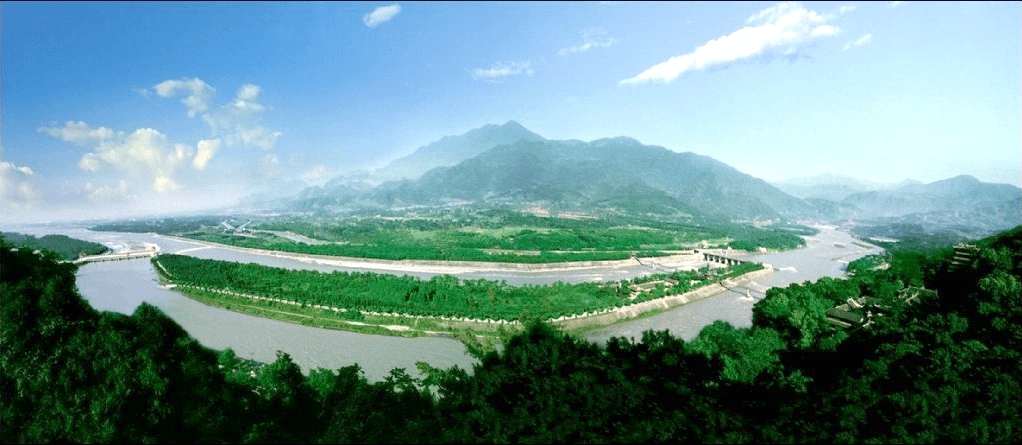
While many ancient wonders exist only as weathered ruins—silent witnesses to lost civilizations—Dujiangyan Irrigation System is something entirely different. It is not a relic of the past, but a living, breathing masterpiece.
Built around 256 BC by the visionary engineer Li Bing, this extraordinary irrigation system continues to do exactly what it was designed to do over two millennia ago: tame the waters of the Min River, prevent catastrophic floods, and nourish vast stretches of fertile land across the Chengdu Plain.
What makes Dujiangyan truly astonishing is not just its longevity—but its philosophy. It achieves perfect water control without a single dam.
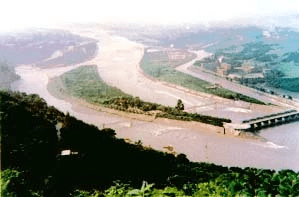
Modern engineering often seeks to conquer nature with towering concrete barriers. Dujiangyan, by contrast, embodies a radically different idea: harmony over control.
Rather than blocking the river, the system gently guides it—using the river’s own energy to regulate itself through three elegantly designed components:
- Yuzui (Fish’s Mouth Levee): A natural divider that splits the river into inner and outer channels.
- Feishayan (Flying Sands Weir): A clever spillway that uses the river’s force to flush away excess water and sediment.
- Baopingkou (Precious Bottle Neck): A narrow opening carved through the mountain, acting like a natural valve to control water flow.
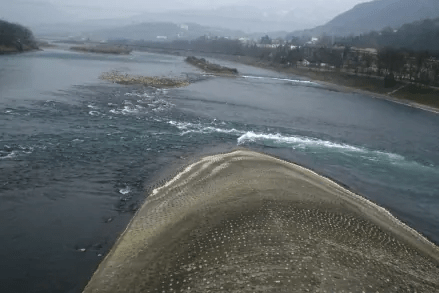
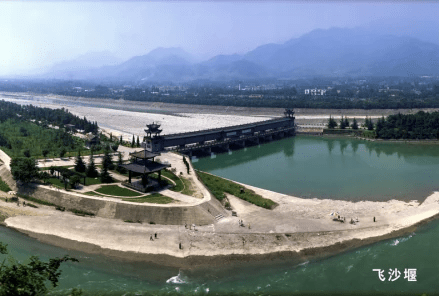
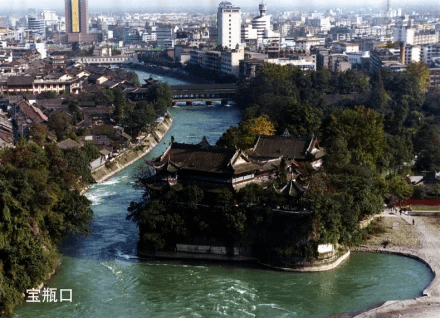
Together, these elements form a system that feels less like machinery and more like a living organism—responsive, adaptive, and enduring.
The “Four-Six” Rule: Nature’s Invisible Hand
At the heart of Dujiangyan lies one of its most brilliant innovations: the Four-Six Divide (四六分水)—a subtle yet powerful hydraulic principle.
Through careful shaping of the riverbed, Li Bing created an automatic system that adjusts itself with the seasons:
- In the dry spring months, the deeper Inner River naturally draws in about 60% of the water, ensuring that farmlands receive the nourishment they need.
- During the summer floods, the wider Outer River takes over, diverting roughly 60% of the surging waters away from populated areas.
No gates. No sensors. No human intervention.
Just the quiet intelligence of design aligned with nature.
The result is nothing short of extraordinary: a self-regulating system that protects against both drought and disaster.
Why It Still Thrives After 2,200 Years
It is rare—almost unimaginable—for a piece of infrastructure this ancient to remain central to modern life. Yet Dujiangyan continues to serve as the lifeline of the Chengdu Plain.
Its enduring relevance lies in principles that feel strikingly modern:
- Sustainability: Instead of fighting sediment buildup, the system uses the “Flying Sands” technique to naturally flush out the majority of silt, keeping waterways clear.
- Ecological Harmony: Without a massive dam or reservoir, the river remains alive—fish migrate freely, and ecosystems flourish undisturbed.
- Living Tradition: The annual practice of Zhuoshui—a deep cleaning of the riverbed—continues today, blending ancient ritual with contemporary science.
Li Bing’s guiding philosophy was deceptively simple:
“Deepen the channel, keep the dykes low.”
Yet within these words lies a profound truth—one that extends far beyond water management.
By respecting the natural flow rather than resisting it, he created a system that has outlasted kingdoms, revolutions, and the passage of time itself.
Recognized today as a UNESCO World Heritage Site, Dujiangyan stands as a quiet but powerful reminder:
Sometimes, the most advanced solutions are not those that overpower nature—but those that understand it.
And perhaps, in a world still learning to balance progress with sustainability, this ancient marvel is not just a story of the past—but a guide for the future.







 Peace LiLy