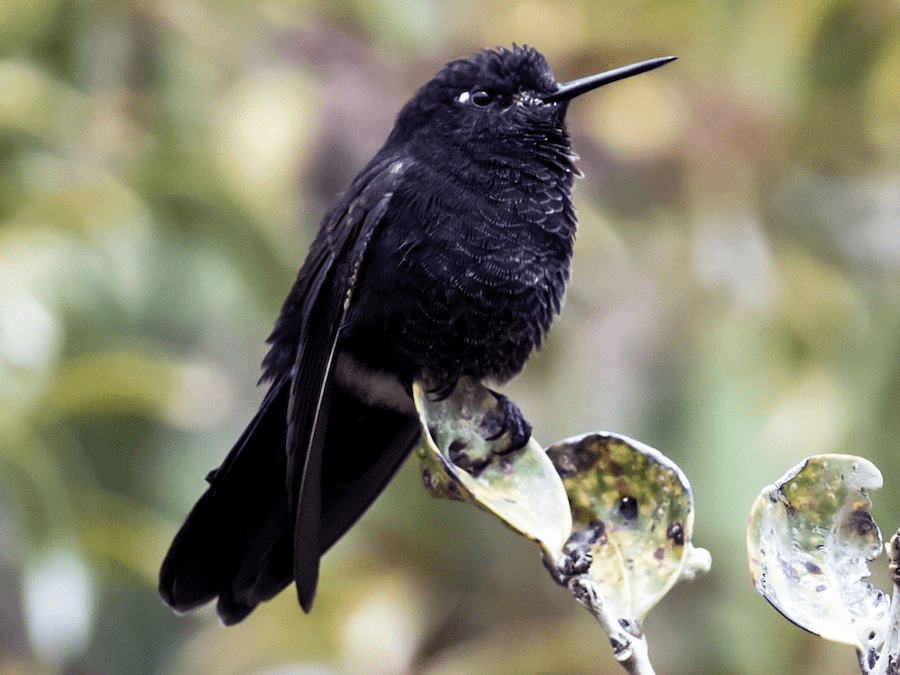
If you think leaving your warm bed on a winter morning is painful, wait until you meet this bird. Every night, to save energy, it follows a routine that sounds almost unbelievable—it turns itself into what can only be described as a “heartbeat-equipped ice cube.”
High in the Andes Mountains of Peru, life for hummingbirds is a tale of extremes. By day, the mountains burst into color, with wildflowers blooming everywhere—a seemingly endless, all-you-can-eat buffet of nectar. But when night falls, temperatures plunge below freezing.
Most birds would fight the cold by burning massive amounts of energy to stay warm. But our tiny protagonist—the Black Metaltail, weighing about as much as a coin—takes a radically different approach.
Its philosophy? If staying warm costs too much energy… then don’t stay warm at all.
As the sun sets and the cold creeps in, the hummingbird perches quietly on a branch. It tilts its beak upward, fluffs its feathers—and then, quite literally, begins to shut down.
Scientists call this state torpor, but in plain terms, it’s almost like logging out of life.
During the day, this tiny creature lives at full speed. Its heart can beat up to 1,200 times per minute as it darts from flower to flower. But once it enters torpor, that number plummets dramatically—to about 40 beats per minute.
Yes… from 1,200 down to 40. It’s almost unimaginable.
And it doesn’t stop there.
Its body temperature, normally around 104°F (40°C), drops to a staggering 37.9°F (3.26°C)—one of the lowest body temperatures ever recorded in any bird or non-hibernating mammal. When scientists first observed this phenomenon, they were stunned.
“They feel like cold stones,” one researcher noted. “If you didn’t know better, you’d think the bird was dead.”
And honestly, who wouldn’t? A tiny bird, motionless, ice-cold, barely breathing—it’s nature’s version of suspended animation.
Because survival demands it.
A hummingbird needs to visit around 500 flowers a day just to get enough nectar to live. If it spent the freezing night burning energy to stay warm, it simply wouldn’t make it to the next day.
By lowering its body temperature to near-death levels, the bird can conserve up to 95% of its energy. It’s a high-risk strategy—but an incredibly effective one.
Survive the night, and morning brings another chance.
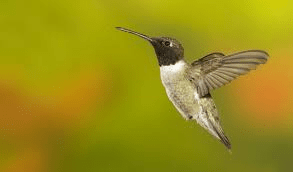
At dawn, as sunlight returns, the bird begins its astonishing revival.
Its body starts to tremble—rapid, intense muscle vibrations, like a phone buzzing on silent. This shivering generates heat, raising its body temperature at about 1°C per minute.
Then, suddenly—
Its eyes open.
It’s alive again.
Fully restored, it takes off into the sky, heading straight back to its daily feast of flowers.
A Lesson from a Tiny Survivor
The next time life feels overwhelming—when challenges pile up, or when you feel exhausted and stuck—think of this tiny hummingbird.
Sometimes, the most powerful survival strategy isn’t to push harder, but to conserve, to pause, to endure.
To rest.
To wait.
To simply make it through the night.
Because if you can do that… tomorrow is another day.
Good night. ❤️

Link:https://peacelilysite.com/2026/03/25/the-bird-that-turns-into-ice-to-survive-the-night/