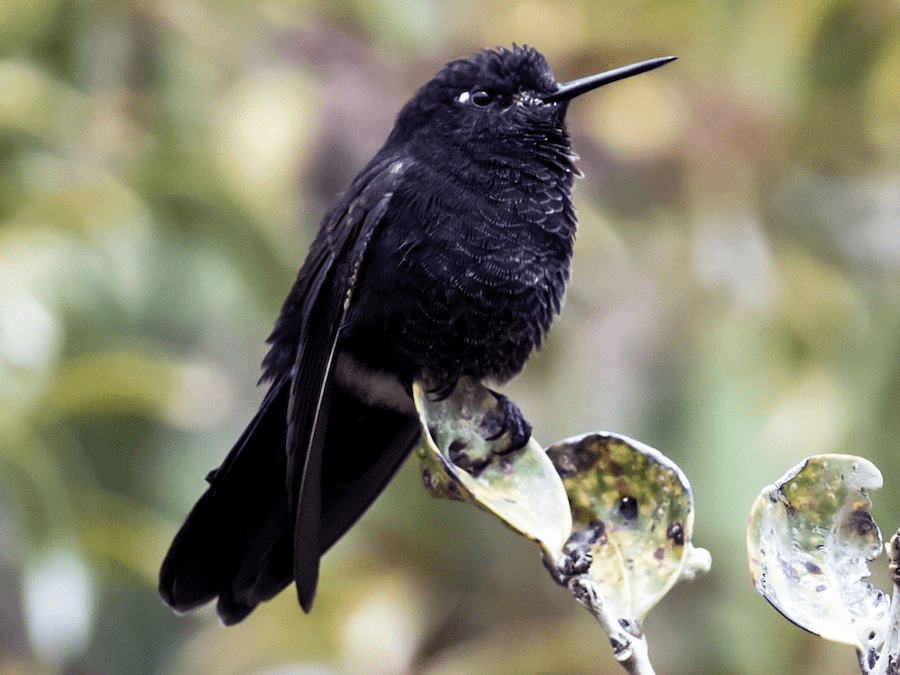
The Bird That Turns Into Ice to Survive the Night

If you think leaving your warm bed on a winter morning is painful, wait until you meet this bird. Every night, to save energy, it follows a routine that sounds almost unbelievable—it turns itself into what can only be described as a “heartbeat-equipped ice cube.”

High in the Andes Mountains of Peru, life for hummingbirds is a tale of extremes. By day, the mountains burst into color, with wildflowers blooming everywhere—a seemingly endless, all-you-can-eat buffet of nectar. But when night falls, temperatures plunge below freezing.

Most birds would fight the cold by burning massive amounts of energy to stay warm. But our tiny protagonist—the Black Metaltail, weighing about as much as a coin—takes a radically different approach.

Its philosophy? If staying warm costs too much energy… then don’t stay warm at all.

As the sun sets and the cold creeps in, the hummingbird perches quietly on a branch. It tilts its beak upward, fluffs its feathers—and then, quite literally, begins to shut down.

Scientists call this state torpor, but in plain terms, it’s almost like logging out of life.
During the day, this tiny creature lives at full speed. Its heart can beat up to 1,200 times per minute as it darts from flower to flower. But once it enters torpor, that number plummets dramatically—to about 40 beats per minute.

Yes… from 1,200 down to 40. It’s almost unimaginable.

And it doesn’t stop there.

Its body temperature, normally around 104°F (40°C), drops to a staggering 37.9°F (3.26°C)—one of the lowest body temperatures ever recorded in any bird or non-hibernating mammal. When scientists first observed this phenomenon, they were stunned.

“They feel like cold stones,” one researcher noted. “If you didn’t know better, you’d think the bird was dead.”

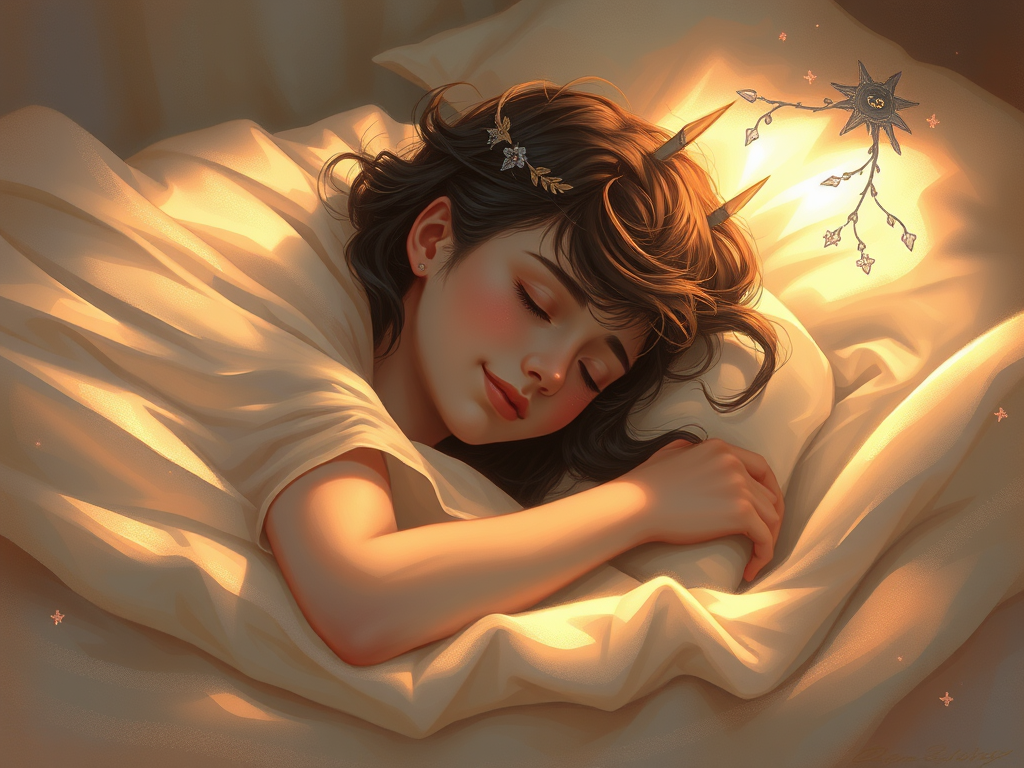
And honestly, who wouldn’t? A tiny bird, motionless, ice-cold, barely breathing—it’s nature’s version of suspended animation.

Because survival demands it.

A hummingbird needs to visit around 500 flowers a day just to get enough nectar to live. If it spent the freezing night burning energy to stay warm, it simply wouldn’t make it to the next day.

By lowering its body temperature to near-death levels, the bird can conserve up to 95% of its energy. It’s a high-risk strategy—but an incredibly effective one.

Survive the night, and morning brings another chance.
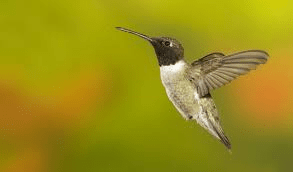
At dawn, as sunlight returns, the bird begins its astonishing revival.

Its body starts to tremble—rapid, intense muscle vibrations, like a phone buzzing on silent. This shivering generates heat, raising its body temperature at about 1°C per minute.

Then, suddenly—

Its eyes open.

It’s alive again.

Fully restored, it takes off into the sky, heading straight back to its daily feast of flowers.

A Lesson from a Tiny Survivor

The next time life feels overwhelming—when challenges pile up, or when you feel exhausted and stuck—think of this tiny hummingbird.

Sometimes, the most powerful survival strategy isn’t to push harder, but to conserve, to pause, to endure.

To rest.

To wait.

To simply make it through the night.

Because if you can do that… tomorrow is another day.

Good night. ❤️
Link:https://peacelilysite.com/2026/03/25/the-bird-that-turns-into-ice-to-survive-the-night/

The Swan’s Gift

The Swan’s Gift

By Brenda Seabrooke

Anton was a farmer who lived with his wife Rubina and their seven children at the edge of the forest. He worked hard and they were happy for many years. Then one spring, the rains didn’t fall and Anton’s wheat died in the fields. As winter came on, their food supply grew smaller and smaller. Soon, Anton’s shoulders were stooped with worry. Rubina’s plump apple cheeks withered. The children no longer sang or laughed or danced, for they were all too hungry.

Every day Anton went out to hunt for food but returned without firing a shot. And every day, Rubina added water to the onion soup until there was nothing in the pot but water. When Anton saw his family crying with hunger, he wanted to cry too.

But instead, he took his gun and went out again into the cold, cold night. He had to find something for them to eat: a bird or a rabbit. But the black branches were empty of birds and no rabbits crouched in the frozen shrub. The only tracks Anton saw were his own.

He came to a small hill and knew it was the last one he would be able to climb before his strength was gone. His feet were numb and his breath rasped in the freezing air. At the top of the rise, he stopped to rest, scanning the snow for tracks. In despair, Anton turned to go. Just then, he saw below him a lake that was not yet frozen over. Its edge was lacy with ice and at its center floated a swan of such dazzling beauty that Anton could not look away. Its stark white feathers gleamed against the dark water and as Anton watched, the swan seemed to grow larger until its image filled his eyes.

Suddenly, juices flowed into Anton’s mouth. He could taste succulent roast swan and see his children’s faces glowing as his family sat at the table eating again. He raised his gun and sighted down the long barrel. Anton put his finger on the trigger. The swan seemed to be looking at him, listening for the shot that would kill it. He lowered the gun. The swan was the most beautiful creature Anton had ever seen. As he watched, the swan fanned its magnificent wings.

Anton closed his eyes and thought of his family. Again, he raised his gun. Hours seemed to pass. The feathers on the swan’s breast moved gently with each beat of its heart, and Anton could feel his own heart beating. He lifted his heavy wet feet, walked a few steps, and then dropped to his knees. “I can’t do it,” he said.

“Why not?” asked a voice as soft as snow or feathers ruffling in a gentle wind.

“I cannot kill beauty. If I kill this swan, my family will have food for one or two meals. And then what? We will be hungry again and it will have been for nothing.”

Anton was too tired to be surprised that he was speaking to the swan or the wind or the night. He was too tired to walk back home. He bowed his head with sadness for his family.

With a cry, the swan lifted its wings, rose from the lake, and circled Anton, water dropping from its wing feathers.As the water hit the snow, it froze into crystals that sparkled in the moonlight. Anton reached out and touched one. It was hard, harder than ice, and did not melt in the warmth of his hand.

“A diamond!” Anton said. Quickly, he scooped up the diamonds that lay in a glittering circle around him. He filled his pockets with them and set off through the snow to a nearby village.

Anton was no longer tired. He no longer felt the cold. He woke up the innkeeper, calling, “I need food.”

“Your crops failed,” said the innkeeper. “Everyone knows you have no money.”

“I have a diamond,” said Anton.

“Where would the likes of you get a diamond?” the man scoffed.

“Let me in and I will explain.”

The innkeeper fed Anton cold venison and sweet dumplings while Anton told his story, and the innkeeper’s wife packed a sledge for him with roast chickens and cheeses and onions and turnips. Then they sent Anton on his way so that they could begin looking for the magic swan themselves.

Rubina met him at the door. “Did you find any food? Mischa has fainted.”

“No. But look what I have brought.” Anton showed her the sledge.

“But how did you get it?” she asked.

For answer, he spilled the diamonds onto the table.

“Oh,” cried Rubina, “you have turned to robbery!”

“No,” said Anton. And he told her all about the swan, and how it had circled him with the diamonds falling from its wings.

Anton and Rubina woke the children even though it was the middle of the night, and they all sat at the table eating slowly, enjoying the flavor of the food and wonderful feeling in their stomachs. Rubina’s black eyes sparkled as she filled her children’s bowls. Anton felt his strength returning. Several of the children hummed as they were put to bed.

Anton and Rubina and their children were never hungry again, for they used their diamonds wisely and well. News of the magic swan spread throughout the land and many people searched for it. But the swan was never found.

Sometimes when Anton was alone in the forest, the image of the swan rose before him. He saw again the gleam of its feathers, the coral glow of its beak, and the magnificent reach of its wings as it glided silently across the sky.

Link:https://peacelilysite.com/2024/05/20/the-swans-gift/

Source: https://files.schudio.com/st-marys-ce-primary-school/files/documents/year_2_reading_1(1).pdf