Escaping the Bustling World: Finding Solace in the Brushstrokes of “Su Shi Nao Chun”

How long has it been since you truly quieted your mind to listen to a bird’s song or feel the subtle arrival of spring?

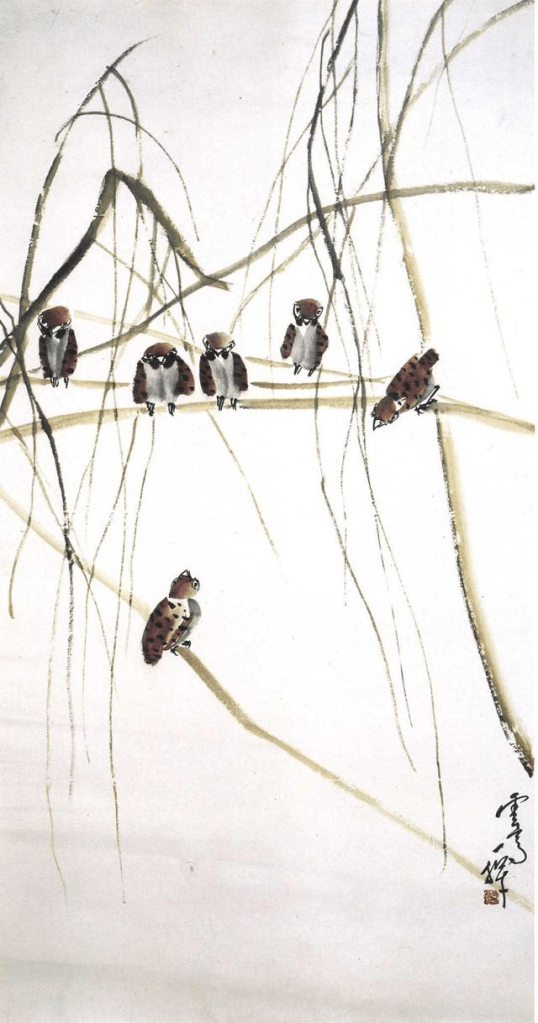
When we slow down and face a masterpiece of freehand flower-and-bird ink painting—Su Shi Nao Chun (The Scholar’s Spring) by H.H. Dorje Chang Buddha III—we find a soothing remedy for the weary soul. With just a few expressive brushstrokes, this painting captures the boundless vitality of early spring. It is not merely a visual feast of fine art; it is a profound spiritual cleansing.

Traditional Chinese ink painting is deeply rooted in the philosophy of “using objects to express one’s will, and borrowing landscapes to convey emotion.” Through the vivid depiction of nature, the artist projects their inner spiritual world and genuine feelings, achieving a sublime state where scene and emotion blend, and the self merges with nature.

The Awakening of Spring: Dialogue in the Willow Branches

Stepping into the world of the painting, what immediately catches your eye and captures your breath is the lively group of birds awakening from their slumber. Facing the spring that has quietly arrived, they chirp and frolic on the branches with joyful abandon.

If you look closely, a bird at the bottom and another at the top right gaze at each other. Their eyes and postures suggest an intimate conversation, as if they are dueting a cheerful folk song, tirelessly spreading the beautiful news of spring’s return.

The artist’s depiction of these birds features exceptionally distinct and precise body language. The fresh, vivid artistic imagery springs to life, showcasing a masterful command of ink and a brilliant compositional mind.

Mastery of Ink: Finding Hope at the Edge of a Cliff

Traditional Chinese painting dictates that “the brush establishes the form and texture, while the ink distinguishes the substantial from the ethereal.” The artistic conception of a piece is born entirely from the movement of brush and ink. The brilliance of Su Shi Nao Chun lies first and foremost in its brushwork.

The lines in this piece are remarkably crisp, rising and falling with an organic, rhythmic tension. Through the controlled weight of pressing and lifting the brush, combined with sudden pauses and sharp turns, the ink gains a raw, powerful, and profound texture.

With simple, concise, and perfectly echoed strokes, the artist wonderfully captures the living dynamism of the willow branches. The entire canvas instantly becomes alive—this aliveness reveals a pure innocence, and it is only through such innocence that true spirituality shines. Once that spirituality emerges, the painting overflows with wit and charm, effortlessly ushering the viewer into a realm of subtle wonder.

This state of effortless, natural creation stems from the artist’s extraordinarily deep spiritual and artistic cultivation. As a master of art, H.H. Dorje Chang Buddha III has dedicated Himself to various forms of painting—including landscapes, figures, flowers, and birds—since youth. His art observes the universe and all living things through the light of Prajna (transcendental wisdom). Moving from the magnificent to the microscopic, the concepts under his brush evolve from the complex to the simple, leaving the ink pure and the brushwork liberated.

His brush often ventures into positions of extreme peril, where the composition seems pushed to a cliff’s edge. Yet, with a sudden, subtle turn of the brush, a whole new horizon opens up—just like the classic Chinese idiom: “Where hills bend and streams wind, the pathway seems blocked; yet past the dark willows and festive flowers, a new village appears.” A fresh, delightful, and breathtaking realm suddenly unfolds.

Flower-and-bird ink painting is not only a vital component of traditional Chinese art holding a significant place in the global artistic landscape, but it is also a symbol of the spiritual character and cultural soul of the Chinese nation.

The philosopher Jonathan Edwards once wrote:

“Spiritual holiness… brings an inexpressible purity, brightness, peacefulness and ravishment to the soul. In other words, that it made the soul like a field or garden of God.”

True works of art possess this exact power—to cultivate the soul and inspire people to look inward at their own spiritual world.

Link:https://peacelilysite.com/2026/05/27/escaping-the-bustling-world-finding-solace-in-the-brushstrokes-of-su-shi-nao-chun/

#ChineseArt #InkPainting #ArtAppreciation #Mindfulness #EasternAesthetics #SpiritualHealing #FineArt

Remembering Our Belonging to the Earth

Dear friends on this beautiful Earth,

I recently came across these words, and they felt less like something to read—and more like something to remember. In a time when the world often feels filled with urgency and uncertainty, this message gently invites us to pause, to listen, and to reconnect with the quiet heartbeat of our Mother Earth… and with one another.

May we breathe a little more deeply, walk a little more gently, and allow love—simple, steady, and sincere—to guide us back to what truly matters.

I hope these words bring you a moment of peace, reflection, and connection, just as they did for me 🌿

Mother Earth’s Humming

By Yuria Celidwen

Now, She still ripples. She still hums, pulses, quivers. She still sighs, murmurs under the Skies.

We pay attention, and all we hear is urgency. Waters whirl, winds rise, fires rage, irate. The challenges are innumerable, but also infinite are the opportunities. Our grief is daunting, but also heartening is our compassion. We course a cosmic webbing holding awe and horror, wonder and doubt, creation and transition . . . us and all others.

This abysmal relentless weaving is love in all its myriad forms.

We listen whole our Mother Earth’s humming, Her calling, Her heartbeat throbbing, and Her ails. We, as made of soil ourselves, are porous. Enacting love flows—throughout— quenching the cracked soils of hopelessness, helplessness, and isolation.

Breathing in, we return, expanding full gratitude.

Breathing out, we connect, unfolding kindness and care.

It is love who guides grief to meaning, anger to action, despair to transformation, fear to safety. Thus, from love, all injuries heal; they repair, restore . . . and bridges open.

Because our beings—whole—open.

Trust becomes.

Relatives, recall those early steps of unknowing and discovering!

Yes.

Those first steps we walk again right here, right now.

Today, we walk our steps attentive and intentional. Our past brings forth sensible alertness now. Tomorrow is right here— made of us—right now.

Yes.

Bring to heart the time we walked barefoot. When our feet caressed the skin of our Lands, concerned little of thorns and pebbles, seeking first to play and connect.

Relatives, evoke the gentle holding of our Mother Earth, Her caring gaze, and Her smiling.

We smile back because we are indeed listening.

Now, we ripple. We hum, pulse, quiver. We sigh, murmur under the Skies.

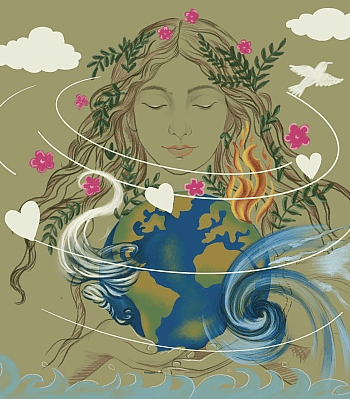
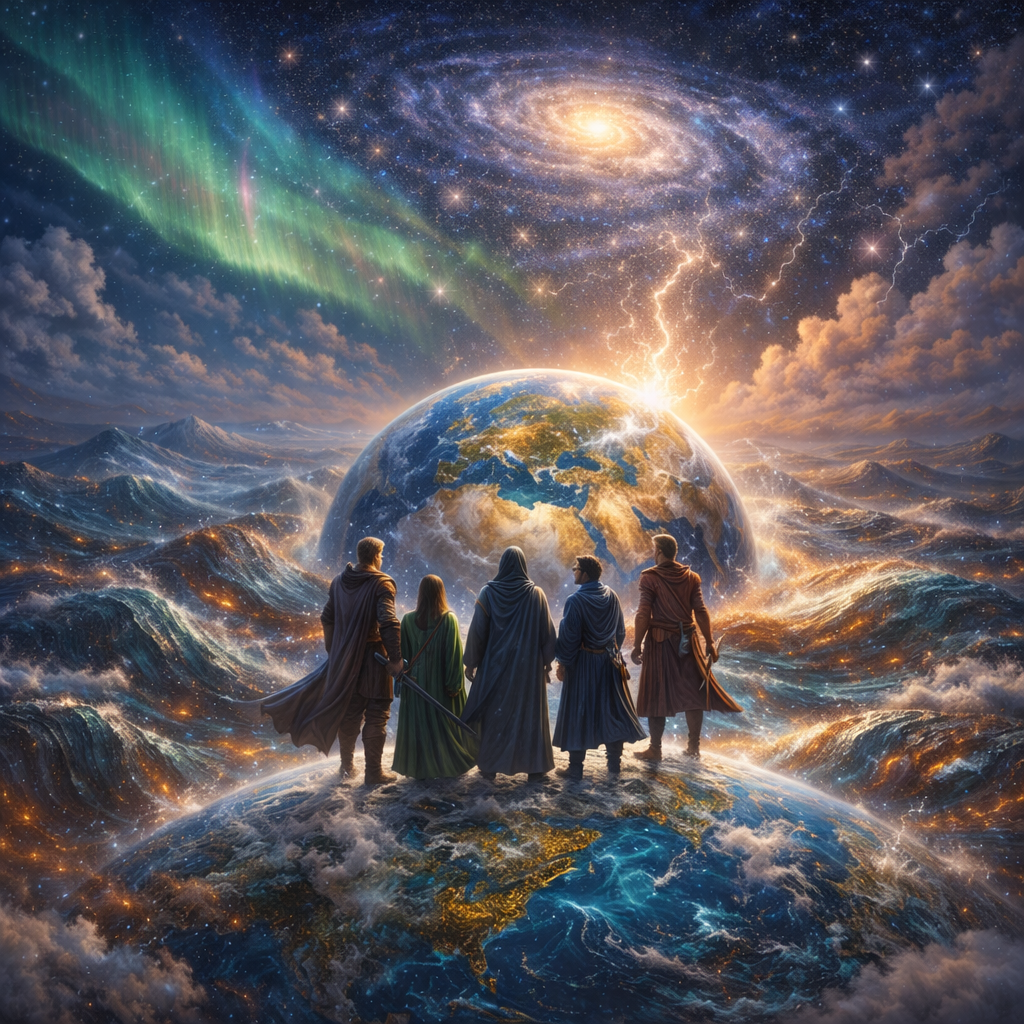
Earth floating amidst glowing turbulent waves under a vibrant starry sky with aurora and galaxy

Source: https://www.awakin.org/v2/read/view.php?tid=2623

Link:https://peacelilysite.com/2026/04/12/remembering-our-belonging-to-the-earth/

Call Me by My True Names

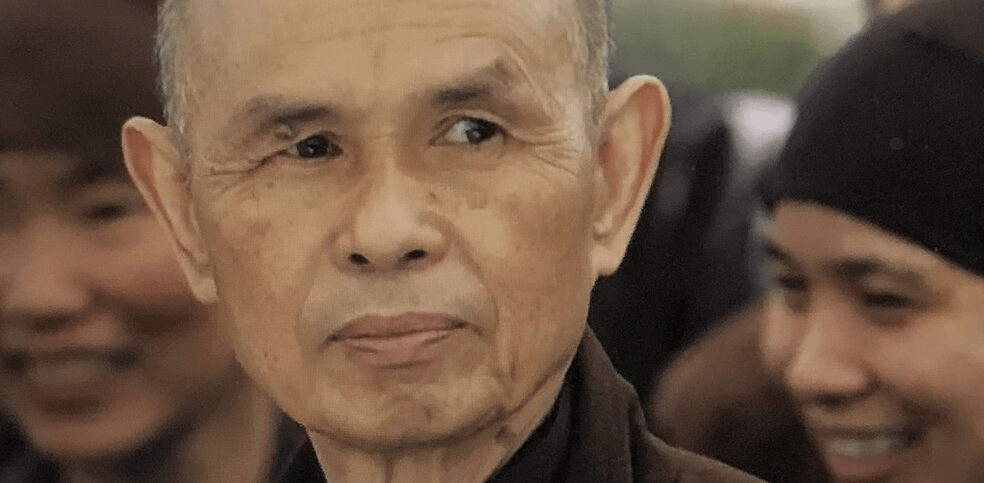
In times of uncertainty and turmoil, the voice of compassion becomes more precious than ever. Thich Nhat Hanh was a world-renowned Vietnamese Zen Buddhist monk, teacher, poet, author, and peace activist whose life embodied mindfulness and nonviolence. His profound influence reached far beyond the Buddhist community; he was nominated for the Nobel Peace Prize by Martin Luther King Jr., who recognized in him “an apostle of peace and nonviolence.”

Today, as the world feels divided and restless, his poem “Call Me by My True Names” invites us to look deeply into our shared humanity. It challenges us to see beyond separation—beyond “us” and “them”—and to recognize that within each of us lives both suffering and compassion. Reading his words now feels like a gentle but powerful reminder: true peace begins when we awaken to our interconnectedness.

Call Me by My True Names

Do not say that I’ll depart tomorrow
because even today I still arrive.

Look deeply: I arrive in every second
to be a bud on a spring branch,
to be a tiny bird, with wings still fragile,
learning to sing in my new nest,
to be a caterpillar in the heart of a flower,
to be a jewel hiding itself in a stone.

I still arrive, in order to laugh and to cry,
in order to fear and to hope.
The rhythm of my heart is the birth and
death of all that are alive.

I am the mayfly metamorphosing on the surface of the river,
and I am the bird which, when spring comes, arrives in time
to eat the mayfly.

I am the frog swimming happily in the clear pond,
and I am also the grass-snake who, approaching in silence,
feeds itself on the frog.

I am the child in Uganda, all skin and bones,
my legs as thin as bamboo sticks,
and I am the arms merchant, selling deadly weapons to Uganda.

I am the twelve-year-old girl, refugee on a small boat,
who throws herself into the ocean after being raped by a sea pirate,
and I am the pirate, my heart not yet capable of seeing and loving.

I am a member of the politburo, with plenty of power in my hands,
and I am the man who has to pay his “debt of blood” to, my people,
dying slowly in a forced labor camp.

My joy is like spring, so warm it makes flowers bloom in all walks of life.
My pain is like a river of tears, so full it fills the four oceans.

Please call me by my true names,
so I can hear all my cries and laughs at once,
so I can see that my joy and pain are one.

Please call me by my true names,
so I can wake up,
and so the door of my heart can be left open,
the door of compassion.

Each time I read “Call Me by My True Names” by Thich Nhat Hanh, I feel both unsettled and awakened.

The poem asks us to see what we often refuse to see—that we are not separate from the suffering of the world. We are not only the compassionate helper, but also, in some deep and interconnected way, the frightened child, the victim, and even the one who causes harm. This is not an easy truth to hold. Yet it is a profoundly liberating one.

The poem gently dissolves the illusion of “us” and “them.” It invites us to return to our true humanity—tender, vulnerable, and deeply connected.

And perhaps, in remembering this, we take one small but meaningful step toward peace.

Link:https://peacelilysite.com/2026/02/12/call-me-by-my-true-names/

Beyond Form: Entering the Dreamlike Realm of Chinese Painting

Sometimes beauty finds us when we least expect it—appearing like a sudden blossom of color in an ordinary moment, stopping us in our tracks and opening our hearts to wonder.

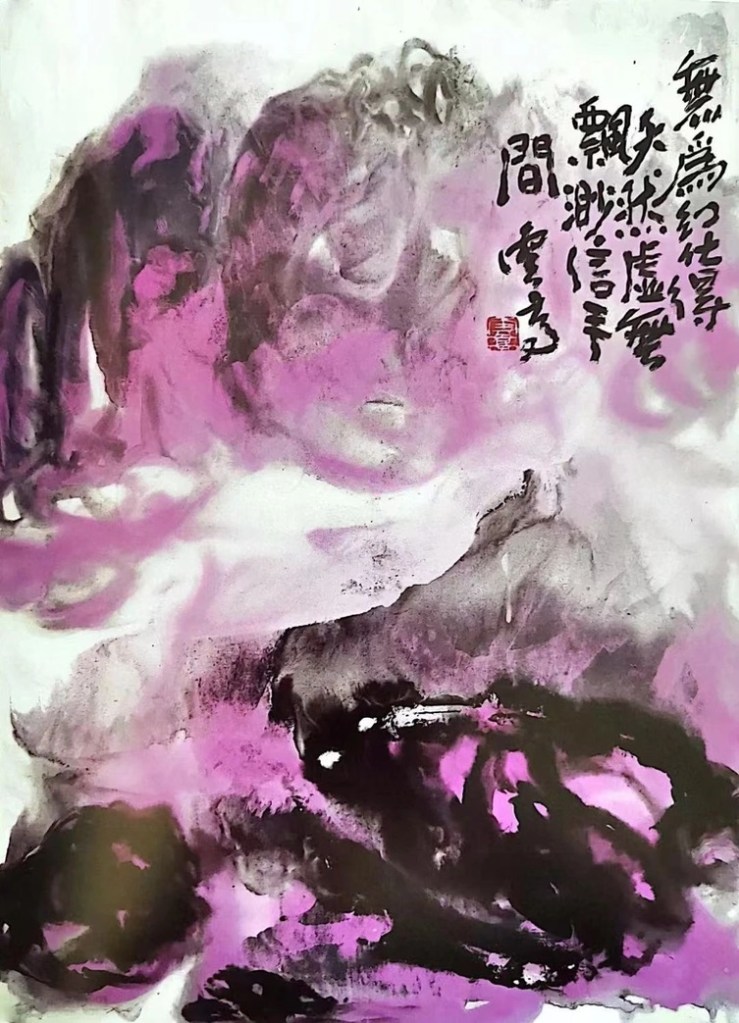
I happened to come across two traditional Chinese paintings online, both dominated by bright pink, and was utterly astonished. I couldn’t help but study them carefully. In Chinese painting, it is rare to see large areas of pink used as the main color, since it often risks appearing vulgar. Yet in the works of H.H. Dorje Chang Buddha III, there is not the slightest trace of vulgarity. On the contrary, they radiate grandeur and magnificence, and the artist’s confident mastery of color bursts forth boldly from the canvas.

The above piece in particular was painted with a heart as pure and untainted as that of a child. Within the seemingly naïve brushstrokes lies immense skill and mastery. The style is free and natural, bold and unrestrained yet still gentle. Its simple composition is infused with deep emotion and imagination, brimming with the vitality of childlike wonder that uplifts the viewer’s spirit.

A few pink houses stand in the scene, behind which several pink fruit trees sway delicately. Ink outlines give the houses their structure, while the softly hanging trees add a tender rhythm to the picture. The artist’s unique technique and extraordinary control of color are truly breathtaking. The inscription on the work further enhances its spiritual resonance:

“Brilliant colors, vivid yet dignified; consummate skill that reveals the heart of a child.”

Indeed, this is a rare and outstanding masterpiece of Chinese painting.

This masterpiece is a freehand splash-ink landscape, where the brush moves with effortless freedom. Layer upon layer of crimson cliffs rise as though born from the artist’s own heart—lines powerful, vigorous, and full of life. Ink strokes carve the very bones of mountains and rocks, each one natural, unrestrained, yet perfectly balanced. Broad washes of pink suffuse the scene, creating an ethereal, dreamlike realm that lingers between presence and absence, as if belonging to an immortal world. To gaze upon this painting is to step into another dimension—where the heart gradually settles into stillness and begins to sense the hidden rhythms of the cosmos.

This painting was not created to showcase skill or to dazzle the eye, but as a natural outpouring of inspiration and emotion. Both ink and color arise directly from the pure stirrings of the artist’s heart.

Here, the true essence of Chinese painting—shen yun (spiritual resonance)—is revealed in its fullest clarity. The inscription makes the artist’s intent unmistakable: “With effortless spontaneity, illusion transforms into nature; in the fleeting and ethereal, the hand finds its way.” The purpose is not simply to depict form, but to open a gateway into a spiritual realm that transcends the material.

Shen yun is at once vivid and elusive—an ineffable charm, a subtle spiritual force that cannot be captured in words. It flows from the painter’s inner cultivation and profound state of mind. When spirit and technique merge seamlessly, the work attains a power far beyond outward appearance.

It is only when the viewer is touched by this shen yun that the formal elements of the painting—the structure of its composition, the interplay of colors, the rhythm of the brush, the unity of poetry and image, the harmony of form and spirit—truly come alive. These elements are essential, of course, but they are not the destination. They are the pathway to something deeper, pointing always toward a higher, transcendent experience.

These two paintings are rare gems of Chinese art, that surprise, inspire, and open a doorway to beauty both profound and pure.

Link:https://peacelilysite.com/2025/08/29/beyond-form-entering-the-dreamlike-realm-of-chinese-painting/

Beyond Form: The Pure Expression of Color in H.H. Dorje Chang Buddha III’s Art

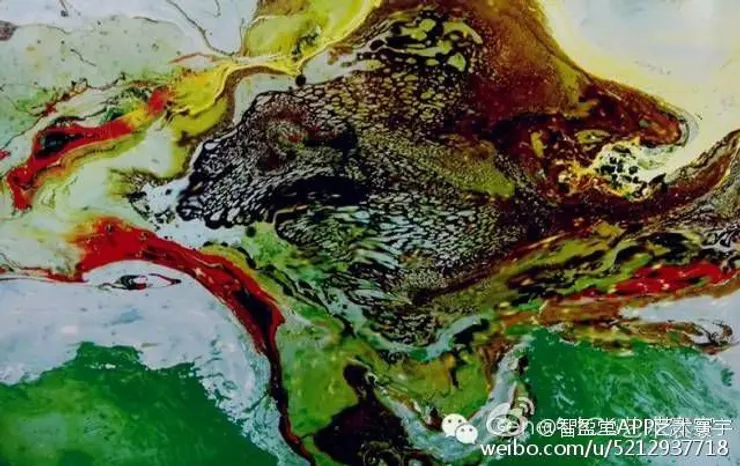
H.H. Dorje Chang Buddha III‘s Abstract Color Paintings create a perfect world shaped entirely by color. Free from concrete worldly forms, this realm exists purely through the interplay of hues—defining, expressing, and embodying itself in vibrant harmony. Here, color is both form and essence, radiating a mesmerizing aura.

Under the masterful hand of H.H. Dorje Chang Buddha III, these colors seamlessly merge into a breathtakingly enchanting spectrum. The atmosphere is dynamic, with scenes that bloom like flowers and surge with the power of the roaring sea. Yet, upon closer reflection, they reveal delicate nuances, refined in their intricate details.

Flower of Life

This painting depicts a unique flower, with delicate white petals gently unfolding and a striking red pistil at its center. Growing irregularly against a dark background, it seems to challenge its surroundings. Though unusual in appearance, this flower carries a profound meaning of life, symbolizing resilience and beauty in adversity. It is not only a miracle of nature but also a representation of vitality, showcasing the brilliance and diversity of life. Each petal tells a story, drawing the viewer into the emotions and strength conveyed by the artwork.

Flower of Life (2)

In this painting, intricate patterns and clear details intertwine, portraying the harmonious growth of various living beings. Each element seems to narrate the origins of life, allowing viewers to deeply sense the evolutionary process of all things.

This artwork is not merely a depiction of nature but also a contemplation of the essence of life. It serves as a reminder that life is in a constant state of growth and transformation, just like our own journeys. Every challenge and breakthrough we experience is an essential part of our personal development.

Through this piece, we are invited to reflect on our own lives and feel a profound connection with nature.

You can discover a selection of the exceptionally charming paintings in the permanent exhibition at The International Art Museum of America, situated in downtown San Francisco.

The Winners Of People Photography Awards: The Diverse Beauty Of Humanity In Photos

Photo by Hassan OUAJBIR on Pexels.com

By Cecilia Rodriguez

“People photography has a rich, captivating history, evolving alongside the development of the medium itself,” the organizers explain. “From capturing iconic figures to telling the stories of everyday individuals, it continues to fuel our profound curiosity about the human experience.”

This award sought to celebrate the most powerful and compelling images of people today, highlighting the diverse and meaningful narratives that shape our shared world.”

Crossing borders, spanning cultures and traversing the world’s most remote corners, the People Photography Award celebrates the diverse beauty of humanity.⁠

The People Photography awards were judged by prizewinning photographer Steve McCurry, one of the most celebrated voices in contemporary photography and author of a unique collection of work featuring some of the most famous images of our time — not least his iconic portrait of an Afghan Girl with piercing green eyes.

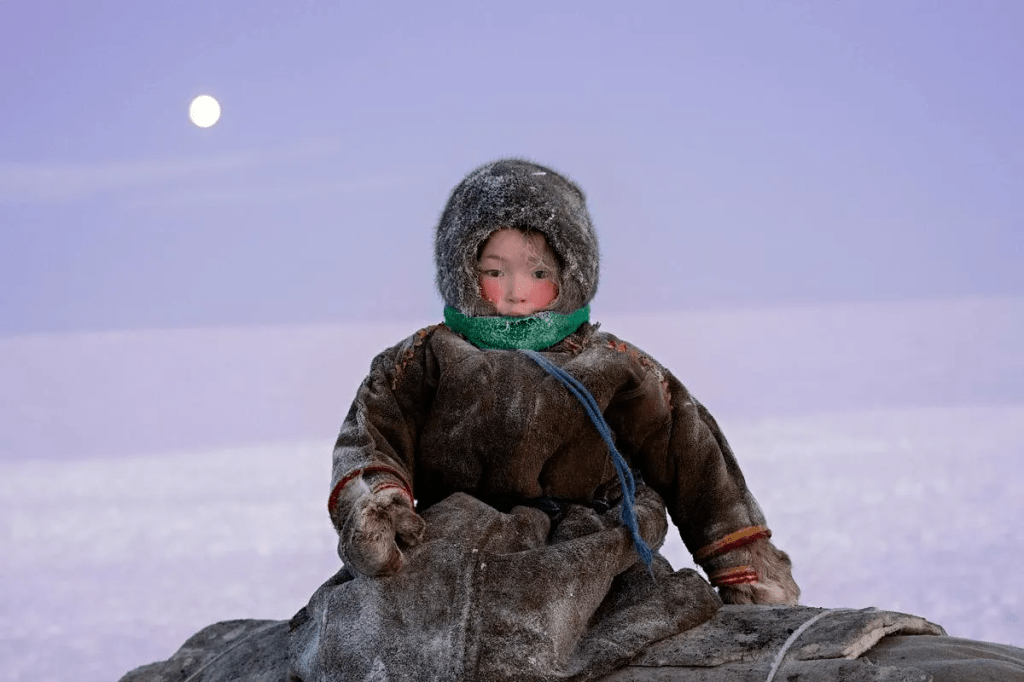
“Shades of white,” 3rd Prize, Yamal peninsula, Siberia, Northern Russia
 Nicola Ducati – People Photography Awards, The Independent Photographer

The photo above, winner of the third prize and $400, is one of the series “Shades of white” and was taken in the Yamal peninsula, Siberia, Northern Russia, where the air is thin and the polar day is very short.

For 4 1/2 hours, the light becomes magical and the colors of everything are perfect pastel against the artic sky, with delicate and unreal shades.

This land is inhabited by the Nenets people, nomadic reindeer herders who, guided by the seasonal cycles and the needs of their animals, migrate incessantly in an infinite circle of movements between ice, frozen rivers and incessant winds in search of new pastures in the most remote tundra. The hostile environment didn’t stop their innate adaptability and gave them prosperity for millennia.

“The soft polar light accentuates frosted textures and the child’s rosy cheeks, underscore both the harshness of the environment and the resilience of those who call it home,” the editors wrote. “It tells a powerful story of a people who have forged a life in one of the planet’s most unforgiving regions — but a people whose future remains uncertain.”

“Puzzled,” 2nd Prize, Western Mongolia
 Alessandra Manzotti – People Photography Awards, The Independent Photographer

A curious Kazakh nomad from Western Mongolia stops his truck to find out what a group of Westerners are doing walking in this remote and desolate stretch of land in the middle of a bitterly cold winter.

“This image captures the spirit of curiosity and resilience that defines life in remote Mongolia,” says McCurry. “The composition is powerful, with the truck and its vibrant blue color creating a striking contrast against the muted tones of the barren landscape. The candid expressions of both the nomad and the dog evoke a sense of warmth and connection, even in a harsh and unforgiving environment. The attention to detail, like the weathered texture of the truck and the distant herd in the background, adds depth to the story. It’s a beautiful balance of humanity and environment, which makes it a memorable piece.”

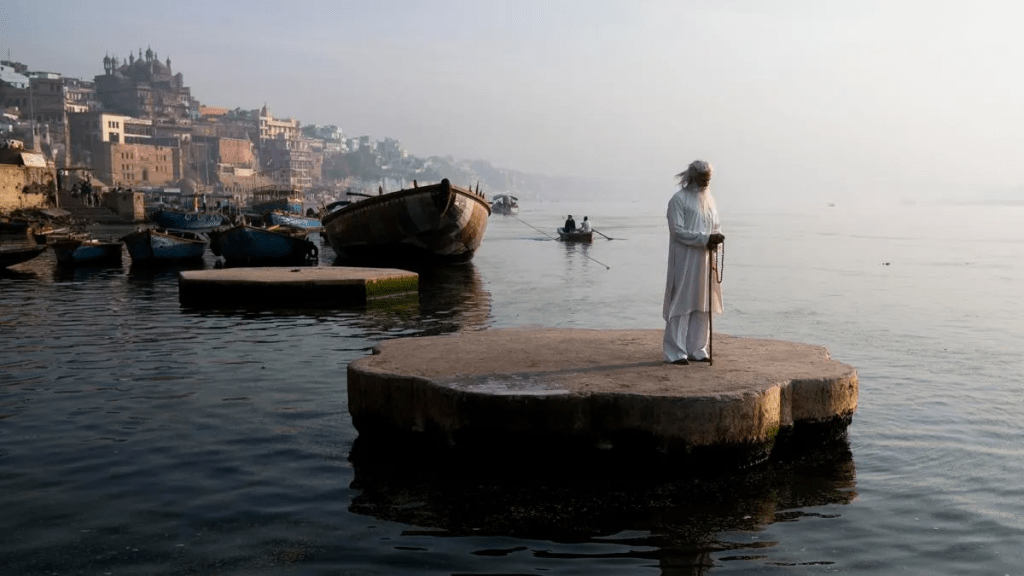
Contemplation, 1st Prize, Ganges River, Varanasi, India
Mohammad Kamal – People Photography Awards, The Independent Photographer

A lone Sadhu stands pensively at the edge of a platform in the Ganges River in Varanasi, India.
The image “Contemplation” , taken by photographer Mo Kamal in Varanasi, India, won first prize and $1,000.

“This image embodies a profound sense of stillness and spirituality, which perfectly captures the essence of Varanasi and the sacred Ganges,” said McCurry. “The man’s serene pose, framed against the soft morning light, evokes a sense of timelessness and introspection. The photograph is a poetic depiction of solitude and faith.”

“Andean Motherhood,” Finalist, Peruvian Andes
Jimmy Strouse – People Photography Awards, The Independent Photographer

In the Peruvian Andes, a mother carries her baby in a traditional bag. “The backdrop of rugged mountains just added to the beauty, giving a glimpse into the rich traditions of indigenous life,” Jimmy Strouse explains. “After showing her the photo on my camera, she nearly started crying, and it hit me: She probably doesn’t see many photos of herself, if ever.”

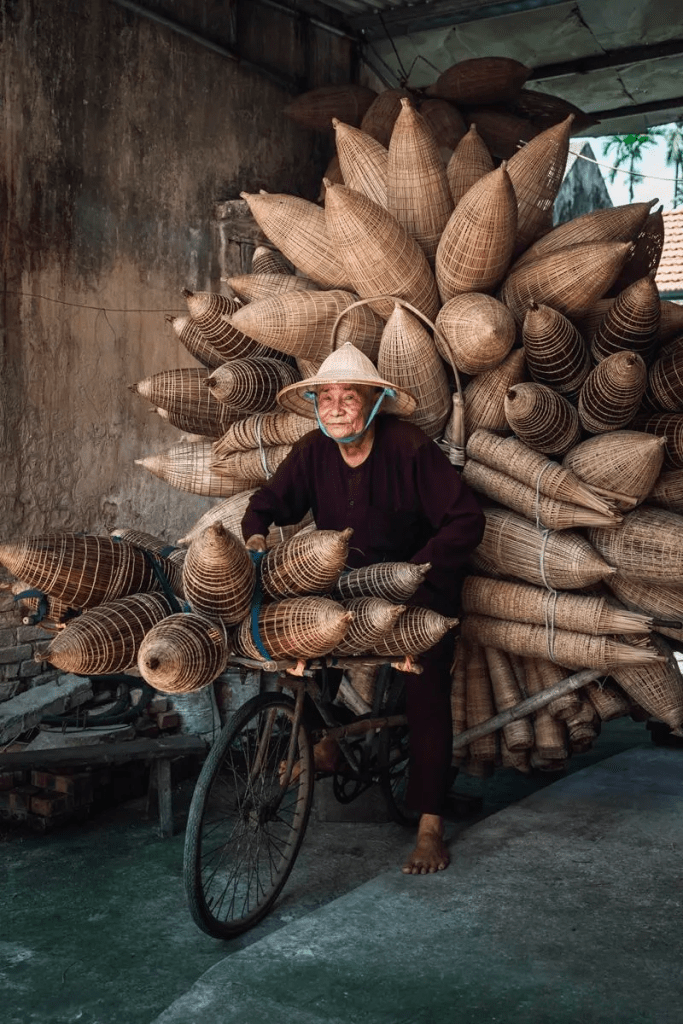
“The Art of Fish Traps,” Finalist, Thu Sy, Vietnam
 Vincenzo Avallone – People Photography Awards, The Independent Photographer

“During my journey, I had the opportunity to visit Thu Sy, a village in Vietnam known for its artisanal production of fish traps,” Vincenzo Avallone explains. “In this photo, I captured a local elderly man transporting an incredible number of fish traps on his bicycle.

“Villamar,” Finalist, Villamar, Bolivia
Michael Murray – People Photography Awards, The Independent Photographer

In a small settlement outside Villamar, Bolivia, a clothes maker pauses for a portrait.

“Shore Bound,” Finalist, Ladakh region, India
 Wasim Malik – People Photography Awards, The Independent Photographer

This is Lamo, a nomadic woman from the serene Changthang region in Ladakh, India, where the vast highlands meet a life of simplicity and resilience.

Link:https://peacelilysite.com/2025/03/07/the-winners-of-people-photography-awards-the-diverse-beauty-of-humanity-in-photos/

Source: https://www.forbes.com/sites/ceciliarodriguez/2025/01/17/the-diverse-beauty-of-humanity-in-photos-10-winners-of-people-photography-awards/

Crossing a Mountain, the Small Boat Enters the Canyon

Crossing a Mountain, the Small Boat Enters the Canyon is an awe-inspiring masterpiece of Yun sculpture. How did H.H. Dorje Chang Buddha III capture the shimmering reflections on the lake’s surface? And how was it possible to create such a vivid and lifelike scene using ordinary plastic steel materials? The majestic mountains, the gentle ripples of the lake, and the lifelike figures aboard the small boat—all elements that seem beyond the reach of ordinary people—were brought to life through the unparalleled artistry of H.H. Dorje Chang Buddha III.

This sculpture is not merely a visual creation—it possesses a soul. Every detail, from the rugged mountains and tranquil lake to the humble fishermen, seems to pulse with vitality. The artwork evokes a sense of harmony with nature, conveying a profound feeling of peace and joy that resonates deeply with viewers.

The Unique Art of Yun Sculpture:
Yun sculpture is a groundbreaking art form created by H.H. Dorje Chang Buddha III, with no precedent in history. Since the emergence of Yun sculpture, humanity has witnessed the birth of an art form that is truly non-reproducible. This genre is distinguished by several remarkable features:

  1. Multidimensional Spatiality: Yun sculptures possess an extraordinary sense of multidimensional space. Their intricate and delicate forms exhibit endless variations, captivating viewers from every angle.
  2. Vibrant, Dreamlike Colors: The colors of Yun sculptures are rich, radiant, and dreamlike—depicting scenes beyond the realm of this world. Their hues seem to emanate a light of their own, enchanting all who behold them.
  3. Sacred and Incomparable Depth: Many Yun sculptures possess a profound and sacred quality. For instance, Color Rhythm, displayed in the Holy Relics Room of H.H. Dorje Chang Buddha III Cultural Art Museum, measures only two to three feet in size. Yet, when viewed through its openings, one can perceive a vast inner depth that seems to extend far beyond the sculpture itself, leaving viewers awestruck by its unfathomable dimensionality.

Countless individuals who have had the privilege of witnessing H.H. Dorje Chang Buddha III’s Yun sculptures have expressed their wonder and reverence: “This is a treasure sent from the divine to humanity,” “A sacred gift from the Buddha,” and “So breathtakingly beautiful that it touches the soul.” Others have compared these masterpieces to the finest jade jewelry and the most magnificent stone sculptures, only to find that even the most exquisite human creations pale in comparison—like dim stars surrounding the brilliance of the moon.

Indeed, the advent of Yun sculpture has elevated the realm of art to an entirely new level, offering the world creations that are not only visually stunning but also spiritually profound, filling the hearts of all who witness them with a sense of wonder and inspiration.

Master Wan Ko Yee (H.H. Dorje Chang Buddha III) Has Made A Great Contribution To Art

Link: https://peacelilysite.com/2025/02/19/crossing-a-mountain-the-small-boat-enters-the-canyon/

Desiderata

Go placidly amid the noise and haste,
and remember what peace there may be in silence.
As far as possible without surrender
be on good terms with all persons.
Speak your truth quietly and clearly;
and listen to others,
even the dull and the ignorant;
they too have their story.

Avoid loud and aggressive persons,
they are vexations to the spirit.
If you compare yourself with others,
you may become vain and bitter;
for always there will be greater and lesser persons than yourself.
Enjoy your achievements as well as your plans.

Keep interested in your own career, however humble;
it is a real possession in the changing fortunes of time.
Exercise caution in your business affairs;
for the world is full of trickery.
But let this not blind you to what virtue there is;
many persons strive for high ideals;
and everywhere life is full of heroism.

Be yourself.
Especially, do not feign affection.
Neither be cynical about love;
for in the face of all aridity and disenchantment
it is as perennial as the grass.

Take kindly the counsel of the years,
gracefully surrendering the things of youth.
Nurture strength of spirit to shield you in sudden misfortune.
But do not distress yourself with dark imaginings.
Many fears are born of fatigue and loneliness.
Beyond a wholesome discipline,
be gentle with yourself.

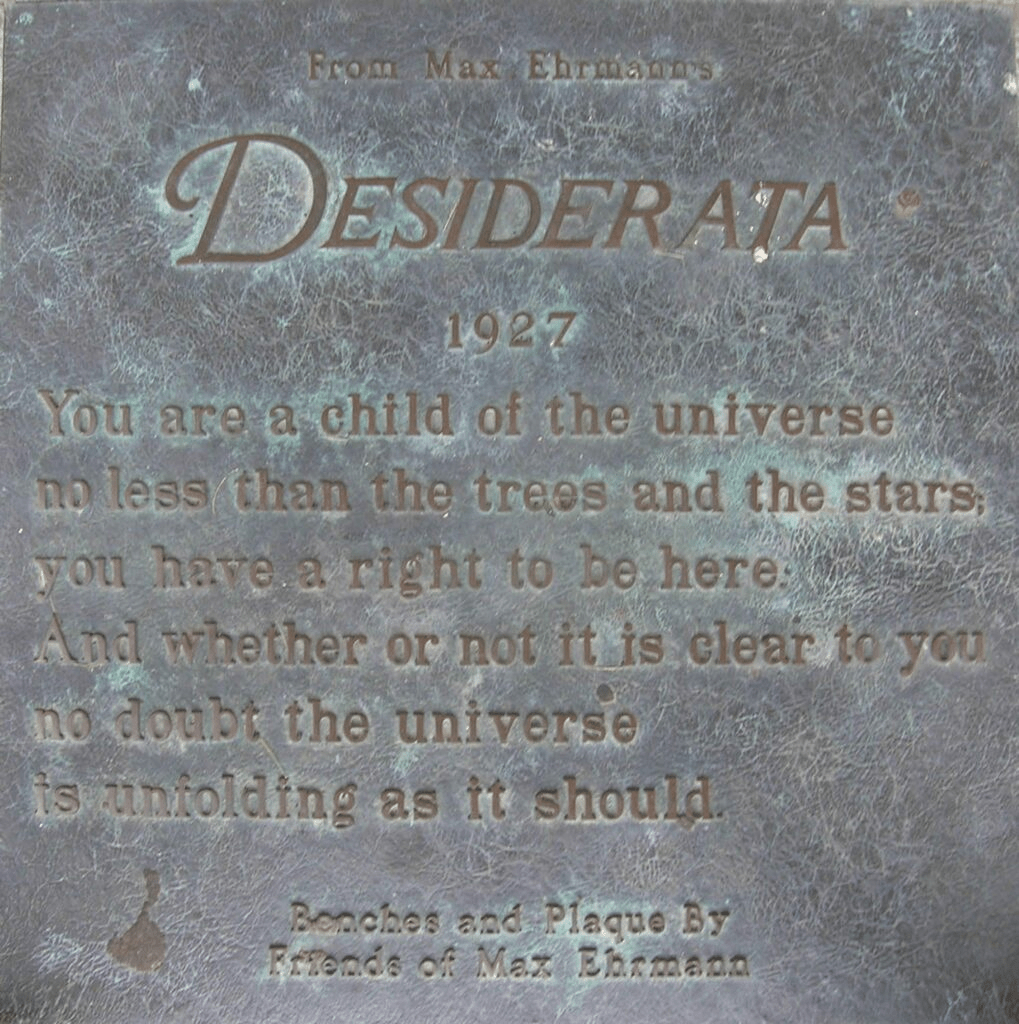
You are a child of the universe,
no less than the trees and the stars;
you have a right to be here.
And whether or not it is clear to you,
no doubt the universe is unfolding as it should.

Therefore be at peace with God,
whatever you conceive Him to be,
and whatever your labors and aspirations,
in the noisy confusion of life keep peace with your soul.

With all its sham, drudgery, and broken dreams,
it is still a beautiful world.
Be cheerful.
Strive to be happy.

Written in 1927 by American poet Max Ehrmann, Desiderata is a timeless poem that continues to inspire readers with its gentle, universal wisdom. The title, meaning “things desired” in Latin, perfectly reflects the poem’s themes of peace, authenticity, and compassion.

Ehrmann composed this prose poem to guide people in living a meaningful life. Though it gained widespread recognition only decades later, Desiderata resonates deeply with readers across generations. Its advice—such as staying calm amid chaos, embracing individuality, and showing kindness—feels especially relevant in today’s fast-paced world.

The poem also carries a spiritual undertone, encouraging acceptance of life’s challenges while celebrating its beauty. Its words remind us to live mindfully, cherish our unique paths, and find serenity in our connection to the larger universe.

In a world where noise and haste often dominate, Desiderata offers a calming presence and serves as a reminder to align our lives with values that bring lasting peace and joy. Whether you’re encountering it for the first time or revisiting its wisdom, this poem remains a meaningful touchstone for navigating modern life with grace.

Link: https://peacelilysite.com/2024/12/06/desiderata/

Source: https://www.cse.cuhk.edu.hk/~cslui/desiderata.html

I Am Me and I am Okay

I Am Me

by Virginia Satir

In all the world there is no one else exactly like me.

Everything that comes out of me is authentically mine because I choose it…

I own everything about me, my body, my feelings, my mouth, my voice, all my actions whether they be to others or to myself

I own my fantasies, my dreams, my hopes, my fears

I own all of my triumphs and successes, all of my failures and mistakes because I own all of me.

I become intimately acquainted with me by so doing, I can love me and be friendly with me in all my parts

I know there are aspects about myself that puzzle me and other aspects I do not know…

but as long as I am friendly and loving to myself, I can courageously and hopefully look for solutions to the puzzles and for ways to find out more about me…

however I look and sound whatever I say and do, and whatever I think and feel at a given moment in time is authentically me

if later some parts of how I looked, sounded, thought and felt turned out to be unfitting, I can discard that which is unfitting and keep the rest and invent something new for that which is I discard

I can see, hear, feel, think, say and do.

I have the tools to survive, to be close to others, to be productive, and to make sense and order out of the world of people and things outside of me…

I own me and therefore I can engineer me

I am me and I AM OKAY.

Satir’s beautiful and empowering poem “I Am Me” encapsulates her core belief in self-worth and individuality. Its heartfelt lines inspire readers to embrace their authentic selves, fostering inner peace and self-acceptance. Through her words, Satir invites us to celebrate who we truly are, reminding us that personal growth is both possible and transformative.

Link:https://peacelilysite.com/2024/11/25/i-am-me-and-i-am-okay/

98. A Man Named Wise [Cheating]

Once upon a time, the Enlightenment Being was born in a merchant’s family in Benares, in northern India. He was given the name Wise. When he grew up, he began doing business with a man whose name just happened to be Verywise.

It came to pass that Wise and Verywise took a caravan of 500 bullock carts into the countryside. After selling all their goods they returned to Benares with their handsome profits.

When it came time to split their gains between them, Verywise said, “I should get twice as much profit as you.” “How come?” asked Wise. “Because you are Wise and I am Verywise. It is obvious that Wise should get only half as much as Verywise.”

Then Wise asked, “Didn’t we both invest equal amounts in this caravan trip? Why do you deserve twice as much profit as I?” Verywise replied, “Because of my quality of being Verywise.” In this way their quarrel went on with no end in sight.

Then Verywise thought, “I have a plan to win this argument.” So he went to his father and asked him to hide inside a huge hollow tree. He said, “When my partner and I come by and ask how to share our profits, then you should say, ‘Verywise deserves a double share.”‘

Verywise returned to Wise and said, ‘My friend, neither of us wants this quarrel. Let’s go to the old sacred tree and ask the tree spirit to settle it.”

When they went to the tree Verywise said solemnly, “My lord tree spirit, we have a problem. Kindly solve it for us.” Then his father, hidden inside the hollow tree, disguised his voice and asked, “What is your question?” The man’s cheating son said, “My lord tree spirit, this man is Wise and I am Verywise. We have done business together. Tell us how to share the profits.” Again disguising his voice, his father responded, “Wise deserves a single share and Verywise deserves a double share.”

Hearing this solution, Wise decided to find out if it really was a tree spirit speaking from inside the tree. So he threw some hay into it and set it on fire. Immediately Verywise’s father grabbed onto a branch, jumped out of the flames and fell on the ground. He said in his own voice, “Although his name is Verywise, my son is just a clever cheater. I’m lucky that the one named Wise really is so, and I’ve escaped only half toasted!”

Then Wise and Verywise shared their profits equally. Eventually they both died and were reborn as they deserved.

The moral is: A cheater may be clever but not wise.

98. A Man Named Wise [Cheating]

Link: https://hhdorjechangbuddhaiiiinfo.com/2024/10/08/98-a-man-named-wise-cheating/

#Buddhisttalesforyoungandold #Buddhiststories #storiesforkids #moralstories #Buddha #Jatakastories #PansiyaPanasJataka