The Five People You Meet in Heaven

The Five People You Meet in Heaven

The Five People You Meet in Heaven, by Mitch Albom, an enchanting, beautifully crafted novel that explores a mystery only heaven can unfold. It is a tale of a life on earth. It’s a tale of life beyond it. It’s a fable about love, a warning about war, and a nod of the cap to the real people of this world, the ones who never get their name in lights.

This book is about the meaning of life. What do we humans live for? Eddie, the protagonist, thought his life was meaningless during his lifetime. After his death, he met five people in heaven. These five people, known and unknown, all played a pivotal role in Eddie’s life. They taught Eddie the meaning and value of life. At last Eddie was relieved. The originally heavy soul also became lighter. Each of us is running towards death. Death is not scary. The scary thing is that we do not know how to live.

Eddie is a grizzled war veteran who feels trapped in a meaningless life of fixing rides at a seaside amusement park. As the park has changed over the years — from the Loop-the-Loop to the Pipeline Plunge — so, too, has Eddie changed, from optimistic youth to embittered old age. His days are a dull routine of work, loneliness, and regret.

Then, on his 83rd birthday, Eddie dies in a tragic accident, trying to save a little girl from a falling cart. With his final breath, he feels two small hands in his — and then nothing. He awakens in the afterlife, where he learns that heaven is not a lush Garden of Eden, but a place where your earthly life is explained to you by five people who were in it. These people may have been loved ones or distant strangers. Yet each of them changed your path forever.

Eddie arrives in Heaven, where he meets “the Blue Man.” The Blue Man explains that Eddie is about to journey through Heaven’s five levels, meeting someone who has had a significant impact upon his life or someone on whom his life had a significant impact. Eddie asks why the Blue Man is his first person, and he informs Eddie that, when Eddie was very young, he caused the car accident that killed him. From this, Eddie learns his first lesson: there are no random events in life and all individuals and experiences are connected in some way.

Eddie meets his former captain from the army, who reminds Eddie of their time together as prisoners of war in a forced labor camp in the Philippines. Their group burned the camp during their escape and Eddie, while running away, remembers seeing a shadow move in one of the huts. The Captain confesses that he shot Eddie in the leg to prevent Eddie from chasing the shadow into the fire. This saved Eddie’s life despite leaving him with a lifelong severe limp. Eddie then learns how the Captain died: he stepped on a land mine that would have killed all the men had he not set it off.

Eddie finds himself outside a diner, where he sees his father through a window. A well-dressed woman named Ruby appears and introduces herself to him. Ruby explains that Ruby Pier was named after her by her husband Emile, who built it in tribute to her. Ruby shows Eddie the true cause of his father’s death, which is different from what he had always believed. She tells Eddie that he needs to forgive his father.

Eddie meets his late wife, Marguerite. They remember their wedding, and Marguerite teaches Eddie that love is never lost in death; it just moves on and takes a different form.

Eddie awakens to see children playing along with a riverbed. A young Filipina girl named Tala comes up to him. Tala reveals that she was the little girl from the hut that Eddie set on fire. Distraught, Eddie breaks down both cursing and asking God “why?” Tala hands him a stone and asks him to “wash” her like the other children in the river are doing to one another. Eddie is puzzled, but dips the stone in the water and starts to scrape off the injuries he had inflicted on her. Tala’s wounds begin to clear until she is freed of all the scars. Eddie asks Tala if she knows if he was able to save the little girl before his death. Tala tells him he did manage to push her out of the way. In this way, Tala explains, he also managed to atone every day for her unnecessary death.

In the end, it shows that Eddie’s Heaven is the Stardust Band Shell, where he met Marguerite.
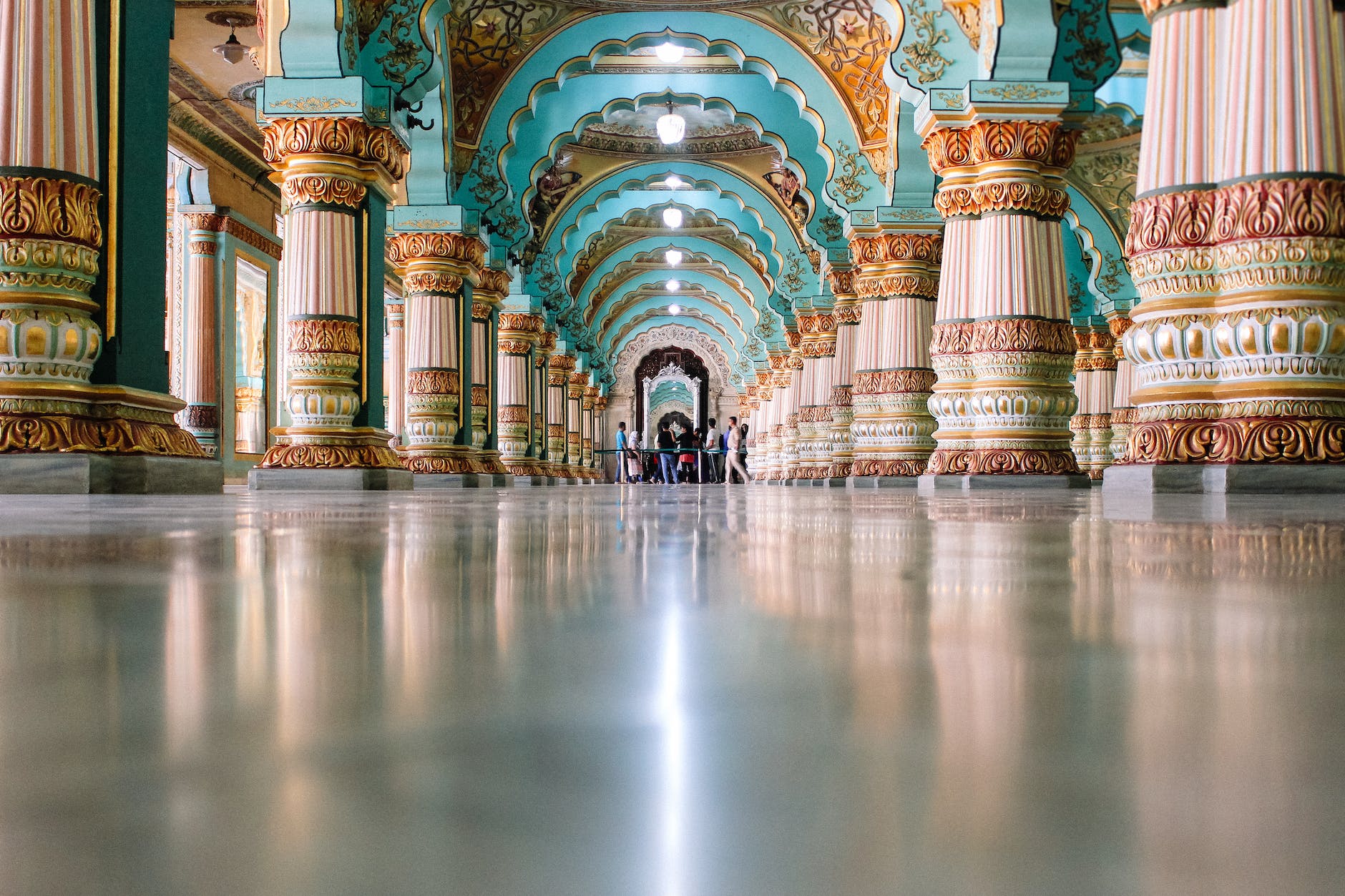
Photo by Mohit Suthar on Pexels.com

One by one, Eddie’s five people illuminate the unseen connections of his earthly life. As the story builds to its stunning conclusion, Eddie desperately seeks redemption in the still-unknown last act of his life: Was it a heroic success or a devastating failure? The answer, which comes from the most unlikely of sources, is as inspirational as a glimpse of heaven itself.

Reading The Five People You Meet in Heaven helped me understand deeper about the law of cause and effect in Buddhism teaching. We live in the web of reincarnation of life and death woven by our own karma. Each one of us is connected by the threads in this vast web. Our thoughts, words, and actions all have a small or big impacts to others near and far. What we humans need now is more love, respect, kindness and compassion, and less conflict, fighting and argument.

The Five People You Meet in Heaven

Link: https://peacelilysite.com/2022/09/11/the-five-people-you-meet-in-heaven/

#TheFivePeopleYouMeetinHeaven#Buddhism#LIfeafterDeath#Death#MitchAlbomKarma#Kindness#Love#Causeandeffect#lawofCauseandeffect

Source: https://en.wikipedia.org/wiki/The_Five_People_You_Meet_in_Heaven, https://www.mitchalbom.com/books/five-people-you-meet-in-heaven/

THE PRICE MAKER [FOOLISHNESS]


Photo by Diego Caumont on Pexels.com

5. THE PRICE MAKER [FOOLISHNESS]

Buddhist Tales for Young and Old, volume 1, Prince Goodspeaker, Stories 1-50

Long ago and far away, there was a king who ruled in Benares, in northern India. One of his ministers was called the Royal Price Maker, and he was a very honest man. His job was to set a fair price for anything the king wanted to buy or sell.

On some occasions, the king did not like his price making. He did not get as big a profit as he wanted. He did not want to pay so much when he bought, or sell for what he thought was not enough. So he decided to change the price maker.

One day he saw a nice looking young man and he thought, “This fellow will be good for my price making position.” So he dismissed his former honest price maker, and appointed this man to be the new one. The man thought, “I must make the king happy by buying at very low prices and selling at very high prices.” So he made the prices ridiculous, without caring at all what anything was worth. This gained the greedy king a lot of money, and made him very happy. Meanwhile, all the others who dealt with the new price maker, including the king’s other ministers and ordinary people, became very unhappy.

Then one day a horse merchant arrived in Benares with 500 horses to sell. There were stallions, mares and colts. The king invited the merchant to the palace, and called upon his Royal Price Maker to set a price for all 500 horses. Thinking only of pleasing the king, he said, “The entire herd of horses is worth one cup of rice.” So the king ordered that one cup of rice be paid to the horse dealer, and all the horses were taken to the royal stables.

5. The Price Maker [Foolishness]

Of course the merchant was very upset, but he could do nothing at the moment. Later he heard about the former price maker, who had a reputation for being very fair and honest. So he approached him and told him what had happened. He wanted to hear his opinion, in order to get a proper price from the king. The former price maker said, “If you do as I say, the king will be convinced of the true value of the horses. Go back to the price maker and satisfy him with a valuable gift. Ask him to tell the value of one cup of rice, in the presence of the king. If he agrees, come and tell me. I will go with you to the king.”

Following this advice, the merchant went to the price maker and gave him a valuable gift. The gift made him very happy, so that he saw the value of pleasing the horse dealer. Then the merchant said to him, “I was very happy with your previous evaluation. Can you please convince the king of the value of one cup of rice?” The foolish price maker said, ‘Why not? I will explain the worth of one cup of rice, even in the presence of the king.”

So the price maker thought the horse dealer was satisfied with his cup of rice. He arranged for another meeting with the king, as the merchant was departing for his own country. The merchant reported back to the old price maker, and they went together to see the king.

All the king’s ministers and his full court were in the royal meeting hall. The horse merchant said to the king, “My lord, I understand that in this your country, my whole herd of 500 horses is worth one cup of rice. Before I leave for home, I want to know the value of one cup of rice in your country.” The king turned to his loyal price maker and said, “What is the value of one cup of rice?”

The foolish price maker, in order to please the king, had previously priced the herd of horses at one cup of rice. Now, after receiving a bribe from the horse dealer, he wanted to please him too. So he replied to the king, in his most dignified manner, “Your worship, one cup of rice is worth the city of Benares, including even your own harem, as well as all the suburbs of the city. In other words, it is worth the whole kingdom of Benares!”

On hearing this, the royal ministers and wise men in the assembly hall started to roar with laughter, slapping their sides with their hands. When they calmed down a little, they said, “Earlier we heard that the kingdom was priceless. Now we hear that all Benares, with its palaces and mansions, is worth only a cup of rice! The decision of the Royal Price Maker is so strange! Where did your highness find such a man? He is good only for pleasing a king such as you, not for making fair prices for a merchant who sells his horses from country to country.”

Hearing the laughter of his whole court, and the words of his ministers and advisers, the king was ashamed. So he brought back his former price maker to his official position. He agreed to a new fair price for the herd of horses, as set by the honest price maker. Having learned a lesson, the king and his kingdom lived justly and prospered.

The moral is: A fool in high office can bring shame even to a king.

5. The Price Maker [Foolishness]

Link: https://peacelilysite.com/2022/09/10/the-price-maker-foolishness/

INTERPRETER’S INTRODUCTION – BUDDHIST TALES FOR YOUNG AND OLD, VOLUME 1, STORIES 1-50

#Buddhisttalesforyoungandold #Buddhiststories #storiesforkids #moralstories #Buddha #Jatakastories #PansiyaPanasJataka #foolishness #Banares #India

Mid-Autumn Festival – Appreciate The Beauty of The Moon

Mid-Autumn Festival – Appreciate The Beauty of The Moon

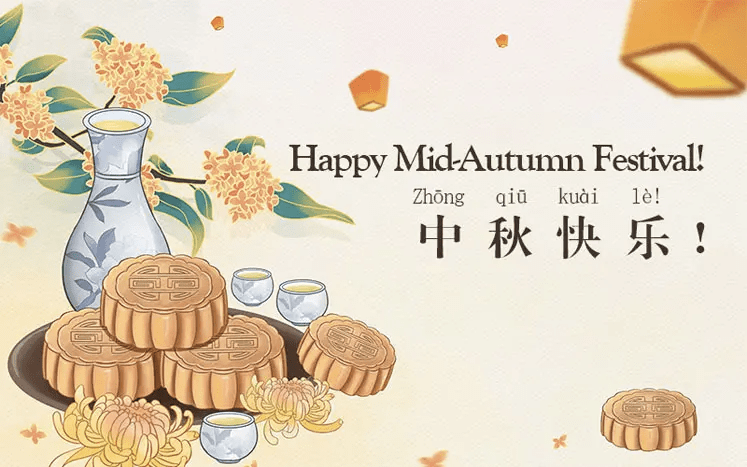
Mid-Autumn Festival, Zhongqiu Jie (中秋节) in Chinese, is also called the Moon Festival. It is the second most important festival in China after Chinese New Year. It is celebrated by many other Asian countries as well, such as Singapore, Malaysia, and the Philippines. This year the date of Mid-Autumn Festival is September 10th.

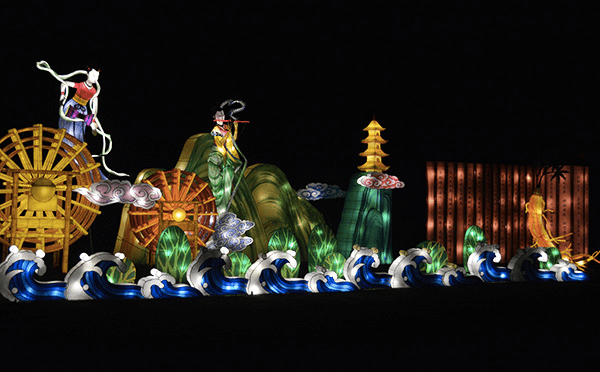
In China, Mid-Autumn Festival is a celebration of the rice harvest and many fruits. Ceremonies are held both to give thanks for the harvest and to encourage the harvest-giving light to return again in the coming year. It is also a reunion time for families, a little like Thanksgiving. Chinese people celebrate it by gathering for dinners, worshiping the moon, lighting paper lanterns, eating mooncakes, etc. 

Mooncakes are the must-eat Mid-Autumn food in China. They are a traditional Chinese pastry. Chinese people see the roundness of mooncakes as a symbol of reunion and happiness.

There are many legends about Mid-Autumn Festival. The most popular stories are about Chang’e and the Jade Rabbit. The origin of the Mid-Autumn Festival is associated with the popular legend of Chang’e (嫦娥), the goddess of the moon… 

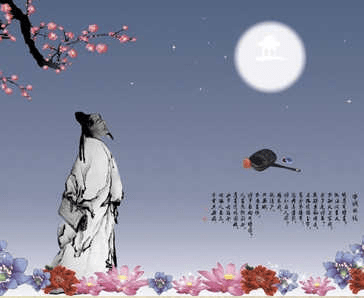
In Chinese history, many poems have been written about the moon. Here are the two I like the most. They not only vividly described the beauty of the moon, but are also philosophical explorations and ponderings on nature and life.

First one is written by SuShi, one of the most famous poet in ancient China, Song Dynasty.

How long will the full moon appear?

How long will the full moon appear?

Wine cup in hand, I ask the sky.

I do not know what time of the year

’Twould be tonight in the palace on high.

Riding the wind, there I would fly,

Yet I’m afraid the crystalline palace would be

Too high and cold for me.

I rise and dance, with my shadow I play.

On high as on earth, would it be as gay?

The moon goes round the mansions red

Through gauze-draped window soft to shed

Her light upon the sleepless bed.

Why then when people part, is the oft full and bright?

Men have sorrow and joy; they part or meet again;

The moon is bright or dim and she may wax or wane.

There has been nothing perfect since the olden days.

So let us wish that man

Will live long as he can!

Though miles apart, we’ll share the beauty she displays.

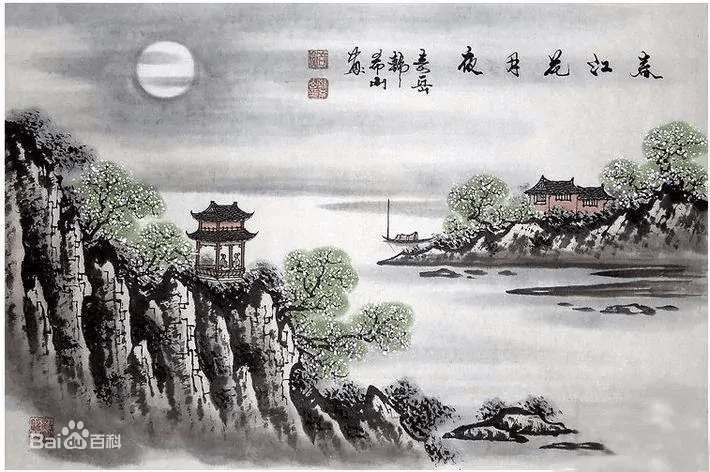
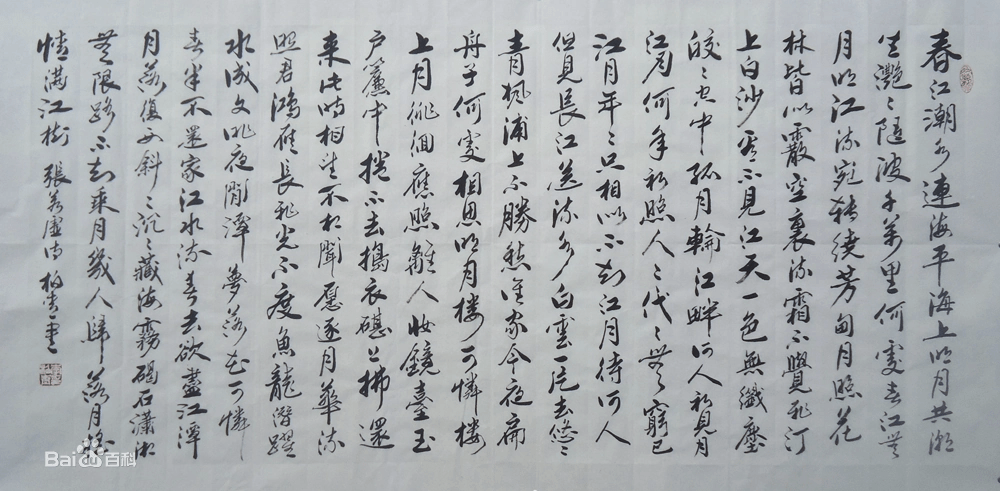
The second one, A Moonlit Night on the Spring River, was written by 张若虚 (Zhang Ruo Xu) in the Tang Dynasty. It superbly illustrates an amazingly beautiful night scene under the full moon, and many music pieces and dances are based on this outstanding poem.

A Moonlit Night on the Spring River

In spring the river rises as high as the sea,
  And with the river’s rise the moon uprises bright.
  She follows the rolling waves for ten thousand li,
  And where the river flows, there overflows her light.

  The river winds around the fragrant islet(小岛) where
  The blooming flowers in her light all look like snow.
  You cannot tell her beams from hoar frost in the air,
  Nor from white sand upon Farewell Beach below.

  No dust has stained the water blending with the skies;
  A lonely wheellike moon shines brilliant far and wide.
  Who by the riverside first saw the moon arise?
  When did the moon first see a man by riverside?

Ah, generations have come and past away;
  From year to year the moons look alike, old and new.
  We do not know tonight for whom she sheds her ray,
  But hear the river say to its water adieu.

  Away, away is sailing a single cloud white;
  On Farewell Beach pine away maples green.
  Where is the wanderer sailing his boat tonight?
  Who, pining away, on the moonlit rails would learn?

  Alas! The moon is lingering over the tower;
  It should have seen the dressing table of the fair.
  She rolls the curtain up and light comes in her bower;
  She washes but can’t wash away the moonbeams there.

  She sees the moon, but her beloved is out of sight;
  She’d follow it to shine on her beloved one’s face.
  But message-bearing swans can’t fly out of moonlight,
  Nor can letter-sending fish leap out of their place.

  Last night he dreamed that falling flowers would not stay.
  Alas! He can’t go home, although half spring has gone.
  The running water bearing spring will pass away;
  The moon declining over the pool will sink anon.

  The moon declining sinks into a heavy mist;
  It’s a long way between southern rivers and eastern seas.
  How many can go home by moonlight who are missed?
  The sinking moon sheds yearning o’er riverside trees.

Chinese Calligraphy of the Poem
A Moonlit Night on the Spring River by Chinese Traditional Instruments

Mid-Autumn Festival – Appreciate The Beauty of The Moon

Link:https://peacelilysite.com/2022/09/09/mid-autumn-festival-appreciate-the-beauty-of-the-moon/

#MidAutumnFestival#TheBeautyofTheMoon#MoonCake#Changer#FamilyReunion#PaperLighten#FullMoon#ChineseCulture#ChineseTraditionalFestival#Culture#ChinesePoem#ChinesePoets

Source: https://www.chinahighlights.com/festivals/mid-autumn-festival.htm,http://language.chinadaily.com.cn/trans/2014-08/26/content_18490381.htm,https://www.joyen.net/article/listen/2/201103/3975.html

Copenhagen World Capital of Architecture for 2023

Copenhagen World Capital of Architecture for 2023

Copenhagen is a unique city, characterized by its canals, cycling culture, magnificent historical buildings, awe-spiring architecture structures, and happy locals. It is actually known as being one of the happiest city in the world.

The architecture of Copenhagen in Denmark is characterised by a wide variety of styles, progressing through Christian IV‘s early 17th century landmarks and the elegant 17th century mansions and palaces of Frederiksstaden, to the late 19th century residential boroughs and cultural institutions to the modernistic contribution of the 20th century such as Arne Jacobsen‘s National Bank and SAS Royal Hotel.

Copenhagen is recognised globally as an exemplar of best practice urban planning. Its thriving mixed use city centre is defined by striking contemporary architecture, engaging public spaces and an abundance of human activity. These design outcomes have been deliberately achieved through careful replanning in the second half of the 20th century, with notable contributions both by leading international architects and a wave of new successful Danish architects.

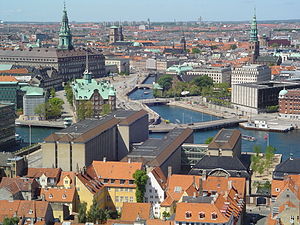
View of Copenhagen from the tower of the Church of Our Saviour

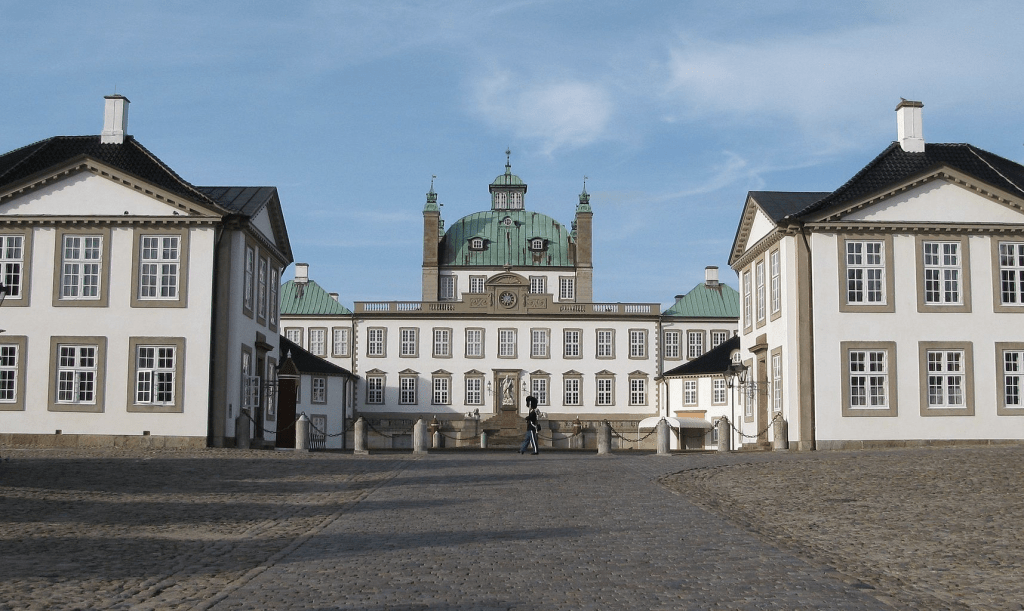
Baroque buildings in Copenhagen include the Round Tower and the Church of Our Saviour as well as Fredensborg Palace.

Fredensborg Palace

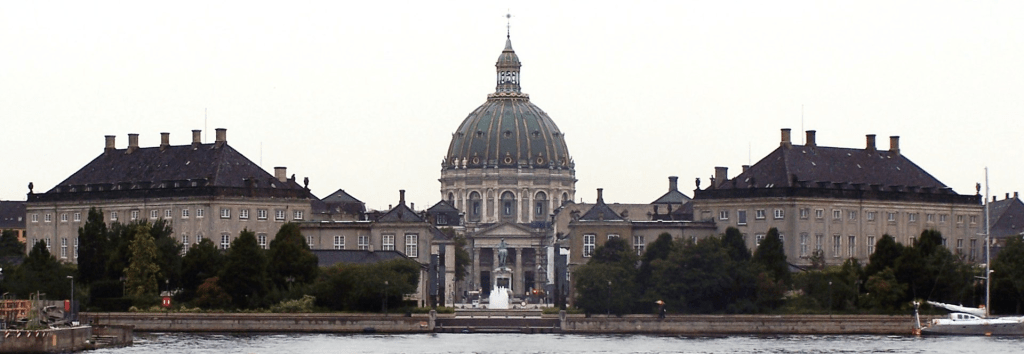
Frederiksstaden was constructed during the reign of Frederick V in the second half of the 18th century and is considered to be one of the most important Rococo complexes in Europe. It was developed to commemorated the 300 years jubilee of the House of Oldenburg taking the throne in Denmark. Leading the project was A. G. Moltke, with Nicolai Eigtved as the main architect. Frederiksstaden has Amalienborg Palace and Marble Church at its centre and together they create an axis that was extended with the creation of the new Copenhagen Opera House in 2005 on the other side of the harbour basin. The district is characterized by straight broad streets in a straight-angled street layout. The streets are lined by bourgeois houses, mansions and palaces. Another important building in the district is the royal Frederiks Hospital was Denmark‘s first hospital in the present-day meaning of the word. It now houses the Danish Museum of Art & Design.

Frederiksstaden has Amalienborg Palace, the Danish residence palace complex with François Joseph Saly’s equestrian statue monument to King Frederik V of Denmark in the middle of the octagonal plaza, and Frederik’s Church at its center.

Copenhagen’s urban development in the first half of the 20th century was heavily influenced by industrialisation. After World War II, Copenhagen Municipality adopted Fordism and repurposed its medieval centre to facilitate private automobile infrastructure in response to innovations in transport, trade and communication. Copenhagen’s spatial planning in this time frame was characterised by the separation of land uses: an approach which requires residents to travel by car to access facilities of different uses. This planning scheme largely aligned with the modernist framework endorsed by Le Corbusier in such conceptual projects

In 1962, Danish architect Jan Gehl shifted the trajectory of Copenhagen’s development by pedestrianising key parts of its city centre with the goal of enhancing the on-street conditions for humans.Rigorous field studies informed Gehl’s conclusion that city spaces perform best when they encourage the use of public spaces.[10] Gehl observed that the quality of life between buildings is diminished when substandard architecture, poor safety and overwhelming car infrastructure limit human engagement in public places.[10] Gehl therefore commenced the replanning of Copenhagen in 1962 by pedestrianising Strøget: the city’s main interior transit artery.

The pedestrianisation of Strøget marked as a major change in the approach of Copenhagen to urban life. The plan was much greater emphasis on pedestrian and bicycle access to the city at the expense of cars. This approach has in turn become internationally influential.

Strøget, Amagertorv. Olga Itenberg • CC BY 2.0

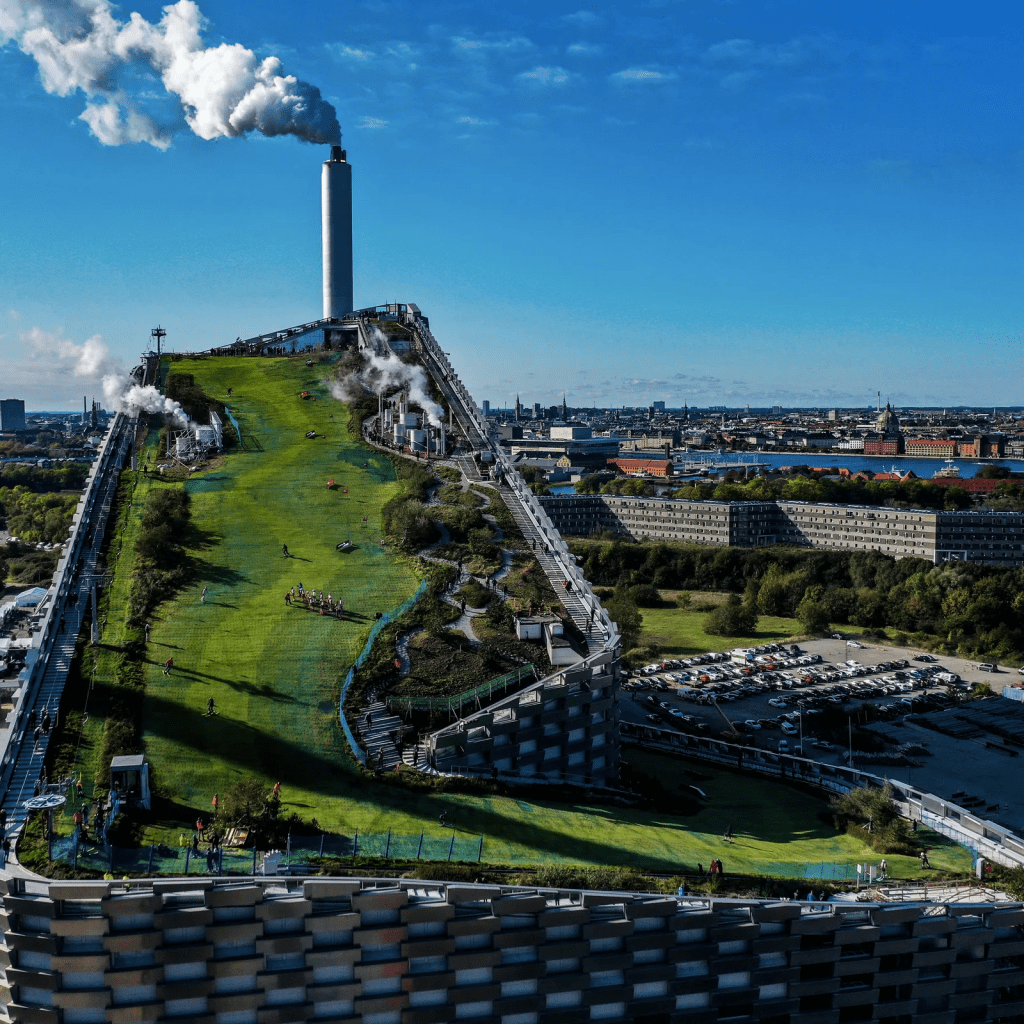
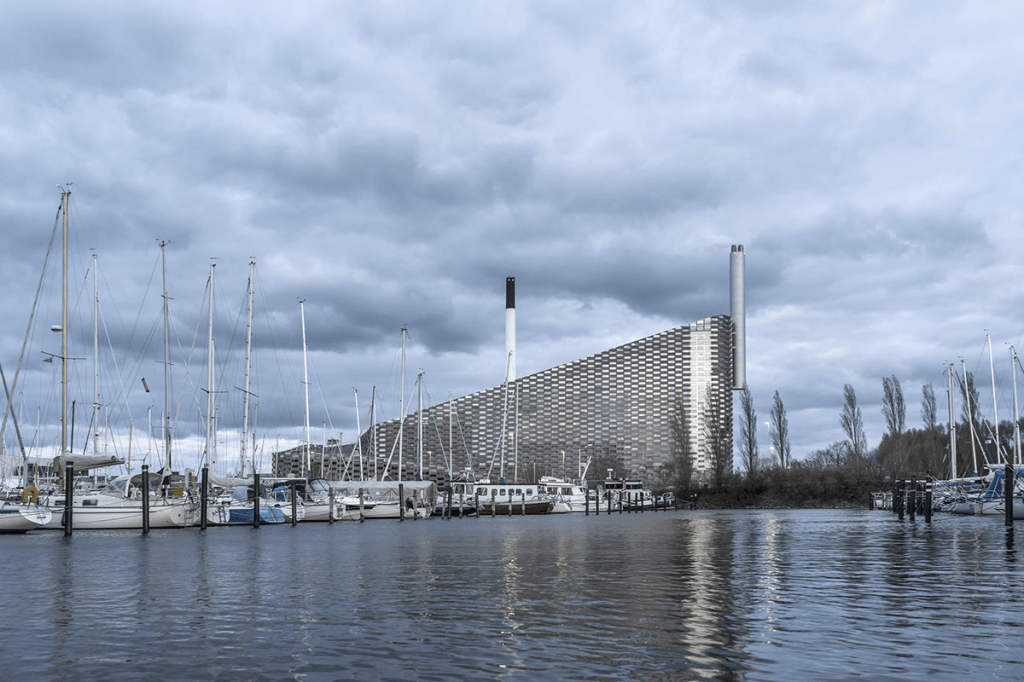
Designed by Danish architect Bjarke Ingels, CopenHill is a multi-use waste-to-energy plant. CopenHill is a real architectural marvel, combining greenery, beauty, waste management technology, sports venues and tourist attractions. The center is a ski slope, along the sides are several waste-to energy plants, the exterior supports multiple climbing walls, and there is a cafe on a hill. This effective design is worthy of other cities to learn and emulate. Skiing down the 1,300-foot green slope is surely a unforgettable experience.

CopenHill

Copenhagen is a marvelous city to see by bike. Grab a coffee from Prolog before heading south along the Cykelslangen (bike snake), which leads to the other side of the harbor. Bike onto Olafur Eliasson’s Circle Bridge, then ride back over the harbor on the new Lille Langebro bridge. Continue along the water to Nyhavn before riding back over the harbor along the Inderhavnsbroen, AKA the Kissing Bridge. In Christianshavn, you’ll bike past the old Noma space and Restaurant 108—grab a pastry on the way—and over the Butterfly Bridge.

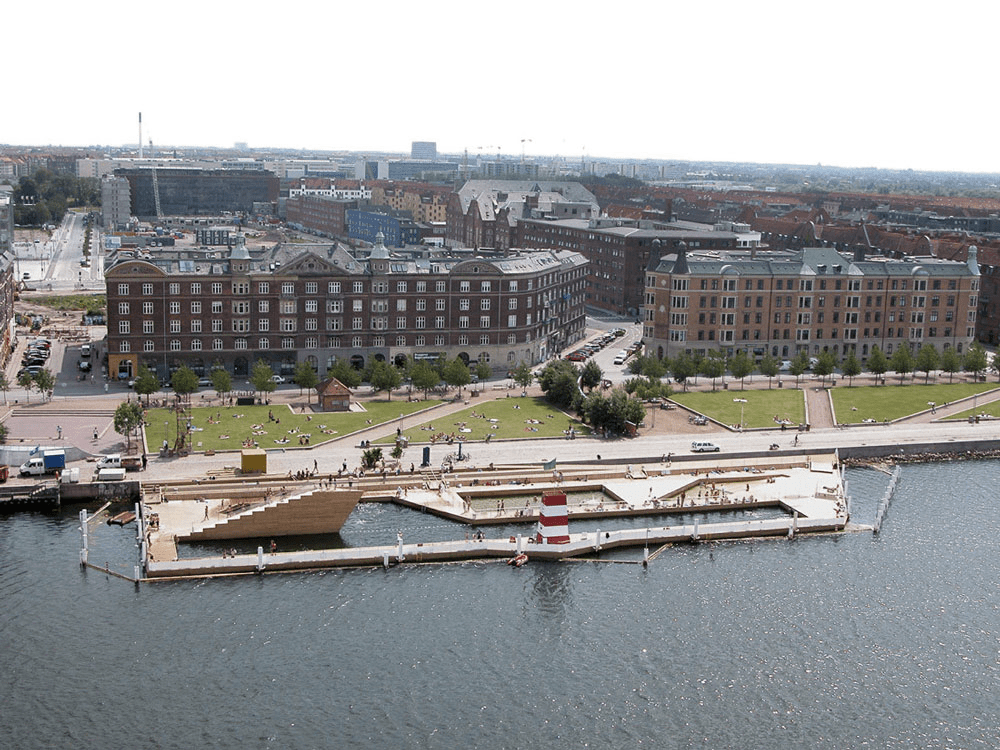
Copenhagen is one of the only cities in Europe where the harbour water is again clean enough to swim in. The city has built three popular harbour baths – a new type of city-beach for people to swim, sunbathe, and cool off on hot summer days. It is good to wear bathing clothes if you are visiting the city, so you can jump into the water whenever you want, especially in the summer.

Source: Arch Daily

OMA’s New Cultural Hub in Copenhagen. Image © Rasmus Hjortshøj – COAST
BIG’s Waste-To-Energy Plant in Copenhagen. Image © Aldo Amoretti
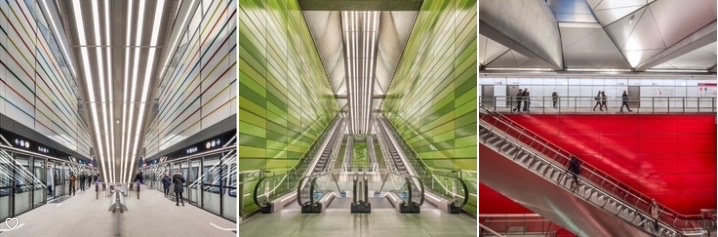
Cobe and Arup’s passenger-focused metro stations in Copenhagen’s docklands. Image © Rasmus Hjortshøj – COAST

Copenhagen has a very convenient and fast subway system. There are now 4 lines called M1, M2,M3 and M4. These lines runs around the city and have intersects with each other. Riding the Metro in Denmark is the easiest and quickest way from the airport to central Copenhagen. Also the Metro runs without a driver (utilizing an automated train control system) and runs 24 hours a day, 7 days a week. During the rush hour the metro runs every 2 to 4 minutes. During the rest of the day trains run every 3 to 6 minutes, so there is very little waiting time.

Copenhagen’s Cityringen (City Circle Line) , the colorful commute  (Photo: Anke Müllerklein)

UNESCO and the UIA launched the World Capital of Architecture initiative to highlight the key role of architecture, city planning, and culture in shaping urban identity and sustainable urban development. Every three years, the city designated as World Capital of Architecture becomes a global forum at the forefront of discussions on contemporary urban planning and architectural issues.

The city of Copenhagen has been officially designated as World Capital of Architecture for 2023 by the Director-General of UNESCO, Audrey Azoulay, on the recommendation of the General Assembly of the International Union of Architects (UIA).

This decision is in keeping with the partnership agreement established between UNESCO and the UIA in 2018, through which UNESCO designates the host cities of UIA’s World Congress as World Capitals of Architecture. “We are very happy to see the torch of the World Capital of Architecture title pass to Copenhagen from Rio de Janeiro,” Audrey Azoulay said. “The inaugural World Capital of Architecture in Rio was a real success, underlining the important role of urban planning, notably in the pandemic context”, she noted, adding that “Copenhagen will build upon Rio’s achievements, by continuing to show the way in which architecture and culture can respond to the challenges of our time, especially in the environmental field.”

As the World Capital of Architecture for 2023, Copenhagen will host a series of major events and programmes on the theme “Sustainable Futures – Leave No One Behind.” In coopeation with the Danish Association of Architects and various Nordic professional bodies, the municipality will examine how architecture and urban design contribute to meeting the 17 United Nations Sustainable Development Goals.

Copenhagen World Capital of Architecture for 2023

Link: https://peacelilysite.com/2022/09/08/copenhagen-world-capital-of-architecture-for-2023/

#Copenhagen#WorldCapitalofArchitecture#UNESCO#UIA#Denmark#Europe

Source: https://www.uia-architectes.org/en/events/world-capitals-of-architecture/copenhagen/, https://www.cntraveler.com/gallery/best-things-to-do-in-copenhagen

10 THINGS TIME HAS TAUGHT ME

Photo by Nita on Pexels.com

10 THINGS TIME HAS TAUGHT ME

1. Most of our life is spent chasing false goals and worshipping false ideals. The day you realise that is the day you really start to live.

2. You really, truly cannot please all of the people all of the time. Please yourself first and your loved ones second, everyone else is busy pleasing themselves anyway, trust me.

3. Fighting the ageing process is like trying to catch the wind. Go with it, enjoy it. Your body is changing, but it always has been. Don’t waste time trying to reverse that, instead change your mindset to see the beauty in the new.

4. Nobody is perfect and nobody is truly happy with their lot. When that sinks in you are free of comparison and free of judgement. It’s truly liberating.

5. No one really sees what you do right, everyone sees what you do wrong. When that becomes clear to you, you will start doing things for the right reason and you will start having so much more fun.

6. You will regret the years you spent berating your looks, the sooner you can make peace with the vessel your soul lives in, the better. Your body is amazing and important but it does not define you.

Art by Linda Apple

7. Your health is obviously important but stress, fear and worry are far more damaging than any delicious food or drink you may deny yourself. Happiness and peace are the best medicine.

8. Who will remember you and for what, become important factors as you age. Your love and your wisdom will live on far longer than any material thing you can pass down. Tell your stories, they can travel farther than you can imagine.

9. We are not here for long but if you are living against the wind it can feel like a life-sentence. Life should not feel like a chore, it should feel like an adventure.

10. Always, always, drink the good champagne/ Cacao and use the things you keep for ‘best’. Tomorrow is guaranteed to no one. Today is a gift that’s why we call it the present. Eat, Drink & Be Merry.

Words: Donna Ashworth

10 THINGS TIME HAS TAUGHT ME

Link: https://peacelilysite.com/2022/09/02/10-things-time-has-taught-me/

#ageing#midlifewomen#poetryforwomen#womensupportingwomen#crone#innercrone#femaletribe#wordsforthesoul#wiser#10thingstime#donnaashworth

WHEN YOUR HEAD HITS THE PILLOW TONIGHT

Photo by Cats Coming on Pexels.com

WHEN YOUR HEAD HITS THE PILLOW TONIGHT

Remember the smiles of the day, the laughter, the little wins, the warm words…

And let everything else go.

Put the lessons learned in a file marked ‘done’ and give yourself a pat on the back for the things you got right.

Leave the stresses of tomorrow where they belong – tomorrow.

Leave the stresses of today where they belong too.

And let the night take away the heavy weight from your shoulders.

Let it go.

Let yourself be safe.

Let yourself be still.

Let yourself be at rest.

When your head hits the pillow tonight my friend, let sleep come and let your soul be.

You did enough today.

We are all just doing our best with no rule book, in a game with no referee and no half-time.

None of us are getting it right, we are all just winging it.

We are all just as scared, just as weary.

When your head hits the pillow tonight my friend,

close your eyes and remember,

you are worthy.

Photo by Visit Greenland on Pexels.com

Words: Donna Ashworth (Copied from Facebook)

#midlifewomen#mums#wordsforthesoul#tothewomen#donnaashworth#poetry#words#quotes#inpsiration#letitgo#quotestoliveby

WHEN YOUR HEAD HITS THE PILLOW TONIGHT

Link: https://peacelilysite.com/2022/09/01/when-your-head-hits-the-pillow-tonight/

The Quail King and the Hunter [Unity]

The Quail King and the Hunter [Unity]

Buddhist Tales for Young and Old, volume 1, Prince Goodspeaker, Stories 1-50

Once upon a time, there was a Quail King who reigned over a flock of a thousand quails.

There was also a very clever quail hunter. He knew how to make a quail call. Because this sounded just like a real quail crying for help, it never failed to attract other quails. Then the hunter covered them with a net, stuffed them in baskets, and sold them to make a living.

Because he always put the safety of his flock first, Quail King was highly respected by all. While on the lookout for danger, one day he came across the hunter and saw what he did. He thought, “This quail hunter has a good plan for destroying our relatives. I must make a better plan to save us.”

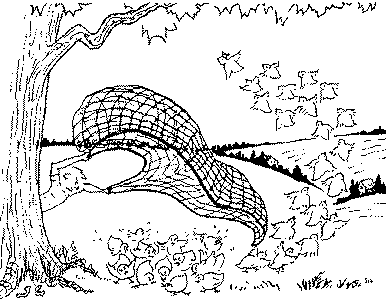
Then he called together his whole nation of a thousand quails. He also invited other quails to attend the meeting. He said, “Greetings to our quail nation and welcome to our visitors. We are faced with great danger. Many of our relatives are being trapped and sold by a clever hunter. Then they are being killed and eaten. I have come up with a plan to save us all. When the hunter covers us with his net, every single one of us must raise his neck at the same time. Then, all together, we should fly away with the net and drop it on a thorn bush. That will keep him busy, and we will be able to escape with our lives.” All agreed to follow this smart strategy.

The next day the hunter lured the quails with his quail call as usual. But when he threw his net over them, they all raised up their necks at once, flew away with the net, and dropped it on a thorn bush. He could catch no quails at all! In addition, it took him the rest of the day to loosen his net from the thorns – so he had no time left to try again!

The same thing happened on the following day. So he spent a second day unhooking his net from sharp thorns. He arrived home only to be greeted by his wife’s sharp tongue! She complained, “You used to bring home quail to eat, and money from selling quails. Now you return empty-handed. What do you do all day? You must have another wife somewhere, who is feasting on quail meat at this very moment!”

The hunter replied, “Don’t think such a thing, my darling. These days the quails have become very unified. They act as one, and raise up their necks and carry my net to a thorn bush. But thanks to you, my one and only wife, I know just what to do! Just as you argue with me, one day they too will argue, as relatives usually do. While they are occupied in conflict and bickering, I will trap them and bring them back to you. Then you will be pleased with me again. Until then, I must be patient.”

The hunter had to put up with his wife’s complaints for several more days. Then one morning after being lured by the quail call, it just so happened that one quail accidentally stepped on the head of another. He immediately got angry and squawked at her. She removed her foot from his head and said, “Please don’t be angry with me. Please excuse my mistake.” But he would not listen. Soon both of them were squawking and squawking, and the conflict got worse and worse!

Hearing this bickering getting louder and louder, Quail King said, “There is no advantage in conflict. Continuing it will lead to danger!” But they just wouldn’t listen.

Then Quail King thought, “I’m afraid this silly conflict will keep them from cooperating to raise the net.” So he commanded that all should escape. His own flock flew away at once.

And it was just in time too! Suddenly the quail hunter threw his net over the remaining quails. The two arguing quails said to each other, “I won’t hold the net for you.” Hearing this, even some of the other quails said, “Why should I hold the net for anyone else?”

So the conflict spread like wildfire. The hunter grabbed all the quails, stuffed them in his baskets, and took them home to his wife. Of course she was overjoyed, and they invited all their friends over for a big quail feast.

The moral is: There is safety in unity, and danger in conflict.

The Quail King and the Hunter [Unity]

Link: https://hhdorjechangbuddhaiiiinfo.com/2022/08/30/the-quail-king-and-the-hunter-unity/

INTERPRETER’S INTRODUCTION – BUDDHIST TALES FOR YOUNG AND OLD, VOLUME 1, STORIES 1-50

#Buddhisttalesforyoungandold #Buddhiststories #storiesforkids #moralstories #Buddha #Jatakastories #PansiyaPanasJataka

32. The Dancing Peacock [Pride and Modesty]

32. The Dancing Peacock [Pride and Modesty]

Once upon a time, a very long time ago, the four-footed animals made the lion their king. There was a gigantic fish that roamed the oceans, and the fish made him their king. The birds were attracted to beauty, so they chose the Golden Swan as their king.

King Golden Swan had a beautiful golden daughter. While she was still young, he granted her one wish. She wished that, when she was old enough, she could pick her own husband.

When his daughter was old enough, King Golden Swan called all the birds living in the vast Himalayan Mountains of central Asia to a gathering. The purpose was to find a worthy husband for his golden daughter. Birds came from far away, even from high Tibet. There were geese, swans, eagles, sparrows, humming birds, cuckoos, owls and many other kinds of birds.

The gathering was held on a high rock slab, in the beautiful green land of Nepal. King Golden Swan told his lovely daughter to select whichever husband she wished.

She looked over the many birds. Her eye was attracted by a shining emerald-green long-necked peacock, with gorgeous flowing tail feathers. She told her father, “This bird, the peacock, will be my husband.”

Hearing that he was the lucky one, all the other birds crowded around the peacock to congratulate him. They said, “Even among so many beautiful birds, the golden swan princess has chosen you. We congratulate you on your good fortune.”

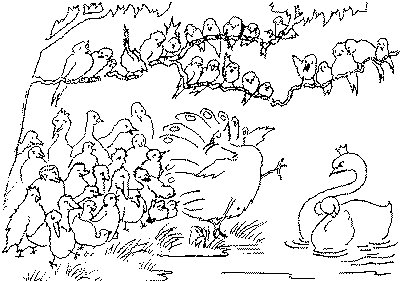
The peacock became so puffed up with pride, that he began to show off his colorful feathers in a fantastic strutting dance. He fanned out his spectacular tail feathers and danced in a circle to show off his beautiful tail. Being so conceited, he pointed his head at the sky and forgot all modesty, so that he also, showed his most private parts for all to see!

The other birds, especially the young ones, giggled. But King Golden Swan was not amused. He was embarrassed to see his daughter’s choice behave in this way. He thought, “This peacock has no inner shame to give him proper modesty. Nor does he have the outer fear to prevent indecent behavior. So why should my daughter be shamed by such a mindless mate?”

Standing in the midst of the great assembly of birds, the king said, “Sir peacock, your voice is sweet, your feathers are beautiful, your neck shines like an emerald, and your tail is like a splendid fan. But you have danced here like one who has no proper shame or fear. I will not permit my innocent daughter to marry such an ignorant fool!”

Then King Golden Swan married his golden daughter to a royal nephew. The silly strutting peacock flew away, having lost a beautiful wife.

The moral is: If you let pride go to your head, you’ll wind up acting like a fool.

Link: https://hhdorjechangbuddhaiiiinfo.com/2022/08/23/32-the-dancing-peacock-pride-and-modesty/

INTERPRETER’S INTRODUCTION – BUDDHIST TALES FOR YOUNG AND OLD, VOLUME 1, STORIES 1-50

#Buddhisttalesforyoungandold #Buddhiststories #storiesforkids #moralstories #Buddha #Jatakastories #PansiyaPanasJataka

Why We Should Sleep Early and Get up Early

Photo by Dominika Roseclay on Pexels.com

Why We Should Sleep Early and Get up Early

When I was a child, my parents always tell me “ Early to bed and early to rise, makes a man happy, healthy, and wise. In western countries, there are old sayings much like this one, such as ” Early birds get worms”. Sleeping early and getting up early is a very good habit. However I found out it is very difficult to pass down this good habit to my children. They have a million reasons to stay up late, academic and recreational. So I decided to find some scientific evidence to convince them.

The information I found surprised me. I realized that I myself should sleep and wake up even earlier.

Circadian rhythms and internal biological clock

Three scientists won the 2017 Nobel Prize for their discoveries of molecular mechanisms that control circadian rhythms. Circadian rhythms are driven by an internal biological clock that anticipates day/night cycles to optimize the physiology and behavior of organisms.

“Chronobiology has an impact on many aspects of our physiology. For example, circadian clocks help to regulate sleep patterns, feeding behavior, hormone release, blood pressure and body temperature. Molecular clocks also play critical roles locally in many tissues. Ablation of clock genes in animal models results in arrhythmic production of hormones, such as corticosterone and insulin (Son et al., 2008). Clock genes also exert a profound influence on metabolism through the control of gluconeogenesis, insulin sensitivity and systemic oscillation of blood glucose (Panda, 2016). Sleep is vital for normal brain function and circadian dysfunction has been linked to sleep disorders, as well as depression, bipolar disorder, cognitive function, memory formation and some neurological diseases (Gerstner and Yin, 2010).”

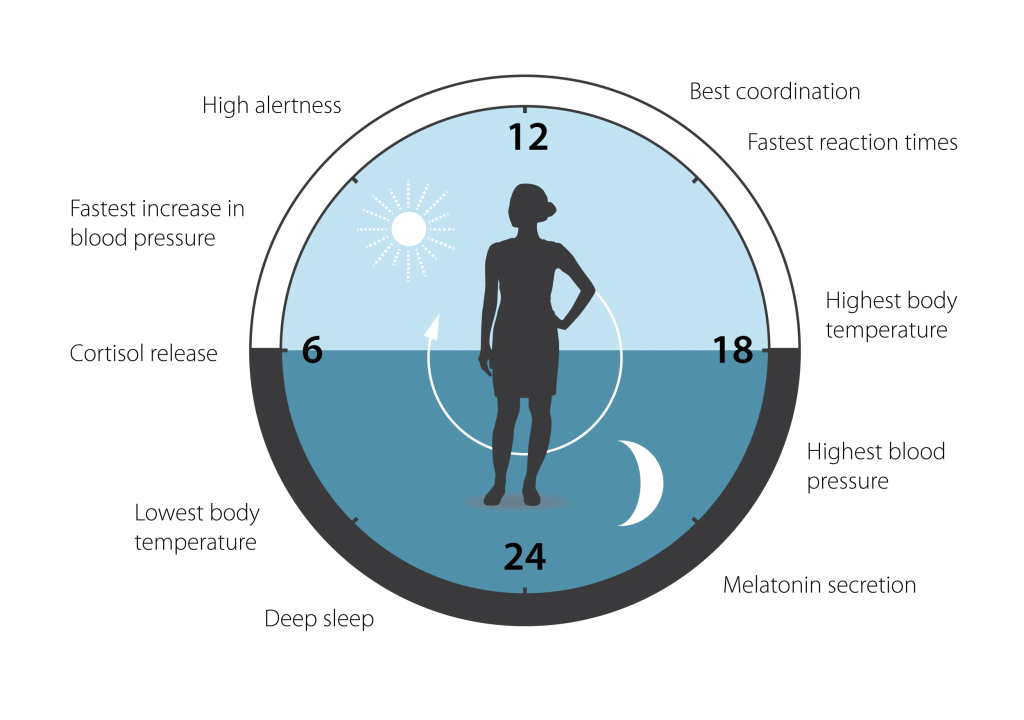
The circadian clock has an impact on many aspects of our physiology.
This clock helps to regulate sleep patterns, feeding behavior, hormone release, blood pressure and body temperature. A large proportion of our genes are regulated by the clock. From https://www.nobelprize.org/prizes/medicine/2017/advanced-information/

Body-Energy Clock in Chinese Medicine

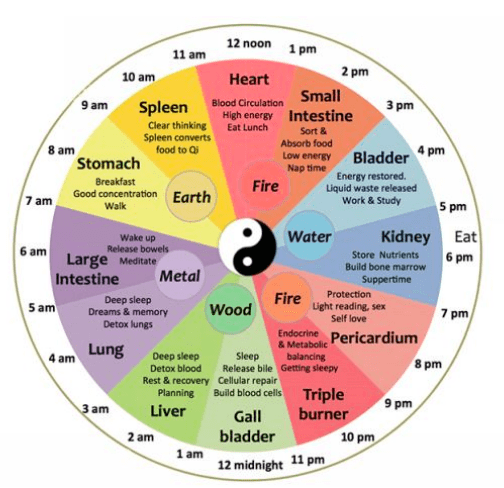
Observations that organisms adapt their physiology and behavior to the time of the day in a circadian fashion have been documented for a long time. Thousands years ago in Chinese Medicine, the body clock was already known. The 24 hour day was divided into 12 two-hour intervals of the Qi (vital force) moving through the organ system. The Body-Energy Clock is built upon the concept of the cyclical ebb and flow of energy throughout the body. During a 24-hour period(see the following diagram), Qi moves in two-hour intervals through the organ systems. During sleep, Qi draws inward to restore the body. This phase is completed between 1 and 3 a.m., when the liver cleanses the blood and performs a myriad of functions that set the stage for Qi moving outward again.

In the 12-hour period following the peak functioning of the liver—from 3 a.m. onward—energy cycles to the organs associated with daily activity, digestion and elimination: the lungs, large intestine, stomach/pancreas, heart, small intestine. By mid-afternoon, energy again moves inward to support internal organs associated with restoring and maintaining the system. The purpose is to move fluids and heat, as well as to filter and cleanse—by the pericardium, triple burner (coordinates water functions and temperature), bladder/kidneys and the liver. Understanding The Body-Energy Clock, could help you to better manage your Sleep, Meals, & Mood.

5 am to 7 am is the time of the Large Intestine, making it a perfect time to have a bowel movement and remove toxins from the day before. So that is the perfect time to get up. Waking up at this time, getting out of bed and moving around, will help your large intestine excrete the waste. Personally, I have discovered that I am prone to constipation if I get up later than this time.

7-9am is the time of the Stomach, so it is important to eat the biggest meal of the day here to optimize digestion and absorption. Warm meals that are high in nutrition are best in the morning. Therefore, if you get up early, you will have enough time to make and enjoy a hearty breakfast. If you get up late, and skip breakfast or just grab some easy treats, then you don’t get enough nutrition for your whole body. According to the body clock the stomach has it’s strongest time in the morning, it secretes a lot of digestive juices in the morning. A lot of people like to eat a big meal at dinner, which can cause the stomach to be overburdened and make the it unable to rest adequately during sleep.

From the Body-Energy Clock we can see the Gall Bladder is most active from 11 p.m. to 1 a.m. The Gall Bladder excretes bile and digest the good fats, it is working hard to repair damaged cells and build new ones. And this process is better processed when you are sleep.

1 a.m. to 3 a.m. is the most active time for the Liver. During this time, toxins are released from the body and fresh new blood is made. The liver is the main detoxifying organ in the body. Our body needs to be in the deep sleep stage, in order to give the liver its full energy capacity so it can do its proper job.

Melatonin Level

Melatonin is often referred to as the sleep hormone. Melatonin level plays an important role in our sleep-wake cycle. It is well-established that melatonin produced by the body plays a fundamental role in getting quality sleep. Scientist has discovered, our body start to increase melatonin secretion soon after the onset of darkness, peaks in the middle of the night, between 2 and 4 a.m., and gradually falls during the second half of the night. Thus most people have the experience that if they stay up too late, they have trouble falling asleep. After 4 a.m. Melatonin level start to decrease, so after 4 a.m. our sleep goes into a light, shallow and dreamy state. Falling asleep during 11 p.m. to 4 a.m., we can get better quality rest from sleeping.

There are many benefits for Going to bed early and getting up early. Here are some examples:

  1. Early risers, whether young or old, have more positive emotions and a better sense of self-health.
  2. Depression is a common mental illness that affects 264 million people worldwide, according to the latest data released on the World Health Organization’s website. A new study in the United States shows that for people who are accustomed to going to bed late, if they can go to bed an hour earlier, they can reduce the risk of depression by 23%.
  3. Staying up late is also an important factor in gain weight, because staying up late can lead to endocrine disorders. If you rest on time, get up early and exercise properly, not only will you prevent excessive weight gain, but you will also be able to maintain a slim body. So, consider to be a early sleeper and early riser, if you wish to control your weight.
  4. Multiple studies have shown that sleep deprivation is associated with increased risk of morbidity. Going to bed early and getting up early can enhance immunity and help fight colds and other viruses. It can also greatly reduce the risk of chronic diseases such as heart disease, kidney disease, high blood pressure, diabetes and stroke.
  5. Study confirms that early sleepers and early risers score 30% higher on anagram tests than those who stay up late.

Here is a interesting video of a navy seal who likes to go to bed early and get up early. I hope you enjoy it, and be happy and healthy.

http://www.businessinsider.com/navy-seal-explains-wake-up-430-am-every-day-jocko-willink-2018-4

Why We Should Sleep Early and Get up Early

Link: https://peacelilysite.com/2022/08/23/why-we-should-sleep-early-and-get-up-early/

#WellnessHealth#HealthInformation#Melatonin#BodyClock#CircadianRhythms#InternalBiological Clock#Depression#WeightControl

Source: https://www.businessinsider.com/navy-seal-explains-wake-up-430-am-every-day-jocko-willink-2018-4, https://mspmag.com/health-and-fitness/chinese-medicine-body-clock-optimize-sleep-meals-mood/, https://www.nirvananaturopathics.com/blog/traditional-chinese-organ-body-clock

Inspiring and Thoughtful Stories

Inspiring and Thoughtful Stories

The water bottle beside a water pump

Photo by Walid Ahmad on Pexels.com

There was a man who had walked in the desert for two days. En route, he encountered a sand strom. After the fierce winds and blowing sands had passed, he was unable to recognize the right direction. Just as he could sustain no longer, he suddenly found a small abandoned house. He dragged his body with fatigue and entered the house.

This was a house without ventilation and piled-up with rotten wood. In desperation, he walked to the corner of the house, and to his surprise, found a water pump. He tried excitedly to pump water, but no matter how hard he tried, not a single drop came out.

Collapsing to the ground, he saw a small corked water bottle next to the water pump. On the bottle was a yellowish paper which read:” You must pour ou the water into the water pump in order to pump water! Don’t forget, please fill the bottle with water again before you leave!”

He pulled out the cork and indeed discovered that the bottle was filled with water! His mind started to struggle… Out of selfishness, as long as I drink all the water in the bottle, I will not die and can walk out of this house alive! If I follow what is written on the paper and pur the only water available into the water pump, in case no water comes up, the I will die of thirst here. Should I take the risk or not?

Finally, he decided to pour the whole bottle of water into the water pump which looked shabby and unusable. He drew water with a shaking hand …. water truly gushed out!

After he had satisfied his thirst, he filled the bottle with water and recorked it. Then, he added his own words at the bottom of the paper: “Believe me, it truly works.” Enlightenment: Learn to give before taking.

The Arrangement of the Angel

Photo by Pixabay on Pexels.com

Two traveling angels came to a rich family and asked to stay for the night. This family was not friendly towards them, they refused to let the angels rest in a comfortable guest room. Instead, the family gave them a comer in the cold basement. When the angels were setting the bed, the older angel saw a hole in the wall, so he patched it up. The younger angel asked for the reason, the older angel said, “Some things are not how they look.”
On the second night, the two angels arrived at a poor farmer’s house, and asked to stay for the night. The farmer couple welcomed them with great warmth. They offered all of their very little food to the two guests, and also let the angels sleep in their bed. The following morning, the two angels saw that the farmer and his wife were crying. Their milk cow, the only source of income, had died last night.

The younger angel was very angry, he questioned the older angel for a good explanation. The first family had everything, and the older angel even helped them patch up a hole in the wall. The second family was very kind even when they were so poor, yet their cow had died.
“Sometimes things are not as they look, said the older angel, “when we were staying in the basement of the rich family, I looked through the hole in the wall and found that there was a pile of gold behind the wall. Because the owner was already blinded by greed, he was not willing to share, so l patched up the wall.”
“Last night, the angel of Death came for the farmer’s wife, I let the milk cow take her place. So sometimes things are not as they look.”

Story of Alexander the Great

Photo by Pixabay on Pexels.com


When Alexander the Great was young, he was extremely powerful and influential. He made conquests everywhere, including most of the three major continents in Europe, Asia, and Africa, which were once belonged to ancient Greece.

Alexander the Great had countless treasures, lands, and subordinates (people); however, this mighty conqueror died at a very young age of 33, and he was nationally mourned. Before his death, Alexander the Great requested to carve out two holes at the sides of his coffin. When he lay inside the coffin, he
wanted both of his hands dangling out from his coffin. He told people next to him that he would like to warn the world of the lessons he had learned: Although he owned countless treasures and attained the highest status, he could not take anything with him.

At his deathbed, he called his generals and told them that he had three wishes that they must carry out. He said, “My first desire is that’, said Alexander, “my physicians alone must transport my coffin back to the city.
Secondly, when my coffin is being carried to the grave, the path leading to the graveyard is to be strewn with gold, silver and precious stones which I have collected in my treasury. My third and last wish is that both my hands are to be kept dangling out of my coffin.”
The people who had gathered there wondered at the king’s strange wishes. But no one dared to bring the question to their lips, so they were silent with the orders. At this very confusing moment, Alexander explained the reason for having these three last wishes, “First, I want my physicians to carry my coffin to show people that no doctor can really cure anybody from sickness. They are powerless and cannot save a person from the clutches of death. So people must not take life for granted. The second wish of strewing gold, silver and other riches on the way to the graveyard is to tell people that not even a fraction of gold will come with me. I spent all my life earning riches but cannot take anything with me. Let people realize that it is a sheer waste of time and life to chase after wealth. Wealth cannot buy back time and life. And about my third wish of having my hands dangling out of the coffin, I wish people know that I came empty-handed into this world and I go out of this world empty-handed as well.

Inspiring and Thoughtful Stories

Link: https://peacelilysite.com/2022/08/19/inspiring-and-thoughtful-stories/