When Practice Becomes Real: Aligning Our Three Karmas with the True Master

In the path of cultivation, many of us begin with sincerity. We read the teachings, we listen, we reflect, and we believe that we are walking the path correctly. Yet a profound question remains:

Why is it that among so many practitioners, so few truly attain realization?
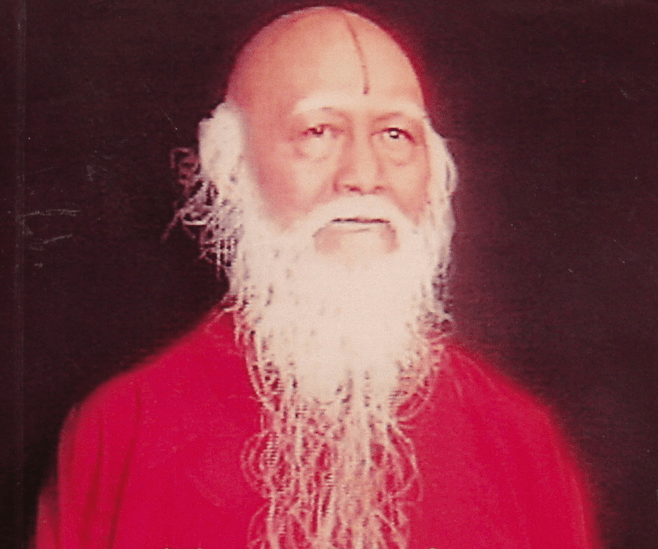
Photo taken in 1999. Elder Dharma King Dorje Losang (191?-2004) was a disciple of H.H. Dorje Chang Buddha III Wan Ko Yeshe Norbu (Great Dharma King Buddha Yangwo Yisinubu).

In a teaching given by Elder Monk Dorje Losang at Bodhi Monastery, a direct and uncompromising answer is offered. There are only two fundamental reasons.

First, one has not followed a true Master—one who is the incarnation of a Buddha or Bodhisattva—and therefore has not received the true Buddha-dharma, but only its outer forms, theories, or popular interpretations.

Second, even if one is fortunate enough to follow a true Master and has encountered the authentic Dharma, one’s three karmas—conduct, speech, and thought—do not truly correspond with the Master’s teachings. In this case, cultivation becomes superficial. Without true alignment, there can be no liberation, no genuine blessings, and no escape from the cycle of birth and death.

This teaching is simple, yet deeply penetrating.

It reminds us that the path is not only about what we learn—but how we live.

True devotion is not merely a feeling. It is expressed through what is called the “Four States of Corresponding”: unwavering loyalty, constancy without change, placing nothing above the Master and the Three Jewels, and reaching complete, wholehearted devotion. Only when these are truly practiced can one’s three karmas fully align.

And yet, for many of us, the challenge lies not in understanding these principles—but in applying them in the smallest moments of daily life.

A story shared by lay practitioner Wang Yuxiang offers a powerful reflection.

On an ordinary day, she decided to prepare steamed dumplings as an offering to her Master, H.H. Dorje Chang Buddha III. Her heart was joyful, filled with the intention to make a sincere offering.

As she prepared the filling, she followed a habit formed over years of cooking at home—she tasted a small portion to check the seasoning, then returned it to the mixture. It was a simple, unconscious action, something she had done countless times before.

But this time, it was different.

In that very moment, something unexpected occurred. A sealed bottle of soy sauce suddenly fell and shattered, creating a loud and startling crash. Shocked, she immediately realized her mistake.

Young woman with a bleeding cut on her foot from broken glass on the floor

This was not food for herself or her family.
This was an offering.

With deep remorse, she repented sincerely, recognizing her lack of mindfulness and reverence. Her tears flowed uncontrollably—not out of fear, but from a genuine awareness of having fallen short in her devotion.

Soon after, she discovered that her foot had been pierced by a sharp piece of glass, causing significant bleeding. Yet despite the injury, her only concern was not to delay her Master’s meal. She endured the pain, completed the offering, and only afterward returned home to tend to her wound.

And then, something extraordinary happened.

The wound—deep, bleeding, and undeniable—had completely disappeared. There was no scar, no swelling, no trace it had ever existed.

To many, such an account may seem difficult to comprehend. But beyond the event itself lies its deeper meaning.

Through this experience, she came to a clear realization: cultivation is not an abstract concept—it is present in every thought, every word, every action.

Even a small, habitual act, when lacking mindfulness and reverence, reveals a gap between one’s intention and one’s actual state of alignment.

From a Buddhist perspective, this story is not merely about a “miracle,” but about cause and condition, sincerity and response.

When one’s mind deviates, even subtly, there is consequence.
When one repents with genuine sincerity, there is also transformation.

More importantly, it reminds us that following a true Master is an immense blessing—but it also carries profound responsibility.

It is not enough to say we believe.
It is not enough to feel devotion in our hearts.

Our three karmas must align—completely, precisely, and without compromise.

Not only in great matters, but in the smallest details of daily life.

How we speak.
How we act.
What thoughts we allow to arise.

Because it is in these subtle moments that our true state is revealed.

If we treat ordinary matters casually, how can we claim sincerity in sacred ones?

If our habits remain unchanged, how can transformation occur?

The path of cultivation is, in truth, very direct.

When the Dharma is true, and when one’s devotion is unwavering, Elder Monk Dorje Losang teaches that liberation can be “as easy as turning over one’s hand.”

But if our practice remains external, if our alignment is incomplete, then no matter how long we cultivate, the result will remain distant.

This is both a warning and a profound encouragement.

It tells us that the path is not far away.
It is right here, in this very moment.

In every thought we choose.
In every word we speak.
In every action we take.

To truly align our three karmas is not something abstract—it is something we practice now.

Quietly.
Sincerely.
Completely.

And perhaps, in that sincerity, the path will naturally unfold.

For full lecture Given by Elder Monk Dorje Losang at Bodhi Monastery, please click here.

For the full account by lay practitioner Wang Yuxiang please refer to  H.H. Dorje Chang Buddha III — A Treasury of True Buddha-Dharma**, pp. 187-189.**

Link:https://peacelilysite.com/2026/04/17/when-practice-becomes-real-aligning-our-three-karmas-with-the-true-master/

The Five People You Meet in Heaven

The Five People You Meet in Heaven

The Five People You Meet in Heaven, by Mitch Albom, an enchanting, beautifully crafted novel that explores a mystery only heaven can unfold. It is a tale of a life on earth. It’s a tale of life beyond it. It’s a fable about love, a warning about war, and a nod of the cap to the real people of this world, the ones who never get their name in lights.

This book is about the meaning of life. What do we humans live for? Eddie, the protagonist, thought his life was meaningless during his lifetime. After his death, he met five people in heaven. These five people, known and unknown, all played a pivotal role in Eddie’s life. They taught Eddie the meaning and value of life. At last Eddie was relieved. The originally heavy soul also became lighter. Each of us is running towards death. Death is not scary. The scary thing is that we do not know how to live.

Eddie is a grizzled war veteran who feels trapped in a meaningless life of fixing rides at a seaside amusement park. As the park has changed over the years — from the Loop-the-Loop to the Pipeline Plunge — so, too, has Eddie changed, from optimistic youth to embittered old age. His days are a dull routine of work, loneliness, and regret.

Then, on his 83rd birthday, Eddie dies in a tragic accident, trying to save a little girl from a falling cart. With his final breath, he feels two small hands in his — and then nothing. He awakens in the afterlife, where he learns that heaven is not a lush Garden of Eden, but a place where your earthly life is explained to you by five people who were in it. These people may have been loved ones or distant strangers. Yet each of them changed your path forever.

Eddie arrives in Heaven, where he meets “the Blue Man.” The Blue Man explains that Eddie is about to journey through Heaven’s five levels, meeting someone who has had a significant impact upon his life or someone on whom his life had a significant impact. Eddie asks why the Blue Man is his first person, and he informs Eddie that, when Eddie was very young, he caused the car accident that killed him. From this, Eddie learns his first lesson: there are no random events in life and all individuals and experiences are connected in some way.

Eddie meets his former captain from the army, who reminds Eddie of their time together as prisoners of war in a forced labor camp in the Philippines. Their group burned the camp during their escape and Eddie, while running away, remembers seeing a shadow move in one of the huts. The Captain confesses that he shot Eddie in the leg to prevent Eddie from chasing the shadow into the fire. This saved Eddie’s life despite leaving him with a lifelong severe limp. Eddie then learns how the Captain died: he stepped on a land mine that would have killed all the men had he not set it off.

Eddie finds himself outside a diner, where he sees his father through a window. A well-dressed woman named Ruby appears and introduces herself to him. Ruby explains that Ruby Pier was named after her by her husband Emile, who built it in tribute to her. Ruby shows Eddie the true cause of his father’s death, which is different from what he had always believed. She tells Eddie that he needs to forgive his father.

Eddie meets his late wife, Marguerite. They remember their wedding, and Marguerite teaches Eddie that love is never lost in death; it just moves on and takes a different form.

Eddie awakens to see children playing along with a riverbed. A young Filipina girl named Tala comes up to him. Tala reveals that she was the little girl from the hut that Eddie set on fire. Distraught, Eddie breaks down both cursing and asking God “why?” Tala hands him a stone and asks him to “wash” her like the other children in the river are doing to one another. Eddie is puzzled, but dips the stone in the water and starts to scrape off the injuries he had inflicted on her. Tala’s wounds begin to clear until she is freed of all the scars. Eddie asks Tala if she knows if he was able to save the little girl before his death. Tala tells him he did manage to push her out of the way. In this way, Tala explains, he also managed to atone every day for her unnecessary death.

In the end, it shows that Eddie’s Heaven is the Stardust Band Shell, where he met Marguerite.

Photo by Mohit Suthar on Pexels.com

One by one, Eddie’s five people illuminate the unseen connections of his earthly life. As the story builds to its stunning conclusion, Eddie desperately seeks redemption in the still-unknown last act of his life: Was it a heroic success or a devastating failure? The answer, which comes from the most unlikely of sources, is as inspirational as a glimpse of heaven itself.

Reading The Five People You Meet in Heaven helped me understand deeper about the law of cause and effect in Buddhism teaching. We live in the web of reincarnation of life and death woven by our own karma. Each one of us is connected by the threads in this vast web. Our thoughts, words, and actions all have a small or big impacts to others near and far. What we humans need now is more love, respect, kindness and compassion, and less conflict, fighting and argument.

The Five People You Meet in Heaven

Link: https://peacelilysite.com/2022/09/11/the-five-people-you-meet-in-heaven/

#TheFivePeopleYouMeetinHeaven#Buddhism#LIfeafterDeath#Death#MitchAlbomKarma#Kindness#Love#Causeandeffect#lawofCauseandeffect

Source: https://en.wikipedia.org/wiki/The_Five_People_You_Meet_in_Heaven, https://www.mitchalbom.com/books/five-people-you-meet-in-heaven/

I need to sincerely repent and cultivate uncompromisingly

I need to sincerely repent and cultivate uncompromisingly

It has been several weeks since the announcement of the news that Namo Dorje Chang Buddha III and Fomu, Holy Mother the Great Mahasattva, have borne dark karmas for living beings and entered parinirvana. Since then I have gradually calmed down from the shock, sadness, sorrow, confusion and loss.

H.H. Dorje Chang Buddha III and Fomu, Holy Mother the Great Mahasattva, set selfless, dedicated, and unsurpassed examples for us. The Buddha’s last words to Venerable Tsemeng Jiaozun so touched my heart: “….. When I said I would bear dark karma for living beings, those were not empty words. To bear dark karma is not to enter dhyāna, but rather, truly and continuously practice shifting the mind-consciousness to suffer on behalf of living beings. What Fomu and I said is what we do. At all times, we must think about bringing auspiciousness, serenity, happiness, and peace to living beings and to the world, to the extent of giving our all and even our lives. ….. I wish all living beings happiness.”

Photo by Suzy Hazelwood on Pexels.com

It has been more than ten years since I first heard the pre-recorded Buddha’s Dharma discourse. I have heard many discs, and I have also read the Dharma books written by H.H. Dorje Chang Buddha III, including “The Supreme and Unsurpassable Mahamudra of Liberation”, “Expounding the Absolute Truth through the Heart Sutra”, “Liaoyi Jing” and so on. But have I really put the Buddha’s teachings into practice? I seldom thought about to take on other person’s dark karma and sufferings. Even when my mother followed the evil master, escaped from the Buddha, and defamed H.H. Dorje Chang Buddha III, I did not think of taking on my mother’s guilt. How selfish I am compared to the Buddha.

In all the Dharma imparted by H.H. Dorje Chang Buddha III, the Buddha always emphasizes putting bodhicitta into practice: When there is a conflict of interest between myself and others, I will rid myself of hatred, antipathy, greed, and arrogant, disparaging mentality. I must not emphasize benefiting myself. I should treat myself and others equally. When other living beings and I are suffering, I want others to extricate themselves from suffering before I do. When other living beings and I are happy, I want others to be happier than I am. I dedicate to all living beings all of the merit and accomplishments from my cultivation in the hope that they will leave suffering and attain liberation.

I felt ashamed that I rarely put all these teachings in my daily practice. Most of the time I put myself at the first priority. I want to have good health, good fortune, and good luck — after I have all these I may share some with others.

When I recite The Supreme and Unsurpassable Mahamudra of Liberation, I realize I just did ritualistic chanting, making empty vows, engaging in visualization. I have always considered myself as a true Buddhist, now I realize that I deceived myself. In fact, I was a fake cultivator, I have not truly put Buddha’s principles into practice. I still have so many dark karmas: selfish thoughts, a mind of hatred, greed, jealousy, presumptuousness, arrogance, shamelessness, a mind that considers myself always in the right, a mind that deceives others. In this life time I have done so many wrongs. Here I sincerely repent of my sins, and vow to not commit to these sins again.

I am already in my fifties — how much longer can I live. I have no time to waste. Buddha has entered parinirvana. Impermanence may come to me at any time. I must follow the Buddha’s teachings truly and diligently. Every day I will introspect myself, asking myself how I should treat others when it comes to my words, how I should treat others when it comes to my mentality, and how I should treat others when it comes to my conduct. I must earnestly practice “the three daily introspections” — conducting three introspections in the course of a day. In the morning, introspect about how during the day I should act to become a purely good and compassionate person, a person who benefits the public. At midday, think back: “From morning until midday, did I have that kind of mindset and conduct?” At night, again think back: “From midday until night, did I have that kind of mindset and conduct? Are the things I did today truly reflective of the conduct, speech, and mindset of a Bodhisattva at the causal stage?”

Great compassionate Buddha and Fomu, Holy Mother the Great Mahasattva! Thank you greatly for using your life to sound the alarm of impermanence for me. And thank you greatly for using your life to bring Buddhist disciples the extraordinary cause and condition to study the Tathagata Dharma. I vow to use my own real actions to wash away my sins, and benefit all beings with compassion and pure goodness in order to repay Buddha’s grace!

Great compassionate Buddha and Fomu, Holy Mother the Great Mahasattva! I, a disciple, still want to hold on to a glimmer of hope and beg you all to return to the Saha world and give us foolish beings another chance!

I need to sincerely repent and cultivate uncompromisingly

Link: https://peacelilysite.com/2022/03/04/i-need-to-sincerely-repent-and-cultivate-uncompromisingly/

#DorjeChangBuddhaIII #HHDorjeChangBuddhaIII#FomuHolyMother#GreatMahasattva#TheSupremeandUnsurpassableMahamudraofLiberation#Parinirvana