🌊 Hechi, Guangxi: The Ultimate Summer Water Paradise! A Hidden Gem Outshining Semporna

Photo by ShoeBookBedRain

When people think of traveling to Guangxi, world-famous destinations like Guilin and Yangshuo immediately come to mind. But tucked away in the northwest of the province lies a hidden, crowd-free water wonderland that is about to become your next obsession: Hechi!

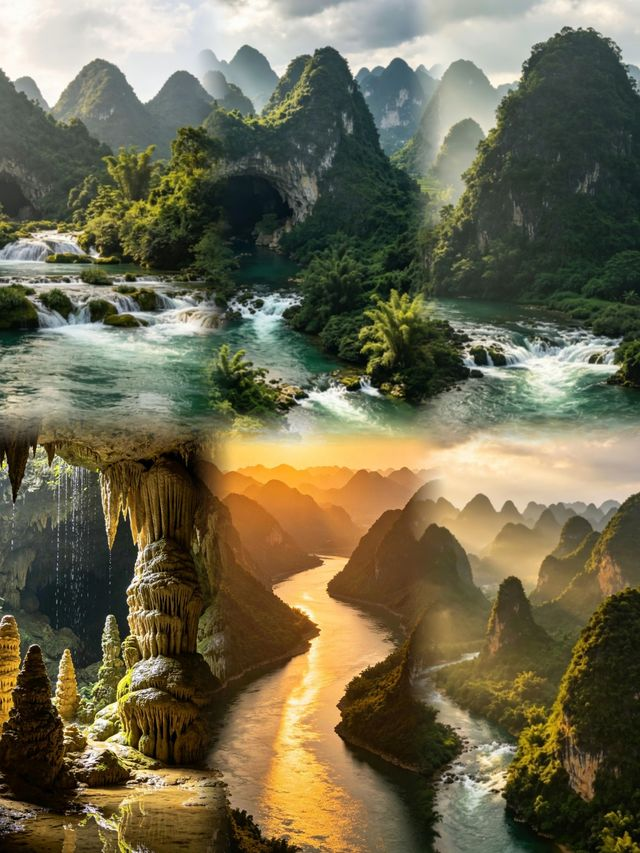
This isn’t Semporna or the Maldives—this is Hechi, a pristine paradise that brings together majestic karst mountains, emerald-green waters, mystical caves, and swirling schools of fish.

If you are looking to escape the summer heat and discover a side of China that most international tourists have never seen, bookmark this ultimate guide to Hechi’s three “divine hidden realms” and start packing!👇

🗺️ Deep Dive: The Three Mystical Water Spots of Hechi

1️⃣ Tian’er: The “Blue Blade” Fish Paddleboarding Drift 🐟

  • The Vibe: Stepping Into an Animated Fantasy World
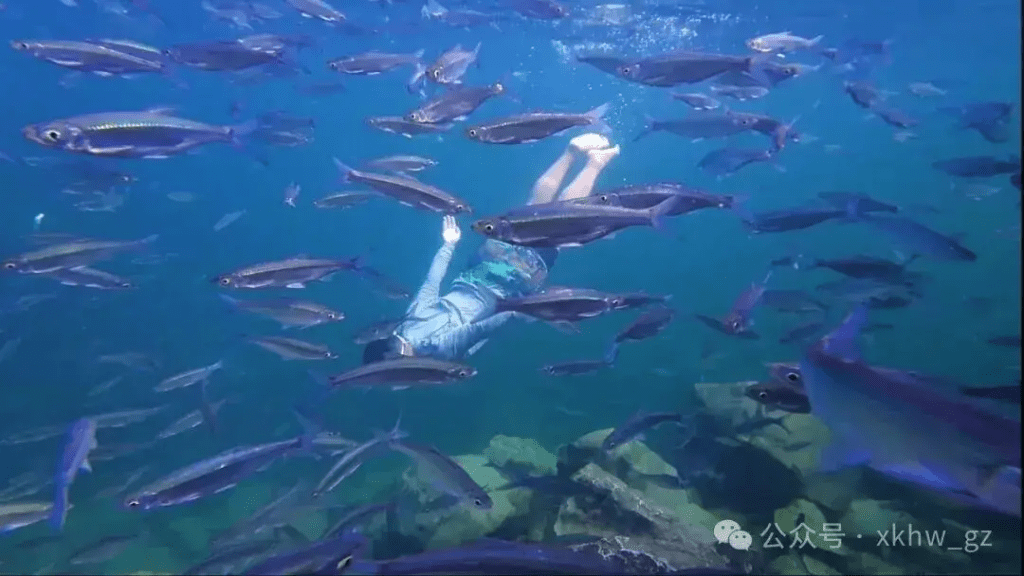
  • The Experience: Imagine paddling down a river nestled between towering karst cliffs, where the water is so still it looks like a sheet of flawless green jade. This is the Hongshui River section in Tian’er. Rent a paddleboard at “Guizhiyuan Mountain Villa” and embark on a breathtaking 12-kilometer drift downstream to the old town pier.The absolute highlight of this journey is crossing the “Blue Blade Fish Storm” point. The Blue Blade fish (Hemiculter leucisculus) is incredibly sensitive to environment and only thrives in ultra-pure, wild waters. When you crumble some bread into the water, the river instantly “comes alive.” Hundreds of shimmering, silver-blue fish will swirl around your paddleboard in a mesmerizing underwater vortex. With the morning sun reflecting off their scales, it genuinely feels like stepping straight into a scene from a fantasy movie.
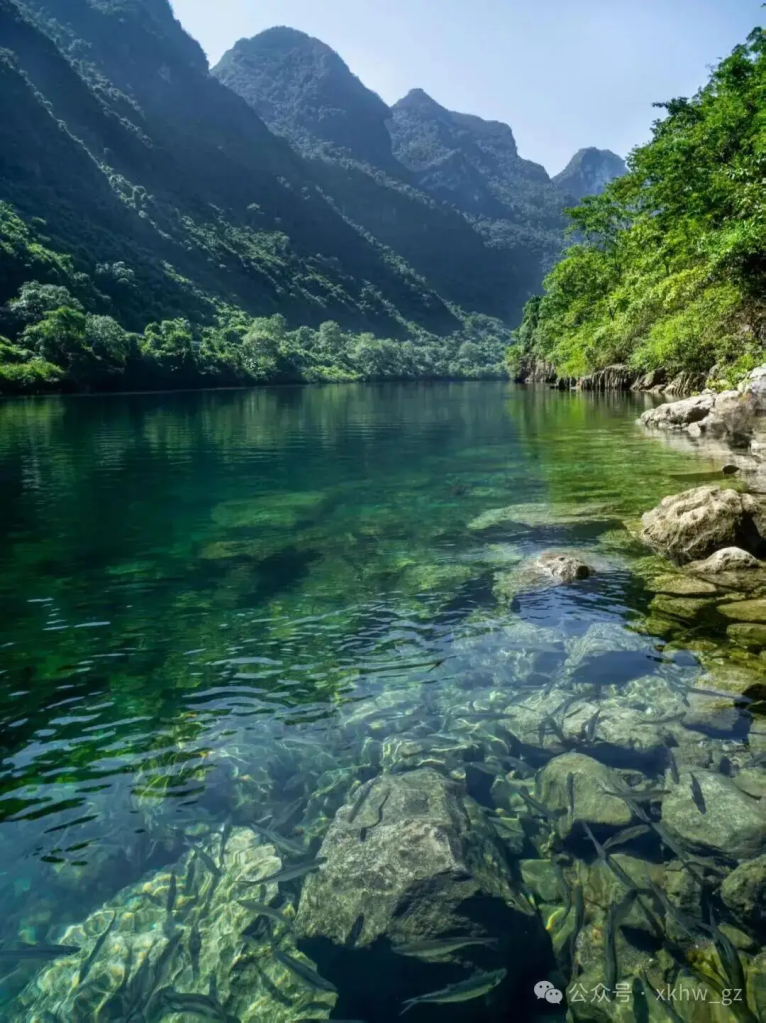
  • 💰 Cost: Around 150 RMB/day for paddleboard rental (convenient pick-up and drop-off services are available at both the start and end points).
  • ⏰ Best Time: April to October, when the fish are most active. Aim for early morning or just after a rain shower when the water is at its most transparent.

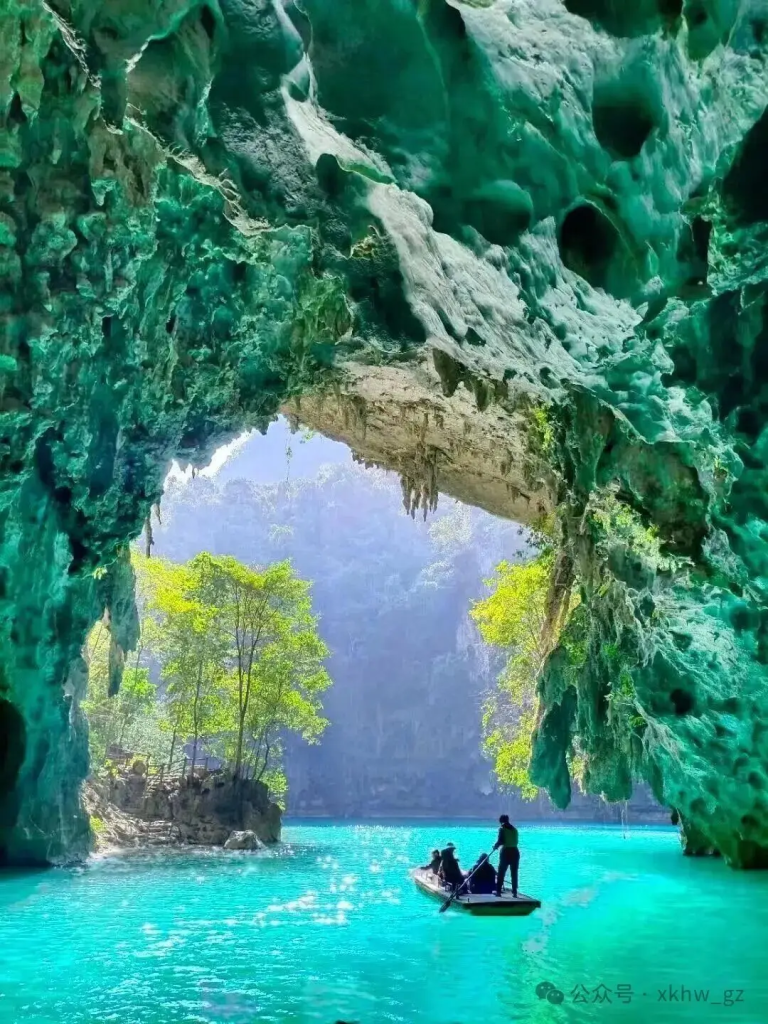
2️⃣ Fengshan: Cruising the Underground “Sea” of Sanmenhai ⛵

  • The Vibe: A Journey to the Center of the Earth
  • The Experience: Don’t let the name fool you—while “Hai” means sea, Sanmenhai is actually a spectacular, world-class geological wonder featuring a cluster of massive karst “heavenly windows” (sinkholes formed by the collapse of underground river ceilings). It is the only place in the world where you can board a traditional manual wooden boat and slide through interconnected caves into hidden tiankengs.As your boat glides from the pitch-black cavern into the light, you will be struck by an otherworldly sight. A beam of natural sunlight pierces through the open roof, illuminating the deep subterranean river into a surreal, glowing Tiffany Blue and deep sapphire. Local residents describe it as “a sea within the mountains, with gates upon the sea.” The jaw-dropping contrast of emerging from a dark cave into a hidden world of vibrant turquoise waters and hanging vines is a visual shock you will never forget.
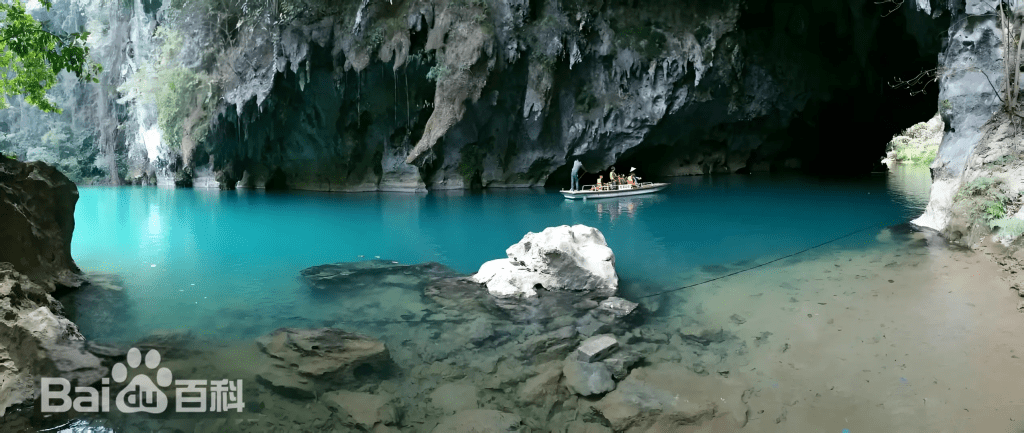
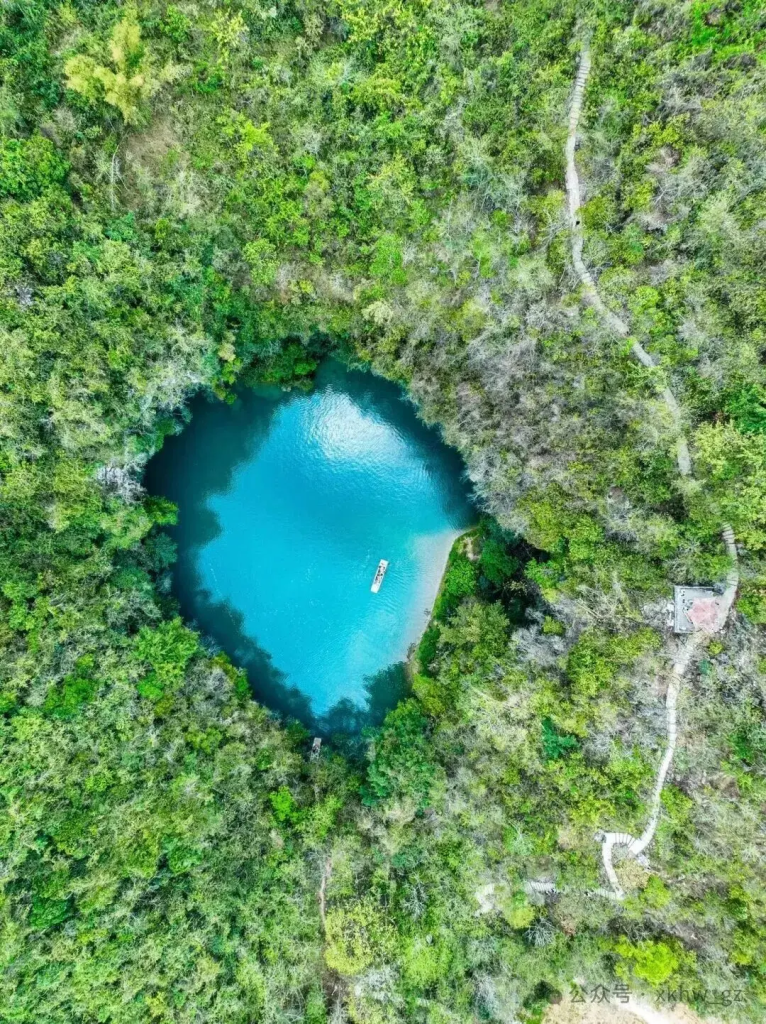
  • 🎫 Tickets: Around 60 RMB (Group rate/Online booking recommended for independent travelers).
  • ⏰ Hours: 08:30 – 17:30 (Last entry at 17:00).

3️⃣ Du’an: Floating on the “Jelly Water” of Jiudun Tianchuang 💧

  • The Vibe: The Everest of Cave Diving Meets a Healing Crystal Palace
  • The Experience: Du’an county is home to hundreds of underground river sinkholes, but the Jiudun Tianchuang (Jiudun Heavenly Window) is the crown jewel. Serving as the source of the Chengjiang River, this spot is legendary among global diving communities. Its underwater caves drop down hundreds of meters into a complex, mysterious labyrinth, earning it the title of “The Mount Everest of Underwater Cave Diving.” In fact, global cave diving depth records have been smashed right here.While the depths are a thrilling challenge for professionals, the surface is a gentle, healing fairy tale. The water here possesses an astonishing, glass-like transparency. It looks exactly like a giant bowl of shimmering green jelly. The best way to experience this is by renting a completely transparent paddleboard. As you float, it feels as though you are suspended in mid-air. Looking down, you can see dozens of meters straight to the bottom where lush river weeds wave like silk ribbons in the current. It requires absolutely zero photo filters—any snapshot here is an instant masterpiece.
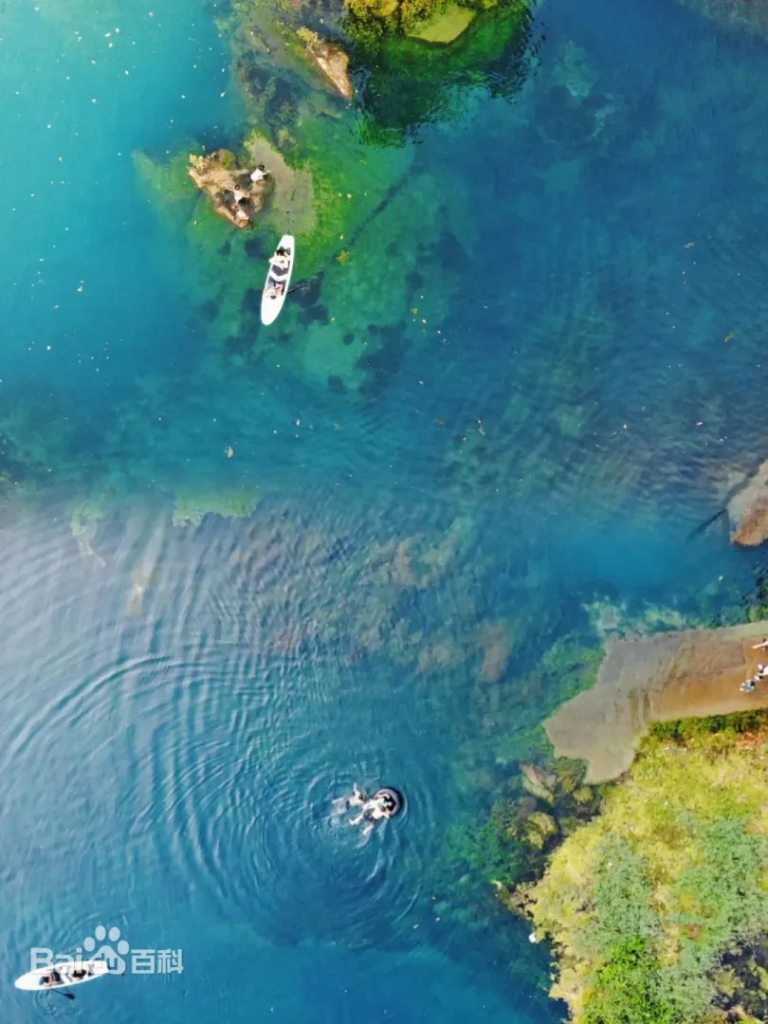
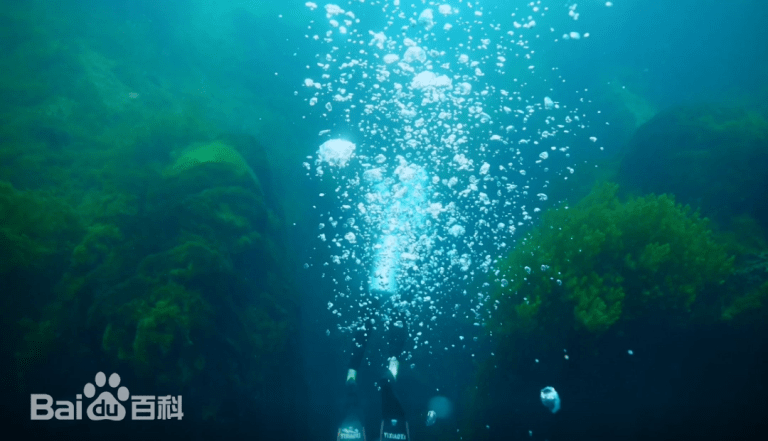
  • 🎫 Tickets: FREE entry to the area!
  • 💰 Paddleboard Rental: Around 30 RMB/hour, or 50 RMB for 2 hours.
  • 📸 Pro-Tip: Make sure to request a clear/transparent paddleboard for those stunning, weightless aerial-style photos!

🚗 【Essential Travel Tips】

  • 📅 Best Season: May to October. This is the prime time for water activities, and you will also get the chance to see the beautiful, rare Ottelia acuminata (sea-cake flowers) blooming on the water’s surface.
  • 🚘 Getting Around: Self-driving or renting a car is highly recommended. The highways and national roads connecting Tian’er, Fengshan, and Du’an are well-maintained, and the driving routes wind through some of the most stunning, dramatic karst landscapes in China.
  • 🎒 What to Pack: High-SPF sunscreen, quick-dry clothing, and a reliable waterproof bag for your electronics. Keep in mind that the caves can get quite chilly, so bring a light jacket.
  • 🕶️ Secret Weapon: Bring a pair of polarized sunglasses! They cut the glare on the water’s surface entirely, allowing you to see the fish and underwater plants with perfect clarity.
  • ⚠️ Safety First: Always wear your life jacket when paddleboarding! No matter how good of a swimmer you are, safety makes the trip enjoyable.
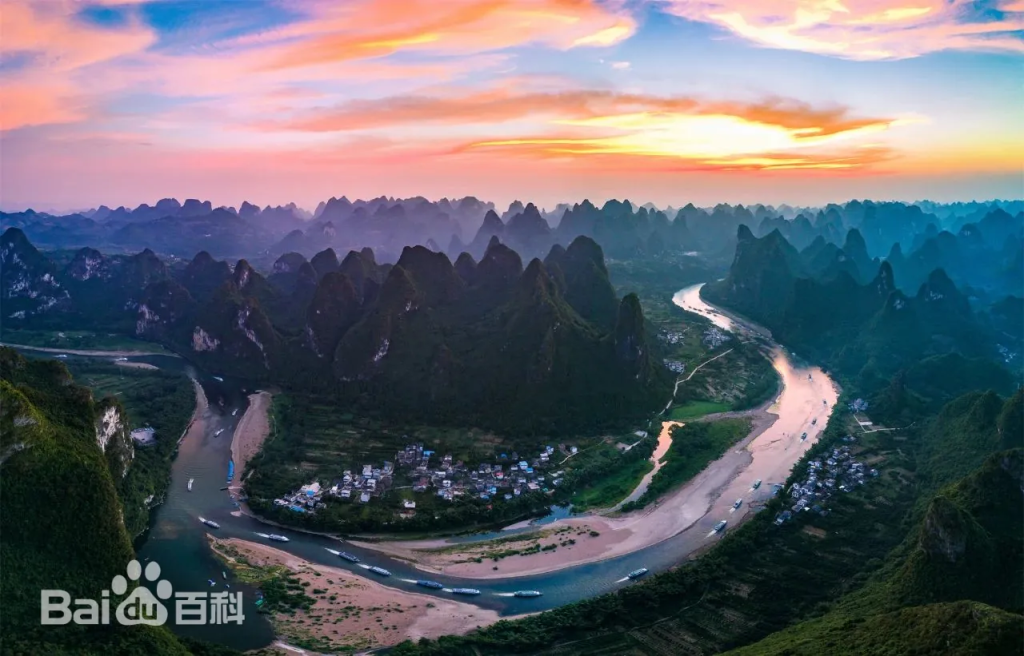
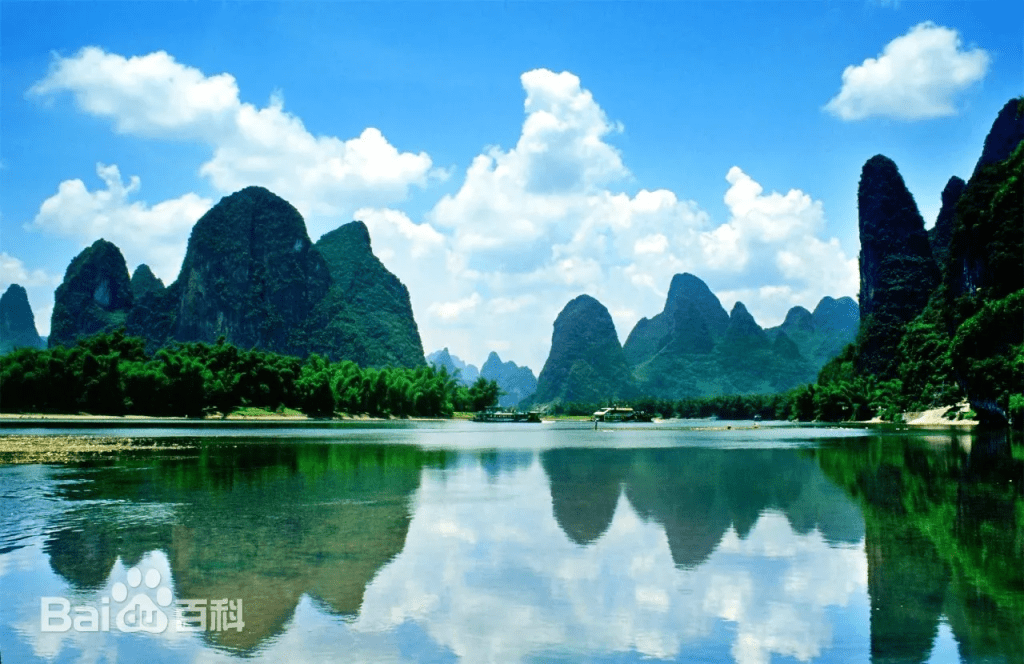
The beauty of Guangxi goes so much deeper than its famous postcards. Hechi offers a raw, wild, and incredibly pure escape that is hard to find in today’s crowded world. If you want to beat the summer heat, dive into crystal waters, and explore the mysteries of the earth without the crowds—Hechi is calling. 🎒🌿

Link:https://peacelilysite.com/2026/06/16/%f0%9f%8c%8a-hechi-guangxi-the-ultimate-summer-water-paradise-a-hidden-gem-outshining-semporna/

The Ultimate Croatian Summer 2026 Itinerary of ‘Must-Do’ Experiences

Courtesy of Boris Kacan / Korcula Tourist Board

By Malana VanTyler Contributor May 21, 2026, 5:14 p.m. ET

Summer 2026 is the year to go deeper into Croatia than most travelers ever do, reaching destinations and experiences sometimes left under the radar. Most first-timers land in Dubrovnik, work their way up the coast, and leave wondering what they missed. The answer is usually everything inland and everything that does not show up on a standard ten-day package. This itinerary is an insider’s handbook on experiences, locations, and sceneries a seasoned Croatia traveler would recommend. From music festivals and Michelin star restaurants, to vitality islands, medieval stone towns, and 3000-year-old palaces. Croatia is more than just a single destination. There are at least ten distinct ones, and this is where to start.

Drink Wine in a Roman Palace in Split

Courtesy of Split and Dalmatia County Tourist Board

The journey begins the moment you land in Split, now reachable on a direct flight from New York. Here, waking up inside a Roman emperor’s palace is not history. It is just Tuesday. The palace Diocletian built here in 305 AD became what the city is today. Sipping local wine perched on 1,700-year-old walls is not a novelty here; it is just a Tuesday, and the city is so diverse that there’s something for everyone who visits. From climbing Marjan hill in the morning and afternoons on the waterfront promenade watching the sunset, to staying for the evening when the city shifts into the slow pace that Dalmatians call pomalo.  Every island on this itinerary leaves from here, which means Split is not just a stop. It is the center of gravity of the entire Dalmatian coast.

Seasoned traveler’s advice: Climb Marjan Hill. Use it as your base for the islands.

Live Island Life at Its Finest in Korčula Town

Courtesy of Andro Tasovac / Korcula Tourist Board

From Split, a ferry southeast through the Dalmatian islands brings you to Korčula, a medieval town located on a narrow stone peninsula that some historians argue was the birthplace of Marco Polo. Step outside the old town walls and within ten minutes you’ll be met with beaches and coves with some of the clearest water on the Dalmatian coast. The island’s gems are Posip and Grk, two white wines indigenous to the island, with Grk believed to be one of the oldest grape varieties in Croatia. On summer evenings, the Moreska, a sword dance performed here continuously since the 17th century, plays out in the open squares by torchlight. An island that delivers medieval architecture, exceptional wine, and some of the clearest water on the Dalmatian coast, and somehow still hasn’t made it onto everyone’s list. That’s exactly why it’s on this one.

Seasoned traveler’s advice: Rent a bike, find a beach, try the Posip.

Experience the Art of the Adriatic Day at Carpe Diem Beach, Hvar

Courtesy of Carpe Diem Beach

The ferry from Korčula to Hvar takes less than an hour. From Hvar town, a boat across the channel brings you to Carpe Diem Beach, a pine-covered cove in the Pakleni Islands that almost everyone who wants to visit Croatia has on their bucket list. Crystal-clear water, a pool above the open Adriatic, nets suspended over the sea. Arrive in the morning for the stillness of it. By afternoon, the sun is down, the crowd has found its way in, and the cove has become something else entirely. The kitchen runs all day, Mediterranean dishes and fresh sushi from lunch through the long Adriatic evening. As the sun drops over the Pakleni Islands, the energy is at its peak, and this pine-covered cove in the middle of the Adriatic becomes the exact center of the Mediterranean summer.

Seasoned traveler’s advice: Get on the first boat from Hvar to enjoy the day to the fullest.

Eat Above the Adriatic with Dinner in the Sky, Dubrovnik

Courtesy of Dinner in the Sky

Take a ferry south, and within a few hours, Dubrovnik appears on the horizon. View from a distance is one thing. From fifty meters above the Adriatic, with the old city walls below you and the open sea stretching in every direction, it is something else entirely. Dinner in the Sky puts a dining table up there, with a chef, a three-course menu of Croatian specialties, and a platform that rotates to catch every angle of the coast. The moment it lifts, and the city drops away, is one of those travel experiences that is genuinely difficult to prepare for. The food is serious, the wine is local, and what started as an unlikely concept has quietly become one of the hardest reservations to get on the entire Dalmatian coast. Some experiences build expectation. This one lives up to it.

Seasoned traveler’s advice: Book the sunset slot. It sells out weeks in advance.

Claim Your Own Island with Master Charter

Courtesy of Master Charter

After Dubrovnik, the journey north is best made by water. The Croatian archipelago is expansive, which is where the Master Charter comes in. Since 2006, the company has been building bespoke sailing itineraries along the Croatian coast. Their expertise lies in matching small groups to handpicked vessels from a fleet. There’s something for everyone, from traditional wooden gulets to luxury motor sailers and beyond. Several captains own the yacht they sail, a rarity in the charter industry, ensuring every detail of the trip (and the stay) gets the attention it deserves. Sun decks, jacuzzis, water toys, and cabins all come as the finishing touches that make going ashore feel like a step down. Out here, with the right crew and the right vessel, a Master Charter voyage is the difference between seeing Croatia and understanding it.

Seasoned traveler’s advice: Book well ahead. The best yachts go early.

Find Yourself on Lošinj, Croatia’s Island of Vitality

Courtesy of Hrvoje Serdar / Mali Lošinj Tourist Board

Before you know it, the sail brings you to the island of Lošinj. To pine-scented air, clean enough to feel like a treatment in itself. Sea so clear the seabed is visible from the surface. A town where food comes with a philosophy– the Taste of Vitality. Seasonal and nutrient-rich, prepared with wellbeing and health in mind. Mali Lošinj has been doing vitality before it became a lifestyle industry. The island sits in the Kvarner Bay, surrounded by one of the cleanest seas in Europe, and 220 kilometers of hiking and cycling trails through pine forests to hidden coves. Options here are endless. Sail, dive, do SUP yoga at sunrise, or simply sit in the pine forest and breathe. Mali Lošinj is a place where rest, movement, nature, and food work together in perfect balance. An island where vitality comes naturally.

Seasoned traveler’s advice: Extend your stay. Come with no agenda.

Dine at a Three Michelin Star Destination at Hotel Grand Park, Rovinj

Courtesy of Grand Park Hotel Rovinj

A short journey away stands the Istrian coast, home of truffles, olives, and wine, with the same seriousness as Tuscany. Rovinj is unique, and Grand Park Hotel Rovinj gives reason to make it a dedicated stop. The hotel sits above the sea at the edge of the Golden Cape forest park, looking out across the Adriatic from one of the finest positions on the Istrian coast. The hotel’s been featured on the World’s 50 Best Hotels 2025 list, and the dining alone justifies it. Rovinj carries more Michelin stars than any other destination in Croatia, and three of them are inside this hotel: Agli Amici Rovinj holds two, Cap Aureo one. Few hotels in Europe can claim a world-ranked address, three Michelin stars, and a view like this. Grand Park earns every night you give it.

Seasoned traveler’s advice: Book a table at one of the Michelin-star restaurants even if you are not staying overnight.

See the Show of the Summer at INmusic Festival, Zagreb

Courtesy of INmusic festival

Reaching Zagreb in June means one thing. For twenty years, Lake Jarun has hosted INmusic, and the festival earned its place on the European calendar edition by edition. A lake island inside a capital city. Stages facing the water. The Zagreb skyline in the background. This year’s lineup for the 20th anniversary is the strongest the festival has put together. It’s a true gem– a mix of global headliners and emerging European acts reflecting what INmusic has always been about. An immersive, laid-back escape, whose two decades of cultural weight are hard to overstate. Zagreb takes its summers seriously, and INmusic’s the reason June belongs to the city. Tens of thousands of people gathering on a lake island in the heart of the capital. A lineup that raises the bar every year. Taken together, it makes INmusic one of Europe’s must-visit festivals, shaping the summer cultural calendar.

Seasoned traveler’s advice: Find accommodation well in advance or opt for on-site camping. 

Walk Across the Water at Plitvice Lakes National Park

Courtesy of National Park Plitvice Lakes Archive

Plitvice Lakes National Park is one of Croatia’s most visited destinations, and it belongs on every itinerary that touches more than just the coast. Located two hours from Zagreb, this national park covers nearly 300 square kilometers of forested karst terrain. What you see is unique– 16 crystalline lakes connected by more than 90 cascades and waterfalls spill over travertine barriers that have been accumulating for millennia. It’s a perfect weekend getaway with an on-site hotel within the National Park and charming restaurants showcasing the local gourmet specialties. It’s been a UNESCO World Heritage Site since 1979, and for a reason. Plitvice stops people in a way that very few places in Europe still can. The water, the color, the scale of it. Some landscapes simply speak for themselves.

Seasoned traveler’s advice: Visit May through September. Book tickets in advance.

Taste the Region at Korak Winery, Plešivica

Courtesy of Korak Winery

From Plitvice back to Zagreb, take a detour to Plešivica, a wine region that Croatians have been calling their Champagne for decades, and Korak Winery is the reason to stop. Their philosophy, heritage and authenticity; all bottled into small batches of premium organic wines. Five generations of hands-on family stewardship, and each member takes a hands-on approach. Josip is the enologist. Vera leads the service, awarded Michelin Best Service 2025. Bernard takes charge of the kitchen. What he built goes beyond a winery restaurant. He cooks the land around him, sourcing from local growers, hunters, and foragers as the season dictates, an approach that earned Korak a Michelin Green star alongside its one Michelin star for cuisine. The eight-course tasting menu, paired with estate wines, makes this detour feel like the whole point of the trip. 

Seasoned traveler’s advice: Take the winery tour and book the restaurant in advance.

Make It Count

Croatia rewards the traveler who plans ahead. The best restaurants fill up weeks in advance. The national park requires timed entry in summer. The distances are short, the people are welcoming, and a country that runs from the mountains of the interior to the islands of the southern Adriatic can be covered in ten days without feeling rushed. Start in Split. Work your way through the islands, up the coast, through the lakes, and into Zagreb just in time for the most anticipated festival in the region. Croatia has a way of filling every day of a trip and leaving you with a list of reasons to come back.

Link:https://peacelilysite.com/2026/05/22/the-ultimate-croatian-summer-2026-itinerary-of-must-do-experiences/

Source: https://www.usatoday.com/story/special/contributor-content/2026/05/21/the-ultimate-croatian-summer-2026-itinerary-of-must-do-experiences/90202255007/

Why Ancient Roman Buildings Still Stand—And Modern Ones Don’t

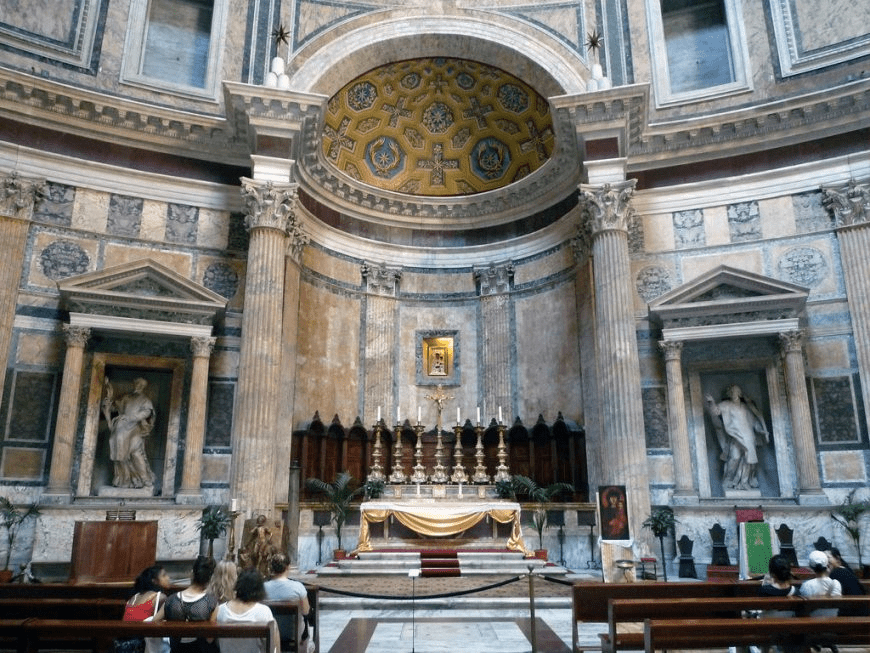
Have you ever stood before the Pantheon in Rome or looked up at the towering aqueducts from ancient times and thought:
“How are these structures—built over 2,000 years ago—still standing strong, while modern buildings crack, rust, and collapse in just a few decades?”

It’s not a miracle. It’s ancient wisdom and material science far ahead of its time.

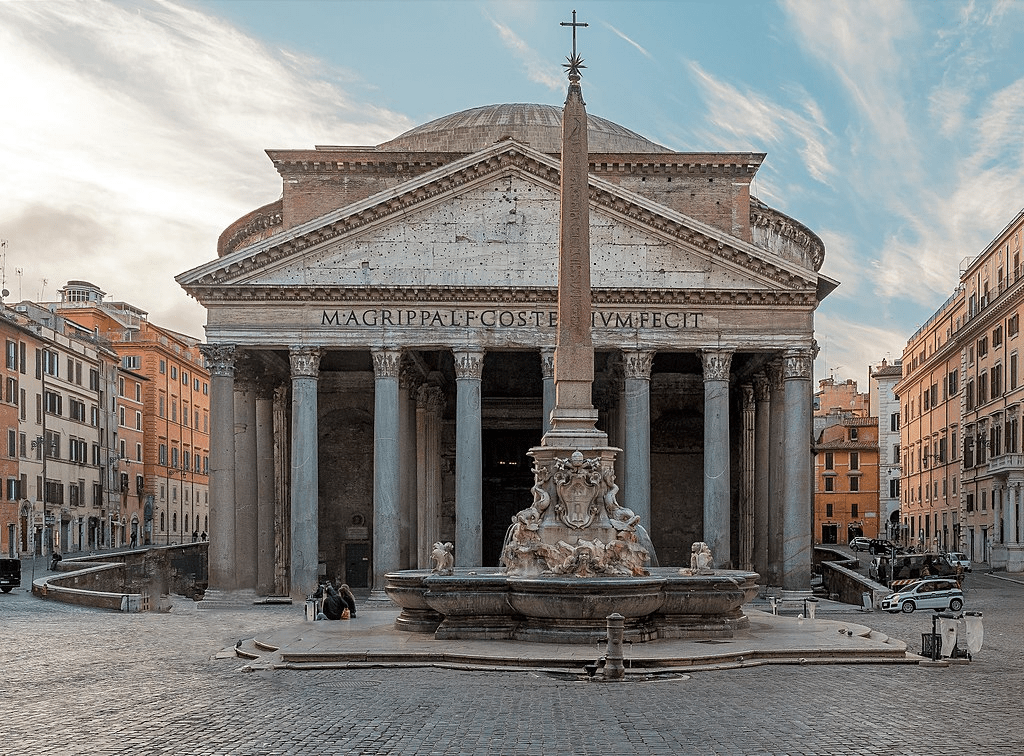
By Rabax63 – File:Pantheon_Rom_1.jpg, CC BY-SA 4.0, https://commons.wikimedia.org/w/index.php?curid=87626466

Pantheon, Rome, c. 125 C.E. (photo: Darren Puttock, CC BY-NC-ND 2.0)

Sanctae Mariae Rotundae (photo: Steven Zucker, CC BY-NC-SA 2.0)

🏛 The Secret of Roman Concrete

Unlike the Portland cement we use today, ancient Roman concrete was made with volcanic ash (pozzolana), lime, water, and volcanic rock. This special mix triggered a chemical reaction known as the pozzolanic reaction, which formed a remarkably stable and durable material.

This volcanic ash came from regions like Campi Flegrei near Naples, rich in silica and alumina. When mixed with lime and water, it formed bonds that strengthened over time—rather than weakened.


🌊 Stronger with Time—Even Underwater

Even more amazing? Roman concrete exposed to sea water didn’t erode—it grew stronger. Scientists discovered that seawater reacted with the volcanic materials to create a rare mineral called tobermorite, which reinforced the concrete’s internal structure.

This is why many ancient Roman ports and sea walls still stand intact after 2,000 years—even without modern rebar or waterproofing.

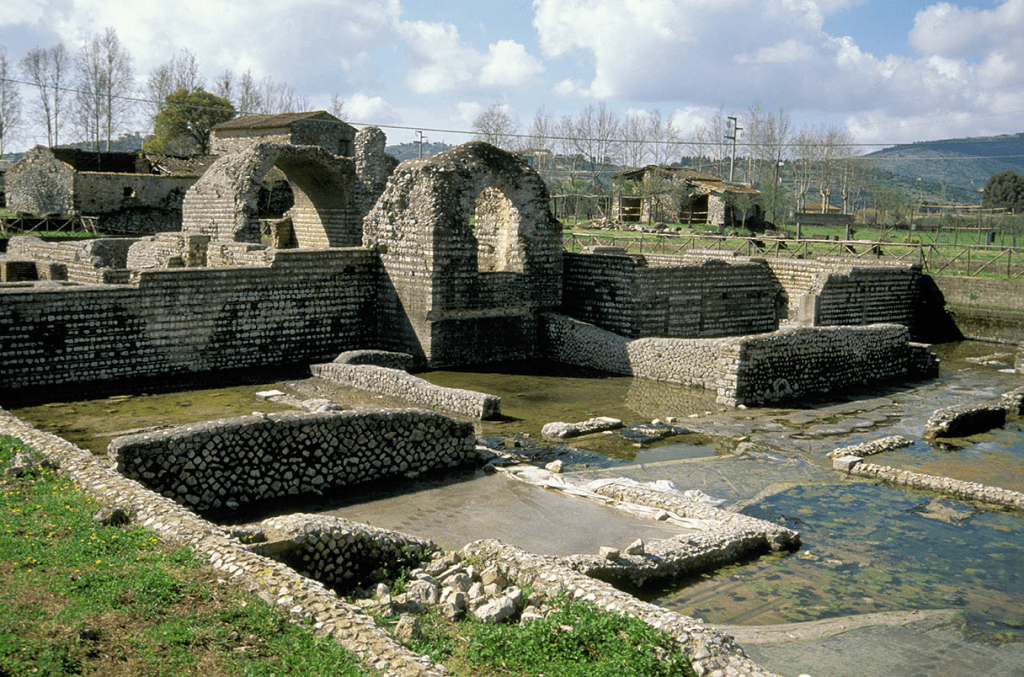
Ruins in Privernum, near Rome, where researchers collected ancient concrete samples from a bordering city wallREDA & CO srl/Alamy


🔧 Self-Healing Capabilities

Roman concrete even had a kind of “self-healing” ability. When small cracks formed, water seeping into the cracks would trigger new chemical reactions, filling the gaps with more binding minerals and sealing the damage naturally.

No wonder structures like the Pantheon’s massive unreinforced concrete dome—still the largest in the world—have stood strong for two millennia.

Today’s concrete (Portland cement) is fast to produce and easy to use—but it’s not built to last. It’s vulnerable to carbonization, water infiltration, and the corrosion of internal steel reinforcements. Many modern buildings begin to deteriorate in as little as 50 to 100 years.

What’s more, many structures are built with thinner supports and cheaper materials to cut costs and speed up construction—further sacrificing long-term durability.

Ancient Roman builders weren’t just engineers—they were environmental designers who worked with nature rather than against it. Their materials were local, natural, and synergistic. They designed for longevity, not just appearance or convenience.

Modern architecture, for all its technological advancements, could learn a powerful lesson:
Durability is a form of sustainability.


We often assume that more advanced technology means better quality. But perhaps what truly makes a structure strong isn’t just engineering—it’s wisdom, respect for nature, and a mindset rooted in harmony and longevity.

If we embrace these ancient insights, maybe our future buildings won’t just house us—they’ll endure for generations.

Link:https://peacelilysite.com/2025/07/21/why-ancient-roman-buildings-still-stand-and-modern-ones-dont/

Xinjiang’s Golden Tapestry: Exploring the Stunning Autumn Landscapes of China’s Northwest

As autumn quietly arrives on the vast land of Xinjiang, a stunning visual feast also begins. Autumn in Xinjiang is like a vivid, colorful painting, with every scene exuding its own unique charm.

If Tibet offers people a spiritual shock, then Xinjiang provides a visual impact.

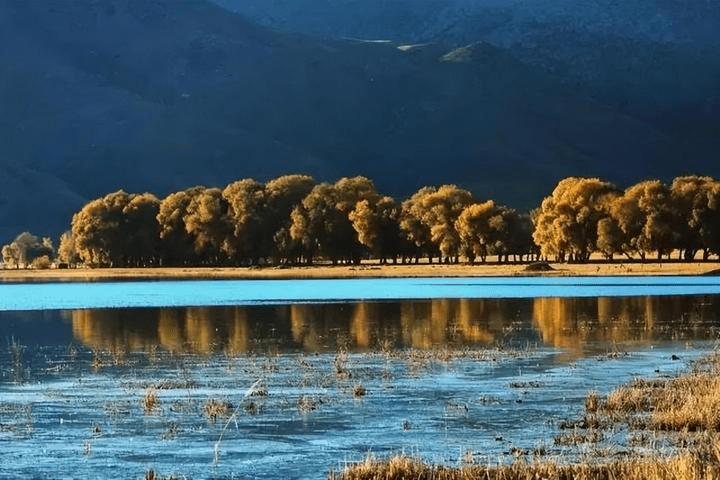
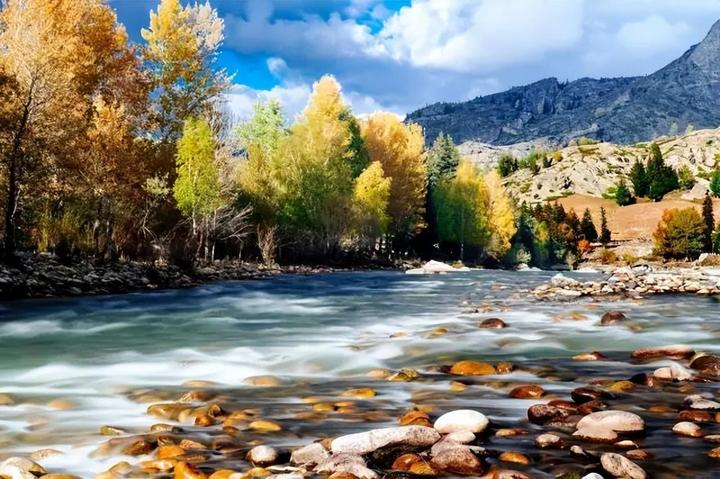
This is the place in China where autumn’s colors are the richest, with vibrant hues blooming amidst alternating poplar forests, lakes, rivers, and deserts.

If you missed the lush greenery of summer, you definitely cannot miss the splendid autumn of Xinjiang. Below is a suggested itinerary for Northern Xinjiang.

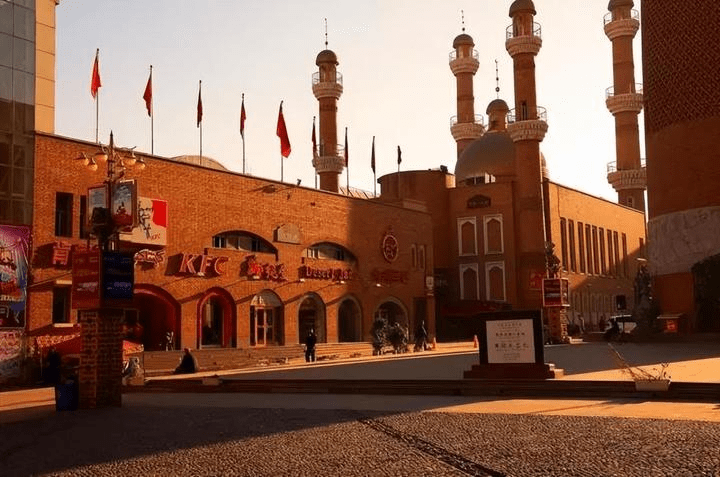
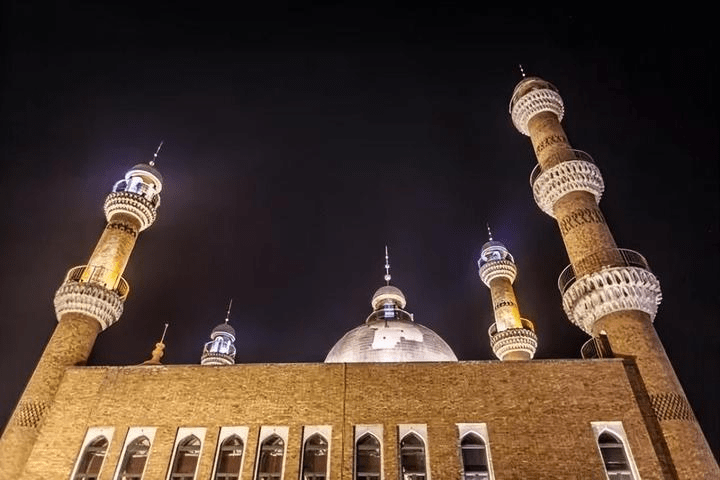
Day 1: Arrive in Urumqi, which can be reached via Urumqi International Airport. Upon arrival, explore the city with key places such as the Erdaoqiao International Bazaar, Hongshan Park, and the Xinjiang Uygur Autonomous Region Museum.

The International Bazaar is the largest bazaar in the world, combining Islamic culture, architecture, ethnic commerce, entertainment, and dining. It is known as the “Window to Xinjiang,” “Window to Central Asia,” and “Window to the World.” It symbolizes the prosperity of commerce and tourism in Xinjiang and serves as a scenic landmark in Urumqi, a city rich in ethnic diversity.

The architecture reflects a strong Islamic style, and while fulfilling modern functionality, it also recreates the historical glory of the ancient Silk Road. The bazaar showcases the deep ethnic characteristics and regional culture of Western China.

You can take Urumqi’s city rapid bus or BRT line 3 and get off at Erdaoqiao Station.Try Big Plate Chicken, baked buns, lamb kebabs, and hand-pulled rice to ignite your taste buds.

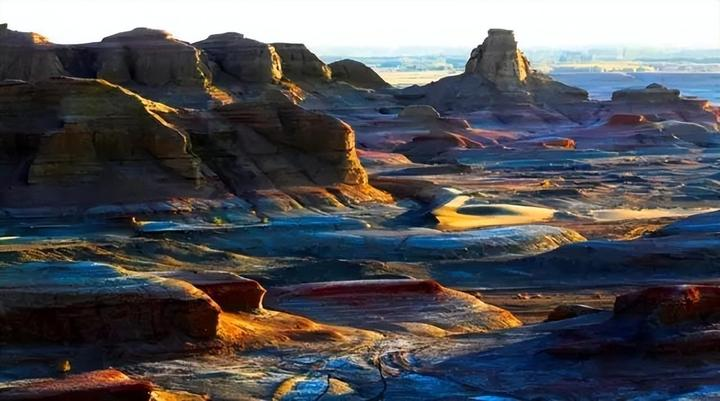
Day 2: Urumqi to Urho Ghost City, exploring the wind-eroded landscapes. Ghost City is also known as Urho Wind City.

It is a unique wind-eroded landform with bizarre shapes. The local Mongolian people call this place “Sulumuhaque,” and the Uygur people refer to it as “Shaytankarshi,” which means Ghost City. The Ghost City stands like a mighty castle in the vast Gobi desert.

This castle-like formation resembles pavilions, towers, corridors, streets, and even a demon’s treasure hall. On the western side of the city gate, there is a rock formation called the “Stone Monkey Gazing at the Sea,” and within the city, you’ll find the towering “Mount Fuji,” the temple-strewn “Angkor Wat,” the magnificent “Potala Palace,” and shapes that resemble a cobra, a roc, and other creatures. These scenes are incredibly varied and dazzling, forming a dreamlike maze.

From a distance, you’ll marvel at its grandeur and magnificence, praising nature’s incredible craftsmanship. Bathed in the glow of the setting sun, the Ghost City becomes a kaleidoscope of colors, resembling a medieval castle with uneven heights and intricate layers, creating a unique spectacle in the Gobi desert.

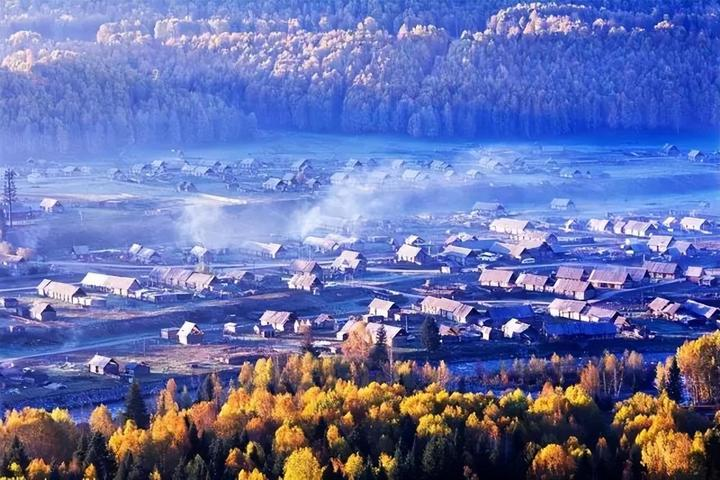
Day 3: Hemu Village, the most beautiful secluded village – Experience the traditional life of the Tuva people.

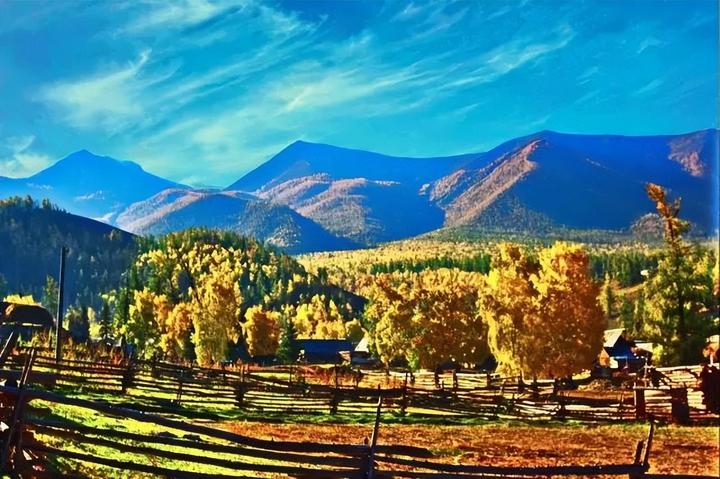
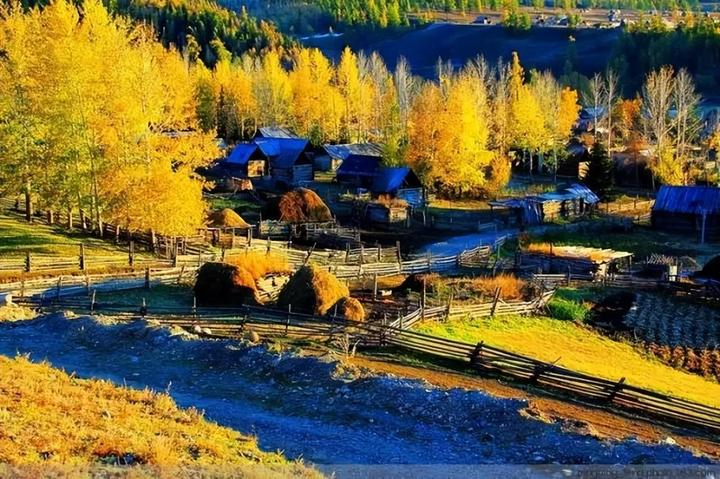
In autumn, the golden leaves of Hemu Village contrast beautifully with the rustic wooden houses. Walking along the village’s paths, the rustling of fallen leaves underfoot seems to whisper stories of the passing years. This is a great place to experience the life of the Tuva people. You can taste local delicacies, enjoy traditional singing and dancing, and immerse yourself in the charm of their unique culture.

Nestled in a vast open area surrounded by mountains, Hemu Village lies quietly, with the Tuva people’s pointed wooden houses and livestock pens scattered casually throughout the village.

A faint mist forms a winding white ribbon above the forest, drifting between the village and the mountains. The most captivating aspect of Hemu Village is its stunning autumn scenery, where mountains covered in red foliage are breathtaking. Smoke rises slowly through the autumn colors, forming a dreamy mist that makes the village look like a fairyland.

Day 4: Kanas – Immersing in the breathtaking scenery of lakes and mountains.

Kanas is one of the world’s rare “earthly paradises.” Its unparalleled beauty is something that even the best photography skills cannot fully capture.

Kanas combines the grandeur of northern landscapes with the delicate charm of southern waters. Additionally, there are other breathtaking spectacles such as the “Sea of Clouds with Buddha’s Light,” the “Color-Changing Lake,” the “Floating Wood Dyke,” and the “Lake Monster,” making it a true wonderland of the Western regions.

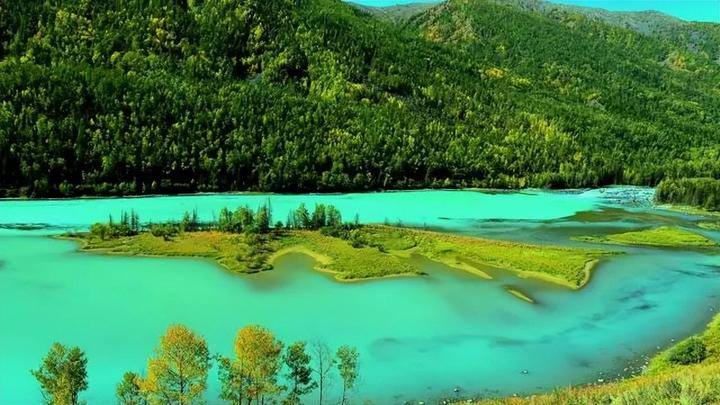
Kanas Lake: This lake, known as the “Earthly Fairyland,” reveals a unique charm in autumn. The lake’s water remains as emerald green as a gemstone, while the surrounding forests are transformed by autumn frost into a dazzling array of colors—fiery reds, golden yellows, and sunset oranges. These hues, set against the backdrop of a bright blue sky, form a breathtaking painting, as if nature itself had painted it with the finest brushstrokes.

Kanas Lake is an alpine lake nestled deep in the Altai Mountains’ dense forests. In 2009, it was named the “Most Beautiful Lake in China” by Chinese National Geography magazine.

Best time to visit: From June to early October.

Transportation: The Kanas Scenic Area has its own airport, and you can fly directly from Urumqi to Kanas. The flight takes about 50 minutes.

Day 5: From Baihaba to the Rainbow Beach, admire the colorful rocks and rivers.

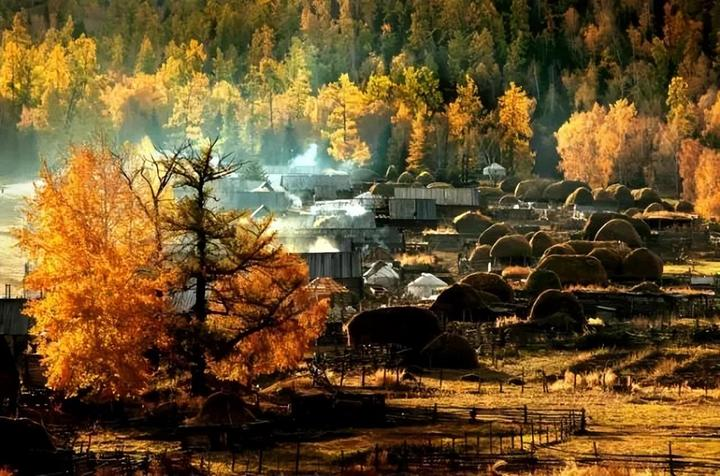
Baihaba Village, known as “the first village in the northwest,” faces the towering mountains of Kazakhstan in the distance. The dense golden pine forests of the Altai Mountains stretch all the way to Baihaba, where the villagers’ wooden houses and livestock pens are scattered harmoniously among the pine and birch forests, creating a peaceful and serene atmosphere. All of the village’s buildings are made of raw wood, with rustic log cabins as its signature feature, giving it the feel of a European-style village.

Baihaba Village: This place, known as “one of the eight most beautiful towns in China,” is especially breathtaking in autumn. The entire village is surrounded by golden birch forests, making it look like a golden fairy-tale world. The old wooden houses are scattered harmoniously among the trees, with smoke gently rising from the chimneys, creating a strong sense of rustic life.

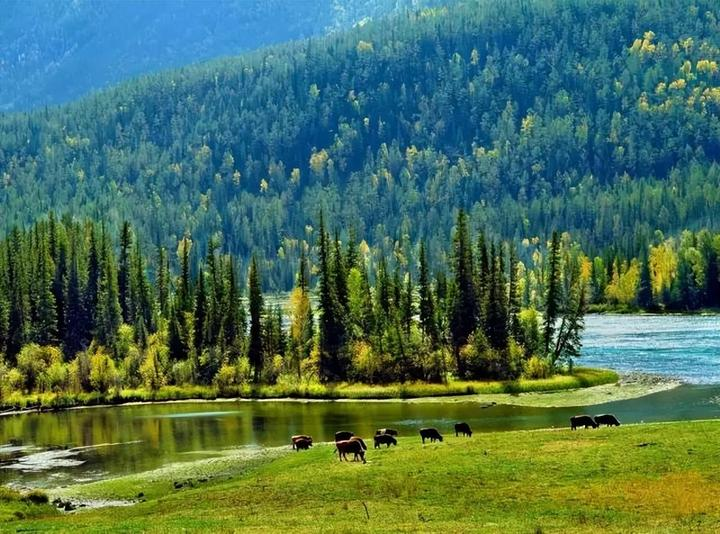
At sunset and in the misty mornings, the smoke drifts lazily, while cows and sheep graze on the hills, painting a picture of harmony between humans and nature. If Kanas is a secluded, ancient paradise, then Baihaba is a fairy-tale world nestled in an untouched natural environment.

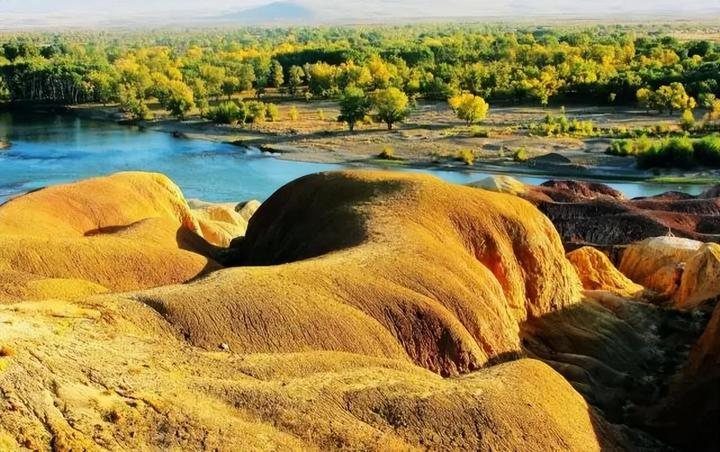
In the morning, immerse yourself in the rustic atmosphere on the grasslands of Baihaba. In the afternoon, head to the spectacular Rainbow Beach to admire Xinjiang’s most beautiful Yardang landforms. The hills here have unique geological features and display a variety of colors. At sunset, under the sunlight, the rocks primarily glow red, with shades of green, purple, yellow, white, black, and transitional hues, creating a vibrant and mesmerizing palette, which is why it’s called “Rainbow Beach.”

Whenever the wind blows, strange sounds of varying lengths and pitches echo from the gullies and beneath the rocks, adding a mysterious and otherworldly feel to the place.

Day 6: Keketohai – Enjoy the tranquility of lakes and forests.

Keketohai Town is located 48 kilometers northeast of Fuyun County in the Altai Mountains, in northern Xinjiang Uygur Autonomous Region. In Kazakh, “Keketohai” means “green forest,” and in Mongolian, it means “blue river bend.”

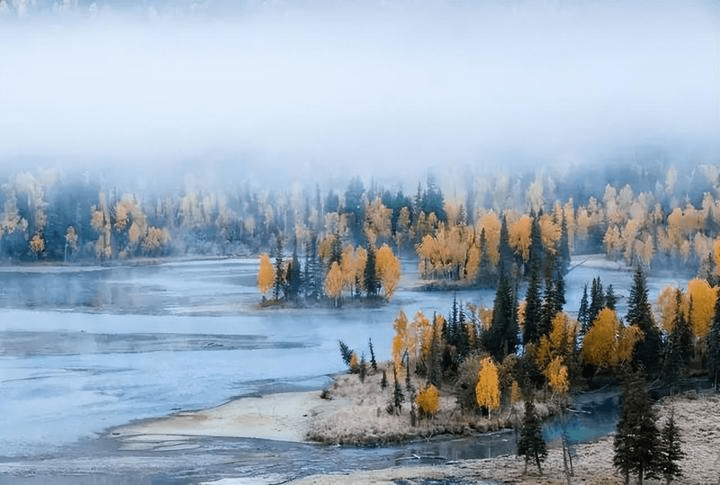
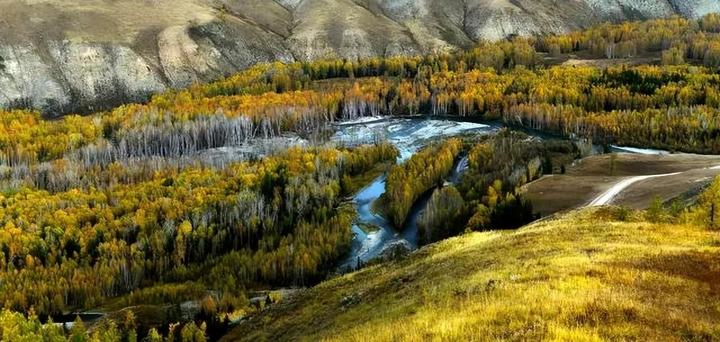
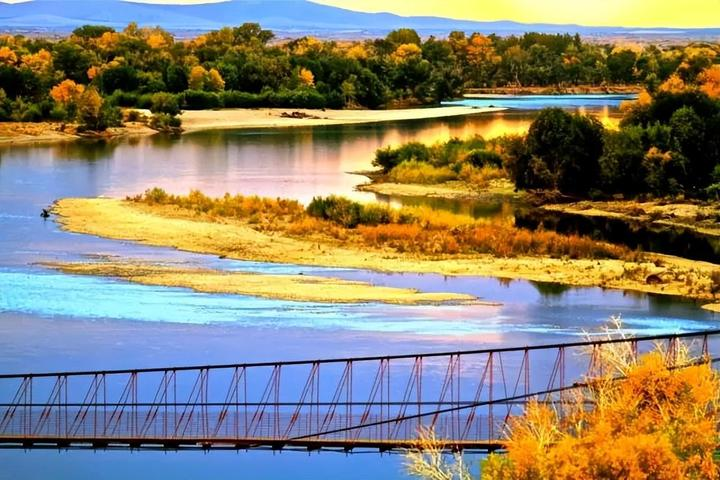
In autumn, the golden birch forests of Keketohai beautifully complement the clear river waters. The river flows gently, reflecting the stunning scenery on both banks, like a giant mirror. Strolling along the river, feeling the breeze and listening to the birds sing, fills one with a sense of peace and serenity.

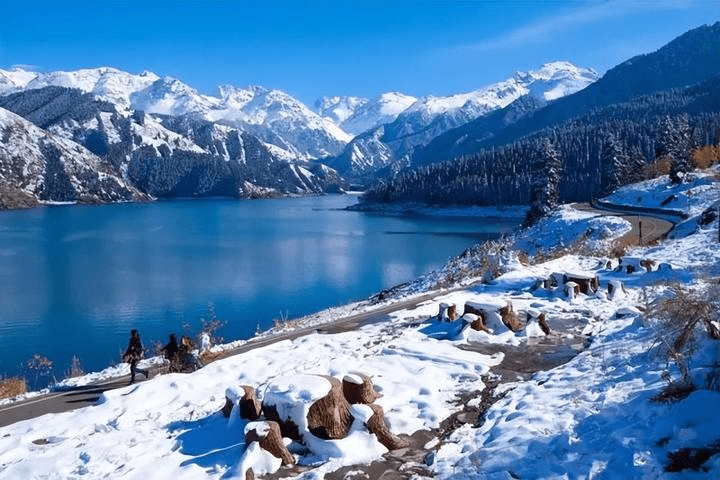
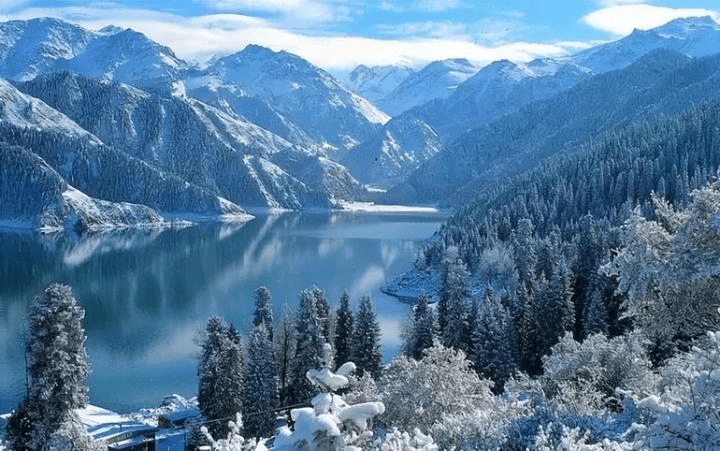
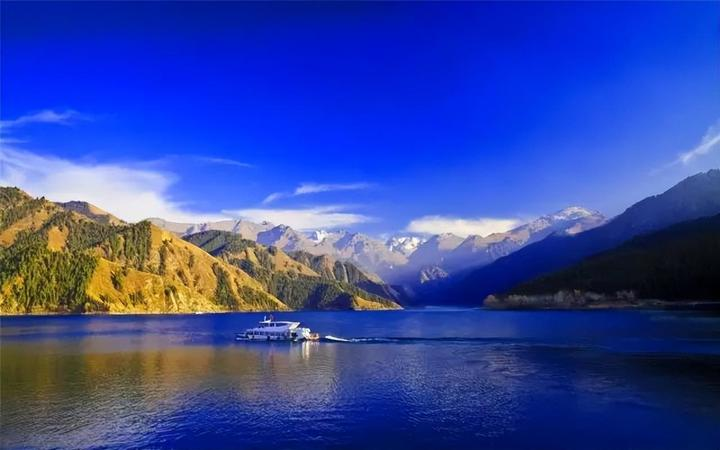
From here, you will have seen most of the beautiful autumn scenery in northern Xinjiang, and you can return to Urumqi to end your trip. If you have more time, you can visit Heavenly Lake (Tianchi) to admire the snowy mountains and emerald waters.

Heavenly Lake: A fairyland amidst the surrounding mountains.

Over the course of history, in the vast wilderness of China’s western regions, a place of extraordinary beauty emerged—Heavenly Lake in the Tianshan Mountains.

Historically known as “Jade Pool,” legend has it that King Mu of the Zhou dynasty traveled west and held a feast with the Queen Mother of the West here. In the Qing dynasty, during the reign of Emperor Qianlong, it was named “Tianchi,” meaning “Heavenly Mirror” or “Divine Lake.”

Heavenly Lake is an extraordinary and mesmerizing sacred site.

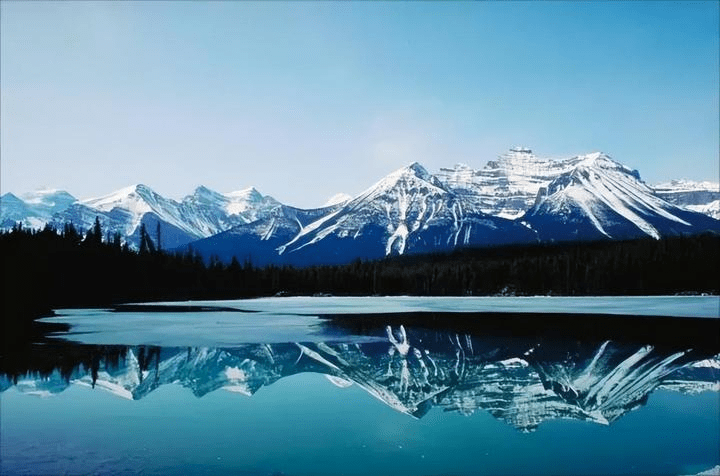
Its fame not only comes from the beautiful and mysterious legends associated with it throughout history, but also from its unique natural and cultural landscapes, renowned both domestically and internationally! The Bogda Peak of the Tianshan Mountains rises to 5,445 meters above sea level, its snow-covered glaciers extending throughout the year. The snowy mountains and the blue lake complement each other, creating breathtaking scenery. The surface of the lake is crescent-shaped, and the water is crystal clear, as pure as jade.

The snow-capped peaks reflect in the lake, surrounded by towering spruce trees, with the emerald waters as smooth as a mirror, forming a picturesque landscape. Encircled by mountains, the area is lush with green grass and vibrant wildflowers, earning it the title “Pearl of the Tianshan Mountains.” Tall, verdant spruce and pine trees cover the mountains and ridges, creating a dense forest canopy.

Link:https://peacelilysite.com/2024/10/18/xinjiangs-golden-tapestry-exploring-the-stunning-autumn-landscapes-of-chinas-northwest/

Source : photos from https://www.52hrtt.com/br/n/w/info/F1665986705929

Copenhagen World Capital of Architecture for 2023

Copenhagen World Capital of Architecture for 2023

Copenhagen is a unique city, characterized by its canals, cycling culture, magnificent historical buildings, awe-spiring architecture structures, and happy locals. It is actually known as being one of the happiest city in the world.

The architecture of Copenhagen in Denmark is characterised by a wide variety of styles, progressing through Christian IV‘s early 17th century landmarks and the elegant 17th century mansions and palaces of Frederiksstaden, to the late 19th century residential boroughs and cultural institutions to the modernistic contribution of the 20th century such as Arne Jacobsen‘s National Bank and SAS Royal Hotel.

Copenhagen is recognised globally as an exemplar of best practice urban planning. Its thriving mixed use city centre is defined by striking contemporary architecture, engaging public spaces and an abundance of human activity. These design outcomes have been deliberately achieved through careful replanning in the second half of the 20th century, with notable contributions both by leading international architects and a wave of new successful Danish architects.

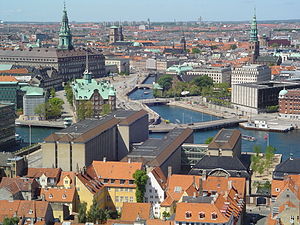
View of Copenhagen from the tower of the Church of Our Saviour

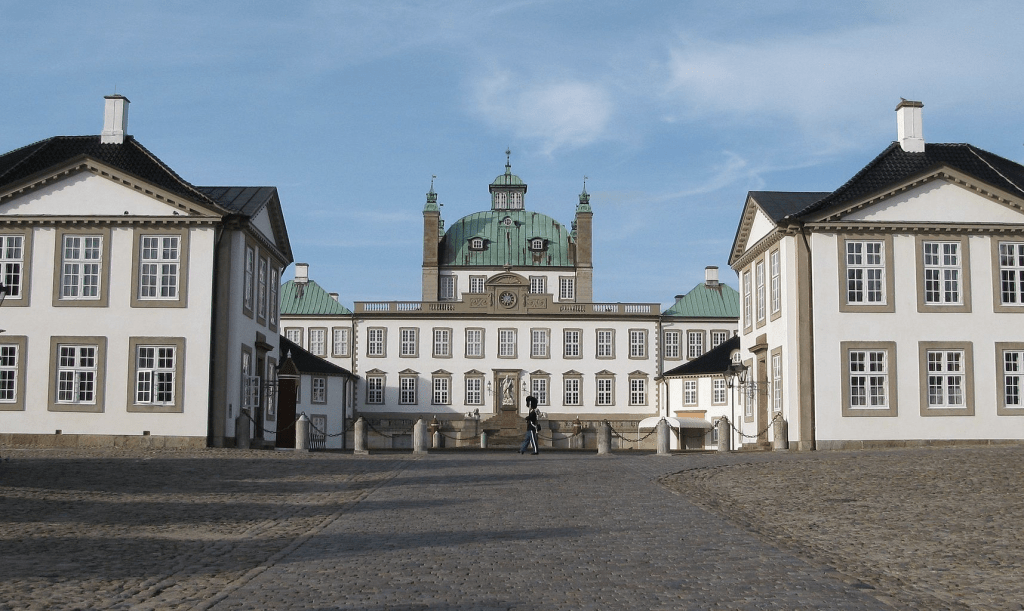
Baroque buildings in Copenhagen include the Round Tower and the Church of Our Saviour as well as Fredensborg Palace.

Fredensborg Palace

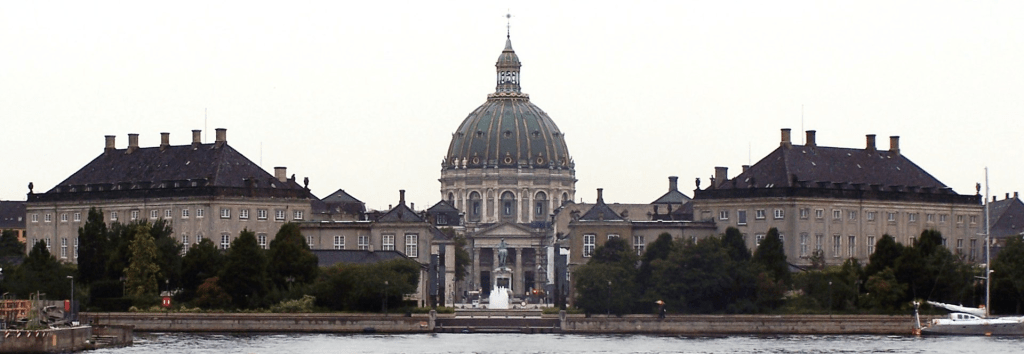
Frederiksstaden was constructed during the reign of Frederick V in the second half of the 18th century and is considered to be one of the most important Rococo complexes in Europe. It was developed to commemorated the 300 years jubilee of the House of Oldenburg taking the throne in Denmark. Leading the project was A. G. Moltke, with Nicolai Eigtved as the main architect. Frederiksstaden has Amalienborg Palace and Marble Church at its centre and together they create an axis that was extended with the creation of the new Copenhagen Opera House in 2005 on the other side of the harbour basin. The district is characterized by straight broad streets in a straight-angled street layout. The streets are lined by bourgeois houses, mansions and palaces. Another important building in the district is the royal Frederiks Hospital was Denmark‘s first hospital in the present-day meaning of the word. It now houses the Danish Museum of Art & Design.

Frederiksstaden has Amalienborg Palace, the Danish residence palace complex with François Joseph Saly’s equestrian statue monument to King Frederik V of Denmark in the middle of the octagonal plaza, and Frederik’s Church at its center.

Copenhagen’s urban development in the first half of the 20th century was heavily influenced by industrialisation. After World War II, Copenhagen Municipality adopted Fordism and repurposed its medieval centre to facilitate private automobile infrastructure in response to innovations in transport, trade and communication. Copenhagen’s spatial planning in this time frame was characterised by the separation of land uses: an approach which requires residents to travel by car to access facilities of different uses. This planning scheme largely aligned with the modernist framework endorsed by Le Corbusier in such conceptual projects

In 1962, Danish architect Jan Gehl shifted the trajectory of Copenhagen’s development by pedestrianising key parts of its city centre with the goal of enhancing the on-street conditions for humans.Rigorous field studies informed Gehl’s conclusion that city spaces perform best when they encourage the use of public spaces.[10] Gehl observed that the quality of life between buildings is diminished when substandard architecture, poor safety and overwhelming car infrastructure limit human engagement in public places.[10] Gehl therefore commenced the replanning of Copenhagen in 1962 by pedestrianising Strøget: the city’s main interior transit artery.

The pedestrianisation of Strøget marked as a major change in the approach of Copenhagen to urban life. The plan was much greater emphasis on pedestrian and bicycle access to the city at the expense of cars. This approach has in turn become internationally influential.

Strøget, Amagertorv. Olga Itenberg • CC BY 2.0

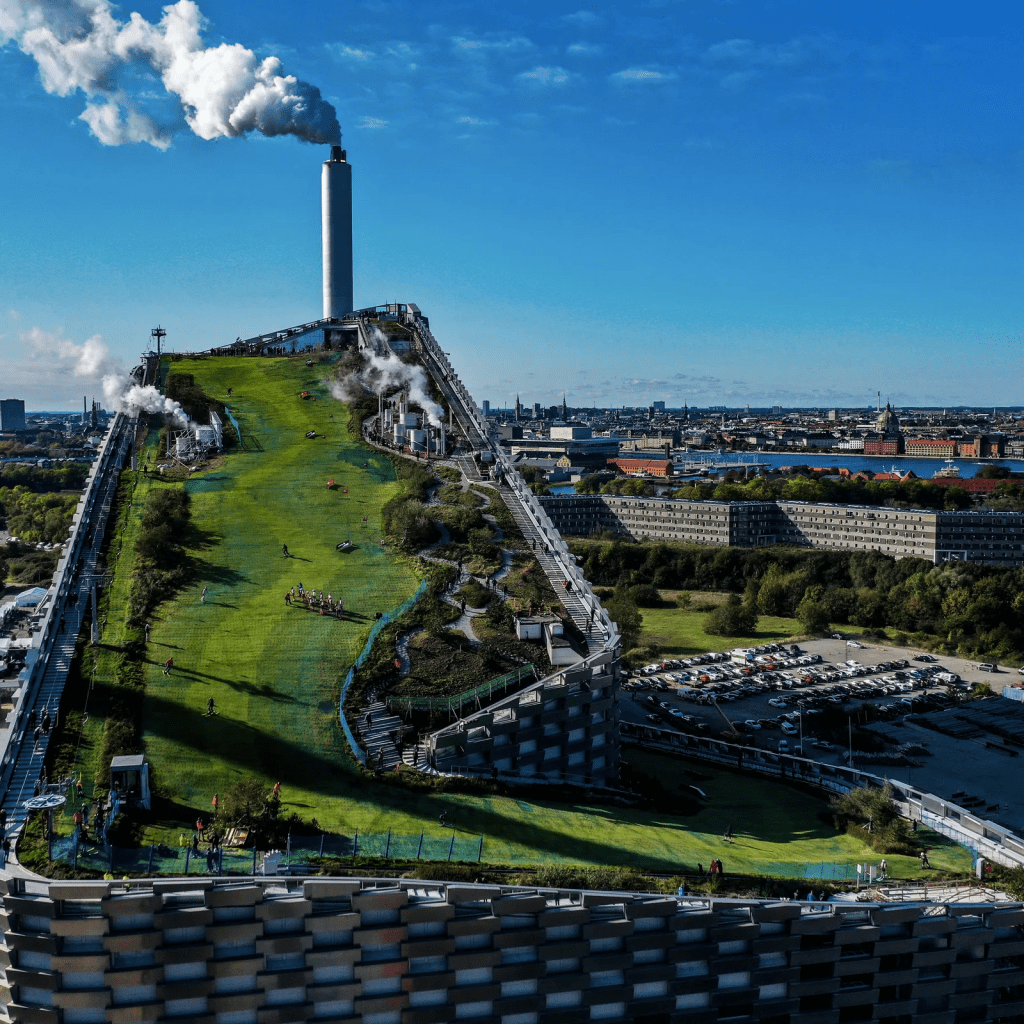
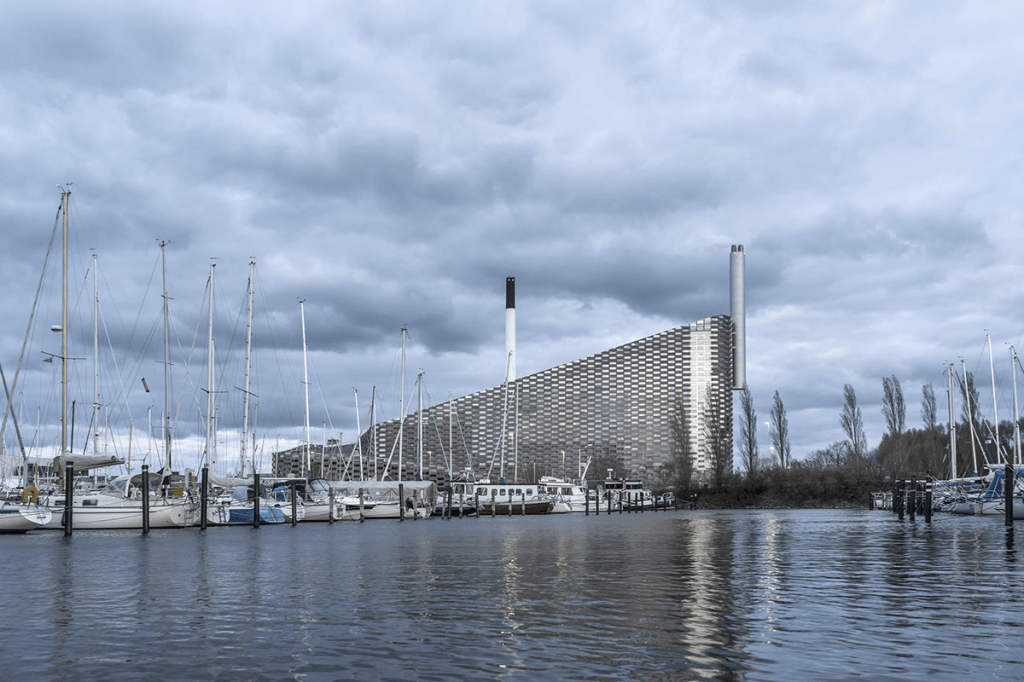
Designed by Danish architect Bjarke Ingels, CopenHill is a multi-use waste-to-energy plant. CopenHill is a real architectural marvel, combining greenery, beauty, waste management technology, sports venues and tourist attractions. The center is a ski slope, along the sides are several waste-to energy plants, the exterior supports multiple climbing walls, and there is a cafe on a hill. This effective design is worthy of other cities to learn and emulate. Skiing down the 1,300-foot green slope is surely a unforgettable experience.

CopenHill

Copenhagen is a marvelous city to see by bike. Grab a coffee from Prolog before heading south along the Cykelslangen (bike snake), which leads to the other side of the harbor. Bike onto Olafur Eliasson’s Circle Bridge, then ride back over the harbor on the new Lille Langebro bridge. Continue along the water to Nyhavn before riding back over the harbor along the Inderhavnsbroen, AKA the Kissing Bridge. In Christianshavn, you’ll bike past the old Noma space and Restaurant 108—grab a pastry on the way—and over the Butterfly Bridge.

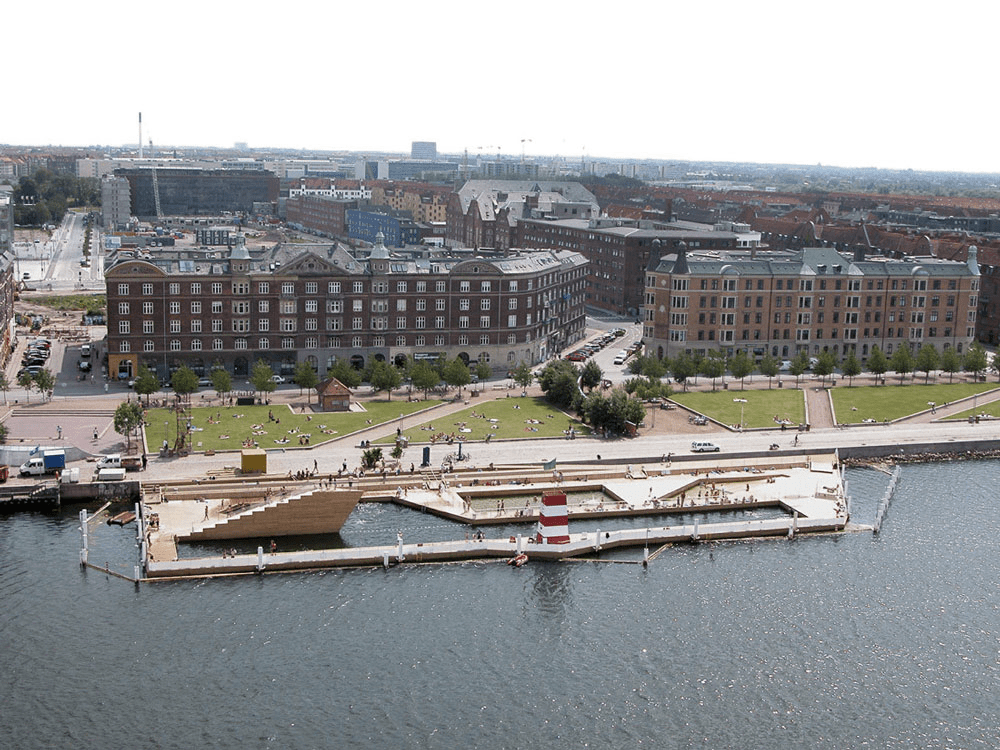
Copenhagen is one of the only cities in Europe where the harbour water is again clean enough to swim in. The city has built three popular harbour baths – a new type of city-beach for people to swim, sunbathe, and cool off on hot summer days. It is good to wear bathing clothes if you are visiting the city, so you can jump into the water whenever you want, especially in the summer.

Source: Arch Daily

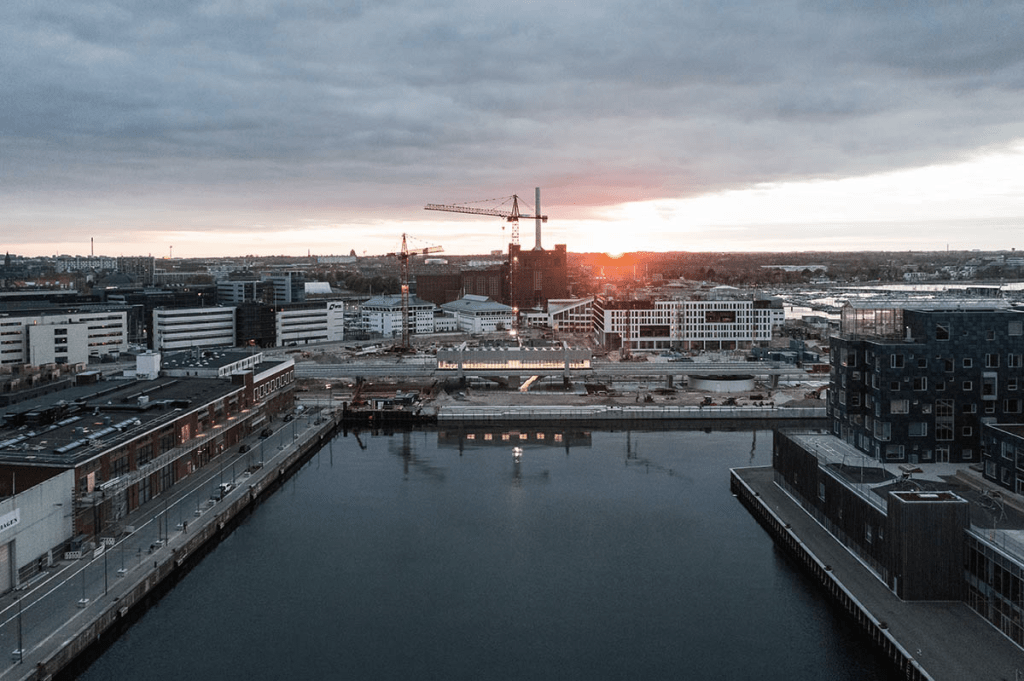
OMA’s New Cultural Hub in Copenhagen. Image © Rasmus Hjortshøj – COAST
BIG’s Waste-To-Energy Plant in Copenhagen. Image © Aldo Amoretti
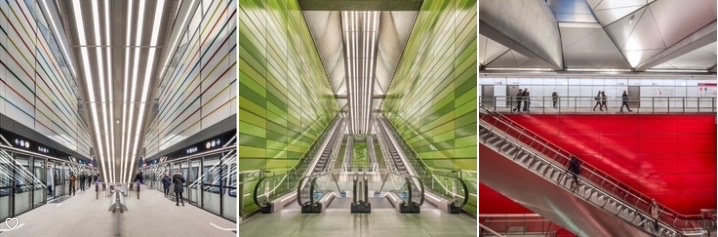
Cobe and Arup’s passenger-focused metro stations in Copenhagen’s docklands. Image © Rasmus Hjortshøj – COAST

Copenhagen has a very convenient and fast subway system. There are now 4 lines called M1, M2,M3 and M4. These lines runs around the city and have intersects with each other. Riding the Metro in Denmark is the easiest and quickest way from the airport to central Copenhagen. Also the Metro runs without a driver (utilizing an automated train control system) and runs 24 hours a day, 7 days a week. During the rush hour the metro runs every 2 to 4 minutes. During the rest of the day trains run every 3 to 6 minutes, so there is very little waiting time.

Copenhagen’s Cityringen (City Circle Line) , the colorful commute  (Photo: Anke Müllerklein)

UNESCO and the UIA launched the World Capital of Architecture initiative to highlight the key role of architecture, city planning, and culture in shaping urban identity and sustainable urban development. Every three years, the city designated as World Capital of Architecture becomes a global forum at the forefront of discussions on contemporary urban planning and architectural issues.

The city of Copenhagen has been officially designated as World Capital of Architecture for 2023 by the Director-General of UNESCO, Audrey Azoulay, on the recommendation of the General Assembly of the International Union of Architects (UIA).

This decision is in keeping with the partnership agreement established between UNESCO and the UIA in 2018, through which UNESCO designates the host cities of UIA’s World Congress as World Capitals of Architecture. “We are very happy to see the torch of the World Capital of Architecture title pass to Copenhagen from Rio de Janeiro,” Audrey Azoulay said. “The inaugural World Capital of Architecture in Rio was a real success, underlining the important role of urban planning, notably in the pandemic context”, she noted, adding that “Copenhagen will build upon Rio’s achievements, by continuing to show the way in which architecture and culture can respond to the challenges of our time, especially in the environmental field.”

As the World Capital of Architecture for 2023, Copenhagen will host a series of major events and programmes on the theme “Sustainable Futures – Leave No One Behind.” In coopeation with the Danish Association of Architects and various Nordic professional bodies, the municipality will examine how architecture and urban design contribute to meeting the 17 United Nations Sustainable Development Goals.

Copenhagen World Capital of Architecture for 2023

Link: https://peacelilysite.com/2022/09/08/copenhagen-world-capital-of-architecture-for-2023/

#Copenhagen#WorldCapitalofArchitecture#UNESCO#UIA#Denmark#Europe

Source: https://www.uia-architectes.org/en/events/world-capitals-of-architecture/copenhagen/, https://www.cntraveler.com/gallery/best-things-to-do-in-copenhagen