Office of His Holiness Dorje Chang Buddha III Announcement No. 62 (02/06/2022)

+2

Office of His Holiness Dorje Chang Buddha III

Announcement No. 62 (02/06/2022)

On January 1, 2022, His Holiness Dorje Chang Buddha III imparted a Dharma for living beings in His Vajra Mandala in Las Vegas on “Greed Can Destroy One’s Realizations,” also titled “Greed is the Foremost Culprit in Destroying One’s Realization.” After Namo Dorje Chang Buddha III imparted Dharma, Fomu, Holy Mother the Great Mahasattva, saw the flowers offered by disciples in the Mandala, then gave a short Discourse: When offering flowers, we must do so with utmost sincerity. There are four main types of flowers for offering to Buddhas: peony, orchid, sunflower, and lotus. Many other flowers, such as Chinese peony 芍藥, should not be offered to Buddhas. After Fomu, Holy Mother the Great Mahasattva, gave the Discourse, She blessed each disciple in the Mandala with a Vajra pill, then announced that she will bear dark karma for living beings.

On the evening of January 4, His Holiness Dorje Chang Buddha III summoned four types of disciples and told them: “Now being the Dharma Ending Era, living beings’ dark karmic forces are too heavy and getting worse. Fomu cannot bear them on Her own. This time, I am going to bear the dark karma together with Fomu for living beings. Therefore, starting tomorrow, I will go into seclusion to perform Dharma. During this period, I will no longer see you! As long as each of you cultivate yourself in accordance with the Dharma, you will attain liberation.”

After some days, when the disciple Tsemeng 翟芒 rushed to Las Vegas to see if His Holiness Dorje Chang Buddha III was well, the Buddha said to him: “Tsemeng, in the Dharma Ending Age, the dark karmic forces of living beings are too heavy. When I said I would bear dark karma for living beings, those were not empty words. To bear dark karma is not to enter dhyāna, but rather, truly and continuously practice shifting the mind-consciousness to suffer on behalf of living beings. What Fomu and I said is what we do. At all times,we must think about bringing auspiciousness, serenity, happiness, and peace to living beings and to the world,to the extent of giving our all and even our lives. I have already brought true Buddha Dharma to this world. Everyone who practices in accordance with The Supreme and Unsurpassable Mahamudra of Liberation and Imparting the Absolute Truth Through the Heart Sutra will surely attain liberation. That’s all. I wish all living beings happiness.”

From then on, other than giving instructions to Dharma King Jinba 金巴法王 and Dharma King Mohe 摩訶法王, Namo Dorje Chang Buddha III did not impart Dharma openly. After almost a month of bearing dark karma for living beings, Namo Dorje Chang Buddha III and Fomu, Holy Mother the Great Mahasattva, looked very sick. In the past few decades, His Holiness Dorje Chang Buddha III had often borne dark karma for living beings, sometimes for a month or two, during which He looked seriously ill. Yet once His Holiness Dorje Chang Buddha III had completed that particular deed of bearing dark karma, Hewould immediately be full of energy as usual.One second, Namo Dorje Chang Buddha III was a gravely ill patient, the next second, He would be strong and healthy without any sickness. That’s why the close disciples have gotten used to that. However, this time, Buddhist disciples did not see His Holiness Dorje Chang Buddha III or Fomu, Holy Mother the Great Mahasattva, return to the human world. Namo Dorje Chang Buddha III and Fomu, Holy Mother the Great Mahasattva, have peacefully entered parinirvana and returned to the Sambhogakaya Buddha Land.

His Holiness Dorje Chang Buddha III, the supreme Primordial Sambhogakaya Buddha and the foremost master in the Dharma realm, came to this world to benefit living beings, and has now left this world as a result of benefitting living beings. All that His Holiness Dorje Chang Buddha III did have always been for the sole purpose of benefitting living beings. His Holiness Dorje Chang Buddha III is always of holy purity! Always altruistic! Always selfless! All of us Buddhist disciples must be grateful to the supremely great compassion and empathy of Namo Dorje Chang Buddha III and Fomu, Holy Mother the Great Mahasattva. We must truly repent our sins and beseech Namo Dorje Chang Buddha III and Fomu to return to this world!

Among all Buddhas in the Dharma realm, Dorje Chang Buddha is the Primordial Buddha, the first Buddha with form, and the only Supreme Lord of Buddhism throughout the entire universe. Dorje Chang Buddha propagated Dharma throughout the universe, hence, all other Buddhas and Great Mahasattvas learned Dorje Chang Buddha’s Dharma and cultivation to attain holy state and liberation, and eventually became Buddhas and Great Bodhisattvas. Dorje Chang Buddha is the primordial ancestor of all Buddhas and Bodhisattvas. Samantabhadra, the Dharmakaya from which Dorje Chang Buddha perfectly manifested, is the Tathagata that has no form at all. The words and deeds of Dorje Chang Buddha are the compass and guiding principles of cultivation for all ordinary and holy beings in the universe.

To help Shakyamuni Buddha, Namo Dorje Chang Buddha II —Venerable Virmalakirti—applied His supreme wisdom and limitless supernormal power to edify Hinayana Arhats who then advanced themselves and eventually became Mahayana Bodhisattvas who helped living beings attain liberation. And, innumerable living beings attained liberationby learning the teachings of Venerable Virmalakirti.

After coming to the sahā world with the Buddha level enlightenment of the Primordial Sambhogakaya Buddha, His Holiness Dorje Chang Buddha III established countless number one records in the world, every one of which was for the sake of benefiting living beings. At a very young age, He saved others without any regard to His own life and was honored with the title “Young Hero.” As He grew older, His Holiness Dorje Chang Buddha III applied His inherent Healing Vidya to heal the sick, purely on a voluntary basis. More than 500 patients used to seek His help every day. His Holiness Dorje Chang Buddha III never accepted one penny from them. Plaques and pennants with words of gratitude sent by the recovered piled up in the Buddha’s house.

As His Holiness Dorje Chang Buddha III continued to benefit living beings on a larger scale, the Central Newsreels and Documentary Studio of China produced a documentary, “One Who Is Dedicated to Advance Himself,” about His life and work. The film was shown nationwide.

In 1987, the highly respected young His Holiness Dorje Chang Buddha III was named Chairman of the Chinese Painting Research Association of the National Commission of China for UNESCO. Honorary chairpersons of the Association included Liao Jingdan 廖井丹, Li Wenqing 李文清, Lü Ji 呂驥, Yuan Xiaoyuan 袁曉園, Wu Zhangshu 吳丈蜀, Qian Juntao 錢君匋, Xie Zhiliu 謝稚柳, and others. Advisors to the Association included Luo Zhanglong 羅章龍, Zhang Kejia 臧克家, and so forth.

In 1992, His Holiness Dorje Chang Buddha III was accorded the “Art Maestro of the East” title. In 1994, during the fourth conference of the World Poets and Culture Congress held in Hungary, 5,612 experts and scholars unanimously voted to confer the “Preeminent Distinguished International Master” title, which was a Head of State level honor, to His Holiness Dorje Chang Buddha III. The conferment certificate was signed by Juan Antonio Samaranch, the then President of the International Olympic Committee. In the same year, the Museum of Master Yi Yungao officially opened in Dayi 大邑, the hometown of His Holiness Dorje Chang Buddha III in Sichuan. That was the first memorial museum in China, or even in the world, being built by a government for a living person.

In 1995, when His Holiness Dorje Chang Buddha III went from Mainland China to visit Taiwan for the first time, Taiwanese people spontaneously gave His Holiness Dorje Chang Buddha III an overwhelmingly ceremonious welcome. More than 20,000 people went to the airport to greet and pay respect to His Holiness Dorje Chang Buddha III. A motorcade of more than 1,700 cars followed the lead of police motorcycles to escort His Holiness Dorje Chang Buddha III from the airport to the hotel. That became the largest welcoming event in human history. Within the short three weeks that His Holiness Dorje Chang Buddha III stayed in Taiwan, General Chiang Wei-kuo 蔣緯國, former Secretary-General of the Taiwan National Security Council, and many other high level government officials formally requested to become disciples of His Holiness Dorje Chang Buddha III. They expressed that they wanted to truly emulate the noble morality, humanistic ethics, thoughts, and deeds of His Holiness Dorje Chang Buddha III.

After His Holiness Dorje Chang Buddha III moved to the United States, His noble morality and unparalleled achievements won the love and admiration of the American people from all walks of life. In 2002, His Holiness Dorje Chang Buddha III was presented with the “Presidential Gold Medal” by the Commissioner to the President’s Advisory Commission on Asian Americans, on behalf of President Bush.

In 2003, the Organization of American States, composing of 34 countries including the United States, Canada, and Mexico,organized the Master Wan Ko Yee Yun Sculpture Exhibition in Washington D.C. at the Capitol of the United States. The Master Wan Ko Yee Yun Sculpture Exhibition was also held at the Congressional Office Building. That was the first time the U.S. Congress held an art exhibition in their Congressional Office Building. Visitors expressed their praises in the guest book, exclaiming that the exhibition was “unprecedented,” and that the artworks were “treasures brought to the human realm by God.”

In 2004, His Holiness Dorje Chang Buddha III was named “Fellow” of the Royal Academy of Arts in the U.K.. Professor Phillip King, President of the Royal Academicians of the Royal Academy of Arts, presented the certificate to His Holiness Dorje Chang Buddha III at the British Embassy in Washington D.C., capital of the United States. The Cultural Attaché of the British Embassy personally attended the ceremony. Professor Phillip King stated that His Holiness Dorje Chang Buddha III was the first artist ever accorded this title in their renowned academy’s more than 200-year history.

The mayor of the U.S. capital Washington D.C.pronounced January 19, 2011 as “His Holiness Dorje Chang Buddha III Day” and called on people to salute to His Holiness Dorje Chang Buddha III.

His Holiness Dorje Chang Buddha III was also accorded the “King Legacy Award for International Service & Leadership” by An International Salute to The Life and Legacy of Dr. Martin Luther King, Jr.. Dozens of great honors have also been presented to His Holiness Dorje Chang Buddha III by U.S. senators, members of the House of Representatives, governors, and governments of all levels.

More remarkably exceptional, Namo Dorje Chang Buddha III was awarded the 2010 World Peace Prize Top Honor Prize, presented to Him at the United States Congress on June 14, 2011 at the U.S. Capitol. On occasions of the holy birthday of His Holiness Dorje Chang Buddha III, the U.S. Congress has held ceremonies to raise the national flag to celebrate, and President Trump and President Biden have sent personal congratulations.

In 2018, the World Peace Prize Awarding Council and the World Peace Prize Religious Leader Title Awarding Council resolved that His Holiness Dorje Chang Buddha III was the Pope of Buddhism of this world and decided to present the Pope of Buddhism Scepter to Him. Namo Dorje Chang Buddha III, however, did not accept the Scepter, but returned it instead. In September 2020, the World Peace Prize Awarding Council and the World Peace Prize Religious Leader Title Awarding Council made a joint resolution that solemnly stated, “The title, status, and authority of the Pope of Buddhism belong only to His Holiness Dorje Chang Buddha III and cannot be exercised by anyone else. This is a permanent and unalterable determination!” The two Councils also entrusted the World Buddhism Association Headquarters to present the Pope of Buddhism Scepter on their behalf to His Holiness Dorje Chang Buddha III.

Upon coming to this world, His Holiness Dorje Chang Buddha III immediately started teaching and saving living beings. He has always called Himself a “nameless cultivator.” His Holiness Dorje Chang Buddha III voluntarily served living beings and did not accept any offerings. One incident clearly shows how Namo Dorje Chang Buddha III taught and saved living beings selflessly. At the Heart Sutra Mandala on Xinhua West Road, Chengdu, Dharma Master Guozhang 果章法師 once recounted to some people that when he received initiation from His Holiness Dorje Chang Buddha III on Paoma Mountain 跑馬山, His Holiness the Buddha was only two and a half years old! After the identity of Namo Dorje Chang Buddha III being the true incarnation of the Primordial Buddha was formally recognized by Dharma kings, regent Dharma kings, and great rinpoches of major Buddhist sects in written congratulations and corroboration letters, His Holiness Dorje Chang Buddha III continued, as always, to teach and save living beings solely on a voluntary basis, and whole-heartedly devoted Himself to serving living beings. Whenever people made offerings to His Holiness Dorje Chang Buddha III, whether they were big or small offerings, in amounts as little as one dollar or as large as a few million US dollars, in the form of 37 acres of land in the city of San Francisco, or even a planeload or a shipload of gold, Namo Dorje Chang Buddha III categorically refused to accept. His Holiness Dorje Chang Buddha III was whole-heartedly dedicated to serving living beings voluntarily.

In the many years that His Holiness Dorje Chang Buddha III was propagating Dharma to save living beings, He imparted more than 2,000 Dharma Discourses in response to living beings’ levels and karmic conditions. Those Dharma Discourses were audio-recorded, and some of which such as What Is Cultivation 什麽叫修行, Sutra on Understanding and Realizing Definitive Truth 了義經, Imparting the Absolute Truth Through the Heart Sutra 藉心經說真諦, and Learning from Buddha 學佛, have been published into books. Not only did His Holiness Dorje Chang Buddha III reveal the truth about humanity and the universe, He also elucidated the truths relevant to various stages of practices, from elementaryto profound accomplishment levels.

In restoring Buddhist texts to their original meaning, His Holiness Dorje Chang Buddha III pointed out that the morning and evening chants used in Buddhist temples nowadays had been tampered with by the descendants of Mara, and those texts are filled with evil views and fallacies. Namo Dorje Chang Buddha III has corrected many errors made by patriarchs and translators in their interpretations of Dharma principles, and directly revealed the chaotic phenomena in Buddhism during this Dharma Ending Era. His Holiness Dorje Chang Buddha III pointed out the path that everyone who wants to attain liberation must take: That is to build our foundation on practicing cultivation. After cultivating ourselves well, we can then learn Dharma, and naturally attain liberation and accomplishment. The correct truths and Dharmas imparted by His Holiness Dorje Chang Buddha III enable listeners to develop their wisdom and good fortune, to help each other, care about each other, and be compassionate to all living beings.

In different countries, Namo Dorje Chang Buddha III has performed great Dharmas including Holy Amrita Bestowed by Buddhas 佛降甘露, Xianliang Great Perfection 現量大圓滿, Holy Fire Offering 勝義火供, Vajra Faman Determination by Holy Selection 金剛法曼擇決, Hayagrīva Raja Water Mandala Bead Divination 馬頭明王水壇珠卦, Determination by Holy Selection on the Regression or Progression on the Bodhi Path 菩提道損減增益法, Guaranteed Delivery to Buddha Land Dharma 保送法, Vajra Array 金剛陣, and Eight Wind Array 八風陣, all of which manifested authentic holy states, enabling living beings to see with their own eyes that Buddha Dharmas are scientific, have veritable power, and absolutely are not just empty talk or theory. More importantly, Namo Dorje Chang Buddha III has brought The Supreme and Unsurpassable Mahamudra of Liberation to living beings in the sahā world, showing humanity the shortcut to attaining liberation. The Supreme and Unsurpassable Mahamudra of Liberation is the highest Dharma that Dorje Chang Buddha transmitted to Amitabha Buddha as well as Buddhas and Great Bodhisattvas in the ten directions during their cultivation stage.

In The Supreme and Unsurpassable Mahamudra of Liberation, His Holiness Dorje Chang Buddha III has made the biggest and highest vow in the entire Dharma realm, “I bear all the sinful karma for living beings, I give living beings all the good karma and merit that I have planted.” Namo Dorje Chang Buddha III has actualized the greatest and holiest vow, sacrificed His life to save the lives of numerous living beings, and returned to the Sambhogakaya Buddha Land!

The unprecedented records established by Namo Dorje Chang Buddha III in this world:

Namo Dorje Chang Buddha III was, historically, the first Buddha to have received the largest, unprecedented number of status-recognition and congratulatory letters by top level great Dharma kings and rinpoches.

Namo Dorje Chang Buddha III was recognized with the highest status in history: an Ancient Buddha.

Namo Dorje Chang Buddha III is the first Ancient Buddha who manifested perfect mastery in Exoteric and Esoteric Buddhism, and perfection of the Five Vidyas. No one else has been able to accomplish the same in the past few thousand years.

Namo Dorje Chang Buddha III manifested Buddha-level wisdom in the creation of Yun Sculpture, which nobody has been able to replicate. Historically, this is the first art form that cannot be replicated.

Namo Dorje Chang Buddha III is the first Ancient Buddha throughout history who only benefited others but did not accept any offerings.

Namo Dorje Chang Buddha III is, historically, the first Ancient Buddha who manifested the most holy miracles.

Namo Dorje Chang Buddha III is, historically, the only Buddha who could offer the kind of Buddha Dharma that enables disciples to attain liberation within two hours: Xianliang Great Perfection, the quickest path to successfully enter the Buddha Land.

Namo Dorje Chang Buddha III had the largest number of disciples who attained accomplishments; for example: Dharma King Daxila of the Tsalpa Kagyu Sect attained the rainbow body; respected layperson Wang Lingze 王靈澤 and Dharma King Gar Tongstan attained freedom from death and rebirth and passed away in a sitting meditative pose; Dharma Master Puguan 普觀法師 and Elder Monk Wuming 悟明長老 attained incorruptible flesh bodies; the Elder Monk Yizhao 意昭老和尚 vowed to return to the sahā world to save living beings; and many others.

Namo Dorje Chang Buddha III has transmitted Dharma to disciples and invoked Avalokiteshvara Bodhisattva to come at a specific time to take the disciple to the Buddha Land; even non-Buddhists saw with their own eyes when the disciple Zhao Yusheng 趙玉勝 was taken away by Avalokiteshvara Bodhisattva. Some disciples, such as Hou Yushan 侯欲善 and Lin Liu Hui-Hsiu 林劉惠秀, were able to visit the World of Ultimate Bliss, then return to the human world before ascending at a specific time to the Buddha Land. The above listed are just a few examples of the numerous Buddhist disciples who followed Namo Dorje Chang Buddha III and attained liberation.

Namo Dorje Chang Buddha III possessed Buddha-level physical constitution and physical strength that are unmatched in the world. Just about a little more than a month ago, on December 23, 2021, at the Holy Miracles Temple, His Holiness Dorje Chang Buddha III lifted the Supreme Holy Vajra Pestle that weighs 437.2 pounds, by using just four fingers to hook on to the Pestle, lifted it up, and held it for more than 13 seconds, surpassing His own base weight standard by 72 levels. Taizun Poshan Waxiang 破山瓦象太尊 asserted: “In this world, from the ancient past up to now, and even before Maitreya Bodhisattva attain Buddhahood, no ordinary or holy being will be able to lift the Buddha Pestle that Namo Dorje Chang Buddha III lifted, surpassing His own base weigh standard by 72 levels!”

The morality of Namo Dorje Chang Buddha III is so noble, His accomplishments so great, and the holy miracles He performed so numerous that it is impossible for us to list them all. What was listed above was just a drop in the ocean. If we were to tell you about all the magnificent feats of His Holiness Dorje Chang Buddha III, it would take more than ten days and ten nights. The magnificent greatness of Namo Dorje Chang Buddha III is not limited to His well-respected humanistic ethics, His noble personality and morality, His erudition, His distinguished accomplishments, His selfless compassion toward humanity and all living beings, and His passion in teaching and actualizing the practice of Buddha Dharma.Through altruistic endeavors, His Holiness Dorje Chang Buddha III truthfully, sincerely, and persistently actualized the principle of compassion, and He diligently worked toward the development of world peace. Many people are moved and motivated by His Holiness Dorje Chang Buddha III. Many people in this world aspire to Namo Dorje Chang Buddha III as their model, referencing His state of morality as their standard, and using His teachings as guidance to elevate their own morality and to benefit living beings. In doing so, not only have they fulfilled happiness in their lives, but many of them have ascended to the Buddha Land, attained freedom from death and rebirth, or attained even higher states of realization and accomplishments.

More importantly, Namo Dorje Chang Buddha III pointed out a bright path for humanity to stay far away from violence, a path that leads to benevolence and loving kindness, successful endeavors, happy families, peace in humanity, and prosperity in societies. Throughout different countries and regions in the world, more and more people of different ethnicities and cultures are actively learning and following the teachings of Namo Dorje Chang Buddha III to cultivate themselves and benefit living beings. Consequently, they have greatly elevated the level of morality in society, advanced human civilization, motivating more and more people in this world to become good, kind, and ethical people, and enabling the world to become an auspicious and green planet. These are the tremendous and inexhaustible contributions that Namo Dorje Chang Buddha III has brought to all human and other sentient beings in this world, so they may increase their happiness.

Fomu, Holy Mother the Great Mahasattva, Professor Yuhua Shouzhi Wang, was profoundly erudite. She was a top world-class art master who had been officially conferred with the “International First Class Artist” title and certificate. Professor Yuhua Shouzhi Wang was the Lifetime Honorary Chairwoman of the International Art Museum of America, and an all-rounded painter whose versatility has never been seen before in history. Fomu, Holy Mother the Great Mahasattva, stands at the summit of world-class artistry in both Western oil painting and Eastern ink painting and founded the Imagery-Naturalism painting style. The paintings of Fomu, Holy Mother the Great Mahasattva, have been exhibited in the Gold Room at the United States Congress, in Shenzhen, Shanghai, Bangkok, as well as at the Palais du Louvre in Paris. Every one of Her exhibitions was overwhelmingly well received, sending shockwaves throughout the art world. Art critics and renowned painters from Europe and Asia acclaimed that every one of her paintings is the apex of art, at the Class of Ease, and an inspiration to future generations. The accomplishments in her water lily and lotus paintings “have never been attained by anyone before and will inspire generations to come.” In August 2021, the Art Who’s Who Museum of Paintings in Dialogue organized theshow “Claude Monet and Yuhua Shouzhi Wang: An Exhibition of Water Lily Paintings in Dialogue” in Southern California. Visitors were overwhelmingly enthusiastic; art collectors and critics acclaimed that Professor Yuhua Shouzhi Wang was indeed an International First Class Artist whose artistry is at the same level as great masters such as Da Vinci, Gauguin, Van Gogh, and Monet.

Fomu is a Great Mahasattva who is the perfect embodiment of great wisdom and compassion, noble morality, kindness, altruism, and selflessness. She always considers other people’s well-being and is humble and very approachable. The compassion and kindness of Fomu, Holy Mother the Great Mahasattva, are pure and flawless. For example, in 2015, someone sneaked into the International Art Museum of America in San Francisco and tried to steal an artwork that had been acclaimed by the World Federation of UNESCO (WFUCA). This person was arrested by the police on site and subsequently detained. Since the artwork that he tried to steal was one of Fomu’s masterpieces, the court repeatedly requested Fomu to provide a valuation of the artwork, so that they could use her valuation to determinethe term for sentencing. When Fomu, Holy Mother the Great Mahasattva, knew about this person’s distress, She provided a statement saying that the artwork was rather ordinary and had no value. The court had no way of sentencing the person to any term and had to release him.

Another time, Fomu, Holy Mother the Great Mahasattva, saved a butterfly that had fallen into the water. Worried about the butterfly’s safety, Fomu brought it home and kept it for a few days to make sure the butterfly is well-recovered before letting it fly away. Fomu relentlessly led disciples to conduct life-releases. She went every week to woodlands to feed ducks and birds and never missed a week. She paid for it with Her own money and never accepted offerings from Buddhist disciples. Fomu, Holy Mother the Great Mahasattva, is well known for Her diligence and thriftiness. For many decades, the noble Fomu, Holy Mother the Great Mahasattva, always cooked Her own meals and washed Her own clothes. She never entrusted others to do Her chores. She would save the food that She could not finish eating and finish it the next day or two. She was never wasteful. Usually, Fomu, Holy Mother the Great Mahasattva, would even save the water that She did not finish drinking, the water used for washing vegetables or hands, or wastewater from the filter and use it for irrigating flowers or flushing toilet. Through Her deeds, the Great Fomu, Holy Mother the Great Mahasattva, was teaching us how to start with the small things, cherish our good fortune, and actualize our cultivation practices.It is impossible to recount all the numerous exemplary deeds of Fomu.

Wherever Fomu, Holy Mother the Great Mahasattva, went, dragon Dharma protectors were present, and holy miracles manifested. When Fomu performed initiation and transmitted Dharma, holy states were manifested. For example, at the Antelope Valley, Fomu’s hat turned into a black garuda. In New Jersey, the hair of Fomu, Holy Mother the Great Mahasattva, suddenly went up and wrapped around a tall building in Manhattan on the opposite shore. In San Francisco, a twin Buddha light suddenly appeared, centered around where Fomu stood. All cultivators are touched by the compassion and morality of Fomu, Holy Mother the Great Mahasatva.

Now, for the sake of saving our lives and our happiness, Namo Dorje Chang Buddha III and Fomu, Holy Mother the Great Mahasattva, have sacrificed themselves and went to the Sambhogakaya Buddha Land. Great Holy Gurus have said: “When learning from Namo Dorje Chang Buddha III and Fomu, Holy Mother the Great Mahasattva, we must not do any bad deeds, and do all kinds of good deeds. We must respectfully listen to the audio-recorded Dharma Discourses imparted by Namo Dorje Chang Buddha III and use the teachings of Namo Dorje Chang Buddha III to examine our every word and deed. We must actualize the teachings of His Holiness Dorje Chang Buddha III by sincerely carrying them out in our practice. Only in this way can we become a good person of noble morality who compassionately benefits others. From there, we can then advance ourselves to become holy beings with attainment of liberation from death and rebirth. More importantly, we must pass on the teachings of Namo Dorje Chang Buddha III from one generation to another, so that humanity in the sahā world can learn the Buddha Dharma taught by Namo Dorje Chang Buddha III to serve other people, attain liberation, and eventually, everyone will attain liberation!

Namo Dorje Chang Buddha III, our Fundamental Guru!

Namo Shakyamuni Buddha, Lord of Buddhism of the Sahā World!

Namo All Buddhas in the Ten Directions!

Office of His Holiness Dorje Chang Buddha III
February 6, 2022

#DorjeChangBuddhaIII #HHDorjeChangBuddhaIII#UnitedInternationalBuddhismAssociationHeadquarters#OfficeofHisHolinessDorjeChangBuddhaIII#BuddhaDharma
United International World Buddhism Association Headquarters Announcement 20150114

United International World Buddhism Association

Headquarters Announcement 20150114

The Great Venerable Wangzha Shagnzun said: “In an attempt to convince others, some individual unlawful masters falsely claim that they could perform inner-tantric Dharma or give holy inner-tantric initiation and that they could communicate with the Yidam and let the disciple who is receiving the initiation attain all accomplishments in a short time. The fact is, these self-bragging masters are not even approved by the Yidam of Famen Gongyu for entering the door themselves. You must know Famen Gongyu is not just for entering the door to the holy test. It is used as long as seeing and interacting with the Yidam and the Dharma Guardians are involved. If you want to receive and learn an inner-tantric initiation, you must be approved by the Yidam of Famen Gongyu for you to enter the gate as the first step. You can only learn the initiation if you have entered the inner-tantric palace. It is absolutely forbidden if you can’t even enter the door to the inner-tantric initiation but shamelessly claim to be a great holy guru and feign with fakeness, taking advantage of the vague and confusing concept of the holy guru status to deceive a lot of Buddhists.

To prevent evil master and liars from hurting living beings, the Headquarters has adopted the Divination and Divine Foretelling and Famen Gongyu, which are used in the holy test, to definitively establish the titles of masters for the different levels. Although we have published many public announcements to explain this serious issue about the guru titles for the different levels so far, some masters still go around pretending to be a great holy guru and deceiving people with their superficial titles, such as venerable, dharma king, rinpoche, or great dharma master. People fall in their traps even though their actual essence does not match the title of holy or great holy being that they profess to be.

At present, there are still some individual masters who do not really cultivate themselves or rigorously abide by the precepts. They know well that they do not have the three vidyas and the six dharmas* (三明六法), but they still pretend to be holy and falsely claim to be a holy being or great holy being. Buddhist cultivators, on the other hand, do not read the public announcements but only listen to the untrue bragging of these people. Therefore, they always end up being deceived, only to complain a lot afterward. It is they to blame because they never read the public announcements. That is why they are incorrigible because they are willing to fall into the trap of deceit. 

To completely put an end to the vile behaviors of those who cheat and hurt Buddhist disciples by feigning to be true and high but are fake and low, and by claiming to have realized the level but have not, you must first understand that a 100% pure holy guru must obtain their title and level through the test. 

This Headquarters confers authentic titles to those holy gurus who have passed the test and issues the holiness level certificates and the buttons to be worn on the Dharma robes according to the levels they attain in the holy test. The titles issued are the most standard and correct guru titles. Other than obtaining the titles through the holy test, only the titles obtained from the six categories of guru qualification such as the Dharma of Knowing in Advance and Foretelling, or the Dharma of Vajra Faman which is used to determine matters regarding the supreme holy, can be considered definitive and standard. Except these, anyone who is a certified reincarnation from a patriarch or a dharma king, a great dharma king, or a great rinpoche cannot be a true and certain holy guru! 

The titles of the levels we publish today are based on the reasoning of the teachings and chosen by Divination and Divine Foretelling and Famen Gongyu that are employed in the holy test. These titles are definitive: Blue Button Level 1 is called Xingde (pronounced like shing-duh); Blue Button Level 2 is called Zengde (pronounced like zeng-duh); Blue Button Level 3 is called Runde (pronounced like ruen-duh). Blue Button Levels 1 to 2 can be called master. As the Chinese proverb says: “Among every three people there must be one whom I can learn from,” because he or she is good at something to teach others. Blue Button Level 3 is defined according to the Dharma rule as a Vajra Master; Gold Button Level 1 is defined according to the Dharma rule as Ruzun (pronounced as ru-zuen), Gold Button Level 2 is defined according to the Dharma rule as Jiaozun (pronounced as jiao-zuen), Gold Button Level 3 is defined according to the Dharma rule as Shangzun (pronounced as shah-ng-zuen), Gold Button Level 4 is defined according to the Dharma rule as Taizun (pronounced as ty-zuen), and Gold Button Level 5 is defined according to the Dharma rule as Shengzun (pronounced as sheng-zuen). 

This Headquarters beseeched H.H. Dorje Chang Buddha III for His approval with the titles defined according to the Dharma rule. His Holiness the Buddha said: “I am not going to take part in the work of setting up the titles for the masters by your Headquarters. As long as it is an undertaking that is benefiting people, you do it! Establishing these titles according to the Dharma rule to prevent those impostor masters from hurting people and to protect living beings is quite good. It is an action of correct karma.” 

From now on, you must not call someone with the nondefinitive and confusing titles of venerable, dharma king, or rinpoche in person or in writing when it comes to calling someone who has a level, because those titles are vague and nondefinitive concept. Who knows if the person is a holy guru, or what kind of holy guru they are! If people continue using such non-definitive titles, these people must be evil people who intentionally help the demon in hurting living beings. All Buddhists must respect what is decreed by the holy Dharma and not aide the evil to cheat people. You must use the Dharma-decreed titles in your calling. If you do not use the Dharma-decreed titles in your calling, you have committed the vile act of disdaining the Three Jewels, because these Dharma-decreed titles are established using Divination and Divine Foretelling and Famen Gongyu. Only when these titles are fixed can those who have an evil mind to fake as holy be prevented from cheating and confusing the world by pretending to be holy and high-level with ordinary and low-level. 

You must pay special attention. Up till now, there has not been one Ruzun of Gold Button Level 1, Jiaozun of Gold Button Level 2, Shangzun of Gold Button Level 3, Taizun of Gold Button Level 4 (an Equal Enlightenment Bodhisattva), or Shengzun of Gold Button Level 5 (a Marvelous Enlightenment Bodhisattva) who is publicly propagating Dharma in the world. Therefore, you can say people cannot meet a Taizun or a Shengzun at all. That is because the good retributions and karmic conditions of living beings are not there. 

The exaggeration of some famous people in the society where they make the pretense of a Marvelous Enlightenment Bodhisattva or an Equal Enlightenment Bodhisattva is 100% deceitful. They are not the reincarnation of any Bodhisattva at all. Where is their achievement in Five Vidyas? They completely violate the stipulation that says “Bodhisattvas are to be found in Five Vidyas” by Shakyamuni Buddha. Even a great rinpoche who is a reincarnated patriarch from thousands of years ago may not be a true holy guru, because the Buddhist history is, all the same, rife with uncertainty and unreal falsity. The title of a Great Holy Guru is not a vague concept. A Great Holy Guru must be a Shangzun of Gold Button Level 3. A Tremendously Holy Guru must be a Taizun of Gold Button Level 4 or a Shengzun of Gold Button Level 5. Anyone who has not realized the status of Shangzun but falsely claims to be a great holy guru must be a master who has regressed and become evil! 

Buddhist disciples! Everything is dependent on the levels as indicated on the robe the master wears. Based on that, you can know how to call the master without violating the precepts. We hope you all read this public announcement well, lest you should fall prey to the deceit of the individual bad people! The Headquarters cannot do much for Buddhist disciples, but we disapprove of anything thing that violates the law of causality! Therefore, we must issue this solemn public announcement! 

United International World Buddhism Association Headquarters

Link: https://thebodhiwish.com/united-international-world-buddhism-association-headquarters-announcement-20150114/

September 30, 2015

*translator’s note: the English translation of this phrase needs further confirmation

(English translation by Zunba)

#DorjeChangBuddhaIII #HHDorjeChangBuddhaIII#UnitedInternationalBuddhismAssociationHeadquarters#HolyGuru#FarmenGongyu#BuddhaDharma

H.H. Dorje Chang Buddha III Lineage

H.H. Dorje Chang Buddha III Lineage

When the universe originated, it was boundless and everything was silent. There was no such thing as length of time or size of space. There was no shape and form, no interior and exterior, no birth and death. This is the dharmakaya (dharma body) Buddha. The true meaning of the dharmakaya Buddha is the concept of a universe that does not perish. This concept of a universe that does not perish is also called “dharmadhatu-tathata (dharma realm true-suchness),” which is Samantabhadra Tathagata (Adharma Buddha).

However, the dharmakaya Buddha only expresses the concept of the true essence of the universe; that is, not being born and not dying, not coming and not going. The dharmakaya Buddha has no form and does not speak. It has no way to communicate any meaning, such as meaning through images or meaning through language. Because of such karmic conditions, the formless dharmakaya Buddha generated the first sambhogakaya Buddha with form. This sambhogakaya Buddha with form transformed into Vajrasattva and other nirmanakayas.

In order to make a distinction between those three, the dharmakaya Buddha was named Adharma Buddha, the sambhogakaya Buddha was named Dorje Chang Buddha, and the nirmanakaya was named Vajrasattva. Actually, Samantabhadra Tathagata is Adharma Buddha and also is Dorje Chang Buddha. In truth, there are not two Buddhas. These distinctions resulted from there being a dharmakaya, sambhogakaya, and nirmanakaya.

Based on this dharma, Samantabhadra Tathagata did not directly incarnate. Even the ancient Buddha Dipankara and Vajrasattva were the nirmanakayas of Dorje Chang Buddha. Sakyamuni Buddha was a disciple of Dipankara Buddha. However, many sects list Samantabhadra Tathagata as the first Buddha who began all the lineages in the dharmadhatu. This way of thinking is actually not erroneous. That is because although Samantabhadra Tathagata is a dharmakaya without form and has no way of speaking, the origin lies with this dharmakaya from which the sambhogakaya Dorje Chang Buddha manifested. This sambhogakaya Buddha was the first one to spread the Buddha-dharma and save living beings in the three spheres of existence so that they would become holy beings.

Dorje Chang Buddha is also called Buddha Vajradhara or Ruler of the Vajra Beings. In the entire universe, Dorje Chang Buddha is the first Buddha with form and is the highest Buddha. That is, the highest leader of Buddhism in the entire universe came into being in the form of Dorje Chang Buddha. It was Dorje Chang Buddha who began transmitting dharma and saving living beings in the dharmadhatu. As a result, Buddhism was born and the Buddha-dharma began spreading.

The teachings of Dorje Chang Buddha led to many disciples becoming Buddhas. The five most famous among such disciples are Aksobhya Buddha of the east, Ratnasambhava Buddha of the south, Amitabha Buddha of the west, Amoghasiddhi Buddha of the north, and Vairocana Buddha of the center. There are also many other Buddhas and Bodhisattvas among the original disciples of Dorje Chang Buddha. Dorje Chang Buddha was the one who initially propagated the Buddha-dharma in the dharmadhatu. Dorje Chang Buddha is the supreme leader of all of Buddhism in the dharmadhatu.

The incarnation of Dorje Chang Buddha is different from the incarnation of any other Buddha. Such an incarnation is a primordial manifestation of the existence of Buddha-dharma. In each world of living beings, there can be at any one time only one incarnation of Dorje Chang Buddha, who manifests or expresses the existence of the true dharma. There will not be a second incarnation of Dorje Chang Buddha in the same age or era. Only after the first incarnation of Dorje Chang Buddha leaves the world can the second incarnation be born based on karmic conditions relating to the good fortune of living beings. For example, the holy and venerable Vimalakirti, who was the second Dorje Chang Buddha, took birth in this earthly realm in the past. The third Dorje Chang Buddha took birth in this earthly realm more than two thousand years after Vimalakirti left it and only when karmic conditions relating to the good fortune of living beings had matured. Furthermore, according to the formal pronouncement of H.H. Mahavairocana Tathagata Dharma King Zunsheng, the fourth Dorje Chang Buddha will descend into this world five thousand years from now.
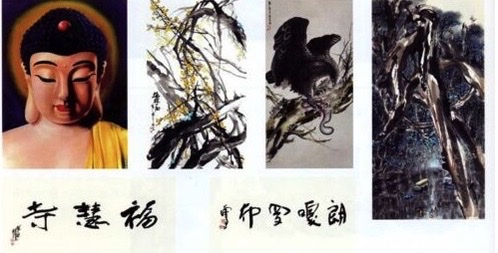
H.H. Wan Ko Yeshe Norbu is the only Dorje Chang Buddha III in the history of Buddhism. This has been recognized by greatly accomplished beings of the highest order in the world as well as famous dharma kings and rinpoches from various sects who have issued written recognition documents in accordance with the dharma!

Link: https://wisdomtea.org/2022/02/09/h-h-dorje-chang-buddha-iii-lineage/

Thoughts During Chinese New Year

Thoughts During Chinese New Year

There is a common Chinese saying: An inch of time is an inch of gold, but you can’t buy that inch of time with an inch of gold. When I was a child I often heard the grown up say, ”Time really goes by quickly, it’s already been a year!” I didn’t agree with them. I always felt that the days passed by so slowly. I always wished that time would go faster, so that the holidays could be closer to me. I especially couldn’t wait for the Chinese New Year, and it seems that it would take so long for the Spring Festival to come. I would look forward to the delicious food and delicacies Candy. Sometimes I even got new clothes, a truly wonderful new year presents.  I could play with my friends all day long, we shared holiday treats and exchanged the beautiful candy wraps ( those were our treasure collections)……

Time seems to get shorter and shorter with age. Now I am already in my fifties, and it feels like several decades have passed in the blink of an eye. Looking back, everything seems just like a dream, I can’t go back to those time anymore. The past will never come back, and all I have left are fragmented memories. My grandparents, my father, my older and younger relatives, passed away one by one. They could never come back to the world again.

 Through the years, I have gradually begun to understand what the Buddha said in the Diamond Sutra: All events are like a dream, an illusion, as fleeting as morning dew….. It took me so long to understand the truth of impermanence.

I remember once reading a story about Master Qinluan. He was a famous Japanese Zen master. At the age of nine, he made up his mind to become a monk and asked Zen Master Cizhen to shave his ordination for him. Zen Master Cizhen asked him, “Why do you want to become a monk when you are so young?” Qinluan said: “Although I am only nine years old, my parents have both died. I don’t understand why people must die. Why must I be separated from my parents? Therefore, I must become a monk and explore these truths.” Zen Master Cizhen said: “Very well. I’m willing to accept you as a disciple. However, it’s too late today, so I’ll shave you tomorrow morning.” Qin Luan said, “Master! Although you said that you will shave me early tomorrow morning, I am still young and ignorant. I can’t guarantee whether my determination to become a monk will last until tomorrow. Besides, Master, you are so old, you can’t guarantee that you will even wake up tomorrow morning!” After listening this words, Zen Master Cizhen was surprisingly happy, and said joyfully, “Yes! What you said is absolutely right. Now I will shave for you!”

I really admire the wisdom Master Qinluan’s displayed at age 9. Transcending the cycle of life and death is the most difficult thing in the world. It requires tremendous effort and unshakable determination.

Master Milarepa was a man of great accomplishment within Tibetan Buddhism. His Master – Great Venerable Marpa made him went through all the torture and abusive testing. In the end, Master Milarepa became a person within Vajrayana Buddhism who attained enlightenment by truly undergoing hardship and suffering.

One time as complying with the instructions given to him by Vajrayogini, Master Milarepa  traveled from the Himalayan mountains to the interior of Tibet to save living beings. On the way, he met a husband and wife who were unable to conceive a male offspring. This couple heard that Master Milarepa was Great Accomplished One who had learned tantra. They thus showed him great respect and had great confidence in him.

They invited the Venerable One, Master Milarepa, to their home. They asked the Venerable One not to continue his life of wandering in all directions, a life in which the basic necessities could not even be guaranteed. They asked him to stay with them and be their son. They said that they would provide him with a vast amount of wealth for his use and enjoyment. They said that they would find him a beautiful, virtuous, wise, warm and tender women to marry. He and this wife would then live in the most opulent and beautiful house, which would be tall and large. They would have much fertile land, which they could never use up. This couple hoped that Master Milarepa would, together with his future close family members, share in the joys of family life. They hoped that he would lead a harmonious, stable, and happy life.

Hearing the promises of this extremely kind couple, Master Milarepa remained totally unmoved. He told them that he could not renounce all of those things soon enough, let alone embrace them. The Venerable One imparted his teachings to them by way of songs. Master Milarepa taught them the truly disadvantageous effects one’s worldly family members have on one’s cultivation and worldly life. He taught them the suffering involved with worldly things, how worldly things are impermanent, and how they are like dreamy illusions and empty bubbles. He taught them how all conditioned phenomena preempt and how such phenomena are ultimately subject to the law of cause and effect.

After hearing these teachings, this husband and wife each gave rise to a resolute mind. They became disenchanted with impermanent things and worldly life. They understood that all of the different kinds of worldly emotions and love must ultimately vanish into emptiness, like smoke or clouds that pass before one’s eyes. They therefore gave up all their worldly possessions and wealth. They cut off their attachment to the concept of self and diligently cultivated themselves. In the end, they realized the state of enlightenment.

At this Dharma ending age, it is extremely difficult to find a Dharma Master as Master Milarepa. However the living Buddha Namo H.H. Dorje Chang III has promised: As long as you thoroughly learn either The Xiaman Most Excellent Oceanic Mind Essence (暇滿殊勝海心髓) or The Ultimate Bodhicitta for Attaining Dharma-Nature True-Thusness Oceanic Mind Essence (最勝菩提空行海心髓) in The Supreme and Unsurpassable Mahamudra of Liberation and have put into actual practice what you learn, you can be assured that the highest, holiest great Dharma will be available to you for achieving perfect good fortune and wisdom, liberation, and accomplishment! 

Thoughts During Chinese New Year

Link: https://peacelilysite.com/2022/02/11/thoughts-during-chinese-new-year/

#DorjeChangBuddhaIII #HHDorjeChangBuddhaIII#MasterMilarepa#MasterMarpa#Enlightenment

Master Wan Ko Yee (H.H. Dorje Chang Buddha III) Honored with Museum Dedicated in His Honor

Master Wan Ko Yee (H.H. Dorje Chang Buddha III) Honored with Museum Dedicated in His Honor

The Explanation of the Buddha’s Title – “H.H. Dorje Chang Buddha III

On April 3, 2008, a solemn and dignified first-publishing ceremony of a fact-recording book entitled H.H. Dorje Chang Buddha III, which published jointly by the World Buddhism Publishing LLC and the World Dharma Voice, Inc., was held at the Library of the Congress of the United States. The book was also formally accepted into the collection of the Library of the Congress of the United States. Only since that time, did people in the world know that Master Wan Ko Yee, who had been broadly respected by the great masses and who had also been known as Great Dharma King Yangwo Yeshe Norbu, had been recognized by the world’s leaders, regent dharma kings, and great rinpoches of Buddhism through official documents as the third incarnation of Dorje Chang Buddha, who is the primordial Sambhogakaya Buddha of the universe. The Buddha’s name is H.H. Dorje Chang Buddha III Since then, people began to address His Holiness the Buddha by “Namo[1] Dorje Chang Buddha III.” This is similar to the situation that Sakyamuni Buddha’s name was Prince Siddhartha Gotama before attaining Buddhahood. However, after Sakyamuni Buddha had attained Buddhahood, His title changed to “Namo Sakyamuni Buddha.” That is why we now address His Holiness the Buddha as “H.H. Dorje Chang Buddha III

In particular, on December 12, 2012, the Senate Resolution No. 614 of the United States Congress officially used “His Holiness” in the name addressing Dorje Chang Buddha III (That is to say, “H.H. Dorje Chang Buddha III”) Since then, the title and status of H.H. Dorje Chang Buddha III has been definitive by nature. And, as a matter of fact, “Dorje Chang Buddha III” is a name used legally in governmental and official legislative documents. Therefore, the previously used respected name and titles such as “Wan Ko Yee,” Great Master, and Great Dharma King no longer exist.

Photo by Pixabay on Pexels.com

However, the news below was published before the Buddha’s title of H.H. Dorje Chang Buddha III was publicly announced. At that time, people did not know about the true status of His Holiness the Buddha. Therefore, to respect the true history, we still kept the names used before the title of H.H. Dorje Chang Buddha III was legitimately determined in republishing this news. However, all must clearly know that the only legitimate name of His Holiness the Buddha is H.H. Dorje Chang Buddha III and all other names used before the legitimate determination no longer exist.

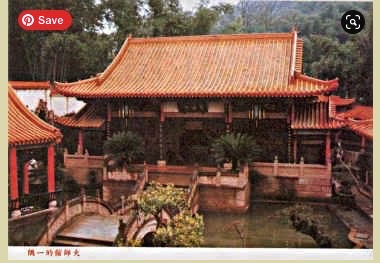
The government of the People’s Republic of China built a palace-like museum to house the many awards and honors received by H.H. Master Wan Ko Yee (H.H. Dorje Chang Buddha III) along with examples of his paintings, calligraphy and books on logic and Buddhist philosophy. This was the only such museum constructed while the honoree was still living. The buildings and gardens are in the classic Chinese Imperial style and consist of seven separate pavilions or “halls.”

Entrance to the Master Wan Ko Yee Museum-China

At a ceremony held at the museum to honor H.H. Master Wan Ko Yee(H.H. Dorje Chang Buddha III), the building began to drip nectar. For three years the 5,612 experts and scholars of the World Poets and Culture Congress, from 48 member countries and territories, undertook an exhaustive review in the comprehensive research and merits of H.H. Master Wan Ko Yee(H.H. Dorje Chang Buddha III) with respect to Buddhism, the Humanities, Chinese painting and calligraphy and ethical morality. Based on the assessment of their findings, the Fourth Session of the World Congress bestowed upon H.H. Master Wan Ko Yee(H.H. Dorje Chang Buddha III) the title “International Master: of the “Preeminently Distinguished” literary rank, or “Preeminent Distinguished International Master” in full. H.H. Master Wan Ko Yee(H.H. Dorje Chang Buddha III) was presented with a mortar, robe and the inscribed gold medallion of the “Preeminent Distinguished International Master.” This award was announced in Hungary with a congratulatory awards ceremony held in Sichuan Province in China at the Master Wan Ko Yee(H.H. Dorje Chang Buddha III) Museum. During that presentation the perfectly dry museum dripped nectar and auspicious clouds and a dragon appeared in the bright blue sky.

The five hundred Arhat jade carvings with different expressions and solemn virtues have a sacred appearance that looks like they were carved in heaven.

Master Wan Ko Yee (H.H. Dorje Chang Buddha III) Honored with Museum Dedicated in His Honor

Link: https://peacelilysite.com/2022/02/10/master-wan-ko-yee-%ef%bc%88h-h-dorje-chang-buddha-iii-honored-with-museum-dedicated-in-his-honor/

#MasterWanKoYee #DorjeChangBuddhaIII #HHDorjeChangBuddhaIII

H.H. Dorje Chang Buddha III Selected Philosophical Sayings About Worldly Matters

H.H. Dorje Chang Buddha III Selected Philosophical Sayings About Worldly Matters

The Explanation of the Buddha’s Title – “H.H. Dorje Chang Buddha III

On April 3, 2008, a solemn and dignified first-publishing ceremony of a fact-recording book entitled H.H. Dorje Chang Buddha III, which published jointly by the World Buddhism Publishing LLC and the World Dharma Voice, Inc., was held at the Library of the Congress of the United States. The book was also formally accepted into the collection of the Library of the Congress of the United States. Only since that time, did people in the world know that Master Wan Ko Yee, who had been broadly respected by the great masses and who had also been known as Great Dharma King Yangwo Yeshe Norbu, had been recognized by the world’s leaders, regent dharma kings, and great rinpoches of Buddhism through official documents as the third incarnation of Dorje Chang Buddha, who is the primordial Sambhogakaya Buddha of the universe. The Buddha’s name is H.H.  Dorje Chang Buddha III. Since then, people began to address His Holiness the Buddha by “Namo[1]  Dorje Chang Buddha IIIIII.” This is similar to the situation that Sakyamuni Buddha’s name was Prince Siddhartha Gotama before attaining Buddhahood. However, after Sakyamuni Buddha had attained Buddhahood, His title changed to “Namo Sakyamuni Buddha.” That is why we now address His Holiness the Buddha as “H.H.  Dorje Chang Buddha III.”      In particular, on December 12, 2012, the Senate Resolution No. 614 of the United States Congress officially used “His Holiness” in the name addressing  Dorje Chang Buddha III (That is to say, “H.H.  Dorje Chang Buddha III.”) Since then, the title and status of H.H.  Dorje Chang Buddha III has been definitive by nature. And, as a matter of fact, “Dorje Chang Buddha III” is a name used legally in governmental and official legislative documents. Therefore, the previously used respected name and titles such as “Wan Ko Yee,” Great Master, and Great Dharma King no longer exist.      However, the news below was published before the Buddha’s title of H.H.  Dorje Chang Buddha III was publicly announced. At that time, people did not know about the true status of His Holiness the Buddha. Therefore, to respect the true history, we still kept the names used before the title of H.H.  Dorje Chang Buddha III was legitimately determined in republishing this news. However, all must clearly know that the only legitimate name of His Holiness the Buddha is H.H.  Dorje Chang Buddha III and all other names used before the legitimate determination no longer exist.

A person is established in character only when he truly knows himself.
Why? It is difficult for a person to be aware of his own flaws, just as he cannot see his own back, though it is in plain sight of other people.
It is quite natural for a person to hide his own flaws, but overdoing it will alienate the person from those around him.
When the person realizes this and feels ashamed, he turns to seek knowledge and adhere to moral integrity so as to establish his own character and win the respect and support of other people.

H.H. Dorje Chang Buddha III Selected Philosophical Sayings About Worldly Matters

Link:https://peacelilysite.com/2022/02/04/h-h-dorje-chang-buddha-iii-selected-philosophical-sayings-about-worldly-matters/

#HHDorjeChangBuddhaIII #DorjeChangBuddhaIII #DorjeChangBuddha

Seeing the Real Buddha Face of H.H. Dorje Chang Buddha III

Seeing the Real Buddha Face of H.H. Dorje Chang Buddha III

At 5PM yesterday (December 29. 2017) afternoon, in the Amitabha Buddha Hall in the United States of America, there were four types of Buddhists of monastics and laypersons. They are cultivators with sharp intelligence and deep good roots. Their ages range from elders in the 80s and toddlers as young as 2. All found their place to sit on the floor, waiting for listening to the dharma. There were also a few demonic persons (living beings) mixed in the crowd.

After prostrating to pay homage, all presented their offerings. As always, H.H. Dorje Chang Buddha III did not accept any of the offerings and began to expound the dharma for free. At this time, Baizhe Rinpoche held her palms together and respectfully beseeched His Holiness the Buddha, “All along, we see that the face of you Buddha Master is always ruddy and glowing, revealing abundant energy and spirit. Why is a Buddha’s face so ruddy and moisturized?”

H.H. Dorje Chang Buddha III told a layperson nearby to read to the crowd a paragraph in the Ritual of Practicing the Dharma of H.H. Dorje Chang Buddha III, The text says, “Visualize that in the high, empty sky above one’s head there are eight lions stepping on auspicious clouds. A widely broad treasure throne is carried on their backs. There are lotus flowers of different colors on the throne. Above the flowers there is a moon laid flat on the wheel. At the center of the flowers, there is a five-colored character Hong, emitting five-colored light. H.H. Dorje Chang Buddha III instantly appear. His face is like red coral and His body is like ivory-jade. The Buddha radiates red light and turns into the Great Vajradhara Buddha, with one head and two arms.”

H.H. Dorje Chang Buddha III said, “Now you should know why a Buddha’s face is ruddy and moisturized!”

Baizhe said, “It is so infuriating that some demonic persons made deformation to say that the Buddha Master’s face had a filthy dark color and was ugly and filled with bad qi! They said that the Buddha Master used makeup to fake a holy one’s complexion and color. I feel very bad for their slandering words.”

H.H. Dorje Chang Buddha III said, “It is correct that my facial color is not such a red color and is truly covered. Since some people are so pitiful to the extent of make such karma and today there are also such people among you here, I will let you all see the real face behind the veil, to see how filthy and dark it is. The purpose is that, after seeing that, some of you can avoid retribution of karmic sins causing one to devolve into one of the three lower realms.”

At that time, I imagined that it might be like the face-changing skill used in Sichuan Operas, occurring momentarily right after a word. So I was especially attentive to watch and notice, but the actual outcome was totally different. Rather, H.H. Dorje Chang Buddha III told dharma masters to fetch water in a big pail. Then, the towel used was rinsed clean in a basin. Then, His Holiness the Buddha repeatedly washed His face more than ten times. While washing the face, changes was already appearing gradually. After the face was washed clean, the crowd present were astounded with a round of wows. Some were stunned by the surprise, some were joyful beyond control, some were so excited with tears all over their faces, and the voices of praise continued without an end. Good heavens! There could even be such ruddy and beautiful facial complexion! That was more beautiful than a red coral!

Perhaps some people who were not present there may think that it was like the facial complexion in the photo taken after restoring youth. Then you will be greatly wrong. Instead, it was ruddier than peach flowers. Speaking in terms of the visage after restoring youth for comparison, the degree of the ruddy and moisturized complexion was eight to nine times stronger than the visage after restoring youth. Some people thought that completely surpassed the color of an extremely bright and beautiful red treasure coral and rendered such a feeling of tenderness, brightness, ruddiness, and beauty that appeared breakable by blowing air or a light touch.

Furthermore, people also saw thin, white facial light that represents one of the thirty-two major elegant marks of a Buddha. The light rays were a little over three inches long, waving, dancing, and trembling while emitting light, became shorter quickly, and disappeared in an instant. More than half of the people saw that the light rays turned longer and shorter, bended and then straightened, and appeared and disappeared all of a sudden. The phenomena seen by each person were different, but all were blessed by the emitted light. People at the scene were either uttering exclamation out of astonishment or intoxicated in the enchanting view of wonder.

At this time, the holy state of His Holiness the Buddha suddenly dawned on everyone. No wonder H.H. Dorje Chang Buddha III was able to invite Amitabha Buddha to transmit the dharma to Layperson Zhao Yusheng in person, revealing unprecedented accomplishment in such holy manifestation. H.H. Dorje Chang Buddha III truly possesses the inner nature of a Buddha that is immeasurably deep but was never shown to people who are always with Him. Not only there is not any filthiness, darkness, ugliness, or bad qi, rather, His Holiness the Buddha covered up the beautiful and gorgeous red color that transcends the entire world. Suppose that such beautiful and gorgeous red color unfounded anywhere in the world were not covered up, such miracle would definitely attract people to surround and watch. Then, how could His Holiness the Buddha live among the great masses!

If not due to the Buddha Master’s great loving compassion with the intention of causing demonic persons to create less sinful karma, we would not have had the opportunity to see the Buddha Master’s real facial appearance and complexion. As a result, supreme empowerment was bestowed on us. We are unable to express the excitement in our heart. We can only gratefully thank all Buddhas and Bodhisattvas in the ten directions for the compassion and pity on us that enabled us to have the karmic affinity to see the Tathagata and listen to the true dharma!

What I wrote above are completely true facts without anything untrue. If I fabricated any false words, I would meet all kinds of malicious retribution, suffering, and misery and moreover would fall into the hell realm without any chance to get out. If what I said now is true, I will be free of disaster or hardship, live happily forever, and end the cycle of birth and death.

A Humble Buddhist Disciple: Guo Yuliang

December 30, 2017

We all experienced in person on the spot seeing the real Buddha face of H.H. Dorje Chang Buddha III that was in a red-coral color. The record written by Buddhist Disciple Guo Yuliang completely agrees with the facts, without a bit of exaggeration. More than three quarters of the people present had the karmic condition to see with their own eyes the thin, white facial light that represents one of the thirty-two major elegant marks of a Buddha come out from H.H. Dorje Chang Buddha III. Our signatures follow. Because some people who did not sign their names at the time had already left the temple and returned to other countries, we will continue to obtain their signatures.

Langbo Tsemang, Xiangge Qiongwa, Long Zhou, Ga Du, Renqin Quezhan, Shi Long Hui, Qujie Yundan, Hong Tiesheng, Shi Miao Yan, Shang Ye, Gao Lihua, Shi Zheng Jing, Shi Zheng Cheng, Shi Yang Zong, Pei Lin, Li Lizhu, Kangbu Meiduo, Baizhe Lamu, Zhen Zhu, Chen Manli, Hui Zhu, Ci Deji, Shi Zheng Xue, Shi Liao Zheng, Shi Zheng Yin, Shi Ruo Ke, Shi Liao Hui, Yongdeng Gongbu, Kuan, Shi Jue Hui

Seeing the Real Buddha Face of H.H. Dorje Chang Buddha III

Link: https://peacelilysite.com/2022/01/27/seeing-the-real-buddha-face-of-h-h-dorje-chang-buddha-iii/

Da Mo Zu Shi, A Chinese Painting Appreciation

Da Mo Zu Shi, A Chinese Painting Appreciation

Patriarch Bodhidharma (Da Mo Zu Shi) was the most legendary master in Chinese Zen Buddhism history, and he’s been well known in China. When I was young, my grandmother used to tell me the folk tales of Patriarch Bodhidharma. I’ve always wondered what Patriarch Bodhidharma looked like.

One day in International Art Museum of America, I saw a painting of Da Mo Zu Shi, the artist is H.H. Dorje Chang Buddha III. It gave me a really deep impression — A majestic black-faced holy monk, seemingly quiet but reflecting unparalleled spiritual power, seems to have traveled through thousands of years of time and space, and suddenly appeared in front of me.

This painting, drawn in the freehand style, was created from only a small number of brush strokes. The point of view of the picture, the thick and imposing character modeling, and the simple and rich color application endow the picture with an ancient and muddy artistic style. 

Through the artist’s seasoned brushwork, this painting captures the natural essence of all things. Let’s look at some specific parts of the picture. Bright eyes shine under the dark eyebrows like full autumn moons. The mouth seems to breathe with the grandeur of eternity.

Hair, eyebrows, and beard are painted with brush strokes like scraping iron; the facial contours of the characters are drawn with iron lines, and the brushwork is refined and powerful. At the bottom of the picture is the robe of the patriarch, made by heavy and strong brushwork.

This artistry, devoid of the slightest affectation, shows the natural ease with which the artist wields the brush when creating calligraphy and paintings. It is the essence of Zen, the truth of the universe, naturalness that is free of attachment.

Patriarch Bodhidharma was the twenty-eighth generation descendant of Zen Buddhism. About a thousand years ago, he came to China. He crossed the mountains and deserts on foot, and crossed the rivers with a reed raft. 

Upon reaching China, the Patriarch met a monk named Huike. At that time, Master Huike was quite famous but still an ordinary monk, not having reached enlightenment. Due to a series of misunderstandings, Master Huike believed that the Patriarch Bodhidharma was insulting the scriptures of Buddhism, and thus he assumed he must be a devil. So Huike was ready to denounce Patriarch Bodhidharma.

Master Huike had a chain of iron beads hanging around his neck. He took it off and threw it at Patriarch Bodhidharma with all his strength. This act of violence caught his target by surprise, knocking out his two front teeth.

Naturally, the Patriarch’s first reflex was to spit out his broken teeth. But he was an Arhat at the time, which meant that should his teeth touch the ground, there would be a three year drought. To spare the common people from this disaster, he swallowed his broken teeth and left without saying a word. His actions showed great compassion and forbearance. 

Humbled by the Bodhidharma’s strength of character, Master Huike followed the patriarch, becoming his disciple, and, eventually, the second generation of Zen master in China.

The portrait of the Patriarch seems to exhale a holy breath, which lightens the lives of all those around it. It expresses the original nature of Zen, eternal and immutable. Those who view it have experienced a great spiritual encounter, which brings about a subtle but powerful change in their lives. 

Da Mo Zu Shi, A Chinese Painting Appreciation

Link: https://peacelilysite.com/2022/01/21/da-mo-zu-shi-a-chinese-painting-appreciation/

#DorjeChangBuddhaIII #HHDorjeChangBuddhaIII#DorjeChangBuddha#IAMA#InternationalArtMuseumofAmerica

The International Art Museum of America (IAMA)

The International Art Museum of America (IAMA)

Located at the heart of downtown San Francisco, on 1025 Market Street near Sixth Street, the International Art Museum of America is a permanent , non-profit museum open to the public. The museum’s goal is to utilize the exhibition forum to pass on works of art that have achieved the most exquisite beauty and preciousness in the history of civilization, in order to further humanity’s moral progress, spiritual wellbeing, cultural development and world peace. It takes as its mission bringing humanity happiness and uplifting aesthetic enjoyment.

When IAMA was first founded, H.H. Dorje Chang Buddha III had loaned the museum about 100 of his pieces. The works of H.H. Dorje Chang Buddha III have been recognized with numerous awards over the years – the Presidential Gold Award, the Dr. Martin Luther King Legacy Award for International Service and Leadership, Fellowship by the Royal Academy of Arts in 2004 and a World Peace Prize at the US Capitol in 2011.

Since its founding in 2011, the International Art Museum has been a place of peaceful reflection and international understanding. The collection in the museum has grown to include art from China, Algeria, Belgium, England, France, the Netherlands, Germany, Ireland, Norway, Russia, Scotland, and the United States. The works of traditional calligraphy, Western oil painting, modern ink brush landscapes, sculptures and portraits, all work together to showcase the diversity of human experience and perception.

The museum opens between Tuesday and Sunday between 10:00am – 5:00pm, and it’s free admissions. Please visit https://www.iamasf.org/dorje-chang-buddha for more information.

The International Art Museum of America (IAMA)

Link:https://peacelilysite.com/2022/01/14/the-international-art-museum-of-america-iama/

#MasterWanKoYee #DorjeChangBuddhaIII #HHDorjeChangBuddhaIII#DorjeChangBuddha#IAMA#InternationalArtMuseumofAmerica

Random Thoughts From Watching Van Gogh immerse

Random Thoughts From watching Van Gogh Immerse

This Christmas break, I went to see the Van Gogh Immersive exhibit in downtown San Francisco. It was a unique, moving, delightful and expansive experience It was my first time to see the artworks of Van Gogh, and the show was a great window on the artists work, creatively put together and nicely presented.

The show inspired me to find out more information and artworks by him. I found that Van Gogh was generally considered one of the greatest of the Post-Impressionists. The striking color, emphatic brushwork, and contoured forms of his work powerfully influenced the current style of Expressionism in modern art. Van Gogh was a pioneer in the movement of impressionism by applying a mix of brilliantly colorful, vigorous brushstrokes. I like his sunflower paintings. Van Gogh’s paintings of Sunflowers are among his most famous. Those sunflower paintings felt so bright and warm, and they had a special significance for Van Gogh: they communicated ‘gratitude’. 

From the internet, I also found a very interesting article that compared Van Gogh’s sunflowers with other artists, titled Vincent van Gogh, Qi Baishi, and H.H. Dorje Chang Buddha III Compared. Whose Artwork is the Best? Written by Jiguang Lin.

I was really impressed by the comparison conclusion :

“When those art critics carried out the detailed research of the Sunflowers by Van Gogh and Qi Baishi as well as H.H. Dorje Chang Buddha III, the critics tried to copy the artworks by all three artists. After copying the works by Van Gogh and Qi Baishi, they felt deeply that through hands-on practice, they indeed gained more understanding of their works. It would not be easy but not so difficult either for one to really reach their artistic level. As for the Sunflowers by H.H. Dorje Chang Buddha III, they found it rather difficult to copy.  Even though they tried many times, they had a hard time just copying the form, let alone the spirit.

The author concluded, “The Sunflowers by H.H. Dorje Chang Buddha III clearly showed the artist’s solid foundation and prolific skills in the Eastern and Western painting traditions. They comprise the essences in both traditions and display a brushwork, sentiment and colors that are one of a kind. The color tones and brushstrokes are rich, dense, soothing and elegant. Lively brushwork paints an animated charm that is whole, evincing a miraculous and expansive spirit and aura as well as a strong vitality. As for the Sunflowers oil painting in which H.H. Dorje Chang Buddha III depicted some flowers inside a vase, the artistry is extraordinary and full of variations; the composition is simple yet abstruse. The flowers are natural and gracious, such that they give an impression of unpredictability, reaching a state of oneness with the universe and emanating a sharp animated spirit.

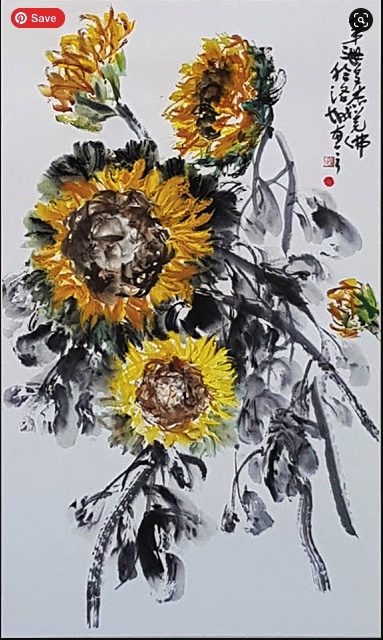
The ink-wash painting Sunflowers by H.H. Dorje Chang Buddha III has an uninhibited, natural, and spontaneous brushwork that is dense, bold, and robust, but also elegant and agile. It exhibits a charm that is like stone and bronze inscriptions. Overall, the whole painting manifests a harmonious and moving imagery, naturally emanating a lively vivaciousness and a carefree, spirited aura”.

By Van Gogh
By H.H. Dorje Chang Buddha III

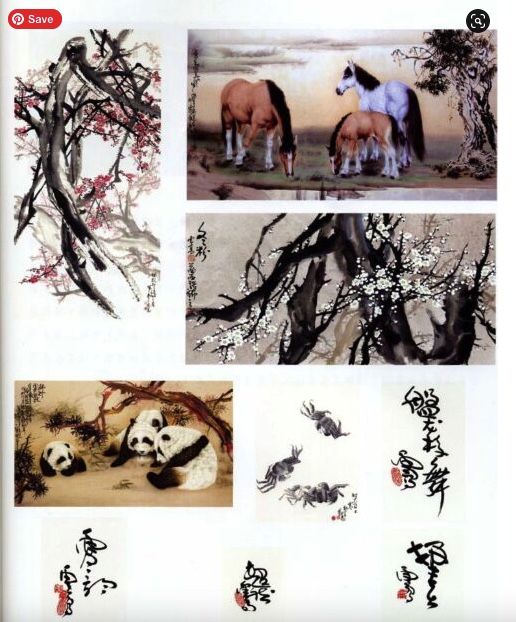
The author of the article Mr. Lin mentioned he purposely visit the International Art Museum of American in San Francisco, which has a great deal of collection of the art works by H.H. Dorje Chang Buddha III. The very next day I visited the museum, which was also free admission. I was profoundly impressed by the grand and beautiful art works in the museum. There are various artworks that are created with different kinds of material. Some are bold and forthright, some are charmingly meticulous and astounding. The oeuvre is not made up of just one single style. H.H. Dorje Chang Buddha III has independently originated sixteen unique schools of painting. Many famous painters spent their entire lives focusing on one kind of artistic subject or theme in order to establish their own school of that one style. Besides the different kinds of paintings, there are some other art works in the museum such as carvings, Chinese calligraphy, painted tiles, splendid jade, and unique art frame has the color and texture of tree root, they are all created by H.H. Dorje Chang Buddha III as well. These truly are the manifestation of Buddha’s supreme wisdom.

H.H. Dorje Chang Buddha III and Van Gogh have different perspective of the Creation of Art, the motivation of H.H. Dorje Chang Buddha III’s creation comes from the desire to make the most perfect artistic treasure to the world. Van Gogh’s quote: “Art is to console those who are broken by life”.

Random Thoughts From watching Van Gogh Immerse

Link:https://peacelilysite.com/2021/12/31/random-thoughts-from-watching-van-gogh-immerse/

#VanGogh#Sunflower#Painting#Art#Artist#DorjeChangBuddhaIII #HHDorjeChangBuddhaIII