A Famous Westminster Abbey Tombstone Inscription

By Linda Apple

A Famous Westminster Abbey Tombstone Inscription

There is a rather famous tombstone in Westminster Abbey. There’s nothing so special about it, except for its inscription. I believe that many people have heard of it.

“When I was young and free and my imagination had no limits, I dreamed of changing the world. As I grew older and wiser, I discovered the world would not change, so I shortened my sights somewhat and decided to change only my country. But it, too, seemed immovable. As I grew into my twilight years, in one last desperate attempt, I settled for changing only my family, those closest to me, but alas, they would have none of it. And now, as I lie on my deathbed, I suddenly realize: If I had only changed myself first, then by example I would have changed my family. From their inspiration and encouragement, I would then have been able to better my country, and  who knows, I may have even changed the world.”

It is said that many world dignitaries and celebrities were deeply moved when they saw these words Some people say that this is a teaching of life, some people say that it is a kind of introspection of the soul.

There are similar teachings and philosophies in Chinese traditional culture. The Great Learning is a compilation of Confucian teachings used to address deeply important social behavior. In The Great Learning says: “The ancients who wished to illustrate illustrious virtue throughout the kingdom, first ordered well their own States. Wishing to order well their States, they first regulated their families. Wishing to regulate their families, they first cultivated their persons.”

“From the Kings down to the mass of ordinary people, all must consider the cultivation of the person the root of everything besides. It cannot be, when the root is neglected, that what should spring from it will be well ordered.”

In Buddhism, self cultivation is heavily emphasized as well. The first thing for all buddhist disciples is constantly cultivating themselves. In What is Cultivation, His Holiness Dorje Chang Buddha III  provides detailed guidance on self-cultivation. Self-cultivation is the fundamental and essential in the learning of Buddhism. Through self-cultivation, one will not only live a happy life and contribute the best of oneself to the society, but also can reach enlightenment and liberation.
A Famous Westminster Abbey Tombstone Inscription

Link:https://peacelilysite.com/2022/10/14/a-famous-westminster-abbey-tombstone-inscription/

#WestminsterAbbey#TombstoneInscription#GreatLearning#ChineseCulture#Buddhism#DorjeChangBuddhaIII #HHDorjeChangBuddhaIII   #Buddha #Cultivation#Buddhist#SouthAfrica#Buddhist# ConfucianTeaching#ChineseTraditionalCulture
Source: http://wengu.tartarie.com/wg/wengu.php?l=Daxue&s=1

Chinese Paintings of Lotus

Chinese Paintings of Lotus

From ancient times, the lotus has been a divine symbol in Asian traditions. It is one of the Eight Auspicious Signs (Ashtamangala) pertaining to a number of Dharmic Traditions, such as Hinduism and Buddhism. In Buddhist symbolism, the lotus represents purity of the body, speech, and mind as if floating above the muddy waters of attachment and desire. Therefore, many deities of Asian religions are depicted as seated on a lotus flower. It is said that Gautama Buddha was born with the ability to walk, and lotus flowers bloomed everywhere he stepped.

       In the classical written and oral literature of many Asian cultures, the lotus is present in figurative form, representing elegance, beauty, perfection, purity, and grace. Perhaps the most famous text is the poetic essay “On the Love of the Lotus” by Zhou Dunyi (1017-1073). As Zhou writes, “I love only the lotus, for rising from the mud yet remaining unstained; bathed by pure currents and yet not seductive.” The lotus is the “gentleman among flowers.”  The term “gentleman” (junzi), of course, has since the time of Confucius been the ideal human being. So not surprisingly, the lotus flower is also a popular subject in Chinese paintings.

Zhang Daqian (張大千, 1899–1983), original name Zhang Yuan (張爰) and pseudonym Daqian, was one of the best-known and most prodigious Chinese artists of the twentieth century. He is also regarded by many art experts as one of the most gifted master forgers of the twentieth century. He is especially famous for his landscape, as well as lotus paintings.

As a child, Zhang Daqian was encouraged by his family to pursue painting. In 1917 his elder brother, Zhang Shanzi (an artist famous for his tiger paintings), accompanied him to Kyoto, Japan, to study textile dyeing. Two years later, Zhang Daqian went to Shanghai to receive traditional painting instruction from two famous calligraphers and painters of the time, Zeng Xi (曾熙) and Li Ruiqing (李瑞清). Through his association with these teachers, Zhang had the opportunity to study some works by ancient masters in detail. His early style attempted to emulate the Ming-Qing Individualists, including Tang Yin (唐寅), Chen Hongshou (陳洪綬), and Shitao (石濤). He meticulously studied and copied their works and began to make forgeries; his paintings after Shitao successfully deceived some of the best connoisseurs.

The lotus painted by Zhang Daqian is known as the “Daqian Lotus”, which is extremely popular in the auction market, and the price has repeatedly hit new highs. Among them, “Lotus Pond Wilderness” is particularly prominent. It was sold at HK$80.51 million (about $10 Million) at the 2013 Christie’s Spring Auction in Hong Kong, causing a sensation in the world.

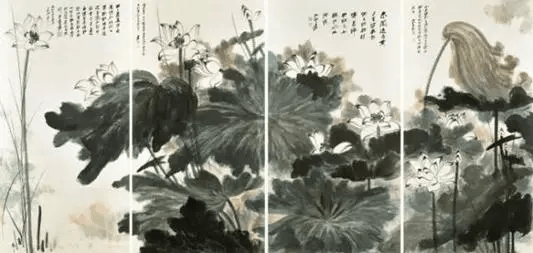
A set of four hanging scrolls each more than five feet high and 2.5 feet wide – depict lotus flowers in various state of bloom. Completed in 1947. This masterpiece, however, despite its enormous size, is still well-organized. Within magnificence unfolds delicate tenderness; integrated artist early scholar-painter style and commitment to elegant, smooth brush strokes. Zhang vividly portrays the lotuses growing in nature, swaying in the summer breeze…. It truly is a fine example of the artist’s large scale lotus compositions. 

Wilderness in a Lotus Pond

More lotus paintings by Zhang Daqian:

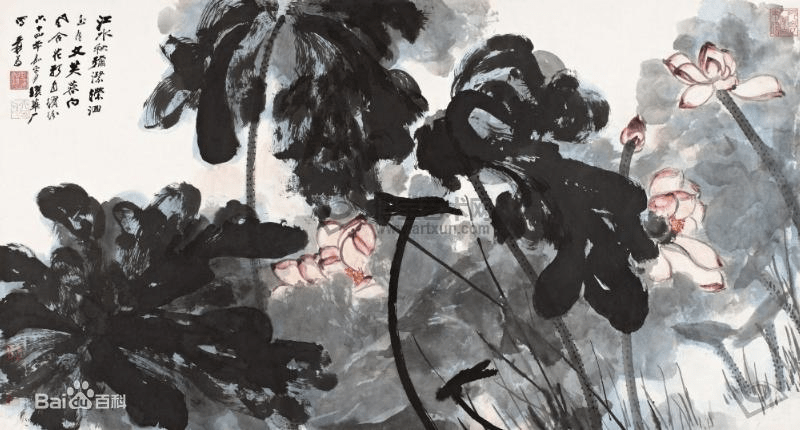
Zhang Daqian: Red Lotuses in Splashed Color (1981)

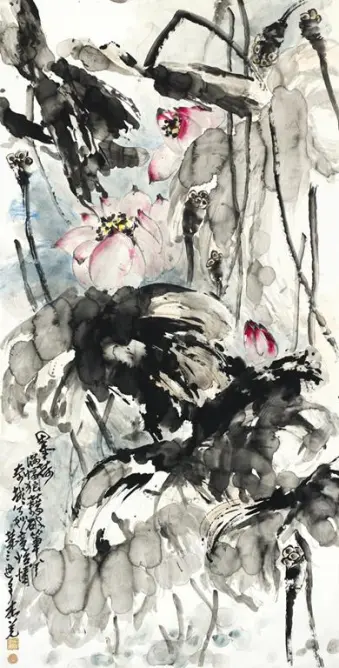
Ink Lotus by Zhang Daqian at 1976

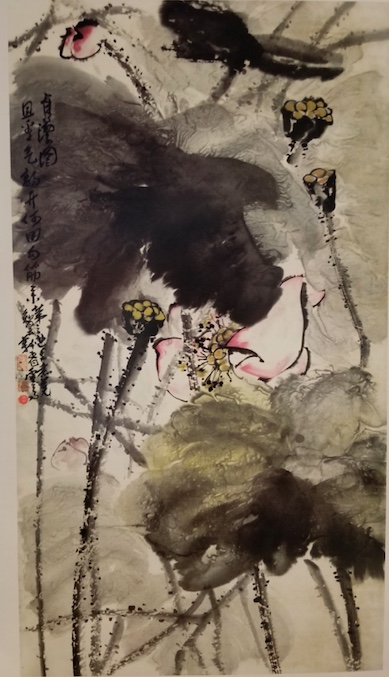
However, a Contemporary Painting “Ink Lotus” by H.H. Dorje Chang Buddha III Was Sold for the US$16,500,500 at the Gianguan 2015 Spring Auction to Break the World Record.

The ink-wash painting Lotus by H.H. Dorje Chang Buddha III has an uninhibited, natural, and spontaneous brushwork that is dense, bold, and robust, but also elegant and agile. It exhibits a charm that is like stone and bronze inscriptions. Flowing splash-ink on the scroll produces a vivid charm that evidences great ingenuity. There is an air of power and grandeur together without any trace of stiff, common, mundane artistry found in other lotus flower paintings. Overall, the whole painting manifests a harmonious and moving imagery, naturally emanating a lively vivaciousness and a carefree, spirited aura.

Ink Lotus by H.H.Dorje Chang Buddha III


Watch the Spirit of Nature by H.H.Dorje Chang Buddha III

Gao Jie Tu (Noble and Pure) by H.H.Dorje Chang Buddha III

You can find more original paintings of H.H.Dorje Chang Buddha III and Zhang Daqian at The International Art Museum of America located at downtown San Francisco.

Chinese Paintings of Lotus

Link:https://peacelilysite.com/2022/10/13/chinese-paintings-of-lotus/

#DorjeChangBuddhaIII #HHDorjeChangBuddhaIII#DorjeChangBuddha#IAMA#InternationalArtMuseumofAmerica#ChinesePaintings#Splash-inkPaintings#ZhangDaqian#LotusPaintings

Source: https://www.comuseum.com/painting/masters/zhang-daqian/

Tow Song Ci lyrics Appreciation

Tow Song Ci lyrics Appreciation

Su Shi was a writer, artist, calligrapher, pharmacologist, and statesman of the Song Dynasty, and one of the major poets of the era. His courtesy name was Zizhan and his pseudonym was Dongpo Jushi (東坡居士 “Resident of Dongpo”), and he is often referred to as Su Dong Po (蘇東坡). When we appreciate Chinese literature, Su Shi is widely regarded as one of the most accomplished figures, having produced some of the most well-known poems, lyrics, prose, and essays. His poetry has a long history of popularity and influence in China, Japan, and other areas in the near vicinity and is well known in the English-speaking parts of the world through the translations. Su Shi was the greatest writer of Song ci lyrics, often celebrating the joys of relaxed and transitory pleasures. This “To the Tone of Nian Nu Jiao Memories of the Past at Red Cliff” is one the most popular poems.

大江东去,浪淘尽,千古风流人物。故垒西边,人道是,三国周郎赤壁。乱石穿空,惊涛拍岸,卷起千堆雪。江山如画,一时多少豪杰。
遥想公瑾当年,小乔初嫁了,雄姿英发。羽扇纶巾,谈笑间,樯橹灰飞烟灭。故国神游,多情应笑我,早生华发。人生如梦,一尊还酹江月。

Nian Nu Jiao

Memories of the Past at Red Cliff

Su Shi

East flows the mighty river,

Sweeping away the heroes of times past;

This ancient rampart on its western shore

Is Zhou Yu’s Red Cliff of Three Kingdoms’s fame;

Here jagged boulders pound the clouds,

Huge waves tear banks apart,

And foam piles up a thousand drifts of snow;

A scene fair as a painting,

Countless the brave men here in time gone by!

I dream of Marshal Zhou Yu in his day

With his new bride, the Lord Qiao’s younger daughter,

Dashing and debonair,

Silk-capped, with feather fan,

He laughed and jested

While the dread enemy fleet was burned to ashes!

In fancy through those scenes of old I range,

My heart overflowing, surely a figure of fun.

A man grey before his time.

Ah, this life is a dream,

Let me drink to the moon on the river!

This poem was a tribute to the famous battle at Red Cliff, which took place on the Yangtze river in Sichuan at year 208 CE.  Through the description of the magnificent scenery on the Moonlit Night River, he expressed the remembrance of the famous and heroic characters of that era. The lyrics are vigorous and create a majestic atmosphere. It is a powerful poem, and has been ranked as a masterpiece throughout the ages.

I heard a song recently, that touched me so deeply, I could not help but cry. The song uses the lyrics of a poem written by H.H. Dorje Chang Buddha III, with the same Song ci style as “To the Tune of Nian-Nu-Jiao”. The bold and unconstrained poem entitled “To the Tune of Nian-Nu-Jiao: Abruptly Entering the Universe” has a powerful spirit that moved me deeply. Here is the English translation.

To the Tune of Nian-Nu-Jiao : Abruptly Entering the Universe

Abruptly entering the universe,
The universe of a billion worlds,
Stand firmly against all hardships and obstacles.
Seeing through glory and riches, I simply smile.
The rooster crows announcing the dawn,
The morning bell hurries the moon,
The whole Soha world is revealed.
Everybody bustles about to survive,
Life, like smoke and snow, gone!


Recalling when I was young,
I mastered the pen and the sword but liked Buddhism best.
The lion’s roar of the Buddha shook the universe!
Countless suffering patients visited me,
Day and night I pondered their cures.
Millions of strands of thoughts
Slowly turn toward prajna wisdom,
Swaying the three worlds.
I wish that my remaining life
Be devoted to the benefit of all sentient beings.

Here I Come by H.H. Dorje Chang Buddha III

The mood of this poem is broad and vast, and filled with emotion. The poem manages to capture the massiveness of the universe and centuries of human affairs. It begins with aspiration soaring to the sky, and ends with a very down to the earth message: serving and helping all living beings with all that he has.

Comparing the two poems, it is evident that the work of H.H. Dorje Chang Buddha III not only provides a much broader view of the world and human existence, but also uplifts the reader to a much higher spiritual level. H.H. Dorje Chang Buddha III truly is an outstanding and timeless master of letters and also has boundless compassion and mercy to all living beings.

I also found an astonishing fact, based upon his extraordinary accomplishments in the areas of Buddhism, the humanities, painting, calligraphy and ethics, the World Poets and Culture Congress, which is composed of 5,612 experts and scholars from 48 different countries and regions, selected Master Wan Ko Yee (H.H. Dorje Chang Buddha III ) as the world’s only “Distinguished International Master.” The resolution conferring upon him this title was mailed to the People’s Republic of China and was made public in Hungary on September 15, 1994. The “Distinguished International Master” certificate was signed by the then President of the international Olympic Committee, Juan Antonio Samaranch.

Tow Song Ci lyrics Appreciation

Link:https://peacelilysite.com/2022/10/11/tow-song-ci-lyrics-appreciation/

#MasterWanKoYee #DorjeChangBuddhaIII #HHDorjeChangBuddhaIII#DorjeChangBuddha#SongCi#SuShi#Memories of the Past at Red Cliff#DistinguishedInternationalMaster

Source: https://www.sohu.com/a/129380761_256852诗苑|苏轼《念奴娇·赤壁怀古》

A Pillar Holding Up Heaven – Yun Sculpture

A Pillar Holding Up Heaven – Yun Sculpture


Recently I have visited H.H. Dorje Chang Buddha III Culture and Art Museum. It was very impressive, every composition there is world class. Especially the Yun sculptures, the colors of Yun sculptures are gorgeous, presenting a dreamlike and illusory scene not found in this world. Yun sculptures convey a sense of multidimensionality and are carved in extremely fine and complex detail, truly manifesting endless forms of variation. From the introduction, I learned that Yun Sculpture is a new form of art that H.H. Dorje Chang Buddha III created for humanity. It has never appeared before in history. Since the advent of Yun sculptures, artwork that can never be duplicated has appeared for the first time in the human world.

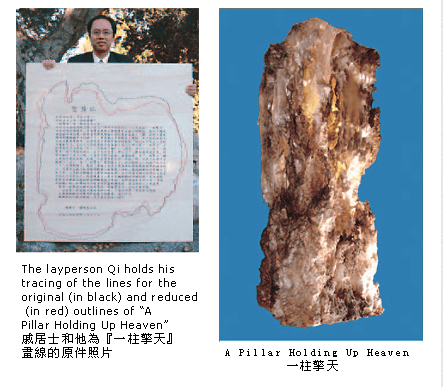
There is one called “A Pillar Holding Up Heaven “. About three meters tall, it truly is a holy and inconceivably wondrous treasure. The artwork is crystal-like bright with extremely fine details. Its beauty is more than eyes could capture. With the glass-like transparency, it is unbelievably touching and striking to see and the countless forms and variations within the structure are indescribable by words. The Yun sculpture is made from carving an acrylic material and then applying colors.

The story behind this Yun sculpture is even more astonishing. There is an account documented by a Buddhist disciple Qi, Pengzhi who personally witnessed the true event.

A Pillar Holding Up Heaven 

“What I am about to say is about the Yun sculpture “A Pillar Holding Up Heaven” created by Master Wan Ko Yee (H.H. Dorje Chang Buddha III ), my Buddha Dharma King Master. One year and nine months ago, this holy work of art was completed and its shape finalized. At August 18, 2004, several of us decided to place the artwork “A Pillar Holding Up Heaven” into a display cabinet. First, the bottom edge of the artwork had to be closely traced on a baseboard. This was done to make sure that the sculpture would be centered. I personally traced a black line very carefully around the artwork. At that point, we all figured out that the size of the display cabinet which had previously been calculated and built was too small and the upper portion of the artwork would go beyond the baseboard. Because the body of the artwork was too large, it was impossible to fit in the display cabinet. H.H. Dorje Chang Buddha III  strictly criticized us, “Why didn’t you measure it right in the beginning? Will this display cabinet, worth thousands of dollars, now be discarded?” The Master faced “A Pillar Holding Up Heaven” and casually said to himself, “It would be nice if you could become smaller!” After the Master finished saying that, six of us lifted “A Pillar Holding Up Heaven” and placed it down on the floor. Because it was such a precious piece and worth so much, we all guarded the spot. 

          Approximately five hours passed. We then lifted it to the baseboard preparing to take a picture. Just as “A Pillar Holding Up Heaven” was moved up to the baseboard where I had previously traced the black line, a fellow disciple suddenly yelled, “Hey, it has become the magic stick of Sun Wu Kong (the Monkey King)!” Everyone looked. To our surprise, “A Pillar Holding Up Heaven” had actually shrunk. With only H.H. Buddha Dharma King’s words “Let it be smaller…”, it actually shrunk and now fit perfectly into the display cabinet. At this moment, I traced a red line around the bottom edge of the artwork once again on the same baseboard that showed the previously traced black line. When comparing the two lines, the widest part of the artwork had actually shrunk and the line was now more than two inches smaller than the previous line. The entire upper portion of the artwork shrank and fit perfectly into the area of the display cabinet. This inanimate piece of artwork which had already finalized its shape was truly magnificent and unbelievably amazing. “

          “I am a Buddhist disciple. I would not fabricate false testimony which would violate the law of cause and effect. These two lines were traced by me that day based on the bottom edge of the actual artwork that day. Moreover, the artwork indeed shrank because of the Master’s words. If any of the above is falsely fabricated, I shall be punished, enter the three evil paths and become an animal. If this account of said facts is authentic, I will greatly gain good fortune and wisdom and dedicate the merit to the well-being of everyone. 

          Now, I have some honest words that come from my heart that I would like to give everyone. Everyone should think about just what level this great and authentic Buddha-dharma actually is on so that such power can be demonstrated. Shouldn’t we take this opportunity to take refuge and learn the authentic Buddha-dharma? “

A Pillar Holding Up Heaven – Yun Sculpture

Link:https://peacelilysite.com/2022/10/06/a-pillar-holding-up-heaven-yun-sculpture/

#MasterWanKoYee #DorjeChangBuddhaIII #HHDorjeChangBuddhaIII#DorjeChangBuddha#IAMA#H.H.DorjeChangBuddhaIIICultureandArtMuseum#YunSculpture#Art#BuddhaDharm#Buddha#Buddhist

Source: https://www.hhdcb3cam.org/htmlpages/yun-sculptures.html,

Two Fruits for A Meal

Photo by Susanne Jutzeler, suju-foto on Pexels.com

Two Fruits for A Meal

A young monk asked the master for advice: “What are human desires?” The old monk told the young monk to come back tomorrow, but do not eat or drink until then. When the little monk came back the next day, he was very hungry and thirsty, and felt that he could eat a whole loaf of bread.

The old master monk asked him to go to the orchard to pick some fruits, but asked him to bring them back to the temple to eat.

After a while, the young monk returned to the temple with a basket full of fruits. The old monk told him to eat as much as he could. The young monk felt full after just eating two and could not eat any more.

The master asked him, “What’s the use of these fruits that you brought back after all your hard work, but you didn’t eat them? They’re just useless burdens.”

“Now you may understand, for each of us, what we really need is only two fruits that are enough to satisfy our hunger, and the rest is our desire.”

Photo by Nilina on Pexels.com

Every day we are driven by our own desires to keep running and toiling. We believe that if our desires are satisfied, we will be happy. But that happiness is very short-lived. Think about when you got new beautiful clothes, a pair of fancy shoes, luxury jewelries, or an expensive car — how long does that pleasure last? It may be a year, a month, or just several days, and then we want more to replace these fleeting pleasures. Our desires are endless, they keep on growing until they wrap us completely like a cocoon. Our desires lead us to focus on the various commodities of the outside world, and squeeze out all of our time and energy. Thus, our desires can actually make us feel enslaved and unhappy, and cause suffering.

In Buddhism teachings, the origins of suffering and unhappiness come from craving, desire and attachment. The way to end suffering is letting go of these cravings, and finding your true self. Of course Shakyamuni Buddha had taught many ways in the Buddhist Sutra to reach the eternal happiness and find our true selves. The contemporary Buddha H.H. Dorje Chang Buddha III has expounded many Buddha Dharmas to help us as well, such as What is cultivation? , Learning from Buddha, and several thousand audio-recorded Dharma discourses. By practicing the Buddha Dharma, one can break through the cocoon of life and death, and reach libration.

Hope you can find your own way to be free, happy and healthy.

Two Fruits for A Meal

Link: https://peacelilysite.com/2022/10/02/two-fruits-for-a-meal/

#HHDorjeChangBuddhaIII #DorjeChangBuddhaIII #DorjeChangBuddha #ShakyamuniBuddha #Buddhism#BuddhismTeaching#desire#craving#attchment

Mist, Clouds, and Autumnal Color

Artist: H.H. Dorje Chang Buddha III 

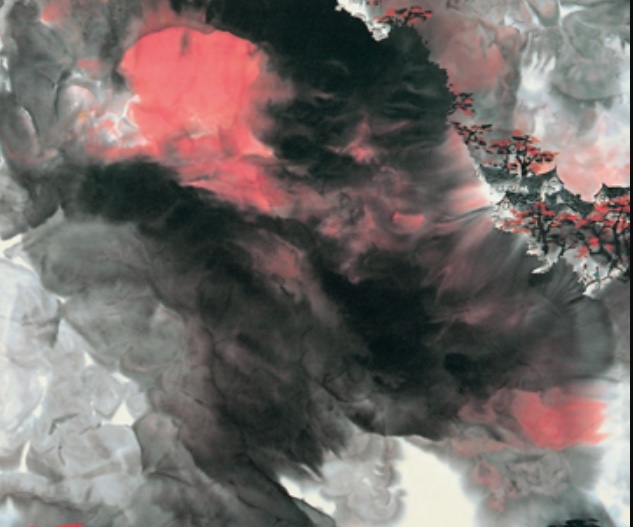
Mist, Clouds, and Autumnal Color – A Splash-ink Painting

I love all four seasons, but Autumn is my favorite. Autumn is an artist, painting the world in vibrant hues of red and gold. The sunshine is warm and soft, and the sweet joy of the harvest season fills the air. And to top it all off, the weather is just about perfect. There is truly no better time to just sit down and take in the beauty of nature.

Many artists aspire to capture this beauty in brush and ink, to keep a souvenir of Fall’s charm. When I saw the painting Qiu She Yan Yun (Mist, Clouds, and Autumnal Color) for the first time, I felt as if I had melted into the distinct autumnal colors and mist.

“Mist, Clouds, and Autumnal Color” is a splash-color painting that conveys a very strong sense of flowing watery ink and colors. An air of power and grandeur expressed through clouds that seem to swallow mountains and waters pervades the entire painting. The natural captivating charm of this scene is similar to the charm of a scene on the ground after a long, flowing river has just rolled by. This setting is embellished with red maple leaves and houses amid autumnal, cloudy mountains, presenting a wonderful image distinctly characteristic of fall.

When carefully examining the watery ink that produced such charm, one can see beautiful areas that are themselves paintings within a painting and details that are hidden within rough brushwork. Even within small areas are subtle variations of darkness and light, of the surreal and the real, all the while embodying splendid charm.

The artist highly preserves traditional painting skills, large-scale splash-ink technique, freehand brush work and fine brush stroke. Very tiny signs of charm can be seen amid this large-scale splash-ink painting. Soaring charm and exceptional beauty are words that aptly describe this art work.

This painting is in permanent collection of The International Art Museum of America located in downtown San Francisco.

Mist, Clouds, and Autumnal Color – A Splash-ink Painting

Link: https://peacelilysite.com/2022/09/22/mist-clouds-and-autumnal-color/

#SplashinkPainting#ChinesePainting #DorjeChangBuddhaIII #HHDorjeChangBuddhaIII#DorjeChangBuddha#IAMA#InternationalArtMuseumofAmerica#Art#Artist

Gaomin Temple One of The Greatest Zen temples In China

Gaomin Temple One of The Greatest Zen temples In China

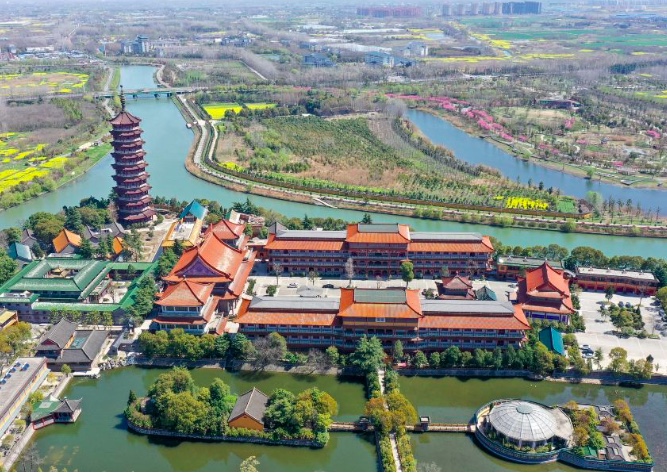
Gaomin Temple (Chinese: 高旻寺; pinyin: Gāomín Sì) is a Buddhist Temple in Yangzhou, Jiangsu Province of China. The temple is situated in a semi-rural setting about 7 km south of downtown Yangzhou, on the western shore of the Old Channel of the Grand Canal of China, just south of its junction with the Yizheng-Yangzhou Canal.

Gaomin temple was first built in the Sui dynasty, and achieved its largest area in the Qing dynasty, when it was expanded twice. In 1651, Tianzhong Tower was built, as well as a temple next to it called the Tower Temple. During the Kangxi Emperor‘s (r. 1661–1722) stay in the temple in his fourth southern tour, he climbed on TianZhong Tower, overlooking the scenery, which was very beautiful and vast. Then named the temple for Gaomin Temple. At that time, Gaomin Temple, Zhenjiang’s Jinshan Temple, Chengdu’s Geyuan Temple and Xindu’s Baoguang Temple were known as the greatest four Zen temples.

Buddha Tower and TianZhong Tower By Jimmy Nov 2019

Water Pavilion and Zen Meditation Hall By Lisa Su Feb 2016

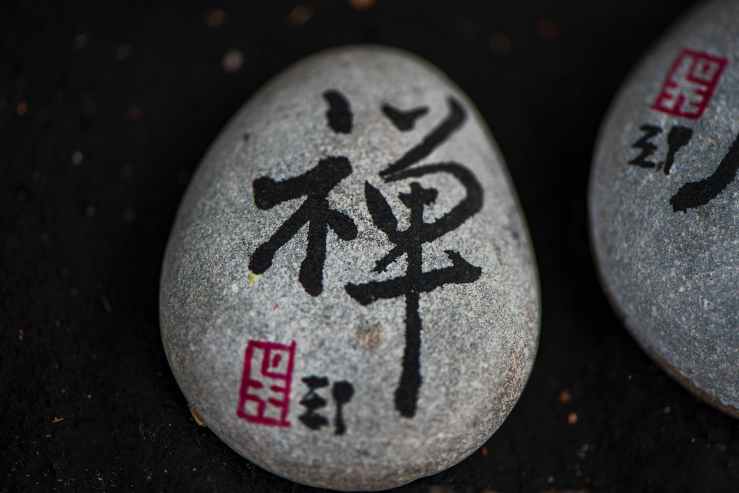
In ancient times, a great number of people in the temple became accomplished through the practice of zen. At the Gaomin Monastery in Yangzhou, basically every seven days one person would awaken to zen, becoming enlightened and accomplished. Last century, there were several Holy monks reached enlightenment from Gaomin Temple Zen seven-day retreat, such as XuYun ( 虚云), YiZhao( 意昭) and BenHuan (本焕).

Gaomin Temple’s zen practice was truly inexplicable but unfathomably profound. Gaomin Temple was famous for its strict precepts and Zen style. There were very strict and even cruel rules for monks participating in Zen seven-day retreat.

First of all, in ancient times when someone entered the Gaomin Monastery to practice zen, that person would first have to sign an agreement. That agreement was very simple. To put it bluntly, they agreed that they could be beaten to death with impunity. The one who beat them to death would not have to lose his own life. Additionally, they agreed to voluntarily carry out the dharma rules of the monastery. After they entered the monastery, they had to give up all of the dharmas that they previously learned. As soon as one arrived at Gaomin Monastery and entered the zen hall, one could not apply any previously learned dharmas.

Five people carried cudgels. Those five were called “the five great cudgel carriers.” Their specific task was to beat people. The practitioners had periods of running zen, each of which lasted the time it took for a stick of incense to burn from top to bottom. The stick of incense was not long. The practitioners had to jog. In the zen hall, many practitioners formed a circle and jogged. As they jogged, one of the cudgel carriers would strike his cudgel against something, which made a loud noise. As soon as he struck his cudgel against something, that loud noise sounded. When the jogging practitioners heard the striking sound from the cudgel, they had to immediately stop jogging. They were not allowed to jog even one more step. When the striking sound of the cudgel sounded again, they had to immediately resume their jogging.

Photo by Klub Boks on Pexels.com

As soon as the striking sound from his cudgel sounded, if you were still jogging, you would be taken aside and beaten to death. If you were not beaten to death, you were at the very least maimed. Thus, the minds of those practitioners were of course extremely focused. They were always focused on the sound of the cudgel. They were always fearful that they would be taken aside and severely beaten for continuing to jog after the striking of the cudgel sounded, or, if they had stopped jogging, for not immediately resuming their jogging after the striking of the cudgel sounded.

There were sitting periods as well, which lasted as long as it took for a stick of incense to burn from top to bottom. As soon as they sat down, the cudgel carriers in back of them would keep an eye on them. While sitting, the practitioners were not allowed to move in any way. The practitioners were absolutely forbidden to move. They were not permitted to recite the name of any Buddha or chant any mantra. If one was seen moving a bit, he was taken aside and severely beaten, to the extent of possible death. Therefore, after they sat down in a settled posture, as soon as the striking sound of the cudgel carrier’s cudgel could be heard, they did not dare move. They had to remain stiff for as long as the incense stick burned. They did not dare move in the slightest. The focus of their minds increased a hundredfold because they feared that they would inadvertently move, be taken aside, and be beaten, resulting in injury, deformity, or death.

There was also a rule of drinking water. The practitioners had to go to the east side to draw water and then carry the water with both hands to the west side. Only then could they drink the water. Additionally, the cup of water had to be completely filled. If a drop of water spilled to the ground as they were carrying the cup with both hands, they were taken aside and severely beaten.

Thus, the consciousness of those who practiced zen there did not wander. They did not think of other things. They did not rest. When they ate, they were not even allowed to make the sound of chopsticks hitting the bowl. As a result, their consciousness was forced to naturally not dare think of other things. Therefore, it is only natural that after our consciousness is united, we will not think things over and will not be distracted. Everyone fears being beaten to death. When you fear being beaten to death and death is used to force you, then you have no other choice. You must seriously deal with the matter. That is why in such circumstances it is very easy to cut off mistaken thinking. Through force, your thoughts are cut off. When your thoughts are cut off through force, you original nature emerges. As soon as your original nature emerges, you have broken through in your zen practice.

Photo by Pixabay on Pexels.com

Therefore, by and large, at each seven-day retreat someone broke through in his zen practice at that monastery. Basically, there would be one breakthrough every seven days. How did they know someone broke through? The day someone broke through, he was ordered to write a verse for others to hear, enabling the abbot of the zen hall and the zen master to recognize him. That practitioner was later tested again to see whether he truly awakened to the truth through the practice of zen, whether he understood his mind and saw his nature.

I have great admiration for those monks who were willing to give up their lives in pursuit of the true Buddha Dharma.

Gaomin Temple One of The Greatest Zen temples In China

Link:https://peacelilysite.com/2022/09/21/gaomin-temple-one-of-the-greatest-zen-temples-in-china/

#Buddhism#ZenBuddhism#ZenTemple#ChineseTemple#GaominTemple#ZenPractice#ZenSevendayRetreat#XuYun#Meditation#ZEnMaster#Monastery

Source: https://en.wikipedia.org/wiki/Gaomin_Temple, https://learntruebuddhism.com/the-great-dharma-of-zen-expounded-by-h-h-dorje-chang-buddha-iii/

Supernatural Abstract Colors: Oil and Acrylic Paintings by H.H. Dorje Chang Buddha III

Supernatural Abstract Colors: Oil and Acrylic Paintings by H.H. Dorje Chang Buddha III

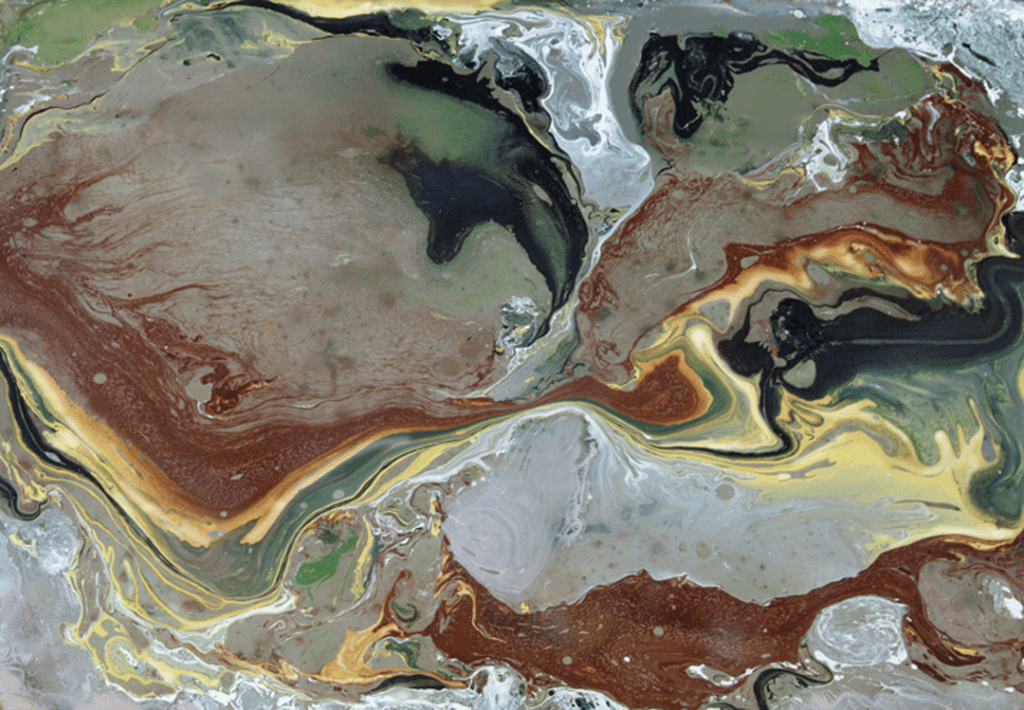
It is precisely due to his extraordinary talent, exceptional wisdom, sublime morality, and extensive vision that H.H. Dorje Chang Buddha III is able to make one after another world-shocking achievement in art. Here, H.H. Dorje Chang Buddha III employs his supernatural abstract colors to introduce us once more to a new world of art that is beautiful, mysterious, and soul-inspiring. This truly is not just some fancy talk, for as soon as you set your eyes on these oil and acrylic paintings, you will find the bright and dazzling colors leaping and dancing, vigorous like billows sluicing over thousands of miles, yet stored up into wonders at the fine tip of a brush. Gentle yet resolute, they freely transcend worldliness. Various colors are mixed ingeniously and beautifully, distilling beauty from their mutual nourishment. One could say they present a state of superb craftsmanship excelling in nature, and of form becoming flexible and elusive. Words cannot describe such harmonious, refined, and soothing artistic enjoyment.

Seen at Yellowstone National Park
Thatched Stone Huts on a Snowy Mountain
Different Tone

Supernatural abstract color is a perfect world composed of colors. It does not have any concrete worldly form but uses only colors to form shapes and express feelings. Color is its shape and theme, and it blends into touching charm. These colors, under H.H. Dorje Chang Buddha III’s hand, suddenly converge into unparalleled, marvelous, and bright magic, expressing the vivid spirit of a flowery scene or the vigor of the roaring sea. Yet, they can be ever so exact when their meaning is revealed through the tip of a brush. The fine details are often revealed among rough strokes, and their charm is naturally displayed. These works of art are fused with the essence of the universe, Nature, and the earth.

The art of H.H. Dorje Chang Buddha III has already cast off the bondage of the common world. Its form and meaning are both like a golden dragon breaking away from the earth’s crust and soaring in the azure sky above the blue sea, free at will, unbridled and unrestrained, all worldly dust whisked away, ever-changing, and beautiful beyond compare! In front of these soul-inspiring rare treasures of art, we admire the exceptional artistry that flows from the boundless heart of the Buddha. We absorb the beauty that transcends all confinements of reality, the beauty created from His use of ever-changing colors for the appreciation of mankind.

It is no surprise that these amazingly beautiful pieces are the creations of H.H. Dorje Chang Buddha III. The supernatural abstract color is just the crystallization of His various astonishing talents and the outflow of His limitless artistic wisdom. He truly deserves to be called a master artist the likes of which have never been seen in history.

These four extremely charming paintings below are in permanent exhibition of The International Art Museum of America located at downtown San Francisco.

A Hidden Wonderland

Supernatural Abstract Colors: Oil and Acrylic Paintings by H.H. Dorje Chang Buddha III

Link:https://peacelilysite.com/2022/09/16/supernatural-abstract-colors-oil-and-acrylic-paintings-by-h-h-dorje-chang-buddha-iii/

#MasterWanKoYee #DorjeChangBuddhaIII #HHDorjeChangBuddhaIII#DorjeChangBuddha#IAMA#InternationalArtMuseumofAmerica#Supernaturalabstractcolor#OilandAcrylicPaintings

A Contemporary Painting “Ink Lotus” by H.H. Dorje Chang Buddha III Was Sold for the US$16,500,500 at the Gianguan Spring Auction to Break the World Record


(Video) A Contemporary Painting “Ink Lotus” by H.H. Dorje Chang Buddha III Was Sold for the US$16,500,500 at the Gianguan Spring Auction to Break the World Record

A Contemporary Painting “Ink Lotus” by H.H. Dorje Chang Buddha III Was Sold for the US$16,500,500 at the Gianguan Spring Auction to Break the World Record. This painting is now displayed at  The International Art Museum of America, located at downtown San Francisco.

(Video) A Contemporary Painting “Ink Lotus” by H.H. Dorje Chang Buddha III Was Sold for the US$16,500,500 at the Gianguan Spring Auction to Break the World Record

Video Link: https://www.youtube.com/watch?v=ynE84cPQp7o&t=1s

A Contemporary Painting “Ink Lotus” by H.H. Dorje Chang Buddha III Was Sold for the US$16,500,500 at the Gianguan Spring Auction to Break the World Record

Link: https://peacelilysite.com/2022/09/15/a-contemporary-painting-ink-lotus-by-h-h-dorje-chang-buddha-iii-was-sold-for-the-us16500500-at-the-gianguan-spring-auction-to-break-the-world-record/

#HHDorjeChangBuddhaIII #DorjeChangBuddhaIII #DorjeChangBuddha#GianguanSpringAuction #ArtArtist#ChinesePainting

Reversing An Old Age Back to Youth — A Holy Manifestation by H.H. Dorje Chang Buddha III

The Explanation of the Buddha’s Title – “H.H. Dorje Chang Buddha III”

On April 3, 2008, a solemn and dignified first-publishing ceremony of a fact-recording book entitled H.H. Dorje Chang Buddha III, which published jointly by the World Buddhism Publishing LLC and the World Dharma Voice, Inc., was held at the Library of the Congress of the United States. The book was also formally accepted into the collection of the Library of the Congress of the United States. Only since that time, did people in the world know that Master Wan Ko Yee, who had been broadly respected by the great masses and who had also been known as Great Dharma King Yangwo Yeshe Norbu, had been recognized by the world’s leaders, regent dharma kings, and great rinpoches of Buddhism through official documents as the third incarnation of Dorje Chang Buddha, who is the primordial Sambhogakaya Buddha of the universe. The Buddha’s name is H.H. Dorje Chang Buddha III Since then, people began to address His Holiness the Buddha by “Namo[1] Dorje Chang Buddha III.” This is similar to the situation that Sakyamuni Buddha’s name was Prince Siddhartha Gotama before attaining Buddhahood. However, after Sakyamuni Buddha had attained Buddhahood, His title changed to “Namo Sakyamuni Buddha.” That is why we now address His Holiness the Buddha as “H.H. Dorje Chang Buddha III”

In particular, on December 12, 2012, the Senate Resolution No. 614 of the United States Congress officially used “His Holiness” in the name addressing Dorje Chang Buddha III (That is to say, “H.H. Dorje Chang Buddha III”) Since then, the title and status of H.H. Dorje Chang Buddha III has been definitive by nature. And, as a matter of fact, “Dorje Chang Buddha III” is a name used legally in governmental and official legislative documents. Therefore, the previously used respected name and titles such as “Wan Ko Yee,” Great Master, and Great Dharma King no longer exist.

Truth about Reversing An Old Age Back to Youth

H.H. Dorje Chang Buddha III has brought many powerful, miracle and extraordinary Buddha Dharmas to this Saha world. Such as The Supreme and Unsurpassable Mahamudra of Liberation, What is Cultivation, Learning From Buddha, Imparting the Absolute Truth Through the Heart Sutra, thousands pieces of audio-recorded Dharma discourses, etc… On October 18, 2012, H.H. Dorje Chang Buddha III within ten minutes, reversed his appearance back to a youthful look. This incredible Buddha Dharma, other than Guru Padmasambhava, noone had any true ability of reversing old age back to youth, including current famous dharma kings, venerable ones, and dharma masters.

Below is the true personal record of this holy miracle event written by a bhiksuni Shi Zheng Hui in the book Revealing The Truth: What Is the Truth about Reversing An Old Age Back to Youth?

Throughout these many years, the Buddha Master (H.H. Dorje Chang Buddha III) really worked very hard and never had any time to have a good rest. Every day, He had to talk a lot and was constantly busy with the endless matters of Buddha-dharma. Additionally, the Buddha Master vowed to bear living beings karmic retributions, as stated in The Supreme and Unsurpassable Mahamudra of Liberation:

“I bear all of the negative karma and offenses of living beings.
I give to you all the good karma and merits I have planted.”

This vow of His Holiness the Buddha did come true. As a result, during a period of several days, all black karmas from the outside were transferred to the Buddha Master. The Buddha Master suddenly became very tired, exhausted, and aged. He looked like a seventy or eighty year old person. Upon seeing the Buddha Master’s situation, Venerable Long Zhi Tape Nyima, a fellow brother who was very good in his cultivation and conduct and who was the reincarnation of DenmaTsemang, one of the twenty-five major disciples of Master Padmasambhava, spoke respectfully to the Buddha Master, “Bud-dha Master it can’t go on like this! Otherwise living beings’ good roots will be severed. Living beings are unable to understand why the Buddha could become so exhausted.” The Buddha Master said, “Even Sakyamuni Buddha became exhausted. If not, why would He enter into nirvana and leave for the Bud-
dha-land? This was exactly how Buddha manifested impermanence”. Brother Tsemang looked very sad and was greatly worried. Then the Buddha Master said, “Let me think about this a bit first.” Brother Tsemang still felt very worried and sorrowful. The Buddha Master felt that what he said did make some sense and told him, You go and get the camera to take a picture of me.” The Buddha Master then also said, “Don’t worry. I am not going to die! Let’s address this after the dharma assembly!”

These photos were true records of the holy miracle Buddha Dharma, they are now displayed at Hua Zang Si, at San Francisco.

On October 18, 2012, l saw in person the Buddha Master reversing His appearance back to a youthful look . Within ten minutes, the Buddha Master reversed His aged appearance to that of a youth. At that time, the Buddha Master was at the mandala on the lawn praying for peace and auspiciousness. He told several of us to go and fetch the offering objects and the prayer manual. When I returned, I suddenly saw that vicissitudes and age were completely removed from the Buddha Master from the skin to the bone structure. The Buddha Master now had a childlike appearance, I was so astonished by what I saw that I dropped the offering apples to the ground! Good Heavens! The changes were like between two different persons. Furthermore, the other monastics present also said that they saw this surprising change.

On December 12, 2012, several hundred people saw H.. Dorje Chang Buddha Ill during the Dharma Assembly of Decision by Selection with their own eyes. They all witnessed the fact that the Buddha Master reversed His appearance back to that of a youth.

People all wanted to learn the dharma of reversing an old age back to youth. Thus, they beseeched the Buddha Master to expound the dharma, which was recorded. The name of this recorded dharma lesson is “This is scary! The disciples did not give in to the Buddha: They insisted that H.. Dorje Chang Buddha Ill did restore youth and childlike appearance!” However, H.H. Dorje Chang Buddha Ill said,
“I do not know the dharma of restoring youth and childlike appearance. I only know a little bit about the methods of medical treatment. Looking at the comparison from the recorded videos, it would be false to say that I did not become vonger at all, However, what you disciples said was much too exaggerated. l simply do not know the dharma of reversing an old age back to childlike youth.”

At this time, Kaichu Rinpoche spoke by the side of the Buddha Master, “Buddha Master always spoke and acted as a humble one. However now He is right in front of us. We can judge with our own eyes. Do we really exaggerate? Can worldly medical treatment change the bone structure or reverse an old age back to youth? Why has there not been even one such example in the world?”
Today, we saw the fact clearly and vividly with our own eyes. We did not exaggerate or speak baselessly. Even though it was denied by the Buddha Master, the iron-clad fact of the Buddha Master’s restored
youth and childlike appearance was undeniable. Think about it. Can this be achieved by ordinary abilities of any human? There has not been such precedence in history!

H.H. Dorje Chang Buddha III has achieved perfect accomplishments that are at the acme of the five Vidyas and commands perfect proficiency in the Tripitaka. Everything His Holiness does is in perfect harmony with the karmic condition without any impediment. Moreover, His Holiness was able to turn
His aged yet still handsome appearance to a youthful and childlike appearance with astonishing, extraordinary effect. However, He does not admit to having the power of realization and always says that He is nothing but a humble cultivator who does not accept offerings.

Reversing An Old Age Back to Youth — A Holy Manifestation by H.H. Dorje Chang Buddha III

Link: https://peacelilysite.com/2022/09/08/reversing-an-old-age-back-to-youth-a-holy-manifestation-by-h-h-dorje-chang-buddha-iii/

#DorjeChangBuddhaIII #HHDorjeChangBuddhaIII#HuaZangSi#HolyManifestation#ReversingAn OldAgeBacktoYouth#RevealingTheTruth#Tripitaka#BuddhaDharma#Kaichu Rinpoche