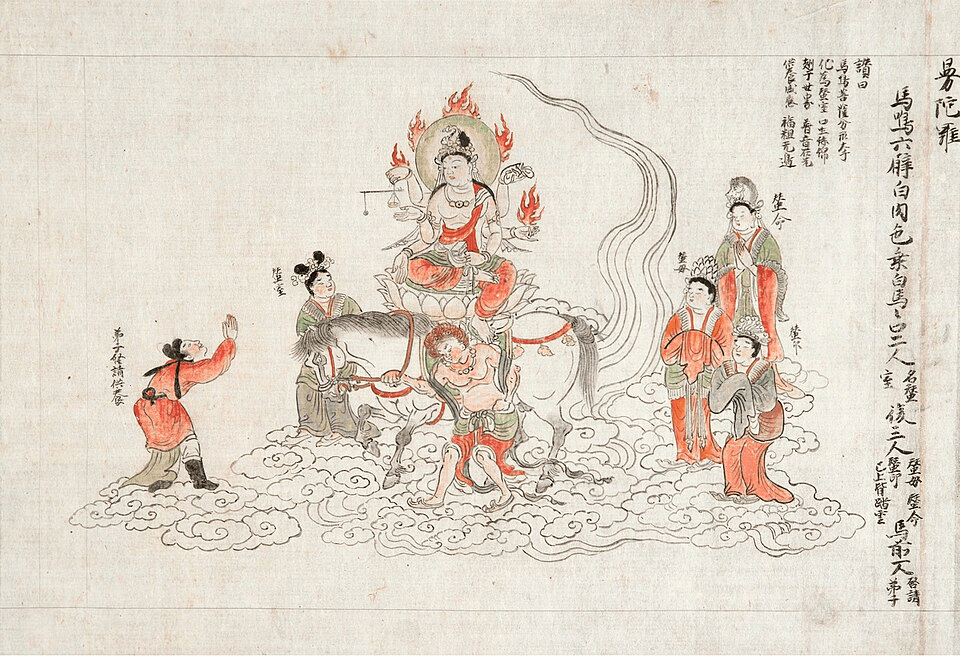
In the brilliant expanse of Buddhist history, one name stands out with singular brilliance. He was not only the 12th Patriarch in the Zen lineage originating from ancient India, but also a literary genius who captured the hearts of a continent through the power of poetry and music: Aśvaghoṣa (known in Chinese tradition as Bodhisattva Horse-Nneigh).
This is the legendary story of how a once-arrogant Brahmin prodigy suffered a dramatic defeat in a battle of wits, entered the Buddhist monastic order, and ultimately became a towering master who galvanized the rise of Mahayana Buddhism.
Born into a noble Brahmin family in Eastern India, young Aśvaghoṣa possessed exceptional intelligence. He mastered classic texts, arts, and above all, the razor-sharp logic of public debate. In ancient India, intellectual debates were high-stakes events where the defeated party was expected to convert and become a disciple of the victor. Driven by youthful pride, Aśvaghoṣa swept through Central India, issuing a brazen challenge to the entire Buddhist community:
“If any monk can defeat me in debate, I will sever my own head in apology! But if no one dares face me, every monastery in this region must cease striking the ghanta—the traditional wooden blocks and bells used to assemble the sangha!”
Faced with his fierce logic and intimidating rhetoric, no local monk dared step forward. As a result, the once-vibrant monasteries fell silent. Morning gongs and evening bells ceased, and the public prestige of Buddhism plummeted.
Hearing of this crisis from Northern India, an venerable elder named Venerable Pārśva knew that if Aśvaghoṣa’s arrogance went unchecked, the true teachings of the Mahayana tradition would fail to flourish. Despite his advanced age, Pārśva traveled vast distances on foot to answer the challenge.
On the day of the grand debate, the arena was packed with the king, ministers, and tens of thousands of onlookers. Observing the frail, white-haired elder, the young prodigy felt immediate condescension. “Venerable monk,” Aśvaghoṣa asked arrogantly, “what shall be the stakes of our debate?” Pārśva calmly replied, “The loser shall become the disciple of the winner, shaving his head and following him for life.” Aśvaghoṣa readily agreed.
Aśvaghoṣa invited the elder to speak first. Pārśva uttered a single, deceptively simple statement of blessing:
“May the world enjoy peace, may the king live a long life, may the land be rich and joyful, and may all disasters cease.”
A hush fell over the crowd. Aśvaghoṣa froze.
By the rules of debate, Aśvaghoṣa was required to refute his opponent’s opening premise. Yet, Pārśva had stated a benevolent blessing for the country and its sovereign. If Aśvaghoṣa tried to refute it, he would violate public ethics, offend the reigning king present in the crowd, and bear the stigma of cursing his own land. But if he agreed with the statement, he could not break the argument, which meant instant defeat.
Aśvaghoṣa searched his mind, only to realize that his formidable logical framework was completely powerless against a statement rooted entirely in compassion, wisdom, and broad goodwill. Pale and humbled, he bowed deeply to the elder: “I have lost. Your wisdom is wrapped in profound compassion. I will honor my promise.” Pārśva had subdued Aśvaghoṣa’s pride not through heated argument, but through calm, unassailable composure. Aśvaghoṣa shaved his head on the spot and officially entered the Buddhist order.
Under the guidance of Pārśva and his successor Puṇyayaśas, Aśvaghoṣa displayed astonishing spiritual insight. He fully digested the Buddhist Canon (Tripitaka) and channeled his pre-existing artistic and literary talents into spreading the Dharma.
The origin of his name—Aśvaghoṣa, literally meaning “Horse’s Neigh”—is tied to a celebrated event. When King Kaniṣka of the Kushan Empire conquered Central India, he demanded indemnity. Instead of vast fortunes of gold or silver, the King requested only two treasures: the sacred Alms Bowl of the Buddha, and Master Aśvaghoṣa.
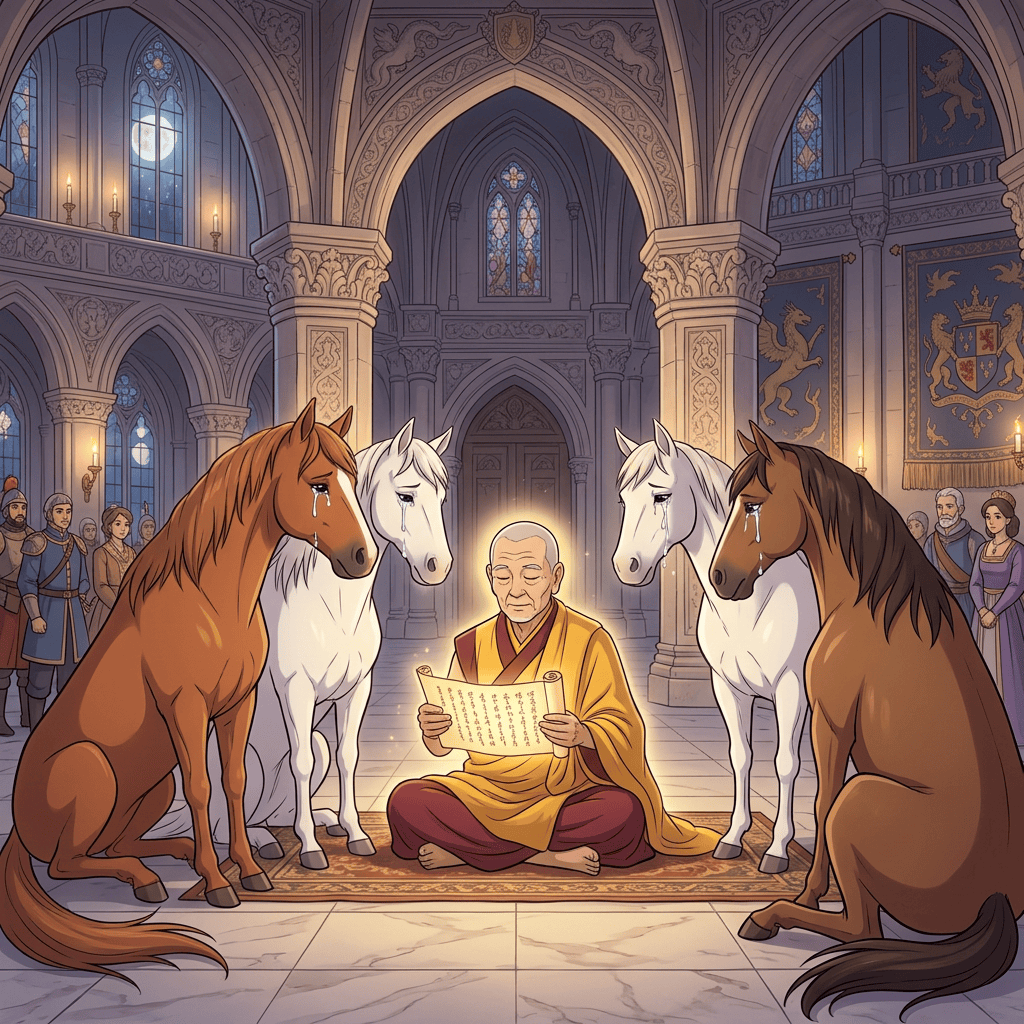
To demonstrate the master’s sublime virtue to skeptical court officials, the King conducted a test. Seven warhorses were locked away and starved of food and water for six straight days. On the seventh day, a crowd gathered. Fresh, sweet grass was placed right in front of the starving horses, while Aśvaghoṣa took the high seat to chant and preach the Dharma.
An astonishing scene unfolded: despite their intense hunger, the seven horses did not even lower their heads to eat. Instead, they stood transfixed, listening intently to the serene, compassionate melody of Aśvaghoṣa’s voice, eventually shedding tears of emotion. Moved by how his sacred chants could touch even the animal realm, the world reverently honored him as Aśvaghoṣa Bodhisattva.
Following King Kaniṣka north, Aśvaghoṣa reached the peak of his creative energy. Understanding that rigid dogma rarely moves the hearts of ordinary people, he pioneered the use of literature and music as tools for spiritual education.
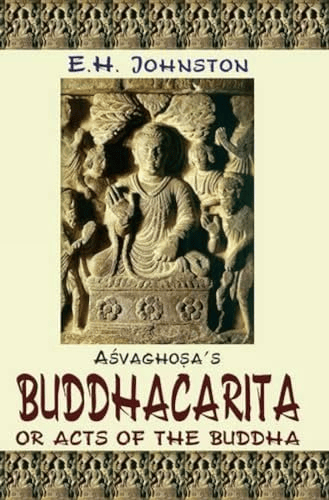
His greatest masterpiece, the Buddhacarita (Acts of the Buddha), is an epic narrative poem detailing the life of the Buddha from birth, renunciation, and enlightenment to his final Parinirvana. Characterized by elegant imagery and deep emotional resonance, it became a pinnacle of classical Sanskrit literature, introducing countless readers to the beauty of Buddhist philosophy. Furthermore, as the trusted spiritual mentor to King Kaniṣka, he played a central role in presiding over the Fourth Buddhist Council, solidifying the theoretical foundation of Mahayana Buddhism.
Aśvaghoṣa’s life is a timeless story of arrogance yielding to genuine wisdom. In his youth, he sought to conquer the world with sharp intellect, yet when confronted with true spiritual depth, he chose to surrender to compassion. By subduing his ego and dedicating his creative gifts to all living beings, he transformed from a defensive debater into a compassionate artist whose voice moved both human hearts and nature alike.
Reference Source: https://en.wikipedia.org/wiki/A%C5%9Bvagho%E1%B9%A3a
 Peace LiLy