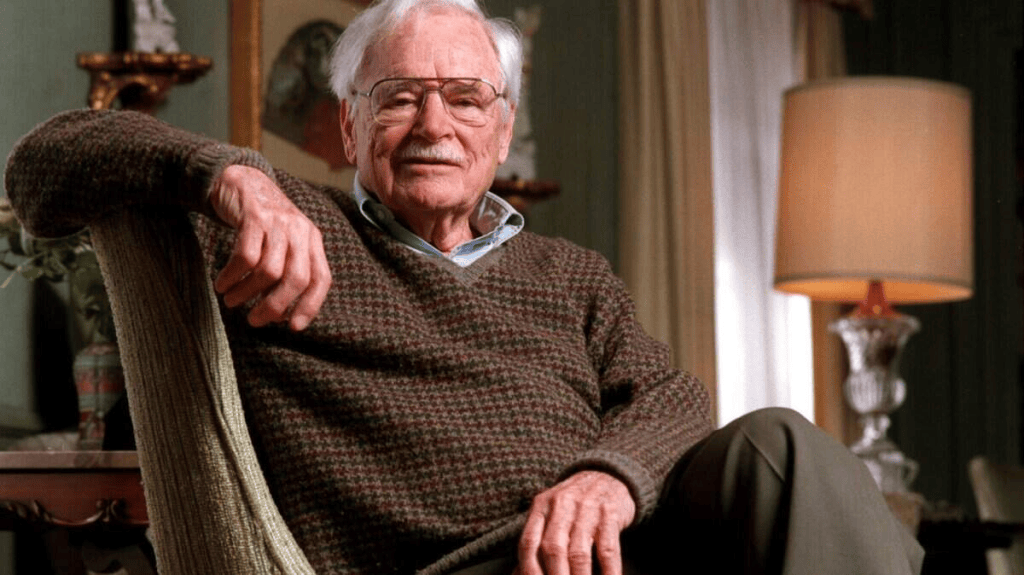
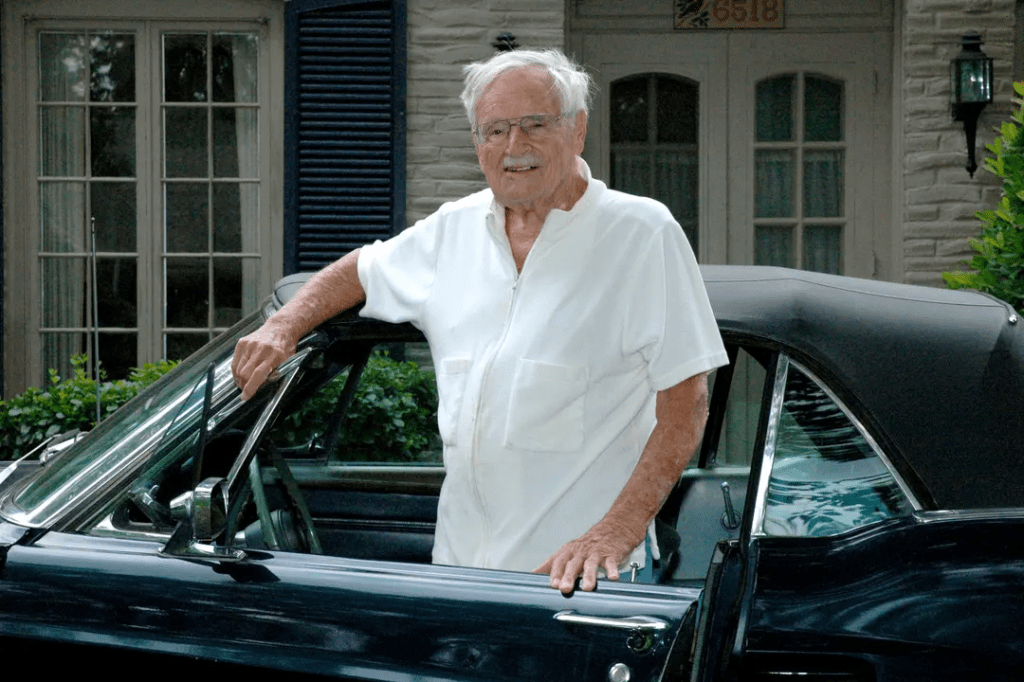
Charlie White was retired in 1997 when this photo was taken, but he still practiced medicine a bit, flying to Haiti on a medical mission. “It’s a doctor’s fundamental dedication to take care of people whether we get paid or not,” he told The Star at the time. Jeff Roberson The Kansas City Star
What does it take to live well—not simply to live a long life, but to remain hopeful, curious, and strong through difficult times?
Dr. Charlie White lived to be 109 years old. He experienced more than a century of enormous changes, but what fascinates me most about his life is not his age. It is how he faced adversity.
When Charlie was only eight years old, his father died suddenly in a tragic elevator accident. His father was just 42. Charlie’s mother was left a widow with five children and no job or obvious means of support. Charlie’s mother turned their home into a boardinghouse to make ends meet. She expected her children to help and gradually taught them to become independent and responsible for their own lives. Charlie later remembered that his mother had essentially put “the responsibility of life” on them. Because she believed they could manage, they learned to believe in themselves.
Something else important happened during those difficult years. Among the people who stayed in their home were medical missionaries. Meeting them helped inspire Charlie to become a doctor.
He did not allow the loss of his father to become the definition of his life.
Instead, he continued his education, entered medicine, and eventually built not one but two medical careers. He lived through the Great Depression, two world wars, enormous changes in medicine, personal losses, and many other challenges.
What strikes me most about Charlie’s story is that resilience did not mean that life stopped hurting. It meant that he continued to participate in life after the hurt.
He learned to adapt.
When medicine changed, he changed with it. When opportunities were lost, he looked for new ones. When he made mistakes, he did not seem to spend his life regretting them. He remained curious about what could come next. His biographer, David Von Drehle, described him not simply as a survivor, but as someone who learned how to thrive through change.
Sometimes we misunderstand resilience.
Being resilient does not mean that we never feel sad, afraid, or discouraged. It means that pain does not have to become the end of our story.
We may lose someone we love.
We may fail.
Our plans may suddenly change.
Someone may disappoint us.
Life may take us in a direction we never expected.
We cannot always choose the circumstances. But we can ask:
What can I do now?
That simple question can give us the strength to take the next step.
Adaptability Is a Form of Wisdom
Charlie lived through a world that changed almost beyond recognition.
Yet he continued to learn and adapt.
This is something we all need today.
The world changes quickly. Technology changes. Our circumstances change. Our bodies change. Relationships change. Sometimes even our dreams change.
Adaptability does not mean abandoning our values.
It means learning how to carry our values into new circumstances.
We can remain kind while adapting.
We can remain honest while adapting.
We can remain hopeful while adapting.
Charlie lived for 109 years, but longevity itself was not his greatest lesson.
A meaningful life is not measured only by the number of years we receive.
It is measured by how we use those years.
Can we continue learning?
Can we forgive?
Can we help others?
Can we remain curious?
Can we appreciate what we have?
Can we face uncertainty without giving up hope?
Charlie understood that life would never be perfect. Yet he continued to meet it with optimism and openness.
Perhaps that is why his story speaks to me.
When something painful happens, we can allow ourselves to grieve—but still move forward.
When circumstances change, we can adapt without losing ourselves.
When we make mistakes, we can learn rather than remain trapped in regret.
When tomorrow is uncertain, we can still choose hope.
Dr. Charlie White could not choose what happened to him when he was eight years old.
But he could choose what he did with the life that followed.
And perhaps that is the deepest lesson of his 109 years:
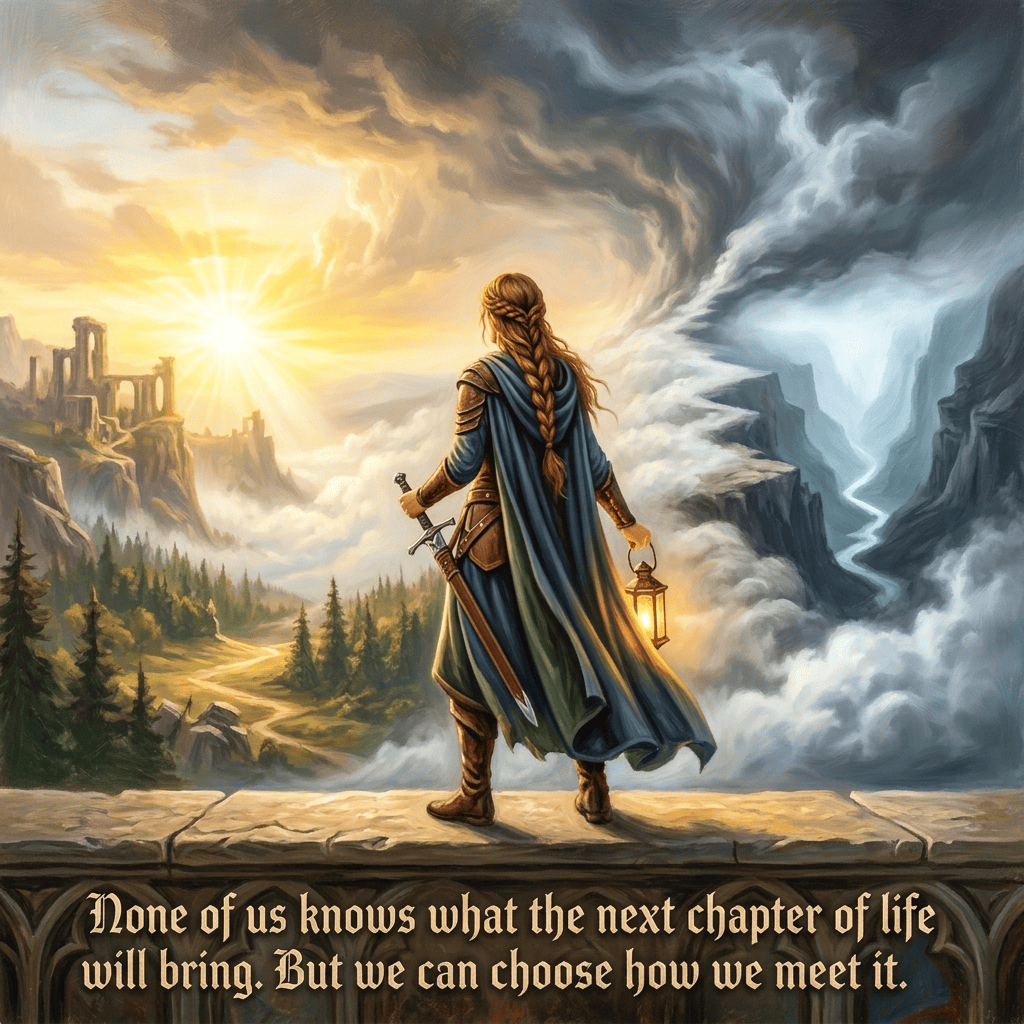
We cannot always choose what happens to us. But we can choose how we meet what happens.
Sometimes, that choice becomes the beginning of our greatest strength.
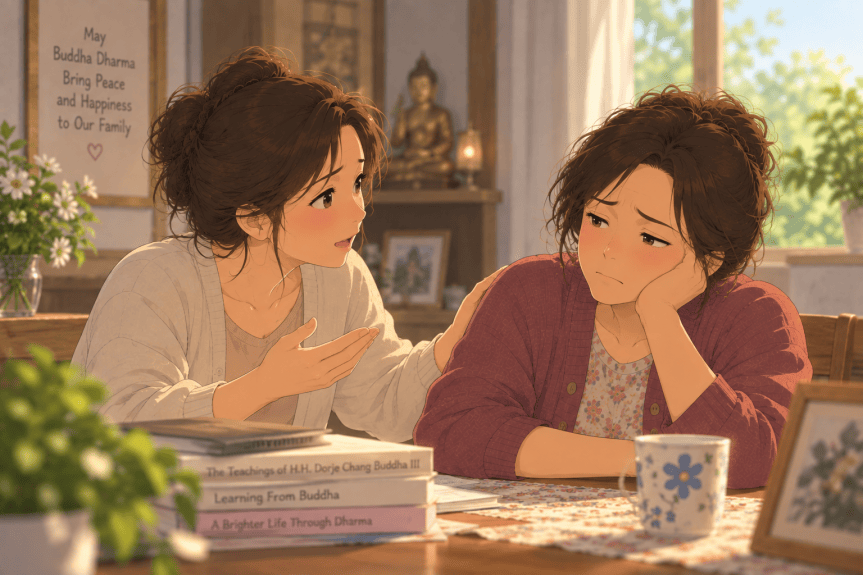
Through participating in group study, respectfully and deeply listening to the Dharma discourses expounded by my Buddha Master, Namo H.H. Dorje Chang Buddha III, and sharing what I had learned with others, I gradually came to understand and feel the pain deep within my mother’s heart.
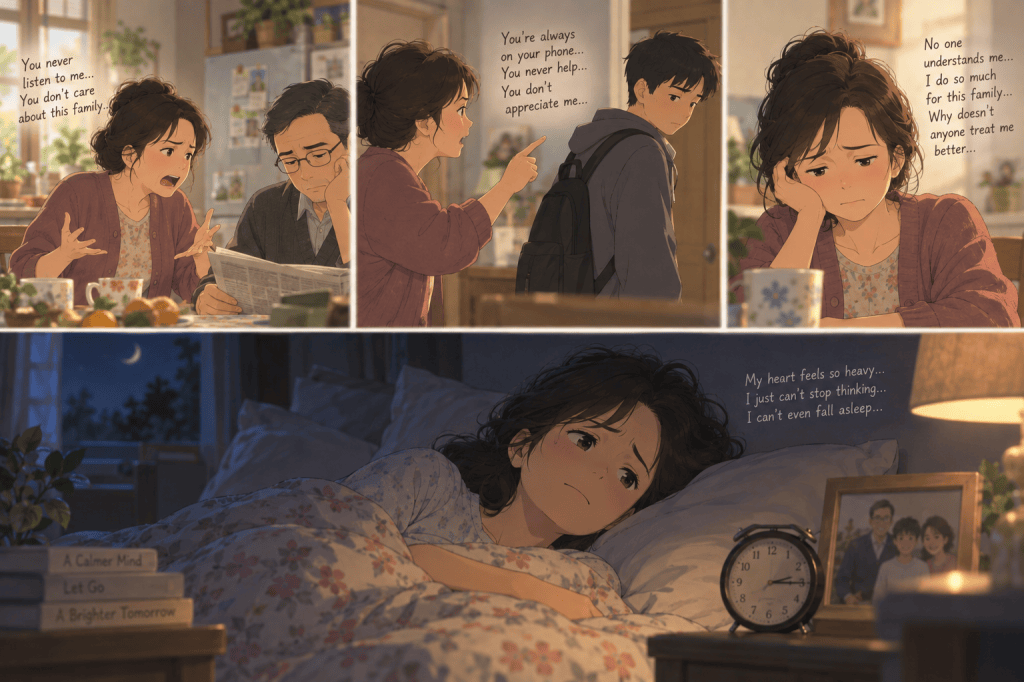
For as long as I can remember, my parents were constantly arguing. During holidays and festivals in particular, our home would become filled with tension. After an argument, my mother would always wear a stern expression and remain silent, while my father would sigh repeatedly, not knowing what to do.
After encountering the Tathagata’s True Dharma taught by H.H. Dorje Chang Buddha III, I wanted to resolve a question that had puzzled me for a long time: My mother had everything she needed in terms of food and clothing and was free from serious illness or misfortune, so why did she complain every day? She would either say that my father did not treat her well or feel that my younger brother and his wife did not treat her well. She would become so upset that she sometimes could not sleep all night.
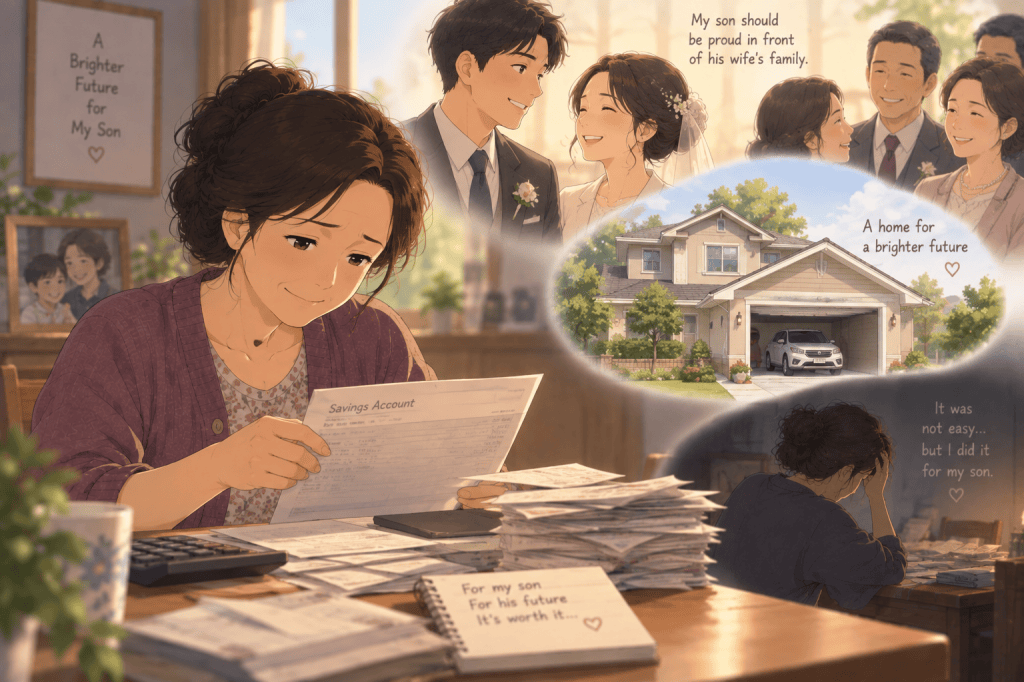
My mother cared greatly about maintaining appearances, even when doing so caused her hardship. She especially doted on my younger brother, whom she treasured dearly. To ensure that he could hold his head high in front of his wife’s family, my mother used almost all of her savings to buy them a home and a garage.
Whenever there was an important occasion or even a smaller matter involving my sister-in-law’s family, my mother always handled everything generously and properly. She would rather live frugally herself than allow my brother to lose face.
Yet despite all she had done, my brother seldom contacted her. Although they lived in the same city, he rarely checked in on her, much less came to see her. I could feel how deeply my mother missed her son. She would often ask me, “I wonder what your brother has been so busy with lately?”
To tell the truth, seeing my mother like this made my heart ache, and I also felt deeply concerned about my inability to help her. How I wished she could learn the true Dharma of the Tathagata with me! After all, it was through learning the true Dharma of H.H. Dorje Chang Buddha III and developing right understanding and right views that I myself had been able to free myself from the suffering caused by my divorce.
Having personally experienced the benefits of learning Buddhism and cultivating myself, I tried to persuade my mother not to dwell on the things that troubled her. I explained to her that these circumstances were the result of causes, conditions, and karmic forces planted in the past. But she did not agree with what I told her.
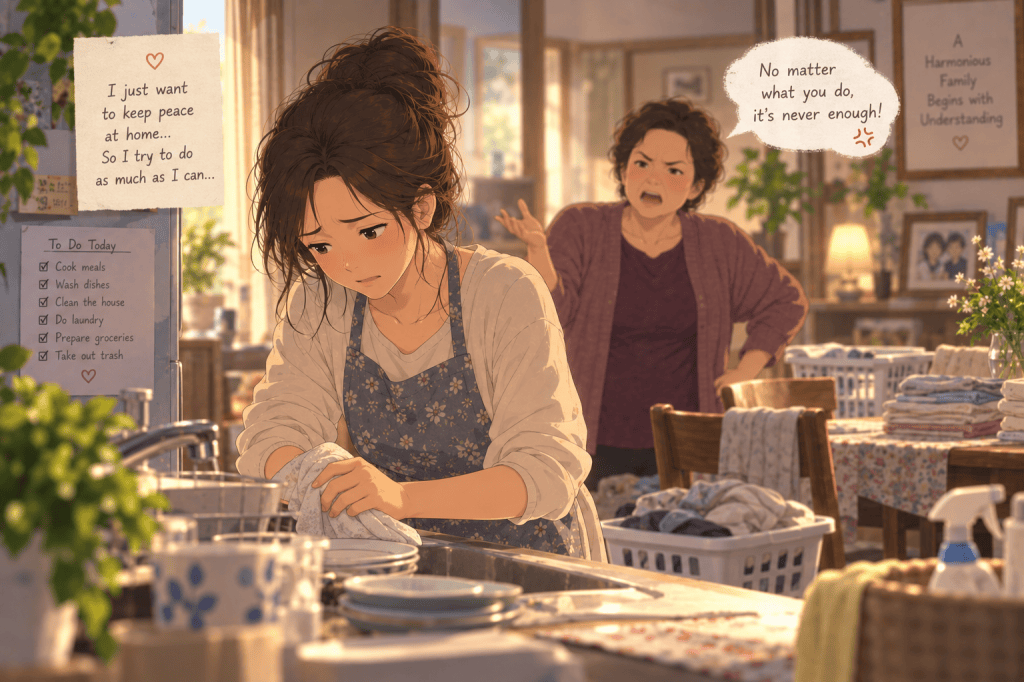
To avoid upsetting my mother, I tried to take care of nearly all the household chores myself so that she would have to do as little as possible for my single-parent household. Yet strangely, the more responsibilities I took upon myself, the more upset she seemed to become. No matter what I did, I could not seem to make her happy.
Back then, I lived very cautiously around her, afraid that something I said or did might cause her to become upset and silently resentful. I also tried communicating with her, but she would often remain silent and keep everything bottled up inside.
Through respectfully studying Expounding the Absolute Truth Through the Heart Sutra, I brought forth right mindfulness and finally came to understand how I should correctly practice the Four Immeasurables of loving-kindness, compassion, empathetic joy, and equanimity. I first needed to begin with equanimity and selfless giving—to be willing to devote my time to considering the needs of my family. Caring for them was not merely about making sure they had enough food, warm clothing, and money to spend. I also needed to learn to recognize and understand the suffering within their hearts.
I began to sincerely spend time with my mother, and gradually I discovered that the ice within her heart was beginning to melt. Instead of telling her, “Don’t be angry anymore” or “Don’t hold on to resentment,” I began placing the responsibility upon myself: I needed to understand the pain within my mother’s heart, listen to what her heart was trying to tell me, help heal her emotional wounds, and help her establish right understanding and right views.
When my mother complained, I became willing to set aside my time and sit quietly beside her, listening attentively. I no longer used the principle of “cause and effect” to argue with her until she had nothing left to say.
When she felt physically tired, I would take the time to massage the acupressure points on her feet and ask her whether the pressure was too light or too strong. When she felt bored, I would willingly spend time with her and chat about everyday family matters instead of lecturing her about principles and doctrines.
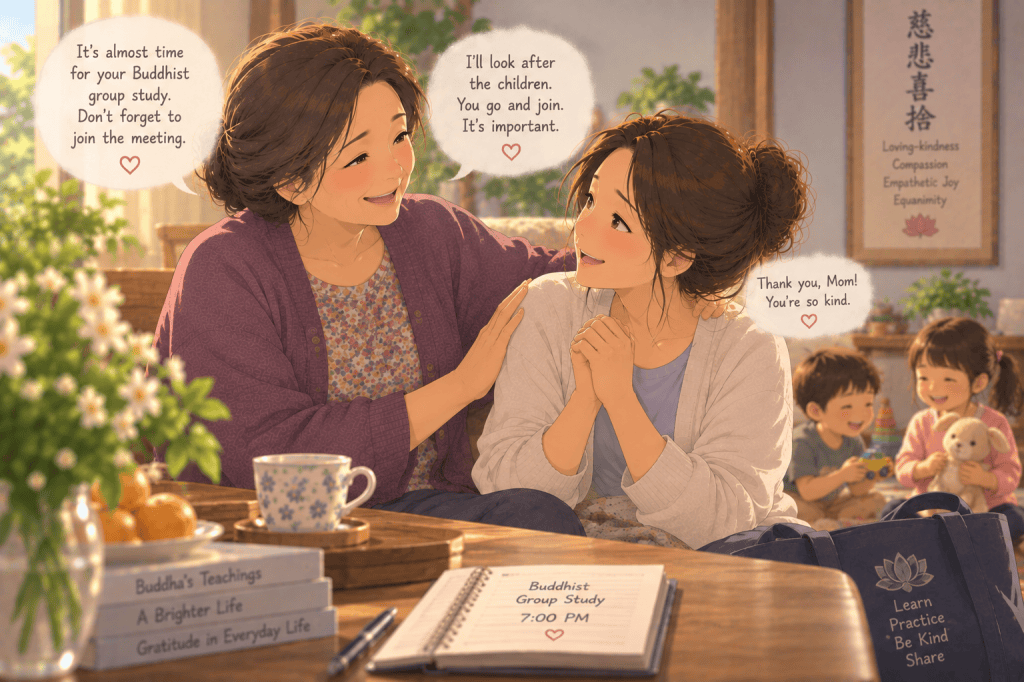
The more I tried to understand the pain in my mother’s heart, the more she began saying things like, “Don’t waste your time on me. I don’t need you to keep me company. Go take care of the children. Once you’ve taken care of everything for them, go do whatever you need to do.”
What surprised and delighted me even more was that my mother eventually began reminding me herself, “It’s almost time for your Buddhist group study. Don’t forget to join the meeting. I’ll help you look after the children.”
I had finally gained my mother’s support. And it happened simply because I had learned to recognize the pain within her heart and was willing to devote my time to sincerely being there for her.
This is exactly what the H.H. Dorje Chang Buddha III teaches in the Dharma discourses: we must put our cultivation into actual practice and cultivate ourselves with respect to the three karmas of body, speech, and mind. We must be sincere in our words and actions and in the way we interact with and treat others. Only by putting genuine effort into our conduct in everyday life can we truly touch the hearts of others.
I have heard that on one occasion the Blessed One was staying at Savatthi, in Jeta’s Grove, Anathapindika’s monastery. There he addressed the monks, “Monks!”
“Yes, lord,” the monks replied.
The Blessed One said: “When a monk is intent on the heightened mind, there are five themes he should attend to at the appropriate times. Which five?
“There is the case where evil, unskillful thoughts — connected with desire, aversion, or delusion — arise in a monk while he is referring to and attending to a particular theme. He should attend to another theme, apart from that one, connected with what is skillful. When he is attending to this other theme, apart from that one, connected with what is skillful, then those evil, unskillful thoughts — connected with desire, aversion, or delusion — are abandoned and subside. With their abandoning, he steadies his mind right within, settles it, unifies it, and concentrates it. Just as a skilled carpenter or his apprentice would use a small peg to knock out, drive out, and pull out a large one; in the same way, if evil, unskillful thoughts — connected with desire, aversion, or delusion — arise in a monk while he is referring to and attending to a particular theme, he should attend to another theme, apart from that one, connected with what is skillful. When he is attending to this other theme, apart from that one, connected with what is skillful, then those evil, unskillful thoughts — connected with desire, aversion, or delusion — are abandoned and subside. With their abandoning, he steadies his mind right within, settles it, unifies it, and concentrates it.
“If evil, unskillful thoughts — connected with desire, aversion, or delusion — still arise in the monk while he is attending to this other theme, connected with what is skillful, he should scrutinize the drawbacks of those thoughts: ‘Truly, these thoughts of mine are unskillful, these thoughts of mine are blameworthy, these thoughts of mine result in stress.’ As he is scrutinizing the drawbacks of those thoughts, those evil, unskillful thoughts — connected with desire, aversion, or delusion — are abandoned and subside. With their abandoning, he steadies his mind right within, settles it, unifies it, and concentrates it. Just as a young woman — or man — fond of adornment, would be horrified, humiliated, and disgusted if the carcass of a snake or a dog or a human being were hung from her neck; in the same way, if evil, unskillful thoughts — connected with desire, aversion, or delusion — still arise in the monk while he is attending to this other theme, connected with what is skillful, he should scrutinize the drawbacks of those thoughts: ‘Truly, these thoughts of mine are unskillful, these thoughts of mine are blameworthy, these thoughts of mine result in stress.’ As he is scrutinizing the drawbacks of those thoughts, those evil, unskillful thoughts — connected with desire, aversion, or delusion — are abandoned and subside. With their abandoning, he steadies his mind right within, settles it, unifies it, and concentrates it.
“If evil, unskillful thoughts — connected with desire, aversion or delusion — still arise in the monk while he is scrutinizing the drawbacks of those thoughts, he should pay no mind and pay no attention to those thoughts. As he is paying no mind and paying no attention to them, those evil, unskillful thoughts are abandoned and subside. With their abandoning, he steadies his mind right within, settles it, unifies it, and concentrates it. Just as a man with good eyes, not wanting to see forms that had come into range, would close his eyes or look away; in the same way, if evil, unskillful thoughts — connected with desire, aversion or delusion — still arise in the monk while he is scrutinizing the drawbacks of those thoughts, he should pay no mind and pay no attention to those thoughts. As he is paying no mind and paying no attention to them, those evil, unskillful thoughts are abandoned and subside. With their abandoning, he steadies his mind right within, settles it, unifies it, and concentrates it.
“If evil, unskillful thoughts — connected with desire, aversion or delusion — still arise in the monk while he is paying no mind and paying no attention to those thoughts, he should attend to the relaxing of thought-fabrication with regard to those thoughts. As he is attending to the relaxing of thought-fabrication with regard to those thoughts, those evil, unskillful thoughts are abandoned and subside. With their abandoning, he steadies his mind right within, settles it, unifies it, and concentrates it. Just as the thought would occur to a man walking quickly, ‘Why am I walking quickly? Why don’t I walk slowly?’ So he walks slowly. The thought occurs to him, ‘Why am I walking slowly? Why don’t I stand?’ So he stands. The thought occurs to him, ‘Why am I standing? Why don’t I sit down?’ So he sits down. The thought occurs to him, ‘Why am I sitting? Why don’t I lie down?’ So he lies down. In this way, giving up the grosser posture, he takes up the more refined one. In the same way, if evil, unskillful thoughts — connected with desire, aversion or delusion — still arise in the monk while he is paying no mind and paying no attention to those thoughts, he should attend to the relaxing of thought-fabrication with regard to those thoughts. As he is attending to the relaxing of thought-fabrication with regard to those thoughts, those evil, unskillful thoughts are abandoned and subside. With their abandoning, he steadies his mind right within, settles it, unifies it, and concentrates it.
“If evil, unskillful thoughts — connected with desire, aversion or delusion — still arise in the monk while he is attending to the relaxing of thought-fabrication with regard to those thoughts, then — with his teeth clenched and his tongue pressed against the roof of his mouth — he should beat down, constrain, and crush his mind with his awareness. As — with his teeth clenched and his tongue pressed against the roof of his mouth — he is beating down, constraining, and crushing his mind with his awareness, those evil, unskillful thoughts are abandoned and subside. With their abandoning, he steadies his mind right within, settles it, unifies it, and concentrates it. Just as a strong man, seizing a weaker man by the head or the throat or the shoulders, would beat him down, constrain, and crush him; in the same way, if evil, unskillful thoughts — connected with desire, aversion or delusion — still arise in the monk while he is attending to the relaxing of thought-fabrication with regard to those thoughts, then — with his teeth clenched and his tongue pressed against the roof of his mouth — he should beat down, constrain, and crush his mind with his awareness. As — with his teeth clenched and his tongue pressed against the roof of his mouth — he is beating down, constraining, and crushing his mind with his awareness, those evil, unskillful thoughts are abandoned and subside. With their abandoning, he steadies his mind right within, settles it, unifies it, and concentrates it.
“Now when a monk… attending to another theme… scrutinizing the drawbacks of those thoughts… paying no mind and paying no attention to those thoughts… attending to the relaxing of thought-fabrication with regard to those thoughts… beating down, constraining and crushing his mind with his awareness… steadies his mind right within, settles it, unifies it and concentrates it: He is then called a monk with mastery over the ways of thought sequences. He thinks whatever thought he wants to, and doesn’t think whatever thought he doesn’t. He has severed craving, thrown off the fetters, and — through the right penetration of conceit — has made an end of suffering and stress.”
That is what the Blessed One said. Gratified, the monks delighted in the Blessed One’s words.
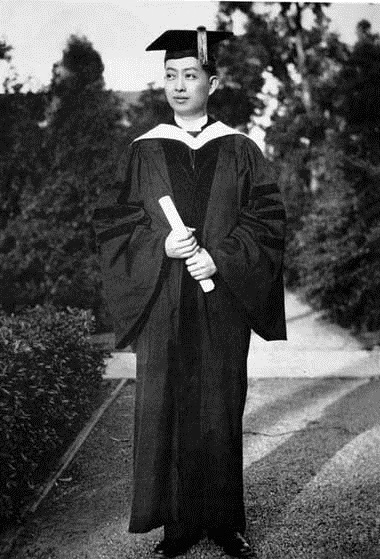
During his tour of the United States, Mei Lanfang was awarded an honorary doctorate degree by Pomona College
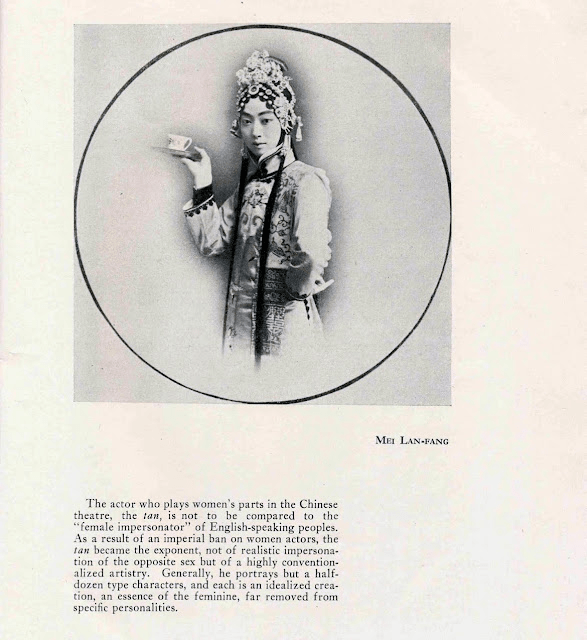
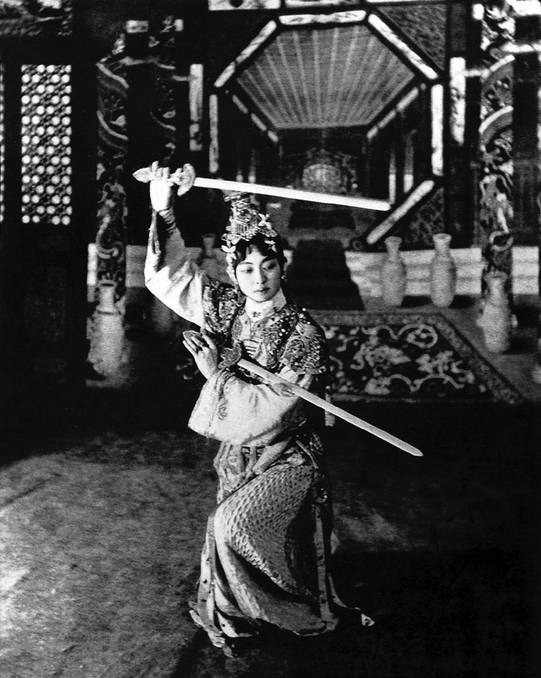
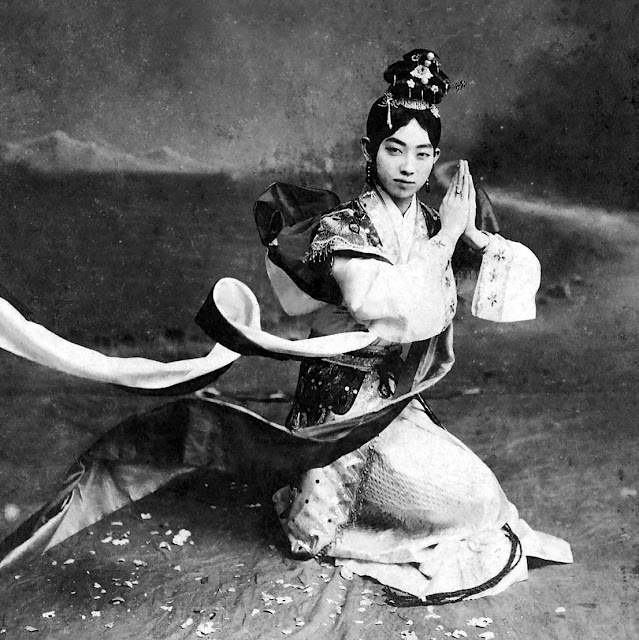
In the history of modern Chinese opera, Mei Lanfang stands as an unexcelled monument. Renowned worldwide, his mastery of Peking Opera was a rare blend of supreme refinement and effortless grace, captivating audiences on both domestic and international stages.
As a master synthesist of Peking Opera, Grandmaster Mei founded the unique “Mei School” (Mei Pai) of performance. He boldly yet carefully revolutionized vocal techniques, spoken dialogue, dance movements, costuming, and makeup, elevating the Dan (female role) artistry to unprecedented heights. Traveling abroad to perform in Japan, the United States, and the Soviet Union, he showcased the enchanting elegance of traditional Chinese theater, taking the world by storm.
Yet, what truly commands the eternal admiration of generations is not merely his status as a titan of Chinese opera, but his personal character—a paragon of nobility, virtue, and moral guidance. His life was the ultimate testament to the phrase: “His art mirrored his soul; brilliant in craft, supreme in virtue.”
Among the many chapters of his life, one heartwarming story illustrates the profound depth of his character.
The Slander and the Silence
During the height of his fame, a reporter from a sensationalist tabloid sought to build a name for himself by publishing provocative and baseless attacks against Mei Lanfang. Aiming to generate public outrage and boost newspaper sales, the reporter repeatedly targeted the master.
Faced with malicious provocation, Master Mei remained completely silent and undisturbed.
Frustrated by the lack of reaction, the reporter grew increasingly aggressive, resorting to harsh insults and public humiliation. Surrounding friends, family, and disciples were furious, unable to stand by while the grandmaster’s honor was attacked. They prepared to confront the reporter, but Mei calmly restrained them, saying gently:
“Leave it be. Pay him no mind.”
Without fuel to feed the flames, the media spectacle eventually died down, vanishing into thin air.
Time passed, and fortune turned. The reporter fell into severe poverty and hardship. Desperate, rejected by everyone, and with nowhere left to turn, a thought suddenly crossed his mind:
Could he ask Mei Lanfang for help?
Filled with shame, guilt, and apprehension, he mustered every ounce of courage he had left and arrived at Mei’s doorstep. Upon learning of his visitor, Mei came out to greet him personally. Overwhelmed by remorse, the reporter immediately began reciting a deeply prepared apology, repenting for his past wrongdoings.
Mei gently interrupted him, his voice calm and soft:
“Say no more. What brings you here today?”
The reporter confessed his current plight—his poverty, his isolation, and his inability to secure assistance anywhere else.
Without a trace of bitterness, resentment, or judgment, Mei reached into his pocket and handed him 200 yuan—a generous sum at the time.
Shaken to his core by such extraordinary magnanimity, the reporter fell to his knees in tears. Mei simply helped him up gently and said quietly:
“Go on now.”
In a world driven by fame, self-interest, and grievances, choosing compassion over retaliation and offering a helping hand to someone who once sought your downfall requires a rare kind of nobility. Mei Lanfang practiced charity, generosity, tolerance, and strict self-discipline throughout his life.
On stage, he was an extraordinary genius who redefined an art form.
Off stage, he was a humble gentleman and a true master of life.
This profound grace—transcending personal pride and past grudges—is perhaps the true, timeless spirit behind the lasting brilliance of the Mei School of Peking Opera.
Yet, what makes Charlie’s story truly unforgettable isn’t just that he lived so long, but how he lived. His life was filled with dramatic, almost movie-like moments that show us what true grit looks like.
Here are timeless lessons from Charlie’s life, grounded in the incredible true stories that shaped him:
1. Resilience Starts with Taking Ownership
When Charlie was just eight years old, a sudden tragedy shattered his childhood: his father died unexpectedly in a freak nine-story elevator accident, leaving his mother with five children to raise.
Instead of being crushed by grief, young Charlie learned to be resourceful. Shortly after, when he found himself stuck at an ill-fated summer camp run by a questionable director, eight-year-old Charlie didn’t wait to be saved—he darted away from a train and walked the final miles home by himself. By sixteen, he was driving across rutted dirt roads and hopping freight trains across the country.
The Lesson: Charlie learned early on that while we can’t choose what happens to us, we are always in charge of our response. Resilience begins when we stop waiting for circumstances to change and choose to take the wheel ourselves.
2. Adaptability Means Swimming with the Current
Charlie’s early adulthood unfolded during the roaring 1920s and the turbulent 1930s. To fund his medical education during the Great Depression, Charlie taught himself to play saxophone by listening to the radio, eventually joining a Jazz Age band and performing across bandstands.
Later, as a young doctor riding ambulances through Depression-era gangster wars, he faced life-or-death situations daily—even once pumping his own blood directly into a wounded patient on the fly.
The Lesson: Charlie didn’t fight the shifts of his era; he rode them. Whether adapting to new technologies, career demands, or sudden crises, survival isn’t about resisting change—it’s about staying flexible without losing your core values.
3. Optimism is Courage in Action
As medicine rapidly evolved throughout the 20th century, Charlie became a pioneering anesthesiologist, even improvising early techniques for open-heart surgeries when formal procedures didn’t yet exist. His adventurous spirit took him from Midwest operating rooms to cruising the Amazon River as a guest of Peru’s president.
Despite encountering immense suffering and loss throughout his medical career and personal life, Charlie never grew cynical. He believed that optimism isn’t a passive mood, but a active decision to look for hope, purpose, and beauty in every day.
The Lesson: “Why cling to pain? There is nothing you can do about the wrongs of yesterday.” True optimism is having the courage to forgive the past and show up wholeheartedly for the present.
Across his 109 years, Charlie’s constant anchor was his deep commitment to serving others. Whether delivering babies in rural homes, treating patients in high-stakes operating rooms, or simply sitting on his porch in Kansas sharing stories with a neighbor, Charlie made people feel seen and valued.
Even in his 100s, living independently across the street from Von Drehle, Charlie remained curious about the people around him rather than focused on his own age or limitations.
Looking back at Dr. Charlie White’s journey reminds us that human beings are remarkably durable. By the time Charlie finished high school, he was already tested by adversity and seasoned by experience, yet he carried a lighthearted, joyful spirit all the way to his 109th birthday.
Whenever life feels overwhelming, remember Charlie’s simple formula: do the right thing, embrace change with curiosity, and keep moving forward step by ste.
In a world that often feels fast-paced and transaction-driven, do you still believe in the power of selfless love and the magic of paying it forward?
Today, I want to share the deeply moving story of an extraordinary hero: Dr. Michael Zollicoffer—affectionately known as “Dr. Z” to his community in Baltimore, Maryland.
For nearly 40 years, Dr. Z’s clinic doors have been wide open to everyone. Whether patients had full insurance, a few dollars in their pocket, or no money at all, Dr. Z treated them with the same unwavering care, dignity, and compassion. To go the extra mile, he even handed out his personal cell phone number to his patients, encouraging them to call anytime, day or night. To Dr. Z, those who walked into his office weren’t just medical charts—they were neighbors, friends, and family.
However, in late 2024, the doctor who dedicated his whole life to saving others faced the toughest battle of his own.
At age 66, Dr. Z received a devastating diagnosis: he was battling two distinct cancers simultaneously—kidney cancer and colorectal cancer.
To make matters worse, right as he was preparing for treatments estimated at over $150,000, administrative issues with Medicare caused a gap in his insurance coverage. Suddenly, the doctor who spent decades treating others for free found himself staring down overwhelming medical bills without safety net protection.
When his community and high school friends found out, they didn’t hesitate. They immediately launched a fundraiser to help save the man who had spent a lifetime saving them.
What happened next was nothing short of breathtaking:
Over 3,400 everyday people pitched in. Many donors weren’t wealthy themselves, yet they gave what they could out of sheer gratitude for the man who was always there for them.
Together, they raised over $280,000 for his medical expenses!
The U.S. House of Representatives formally honored his decades of service, officially entering his story into the Congressional Record.
Love truly has the power to heal.
Thanks to the outpouring of financial support and medical care, Dr. Z’s tumors have shrunk by half! With his insurance resolved and his spirit as resilient as ever, Dr. Z has returned to doing what he loves most: he continues to see patients at his Baltimore clinic every single week.
Dr. Z’s story is a beautiful reminder: every seed of kindness you plant into the world has a way of blooming back to comfort you when you need it most.
We might not all be doctors, but we all have the power to light up someone’s world. Whether it’s checking in on a neighbor, offering a helping hand, or simply sharing a smile, small acts of care ripple outward in ways we can never fully predict.
💬 “No act of kindness, no matter how small, is ever wasted.”
May Dr. Z’s story inspire us all to look out for one another. If this story warmed your heart, share it with a friend today and let’s keep spreading the positive energy! 🌱✨
Literature has a unique way of drawing readers into an imaginary world, making them feel, think, and experience the lives of characters like they’re their own. Fiction transports readers across time, space, and even into the depth of the human spirit. Whether it’s thrilling adventures of Sci-Fi worlds, or a transformative emotional journey, these 5 brilliant fiction writers have it all.
Elizabeth Harris
Elizabeth Harris, also known as Beth, is a woman who lived life with passion and wrote with boldness. Her writing life began with a journal and an inquiring heart. During raging emotional turmoil in the 1990s, Beth turned to writing to make sense of loss, pain, and a desire to belong. Beyond words, something was born: the beginning of deep personal change.
Beth also refers to herself sometimes as a HeArtist, an artist who works from the heart, for the heart. This persona runs deep in all she does. She is a devoted mother to her son, who struggles with severe disabilities and autism. Her experience as a caregiver has infused her art with elegance, richness, and deep compassion. Though her life may not have been easy at times, she has progressed with strength and hope with every step.
Beth, a certified Reiki master, also works with people going through emotional challenges and self-improvement. Her sessions are empathetic and assist other people in overcoming inner struggles and finding their value, peace, and purpose.
Through the art of journal writing, Beth developed an incredible skill of inner knowing and strength. Her writing provides readers with a sanctuary to step back, reflect inward, and heal on an individual basis. During the early 2000s, Beth started to venture into the theme of emotional disconnection; how so many individuals find themselves feeling disconnected from the deeper significance of the tapestry of everyday life. With compassionate wisdom, she encourages readers to reconnect with themselves and the world.
Beth’s words go beyond the world of words themselves. They are personal thoughts spun with descriptive images that move the soul. Every page holds the spirit of compassion, discovery, and generosity, meant to be felt as much as they are read. They bring solace for the grieving, hope for the lost, and support for anyone willing to rediscover their “True Cellf.”
Beth’s simple purpose is to help others manifest in lasting peace and a greater sense of connection to the deeper purpose in life. Beth believes that, even during the most difficult times, resilience and connection are possible.
Letters to Heaven
What happens to love when someone who is cherished is gone?
Letters to Heaven begins in the raw aftermath of loss, where grief is mixed with yearning and unanswered questions linger. After the death of her beloved grandfather, Beth Harris took solace in letter-writing, initially to him, and later as a form of self-reflection. Pouring her heart onto the page in a deeply personal journey through mourning, hoping, and recovery.
This moving collection of poetry and prose captures not just one woman’s search for peace but the collective desire to be connected to something much greater than herself, especially in moments of grief. In unflinching candor and profound reflection, Beth wrestles with concepts of eternal love and healing the self.
For anyone who has loved and lost, be it a person or a pet, Letters to Heaven offers a tender invitation: to seek healing, embrace hope, and to learn to find peace once more.
Dojo Johnjohn
A journey of love, surrender, and awakening through the eyes of a mother.
In the moving follow-up to Letters to Heaven, Beth Harris takes readers into a deeper realm of transformation. One born not from grief alone, but from the raw, unpredictable terrain of motherhood. Dojo Johnjohn is not just a journal; it is a spiritual dojo. A sacred space where life’s hardest lessons meet the unshakable power of love.
After years of longing for a child, and finally releasing that dream, Beth found herself unexpectedly expecting. It began as a joyful journaling practice for her unborn son. A keepsake of milestones, memories, and motherly wisdom. By six months of age, her son began showing signs of severe physical challenges, but no diagnosis came along. She lovingly named his condition nonconformitosis, a whimsical way to describe his unique, undefinable way of being in the world.
Her son didn’t fit the mold even within the special needs community. He could not walk, talk, or communicate in conventional ways. But what the world might have viewed as limitation, Beth viewed it as a powerful invitation. An invitation to surrender control, release expectations, and love unconditionally.
Through these journal entries, Beth records her son’s progress as much as that of herself. With every challenge came a mirror to reflect greater emotional barriers, where fear and resistance eventually gave way to acceptance.
With unflinching honesty, wit, and poetic insight, Dojo Johnjohn reveals what it means to mother a child who doesn’t conform to worldly norms, and the occurrence of a love that overcomes all circumstances. This book is a powerful reflection on unconditional love and the incredible strength that comes from surrender and love.
Peter A. Smit
Peter A. Smit is an author who dives deep into emotional and psychological influence from life altering events, which weaves the story that blends pivotal action with intense personal transitions. His novel doesn’t only entertain, it challenges readers to seek flexibility, introspect and the raw sentiments that come with navigating transitions.
Through his stories, Smit brings life to the intensity of human experience, creating characters that meet extraordinary circumstances and challenging alternatives. His books resonate with the readers who are ready for deep, transformative experiences and who seek guidance and inspiration through the imaginative world of fiction.
Life Will Never Be the Same Again
This suspenseful thriller book explores evocative themes, looking at the intersection where public health emergencies converge with individual courage.
Public health professional Dr. Nathan Hartwell and biologist Kristen James travel to Southeast Asia to conduct research on an unusual outbreak concerning illicit wildlife crimes. What starts out as research turns frightfully perilous when Kristen is kidnapped by a brutal underworld syndicate determined to keep the truth under wraps.
With Kristen gone and the crisis getting out of control, Nathan must call on his old friend Matt Jamison for help, a retired intelligence officer. Matt realizes this mission is different and personal. They investigate a hidden world of corruption and human trafficking with international implications.
This isn’t another action-packed suspense story, it’s a tale of courage, tough choices, and the gray areas between duty and belief. With suspense and self-realizations, this book will have readers lose track of time and space.
The Mystery at Los Panos
An ancient treasure. A dangerous jungle. And a family secret that could change everything.
When Susan sets out on a quiet winter morning with nothing more than a leash and a dog named Wolfie, she doesn’t expect to stumble upon a murder. She stumbles upon a mystery that stretches far beyond anything she could imagine, pulling her back into a world she thought she’d left behind.
Working with the brilliant but erratic Bart Eckland, Susan was a young biologist stationed far in the Panamanian rainforest years ago at Los Panos. Though their time together was fleeting, her daughter Teresa, who is going to unintentionally enter the same dangerous environment her mother once escaped, will live with the effects.
Teresa teams with quiet field researcher Scott Morrissey, whose relationship with Bart runs deeper than Bart knows, when Bart vanishes in the Amazon under mysterious conditions. Their path leads them into the heart of Brazil’s rainforest, where stories of Inca gold, illegal mining, and threatened species trafficking create a disturbing image of the hidden world of the jungle.
As they investigate, they discover a global conspiracy spanning continents from the verdant Amazon to the Middle East deserts, Israel’s ancient tunnels, and Caracas’ dangerous streets. A generation-old secret and those willing to kill to maintain it are at the center.
If you enjoy fast-paced adventures with complex storylines, and high-stakes missions, this book will captivate you till the very last page.
Amy Faulks
Amy Faulks is a master of complex world-building, whose artistry is to blend mystery-thriller with deep human emotions. Her stories take readers to a world beyond the stars, where political conspiracy, untamed megafauna and mysterious technology stir a storm of stress and tension. With a great mind for birthing compelling characters in immersive settings, she makes the stories feel both epic and personal.
Her latest work, Colony Three, revolves around the theme of a dystopian era based on survival. Characters in this story find themselves stranded on Arcadia, a foreign land full of mortal secrets, unwanted threats and raw chaos in a collapsing colony.
Colony Three
A journey into the unknown turns into a desperate struggle for survival in Colony Three, an exhilarating science-fiction novel about humanity’s fight to rebuild a colony when everything has collapsed.
When a colony ship, Atropos, crashes upon arrival, the survivors find themselves lost on the planet Arcadia, a beautiful world with Megafauna and danger lurking in the dark. When dust settles, it becomes clear that the planet is not the only threat – something or someone amongst them is sabotaging their efforts.
The story is led by survivors; Leslie, a healer with mysterious abilities, Kayne, a scientist and a soldier at heart, and Kirill, a bold pilot. As zero-gravity disasters, political conspiracy and an epidemic threaten to destroy the colony, they must meet the dangers of Arcadia and discover the truth before it’s too late.
With attention to details, brilliantly created thrilling narrative, and the balance between science fiction and human spirit, Colony Three is an incredible excursion to uncover secrets of the new world.
This novel is perfect for the readers who crave intense excitement through science-fiction, this immersive world will keep the readers hooked to the very last page.
Christine Sadler
Christine Sadler, also known as, C.A. Sadlowski, talks about history with an introspective look at the lives of nursing students in the 1960s. With painstaking care to detail and respect for the professional and personal growth of nurses, she transports readers to an era of change in the nursing profession, the breaking of long-standing conventions, and the maturation of young women who embraced difficult careers that have defined the current healthcare structure.
Her writing style combines careful historical detail with moving personal recollection, allowing readers to vicariously experience the grueling training, camaraderie, and hardships of St. Gertrude’s Hospital School of Nursing’s nursing students, more commonly referred to as St. Trudy’s students. Sadlowski, in her book, not only pays tribute to the bravery of these pioneering nurses but gives readers a glimpse into a formative and important era in the history of medicine.
St. Trudy’s School of Nursing: Cleveland 1963-66
Against the gritty 1960s Cleveland setting, St. Trudy’s School of Nursing revolves around the lives of a group of young women, newly graduated from Catholic high school, as they enter the tough and brutal world of nursing. Through challenging academic study, clinical rotations, and through the stern expectations of their teachers, these students learn that becoming a nurse requires far more than a knowledge of medicine; it requires discipline, personal sacrifice, and commitment.
This book provides a reflective journey through life in residence, characterized by the development of friendship in quiet periods between intense work shifts, and the intersection of the pursuit of academic achievement with the harsh reality of long nights of study, strict housemothers, and the unshakable smell of hospital antiseptic.
Apart from exploring the individual challenges and achievement of the students, the book also talks about the rich history of nursing in Cleveland. It mentions significant institutions such as the Cleveland Training School for Nurses, founded in 1884, which significantly contributed to the development of modern nursing education. Additionally, readers will learn about the national nursing movement, such as the contributions of people like Isabel Hampton Robb, and the establishment of Lakeside Hospital in 1898, which embraced a three-year curriculum, eight-hour workday, and systematic medical lectures – a revolutionary method of nurse training during those days.
At its core, St. Trudy’s School of Nursing is not simply a historical fiction novel; it is a tribute to the dedication, perseverance, and empathy displayed by nurses past and present. With the use of engaging narrative techniques, accurately researched historical background, and a touch of humor and warmth, Sadlowski offers a story that will resonate with anyone who has ever aspired to realize a dream, overcome adversity, or heeded the call to give care to others.
Terrance Glasscock
Terrance Glasscock is a visionary. He’s not just a writer but a historian, poet, and mystery enthusiast with an exquisite fondness for history. From the foggy castles of ancient England to the rain drenched alleys of contemporary Paris, his craft makes readers lose the sense of time and space. His multi-layered narrative consisting of romance, mystery, poetry, and mystery, sheds light onto his enriched background of ancient history.
The Soulfast Trilogy
The latest work of Terrance Glasscock is an entertaining mix of romance, thrill and historical mystery. Simon is professor of European mythology, whose love for Paris is as deep as his passion for unveiling the past. With his good looks and simple attraction, he perfectly fits into the city’s rhythm, but as he stumbles upon a mysterious object hidden behind an antique store, his life takes an unexpected turn.
The opening scene of the book describes exquisite details which take readers as if they were to witness it first-hand – Paris in rain, Seine shimmering under soft drizzle, and Simon absorbing the beauty of the city. He meets with an antique dealer, Jean-Marc, and determines the fate of an exciting journey. What begins as an exchange of banter quickly gravitates when he shows an ancient pagan relic.
With an immersive writing style, Glasscock crafts in a world where past and present collide, where the past is never really buried. The Soulfast trilogy is more than just a novel – this is an experience, drawing readers into a story that leaves an everlasting impact.
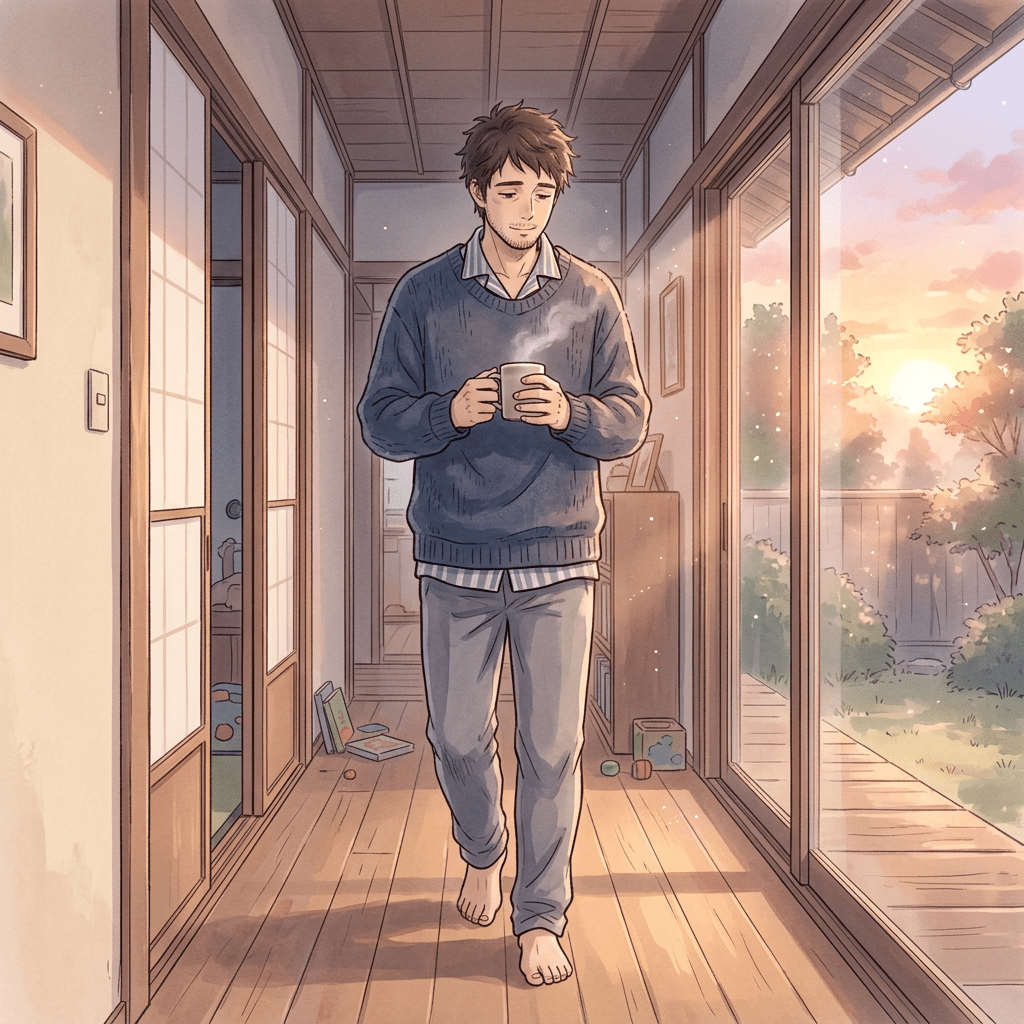
The children always remembered the way their father moved through the house in the early morning — not rushing, not dragging, but walking with a quiet steadiness, as if each step were placed with intention. The soft shuffle of his feet, the gentle clearing of his throat, the way he paused at the doorway to look at the sky before beginning the day — all of it felt like a small ceremony, a reminder that life was something to be met with presence.
He never taught them compassion through words. He taught it through the way he lived.
When a neighbor’s roof began to leak during the winter rains, he didn’t sigh or complain about the inconvenience. He simply gathered his tools, wiped the mist from his glasses, and said, “Come with me. Let’s see how we can help.” The children watched him climb the ladder slowly, carefully, as if he were ascending a sacred path. The cold wind tugged at his jacket, the shingles were slick beneath his hands, but he worked with a calm focus that made the moment feel almost holy. When he patched the leak and the dripping finally stopped, he smiled — not because he wanted praise, but because someone’s burden had become lighter.
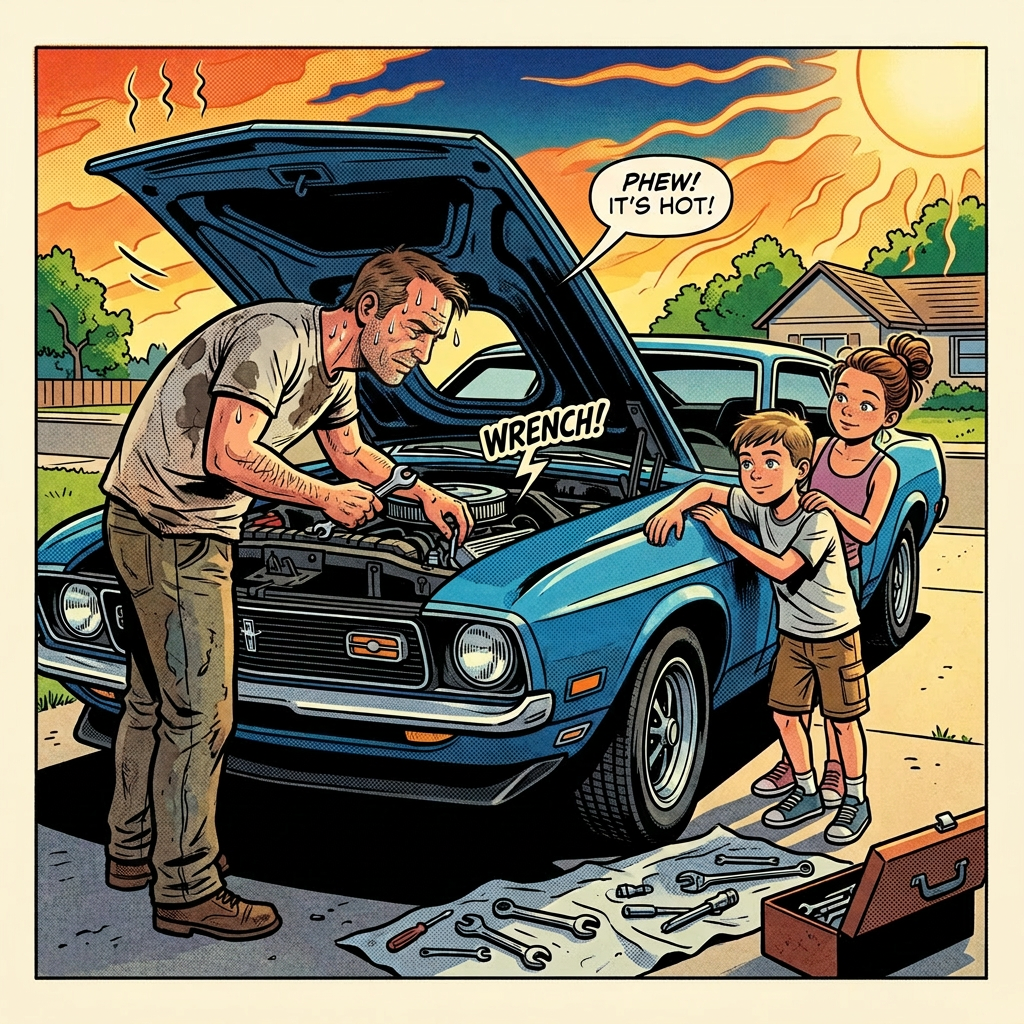
Another time, when an elderly man’s car refused to start in the heat of summer, their father knelt beside the engine with the same tenderness he used when holding a newborn. The children stood nearby, watching the sweat bead on his forehead as he listened to the engine’s uneven breaths. “Machines speak too,” he told them softly. “You just have to listen with patience.” When the engine finally roared back to life, the old man’s eyes filled with relief. Their father simply nodded, wiped his hands on a rag, and whispered, “May your road be smooth.”
The children didn’t understand it then, but he was teaching them the Dharma in the language of everyday life. He was showing them how to see suffering without turning away, how to offer help without expecting anything in return, how to move through the world with a heart that stayed open even when life was heavy.
As they grew older, they began to feel the weight of those lessons in their own bones.
One became a teacher who stayed after school to help students who felt invisible. She remembered the way her father listened — fully, without judgment — and she tried to offer her students that same refuge. Another became a nurse who held trembling hands in the quiet hours of the night. He remembered how his father breathed slowly, steadily, even when the work was hard, and he learned to be a calm presence for others. The youngest created a community program that helped families rebuild their lives. She remembered the way her father patched roofs and revived engines, and she understood that healing often begins with the smallest acts of care.
They didn’t choose these paths because their father told them to. They chose them because they had lived their whole lives watching him turn compassion into action, moment by moment, breath by breath.
Years passed. The children grew into adults who carried their father’s teachings in the way they spoke, the way they listened, the way they offered themselves to the world. And their father, now older, watched them with a quiet pride that softened his eyes.
On Father’s Day, they gathered around him. His hair had turned silver, his hands were rough from decades of work, but his presence was still steady — like a lantern that had guided them through every dark season.
“Dad,” the eldest said, her voice trembling, “everything we do… everything we’ve become… it’s because of you.”
He shook his head gently, the way he always did when he felt gratitude but didn’t want praise.
“I only showed you the path,” he whispered. “You walked it yourselves.”
But the children knew the truth.
He had given them more than shelter. More than guidance. More than love.
He had given them a way of seeing the world — a way rooted in compassion, patience, and the belief that every act of kindness sends ripples far beyond what the eye can see.
And as they sat with him that Father’s Day, surrounded by the warmth of everything he had nurtured, they realized something too:
The seeds he planted had grown into a forest — a living testament to the quiet, powerful love of a father who taught not through words, but through the gentle, unwavering example of a life lived with an open heart.
Have you ever had a moment like this? A brilliant, fiery idea ignites in your heart, but in the very next second, reality and the voices around you pour cold water all over it: “That’s impossible.” “You aren’t ready yet.” “Don’t be naive—wait until you have enough money and time.”
And so, countless life-changing possibilities quietly wither away in the endless cycle of “waiting.”
Today, I want to share a true miracle that might sound absolutely absurd at first. But after reading it, you might just find yourself re-evaluating the dreams you once labeled as “impossible.”
Years ago, a 26-year-old American youth named Robert Christopher watched people working on cargo ships, hitchhiking across the Atlantic, and traveling the globe. A simple question popped into his head: “If others can do it, why can’t I?”
When he shared this wild idea with his friends, it was met—unsurprisingly—with a chorus of mockery: “You are being way too naive!”
An ordinary person might have backed down. But Robert ignored the laughter. Instead, he pulled a fountain pen and a small slip of paper from his pocket, doing something that would completely alter the trajectory of his life: he listed every single difficulty he could foresee on the journey, and right next to each one, he meticulously wrote down a concrete solution.
He didn’t waste a single minute. The moment the list was done, the action began.
Mastering the Art of Resource Management
What is the biggest obstacle to traveling the world? Visas, transportation, maps, and money. Robert had a mere $80 in his pocket—an amount that, even back then, wasn’t enough to cover a young boy’s monthly living expenses. Yet, instead of letting financial scarcity limit him, he launched a textbook masterclass in resource integration:
No money for airfare? He struck a deal with a cargo airline, agreeing to take promotional photographs for the company in exchange for a flight across the Atlantic.
No maps or international driving permit? He approached the relevant authorities and promised to provide a detailed report on the road conditions in the Middle East. In return, he secured his permit and maps for free.
No safety net? He signed a contract with a pharmaceutical company, guaranteeing to collect soil samples from the countries he visited. He even hustled to secure seaman’s papers, a clean criminal record certificate from New York authorities, and a youth hostel membership.
When he finally waved goodbye to New York with just $80, his true global currency wasn’t cash—it was the unique value he could offer to others.
In the Face of the Impossible, There is Always a Way
How do you survive a journey around the world on $80? Robert proved through his actions that when your desire is strong enough, solutions will always outnumber problems.
In Gander, Newfoundland, unable to afford his first breakfast, he took professional photographs of the kitchen cooks. The joy he brought them was exchanged for a hearty, warm meal. In Ireland, he spent $4.80 on four cartons of American cigarettes. He keenly understood that in many countries, cigarettes functioned as smoothly as paper currency. From Paris to Vienna, and through the Alps into Switzerland, he used cigarettes as tips and payment to secure rides from drivers and conductors.
In Damascus, his enthusiastic photography for a local policeman filled the officer with such pride that he ordered a public bus to provide Robert with free service. In Baghdad, the manager and staff of the Iraq Express Transport Company loved his photos so much that they invited him to travel by boat to Tehran, completely free of charge. In Bangkok, he provided a luxury travel agency manager with highly sought-after, detailed maps and information about a specific region, earning himself a reception fit for a king. Finally, working as a sailor aboard the ship “Flying Spray,” he navigated from Japan back to San Francisco.
84 days. 80 dollars. He didn’t just survive; he witnessed the world.
Looking back at Robert’s legendary journey, we have to ask: Why did such a seemingly reckless plan unfold so smoothly?
Did Robert fail to foresee the immense risks involved? Of course he foresaw them. But it was precisely because he knew the risks that he chose to take the leap—using adventure to add color and flavor to his life. In this grand game, he fully mobilized his intelligence and brilliantly orchestrated every resource around him.
Too often, we use the word “impossible” as an excuse for inaction, when in reality, we are just hiding our fear of the unknown.
The Trap of “Waiting for the Perfect Moment”: Most people wait until they have saved enough money or until the timing is flawless. The truth is, that “perfect moment” does not exist.
Underestimating Our Own Value: Robert lacked money, but he possessed photography skills, the ability to gather data, the courage to negotiate, and the willingness to harvest soil samples. Money is just one form of wealth. Your wisdom, skills, and passion are all highly spendable currencies in the real world.
Many things in life seem impossible only until we decide to do them.
Obstacles are like a mirror—they are only as intimidating as you allow them to be. When you fixate entirely on what you lack—“I don’t have money,” “I don’t have time,” “I don’t have the background”—you trap yourself in place.
The next time a deep aspiration sparks within you, remember 26-year-old Robert: Ignore the skepticism around you. Tear out a piece of paper, write down the hurdles, and ask yourself: “To solve this, what is one thing I can do right now?”
The moment you truly commit and take action, you will find that the universe has a funny way of clearing a path for you.
Ever wonder if people can ‘sense’ what you’re thinking? In Chinese culture, we call this ‘Xiang You Xin Sheng.’ It’s the idea that your aura is a mirror of your soul. I found this traditional story particularly striking today, as it shows how changing your mind is the ultimate way to change your luck.
In Chinese culture, there is an ancient proverb: “Xiang You Xin Sheng” (相由心生). While it literally translates to “one’s appearance is born from the heart,” its wisdom goes far deeper than physical beauty.
In this context, “Xiang” (相) refers to much more than just the face; it encompasses one’s “aura,” “vibe,” or the invisible energy one radiates to the world. The teaching suggests that our persistent thoughts eventually sculpt our features and our presence, and this shift in our “countenance” often signals a pivotal turn in our destiny.
There is a traditional story that perfectly illustrates this profound connection between thought, aura, and fate.
Long ago, a wealthy man with no children of his own adopted a young orphan. He raised the boy as his own flesh and blood, providing him with a fine education and teaching him the intricacies of business and integrity. As the boy grew into a young man, he became exceptionally handsome and capable. To any observer, he was the clear heir to a vast fortune.
However, the human heart can be like a dark, fathomless pond. In moments of solitude, a shadow began to creep into the young man’s mind: “Since all of this will eventually be mine, why shouldn’t I have it sooner?”
At first, this thought was a mere spark. But over time, it began to smolder. It subtly changed his “Xiang”—his once-clear eyes grew clouded with a trace of calculation, and his once-welcoming aura took on a subtle edge of coldness.
One day, a guest skilled in the ancient art of physiognomy (face reading) visited the house. After observing the young man, the guest whispered to the father: “This young man’s spirit is darkened. There is a hidden greed between his brows. He may harbor betrayal in his heart; you must be on your guard.”
The young man happened to overhear this from behind a wall. In that moment, he felt as though he had been struck by lightning. He wasn’t angry at being insulted; he was terrified of being seen. He realized that his inner “vibe” had betrayed him—the “thief” in his heart had indeed been lurking there for a long time.
“My father has treated me with the kindness of a mountain, yet I covet his life and wealth. How am I different from a beast?” he thought. This intense shame acted like a mirror, reflecting the stains on his soul. In that instant, he made the most important decision of his life: he would cut off his greed, leave his comfortable home, and find his true, clean self again.
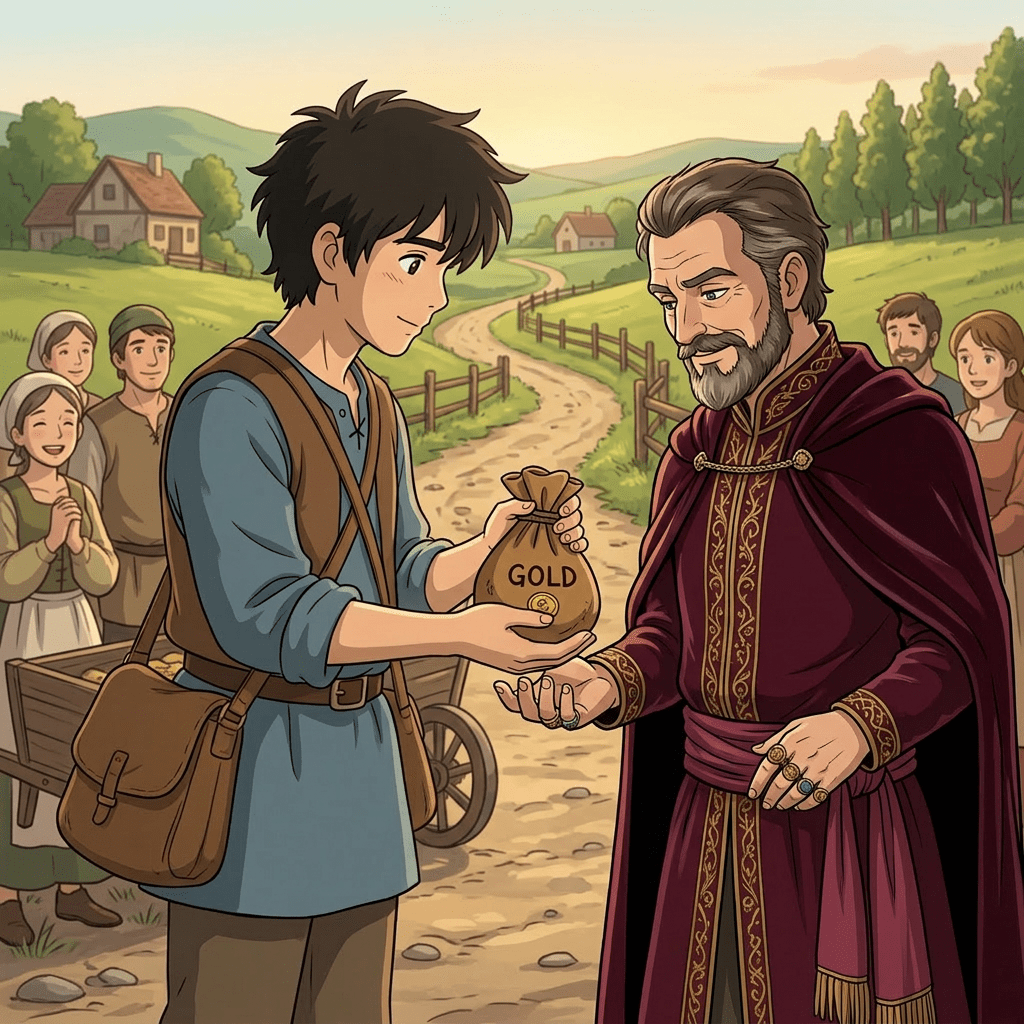
He bid farewell to his father and set out to make his own way. Not long after, while traveling a lonely path, he found a heavy pouch filled with gold and silver—enough wealth to change a man’s life instantly.
In the silence of the wilderness, with no one watching, the old greed flickered for a second. But he immediately remembered the shame and the awakening he had experienced. Instead of taking the pouch, he waited. He stood his ground from noon until dusk, until a frantic traveler appeared, searching in despair for his lost property.
When the young man returned the wealth, the owner was moved to tears. Impressed by such rare integrity, the traveler used his influence to recommend the young man for a prestigious and honorable career. From that point on, the young man no longer relied on an inheritance. Through his own hard work and “righteous spirit,” he built a life of genuine dignity and peace.
Years later, when people spoke of him, they saw a man with a gentle face and a clear, peaceful aura. The gloom of his youth had vanished. He finally understood that what changed his fate wasn’t the bag of gold or the new job; it was the moment he chose to face his own inner ugliness and personally extinguish the fire of greed.
The turning points in our lives rarely happen during grand, public moments. They happen in the silent depths of the heart. One thought can lead a person into an abyss; one shift in thought can lead them back to the light.
We cannot guarantee that we will never harbor a dark thought, but we can choose—the moment we become aware of it—not to follow where it leads.
As the old wisdom teaches: Good and evil exist within a single thought. And destiny? It often waits at the corner of that very same thought, ready to turn your life in a whole new direction.