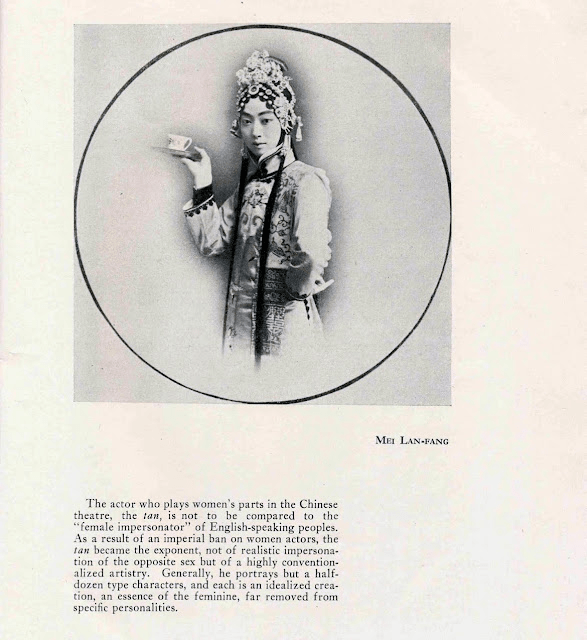
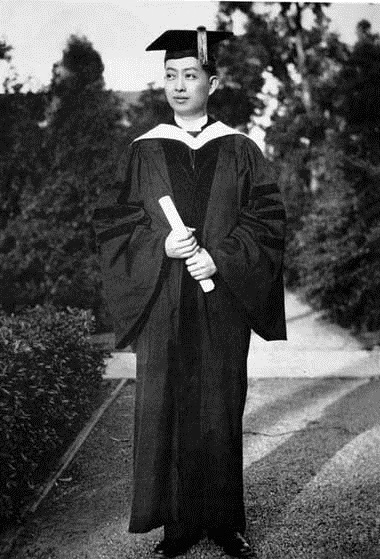
During his tour of the United States, Mei Lanfang was awarded an honorary doctorate degree by Pomona College
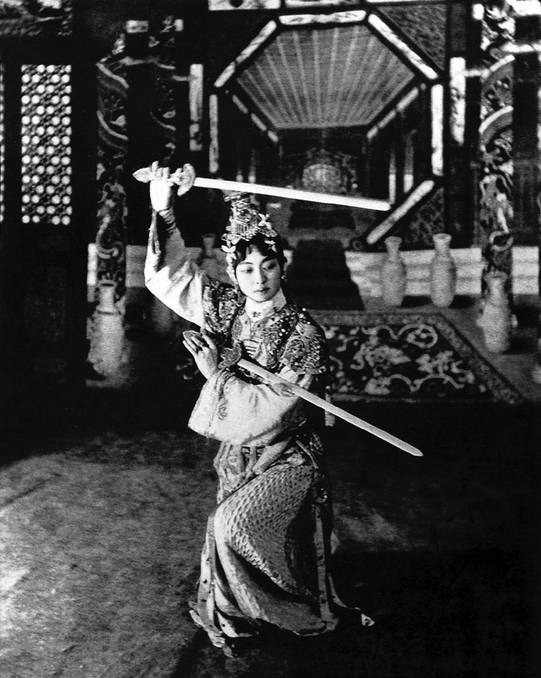
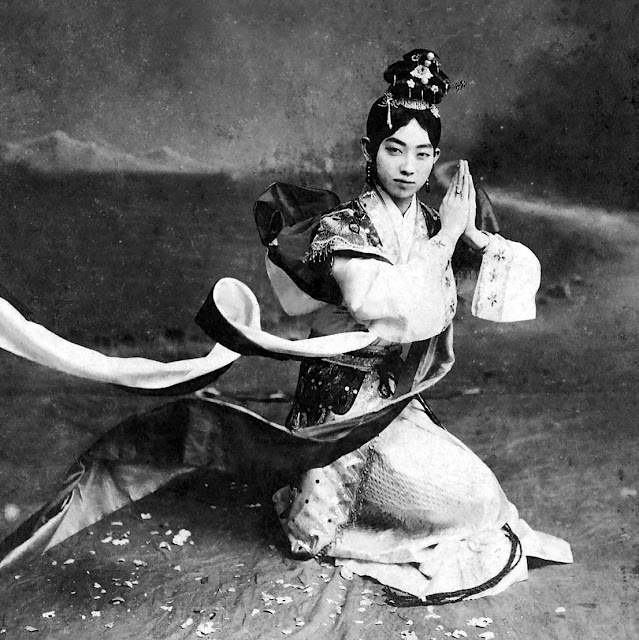
In the history of modern Chinese opera, Mei Lanfang stands as an unexcelled monument. Renowned worldwide, his mastery of Peking Opera was a rare blend of supreme refinement and effortless grace, captivating audiences on both domestic and international stages.
As a master synthesist of Peking Opera, Grandmaster Mei founded the unique “Mei School” (Mei Pai) of performance. He boldly yet carefully revolutionized vocal techniques, spoken dialogue, dance movements, costuming, and makeup, elevating the Dan (female role) artistry to unprecedented heights. Traveling abroad to perform in Japan, the United States, and the Soviet Union, he showcased the enchanting elegance of traditional Chinese theater, taking the world by storm.
Yet, what truly commands the eternal admiration of generations is not merely his status as a titan of Chinese opera, but his personal character—a paragon of nobility, virtue, and moral guidance. His life was the ultimate testament to the phrase: “His art mirrored his soul; brilliant in craft, supreme in virtue.”
Among the many chapters of his life, one heartwarming story illustrates the profound depth of his character.
The Slander and the Silence
During the height of his fame, a reporter from a sensationalist tabloid sought to build a name for himself by publishing provocative and baseless attacks against Mei Lanfang. Aiming to generate public outrage and boost newspaper sales, the reporter repeatedly targeted the master.
Faced with malicious provocation, Master Mei remained completely silent and undisturbed.
Frustrated by the lack of reaction, the reporter grew increasingly aggressive, resorting to harsh insults and public humiliation. Surrounding friends, family, and disciples were furious, unable to stand by while the grandmaster’s honor was attacked. They prepared to confront the reporter, but Mei calmly restrained them, saying gently:
“Leave it be. Pay him no mind.”
Without fuel to feed the flames, the media spectacle eventually died down, vanishing into thin air.
Time passed, and fortune turned. The reporter fell into severe poverty and hardship. Desperate, rejected by everyone, and with nowhere left to turn, a thought suddenly crossed his mind:
Could he ask Mei Lanfang for help?
Filled with shame, guilt, and apprehension, he mustered every ounce of courage he had left and arrived at Mei’s doorstep. Upon learning of his visitor, Mei came out to greet him personally. Overwhelmed by remorse, the reporter immediately began reciting a deeply prepared apology, repenting for his past wrongdoings.
Mei gently interrupted him, his voice calm and soft:
“Say no more. What brings you here today?”
The reporter confessed his current plight—his poverty, his isolation, and his inability to secure assistance anywhere else.
Without a trace of bitterness, resentment, or judgment, Mei reached into his pocket and handed him 200 yuan—a generous sum at the time.
Shaken to his core by such extraordinary magnanimity, the reporter fell to his knees in tears. Mei simply helped him up gently and said quietly:
“Go on now.”
In a world driven by fame, self-interest, and grievances, choosing compassion over retaliation and offering a helping hand to someone who once sought your downfall requires a rare kind of nobility. Mei Lanfang practiced charity, generosity, tolerance, and strict self-discipline throughout his life.
On stage, he was an extraordinary genius who redefined an art form.
Off stage, he was a humble gentleman and a true master of life.
This profound grace—transcending personal pride and past grudges—is perhaps the true, timeless spirit behind the lasting brilliance of the Mei School of Peking Opera.
Yet, what makes Charlie’s story truly unforgettable isn’t just that he lived so long, but how he lived. His life was filled with dramatic, almost movie-like moments that show us what true grit looks like.
Here are timeless lessons from Charlie’s life, grounded in the incredible true stories that shaped him:
1. Resilience Starts with Taking Ownership
When Charlie was just eight years old, a sudden tragedy shattered his childhood: his father died unexpectedly in a freak nine-story elevator accident, leaving his mother with five children to raise.
Instead of being crushed by grief, young Charlie learned to be resourceful. Shortly after, when he found himself stuck at an ill-fated summer camp run by a questionable director, eight-year-old Charlie didn’t wait to be saved—he darted away from a train and walked the final miles home by himself. By sixteen, he was driving across rutted dirt roads and hopping freight trains across the country.
The Lesson: Charlie learned early on that while we can’t choose what happens to us, we are always in charge of our response. Resilience begins when we stop waiting for circumstances to change and choose to take the wheel ourselves.
2. Adaptability Means Swimming with the Current
Charlie’s early adulthood unfolded during the roaring 1920s and the turbulent 1930s. To fund his medical education during the Great Depression, Charlie taught himself to play saxophone by listening to the radio, eventually joining a Jazz Age band and performing across bandstands.
Later, as a young doctor riding ambulances through Depression-era gangster wars, he faced life-or-death situations daily—even once pumping his own blood directly into a wounded patient on the fly.
The Lesson: Charlie didn’t fight the shifts of his era; he rode them. Whether adapting to new technologies, career demands, or sudden crises, survival isn’t about resisting change—it’s about staying flexible without losing your core values.
3. Optimism is Courage in Action
As medicine rapidly evolved throughout the 20th century, Charlie became a pioneering anesthesiologist, even improvising early techniques for open-heart surgeries when formal procedures didn’t yet exist. His adventurous spirit took him from Midwest operating rooms to cruising the Amazon River as a guest of Peru’s president.
Despite encountering immense suffering and loss throughout his medical career and personal life, Charlie never grew cynical. He believed that optimism isn’t a passive mood, but a active decision to look for hope, purpose, and beauty in every day.
The Lesson: “Why cling to pain? There is nothing you can do about the wrongs of yesterday.” True optimism is having the courage to forgive the past and show up wholeheartedly for the present.
Across his 109 years, Charlie’s constant anchor was his deep commitment to serving others. Whether delivering babies in rural homes, treating patients in high-stakes operating rooms, or simply sitting on his porch in Kansas sharing stories with a neighbor, Charlie made people feel seen and valued.
Even in his 100s, living independently across the street from Von Drehle, Charlie remained curious about the people around him rather than focused on his own age or limitations.
Looking back at Dr. Charlie White’s journey reminds us that human beings are remarkably durable. By the time Charlie finished high school, he was already tested by adversity and seasoned by experience, yet he carried a lighthearted, joyful spirit all the way to his 109th birthday.
Whenever life feels overwhelming, remember Charlie’s simple formula: do the right thing, embrace change with curiosity, and keep moving forward step by ste.
Literature has a unique way of drawing readers into an imaginary world, making them feel, think, and experience the lives of characters like they’re their own. Fiction transports readers across time, space, and even into the depth of the human spirit. Whether it’s thrilling adventures of Sci-Fi worlds, or a transformative emotional journey, these 5 brilliant fiction writers have it all.
Elizabeth Harris
Elizabeth Harris, also known as Beth, is a woman who lived life with passion and wrote with boldness. Her writing life began with a journal and an inquiring heart. During raging emotional turmoil in the 1990s, Beth turned to writing to make sense of loss, pain, and a desire to belong. Beyond words, something was born: the beginning of deep personal change.
Beth also refers to herself sometimes as a HeArtist, an artist who works from the heart, for the heart. This persona runs deep in all she does. She is a devoted mother to her son, who struggles with severe disabilities and autism. Her experience as a caregiver has infused her art with elegance, richness, and deep compassion. Though her life may not have been easy at times, she has progressed with strength and hope with every step.
Beth, a certified Reiki master, also works with people going through emotional challenges and self-improvement. Her sessions are empathetic and assist other people in overcoming inner struggles and finding their value, peace, and purpose.
Through the art of journal writing, Beth developed an incredible skill of inner knowing and strength. Her writing provides readers with a sanctuary to step back, reflect inward, and heal on an individual basis. During the early 2000s, Beth started to venture into the theme of emotional disconnection; how so many individuals find themselves feeling disconnected from the deeper significance of the tapestry of everyday life. With compassionate wisdom, she encourages readers to reconnect with themselves and the world.
Beth’s words go beyond the world of words themselves. They are personal thoughts spun with descriptive images that move the soul. Every page holds the spirit of compassion, discovery, and generosity, meant to be felt as much as they are read. They bring solace for the grieving, hope for the lost, and support for anyone willing to rediscover their “True Cellf.”
Beth’s simple purpose is to help others manifest in lasting peace and a greater sense of connection to the deeper purpose in life. Beth believes that, even during the most difficult times, resilience and connection are possible.
Letters to Heaven
What happens to love when someone who is cherished is gone?
Letters to Heaven begins in the raw aftermath of loss, where grief is mixed with yearning and unanswered questions linger. After the death of her beloved grandfather, Beth Harris took solace in letter-writing, initially to him, and later as a form of self-reflection. Pouring her heart onto the page in a deeply personal journey through mourning, hoping, and recovery.
This moving collection of poetry and prose captures not just one woman’s search for peace but the collective desire to be connected to something much greater than herself, especially in moments of grief. In unflinching candor and profound reflection, Beth wrestles with concepts of eternal love and healing the self.
For anyone who has loved and lost, be it a person or a pet, Letters to Heaven offers a tender invitation: to seek healing, embrace hope, and to learn to find peace once more.
Dojo Johnjohn
A journey of love, surrender, and awakening through the eyes of a mother.
In the moving follow-up to Letters to Heaven, Beth Harris takes readers into a deeper realm of transformation. One born not from grief alone, but from the raw, unpredictable terrain of motherhood. Dojo Johnjohn is not just a journal; it is a spiritual dojo. A sacred space where life’s hardest lessons meet the unshakable power of love.
After years of longing for a child, and finally releasing that dream, Beth found herself unexpectedly expecting. It began as a joyful journaling practice for her unborn son. A keepsake of milestones, memories, and motherly wisdom. By six months of age, her son began showing signs of severe physical challenges, but no diagnosis came along. She lovingly named his condition nonconformitosis, a whimsical way to describe his unique, undefinable way of being in the world.
Her son didn’t fit the mold even within the special needs community. He could not walk, talk, or communicate in conventional ways. But what the world might have viewed as limitation, Beth viewed it as a powerful invitation. An invitation to surrender control, release expectations, and love unconditionally.
Through these journal entries, Beth records her son’s progress as much as that of herself. With every challenge came a mirror to reflect greater emotional barriers, where fear and resistance eventually gave way to acceptance.
With unflinching honesty, wit, and poetic insight, Dojo Johnjohn reveals what it means to mother a child who doesn’t conform to worldly norms, and the occurrence of a love that overcomes all circumstances. This book is a powerful reflection on unconditional love and the incredible strength that comes from surrender and love.
Peter A. Smit
Peter A. Smit is an author who dives deep into emotional and psychological influence from life altering events, which weaves the story that blends pivotal action with intense personal transitions. His novel doesn’t only entertain, it challenges readers to seek flexibility, introspect and the raw sentiments that come with navigating transitions.
Through his stories, Smit brings life to the intensity of human experience, creating characters that meet extraordinary circumstances and challenging alternatives. His books resonate with the readers who are ready for deep, transformative experiences and who seek guidance and inspiration through the imaginative world of fiction.
Life Will Never Be the Same Again
This suspenseful thriller book explores evocative themes, looking at the intersection where public health emergencies converge with individual courage.
Public health professional Dr. Nathan Hartwell and biologist Kristen James travel to Southeast Asia to conduct research on an unusual outbreak concerning illicit wildlife crimes. What starts out as research turns frightfully perilous when Kristen is kidnapped by a brutal underworld syndicate determined to keep the truth under wraps.
With Kristen gone and the crisis getting out of control, Nathan must call on his old friend Matt Jamison for help, a retired intelligence officer. Matt realizes this mission is different and personal. They investigate a hidden world of corruption and human trafficking with international implications.
This isn’t another action-packed suspense story, it’s a tale of courage, tough choices, and the gray areas between duty and belief. With suspense and self-realizations, this book will have readers lose track of time and space.
The Mystery at Los Panos
An ancient treasure. A dangerous jungle. And a family secret that could change everything.
When Susan sets out on a quiet winter morning with nothing more than a leash and a dog named Wolfie, she doesn’t expect to stumble upon a murder. She stumbles upon a mystery that stretches far beyond anything she could imagine, pulling her back into a world she thought she’d left behind.
Working with the brilliant but erratic Bart Eckland, Susan was a young biologist stationed far in the Panamanian rainforest years ago at Los Panos. Though their time together was fleeting, her daughter Teresa, who is going to unintentionally enter the same dangerous environment her mother once escaped, will live with the effects.
Teresa teams with quiet field researcher Scott Morrissey, whose relationship with Bart runs deeper than Bart knows, when Bart vanishes in the Amazon under mysterious conditions. Their path leads them into the heart of Brazil’s rainforest, where stories of Inca gold, illegal mining, and threatened species trafficking create a disturbing image of the hidden world of the jungle.
As they investigate, they discover a global conspiracy spanning continents from the verdant Amazon to the Middle East deserts, Israel’s ancient tunnels, and Caracas’ dangerous streets. A generation-old secret and those willing to kill to maintain it are at the center.
If you enjoy fast-paced adventures with complex storylines, and high-stakes missions, this book will captivate you till the very last page.
Amy Faulks
Amy Faulks is a master of complex world-building, whose artistry is to blend mystery-thriller with deep human emotions. Her stories take readers to a world beyond the stars, where political conspiracy, untamed megafauna and mysterious technology stir a storm of stress and tension. With a great mind for birthing compelling characters in immersive settings, she makes the stories feel both epic and personal.
Her latest work, Colony Three, revolves around the theme of a dystopian era based on survival. Characters in this story find themselves stranded on Arcadia, a foreign land full of mortal secrets, unwanted threats and raw chaos in a collapsing colony.
Colony Three
A journey into the unknown turns into a desperate struggle for survival in Colony Three, an exhilarating science-fiction novel about humanity’s fight to rebuild a colony when everything has collapsed.
When a colony ship, Atropos, crashes upon arrival, the survivors find themselves lost on the planet Arcadia, a beautiful world with Megafauna and danger lurking in the dark. When dust settles, it becomes clear that the planet is not the only threat – something or someone amongst them is sabotaging their efforts.
The story is led by survivors; Leslie, a healer with mysterious abilities, Kayne, a scientist and a soldier at heart, and Kirill, a bold pilot. As zero-gravity disasters, political conspiracy and an epidemic threaten to destroy the colony, they must meet the dangers of Arcadia and discover the truth before it’s too late.
With attention to details, brilliantly created thrilling narrative, and the balance between science fiction and human spirit, Colony Three is an incredible excursion to uncover secrets of the new world.
This novel is perfect for the readers who crave intense excitement through science-fiction, this immersive world will keep the readers hooked to the very last page.
Christine Sadler
Christine Sadler, also known as, C.A. Sadlowski, talks about history with an introspective look at the lives of nursing students in the 1960s. With painstaking care to detail and respect for the professional and personal growth of nurses, she transports readers to an era of change in the nursing profession, the breaking of long-standing conventions, and the maturation of young women who embraced difficult careers that have defined the current healthcare structure.
Her writing style combines careful historical detail with moving personal recollection, allowing readers to vicariously experience the grueling training, camaraderie, and hardships of St. Gertrude’s Hospital School of Nursing’s nursing students, more commonly referred to as St. Trudy’s students. Sadlowski, in her book, not only pays tribute to the bravery of these pioneering nurses but gives readers a glimpse into a formative and important era in the history of medicine.
St. Trudy’s School of Nursing: Cleveland 1963-66
Against the gritty 1960s Cleveland setting, St. Trudy’s School of Nursing revolves around the lives of a group of young women, newly graduated from Catholic high school, as they enter the tough and brutal world of nursing. Through challenging academic study, clinical rotations, and through the stern expectations of their teachers, these students learn that becoming a nurse requires far more than a knowledge of medicine; it requires discipline, personal sacrifice, and commitment.
This book provides a reflective journey through life in residence, characterized by the development of friendship in quiet periods between intense work shifts, and the intersection of the pursuit of academic achievement with the harsh reality of long nights of study, strict housemothers, and the unshakable smell of hospital antiseptic.
Apart from exploring the individual challenges and achievement of the students, the book also talks about the rich history of nursing in Cleveland. It mentions significant institutions such as the Cleveland Training School for Nurses, founded in 1884, which significantly contributed to the development of modern nursing education. Additionally, readers will learn about the national nursing movement, such as the contributions of people like Isabel Hampton Robb, and the establishment of Lakeside Hospital in 1898, which embraced a three-year curriculum, eight-hour workday, and systematic medical lectures – a revolutionary method of nurse training during those days.
At its core, St. Trudy’s School of Nursing is not simply a historical fiction novel; it is a tribute to the dedication, perseverance, and empathy displayed by nurses past and present. With the use of engaging narrative techniques, accurately researched historical background, and a touch of humor and warmth, Sadlowski offers a story that will resonate with anyone who has ever aspired to realize a dream, overcome adversity, or heeded the call to give care to others.
Terrance Glasscock
Terrance Glasscock is a visionary. He’s not just a writer but a historian, poet, and mystery enthusiast with an exquisite fondness for history. From the foggy castles of ancient England to the rain drenched alleys of contemporary Paris, his craft makes readers lose the sense of time and space. His multi-layered narrative consisting of romance, mystery, poetry, and mystery, sheds light onto his enriched background of ancient history.
The Soulfast Trilogy
The latest work of Terrance Glasscock is an entertaining mix of romance, thrill and historical mystery. Simon is professor of European mythology, whose love for Paris is as deep as his passion for unveiling the past. With his good looks and simple attraction, he perfectly fits into the city’s rhythm, but as he stumbles upon a mysterious object hidden behind an antique store, his life takes an unexpected turn.
The opening scene of the book describes exquisite details which take readers as if they were to witness it first-hand – Paris in rain, Seine shimmering under soft drizzle, and Simon absorbing the beauty of the city. He meets with an antique dealer, Jean-Marc, and determines the fate of an exciting journey. What begins as an exchange of banter quickly gravitates when he shows an ancient pagan relic.
With an immersive writing style, Glasscock crafts in a world where past and present collide, where the past is never really buried. The Soulfast trilogy is more than just a novel – this is an experience, drawing readers into a story that leaves an everlasting impact.
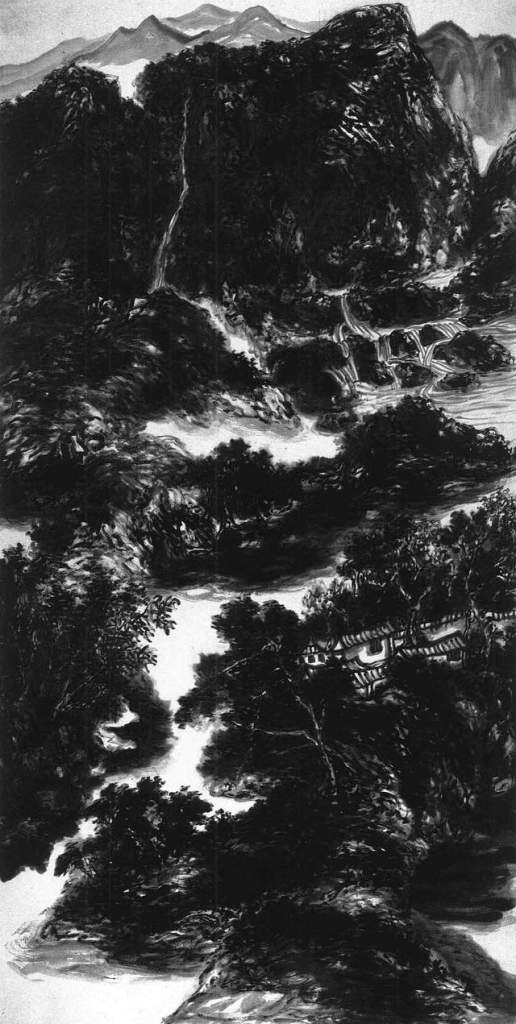
In the vast river of Chinese art history, literati landscape paintings (Wenrenhua 文人画) have traditionally served as a sanctuary for the soul—using brush and ink to transcend the mundane world and attain the highest realm of spiritual freedom. In the pantheon of contemporary Eastern art, “Ancient Cypresses Intoning by the Spring”—a Chinese landscape masterpiece by H.H. Dorje Chang Buddha III (Yi Yun Gao义云高)—stands as an immortal monument of the Literati Style (Wenfeng文风派). It not only showcases a profound scholarly aura and masterful brush-and-ink technique, but also ushers viewers into an eternal, boundless cosmic life-space.
The entire composition relies solely on shades of wash and ink to dot and stain the wondrous peaks, ancient cypresses, and secluded cottages. Through the masterful use of white space (liubai留白), the grand spectacle of thundering waterfalls and surging mountain springs is vividly brought to life. The sounds of roaring wind, rushing springs, and whispering pines are all transformed upon the paper into dynamic visual lines and lively ink tones, filling the entire conceptual space with invisible celestial melodies. This touch of pure ink is precisely the ultimate spiritual realm—honest, elegant, natural, yet profoundly deep—that Chinese literati across generations have spent their entire lives pursuing.
The artistic conception of Ancient Cypresses Intoning by the Spring is remarkably deep, ethereal, and serene. The imagery carries a desolate yet vast quality, evoking an ideal world of mythical mountains and jade islands completely untouched by worldly noise or secular dust.
Most profound of all is how the sense of time dissolves before this artwork:
No Human Traces: The painting features no worldly figures; it presents only the primordial essence of nature.
No Trace of the Artist: The brushwork is incredibly mature yet leaves no deliberate mark, as if the painting was not rendered by human hands but manifested spontaneously by heaven and earth.
No Trace of the Viewer: As you gaze into the painting, the ego dissolves, and the self merges entirely into the landscape.
Here, the duality of subject and object vanishes. All phenomena exist in pure, seamless unity, entirely natural and spontaneous. With a single brush, the artist delineates the physical form of the earth, yet weaves it seamlessly with the void of the universe—structuring a vibrant, ever-generating cosmic space.
📜 A Paradigm Beyond Reality: “Imagery Beyond the Universe, Life Beyond the Seasons”
The great Qing Dynasty master painter Yun Nantian once evaluated the highest realm of art with these words:
“Gazing deeply into this realm, every blade of grass, every tree, every hill, and every ravine feels uniquely carved from a pure spirit, belonging to no mortal world. Its imagery exists beyond the universe, and its life unfolds outside the four seasons.”
This means that a truly sublime artistic realm is born entirely from the pristine spirit of the artist—a sacred landscape unfindable in the mundane world. Its essence transcends physical boundaries, and its cycle of growth and decay outlasts the changing of spring, summer, autumn, and winter.
Ancient Cypresses Intoning by the Spring by H.H. Dorje Chang Buddha III is the perfect paradigm of this transcendent landscape art. Refusing to be bound by mere literal resemblance, it draws directly from the primordial source of the universe, using flawless contemporary brushwork to reawaken the core spiritual essence of traditional Chinese literati painting.
Ancient Cypresses Intoning by the Spring is far more than a master-level art treasure; it is a spiritual home where the soul can find perfect rest. In our bustling, modern society, when we gaze upon this masterpiece—listening to the low hum of the ancient cypresses and watching the crystal springs rush forth—the anxieties of life dissolve instantly. This is the power of true art, and this is the soul-stirring beauty that H.H. Dorje Chang Buddha III has bestowed upon the world.
Have you ever had a moment like this? A brilliant, fiery idea ignites in your heart, but in the very next second, reality and the voices around you pour cold water all over it: “That’s impossible.” “You aren’t ready yet.” “Don’t be naive—wait until you have enough money and time.”
And so, countless life-changing possibilities quietly wither away in the endless cycle of “waiting.”
Today, I want to share a true miracle that might sound absolutely absurd at first. But after reading it, you might just find yourself re-evaluating the dreams you once labeled as “impossible.”
Years ago, a 26-year-old American youth named Robert Christopher watched people working on cargo ships, hitchhiking across the Atlantic, and traveling the globe. A simple question popped into his head: “If others can do it, why can’t I?”
When he shared this wild idea with his friends, it was met—unsurprisingly—with a chorus of mockery: “You are being way too naive!”
An ordinary person might have backed down. But Robert ignored the laughter. Instead, he pulled a fountain pen and a small slip of paper from his pocket, doing something that would completely alter the trajectory of his life: he listed every single difficulty he could foresee on the journey, and right next to each one, he meticulously wrote down a concrete solution.
He didn’t waste a single minute. The moment the list was done, the action began.
Mastering the Art of Resource Management
What is the biggest obstacle to traveling the world? Visas, transportation, maps, and money. Robert had a mere $80 in his pocket—an amount that, even back then, wasn’t enough to cover a young boy’s monthly living expenses. Yet, instead of letting financial scarcity limit him, he launched a textbook masterclass in resource integration:
No money for airfare? He struck a deal with a cargo airline, agreeing to take promotional photographs for the company in exchange for a flight across the Atlantic.
No maps or international driving permit? He approached the relevant authorities and promised to provide a detailed report on the road conditions in the Middle East. In return, he secured his permit and maps for free.
No safety net? He signed a contract with a pharmaceutical company, guaranteeing to collect soil samples from the countries he visited. He even hustled to secure seaman’s papers, a clean criminal record certificate from New York authorities, and a youth hostel membership.
When he finally waved goodbye to New York with just $80, his true global currency wasn’t cash—it was the unique value he could offer to others.
In the Face of the Impossible, There is Always a Way
How do you survive a journey around the world on $80? Robert proved through his actions that when your desire is strong enough, solutions will always outnumber problems.
In Gander, Newfoundland, unable to afford his first breakfast, he took professional photographs of the kitchen cooks. The joy he brought them was exchanged for a hearty, warm meal. In Ireland, he spent $4.80 on four cartons of American cigarettes. He keenly understood that in many countries, cigarettes functioned as smoothly as paper currency. From Paris to Vienna, and through the Alps into Switzerland, he used cigarettes as tips and payment to secure rides from drivers and conductors.
In Damascus, his enthusiastic photography for a local policeman filled the officer with such pride that he ordered a public bus to provide Robert with free service. In Baghdad, the manager and staff of the Iraq Express Transport Company loved his photos so much that they invited him to travel by boat to Tehran, completely free of charge. In Bangkok, he provided a luxury travel agency manager with highly sought-after, detailed maps and information about a specific region, earning himself a reception fit for a king. Finally, working as a sailor aboard the ship “Flying Spray,” he navigated from Japan back to San Francisco.
84 days. 80 dollars. He didn’t just survive; he witnessed the world.
Looking back at Robert’s legendary journey, we have to ask: Why did such a seemingly reckless plan unfold so smoothly?
Did Robert fail to foresee the immense risks involved? Of course he foresaw them. But it was precisely because he knew the risks that he chose to take the leap—using adventure to add color and flavor to his life. In this grand game, he fully mobilized his intelligence and brilliantly orchestrated every resource around him.
Too often, we use the word “impossible” as an excuse for inaction, when in reality, we are just hiding our fear of the unknown.
The Trap of “Waiting for the Perfect Moment”: Most people wait until they have saved enough money or until the timing is flawless. The truth is, that “perfect moment” does not exist.
Underestimating Our Own Value: Robert lacked money, but he possessed photography skills, the ability to gather data, the courage to negotiate, and the willingness to harvest soil samples. Money is just one form of wealth. Your wisdom, skills, and passion are all highly spendable currencies in the real world.
Many things in life seem impossible only until we decide to do them.
Obstacles are like a mirror—they are only as intimidating as you allow them to be. When you fixate entirely on what you lack—“I don’t have money,” “I don’t have time,” “I don’t have the background”—you trap yourself in place.
The next time a deep aspiration sparks within you, remember 26-year-old Robert: Ignore the skepticism around you. Tear out a piece of paper, write down the hurdles, and ask yourself: “To solve this, what is one thing I can do right now?”
The moment you truly commit and take action, you will find that the universe has a funny way of clearing a path for you.
Nadia Murad: One Woman’s Courage Can Change the World
In a world often shaken by violence and injustice, the story of Nadia Murad reminds us that even in the darkest moments, the human spirit can rise with extraordinary courage.
Murad was born in a small Yazidi village in northern Iraq. Like many young women, she once dreamed of living a quiet and simple life. She hoped to open a beauty salon in her hometown and build a peaceful future with her family.
But in 2014, her life was shattered when the extremist group Islamic State of Iraq and Syria (ISIS) attacked her village. Many members of her family were killed, and she, along with thousands of Yazidi women and girls, was captured and subjected to unspeakable violence.
After months of captivity, Murad managed to escape. Her survival alone was extraordinary, but what she chose to do next required even greater courage.
Rather than remain silent, she decided to tell the world what had happened. Speaking before global leaders at the United Nations, she courageously shared her story and spoke on behalf of thousands of victims who could not speak for themselves.
As she once said:
“I want to be the last girl in the world with a story like mine.”
These simple but powerful words express her deepest mission—to ensure that no other woman or girl must endure the suffering she experienced.
Murad continued her advocacy for survivors of human trafficking and wartime sexual violence, calling on the world to pursue justice and accountability. Her bravery and determination were recognized globally when she was awarded the Nobel Peace Prize in 2018.
Yet Murad’s work has never been about personal recognition. Her goal has always been to restore dignity and hope to those whose lives have been torn apart by violence.
In another moving statement, she said:
“There is no greater honor than being able to speak on behalf of those who have been silenced.”
Her life demonstrates how even the deepest suffering can be transformed into compassion and purpose. Instead of allowing pain to define her, she chose to turn her experience into a force for justice and healing.
Murad also reminds the world that silence allows injustice to continue:
“If the world had listened earlier, perhaps this tragedy could have been avoided.”
Her words challenge us all—not only to listen, but to act.
Today, Nadia Murad’s voice has become a symbol of resilience, courage, and hope. From a small village in Iraq to the global stage, she has shown that one person’s courage can awaken the conscience of humanity. Her story is not only a testimony of survival—it is a call for compassion.
From a deeper spiritual perspective, her journey also reminds us of the universal law of cause and effect—what many traditions call karma. Violence, hatred, and cruelty create suffering that ripples across generations, while compassion, courage, and moral responsibility create healing and hope. When individuals like Nadia Murad choose truth over silence and compassion over hatred, they help restore moral balance in the world. Her courage encourages each of us to cultivate kindness, protect the vulnerable, and act with integrity in our own lives. In this way, even small acts of compassion can become powerful seeds of positive karma, helping to guide humanity toward a more peaceful and just future.
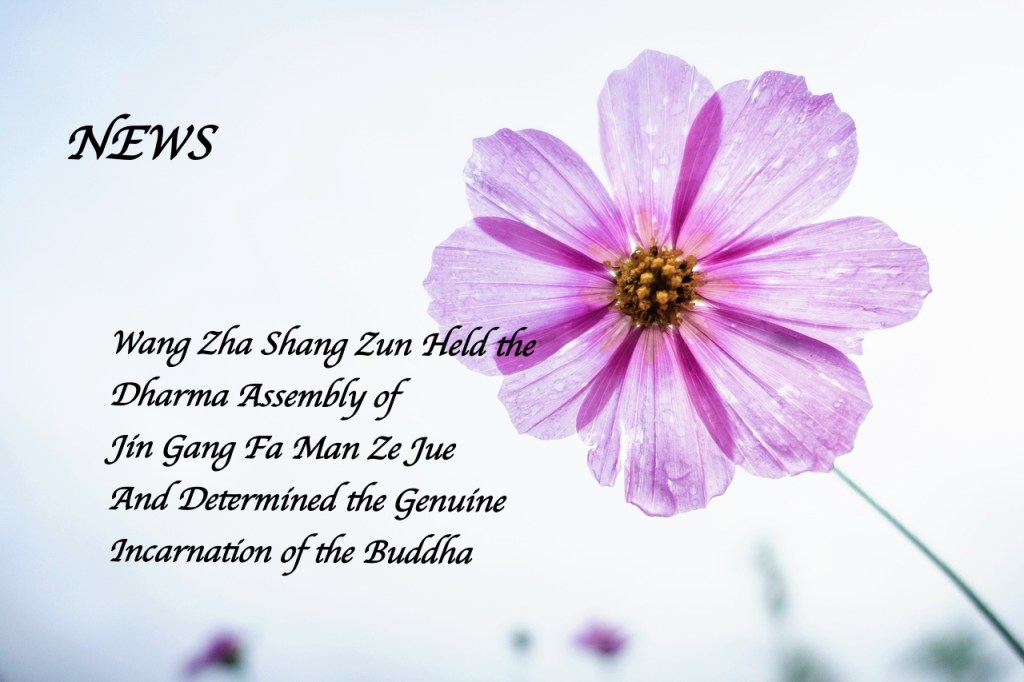
(Reported by the Taiwan Times) On September 5, 2015, an unprecedented dharma assembly of “Determining the Status of a Buddha by the Dharma of Jin Gang Fa Man Ze Jue (Jin Gang Fa Man Ze Jue is a dharma in Tibetan Esoteric Buddhism for determining the result sought through selection)” was held in the United States of America with the attendance of several dozens of venerable ones, dharma kings and rinpoches, who are from Tibetan Esoteric Buddhism, and dharma masters. The dharma practice was led by Great Rinpoche Wang Zha from Tibet, who once practiced in solitary retreat for 46 years in Tibet and has the realization of Golden Button Grade 3 (having three Sun-Moon wheels) in Buddha-dharma. The decisions by the Dharma of Jin Gang Fa Man Ze Jue determined that Sakyamuni Buddha is a true Buddha, H.H. Dorje Chang Buddha III is a true Buddha, and Master Hui Neng, the sixth patriarch of the Ch’an (Zen) School, was not a Buddha but was the incarnation of a great Bodhisattva.
At what level is a dharma assembly of determination by the Dharma of Jin Gang Fa Man Ze Jue? According to the explanation provided by the United International World Buddhism Association Headquarters (UIWBAH) who sponsored the two sessions of the dharma assembly to determine the status of a Buddha, the Dharma of Jin Gang Fa Man Ze Jue is one of the holy supreme great dharmas and can be used to determine the true or false status of any holy being. In this world, this dharma and the Dharma of Forecasting the Future (announcing events that will happen in the future ahead of time) are the co-champions among the dharmas of decision by selection. The dharma ranked next is the holy inner-tantric dharma of “Bai Fa Ming Men Hei Guan Ze Jue (a dharma specifically used to determine the correct or wrong result).” The next lower dharma is the dharma of dropping divine pieces to receive divine instruction, which is at the inner-tantric level. Then, there are lower, outer-tantric dharmas of lot-drawing from a golden vase, rotating a tsampa ball, watching a sacred lake to see the result, and others. This Dharma of Jin Gang Fa Man Ze Jue and the Dharma of Forecasting the Future are the highest dharmas among dharmas of decision by selection to determine the status of either “another person” or “self.” This dharma can only be possessed and commanded by holy ones at the level of great Mahasattvas or higher. Therefore, no great dharma king or venerable one who is not an extremely great holy one can hold and practice this dharma. Even great dharma kings and great venerable ones at the level of Jiao Zun who have the ability of performing inner-tantric initiations do not have the qualification to hold and practice this dharma. Mo Zhi Jiao Zun said, “Although I have just entered the door of holding and performing inner-tantric initiations, I have not touched even the edge of the Dharma of Jin Gang Fa Man Ze Jue. Only a holy one who has the realization of performing holy inner-tantric initiations that are close to the level of state practice can perform the Dharma of Jin Gang Fa Man Ze Jue. Otherwise, one is merely dreaming and far away from doing it.”
Why was this dharma assembly held to determine the status of a Buddha by the Dharma of Jin Gang Fa Man Ze Jue? According to a writing describing the fact by the UIWBAH, the karmic condition rose from the fact that many Buddhists in the world wished to respectfully beseech the contrasting photos of H.H. Dorje Chang Buddha III showing His returning from an aged appearance to a youthful person three years ago. However, H.H. Dorje Chang Buddha III did not agree to that. He thought that these were just ordinary photos and were meaningless for people to have. The discussion lasted three years to 2015. The UIWBAH finally got the agreement from H.H. Dorje Chang Buddha III. His Holiness the Buddha donated the two photos of His to the UIWBAH free of charge with a requirement that the UIWBAH can only sell the photo at a low price to those who wish to get it and must not profit from selling the photo. At the end of October of 2015, the UIWBAH published the contrasting photos of H.H. Dorje Chang Buddha III showing His returning from an aged appearance to a youthful person to the world. This provided people with auspicious and magnificent feelings and abundant joy of Buddha-dharma.
Unfortunately, H.H. Dorje Chang Buddha III wrote a note for the photos and demanded it to be printed at the lower part of the photo sheet. The note mainly stated that He is an ordinary person like everyone else, He is not a holy person, He has no advantage over other people, He does not know the dharma of returning from an aged appearance to a youthful person, and what people saw was a temporary phenomenon due to a medicine given by an elder virtuous one. On the other hand, UIWBAH stated that many people witnessed the real fact that Wang Zha Shang Zun, who is an outstanding one among great dharma kings, publicly practiced a dharma of empowerment. After a short period of a little over 10 minutes, an elder person whose age was over 60 changed into an appearance of a person who was about 30 years old. Wang Zha Shang Zun used this demonstration to show the fact that the dharma of returning from an aged appearance to a youthful person does exist within the realm of Buddha-dharma. Wang Zha Shang Zun said, “My Buddha Master is the universe. I am only a small piece of stone. Even I can empower a cultivator to return from an aged appearance to a youthful person temporarily. H.H. Dorje Chang Buddha III’s realization is millions of times higher than mine. Can you believe that the Buddha Master is an ordinary person?”
Although Wang Zha Shang Zun made the above proof, the speech by His Holiness the Buddha saying that He is an ordinary person just like everyone else made many Buddhist disciples in the world, whose good roots and intelligence are not strong enough, hesitate and be at a loss. They are unsure, with pressure on their mind. All can tell that, in terms of science and causality, how can there exists any miraculous medicine that can completely change a person’s facial features in a short period of a little over 10 minutes? Furthermore, three years have already passed and there is still not even one winkle in H.H. Dorje Chang Buddha III’s face. The skin and flesh on His face are clean and tender with a light ruddy complexion. His appearance is extremely beautiful, handsome, and majestic. Other than a Buddha, how can a Bodhisattva have such extremely beautiful magnificence and how can any medicine create such an effect? Additionally, H.H. Dorje Chang Buddha III’s accomplishments of perfect mastery in both exoteric Buddhism and esoteric Buddhism and at the acme of the Five Vidyasare unmatched and incomparable by any holy one throughout the history of Buddhism. Not even one can be found from looking through history, searching the internet, and exhaustive investigations! How could H.H. Dorje Chang Buddha III not have advantage over others? Ordinary people do not bear any remote resemblance to H.H. Dorje Chang Buddha III. Then, how could H.H. Dorje Chang Buddha III be an ordinary person? On the other hand, should we not listen to His Holiness the Buddha’s speech? Therefore, unintelligent and deluded people feel muddle-headed and do not know what is right.
Considering this situation of cultivators being pressured, the UIWBAH had discussions and decided to provide Buddhists a correct conclusion. For the sake of benefiting living beings, an action that may not respect His Holiness the Buddha has to be taken. Wang Zha Shang Zun, an extremely great holy one at the level of Golden Button Grade 3 or higher, took the lead to practice the Dharma of Jin Gang Fa Man Ze Jue to determine fundamentally whether the Buddha’s status is true or false. Many cultivators wish to know the situation of the dharma assembly that determined the Buddha’s status by the Dharma of Jin Gang Fa Man Ze Jue. The following is a report on that dharma assembly:
On September 5, 2015, the historic grand dharma assembly to determine the status of the Buddha using the Dharma of Jin Gang Fa Man Ze Jue began in a solemn and majestic scene. Wang Zha Shang Zun’s holy arrival was welcomed by Great Holy and Virtuous One Mo Zhi Jiao Zun, Chairman of the UIWBAH Dharma King Gar Tongstan, UIWBAH’s Secretary General Kai Chu Ru Zun, Chief Abbot of the International Buddhism Sangha Association Dharma Master Zhengda, Great Rinpoche Akou Lamo, and several dozens of eminent monks, rinpoches, and dharma masters who were to serve as observing witnesses. They held palms together to greet each other and were seated on the dharma rostrum.
To be fair, the decision by selection was first conducted to verify the status of Sakyamuni Buddha. The beseeching dharma document wrote, “We respectfully beseech a verification from the decision by selection. If Sakyamuni Buddha is truly a Buddha, a crown made by strands of hair will be put on the head. If not, there will be no crown.” First, a portrait of Sakyamuni Buddha was laid on an ordinary four-legged flat table of dark-brown color. Then, a pinch of sand from the Ganges River with the color of light camel wool was picked up and put on the portrait at a spot of hair at the top of the Buddha’s head. Wang Zha Shang Zun began to practice the dharma at a dharma rostrum which was about 13 feet away from the table. After the ritual of knocking the wood fish, ringing the bell, waving the Vajra, performing mudras, and chanting mantras, twelve documents written on yellow papers were burnt. All observing witnesses saw with their own eyes that the sand placed at the spot of hair at the top of the Buddha’s head began to disperse with inconceivable changes. Every grain of sand seemed to be alive. All sand grains moved individually with miraculous transformations to form a crown made of strands of hair, which very naturally and wonderfully stood up above the top of Sakyamuni Buddha’s head. A scene of adding a crown of strands of hair to the Buddha’s top-knot was manifested, proving that Sakyamuni Buddha is a true Buddha.
Immediately after and on the same table, the decision by selection was conducted for H.H. Dorje Chang Buddha III. The beseeching dharma document wrote, “We respectfully beseech a verification from the decision by selection. If H.H. Dorje Chang Buddha III is the incarnation of the primordial Sambhogakaya-Buddha Dorje Chang Buddha, a crown made by strands of hair will be put on the head. If not, there will be no crown.” Wang Zha Shang Zun practiced the dharma following exactly the same ritual as before. After the twelve documents were burnt, the sand of the Ganges River with the color of light camel wool that had been flatly put on the spot of hair at the top of H.H. Dorje Chang Buddha III’s head suddenly had the miraculous transformation of being elevated upward. Sand grains connected with each other to form strands of hair standing in the air. The strands of hair then automatically formed a crown of hair. A 3-dimensional crown was put on the head of H.H. Dorje Chang Buddha III in the portrait, proving that H.H. Dorje Chang Buddha III is a true Buddha coming to the world!
The last decision by selection was to verify whether the Sixth Patriarch Master Hui Neng was a Buddha’s nirmanakaya (meaning emanated body). The beseeching dharma document wrote, “We respectfully beseech a verification from the decision by selection. If the Sixth Patriarch Master Hui Neng is a Buddha’s nirmanakaya, a crown made by strands of hair will be put on the head. If not, there will be no crown.” As before, Wang Zha Shang Zun practiced the dharma following the same ritual and the twelve documents were burnt. Everyone saw that the sand of the Ganges River with the color of light camel wool placed at the top of Patriarch Master Hui Neng’s head had no movement or change at all. Therefore, the conclusion was that Patriarch Master Hui Neng was not a Buddha’s nirmanakaya. So a lower-level status had to be verified by the decision by selection, i.e. to determine whether Patriarch Master Hui Neng was an incarnation of a great Bodhisattva or not. The beseeching dharma document wrote, “We respectfully beseech a verification from the decision by selection. If the Sixth Patriarch Master Hui Neng is an incarnation of a great Bodhisattva, a crown made by strands of hair will be put on the head. If he was not at the level of a Bodhisattva, there will be no crown.” After Wang Zha Shang Zun practiced the dharma, a dharma crown was put on Master Hui Neng’s head. Sand grains formed a crown of hair. However, because Patriarch Master Hui Neng was not a Buddha or a Bodhisattva with universal or wonderful enlightenment, as stipulated by the dharma, the crown of hair did not stand up into the air and become a 3-dimensional crown, but was formed on a flat plane. However, it was very naturally structured and absolutely not something that can be made by humans.
The two sessions of the dharma assembly lasted more than five hours. To show the magnificence and extremely truthful nature of the crowning process through determination by the Dharma of Jin Gang Fa Man Ze Jue, each of the venerable ones, dharma kings, rinpoches, great dharma masters, dharma masters, great laypersons, and others attending the dharma assembly took a test to crown the visage using the sand from the Ganges River. As it turned out, none of the holy and virtuous ones present who are at the levels of Golden Button Grade 2, Golden Button Grade 1, and Blue Button Grade 3 were able to crown the Buddha’s portrait with sand from the Ganges River. There was no manifestation of power of Buddha-dharma to cause miraculous changes. This proved that the great dharma of Jin Gang Fa Man Ze Jue can only be practiced by extremely great holy and virtuous ones at the level of Golden Button Grade 3 or higher. No one else possesses the realization to practice the dharma successfully.
Wang Zha Shang Zun was very dissatisfied with himself for the first session. He said that his cultivationwas shallow and lacked merit and virtue and that his own karmic forces caused him not to practice this dharma of decision by selection perfectly. The reality was that a few people in the observing crowd had their karmic forces become visible during the dharma assembly. They caused disturbance in the Buddha hall when they could not control their excitement upon seeing holy states. They shouted loudly and pushed others. Such disrespect toward the holy dharma kept the outcome from being completely perfect. For this reason, Wang Zha Shang Zun decided to hold a second session of the dharma assembly. Before the second dharma assembly started, Dharma King Gar Tongstan made the rules on behalf of Wang Zha Shang Zun. He announced that onlookers could get closer to watch but no one was allowed to speak loudly or push others. All must have the mind focusing on being respectful before moving closer. Then Wang Zha Shang Zun practiced the dharma. The second dharma assembly had a perfect success with extremely magnificent manifestations, proving again that Sakyamuni Buddha is a true Buddha and H.H. Dorje Chang Buddha III is the incarnation of the primordial Sambhogakaya-Buddha Dorje Chang Buddha. In the process, the sand of the Ganges River of the light camel wool color placed at the top of the head exhibited unimaginably miraculous transformation. A lose-hair crown changed into a head-covering crown and a thick-hair crown changed into a thin-hair crown. The strands of hair gathered or separated as required at different places to knit into a naturally perfect crown. Every sand grain had its own independent life. Some walked extremely fast; some wandered around casually; some followed twisted paths; some traveled past the boundary and then came back; and some climbed from the bottom to the top. The sand grains followed each other one by one to form strands of hair that stood into the air without falling. Eventually, a knot was formed to create a perfect crown for the Sambhogakaya-Buddha. Then, Wang Zha Shang Zun snapped a finger to perform a mudra and the strands of hair fell into a pile of sand with no trace left of the crown. Wang Zha Shang Zun issued a dharma decree to distribute the sand of the Ganges River (which became Vajra Sand after the dharma was performed) to all who were present. Every attendee received a share of the Vajra Sand that manifested the holy crown worn by the genuine incarnation of the Buddha.
The situation at the time was that the dharma was practiced with the same table, at the same position, following the same ritual, and using the same sand of the Ganges River. However, the three hair crowns created were completely different. There was one Bodhisattva two-dimensional crown and there were two Buddha hair crowns that were three-dimensional and stood into the air. The latter two were also different from each other in terms of shape and structure.
All attendees on the dharma assembly on that day took an oath to testify for the above reported true facts, “We all attended the dharma assembly for determining the status of the Buddha by the Dharma of Jin Gang Fa Man Ze Jue as practiced by Wang Zha Shang Zun. We clearly understand and believe in the law of cause and effect. What was stated above is true and without any false statement. If we lied to deceive people, we not only will not become accomplished but also will descend into the three lower realms to undergo extremely miserable suffering. If what was stated above is all true, we wish and pray that all living beings be able to learn the true dharma of the Tathagata from H.H. Dorje Chang Buddha III and Sakyamuni Buddha, attain perfect good fortune and wisdom, and become accomplished and liberated to benefit countless living beings.”
(Translated from a news report in Chinese published by Taiwan Times)
She was eight years old when her father gambled her away in a card game. Her older sister had three hours to win her back before the debt collector came.
Deadwood, Dakota Territory. 1877. A place where law came slow, danger came fast, and survival belonged to the ruthless.
Thomas Garrett had lost everything—his mining stake, his wages, his self-respect—and now, in a drunken haze at the Gem Saloon, he’d lost something far worse:
his daughter.
The man who won her was Bullock— not the sheriff, but a labor trafficker who “supplied” children to mining camps. Kids as young as six spent twelve-hour days sorting ore until their lungs failed or their fingers gave out. Most didn’t live past fourteen.
Thomas signed the paper without hesitation. Bullock would collect little Emma at noon.
When fifteen-year-old Sarah came home from the laundry and learned what her father had done, she didn’t cry. Didn’t scream. Didn’t fall apart.
She simply asked, “When?”
“Tomorrow. Noon.”
Three hours until dawn. Three hours to save her sister.
And Sarah had something her father never had:
clarity.
She knew Bullock.
Everyone did. A cruel man who hid behind paperwork and respectability.
He’d made her father sign a contract— which meant it could be challenged.
And Deadwood had something else:
A new federal judge who’d publicly declared that parents could not use their children to pay debts.
Sarah didn’t sleep. She didn’t blink.
At dawn she was already standing in the courthouse, breathless, determined.
The clerk tried to dismiss her— fifteen-year-old girls didn’t talk law.
But Sarah did.
Because before drink ruined him, her father had been a clerk… and she’d read every law book he left lying around.
She laid out the case with the precision of a trained lawyer:
The contract violated territorial labor laws.
It constituted debt bondage of a minor.
Thomas Garrett was legally incapacitated due to intoxication.
The clerk stared. Then nodded.
He woke the judge.
Judge Isaac Parker—who would one day be known as the “Hanging Judge”—read the contract, listened to Sarah, and did something extraordinary:
He issued an emergency injunction, blocking the transfer and summoning both Bullock and Thomas Garrett to court that afternoon.
When Bullock arrived at the Garrett cabin at noon, two men at his back, he found Sarah waiting on the porch.
Not shaking.
Not pleading.
Holding a federal court order in her hand.
Bullock turned red with fury but wasn’t stupid enough to defy a judge.
At the hearing, Judge Parker didn’t hesitate.
He voided the contract. Declared it an illegal attempt to traffic a minor. Warned Bullock that any further attempt to collect “payment” would end with him in chains.
Then he turned to Thomas Garrett.
A father who gambled his children away forfeits the right to be a father.
Parker stripped him of parental rights and— in a move that shocked the entire Dakota Territory— appointed fifteen-year-old Sarah as her sister’s legal guardian.
But victory didn’t fill their stomachs.
Sarah now had an eight-year-old to raise, no money, no home, and only her laundry work to survive.
What she did next became legend.
She went to five different businesswomen in Deadwood— laundry owners, seamstresses, boarding house keepers— and proposed a deal:
“I’ll work for reduced wages. You house and feed my sister and me. I’ll take the hardest jobs and the longest hours.”
Four said no.
The fifth— a widow named Martha Bullock (no relation to the trafficker)— said yes.
For the next three years, Sarah worked sixteen-hour days. Emma went to school— Sarah insisted on it.
She saved every coin.
By 1880, she’d saved enough to lease a small building and open her own laundry.
By 1882, she owned it.
She employed six women. Paid fair wages. Offered housing to those in need.
Emma, thirteen, kept the books.
When Emma turned eighteen, Sarah paid— entirely from her business profits— for her to attend normal school and become a teacher.
Emma later became a school principal and one of the fiercest advocates for child labor reform in the state.
Sarah never married.
“I raised one child already,” she’d say with a half-smile. “Did a better job than most with half the resources.”
She ran her business until 1910, providing work for over a hundred women across three decades.
Emma retired as the first female superintendent in her county.
When Sarah died in 1923, her obituary mentioned her “successful business career.”
Emma told the real story:
A fifteen-year-old girl who had three hours, a law book, and the unwavering conviction that her sister’s life was not for sale.
Judge Parker later said:
“Justice isn’t only about punishing the guilty. Sometimes it’s about recognizing competence where no one else looks for it.”
The line between tragedy and triumph is thin. Sometimes it’s nothing more than a teenage girl who refuses to accept that her sister can be traded like poker chips—
and who’s smart enough to find the one legal lever that can stop it.
Sarah Garrett didn’t have money. Didn’t have weapons. Didn’t have allies.
She had time running out. A mind trained by desperation. And love hard enough to fight the world.
How Abraham Lincoln’s words remind us that perseverance begins within.
“Always bear in mind that your own resolution to succeed is more important than any other.” — Abraham Lincoln
Abraham Lincoln is remembered not only as one of America’s greatest presidents but also as a timeless symbol of perseverance, moral strength, and inner conviction. His life was marked by hardship and failure, yet through every setback, Lincoln never lost sight of his determination to rise above circumstance and serve a higher purpose.
Born in a humble log cabin in Kentucky in 1809, Lincoln’s path was anything but easy. He had little formal education, often studying by firelight after long days of farm work. Throughout his early years, he faced financial difficulties, career failures, and deep personal losses — including the death of his beloved mother and, later, two of his children.
He failed in business, lost several elections, and faced harsh criticism from both supporters and opponents. Yet each time, he stood back up. His perseverance was not fueled by ego or ambition, but by a steadfast belief in purpose — the belief that doing what is right matters more than comfort or success.
Lincoln’s life reminds us that greatness is not born of ease, but of endurance.
“Your Own Resolution Is More Important Than Any Other”
When Lincoln spoke these words, he wasn’t offering mere encouragement — he was revealing a universal truth about the power of inner determination.
In life, we will always face opinions, expectations, and pressures from the world around us. People may doubt us, situations may discourage us, and even our own fears may whisper that we are not enough. But Lincoln reminds us: what truly determines our path is not what others think, but what we resolve to do.
Our resolution — that unwavering inner decision to keep moving forward — becomes the compass that guides us through storms.
It is what pushes a student to keep learning after failing an exam, an artist to keep creating despite rejection, or a parent to keep loving and protecting despite exhaustion. It is what allows ordinary people to do extraordinary things.
In today’s world of instant gratification and constant comparison, Lincoln’s wisdom feels more relevant than ever. We often measure ourselves by the world’s standards — success, wealth, recognition — and forget that true strength comes from within.
When we cultivate resolution, we learn to stand firm in uncertainty. We begin to trust our purpose more than our fears. We stop seeking validation from others, and start building quiet confidence from persistence and integrity.
Lincoln’s life teaches us that no matter how dark the moment, perseverance can bring light. His story shows that success is not defined by how often we win, but by how often we rise after falling.
To live by Lincoln’s words is to live with courage — not the absence of fear, but the determination to act despite it. It means believing in our capacity to grow, to change, and to make a difference, no matter how small our beginnings.
When challenges arise — whether in our work, relationships, or personal goals — we can remind ourselves of Lincoln’s steady faith in resolution. The world may test us, but as long as we hold our own conviction close, we will find a way forward.
Lincoln’s words have always spoken deeply to me. Whenever I face uncertainty or moments of self-doubt, I remind myself of his quiet strength — how he stood tall not because life was kind, but because his heart was steady.
His quote, “Your own resolution to succeed is more important than any other,” reminds me that motivation is not something we wait for — it is something we choose, moment by moment. And in choosing it, we slowly build the courage to move forward again, with hope and purpose.
At one time Buddha was living in Jetavanārāma. At that time the king of Kosala had a Brahmin who could tell whether a sword was lucky by smelling it. When smiths would bring their swords, if they had given bribes, he said, “It is good.” To those who did not give bribes, he said to them, “It is bad.” All in the course of time knew the deceptive nature of this man. Knowing his nature, one smith made a sword and making it very sharp, put it in a sheath filled with hot chili powder. He brought it to the king. The king summoned the Brahmin and requested him to tell them the goodness or badness of the sword.
The Brahmin, in accord with the order of the king, took the sword out from the sheath and placing it near his nose tried to smell it. Immediately, before he could say anything, the chili powder smelled by him caused him to sneeze. He could not remove the sword from his nose quickly enough, so when he sneezed, the sword cut off the tip of his nose. This story spread everywhere and eventually it reached even the monks in the preaching hall.
One day in the preaching hall of Jetavanārāma the assembled monks were speaking about this. When the Buddha visited there, the monks paid respect to the Buddha.
The Buddha asked, “Oh monks, what were you discussing before I came here?” Then the monks related the story of the Brahmin who smelled swords for the king of Kosala. Buddha said, “Not only today this man faced this mishap, but also in the past he faced the same fate.” The monks requested the Buddha to disclose the past story. The Buddha spoke then the past story:
At one time, a king called Brahmadatta ruled in Benares. He had a fortune-telling Brahmin who by smelling swords could tell their goodness or badness. He took bribes from the sword smiths. He condemned the work of those smiths who had not given bribes because they had not given him bribes.
Once a certain trickster smith made a good sword and made it well sharpened. He applied hot chili powder to it and took it to the king. The king summoned the Brahmin to examine the sword. As it was covered with hot chili powder, when he smelled it, he sneezed before he was able to remove the sword from his nose. The tip of his nose was cut off, and he was ashamed because of this. The king became very sad because of this and requested his craftsmen to make a fake tip for the Brahmin’s nose with wax. And the Brahmin again asked to work for the king.
At this time the king had a nephew at his palace, and also his daughter. The two of them since they were very young, had grown up together. When they got older, they fell in love with each other. The king did not know this secret love. The king and his ministers one day discussed the marriage of the princess. The king said, “I will give my daughter to a prince of another kingdom. If I do so, I will gain two new supporters, the prince and his father, to defend my kingdom.” Since then, the princess was not allowed to see the nephew with whom she had grown up so as to try to prevent them from falling in love. This strengthened their love for one another. And the nephew wanted to marry the princess as they both were now grown up.
The nephew therefore made a stratagem to marry the princess. He met the servant woman of the princess and gave her a bribe of a thousand gold coins. He requested her to keep the princess away for one day from the palace so that he could get to her. The woman said, “Do not worry. I will do it. I will take responsibility for that.”
Thinking of a stratagem, she went to the king and said, “Your lordship, your daughter is under the influence of an evil spirit. She is becoming unlucky and emaciated. Therefore, we will have to remove the evil spirit from her body.” The king asked, “What can we do for that?” The woman said, “In such-and-such a place there is a certain cemetery. There you need to make a stage. Keep a corpse on top of it, and cover it placing a bed over the dead body. We will place the princess on the bed and bathe her. Then the evil spirit will leave her.”
Hearing this, the king ordered her to do all these things and gave her all she had requested. She then undertook the task. She also tied some dried chili powder in a cloth, and she hid it near the bed so the nephew would be able to take it. She requested the nephew to go there and lie under the bed as the dead body. She explained to the nephew how to carry this off. The woman said to the caretakers, “When I come to the cemetery and wash the princess, the dead body will sneeze two or three times, come out from under the bed, and seize and devour the first one whom he sees. Therefore, be warned. Run away.” This was also mentioned to the nephew and princess, and the nephew was told, “When the caretakers run away, take the princess out of the cemetery, and after taking a bath with her, go wherever you like.”
On the day they set to have the service, the nephew went early and lay down under the bed she had prepared. The woman mentioned again to all the caretakers in the cemetery, “When the dead body sneezes, you will have to be ready for the death of the first one he seizes.” When, as she said, the nephew started to sneeze, all the caretakers laying their weapons down beside them, ran away from the cemetery screaming loudly. The retinue and other dignitaries who had come to witness this also all ran away.
When the nephew came out from under the bed, he took the princess, took a good bath, and went to his house with her. Hearing this news, the king became happy and he gave his daughter to the nephew.
Finalizing this story the Buddha said, “At that time the fortune-telling Brahmin who was skilled in sniffing swords was this fortune-telling Brahmin of today. The nephew prince of the king of Benares was I who am the Buddha.”
The moral: “What causes a loss for one person, may cause a gain for someone else.”