The Man Who Saved 90 Acres: Why Bob Fletcher’s Integrity Still Matters Today

In the middle of a storm, most people look for shelter. But a rare few choose to stand in the rain to keep someone else’s home from washing away.

In 1942, the United States was a place of fear and suspicion. Following the attack on Pearl Harbor, Executive Order 9066 forced thousands of Japanese-American citizens into internment camps. They were given just days to pack what they could carry, leaving behind their businesses, their homes, and their life’s work.

In Florin, California, most people looked away as their neighbors were taken. But an agricultural inspector named Bob Fletcher did something different. He stepped forward.
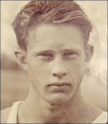
Note 1

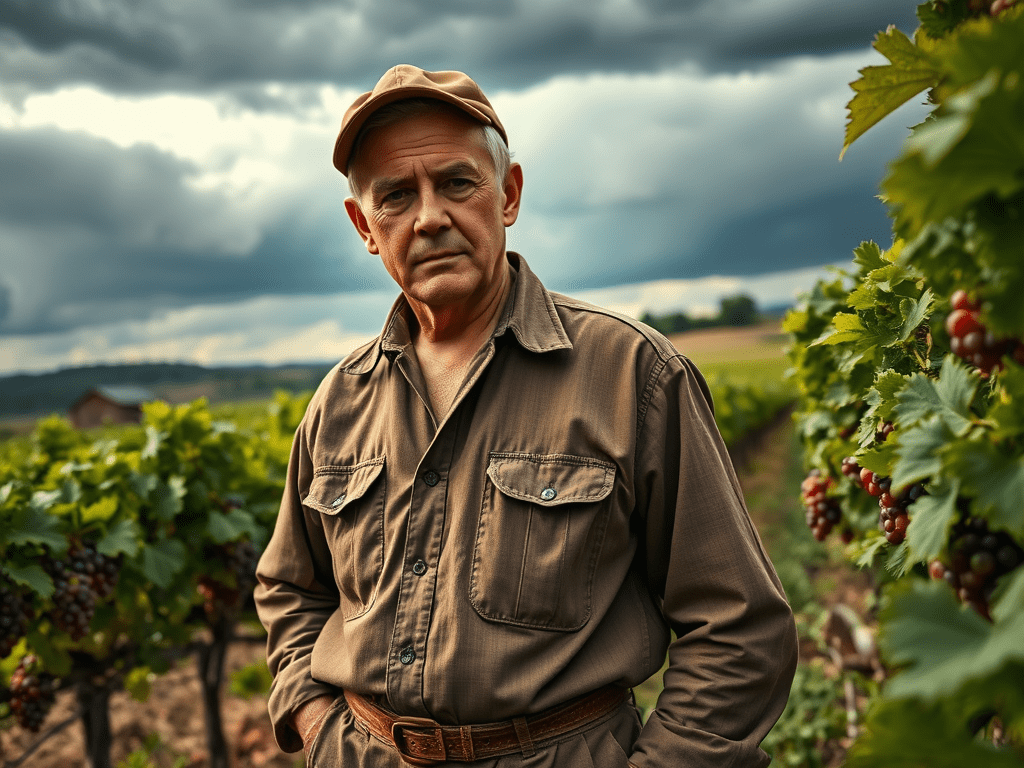
Bob Fletcher was 31 years old when his neighbors—the Tsukamoto, Nitta, and Okamoto families—were ordered to leave. They were strawberry and grape farmers who faced losing everything to foreclosure.

They asked Bob if he would manage their farms while they were gone. Bob didn’t just say yes; he quit his stable job with the state to become a full-time farmer for people who weren’t even allowed to be there.

For three years, Bob worked 18-hour days. He managed 90 acres of flame tokay grapes across three different farms.

The Cost of Doing the Right Thing

Doing the “right thing” is rarely easy. Bob wasn’t seen as a hero by his community at the time. He was called names, shunned by neighbors, and at one point, someone even fired a shot into the barn where he was working.

But Bob had a quiet, iron-clad integrity. He lived in the migrant bunkhouses rather than the families’ main homes. He paid their mortgages, their taxes, and their bills. When the families finally returned in 1945, they didn’t return to ruins—they returned to thriving farms and a bank account full of the profits Bob had saved for them.
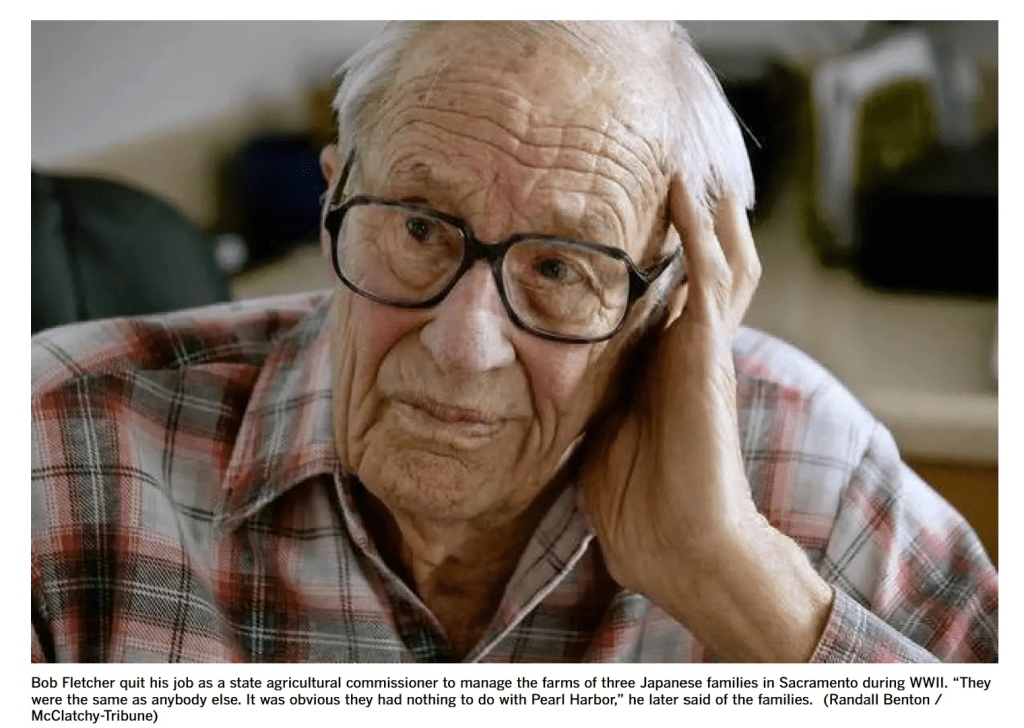
Bob Fletcher lived to be 101 years old. For decades, he deflected praise, often saying:

“I don’t know about being a hero. I just did what I thought was right.”

His life leaves us with enduring lessons:

Integrity is a verb.
It is not what we believe in private, but what we practice when no one is watching—and when it costs us something.

One person is enough.
Bob couldn’t stop a national injustice, but he saved three families. Sometimes protecting one corner of the world is exactly what we are called to do.

Moral courage is quiet.
It doesn’t announce itself. Sometimes it looks like long days, dirty hands, and the refusal to surrender compassion to fear.

We may not be living through a world war, but we all face moments where it is easier to go along with the crowd than to stand up for a neighbor. Bob Fletcher’s life asks us: Who are we looking out for? What are we willing to protect?

Link:https://peacelilysite.com/2026/01/05/the-man-who-saved-90-acres-why-bob-fletchers-integrity-still-matters-today/

Note 1 : Photo By Unknown Author – Original publication: LegacyImmediate source: https://www.legacy.com/us/obituaries/sacbee/name/robert-fletcher-obituary?id=11367093, Fair use, https://en.wikipedia.org/w/index.php?curid=69402868

The Huntington Library

A Haven of Beauty, Culture, and Knowledge

Tucked away in the idyllic town of San Marino, California, lies a captivating destination that continues to enthrall visitors from all corners of the globe—the Huntington Library, Art Museum, and Botanical Gardens. Boasting breathtaking landscapes, vast collections, and a harmonious fusion of nature, culture, art, history, and science, the Huntington Library is a place of awe-inspiring wonder that leaves an indelible mark on the hearts of those who venture within its gates. This July 4th holiday, we had the pleasure of revisiting this remarkable institution, once again succumbing to its irresistible allure.

Stepping foot into the Huntington Library is like entering a world where nature and culture intertwine harmoniously. The lush botanical gardens stretch across 120 acres, offering a mesmerizing collection of plants, flowers, and trees from all corners of the globe. As you stroll along the meandering paths, you’ll encounter a kaleidoscope of colors and fragrances, inviting you to immerse yourself in the serenity of nature. The carefully manicured landscapes provide the perfect backdrop for contemplation, relaxation, and exploration.

Chinese Garden

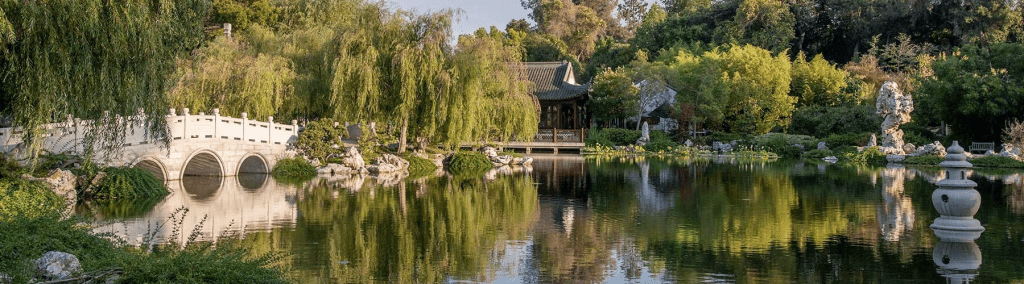
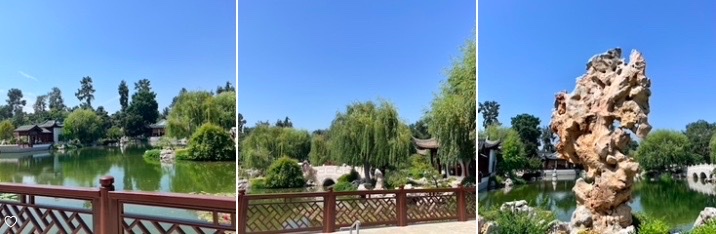
Among the many wonders that grace the Huntington Library, the Chinese Garden stands out as a true gem. This tranquil oasis, known as the Garden of Flowing Fragrance (Liu Fang Yuan), transports visitors to the essence of traditional Chinese landscaping. With its tranquil ponds, graceful pavilions, and meandering pathways, the Chinese Garden evokes a sense of peace and serenity. Every element, from the meticulously arranged rocks to the delicate architecture, conveys the rich insights of Chinese culture, inviting visitors to appreciate its profound beauty.

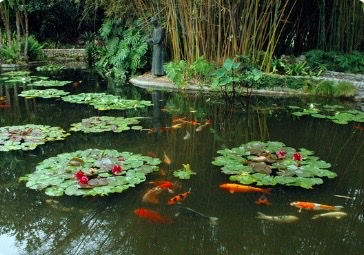
Nestled within the captivating grounds of the Huntington Library, Art Museum, and Botanical Gardens, the Lily Ponds stand as a timeless testament to the beauty and tranquility of nature. Established in 1904 as the first garden on Henry E. Huntington’s property, the Lily Ponds have become a beloved destination for visitors seeking solace and respite. Surrounded by bamboo groves and the majestic conifer tree collection, this serene haven features five picturesque ponds and an open grass meadow. With the presence of lotus blossoms, graceful koi fish, and elegant papyrus, the Lily Ponds offer a truly enchanting location for relaxation and the staging of unique events.

Beyond its mesmerizing gardens, the Huntington Library boasts an extensive collection of art, rare books, manuscripts, and historical artifacts. Art enthusiasts will find themselves immersed in masterpieces that span centuries, from the Renaissance to contemporary works. History buffs can delve into rare documents that shed light on pivotal moments in human civilization. Moreover, the Huntington Library offers an incredible array of scientific resources, including an impressive collection of botanical specimens, which serve as invaluable tools for researchers and scholars.

Peter Verstille’s diary and memorandum book, pages 19 and 20. Verstille was dismayed by the political corruption and misdirection he perceived in London. Throughout his diary, he worried what “the Deplorable Degeneracy of our present Times” would mean for the fate of the British Empire and America. | The Huntington Library, Art Museum, and Botanical Gardens.

The Huntington Library’s existence as a public treasure is owed to the foresight and generosity of Henry E. Huntington and his second wife, Arabella. The couple amassed an extraordinary collection of books, art, and manuscripts throughout their lifetimes. Instead of keeping these treasures confined to private quarters, they made the decision to establish the Huntington Library, ensuring that future generations would have the opportunity to experience the world’s wonders firsthand. Their philanthropic vision has created a lasting legacy that continues to enrich the lives of countless individuals today.

Visiting the Huntington Library is an experience that lingers in the hearts and minds of all who venture within its gates. The seamless integration of nature, culture, art, history, and science makes it a truly remarkable place. Whether you find solace in the tranquil Chinese Garden, lose yourself in the captivating art collections, or immerse yourself in the wealth of knowledge held within its walls, the Huntington Library offers a journey of discovery and inspiration. The selfless act of the Huntington couple in preserving this treasure for the public to enjoy is a testament to the power of sharing and the immense value of fostering a deeper understanding of our world. So, if you ever find yourself in California, make sure to visit the Huntington Library, where beauty, culture, and knowledge come together in perfect harmony.

A Haven of Beauty, Culture, and Knowledge

Link:https://peacelilysite.com/2023/07/14/the-huntington-library/

#HuntingtonLibrary#ChineseGarden #LilyPonds#Beauty #Culture #Knowledge#California #Botanical Gardens #ExtraordinaryDestination #Travel #History

Source: https://huntington.org