Chinese Plum Blossom Paintings

Chinese Plum Blossom Paintings

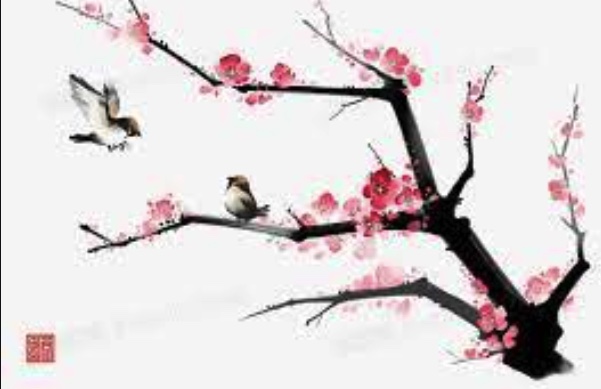
One of the most beloved flowers in China, the plum blossoms (méi-huā, 梅花) have been frequently depicted in Chinese painting and poetry for centuries. The Chinese see its blossoms as both a symbol of winter as well as a harbinger of spring. It is precisely for this reason that the blossoms are so beloved, as they bloom most vibrantly amidst the winter snow, after most other plants have shed their leaves, and before other flowers appear. They are seen as an example of resilience and perseverance in the face of adversity. Though neither the plum tree nor its blossoms are very striking, they manage to exude an otherworldly exquisiteness and beautiful elegance. The demeanor and character of the plum tree thereby serves as a metaphor for inner beauty and humble display under adverse conditions. Because they blossom in winter, the plum blossom is a member of the “Three Friends of Winter (歲寒三友)”, along with the pine and the bamboo. The plum blossom is also a member of the “Four Gentlemen (四君子)” in Chinese art (the others being orchid, bamboo, and chrysanthemum), symbolizing nobility. In China, there are over 300 recorded cultivars of mei, which can be broadly divided by color into white, pink, red, purple, and light green types.

When we look through all of the ancient and modern books on plum blossom paintings, it is not difficult to discover that all of the famous master plum blossom painters had extensive knowledge, deep understanding of ancient and their own contemporary times, and immense talents. No artist in history can be found who lacked virtue and learning and still was capable of painting highly exquisite plum blossom paintings. The plum blossom paintings of ancient artists such as Mian Wang and Dongxin Jin and the modern artist Changshuo Wu are splendid works based upon the profound knowledge and virtue of their creators.
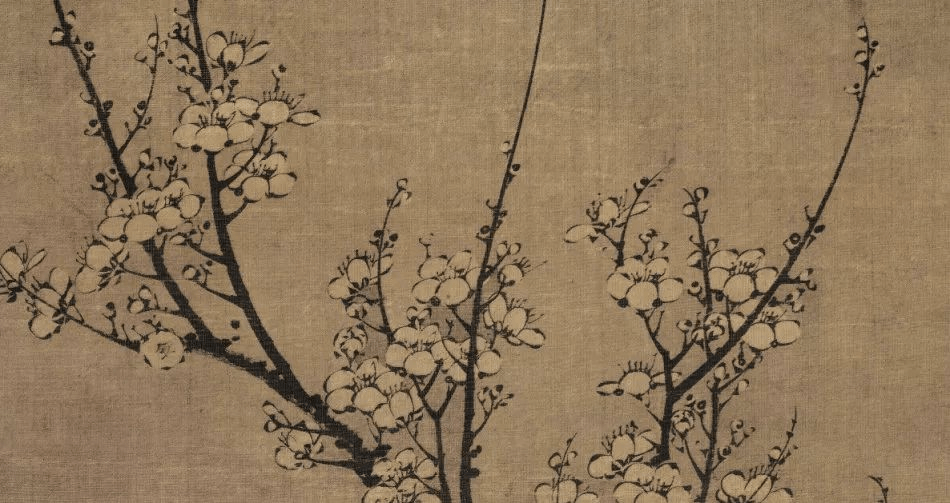
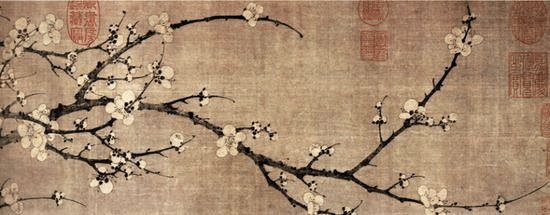
Mian Wang ( 1287-1359 ) : Early Spring at South Corner of Garden
Artist: Dongxin Jin (1687 – 1764)
Artist: Changshuo Wu (1844 – 1927)

As a contemporary artist, the Pop of Buddhist, H.H. Dorje Chang Buddha III has also painted dozens of masterpieces of plum blossom compositions. All in the book entitled Collected Plum Blossom Paintings, Calligraphy, Poems, and Songs. Wielding the brush with great facility, His Holiness creates paintings that are completely devoid of mundane garishness, have the exquisite look of ancient bronze and stone inscriptions, and are imbued with a scholarly air. His Holiness’s painting skills have surpassed the ordinary and reached the consummate mastery of a holy being. Below are several art works from the book. Some of the paintings are in the exhibition of The International Art Museum of America.
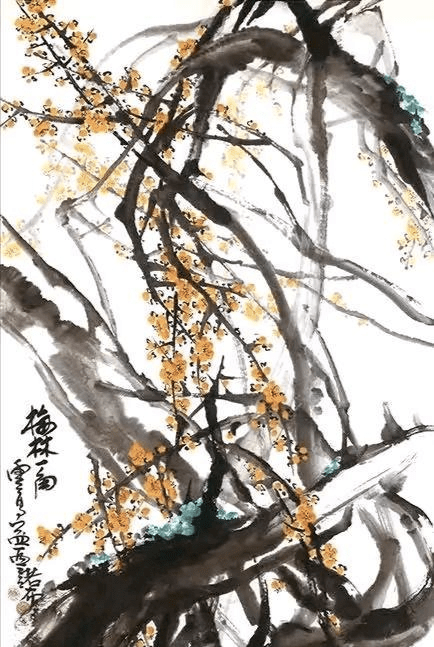
Small Portion of a Plum Grove

Yellow plum blossoms bloom in winter and are generally used during Chinese New Year celebrations as a symbol of great auspiciousness. The painting expresses beauty of a real plum blossom grove.

Drunk in a Green Garden

The turquoise plum blossom is a rare species of plum blossom. These elegant, sublime flowers have a strong resistance to coldness and a scent that is quite fresh and fragrant. This painting has a vigorous and firm style yet maintains great simplicity. The brushwork is bold, vigorous, and completely unconstrained. Large, dancing strokes of a casual hand and free mind bring to form branches and twigs.

Plum Fragrance in the Holy Realm

The brushwork, casually applied, was accomplished with an unfettered hand and detached mind, free of the slightest artificiality. It is a seemingly ever-changing work. Its charm, tone, transitions, and depictions represent the highest level of Eastern ink-and-wash paintings. A transparent layer of lighter ink on top of darker ink is clearly visible, imbuing the painting with a pure and fragrant air and providing the viewer with a feeling of comfort and ease.
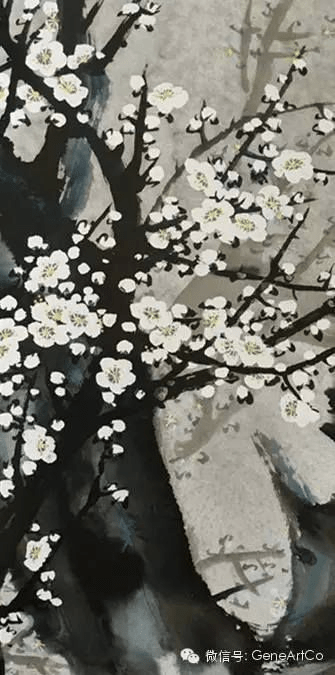
Winter Powder

A most elegant and valued plum flower called ‘Dong Fen” (winter powder). It is widely known to be the king of whiter plum blossoms. A strong contrast is presented by the graceful dense ink that was used to paint the tree trunk and the whiting used to form the flowers. The spatial effect of fairness adds to the charm of the picture, showing an awareness of both emptiness and form. A very special aspect of this painting is that the artist did not apply powerful, bold strokes of uneven contour and content. Rather, ink was applied through a gradual moistening process, manifesting the strong talent of the artist.

Chinese Plum Blossom Paintings

Link: https://peacelilysite.com/2022/11/03/chinese-plum-blossom-paintings/

#DorjeChangBuddhaIII #HHDorjeChangBuddhaIII#DorjeChangBuddha#IAMA#InternationalArtMuseumofAmerica#ChinesePaintings#PlumBlossom#Paintings#WangMian#WuChangShuo

Source: https://www.comuseum.com/painting/flower-painting/plum-blossom/

Unique Lotuses in Ink – By Dr. Yuhua Shouzhi Wang

Unique Lotuses in Ink – By Dr. Yuhua Shouzhi Wang

This painting’s arrangement is classically simple and straightforward. The brushwork conveys both simplicity and adeptness. Each lotus stem was painted with just one stroke from top to bottom. The important fact is that the artist dared to adopt an extremely plain and uncreative artistic conception, yet remarkably powerful, seasoned painting skills casually applied are reflected deep within this
painting. This work also reveals the artist’s inner power based on her broadmindedness. Even more wonderful is the fact that no touchups whatsoever were added to the lotus stems to enhance their charm. Painting skills alone were relied upon to capture both the spirit and form of the stems,resulting in a very enuine-looking image. The seedpod, flower, and leaves are in complete concert with one
another. The style is vivacious, elegant, free of conventionality, and wonderfully spellbinding.

Someone who does not believe in the difficulty of painting a lotus stem with just one stroke should try it himself. He will then know how very difficult it is. A work of this quality can only be successfully created by an artist who has reached great heights in painting and whose artistry is devoid of any trace of vulgarity. This is a precious painting in which the extraordinary can be seen within the seemingly ordinary. It is no wonder that Yu Hua Shouzhi Wang was praised by experts as “the unmatched master of lotus flower paintings from ancient times to now” when her artwork was exhibited in the United States Capitol.

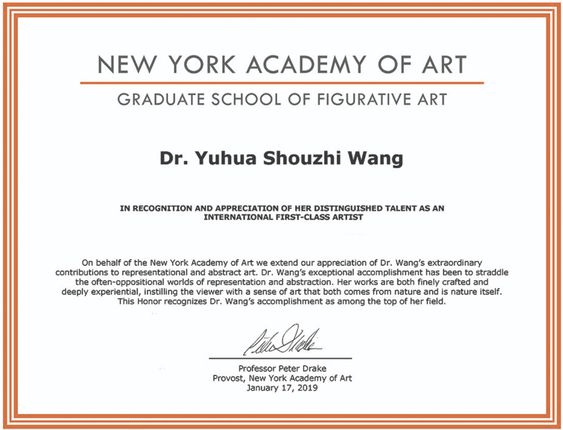
Dr. Yuhua Shouzhi Wang is the Lifetime Honorary Chairwoman of the International Art Museum of America. The museum has a dedicated gallery exhibiting her artworks. Her paintings encompass a broad range of styles and subject matters, including landscapes, animals, flowers, birds, and so forth, all of which have reached the summit of world class artistic excellence. Her artistic achievement has reached perfection at the summit of the “ten ultimate artistries.”

Professor Wang’s works have been exhibited and widely acclaimed in the United States, China, Asia, and Europe. In 2008, the United States Congress held an exhibition of the professor’s works, calling her art a “treasure of the world.” The U.S. Congressional Record chronicled the recognition that “her lotus flower paintings are unsurpassed and are extremely valuable.” Professor Yuhua Shouzhi Wang has also been critically acclaimed by news media that “she fuses vivacity, power, color, scholarly essence, quintessence of stone and bronze inscriptions, spirituality, erudition, and morality into oneness in her art. She is the foremost artist in the world.”

Professor Wang is a person of humility and noble morality. She is modest, unassuming, beneficent and genial. The characteristics of an artist’s paintings essentially reflect the character of the painter.

Unique Lotuses in Ink – By Dr. Yuhua Shouzhi Wang

Link: https://peacelilysite.com/2022/09/14/unique-lotuses-in-ink-by-dr-yuhua-shouzhi-wang/

#ProfessorYuHuaShouZhiWang#Art#Artist#ClassofEase#InternationalArtMuseumofAmerica#TenUltimateArtistries#ArtistofFirstclassstanding#Inkpaintings#LotusPainters

See My Home – A Chinese Painting By H.H. Dorje Chang Buddha III

See My Home – A Chinese Painting By H.H. Dorje Chang Buddha III

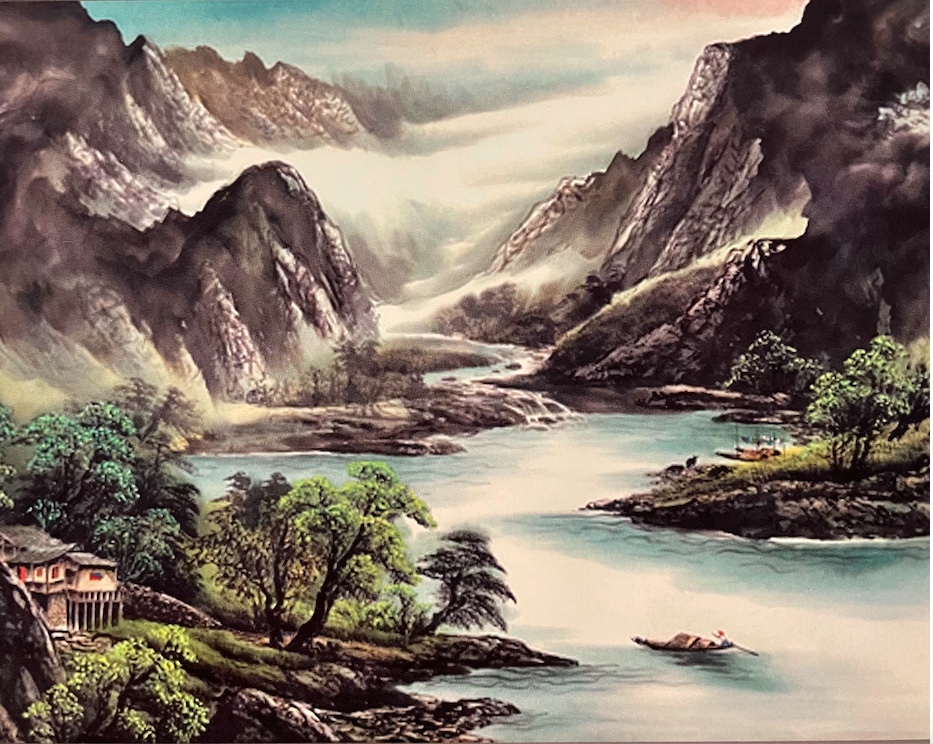
The first time I saw this Chinese ink painting, I cried from the bottom of my heart. What a wonderland beyond this world, how I wish I could live there! It gave me the deep impression of otherworldliness, leisureliness and tranquility. This place is not for ordinary people, it is the place for the holy hermits living untethered from the world. The painting seems like a clear spring flowing through my body and purifying my soul. People have said: a good painting is like a fine poem, like a beautiful song. Looking at this transcendental art piece, I could hear the elegant Chinese classic music “River flowing down from the tall mountain”, and see the gentle pleasant whisper of the clouds sweeping through the forest. It also reminds me one of the Cold Mountain’s poem:

Clambering up the Cold Mountain path,
The Cold Mountain trail goes on and on:
The long gorge choked with scree and boulders,
The wide creek, the mist blurred grass.
The moss is slippery, though there’s been no rain
The pine sings, but there’s no wind.
Who can leap the world’s ties
And sit with me among the white clouds?

Here you can see the artist combined different kinds of painting skills: center brush-tip technique, side brush-edge technique, large-scale freehand brush work, splash-ink technique and fine brush stroke. The mountain scenery was painted with black ink and heavy hues of green. This artwork not only preserves traditional painting skills but also manifests the realistic effect of modern Western oil paintings.

In Chinese paintings, it is very difficult to apply the perspective technique, with its three-dimensional look, to paintings in which the center brush-tip technique is used to express scholarly charm. However, this painting combines four different elements: the three-dimensional perspective technique together with the scattered perspective technique, the splash-ink technique with lines freehand brushwork, and realism. Attributes from both Chinese and Western paintings form a single stylish charm. It depicts a pristine rural setting, a land accompanied by mountain, river, sun and moon spirits. One regards a place as home when one has cherished feelings toward the local customs and conditions of that place. Wouldn’t you like such a home?

This painting is in permanent collection of The International Art Museum of America.

#MasterWanKoYee #DorjeChangBuddhaIII #HHDorjeChangBuddhaIII#DorjeChangBuddha#IAMA#InternationalArtMuseumofAmerica

See My Home – A Chinese Painting By H.H. Dorje Chang Buddha III

Link: https://peacelilysite.com/2022/05/27/see-my-home-a-chinese-painting-by-h-h-dorje-chang-buddha-iii/