The Compassionate Vows of the Medicine Buddha: A Path to Health, Harmony, and Happiness

Source: Luobenkun Art museum

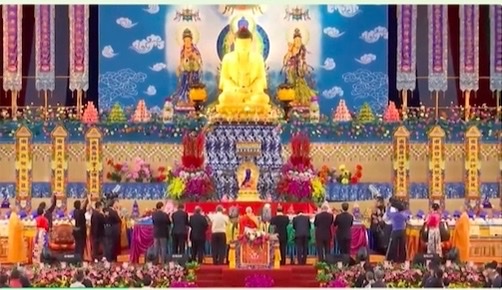
On the 29th day of the ninth lunar month, Buddhist disciples worldwide honor the birthday of Bhaisajyaguru Buddha, known as the Medicine Buddha or the Great Medicine King. He is also referred to as the Buddha of Twelve Great Vows, embodying deep compassion and healing. Presiding over the Pure Land of Lapis Lazuli Light in the East, the Medicine Buddha has inspired countless practitioners with his transformative teachings and boundless compassion.

Buddhist communities celebrate this sacred day with ceremonies, reciting the Medicine Buddha Sutra, learning from his teachings, and making offerings. The Medicine Buddha Sutra recounts Shakyamuni Buddha’s dialogue with Manjusri Bodhisattva, where he reveals the profound virtues of the Medicine Buddha’s Pure Land and the twelve vows he made as a bodhisattva. These vows reflect his deep empathy for beings suffering from illness, poverty, and ignorance, and his wish to liberate them from these afflictions. This sutra is not only a sacred text but also a guide for overcoming life’s challenges, helping us gain inner peace, health, and happiness.

The sutra explains the Medicine Buddha’s teachings with a unique emphasis on relieving suffering in this life. By focusing on the here and now, the Buddha’s teachings encourage us to look at our lives with clarity, understand our challenges, and gain relief from worldly troubles. This practical orientation gives the Medicine Buddha Sutra a distinctive place in Buddhist practice, emphasizing the importance of compassionate action and wisdom in daily life.

The Twelve Great Vows of the Medicine Buddha

First:
I vow to assist those impoverished and tormented by constant struggles. Those who come across my name, sincerely honor it, and practice Dharma to build their merit will see their wishes come true.

Second:
I vow that my body shall shine as beams of brilliant light across this infinite, boundless world, freeing all beings from ignorance and worry through my teachings. May all beings attain a perfect state of character, integrity, and enlightenment, like the Buddha.

Third:
I vow that my body shall be like flawless crystal, radiating splendid light to all corners, enlightening beings with wisdom. Through the blessings of compassion, may all beings gain spiritual power and physical strength to achieve their aspirations on a virtuous path.

Fourth:
I vow to grant all beings the inexhaustible resources they need, freeing them from pain and guilt caused by material desires. While essentials such as clothing, food, shelter, and transport are needed, they should be wisely used. May they generously share these resources within the community to foster harmony.

Fifth:
I vow to lead those who have strayed back to the path of righteousness, guiding them toward enlightenment on the Buddha way.

Sixth:
I vow to enable all beings to uphold precepts of purity and morality. If they falter, they shall be guided to repent. Those who sincerely regret their wrongdoings and vow to change, with faith in the Buddha, shall be forgiven and regain purity.

Seventh:
I vow that all beings who are physically disabled or ill will be blessed with both physical and mental health. Those who faithfully honor the Buddha will receive these blessings.

Eighth:
I vow to alleviate the suffering of the poor and sick. May the ill be cured, the helpless supported, and the impoverished uplifted.

Ninth:
I vow to relieve the suffering of women seeking transformation. By hearing my name, paying homage, and praying, may their wishes be fulfilled, leading them ultimately to Buddhahood.

Tenth:
I vow to release all beings from harmful thoughts. I will guide them to righteousness and honor, so they may walk the Buddha way on a path of light.

Eleventh:
I vow to save those who have sincerely repented, including prisoners and victims of natural disasters. Those who are sincere will receive my blessings and be freed from suffering.

Twelfth:
I vow to relieve those facing starvation or committing crimes for survival. If they hear my name and hold it dear, I will lead them to the benefits of Dharma and favor them with the sustenance they need, helping them to lead peaceful, contented lives.

The Medicine Buddha’s great vows remind us of the healing power of compassion and inspire us to live with kindness and selflessness. Whether through reciting his name, chanting his mantras, or making offerings, we are encouraged to practice not only for our own relief but also for the welfare of all beings. By embodying the virtues outlined in the Medicine Buddha Sutra, we aim to carry forward the Buddha’s compassionate mission, helping ourselves and others find happiness, harmony, and well-being.

May we all find solace and empowerment through the compassionate vows of the Medicine Buddha and live our lives with health, joy, and a sense of unity with all beings.

Link:https://peacelilysite.com/2024/10/31/the-compassionate-vows-of-the-medicine-buddha-a-path-to-health-harmony-and-happiness/

Source: https://www.baromkagyu.org/medicine

Sun Simiao: The “Medicine King” of China and His Legacy of Compassionate Healing

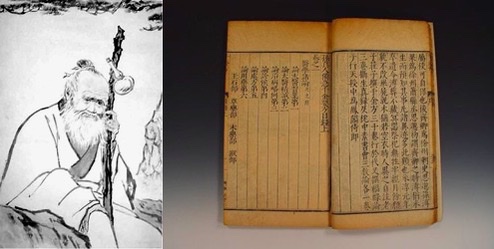
Sun Simiao’s achievements in traditional Chinese medicine and his noble medical ethics are regarded as exemplary in history. As a renowned medical scholar of the Tang Dynasty, he is honored by later generations as the “Medicine King,” and his contributions continue to have a lasting impact. Born into a poor family in Jingzhao Huayuan (now Yaoxian District, Tongchuan City, Shaanxi Province), Sun Simiao was frail and sickly as a child, and his family’s savings were nearly depleted to treat his illnesses. The people around him lived in similar poverty, and many lost their lives due to a lack of medical treatment. This inspired the young Sun Simiao to dedicate his life to studying medicine, vowing to tirelessly work to relieve people’s suffering. He believed that “human life is precious, worth more than a thousand pieces of gold. Saving a life surpasses all else in merit.” This belief guided him throughout his medical career.

A widely circulated story illustrates Sun Simiao’s deep sense of compassion and ethics: One day, while walking, he saw some village children who had captured a weary snake that was near death. Moved by compassion, Sun Simiao purchased the snake from them and released it into the water. Later, while meditating, a man dressed in green appeared and invited him to the legendary Crystal Palace. It turned out that the snake he had saved was the son of the Dragon King, the ruler of the sea. In gratitude, the Dragon King invited Sun Simiao to sit in the seat of honor at a banquet and said, “My son was captured while playing yesterday. If it weren’t for your help, he would have been killed!”

After the banquet, the Dragon King offered Sun Simiao precious treasures to thank him. However, Sun declined and said, “I have heard that the Dragon Palace has many secret medical formulas. If you could share them with me to help relieve the suffering of people, that would be far more valuable to me than any gold or jewels.” Touched by his selflessness, the Dragon King gifted him the “36 Jade Formulas,” which further enhanced Sun Simiao’s medical knowledge.

Sun Simiao devoted his life to the study of medicine, and his monumental work, Qian Jin Yao Fang (Essential Prescriptions Worth a Thousand Gold), is the first comprehensive encyclopedia of clinical medicine in Chinese history. Hailed as a “treasure of humanity,” the book covers everything from fundamental medical theories to clinical practices, integrating principles, methods, prescriptions, and herbal medicine. Not only did Sun Simiao compile the clinical experiences of past medical experts, but he also included many folk remedies and prescriptions, drawing from a wide range of sources. To this day, Qian Jin Yao Fang holds immense academic value and continues to guide practitioners in the field of traditional Chinese medicine. He also wrote two other influential books, Bei Ji Qian Jin Yao Fang and Qian Jin Yi Fang, which have had a significant impact on Chinese medicine to this day.

In addition to his remarkable medical skills, Sun Simiao is revered for his noble medical ethics. In his work Da Yi Jing Cheng (The Sincere Heart of a Great Physician), Sun clearly articulated that a truly great physician must be calm, free from desires, and compassionate. A doctor must have the determination to save lives, without discriminating based on wealth, status, age, beauty, personal relationships, ethnicity, or intelligence. All patients should be treated with the same care as one’s own family, without any hesitation or self-interest, and the physician must not shrink from hardships or dangers. Day and night, through cold or heat, hunger or exhaustion, the doctor should be fully devoted to the welfare of the patient, without seeking recognition or rewards. This high standard of medical ethics has been called the “Hippocratic Oath of the East” and has had a profound influence. Even today, many medical schools in China still use Da Yi Jing Cheng as an oath, reminding students to embody this spirit and serve patients wholeheartedly.

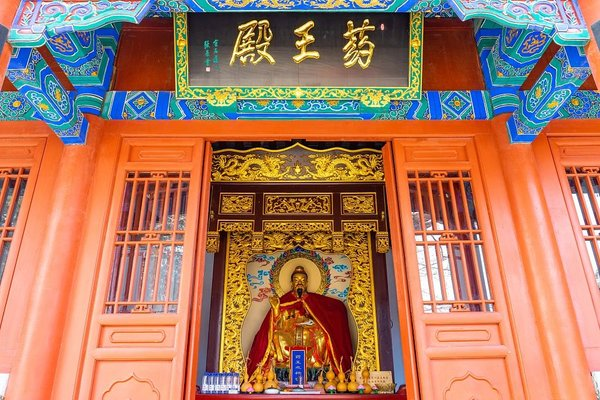
The Medicine King Temple in the Mount Tai Scenic Area in Shandong is dedicated to honoring Sun Simiao, the Medicine King. (Image source: Visual China)

Sun Simiao’s life was not only a beacon of excellence in the field of medicine but also a model of selflessness and moral integrity. His legendary stories and medical achievements have added a shining chapter to the history of Chinese medicine, inspiring generations of healers to follow in his footsteps.

Link:https://peacelilysite.com/2024/10/24/sun-simiao-the-medicine-king-of-china-and-his-legacy-of-compassionate-healing/