Why Spiritual Cultivation Matters More Than Ever in a Rapidly Advancing World

In recent years, I’ve often found myself reflecting on the pace of our modern world. Everywhere we look, technology advances with breathtaking speed—AI systems that learn in seconds, devices that connect continents instantly, and scientific breakthroughs that would have been unimaginable a generation ago.

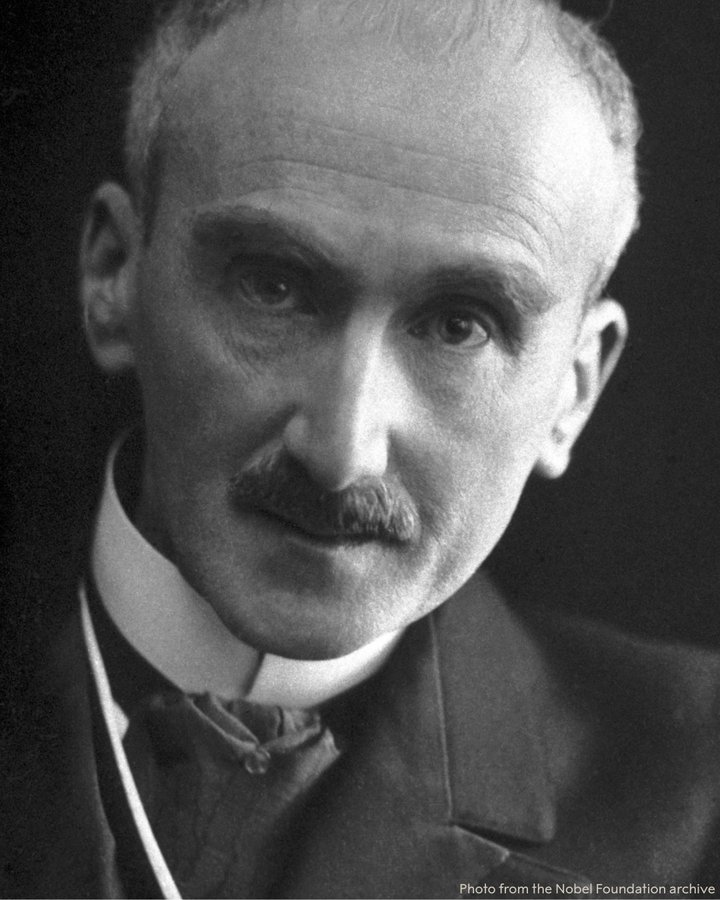
And yet, despite all this progress, people still feel anxious, divided, and spiritually adrift. It was during one of these reflections that I came across a profound message from French philosopher Henri Bergson, winner of the 1927 Nobel Prize in Literature. His words, spoken nearly a century ago, resonated deeply with me:

“An increase in the material means at the disposal of humanity may even present dangers unless it is accompanied by a corresponding spiritual effort.”

This single sentence contains a timeless truth.

The Wisdom of Henri Bergson: Progress Requires Balance

When Bergson delivered his Nobel Prize banquet speech in 1928, he had witnessed the sweeping transformations brought by steam power, electricity, and industrialization. Many believed that these innovations would naturally lead to a better, more harmonious world.

But Bergson saw with clarity that outer progress alone is not enough. Without cultivating our inner world—our morality, our compassion, our spiritual understanding—technology can deepen misunderstandings and widen divisions.

How true this remains today.

The Modern Paradox: Hyper-Connection, Inner Disconnection

We live in a time of extraordinary access and convenience:

  • We can video chat across the planet, yet many feel more isolated than ever.
  • We scroll endlessly through social media, yet our hearts grow restless and overwhelmed.
  • We generate more data in a day than ancient civilizations produced in centuries, yet wisdom feels increasingly rare.

Technology connects our devices, but only spiritual cultivation connects our hearts.

Why Spiritual Effort Is Essential Today

1. It grounds us amid the noise.

With information constantly flooding our minds, spiritual practice helps us regain clarity and stay anchored in truth.

2. It builds our inner resilience.

Life will always bring challenges. Meditation, reflection, and ethical living strengthen the mind and heart to navigate them with wisdom.

3. It cultivates compassion in a divided world.

True peace comes not from advanced systems but from understanding, patience, and kindness—qualities only nurtured through spiritual effort.

4. It reminds us of our shared purpose.

Spiritual insight dissolves boundaries, allowing us to see one another not as competitors but as fellow travelers on the path of life.

Bergson’s warning pierces straight into the heart of our time:

If humanity’s material power grows faster than its moral and spiritual maturity, danger follows.
But when the two rise together, society finds harmony.

This is not just a philosophical idea—it is a blueprint for a peaceful, sustainable future. Whether through meditation, prayer, study, service, or simple acts of kindness, each of us has the power to elevate our inner life.

Our modern world celebrates speed, innovation, and efficiency. But the deeper question is: Do these advances help us become better human beings?

If spiritual cultivation becomes the guiding compass of our progress, then technology becomes a tool for upliftment rather than turmoil.

As we look toward the future, may we remember:

  • Our machines may evolve, but our hearts must evolve too.
  • Our knowledge may expand, but our wisdom must deepen.
  • Our world may grow louder, but our inner clarity must grow stronger.

Only then can humanity advance not just outwardly, but inwardly—toward peace, wisdom, and true connection.

Link:https://peacelilysite.com/2025/11/25/why-spiritual-cultivation-matters-more-than-ever-in-a-rapidly-advancing-world/

Vibrations of the Soul: How Dr. David Hawkins’ Energy Scale Reveals the Secret to Health and Happiness

What if your thoughts and emotions were not just fleeting states of mind, but actual energy frequencies that shape your physical health and the world around you?

Dr. David R. Hawkins, a renowned American psychiatrist and spiritual teacher, spent decades studying human consciousness and developed a revolutionary model known as the Map of Consciousness. His work, presented in the best-selling books Power vs. Force and Letting Go, offers profound insight into how our energy levels—shaped by our emotions, beliefs, and spiritual awareness—directly impact our health and happiness.


🧠 The Energy Scale That Maps Our Inner World

Hawkins created a logarithmic scale of consciousness, ranging from 1 to 1000, where each level reflects a specific emotional and spiritual frequency. These levels are not abstract—they can be measured through kinesiology (muscle testing) and are believed to influence not only individual wellbeing but also global consciousness.

Here’s a simplified breakdown:

LevelEmotion/StateEffect on Health
20–100Shame, Guilt, Apathy, FearWeakens body and immune system
200Courage (Turning Point)Threshold into empowering, healing energy
300–400Willingness, AcceptanceEnhances emotional resilience and balance
500Love, CompassionPromotes deep healing and joy
600–700+Peace, EnlightenmentSpiritual transcendence and lasting vitality

Hawkins emphasized that 200 is the critical dividing line. Below this threshold, people are ruled by fear, anger, or despair—states that are energetically draining and often linked to physical illness. Above 200, individuals begin to reclaim their personal power, align with truth, and tap into energies that support healing, vitality, and inner peace.


Dr. David R. Hawkins, stated that many people fall ill because they lack love and are filled only with pain and despair. When a person’s vibrational frequency is below 200, they are more prone to illness.

Dr. Hawkins, who interacted with many patients daily, said that he could tell why a person was sick just by looking at them—because he couldn’t find even a trace of love in them. Instead, their entire being was enveloped in pain and despair, living in a state dominated by negative thoughts.

According to Hawkins, many people fall ill not because of viruses or external factors alone, but because their emotional vibration is too low. When we live in fear, hold grudges, dwell in guilt, or resist life, our frequency drops—and the body, being energy-sensitive, responds with imbalance and dis-ease.

Chronic stress, suppressed anger, and emotional numbness are not just psychological burdens—they create an environment where illness can thrive.

If a person’s vibrational frequency is above 200, they are less likely to become ill. In contrast, emotions like anger, constantly blaming others, and harboring resentment consume a great deal of energy.


💖 Love, Faith, and Healing: The Power of High Frequency

Dr. David R. Hawkins observed that when Nobel Peace Prize laureate Mother Teresa appeared at the award ceremony, the atmosphere in the entire venue became remarkably elevated. The vibrational frequency of the space rose significantly, and her powerful presence allowed everyone there to tangibly feel her energy. In her presence, no one harbored negative thoughts.

According to Dr. Hawkins, when a person with a high vibrational frequency enters a space, they uplift everything around them—people, emotions, and even the environment itself. In contrast, someone who is filled with negative thoughts not only harms their own well-being but also disrupts the energetic field of their surroundings.

From a medical standpoint, Dr. Hawkins found the power of thought to be truly extraordinary. Through millions of tests and global surveys conducted across different races and cultures, he discovered that the impact of human consciousness was consistent and universal.


🌿 How to Raise Your Energy Level and Stay Healthy

You don’t need to be a spiritual master to benefit from Hawkins’ insights. Simple, daily practices can help you maintain a high vibrational state and support your health:

  1. Practice Gratitude
    Start and end each day reflecting on what you are thankful for. Gratitude is a natural vibration lifter.
  2. Choose Forgiveness Over Resentment
    Let go of past hurts. Forgiveness is not for others—it’s a gift you give yourself to release energetic baggage.
  3. Meditate or Pray Daily
    Quieting the mind and focusing on divine compassion, love, or light raises your frequency significantly.
  4. Speak with Kindness and Honesty
    Truthfulness and compassion are energetically aligned with the higher levels of consciousness.
  5. Surround Yourself with Uplifting Influences
    Avoid negative media, toxic relationships, or environments that lower your energy. Choose art, nature, music, and people who inspire joy.
  6. Invoke Higher Consciousness
    Repeating sacred names—such as “Amitabha Buddha,” “Guanyin,” or “Jesus Christ”—with pure faith has been shown to uplift energy and bring healing calm.


✨ The Ultimate Wellness Is a Shift in Consciousness

Dr. David Hawkins teaches us that wellness begins from within. By raising our consciousness, choosing love over fear, and aligning with truth and compassion, we can live not only healthier lives—but more joyful, meaningful ones.

Your mind is more powerful than you think. And your heart—when opened fully—has the power to heal not just your body, but the world around you.


“What you are looking for is what is looking.” — David R. Hawkins

Link:https://peacelilysite.com/2025/07/08/vibrations-of-the-soul-how-dr-david-hawkins-energy-scale-reveals-the-secret-to-health-and-happiness/

What Happens After Death? Unraveling the Mystery of Existence

What Happens After Death? Unraveling the Mystery of Existence
Photo Credit: Unsplash.com

The Enigma of Existence: Exploring Life After Death

The concept of life after death has intrigued humanity for centuries. Different cultures, philosophies, and religions have provided varying explanations, yet the mystery remains. Is there life after death, or does consciousness simply cease to exist when the body dies? In this article, we explore some of the most prominent beliefs and theories surrounding the enigma of existence after death, seeking to understand this profound question from multiple perspectives.

What Are the Most Common Beliefs About Life After Death?

Throughout history, many cultures and religions have proposed theories about life after death. Religious scholars suggest that the idea of an afterlife serves to give people comfort and meaning in the face of mortality. Christianity, Islam, Hinduism, and Buddhism all have distinct views on the afterlife, each offering unique insights into the question of what happens after death.

In Christianity, for example, life after death is often seen as either eternal life in heaven or eternal separation from God in hell. Researchers point out that many Christians believe that the soul lives on after the body dies, and that salvation or damnation is determined by one’s actions during their lifetime.

In Hinduism, the concept of reincarnation is central. According to this belief, the soul is reborn in a new body after death, and the circumstances of the new life are determined by the actions (karma) of the previous life. Philosophers argue that this cycle of death and rebirth is a form of spiritual evolution, with the ultimate goal being moksha, or liberation from the cycle of reincarnation.

Buddhism also supports the idea of reincarnation, but with an emphasis on achieving enlightenment to break free from the cycle of rebirth. Experts note that Buddhism teaches that attachment to the self is the source of suffering, and liberation occurs when one transcends the ego and achieves nirvana.

Scientific Views on Life After Death

From a scientific standpoint, the question of life after death is more complex. The majority of scientists assert that there is no empirical evidence to support the idea that consciousness survives after death. Neuroscientists argue that consciousness is a product of brain activity, and when the brain ceases to function, so does consciousness.

There are notable phenomena that have intrigued researchers. Medical professionals have documented instances of near-death experiences (NDEs), where individuals report vivid sensations, such as a sense of floating above their body, moving through a tunnel, or encountering deceased loved ones. While these experiences are often interpreted by some as evidence of life after death, psychologists suggest that they may be explained by the brain’s reaction to trauma, oxygen deprivation, or the release of chemicals like DMT.

While science cannot definitively answer the question of what happens after death, these experiences have raised questions about the nature of consciousness and whether it is entirely tied to the brain. The debate continues, and more research is needed to explore the mysteries of the human mind.

Near-Death Experiences: Are They Evidence of Life After Death?

Near-death experiences (NDEs) have become a focal point in discussions about life after death. People who have experienced NDEs often describe sensations of peace, floating outside their body, or meeting beings of light. Some researchers hypothesize that these experiences are the result of a brain in distress, attempting to make sense of its impending shutdown.

Many individuals who have experienced NDEs report feeling profound transformations in their lives afterward, including a greater sense of purpose or reduced fear of death. Experts in the field of psychology and consciousness studies suggest that these transformations could point to an experience beyond the physical brain, offering a glimpse into an afterlife.

The question remains: do these experiences represent glimpses into an afterlife, or are they simply a product of the brain’s complex workings during moments of trauma? The scientific community continues to study these occurrences, and while answers remain elusive, the personal testimonies of those who have undergone NDEs continue to fuel interest in the idea of life after death.

What Philosophical Theories Are There About Life After Death?

In addition to religious and scientific perspectives, philosophical theories about life after death explore the nature of existence and consciousness. Philosophers have long debated whether consciousness is purely a physical phenomenon or if it could exist independently of the body.

One of the most famous theories comes from the philosopher René Descartes, who posited that the mind and body are separate entities. According to Descartes’ dualism, the mind (or soul) can exist independently of the body and could potentially continue after death. Modern philosophers who follow dualistic thinking often suggest that consciousness may not be confined to the brain and could persist beyond the body’s death.

On the other hand, materialist philosophers argue that consciousness is entirely dependent on the brain, and once the brain ceases to function, consciousness ceases as well. These contrasting viewpoints continue to shape the ongoing philosophical discussion on the nature of life after death.

Can Science and Religion Coexist in Understanding Life After Death?

While science and religion often present differing views on life after death, some thinkers suggest that they need not be mutually exclusive. Interdisciplinary experts argue that the two perspectives can coexist, offering a fuller understanding of the mystery. Religion provides spiritual and moral frameworks for understanding the afterlife, while science explores the empirical, physical aspects of life and death.

In recent years, there has been a growing interest in integrating scientific and spiritual perspectives on consciousness. Some researchers are exploring the idea that consciousness might exist beyond the brain, and that this may have implications for understanding life after death. Scholars in the field of consciousness studies have suggested that more research is needed to bridge the gap between spiritual and scientific explanations of existence after death.

The enigma of life after death remains unsolved. Whether through religious beliefs, scientific inquiry, or philosophical speculation, humanity continues to seek answers to this profound question, driven by the desire to understand what happens after we take our final breath.

Link:https://peacelilysite.com/2025/06/09/what-happens-after-death-unraveling-the-mystery-of-existence/

Source: https://worldreporter.com/what-happens-after-death-unraveling-the-mystery-of-existence/

Psychoenergetic Science: A Second Coperican-Scale Revolution

Dr. Tiller, a professor emeritus of materials science and engineering at Stanford University, tells us that “the term Psychoenergetics[1] was coined by the Russians in the Soviet era or 1950-1970. This was done to provide a strongly materialistic flavor to the fields of parapsychology and spiritual-related phenomena in order to make research in these areas palatable to the communist party’s worldview.” Dr. Tiller started his work to find a rigorous framework for scientifically understanding this class of phenomena during this period and until the present time.

He expanded on Einstein’s revolutionary work in this area even expanding Einstein’s famous E=mcto incorporate the evolutionary concept of consciousness. He even devised formulae, based upon careful experimental research, that link “subtle energies” to those of mainstream science and which expand the present-day formation of quantum mechanics. He noted that there “…was a class of truly weird phenomena that had been visible for more than a century and was somehow related to various processes associated with the application of human consciousness in our world. On the other hand, there still exists today, a very long-held, underlying assumption of conventional science that ‘No human qualities of consciousness, intention, emotion, mind or spirit can significantly influence a well-designed target experiment in physical reality.’ Something is very wrong here!”

He noted that “…the first Copernican revolution of thought lifted humanity from an earth-centric, theocratic-inspired, model of our solar system, which was largely qualitative in terms of details, to a local solar system which was sun-centered.” This, in turn, with the contribution of Galileo, Newton, and others, expanded our world-view and provided the framework for the great technological advancements of our modern era. He also provided his intuitive hypothesis on the link of our physical reality within the context of our higher [or spiritual] dimensional nature”…that this new, second Copernican-type revolution will, in terms of scale, be at least as significant for the progress of humankind as the first one!”

Not all scientists are there yet, or even close, but this beginning is hopeful. Much of what he writes is vastly beyond my capacity to absorb and, frankly, my interest. However, I believe that it is very relevant to our practice and is consistent with the teachings of the Buddha, albeit in a different language and perspective and with a different goal although Dr. Tiller holds that the underlying principle of all is “love.” You may ask how I can talk of dragons and yidams and all sorts of strange things and still be interested in science? I know a very bright young man, who was brought up as a religion-scorning communist, who thought that monks were parasites of the people and begrudged the donations his pious mother gave them. After several business failures, he took some time off to reflect on what had gone wrong in his life and started reading books by some on his favorite scientists and mathematicians. At the end of one such work, a scientist whom he admired greatly, said something after explaining an evolved scientific finding, “Of course, the Buddha told us all of this over 2,500 years ago.” He then decided to reconsider the works of the Buddha and is now a great master as well as a successful scientist. I too believe that science will eventually catch up with the Buddha or at least come closer to explaining what is now unkown and mysterious and the world will be better for it. I also believe that like unlocking the power of the atom through the work of Einstein et al came with great risks and potential for disaster, likewise our research into consciousness and our higher natures must be based in the evolution of our character. Correct Cultivation is essential on so many levels.

[1]   Psychoenergetic Science relates to the relationship between human consciousness and subtle energy.

The Intersection of Science and Buddhism: Exploring the Nature of Reality

The Secret Connection Between Quantum Physics And Buddhism

The German philosopher Karl Jaspers once said, “In science, half-understood knowledge leads one to abandon faith, while complete knowledge brings one back to faith.” This profound statement encapsulates the evolving relationship between scientific discovery and spiritual insight. Over the past century, science—particularly in the realm of quantum physics—has begun to reveal striking parallels with the teachings of Buddhism, suggesting that the boundary between scientific and spiritual understandings of reality is far more porous than once believed.

One of the most fascinating intersections between Buddhism and quantum physics lies in the concept of Emptiness (Śūnyatā). According to Buddhist philosophy, Emptiness is the fundamental nature of all phenomena—it is the limitless, dynamic potential from which everything arises and to which everything ultimately returns. This notion mirrors the scientific concept of the Quantum Field, the invisible yet omnipresent ground of pure potentiality that gives rise to all matter and energy in the universe.

Imagine a dream: within the dream, we experience vivid landscapes, emotions, and interactions. Yet, upon waking, we realize that none of it was truly real. However, the consciousness that enabled the dream was undeniably present. Similarly, in quantum physics, the Quantum Field remains unseen, yet it is the essential foundation from which all particles and forms emerge and dissolve. Nothing within the dream is independently real, just as in Buddhism, reality is understood through Pratītyasamutpāda, or dependent arising—the principle that all things exist in interdependence, without intrinsic self-existence.

Quantum mechanics further supports this view by demonstrating that particles do not exist as fixed entities but as probability waves, manifesting only when observed. This aligns with Buddhist teachings that emphasize the illusory nature of a solid, independent reality. Just as a wave transforms into a particle through observation, our perception shapes the world we experience.

The implications of these parallels are profound. If science and Buddhism are describing reality in similar ways, then understanding the universe may require not just empirical observation but also deep contemplation. As both disciplines continue to explore the mysteries of existence, they may converge on a deeper, unified truth—one that transcends dualities and reveals the interconnected nature of all things.

In this age of scientific breakthroughs and spiritual awakening, perhaps the most important lesson is that reality is far more mysterious than we ever imagined. Whether through the lens of quantum physics or the wisdom of Buddhism, we are invited to look beyond appearances and embrace the boundless potential that underlies all existence.

The Secret Connection Between Quantum Physics And Buddhism

Link:https://peacelilysite.com/2025/03/25/the-intersection-of-science-and-buddhism-exploring-the-nature-of-reality/

A Neurosurgeon’s Journey from Skepticism to Divine Revelation

Eben Alexander’s Proof of Heaven

Eben Alexander, a distinguished neurosurgeon, once firmly embraced the philosophy of Epicurus, believing in the finality of death and positing that there is nothing beyond our mortal existence. However, his own extraordinary encounter shattered these convictions, launching him into a profound journey that defied conventional understanding. In his compelling book, “Proof of Heaven,” Alexander shares a narrative that not only transformed his perceptions but also prompted contemplation on the very essence of existence.

As a highly esteemed figure in the medical community, Alexander boasted impeccable credentials, marked by significant contributions to neurosurgery and numerous academic accomplishments. His trajectory took an unexpected turn when he confronted bacterial meningitis caused by a rare strain of E. coli. With his neocortex, the seat of consciousness, succumbing to the illness, survival seemed improbable.

Against all odds, Alexander emerged from a seven-day coma with a surprising declaration: “All is well.” His miraculous recovery, confounding medical experts, extended beyond the physical realm. He vividly recounts a journey into a realm of ineffable beauty, profound understanding, and divine love—an experience that transcended his compromised brain function.

The title of Alexander’s book, “Proof of Heaven,” encapsulates the essence of his revelation. Through his firsthand account, supported by corroborating testimony, he challenges the notion that consciousness is solely a product of neural activity. His inexplicable recovery stands as a testament to the mysteries that lie beyond our comprehension, prompting profound reconsideration of life and death.

In the ethereal realms that Eben Alexander traversed during his coma-induced journey, he vividly described scenes of unparalleled beauty and awe. His narrative delves into luminous landscapes with vibrant colors and radiant light, transcending the limitations of earthly perception. Alexander spoke of meadows adorned with blossoms emitting melodies, a symphony of sound intertwined with vibrant hues that danced harmoniously.

Moving through this celestial expanse, Alexander encountered entities of immense love and wisdom, beings emanating a profound sense of interconnectedness and understanding. He described interactions with ethereal guides who communicated not through conventional language but through a telepathic exchange of pure emotions and intentions. These guides, he noted, possessed a divine knowledge surpassing the comprehension of the earthly mind.

Furthermore, Alexander shared experiences of traversing a vast, intricate network of interconnected realms, each layer revealing higher levels of consciousness and spiritual understanding. He conveyed encounters with deceased loved ones and souls radiating unconditional love, contributing to an overwhelming sense of peace and acceptance.

Colleagues attested to Alexander’s astonishing recovery, leaving the medical community baffled about the disease’s origin and subsequent recovery. Infectious diseases specialist Scott Wade, in an appendix, described the recovery as “truly remarkable.”

The crux of Alexander’s narrative lies in the title of his book, revealing his journey to a realm of hyper-real beauty, understanding, and divine love—a journey that occurred without the active participation of his brain. This challenges the notion that consciousness is solely a product of brain activity and provides compelling evidence for the existence of an afterlife.

In his book, Alexander also described what compelled him to return to the earthly world. He recounted seeing his son’s sad face and sincere prayer for Alexander to come back and be a father again. Alexander realized that taking care of family is a crucial responsibility on Earth.

Despite skepticism and criticism, the integrity of Alexander’s character and the veracity of his accounts remain steadfast, prompting broader questions about the limitations of empirical science in explaining transcendent phenomena.

Contemplating the implications of Alexander’s revelation compels us to ponder transformative potential across diverse fields of inquiry. What paradigm shifts would occur if the hypothesis of an afterlife were embraced within disciplines such as psychology, sociology, literature, and philosophy? How might our perceptions of reality and human experience be redefined in light of such profound revelations?

For many, Alexander’s journey offers a profound shift in perspective—a redirection of focus from the fear of death to the complexities of earthly existence. His account underscores the interconnectedness of the human experience, suggesting that the struggles and choices we face in this life hold profound significance.

Alexander’s account prompts contemplation on the relationship between the earthly realm and the divine. While he suggests that Heaven supports and holds us invisibly, it is equally plausible to consider that Heaven depends on us. Earth, with its struggles and challenges, becomes the consequential place where the battle between good and evil unfolds, shaping our choices and influencing realms beyond.

In essence, Eben Alexander’s odyssey transcends the boundaries of conventional understanding, beckoning us to explore the uncharted territories of consciousness and existence. Whether embraced as irrefutable proof or contemplated as a profound allegory, his journey serves as a catalyst for introspection, challenging us to reconsider the fundamental questions that define our humanity. As we navigate the mysteries of life and death, perhaps we are reminded that the ultimate truth lies not solely in the destination but in the journey itself.

Link:https://peacelilysite.com/2024/03/01/a-neurosurgeons-journey-from-skepticism-to-divine-revelation/