A World Appears: A Journey into Consciousness

By David Maechese

For as long as I can remember, I’ve wrestled with my own thoughts and feelings about identity. Why am I, David, the person I am? How changeable is that? Where do those thoughts and feelings come from anyway, and what purposes do they ultimately serve? I suppose it’s no coincidence then that I’ve also always been so curious about the subject of human consciousness. That’s the area of science and philosophy — of human thinking generally! — that burrows most deeply into similar questions and, to varying degrees of satisfaction, offers a plethora of possible answers.

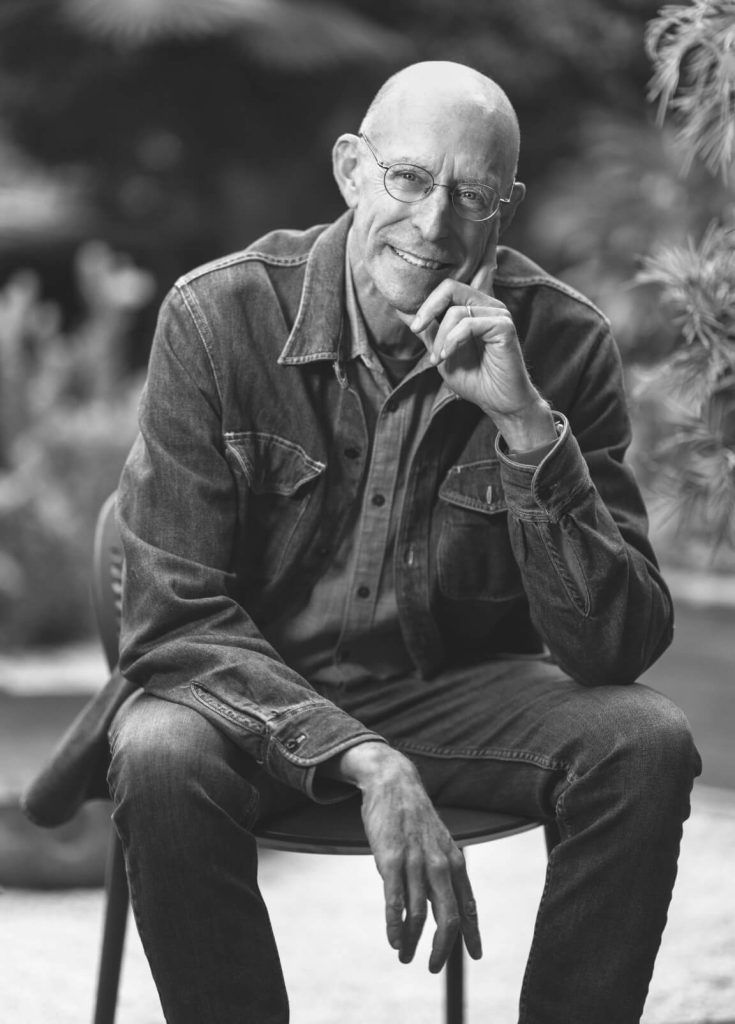
The best-selling author Michael Pollan has been thinking about these things, too. Throughout his work — which includes classic books like “The Omnivore’s Dilemma” (2006), about why we eat the way we do, and “How to Change Your Mind” (2018), about the science and uses of psychedelic drugs — Pollan has waded into ideas about the inner workings of the mind. Now, with his forthcoming book, “A World Appears: A Journey Into Consciousness,” which will arrive this month, he has jumped into the deep end. The book is both a highly personal and expansive multidisciplinary survey of questions around human consciousness — what it is, what causes it, what it’s for and what the possible answers might mean for how we choose to live. And as Pollan explained, with the rise of artificial intelligence as well as the relentless political pressure on our attention (that is, our minds), those questions, already profound, are becoming only more urgent.

I want to get some basics: How do you define consciousness? The simplest way to define consciousness is as subjective experience. Another one-word definition is “awareness.” Thomas Nagel, the N.Y.U. philosopher, wrote a piece back in the ’70s called “What Is It Like to Be a Bat?” His idea is: If we can imagine it is like anything to be a bat, then a bat is conscious, because that means it has some sort of subjective experience. Why did he choose bats? Well, they’re very different than we are. Instead of using eyesight, they use echolocation. They bounce signals off of objects to move through space. We can vaguely imagine going through the world with echolocation. Whereas my toaster, I can’t do that. I don’t have a sense of what it’s like to be my toaster.

A big question of consciousness is what the philosopher David Chalmers has referred to as the “hard problem.” Can you tell people what that is? Basically how you get from matter to mind, how you cross that huge gulf from neurons to subjective experience — a gulf no one has managed to cross. Related questions are: Why don’t all these things we do go on automatically? Why do we have to be aware of anything? We could be completely automated and perhaps get along just fine. Your brain is monitoring your body and making fine adjustments in the blood gasses, in the heart rate, in digestion. There’s a lot going on that we don’t have to think about. So why do we have to think about any of it? Some interesting theories have been proposed. One is that some of the issues that we deal with have to be decided in a conscious way. When you have two competing needs — you’re hungry and you’re tired — which should take precedence? So consciousness opens up this space of decision-making. The other argument is that we live in a very complex social world where I have to predict what you’re going to say; I have to imagine my way into your head. You can’t automate human social interaction. It has too many elements. So consciousness is very helpful in navigating that world.

It seems likely to me that regardless of the source of consciousness, it’s probably a result of evolutionary processes — that consciousness evolved to make information available to certain parts of the brain, or to help us recognize patterns, or perceive threats, or maintain homeostasis. But are any non-evolutionary arguments for consciousness plausible to you? Oh, yeah. One is panpsychism.

Which could sound bonkers. It can sound bonkers. Panpsychism is the idea that everything, every particle, the ink on the page, the atoms, all have some infinitesimal degree of psyche or consciousness, and somehow this consciousness is combined in some way from our cells and the rest of our bodies to create this kind of superconsciousness. It sounds crazy. There are some very serious people who believe in it. You have to expand your sense of the plausible when you’re looking at consciousness. But we’ve done that before. How long ago was it that we discovered electromagnetism? This crazy idea that there are all these waves passing through us that can carry information. That’s just as mind-blowing, right?

I could happily talk about consciousness all day, but often when I do talk about it with people, I can tell that they view thinking about consciousness as almost akin to navel gazing. Like, it’s an interesting thing to think about, but really what difference does it make? What is your response to that? I’ve thought a lot about what good is it to think about consciousness, and I came to think that it’s more important than ever. Scientists are now learning that more and more animals and creatures — going all the way down possibly to insects — are conscious. So that’s one interesting issue: We’re sharing consciousness with more creatures. And then the big threat is artificial intelligence and the effort to create a conscious A.I., which is going to be an enormous challenge to this question of what does it mean to be human. Is consciousness something that a machine can possess? Are we more like intelligent machines or conscious, feeling animals? Who are we? So I think we’re approaching this kind of Copernican moment of redefinition.

What do you think we should do with the increasing awareness that more animals might be conscious than we previously thought? I guess the argument would be that we should have a greater amount of respect for them, but we know human beings are conscious and we exploit the hell out of other humans all the time. That’s a great question. There’s this whole conversation, very active here where I live in Silicon Valley, that if A.I. is conscious, then we’re going to have to give it moral consideration. Well, really? Have we given moral consideration to one another? Have we given moral consideration to the chickens and the cattle that we eat? The answer is no. It doesn’t automatically follow. So we’re going to have to sort out the ethics. Maybe it’s around the ability to suffer. Maybe that’s where you draw the line. I don’t know. I’m not an ethicist, but it’s not as easy as: You’re conscious, therefore you have all these rights. A.I. is really going to complicate this. Who we grant personhood to is a very subjective human decision. We give it to corporations, oddly enough, which are not conscious, but there are all sorts of creatures we don’t give it to. I don’t think we’re entirely rational or consistent in our granting of moral consideration.

You are skeptical that A.I. can achieve consciousness. Why? I’m convinced by some of the researchers, including Antonio Damasio and Mark Solms, who made a really compelling case that the origin of consciousness is with feelings, not thoughts. Feelings are the language in which the body talks to the brain. We forget that brains exist to keep bodies alive, and the way the body gets the brain’s attention is with feelings. So if you think feelings are at the center of consciousness, it’s very hard to imagine how a machine could rise to that level to have feelings. The other reason I think we’re not close to it is that everything that machines know, the data set on which they’re trained, is information on the internet. They don’t have friction with nature. They don’t have friction with us. Some of the most important things we know are about person-to-person contact, about contact with nature — this friction that really makes us human.

Despite how it may seem, the internet is not actually the whole of the world. But to a computer, it’s all you got.

How would we know if an A.I. is conscious or not? How do I know you’re conscious?

I promise I am! Your promise is what’s called reportability in philosophy. You can ask something if it’s conscious, and with humans, we kind of know.

But if an A.I. says: “Michael, I’m conscious. I promise,” how do we know? We don’t, and that is exactly why people are falling deep into these relationships with A.I. We can’t say it’s not conscious when it tells us it is. But we can test it in various ways. It all goes back to this idea of the Turing test — that the test of machine intelligence would be when they can fool us.

If the Turing test is the criteria for machine consciousness, then that test has already been passed. Exactly, it has fooled many, many people. Whether it can fool an expert, too, I don’t know, but probably. So we’re in a very weird place where the machines we’re living with are telling us they’re conscious. We can’t dispute it, but we can look at how they’re made and draw the kind of conclusions I’ve drawn. But is that going to persuade everybody? No. We want them to be conscious in some way. Or some of us do. It’s easier to have a relationship with a chatbot than another human. Going back to that friction point, they offer no friction. They just suck up to us and convince us how brilliant we are, and we fall for it.

What do you think religion has to offer to questions about consciousness? Buddhism has been thinking about consciousness for a very long time. It has been raising these questions about the self and giving people tools to transcend the self, which in itself is a desire that is surprising. We cling to this ego so firmly; at the same time, we do a lot of things to get away from it, whether it’s extreme sports or psychedelics or meditation.

Or watching a movie or having sex or any number of things. Some of the highest experiences of life are these moments where we transcend the self, and that’s curious.

What do you think that’s about? Why, if we cling to the self, are we also so hungry to lose ourselves? The self isolates us, the ego builds walls around it, it’s constantly evaluating, it ruminates. There’s a lot of crappy stuff about the self.

Yeah, it’s constantly yammering away. Yes, there is that voice in our head, and it embodies critical voices, very often inherited from parents or other people. I mean, the ego is very useful. It gets a lot done. It got my book done. It gets your podcast done. So we shouldn’t be too critical of it. On the other hand, when we transcend the self, we connect to things larger than ourselves. And this is one of the beautiful things about psychedelics — when they work, there is this sense of dissolution of self. The walls come down, and you feel part of nature. You feel love. I had an experience I describe in the book of self-dissolution where I merged with this piece of music, this Bach cello suite, and it was such a profound experience because the subject-object split went away and I was identical to this music. The interesting thing, though, is that consciousness doesn’t go away when the ego goes away. We protect our ego because we’re afraid if we lose it, we’re dead. But we’re not. It’s just one voice. There’s a lot else going on, as you learn when you meditate and use psychedelics.

How often do you do psychedelics? Not very often at all. It’s hard to find time. It’s a big day with a lot of preparation and everything. If I can do it once a year, I’m happy. What I’m talking about is ideally a guided experience. You can let yourself go when someone’s watching your body. So when I can put myself in that situation — which isn’t easy to do, and it’s expensive — I find that very valuable. I’m still learning things.

What are you learning? Oh, every psychedelic experience is different. You never go back to the same place. That’s why I think it’s a great thing to do on or around your birthday, to sort of take stock of your reality and what the issues are. I had an experience not too long ago that kind of rocked me.

What was it? It was a guided trip on — it doesn’t matter what it was on. I had these powerful emotions that had no name. They were like these giant blimps crashing into me, crashing into each other, and I was straining and so frustrated that I didn’t know what they were, and the answer never came clear during the experience. Oddly enough, the answer to what they were came two weeks later when I happened to be at a meditation retreat. The links between psychedelics and meditation are very fruitful and interesting. I was doing a walking meditation after a couple days of complete silence, 12-hour-a-day meditating, and there were the blimps. In sans serif letters, right on the blimp, was the word “fear.” I quickly realized what it was. It was fear of losing something very close to you. So the combination of two experiences ended up being very productive. But on its own, the psychedelic experience raised more questions than gave answers.

Questions of consciousness, which are really questions about what makes us us, are some of the most important questions that can be asked. But at the same time, they can lead into other questions like: Is there some David — some stable “I” — that exists or not? Or what is the relationship between free will and consciousness? Sometimes thinking about those questions can be destabilizing. Is that just me? Do you have similar apprehensions? It can be destabilizing, absolutely. One of the reasons people are happy to be less conscious and fill their attention with distractions and drugs is because the mind can be a scary place to visit. We often want to be less aware of what’s going on. There are reasons people avoid going down these rabbit holes. It takes a willingness to risk something.

I apologize if this seems like a woo-woo question, but do you think the absence of something like a stable “self” also means the absence of something like a soul? Do you believe in a soul? Well, if a soul is something that is indestructible and survives our death, no. But I can’t say anything about the afterlife with confidence. Consciousness has become our secular substitute for the soul; we talk about consciousness the way people in the 16th or 17th century talked about souls. Some people’s interest in it is the fact that it floats free of these mortal bodies and maybe gets folded into a collective consciousness after we’re gone. So I think there is a hidden religiosity or spirituality in the whole conversation around consciousness. Somebody asked me recently, Do you think as people get older, they are more interested in consciousness? And I would say yes, and probably for that reason.

It does seem that many of us have consistencies to ourselves that are a little hard to explain in the absence of something like a stable identity or a soul. In the new book, you mention a period in your teenage years when you were reading Hermann Hesse, writing bad poetry and thinking about the big questions. I don’t know if you still write bad poetry, but the other two things don’t seem that far away from what you’re now doing in your 70s. So what might explain what seem like intrinsic core qualities that are constant for you through time if not a stable self-identity or a soul? Even though I talk a lot about this idea that maybe the self is an illusion, it still has a conventional reality. The fact that I’m using myself to talk to yourself makes this very easy. If neither of us had selves right now, it would be a very loosey-goosey conversation. I can’t even imagine what it would be like. Matthieu Ricard said: It’s like a river has a name, and that conventional name is very useful, but there’s nothing consistent there. It’s just water passing.

I brought something like this up earlier, but I want to ask another version of it. This morning I was reading the news and thinking, Gosh, right now, is talking to Michael Pollan about consciousness a kind of “how many angels can dance on the head of a pin” conversation? I decided the answer is no, but do you ever have those doubts? I did at various points when I was starting on this book and the world was starting to fall apart. Like, is this how I should be using my energy? But I think that consciousness is at stake in a lot of what’s going on. One of the things Trump has done is occupy a significant chunk of our attention every single day. Our consciousness is being polluted, and protecting ourselves against that at the same time we preserve the ability to act politically is a difficult balancing act. Consciousness is a very precious realm. It’s the realm of our privacy and our freedom to think. So I think we need some kind of consciousness hygiene, particularly at this moment, where this one politician has figured out ways to command our attention. Consciousness is more relevant now than it even was 10 or 20 years ago, as something to think about, protect and nurture.

This interview has been edited and condensed from two conversations. Listen to and follow “The Interview” on Apple Podcasts, Spotify, YouTube, iHeartRadio, or Amazon Music. David Marchese is a writer and co-host of The Interview, a regular series featuring influential people across culture, politics, business, sports and beyond in the New York Times.

Link:https://peacelilysite.com/2026/06/12/a-world-appears-a-journey-into-consciousness/

Source:https://www.zhaxizhuoma.org/a-journey-into-consciousness/

From Fear to Love: Consciousness, Compassion, and Humanity’s Inner Awakening

In times when the world feels overwhelmed by conflict, division, and uncertainty, many people are searching for deeper answers about human consciousness and the true purpose of life. One thinker whose work has inspired millions to reflect on these questions is Gary Zukav, a writer and former physicist known for exploring the relationship between science, consciousness, and spiritual growth.

Zukav first gained recognition through his book The Dancing Wu Li Masters, which introduced complex ideas of modern physics to general readers. Later, his bestselling book The Seat of the Soul shifted the conversation toward a deeper exploration of human consciousness and spiritual evolution. In this work, Zukav proposes a powerful idea: humanity is undergoing a transformation from seeking external power to discovering authentic power—the power that arises from the soul.

His message can be summarized in three simple yet profound movements of the human spirit:

  • Humanity must move from fear to love
  • from control to compassion
  • from external power to inner wisdom

Although Zukav approached these ideas through the lens of psychology and consciousness, they resonate deeply with teachings that have existed for thousands of years within Buddhism.

In Buddhist teachings, the mind is the source of both suffering and liberation. According to Gautama Buddha, our thoughts, intentions, and actions shape our experience of the world. This principle is closely connected to the law of Karma, which teaches that every action—whether physical, verbal, or mental—creates corresponding results.

When people act from fear, anger, or greed, they plant seeds of suffering. When they act from compassion, generosity, and wisdom, they create causes for peace and happiness.

Seen in this light, Zukav’s idea of moving from external power to authentic power reflects a timeless Buddhist insight: true strength does not arise from domination or control, but from the transformation of the mind.

In the modern world, success is often measured by status, wealth, or influence. Yet Buddhism reminds us that these forms of external power are temporary and unstable.

The Buddha taught that genuine freedom comes from cultivating inner qualities such as:

  • compassion
  • mindfulness
  • wisdom
  • loving-kindness

When these qualities grow within us, our consciousness naturally changes. Instead of reacting with fear or anger, we begin to respond with understanding and care. This is the beginning of authentic power—the same inner power Zukav describes.

Zukav believes humanity is evolving toward a new level of awareness, where people become more conscious of their intentions and the effects of their actions. This idea echoes the Buddhist path of awakening, where individuals gradually develop greater awareness of their thoughts and emotions.

Each moment offers a choice: to act from fear or from love, from control or from compassion.

If enough people choose compassion, the collective consciousness of humanity can also change. In this sense, spiritual transformation is not only personal—it is also global.

A Gentle Reminder for Our Time

In a world often shaken by conflict and division, Zukav’s words serve as a gentle reminder that true change begins within the human heart.

Humanity must move
from fear to love,
from control to compassion,
from external power to inner wisdom.

These movements are not only philosophical ideals; they are practical steps toward creating a more peaceful world. When we cultivate compassion and awareness in our own lives, we are already contributing to the transformation of human consciousness.

As the Buddha taught, peace in the world begins with peace in the mind. And when one heart awakens to compassion, it quietly lights the path for many others.

Link:https://peacelilysite.com/2026/03/12/from-fear-to-love-consciousness-compassion-and-humanitys-inner-awakening/

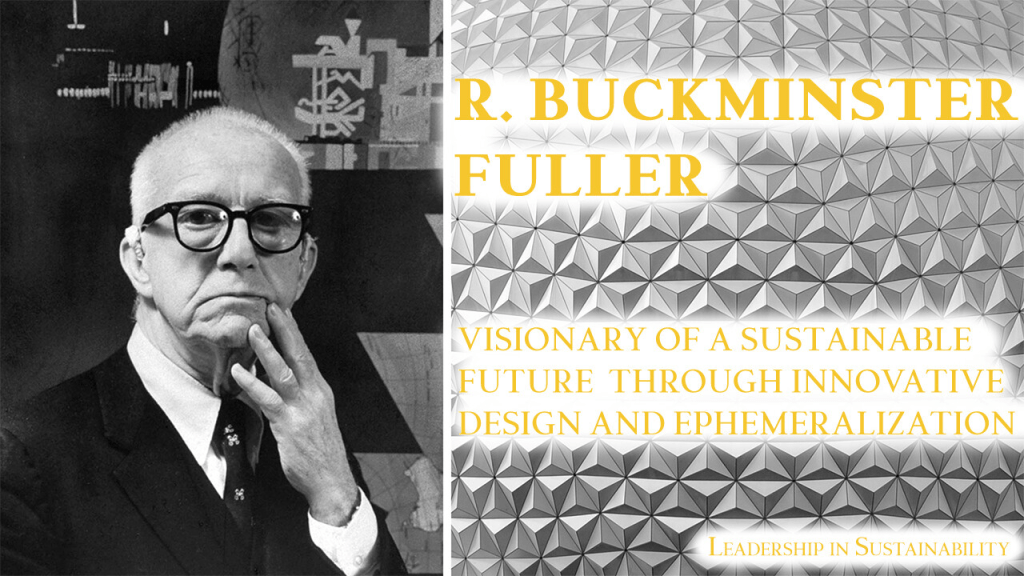
Building a World That Works for Everyone

Inspired by Buckminster Fuller

“It is now highly feasible to take care of everybody on Earth at a ‘higher standard of living’ than any have ever known. It no longer has to be you or me. Selfishness is unnecessary and henceforth unrationalizable as mandated by survival.”
— Buckminster Fuller

These words, spoken decades ago, feel more relevant today than ever before.

We live in a time of extraordinary technological advancement. We can communicate instantly across continents. We can grow food more efficiently than at any other time in history. We have the scientific knowledge and global infrastructure necessary to ensure that every human being has access to clean water, nourishment, shelter, education, and healthcare.

And yet, division persists. Scarcity thinking dominates. Nations compete. Individuals hoard. Systems prioritize profit over people.

Buckminster Fuller saw clearly what many still struggle to accept: the world already has enough. The issue is not capacity—it is consciousness.

For centuries, humanity operated under survival-based thinking. Resources seemed limited. Expansion required conquest. Security demanded competition. But Fuller argued that we have entered a new era—an era where cooperation is not only morally preferable, but practically possible.

Today, it is technologically feasible to care for everyone on Earth. Renewable energy can power entire regions. Regenerative agriculture can restore depleted soil. Global collaboration can solve complex problems faster than any single nation working alone.

What prevents us from realizing this potential is not a lack of tools—it is a lack of shared vision.

To build a world that works for everyone, we must shift from isolation to interconnection.

Every action we take ripples outward. The food we purchase affects farmers and ecosystems. The words we speak shape emotional climates. The values we teach our children become the architecture of tomorrow’s society.

A conscious world begins with conscious individuals.

It begins when we recognize that no one truly thrives while others suffer. It begins when we see that compassion is not weakness—it is intelligent design for humanity’s future.

Fuller’s statement—“It no longer has to be you or me”—is revolutionary. For much of history, survival appeared to demand winners and losers. But in a globally connected civilization, that paradigm is outdated.

Environmental collapse in one region affects the whole planet. Economic instability spreads across borders. Violence anywhere diminishes humanity everywhere.

Likewise, innovation anywhere uplifts humanity everywhere. Kindness anywhere restores hope everywhere.

The future no longer belongs to competition alone. It belongs to collaboration.

Our mission to cultivate a more conscious, interconnected world is not idealistic—it is realistic.

It asks us to:

  • Think beyond personal gain.
  • Support systems that uplift the many, not just the few.
  • Practice compassion in daily life.
  • Align innovation with wisdom.
  • Remember that humanity shares one home.

The tools are here. The knowledge is here. The opportunity is here.

What remains is our collective choice.

Will we cling to outdated models of fear and separation?
Or will we step into the maturity of cooperation and shared flourishing?

Buckminster Fuller believed humanity was capable of making that leap. The question now is whether we are ready to live up to that possibility.

The future is not something that happens to us.
It is something we consciously create—together.

Link:https://peacelilysite.com/2026/02/26/building-a-world-that-works-for-everyone/

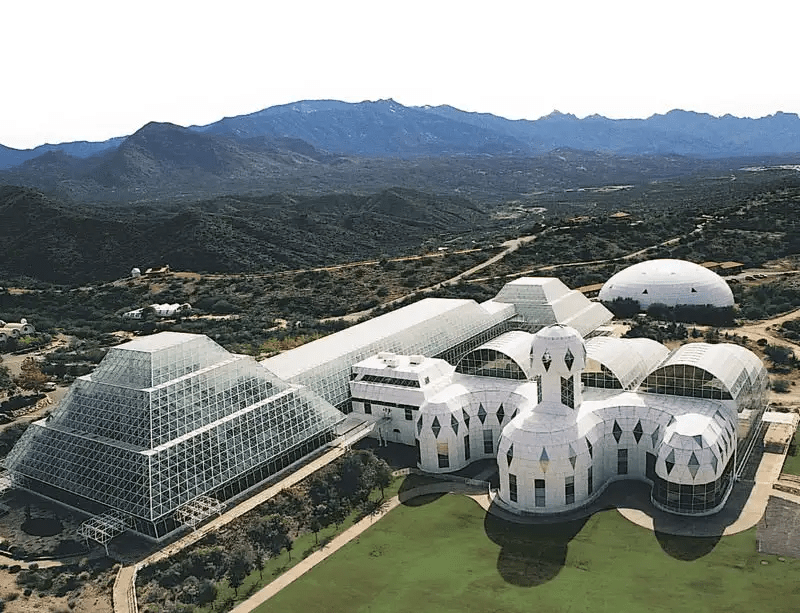
Biosphere 2: A 1991 Experiment That Reminds Us to Be Humble Tenants on Earth

In 1991, deep in the Arizona desert, an unprecedented experiment quietly began—one that captured the imagination of the world and, in time, revealed a powerful lesson about humanity’s relationship with nature.

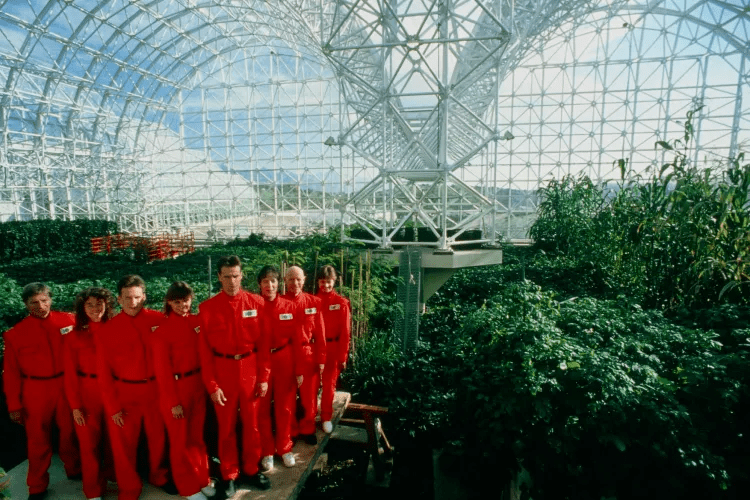
Eight people—four men and four women—were sealed inside a massive glass-and-steel structure known as Biosphere 2. Inside this enclosed world were recreated ecosystems meant to mirror Earth itself: a tropical rainforest, an ocean with coral reef, a desert, savanna, wetlands, farmland, and living quarters. For two full years, the inhabitants were to live completely self-sufficiently, growing their own food, recycling their air and water, and surviving without outside assistance.

The ambition was breathtaking. Biosphere 2 was envisioned as a blueprint for the future—an experiment to test whether humans could survive in closed ecosystems, potentially paving the way for space travel and the colonization of other planets. Behind this vision stood oil tycoon Edward Bass, who invested nearly $200 million into the project. It was, at once, a serious scientific endeavor and a meticulously choreographed public spectacle, drawing intense global attention from scientists, media, and the public alike.

Yet as the months passed, the experiment revealed something far more profound than plans for Mars.

Despite advanced engineering, cutting-edge technology, and idealistic human determination, the biosphere began to falter. Oxygen levels dropped unexpectedly. Crops failed. Certain species flourished too aggressively while others vanished. Tiny imbalances multiplied into serious problems. Even the soil—something often overlooked—absorbed oxygen in ways scientists had not fully anticipated.

What became clear was this: Earth’s ecological system is far more complex, delicate, and interconnected than human intelligence can fully replicate or control.

Biosphere 2 did not fail because of a lack of effort or intelligence. It faltered because nature is not a machine that can be perfectly engineered. It is a living, breathing system shaped by countless relationships that have evolved over billions of years. When humans attempt to dominate or redesign nature without deep humility, unforeseen consequences inevitably arise.

Looking back today, Biosphere 2 feels less like a rehearsal for escaping Earth and more like a gentle warning.

Rather than asking how we can leave this planet, perhaps the deeper question is how we can live more respectfully upon it. The experiment reminds us that technology, no matter how advanced, cannot replace the wisdom embedded in natural laws. Human ambition, when detached from reverence, can easily turn into overconfidence.

We are not masters of Earth—we are tenants.

To live well on this planet requires humility: listening to nature rather than overriding it, cooperating with ecological rhythms rather than forcing outcomes, and recognizing that every action ripples through an intricate web of life. True progress is not measured by how much we can control, but by how well we can coexist.

More than three decades later, Biosphere 2 still stands in the Arizona desert, now used for research and education. Its greatest contribution may not be scientific data alone, but the quiet reminder it offers to humanity:

Respect nature.
Honor complexity.
Live humbly.
And follow the laws of the Earth that has always sustained us.

Link:https://peacelilysite.com/2026/02/02/biosphere-2-a-1991-experiment-that-reminds-us-to-be-humble-tenants-on-earth/

Why Spiritual Cultivation Matters More Than Ever in a Rapidly Advancing World

In recent years, I’ve often found myself reflecting on the pace of our modern world. Everywhere we look, technology advances with breathtaking speed—AI systems that learn in seconds, devices that connect continents instantly, and scientific breakthroughs that would have been unimaginable a generation ago.

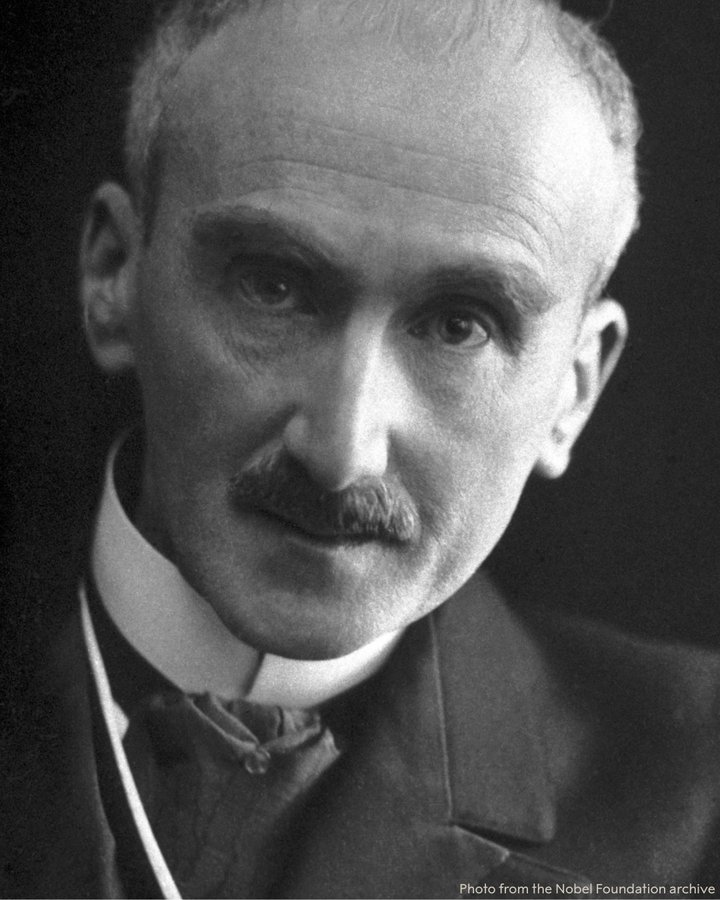
And yet, despite all this progress, people still feel anxious, divided, and spiritually adrift. It was during one of these reflections that I came across a profound message from French philosopher Henri Bergson, winner of the 1927 Nobel Prize in Literature. His words, spoken nearly a century ago, resonated deeply with me:

“An increase in the material means at the disposal of humanity may even present dangers unless it is accompanied by a corresponding spiritual effort.”

This single sentence contains a timeless truth.

The Wisdom of Henri Bergson: Progress Requires Balance

When Bergson delivered his Nobel Prize banquet speech in 1928, he had witnessed the sweeping transformations brought by steam power, electricity, and industrialization. Many believed that these innovations would naturally lead to a better, more harmonious world.

But Bergson saw with clarity that outer progress alone is not enough. Without cultivating our inner world—our morality, our compassion, our spiritual understanding—technology can deepen misunderstandings and widen divisions.

How true this remains today.

The Modern Paradox: Hyper-Connection, Inner Disconnection

We live in a time of extraordinary access and convenience:

  • We can video chat across the planet, yet many feel more isolated than ever.
  • We scroll endlessly through social media, yet our hearts grow restless and overwhelmed.
  • We generate more data in a day than ancient civilizations produced in centuries, yet wisdom feels increasingly rare.

Technology connects our devices, but only spiritual cultivation connects our hearts.

Why Spiritual Effort Is Essential Today

1. It grounds us amid the noise.

With information constantly flooding our minds, spiritual practice helps us regain clarity and stay anchored in truth.

2. It builds our inner resilience.

Life will always bring challenges. Meditation, reflection, and ethical living strengthen the mind and heart to navigate them with wisdom.

3. It cultivates compassion in a divided world.

True peace comes not from advanced systems but from understanding, patience, and kindness—qualities only nurtured through spiritual effort.

4. It reminds us of our shared purpose.

Spiritual insight dissolves boundaries, allowing us to see one another not as competitors but as fellow travelers on the path of life.

Bergson’s warning pierces straight into the heart of our time:

If humanity’s material power grows faster than its moral and spiritual maturity, danger follows.
But when the two rise together, society finds harmony.

This is not just a philosophical idea—it is a blueprint for a peaceful, sustainable future. Whether through meditation, prayer, study, service, or simple acts of kindness, each of us has the power to elevate our inner life.

Our modern world celebrates speed, innovation, and efficiency. But the deeper question is: Do these advances help us become better human beings?

If spiritual cultivation becomes the guiding compass of our progress, then technology becomes a tool for upliftment rather than turmoil.

As we look toward the future, may we remember:

  • Our machines may evolve, but our hearts must evolve too.
  • Our knowledge may expand, but our wisdom must deepen.
  • Our world may grow louder, but our inner clarity must grow stronger.

Only then can humanity advance not just outwardly, but inwardly—toward peace, wisdom, and true connection.

Link:https://peacelilysite.com/2025/11/25/why-spiritual-cultivation-matters-more-than-ever-in-a-rapidly-advancing-world/

Vibrations of the Soul: How Dr. David Hawkins’ Energy Scale Reveals the Secret to Health and Happiness

What if your thoughts and emotions were not just fleeting states of mind, but actual energy frequencies that shape your physical health and the world around you?

Dr. David R. Hawkins, a renowned American psychiatrist and spiritual teacher, spent decades studying human consciousness and developed a revolutionary model known as the Map of Consciousness. His work, presented in the best-selling books Power vs. Force and Letting Go, offers profound insight into how our energy levels—shaped by our emotions, beliefs, and spiritual awareness—directly impact our health and happiness.


🧠 The Energy Scale That Maps Our Inner World

Hawkins created a logarithmic scale of consciousness, ranging from 1 to 1000, where each level reflects a specific emotional and spiritual frequency. These levels are not abstract—they can be measured through kinesiology (muscle testing) and are believed to influence not only individual wellbeing but also global consciousness.

Here’s a simplified breakdown:

LevelEmotion/StateEffect on Health
20–100Shame, Guilt, Apathy, FearWeakens body and immune system
200Courage (Turning Point)Threshold into empowering, healing energy
300–400Willingness, AcceptanceEnhances emotional resilience and balance
500Love, CompassionPromotes deep healing and joy
600–700+Peace, EnlightenmentSpiritual transcendence and lasting vitality

Hawkins emphasized that 200 is the critical dividing line. Below this threshold, people are ruled by fear, anger, or despair—states that are energetically draining and often linked to physical illness. Above 200, individuals begin to reclaim their personal power, align with truth, and tap into energies that support healing, vitality, and inner peace.


Dr. David R. Hawkins, stated that many people fall ill because they lack love and are filled only with pain and despair. When a person’s vibrational frequency is below 200, they are more prone to illness.

Dr. Hawkins, who interacted with many patients daily, said that he could tell why a person was sick just by looking at them—because he couldn’t find even a trace of love in them. Instead, their entire being was enveloped in pain and despair, living in a state dominated by negative thoughts.

According to Hawkins, many people fall ill not because of viruses or external factors alone, but because their emotional vibration is too low. When we live in fear, hold grudges, dwell in guilt, or resist life, our frequency drops—and the body, being energy-sensitive, responds with imbalance and dis-ease.

Chronic stress, suppressed anger, and emotional numbness are not just psychological burdens—they create an environment where illness can thrive.

If a person’s vibrational frequency is above 200, they are less likely to become ill. In contrast, emotions like anger, constantly blaming others, and harboring resentment consume a great deal of energy.


💖 Love, Faith, and Healing: The Power of High Frequency

Dr. David R. Hawkins observed that when Nobel Peace Prize laureate Mother Teresa appeared at the award ceremony, the atmosphere in the entire venue became remarkably elevated. The vibrational frequency of the space rose significantly, and her powerful presence allowed everyone there to tangibly feel her energy. In her presence, no one harbored negative thoughts.

According to Dr. Hawkins, when a person with a high vibrational frequency enters a space, they uplift everything around them—people, emotions, and even the environment itself. In contrast, someone who is filled with negative thoughts not only harms their own well-being but also disrupts the energetic field of their surroundings.

From a medical standpoint, Dr. Hawkins found the power of thought to be truly extraordinary. Through millions of tests and global surveys conducted across different races and cultures, he discovered that the impact of human consciousness was consistent and universal.


🌿 How to Raise Your Energy Level and Stay Healthy

You don’t need to be a spiritual master to benefit from Hawkins’ insights. Simple, daily practices can help you maintain a high vibrational state and support your health:

  1. Practice Gratitude
    Start and end each day reflecting on what you are thankful for. Gratitude is a natural vibration lifter.
  2. Choose Forgiveness Over Resentment
    Let go of past hurts. Forgiveness is not for others—it’s a gift you give yourself to release energetic baggage.
  3. Meditate or Pray Daily
    Quieting the mind and focusing on divine compassion, love, or light raises your frequency significantly.
  4. Speak with Kindness and Honesty
    Truthfulness and compassion are energetically aligned with the higher levels of consciousness.
  5. Surround Yourself with Uplifting Influences
    Avoid negative media, toxic relationships, or environments that lower your energy. Choose art, nature, music, and people who inspire joy.
  6. Invoke Higher Consciousness
    Repeating sacred names—such as “Amitabha Buddha,” “Guanyin,” or “Jesus Christ”—with pure faith has been shown to uplift energy and bring healing calm.


✨ The Ultimate Wellness Is a Shift in Consciousness

Dr. David Hawkins teaches us that wellness begins from within. By raising our consciousness, choosing love over fear, and aligning with truth and compassion, we can live not only healthier lives—but more joyful, meaningful ones.

Your mind is more powerful than you think. And your heart—when opened fully—has the power to heal not just your body, but the world around you.


“What you are looking for is what is looking.” — David R. Hawkins

Link:https://peacelilysite.com/2025/07/08/vibrations-of-the-soul-how-dr-david-hawkins-energy-scale-reveals-the-secret-to-health-and-happiness/

What Happens After Death? Unraveling the Mystery of Existence

What Happens After Death? Unraveling the Mystery of Existence
Photo Credit: Unsplash.com

The Enigma of Existence: Exploring Life After Death

The concept of life after death has intrigued humanity for centuries. Different cultures, philosophies, and religions have provided varying explanations, yet the mystery remains. Is there life after death, or does consciousness simply cease to exist when the body dies? In this article, we explore some of the most prominent beliefs and theories surrounding the enigma of existence after death, seeking to understand this profound question from multiple perspectives.

What Are the Most Common Beliefs About Life After Death?

Throughout history, many cultures and religions have proposed theories about life after death. Religious scholars suggest that the idea of an afterlife serves to give people comfort and meaning in the face of mortality. Christianity, Islam, Hinduism, and Buddhism all have distinct views on the afterlife, each offering unique insights into the question of what happens after death.

In Christianity, for example, life after death is often seen as either eternal life in heaven or eternal separation from God in hell. Researchers point out that many Christians believe that the soul lives on after the body dies, and that salvation or damnation is determined by one’s actions during their lifetime.

In Hinduism, the concept of reincarnation is central. According to this belief, the soul is reborn in a new body after death, and the circumstances of the new life are determined by the actions (karma) of the previous life. Philosophers argue that this cycle of death and rebirth is a form of spiritual evolution, with the ultimate goal being moksha, or liberation from the cycle of reincarnation.

Buddhism also supports the idea of reincarnation, but with an emphasis on achieving enlightenment to break free from the cycle of rebirth. Experts note that Buddhism teaches that attachment to the self is the source of suffering, and liberation occurs when one transcends the ego and achieves nirvana.

Scientific Views on Life After Death

From a scientific standpoint, the question of life after death is more complex. The majority of scientists assert that there is no empirical evidence to support the idea that consciousness survives after death. Neuroscientists argue that consciousness is a product of brain activity, and when the brain ceases to function, so does consciousness.

There are notable phenomena that have intrigued researchers. Medical professionals have documented instances of near-death experiences (NDEs), where individuals report vivid sensations, such as a sense of floating above their body, moving through a tunnel, or encountering deceased loved ones. While these experiences are often interpreted by some as evidence of life after death, psychologists suggest that they may be explained by the brain’s reaction to trauma, oxygen deprivation, or the release of chemicals like DMT.

While science cannot definitively answer the question of what happens after death, these experiences have raised questions about the nature of consciousness and whether it is entirely tied to the brain. The debate continues, and more research is needed to explore the mysteries of the human mind.

Near-Death Experiences: Are They Evidence of Life After Death?

Near-death experiences (NDEs) have become a focal point in discussions about life after death. People who have experienced NDEs often describe sensations of peace, floating outside their body, or meeting beings of light. Some researchers hypothesize that these experiences are the result of a brain in distress, attempting to make sense of its impending shutdown.

Many individuals who have experienced NDEs report feeling profound transformations in their lives afterward, including a greater sense of purpose or reduced fear of death. Experts in the field of psychology and consciousness studies suggest that these transformations could point to an experience beyond the physical brain, offering a glimpse into an afterlife.

The question remains: do these experiences represent glimpses into an afterlife, or are they simply a product of the brain’s complex workings during moments of trauma? The scientific community continues to study these occurrences, and while answers remain elusive, the personal testimonies of those who have undergone NDEs continue to fuel interest in the idea of life after death.

What Philosophical Theories Are There About Life After Death?

In addition to religious and scientific perspectives, philosophical theories about life after death explore the nature of existence and consciousness. Philosophers have long debated whether consciousness is purely a physical phenomenon or if it could exist independently of the body.

One of the most famous theories comes from the philosopher René Descartes, who posited that the mind and body are separate entities. According to Descartes’ dualism, the mind (or soul) can exist independently of the body and could potentially continue after death. Modern philosophers who follow dualistic thinking often suggest that consciousness may not be confined to the brain and could persist beyond the body’s death.

On the other hand, materialist philosophers argue that consciousness is entirely dependent on the brain, and once the brain ceases to function, consciousness ceases as well. These contrasting viewpoints continue to shape the ongoing philosophical discussion on the nature of life after death.

Can Science and Religion Coexist in Understanding Life After Death?

While science and religion often present differing views on life after death, some thinkers suggest that they need not be mutually exclusive. Interdisciplinary experts argue that the two perspectives can coexist, offering a fuller understanding of the mystery. Religion provides spiritual and moral frameworks for understanding the afterlife, while science explores the empirical, physical aspects of life and death.

In recent years, there has been a growing interest in integrating scientific and spiritual perspectives on consciousness. Some researchers are exploring the idea that consciousness might exist beyond the brain, and that this may have implications for understanding life after death. Scholars in the field of consciousness studies have suggested that more research is needed to bridge the gap between spiritual and scientific explanations of existence after death.

The enigma of life after death remains unsolved. Whether through religious beliefs, scientific inquiry, or philosophical speculation, humanity continues to seek answers to this profound question, driven by the desire to understand what happens after we take our final breath.

Link:https://peacelilysite.com/2025/06/09/what-happens-after-death-unraveling-the-mystery-of-existence/

Source: https://worldreporter.com/what-happens-after-death-unraveling-the-mystery-of-existence/

Psychoenergetic Science: A Second Coperican-Scale Revolution

Dr. Tiller, a professor emeritus of materials science and engineering at Stanford University, tells us that “the term Psychoenergetics[1] was coined by the Russians in the Soviet era or 1950-1970. This was done to provide a strongly materialistic flavor to the fields of parapsychology and spiritual-related phenomena in order to make research in these areas palatable to the communist party’s worldview.” Dr. Tiller started his work to find a rigorous framework for scientifically understanding this class of phenomena during this period and until the present time.

He expanded on Einstein’s revolutionary work in this area even expanding Einstein’s famous E=mcto incorporate the evolutionary concept of consciousness. He even devised formulae, based upon careful experimental research, that link “subtle energies” to those of mainstream science and which expand the present-day formation of quantum mechanics. He noted that there “…was a class of truly weird phenomena that had been visible for more than a century and was somehow related to various processes associated with the application of human consciousness in our world. On the other hand, there still exists today, a very long-held, underlying assumption of conventional science that ‘No human qualities of consciousness, intention, emotion, mind or spirit can significantly influence a well-designed target experiment in physical reality.’ Something is very wrong here!”

He noted that “…the first Copernican revolution of thought lifted humanity from an earth-centric, theocratic-inspired, model of our solar system, which was largely qualitative in terms of details, to a local solar system which was sun-centered.” This, in turn, with the contribution of Galileo, Newton, and others, expanded our world-view and provided the framework for the great technological advancements of our modern era. He also provided his intuitive hypothesis on the link of our physical reality within the context of our higher [or spiritual] dimensional nature”…that this new, second Copernican-type revolution will, in terms of scale, be at least as significant for the progress of humankind as the first one!”

Not all scientists are there yet, or even close, but this beginning is hopeful. Much of what he writes is vastly beyond my capacity to absorb and, frankly, my interest. However, I believe that it is very relevant to our practice and is consistent with the teachings of the Buddha, albeit in a different language and perspective and with a different goal although Dr. Tiller holds that the underlying principle of all is “love.” You may ask how I can talk of dragons and yidams and all sorts of strange things and still be interested in science? I know a very bright young man, who was brought up as a religion-scorning communist, who thought that monks were parasites of the people and begrudged the donations his pious mother gave them. After several business failures, he took some time off to reflect on what had gone wrong in his life and started reading books by some on his favorite scientists and mathematicians. At the end of one such work, a scientist whom he admired greatly, said something after explaining an evolved scientific finding, “Of course, the Buddha told us all of this over 2,500 years ago.” He then decided to reconsider the works of the Buddha and is now a great master as well as a successful scientist. I too believe that science will eventually catch up with the Buddha or at least come closer to explaining what is now unkown and mysterious and the world will be better for it. I also believe that like unlocking the power of the atom through the work of Einstein et al came with great risks and potential for disaster, likewise our research into consciousness and our higher natures must be based in the evolution of our character. Correct Cultivation is essential on so many levels.

[1]   Psychoenergetic Science relates to the relationship between human consciousness and subtle energy.

The Intersection of Science and Buddhism: Exploring the Nature of Reality

The Secret Connection Between Quantum Physics And Buddhism

The German philosopher Karl Jaspers once said, “In science, half-understood knowledge leads one to abandon faith, while complete knowledge brings one back to faith.” This profound statement encapsulates the evolving relationship between scientific discovery and spiritual insight. Over the past century, science—particularly in the realm of quantum physics—has begun to reveal striking parallels with the teachings of Buddhism, suggesting that the boundary between scientific and spiritual understandings of reality is far more porous than once believed.

One of the most fascinating intersections between Buddhism and quantum physics lies in the concept of Emptiness (Śūnyatā). According to Buddhist philosophy, Emptiness is the fundamental nature of all phenomena—it is the limitless, dynamic potential from which everything arises and to which everything ultimately returns. This notion mirrors the scientific concept of the Quantum Field, the invisible yet omnipresent ground of pure potentiality that gives rise to all matter and energy in the universe.

Imagine a dream: within the dream, we experience vivid landscapes, emotions, and interactions. Yet, upon waking, we realize that none of it was truly real. However, the consciousness that enabled the dream was undeniably present. Similarly, in quantum physics, the Quantum Field remains unseen, yet it is the essential foundation from which all particles and forms emerge and dissolve. Nothing within the dream is independently real, just as in Buddhism, reality is understood through Pratītyasamutpāda, or dependent arising—the principle that all things exist in interdependence, without intrinsic self-existence.

Quantum mechanics further supports this view by demonstrating that particles do not exist as fixed entities but as probability waves, manifesting only when observed. This aligns with Buddhist teachings that emphasize the illusory nature of a solid, independent reality. Just as a wave transforms into a particle through observation, our perception shapes the world we experience.

The implications of these parallels are profound. If science and Buddhism are describing reality in similar ways, then understanding the universe may require not just empirical observation but also deep contemplation. As both disciplines continue to explore the mysteries of existence, they may converge on a deeper, unified truth—one that transcends dualities and reveals the interconnected nature of all things.

In this age of scientific breakthroughs and spiritual awakening, perhaps the most important lesson is that reality is far more mysterious than we ever imagined. Whether through the lens of quantum physics or the wisdom of Buddhism, we are invited to look beyond appearances and embrace the boundless potential that underlies all existence.

The Secret Connection Between Quantum Physics And Buddhism

Link:https://peacelilysite.com/2025/03/25/the-intersection-of-science-and-buddhism-exploring-the-nature-of-reality/

A Neurosurgeon’s Journey from Skepticism to Divine Revelation

Eben Alexander’s Proof of Heaven

Eben Alexander, a distinguished neurosurgeon, once firmly embraced the philosophy of Epicurus, believing in the finality of death and positing that there is nothing beyond our mortal existence. However, his own extraordinary encounter shattered these convictions, launching him into a profound journey that defied conventional understanding. In his compelling book, “Proof of Heaven,” Alexander shares a narrative that not only transformed his perceptions but also prompted contemplation on the very essence of existence.

As a highly esteemed figure in the medical community, Alexander boasted impeccable credentials, marked by significant contributions to neurosurgery and numerous academic accomplishments. His trajectory took an unexpected turn when he confronted bacterial meningitis caused by a rare strain of E. coli. With his neocortex, the seat of consciousness, succumbing to the illness, survival seemed improbable.

Against all odds, Alexander emerged from a seven-day coma with a surprising declaration: “All is well.” His miraculous recovery, confounding medical experts, extended beyond the physical realm. He vividly recounts a journey into a realm of ineffable beauty, profound understanding, and divine love—an experience that transcended his compromised brain function.

The title of Alexander’s book, “Proof of Heaven,” encapsulates the essence of his revelation. Through his firsthand account, supported by corroborating testimony, he challenges the notion that consciousness is solely a product of neural activity. His inexplicable recovery stands as a testament to the mysteries that lie beyond our comprehension, prompting profound reconsideration of life and death.

In the ethereal realms that Eben Alexander traversed during his coma-induced journey, he vividly described scenes of unparalleled beauty and awe. His narrative delves into luminous landscapes with vibrant colors and radiant light, transcending the limitations of earthly perception. Alexander spoke of meadows adorned with blossoms emitting melodies, a symphony of sound intertwined with vibrant hues that danced harmoniously.

Moving through this celestial expanse, Alexander encountered entities of immense love and wisdom, beings emanating a profound sense of interconnectedness and understanding. He described interactions with ethereal guides who communicated not through conventional language but through a telepathic exchange of pure emotions and intentions. These guides, he noted, possessed a divine knowledge surpassing the comprehension of the earthly mind.

Furthermore, Alexander shared experiences of traversing a vast, intricate network of interconnected realms, each layer revealing higher levels of consciousness and spiritual understanding. He conveyed encounters with deceased loved ones and souls radiating unconditional love, contributing to an overwhelming sense of peace and acceptance.

Colleagues attested to Alexander’s astonishing recovery, leaving the medical community baffled about the disease’s origin and subsequent recovery. Infectious diseases specialist Scott Wade, in an appendix, described the recovery as “truly remarkable.”

The crux of Alexander’s narrative lies in the title of his book, revealing his journey to a realm of hyper-real beauty, understanding, and divine love—a journey that occurred without the active participation of his brain. This challenges the notion that consciousness is solely a product of brain activity and provides compelling evidence for the existence of an afterlife.

In his book, Alexander also described what compelled him to return to the earthly world. He recounted seeing his son’s sad face and sincere prayer for Alexander to come back and be a father again. Alexander realized that taking care of family is a crucial responsibility on Earth.

Despite skepticism and criticism, the integrity of Alexander’s character and the veracity of his accounts remain steadfast, prompting broader questions about the limitations of empirical science in explaining transcendent phenomena.

Contemplating the implications of Alexander’s revelation compels us to ponder transformative potential across diverse fields of inquiry. What paradigm shifts would occur if the hypothesis of an afterlife were embraced within disciplines such as psychology, sociology, literature, and philosophy? How might our perceptions of reality and human experience be redefined in light of such profound revelations?

For many, Alexander’s journey offers a profound shift in perspective—a redirection of focus from the fear of death to the complexities of earthly existence. His account underscores the interconnectedness of the human experience, suggesting that the struggles and choices we face in this life hold profound significance.

Alexander’s account prompts contemplation on the relationship between the earthly realm and the divine. While he suggests that Heaven supports and holds us invisibly, it is equally plausible to consider that Heaven depends on us. Earth, with its struggles and challenges, becomes the consequential place where the battle between good and evil unfolds, shaping our choices and influencing realms beyond.

In essence, Eben Alexander’s odyssey transcends the boundaries of conventional understanding, beckoning us to explore the uncharted territories of consciousness and existence. Whether embraced as irrefutable proof or contemplated as a profound allegory, his journey serves as a catalyst for introspection, challenging us to reconsider the fundamental questions that define our humanity. As we navigate the mysteries of life and death, perhaps we are reminded that the ultimate truth lies not solely in the destination but in the journey itself.

Link:https://peacelilysite.com/2024/03/01/a-neurosurgeons-journey-from-skepticism-to-divine-revelation/