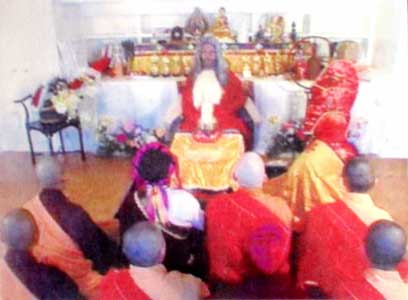
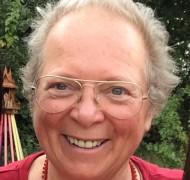
Zhaxi Zhuoma Rinpoche recalls several holy manifestations and unusual supernormal events that she personally witnessed after following her Buddha Master, H.H. Dorje Chang Buddha III Many other students have other similar experiences and are included in books and various articles reported elsewhere on this website. It must be noted that H.H. Dorje Chang Buddha III does not encourage or advocate practicing any form of supernatural power and is very modest about His own abilities. He is constantly warning us not to be attached to these states and experiences, but to instead practice our cultivation and develop our morality, concentration, and wisdom. A more complete accounting of what Zhaxi Zhuoma Rinpoche has seen and experienced is now available in book form on this website and at Amazon and other book stores.
After receiving a small blue “Return-to-Youth Pill”, my hair changed from salt & pepper to the original light brown of my youth. I even let my hair grow, just to see for sure.
When I could not understand why I was asked to do something (although, of course, I did what was asked), several unrelated events occurred that explained why this was so.
I saw three-colored nectar suddenly manifested in a freshly washed bowl after a group of us disciples chanted mantras. Click for news article.
My students have also seen and even received advice from certain holy beings. Several of my students have had the Buddha Master appear and bless them.
I have never seen the Buddha not be able to answer any question asked of him.
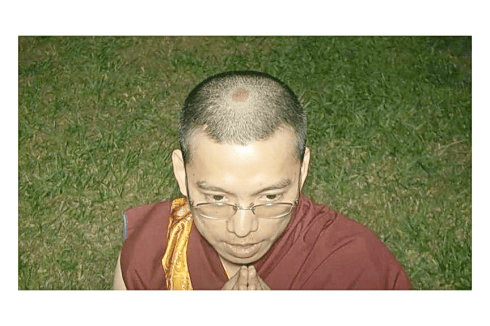
On a special occasion, the Buddha Master blessed me and after that a diamond formed on my head that would turn bright red and pulsate from time to time. This also happened when I read the Buddha Master’s discourses, but other times as well.
“Once, when in Washington, D.C., preparing to introduce the book H. H. Dorje Chang Buddha III, to various congressional staff, I saw a very large bright neon pink light jump from tree to tree across a field from where I was staying. Earlier that morning and at other times, I would see bright yellow lights flash when I was doing dharma work for the Buddha Master. They were like the lights that flashed when the discourse What Is Cultivation?was first transmitted.” Click for article on this event.
I saw rainbow “jewels” appear on a holy site where many inner-tantric initiations had been held and where “Auspicious Grass of the Four Jewels” had grown. Click for news article.
After having a minor stroke, I was again healed so as to be able to go on a strenuous trip to visit all fifty states in the U.S.
On several occasions, I have seen pillars of light descend from the heavens, sometimes being able to capture them on digital cameras.
I have seen nectar fall several times and places, the first being in southern California under a certain magnolia tree and the last under that same tree after it had been moved to Hua Zang Si, a temple in San Francisco. It also rained under a flowering jacaranda tree on the veranda where students performed skits and other shows in honor of the Buddha Master’s birthday. Click for news article.
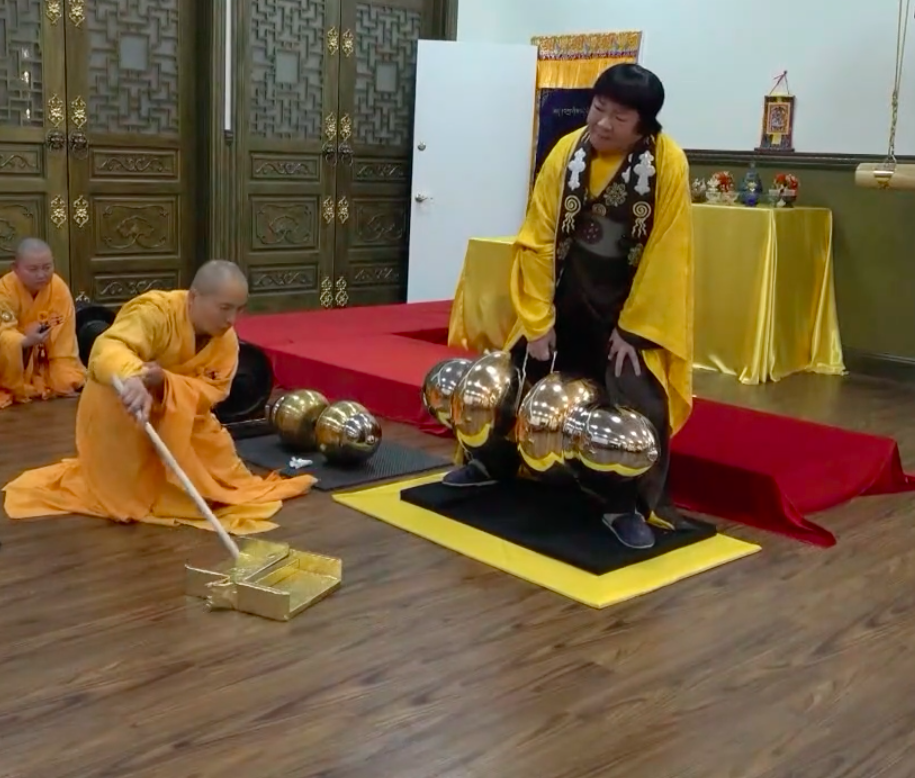
I have seen students practice the tummo (inner heat or fire) dharma and raise their body temperature to very high levels–even high enough to burn the fingers of those who touched a metal bowl lying on the student’s stomach. Click for article.
I have seen sacred seed syllables form on the bodies of students and holy ones.
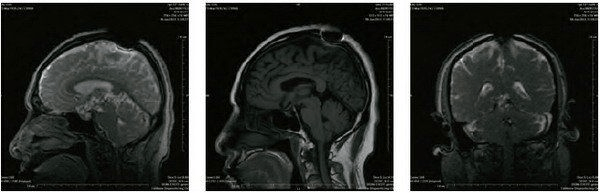
I have had my crown opened as documented by a MRI devise. Read article on this miraculous event.
Several very large koi fish came and did a dance for the Buddha Master in the pond at the Holy Vajrasana Temple & Retreat Center in Sanger. Schools of fish also followed the Buddha Master around as He toured a Japanese garden south of San Francisco and Dragon Fish came to pay respect to the Buddha when he gave a discourse in Thailand.
A vajra pill sang and danced while I held it.
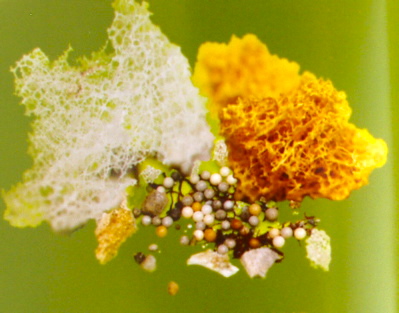
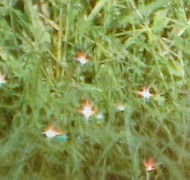
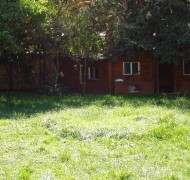
I saw a particular type of flower called “Auspicious Grass of the Four Jewels” grow directly in front of where the Ultimate Bathing the Buddha ceremony took place. The flowers had four distinct very thin parts. They grew in a particular pattern and formed a perfect circle. Prior to the Dharma Assembly the area was perfectly flat. After the ceremony, the ground became slightly elevated, forming a mound upon which these special flowers grew. These flowers grew no other place in the yard. Click for news article.
Another red vajra pill flew from my hand to a holy place and was recovered and empowered by the Kalachakra Vajra, a manifestation of Shakyamuni Buddha. The pill danced in my hand and also in a clear stupa where it remains. It continues to dance in the stupa from time to time. Click for article.
An old metal pole started shaking quite violently at the temple and over time was joined by four more poles. Sometimes the shaking is constant, sometime it seems to pulsate as if sending coded messages. Others report seeing various lights or feel energy emanating from these poles. Pilgrims travel from all over the world to see these poles. Click for article. Also see many news articles of pilgrims visiting the poles.
Many light beings from other realms appear and can sometimes be seen by the naked eye and sometimes only on video or digital recordings at the temple in Sanger. Visitors to the temple have also seen and recorded them. Click for photos.
I saw the beautiful and amazing relics or sharira from a special close disciple of the Buddha Master. Click for article.
The Buddha Master was able to transfer His energy to me and enable me to raise my temperature after it continued to decline to dangerous levels.
A colored mandala was written on top of a large flat stone. After dharma was done, the stone was removed and the same mandala had been transferred through the stone and appeared on a bed of sand beneath the stone. This I saw done twice. The second time a pile of mixed various colored sands was placed below the stone, but were sorted out into seed characters after the dharma was performed on the stone. Click for photo.
I experienced the elimination of dark karma by having the Buddha Master’s magical Dharma Wheel placed on my chest. I could not bear the heat of the small metal object, but the Buddha Master picked it up with no problem. Click for news article.
I saw the Buddha Master create incredible works of art in very short periods of time. Some even contained a permanent fog or mist. Click for photo
I saw the Buddha Master change very quickly from an old beaten and bruised person to His usual self. This happened after the Buddha Master had predicted what would happen the previous day. An even more amazing transformation from an old man to a handsome youth happened and was was documented more recently. Click for more.
I saw the Buddha Master turn blue during an empowerment ceremony. I did not know at the time that He was an incarnation of Dorje Chang Buddha who is blue. Click for article.
I saw my roommate and another rinpoche lift a pool of water weighing over two tons with only the power of their mantras at the Ultimate Bathing of the Buddha Dharma Assembly. Click for more.
I have seen the consciousness of my relatives and those of my students raised to a higher level. One western student’s mother (who was not a Buddhist) had the Buddha Master come to help her go to the Pure Land. Click for news article.
I was there when a very young rinpoche took a vow that she would become accomplished in a very short period of time after she had received a Prajna Empowerment and she did.
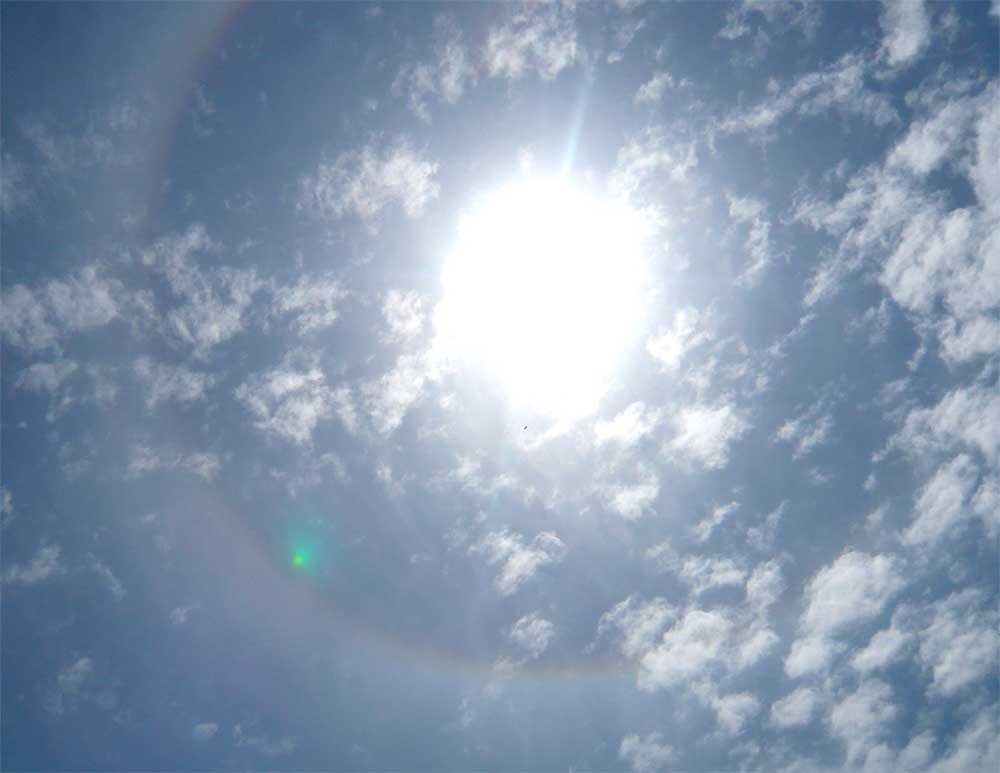
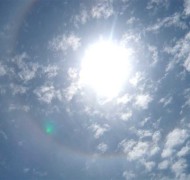
I have seen many, many Buddha Lights appear around both the sun and the moon prior or after or during special dharma assemblies or events.
I saw an antique wooden statue of Kuan Yin emit golden light after another dharma of selection ceremony. This time I shook a large container of long bamboo sticks. Each stick had a certain number that corresponded to a given outcome. I did this three or four times for each event and each time the results for each time I shook the sticks was the same AND exactly what the Buddha Master had predicted. I witnessed variations on this dharma many times.
I received a dharma of selection whereby I printed a number of outcomes on small pieces of paper for a major life decision that I was about to make; rolled these pieces of paper into tight rolls; placed these rolls in a round vase, and then asked to shake the vase and remove one. I rerolled it and replaced it doing this at least three times. Each time, I drew the same answer, which was the answer the Buddha Master gave me in the beginning.
I was present when various colored sharira appeared in a cloud of nectar.
I experienced a “freak” rain of hail one summer in Los Angeles that only rained where the Buddha Master was staying and right after a speech given by the Buddha Master that had forecasted such an event.
I saw sand from the Ganges River in India assemble to form strands of hair that created a three-dimensional crown on certain images of H.H. Dorje Chang Buddha and Shakyamuni Buddha to prove that they were both incarnations of Buddhas.
THE PRE-EMINENT GREATLY VIRTUOUS ONE IN PRESENT-DAY TIBET: H.H. DHARMA KING ACHUK
Dharma King Omniscience Jamyang Lungdok Gyaltsen Achuk Lama is a great Dharma Master in the Nyingma sect of Tibetan Buddhism. He is the incarnation of Venerable Longsal Nyingpo, one of the twenty-five great disciples of Guru Padmasambhava. Dharma King Omniscience is one of the greatest and most accomplished leaders of contemporary Buddhism.
In the summer of 2006, Dharma King Omniscience encountered “A Treasury of True BuddhaDharma” and was profoundly impressed. Recognizing the unparalleled accomplishments and wisdom revealed in the book, he pondered the identity of the extraordinary individual behind such realization. Utilizing his supernatural powers, he peered into the dharmadhatu and unveiled the remarkable truth. It became evident that the acknowledgment made by Urgyen Xirao, Guru Padmasambhava’s dharma prince, was entirely accurate.
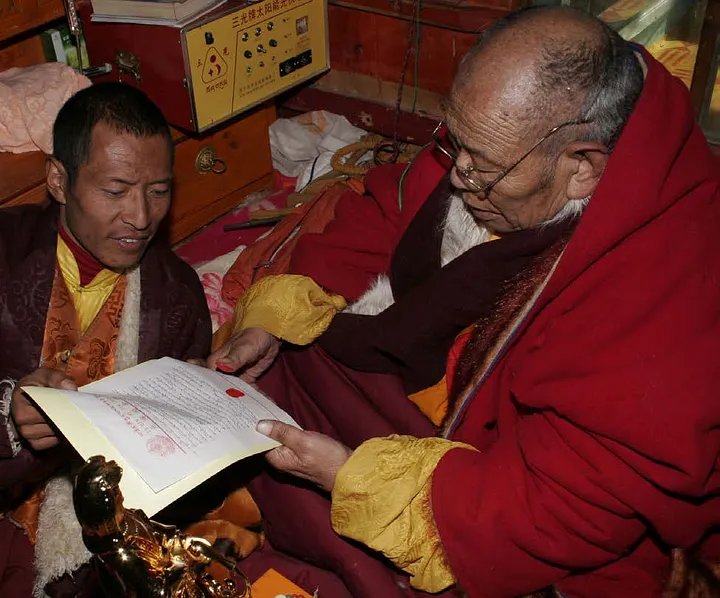
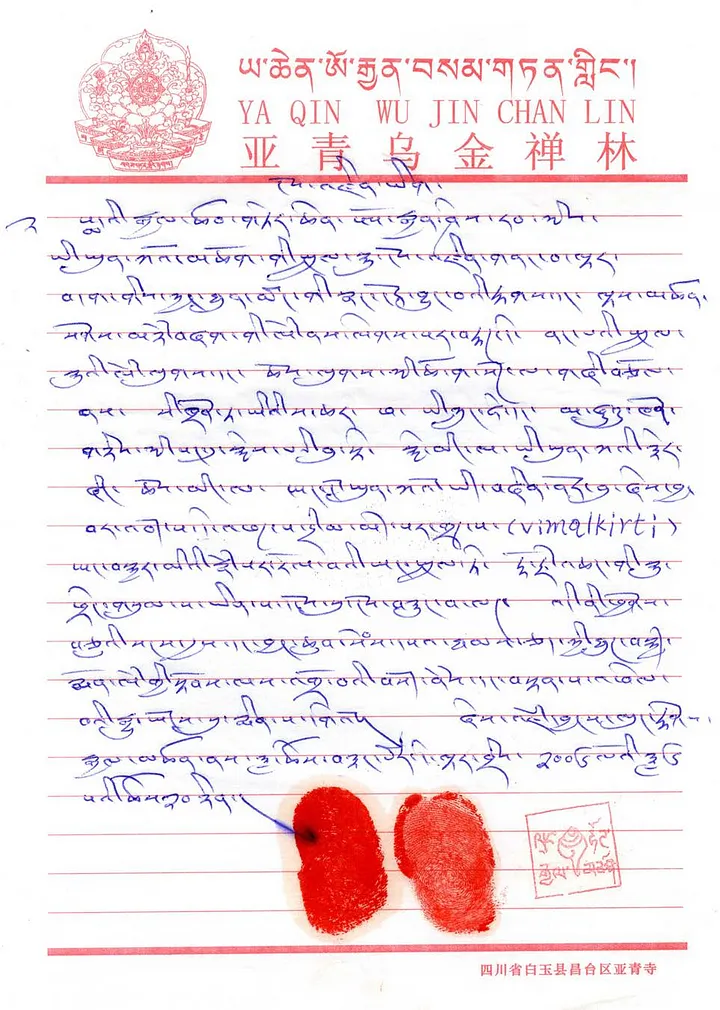
Urgyen Xirao had asserted in the recognition that His Holiness Yangwo Wan Ko Yeshe Norbu Great Dharma King is a sublime being of immense holiness. Dharma King Omniscience, fully concurring, proceeded to compose his own certificate of recognition, affixing his precious red seal upon it. The certificate declared His Holiness Yangwo Wan Ko Yeshe Norbu as the paramount leader of Buddhism.
Certificate of Recognition (in Tibetan)
Here is the English translation:
Based upon the recognition of Urgyen Xirao, the dharma prince of Guru Padmasambhava, and following the system and religious rituals of Tibetan Buddhism for determining the reincarnation of Rinpoches, I entered samadhi to observe the truth. I now solemnly recognize that H.H. Master Wan Ko Yee, who is the son of father Zhonghai Yee and mother Kunfang Xu from Dayi County in Sichuan Province, is the incarnation of Vimalakirti (that is, Vimalakirti has again come to this world), is Dorje Chang Buddha III and has the dharma name of H.H. Yangwo Wan Ko Yeshe Norbu. This is the maturing of the karmic conditions of living beings relating to good fortune and wisdom. We are grateful for this blessing bestowed by the Buddhas. I hereby recognize.
Dharma King Jamyang Lungdok Gyaltsen June 20, 2006
BRIEF INTRODUCTION TO JAMYANG LUNGDOK GYALTSEN RINPOCHE
Dharma King Omniscience Jamyang Lungdok Gyaltsen Achuk Lama is a great Dharma Master in the Nyingma sect of Tibetan Buddhism. He is the incarnation of Venerable Longsal Nyingpo, one of the twenty-five great disciples of Guru Padmasambhava. Because people had different views on the reincarnated identity of Dharma King Omniscience, on a holy day in 2007 at Hua Zang Si in San Francisco, the International Buddhism Sangha Association beseeched H.H. Dorje Chang Buddha III Holiest Tathagata to recognize the true identity of Dharma King Jamyang Lungdok Gyaltsen. In the end, that association did receive such recognition from H.H. Dorje Chang Buddha III. H.H. Dharma King Jamyang Lungdok Gyaltsen was recognized by H.H. Dorje Chang Buddha III as the true incarnation of Venerable Longsal Nyingpo. The International Buddhism Sangha Association then held the holy form of Drawing Lots From a Golden Vase Dharma Assembly. One lot was drawn from among 120 sealed lots. After a curtain was removed and after that lot was unsealed and opened in front of all those present, it was discovered that H.H. Dharma King Jamyang Lungdok Gyaltsen is indeed the true incarnation of Venerable Longsal Nyingpo. Not only was the true identity of Jamyang Lungdok Gyaltsen personally recognized by the Holiest Tathagata, the Drawing Lots From a Golden Vase Ceremony confirmed that he is a great holy being who is the true reincarnation of Venerable Longsal Nyingpo. Yerba Rinpoche, who has demonstrated his supernatural powers over many lifetimes, personally discovered evidence throughout the six realms that Dharma King Omniscience never for a moment ceased striving to bring living beings to salvation and enlightenment.
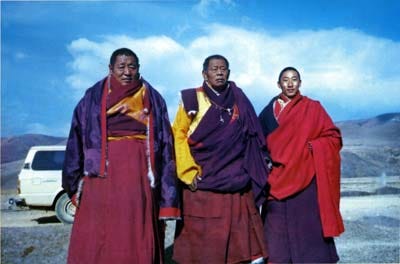
The person in the middle is Dharma King Omniscience Jamyang Lungdok Gyaltsen. To his left is Dharma King Jigme Phuntok and to his right is Asong Rinpoche.
Dharma King Omniscience was born in 1927 amidst rare and auspicious signs. The dharma protecting deities transformed into various physical forms to protect him when he was a child, which is something only experienced by beings of great holiness. He understood without impediment all scriptures and sutras. At 12, he entered the order of monks. Beginning at 18, he followed his vajra master Arik Vajradhara, a great accomplished one, into 43 years of solitary meditation. He received from Sela Yangzhi a complete transmission of the teachings he learned in his prior life. Sela Yangzhi was a true incarnation of Padmasambhava. Dharma King Omniscience manifested the ultimate essence of all the dharma and turned into a rainbow body of Great Perfection. He has entered the dharmadhatu’s non-attachment state and Four Wisdoms state. He has attained the state of the four divisions of initiations. He has accomplished the cutting off of all defilements related to the six sense organs. His once ordinary body has become a rainbow-light body. The dharma king’s body is able at any time to manifest rainbows, crystal pagodas, Buddha images, Tibetan seed characters, hand-held pennants, etc. The wrinkles of the skin of his entire body have formed the image of a mandala filled with pictures of all the Buddhas and Bodhisattvas. Sariras naturally pour forth from his body.
Among all Buddhas in the Dharma realm, Dorje Chang Buddha is the Primordial Buddha, the first Buddha with form, and the only Supreme Lord of Buddhism throughout the entire universe. Dorje Chang Buddha propagated Dharma throughout the universe, hence, all other Buddhas and Great Mahasattvas learned Dorje Chang Buddha’s Dharma and cultivation to attain holy state and liberation, and eventually became Buddhas and Great Bodhisattvas. Dorje Chang Buddha is the primordial ancestor of all Buddhas and Bodhisattvas. Samantabhadra, the Dharmakaya from which Dorje Chang Buddha perfectly manifested, is the Tathagata that has no form at all. The words and deeds of Dorje Chang Buddha are the compass and guiding principles of cultivation for all ordinary and holy beings in the universe.
To help Shakyamuni Buddha, Namo Dorje Chang Buddha II —Venerable Virmalakirti—applied His supreme wisdom and limitless supernormal power to edify Hinayana Arhats who then advanced themselves and eventually became Mahayana Bodhisattvas who helped living beings attain liberation. And, innumerable living beings attained liberationby learning the teachings of Venerable Virmalakirti.
After coming to the sahā world with the Buddha level enlightenment of the Primordial Sambhogakaya Buddha, His Holiness Dorje Chang Buddha III established countless number one records in the world, every one of which was for the sake of benefiting living beings. At a very young age, He saved others without any regard to His own life and was honored with the title “Young Hero.” As He grew older, His Holiness Dorje Chang Buddha III applied His inherent Healing Vidya to heal the sick, purely on a voluntary basis. More than 500 patients used to seek His help every day. His Holiness Dorje Chang Buddha III never accepted one penny from them. Plaques and pennants with words of gratitude sent by the recovered piled up in the Buddha’s house.
As His Holiness Dorje Chang Buddha III continued to benefit living beings on a larger scale, the Central Newsreels and Documentary Studio of China produced a documentary, “One Who Is Dedicated to Advance Himself,” about His life and work. The film was shown nationwide.
In 1987, the highly respected young His Holiness Dorje Chang Buddha III was named Chairman of the Chinese Painting Research Association of the National Commission of China for UNESCO. Honorary chairpersons of the Association included Liao Jingdan 廖井丹, Li Wenqing 李文清, Lü Ji 呂驥, Yuan Xiaoyuan 袁曉園, Wu Zhangshu 吳丈蜀, Qian Juntao 錢君匋, Xie Zhiliu 謝稚柳, and others. Advisors to the Association included Luo Zhanglong 羅章龍, Zhang Kejia 臧克家, and so forth.
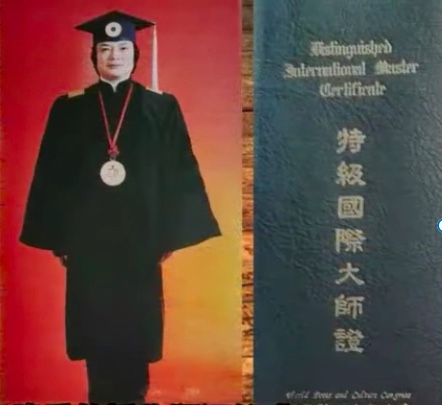
In 1992, His Holiness Dorje Chang Buddha III was accorded the “Art Maestro of the East” title. In 1994, during the fourth conference of the World Poets and Culture Congress held in Hungary, 5,612 experts and scholars unanimously voted to confer the “Preeminent Distinguished International Master” title, which was a Head of State level honor, to His Holiness Dorje Chang Buddha III.
The conferment certificate was signed by Juan Antonio Samaranch, the then President of the International Olympic Committee. In the same year, the Museum of Master Yi Yungao officially opened in Dayi 大邑, the hometown of His Holiness Dorje Chang Buddha III in Sichuan. That was the first memorial museum in China, or even in the world, being built by a government for a living person.
In 1995, when His Holiness Dorje Chang Buddha III went from Mainland China to visit Taiwan for the first time, Taiwanese people spontaneously gave His Holiness Dorje Chang Buddha III an overwhelmingly ceremonious welcome. More than 20,000 people went to the airport to greet and pay respect to His Holiness Dorje Chang Buddha III. A motorcade of more than 1,700 cars followed the lead of police motorcycles to escort His Holiness Dorje Chang Buddha III from the airport to the hotel. That became the largest welcoming event in human history. Within the short three weeks that His Holiness Dorje Chang Buddha III stayed in Taiwan, General Chiang Wei-kuo 蔣緯國, former Secretary-General of the Taiwan National Security Council, and many other high level government officials formally requested to become disciples of His Holiness Dorje Chang Buddha III. They expressed that they wanted to truly emulate the noble morality, humanistic ethics, thoughts, and deeds of His Holiness Dorje Chang Buddha III.
After His Holiness Dorje Chang Buddha III moved to the United States, His noble morality and unparalleled achievements won the love and admiration of the American people from all walks of life. In 2002, His Holiness Dorje Chang Buddha III was presented with the “Presidential Gold Medal” by the Commissioner to the President’s Advisory Commission on Asian Americans, on behalf of President Bush.
In 2003, the Organization of American States, composing of 34 countries including the United States, Canada, and Mexico,organized the Master Wan Ko Yee Yun Sculpture Exhibition in Washington D.C. at the Capitol of the United States.
The Master Wan Ko Yee Yun Sculpture Exhibition was also held at the Congressional Office Building. That was the first time the U.S. Congress held an art exhibition in their Congressional Office Building. Visitors expressed their praises in the guest book, exclaiming that the exhibition was “unprecedented,” and that the artworks were “treasures brought to the human realm by God.”
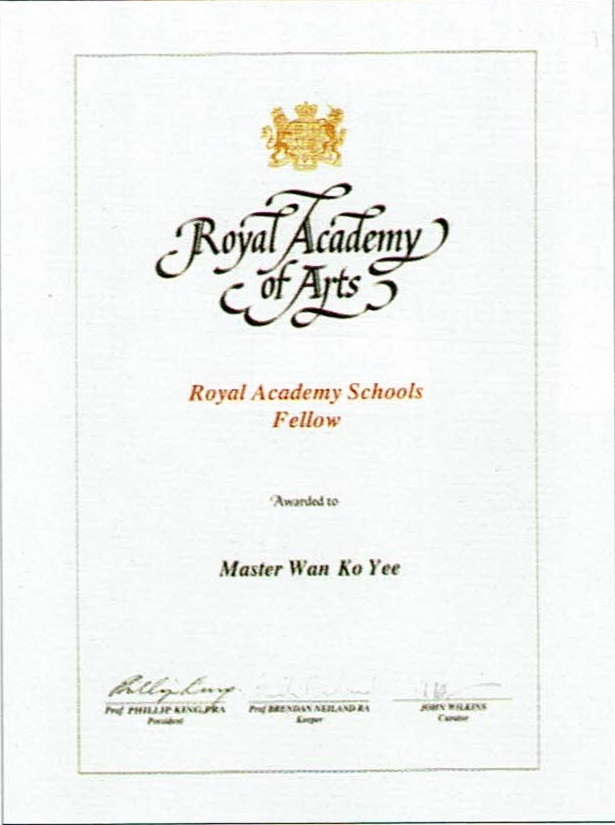
In 2004, His Holiness Dorje Chang Buddha III was named “Fellow” of the Royal Academy of Arts in the U.K.. Professor Phillip King, President of the Royal Academicians of the Royal Academy of Arts, presented the certificate to His Holiness Dorje Chang Buddha III at the British Embassy in Washington D.C., capital of the United States. The Cultural Attaché of the British Embassy personally attended the ceremony. Professor Phillip King stated that His Holiness Dorje Chang Buddha III was the first artist ever accorded this title in their renowned academy’s more than 200-year history.
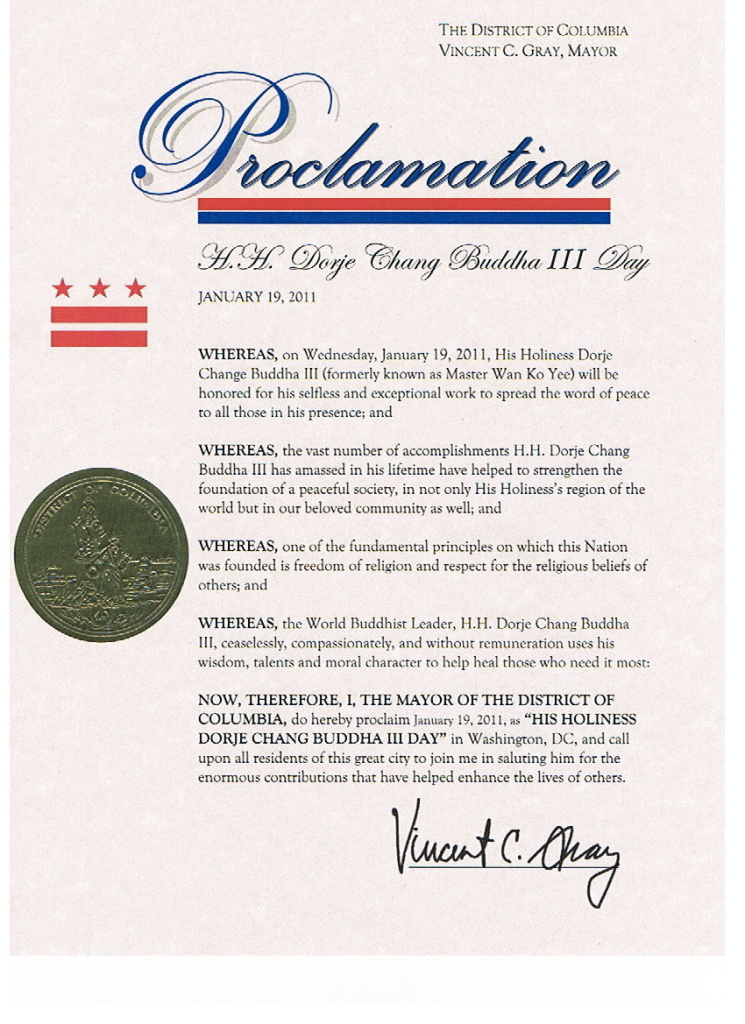
The mayor of the U.S. capital Washington D.C.pronounced January 19, 2011 as “His Holiness Dorje Chang Buddha III Day” and called on people to salute to His Holiness Dorje Chang Buddha III.
His Holiness Dorje Chang Buddha III was also accorded the “King Legacy Award for International Service & Leadership” by An International Salute to The Life and Legacy of Dr. Martin Luther King, Jr.. Dozens of great honors have also been presented to His Holiness Dorje Chang Buddha III by U.S. senators, members of the House of Representatives, governors, and governments of all levels.
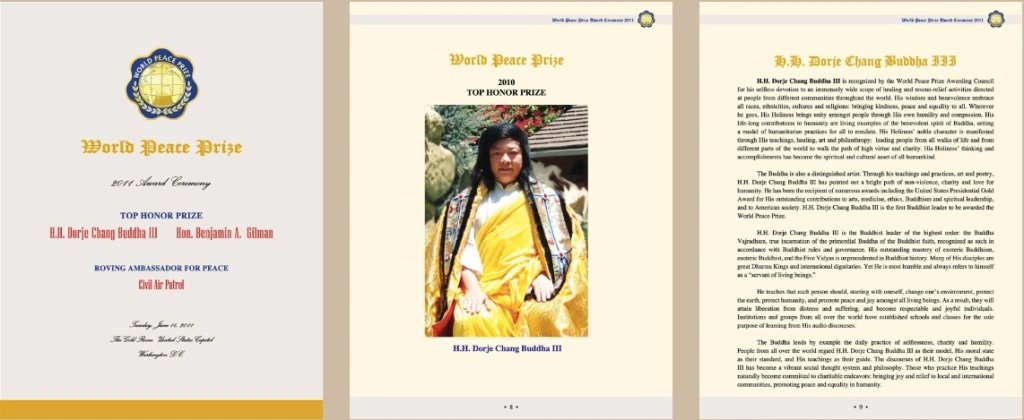
More remarkably exceptional, Namo Dorje Chang Buddha III was awarded the 2010 World Peace Prize Top Honor Prize, presented to Him at the United States Congress on June 14, 2011 at the U.S. Capitol. On occasions of the holy birthday of His Holiness Dorje Chang Buddha III, the U.S. Congress has held ceremonies to raise the national flag to celebrate, and President Trump and President Biden have sent personal congratulations.
In 2018, the World Peace Prize Awarding Council and the World Peace Prize Religious Leader Title Awarding Council resolved that His Holiness Dorje Chang Buddha III was the Pope of Buddhism of this world and decided to present the Pope of Buddhism Scepter to Him. Namo Dorje Chang Buddha III, however, did not accept the Scepter, but returned it instead. In September 2020, the World Peace Prize Awarding Council and the World Peace Prize Religious Leader Title Awarding Council made a joint resolution that solemnly stated, “The title, status, and authority of the Pope of Buddhism belong only to His Holiness Dorje Chang Buddha III and cannot be exercised by anyone else. This is a permanent and unalterable determination!” The two Councils also entrusted the World Buddhism Association Headquarters to present the Pope of Buddhism Scepter on their behalf to His Holiness Dorje Chang Buddha III.
Upon coming to this world, His Holiness Dorje Chang Buddha III immediately started teaching and saving living beings. He has always called Himself a “nameless cultivator.” His Holiness Dorje Chang Buddha III voluntarily served living beings and did not accept any offerings. One incident clearly shows how Namo Dorje Chang Buddha III taught and saved living beings selflessly. At the Heart Sutra Mandala on Xinhua West Road, Chengdu, Dharma Master Guozhang 果章法師 once recounted to some people that when he received initiation from His Holiness Dorje Chang Buddha III on Paoma Mountain 跑馬山, His Holiness the Buddha was only two and a half years old! After the identity of Namo Dorje Chang Buddha III being the true incarnation of the Primordial Buddha was formally recognized by Dharma kings, regent Dharma kings, and great rinpoches of major Buddhist sects in written congratulations and corroboration letters, His Holiness Dorje Chang Buddha III continued, as always, to teach and save living beings solely on a voluntary basis, and whole-heartedly devoted Himself to serving living beings. Whenever people made offerings to His Holiness Dorje Chang Buddha III, whether they were big or small offerings, in amounts as little as one dollar or as large as a few million US dollars, in the form of 37 acres of land in the city of San Francisco, or even a planeload or a shipload of gold, Namo Dorje Chang Buddha III categorically refused to accept. His Holiness Dorje Chang Buddha III was whole-heartedly dedicated to serving living beings voluntarily.
In the many years that His Holiness Dorje Chang Buddha III was propagating Dharma to save living beings, He imparted more than 2,000 Dharma Discourses in response to living beings’ levels and karmic conditions. Not only did His Holiness Dorje Chang Buddha III reveal the truth about humanity and the universe, He also elucidated the truths relevant to various stages of practices, from elementary to profound accomplishment levels.
Those Dharma Discourses were audio-recorded, and some of which such as What Is Cultivation 什麽叫修行, Sutra on Understanding and Realizing Definitive Truth 了義經, Imparting the Absolute Truth Through the Heart Sutra 藉心經說真諦, and Learning from Buddha 學佛, have been published into books.
In restoring Buddhist texts to their original meaning, His Holiness Dorje Chang Buddha III pointed out that the morning and evening chants used in Buddhist temples nowadays had been tampered with by the descendants of Mara, and those texts are filled with evil views and fallacies. Namo Dorje Chang Buddha III has corrected many errors made by patriarchs and translators in their interpretations of Dharma principles, and directly revealed the chaotic phenomena in Buddhism during this Dharma Ending Era. His Holiness Dorje Chang Buddha III pointed out the path that everyone who wants to attain liberation must take: That is to build our foundation on practicing cultivation. After cultivating ourselves well, we can then learn Dharma, and naturally attain liberation and accomplishment. The correct truths and Dharmas imparted by His Holiness Dorje Chang Buddha III enable listeners to develop their wisdom and good fortune, to help each other, care about each other, and be compassionate to all living beings.
In different countries, Namo Dorje Chang Buddha III has performed great Dharmas including Holy Amrita Bestowed by Buddhas 佛降甘露, Xianliang Great Perfection 現量大圓滿, Holy Fire Offering 勝義火供, Vajra Faman Determination by Holy Selection 金剛法曼擇決, Hayagrīva Raja Water Mandala Bead Divination 馬頭明王水壇珠卦, Determination by Holy Selection on the Regression or Progression on the Bodhi Path 菩提道損減增益法, Guaranteed Delivery to Buddha Land Dharma 保送法, Vajra Array 金剛陣, and Eight Wind Array 八風陣, all of which manifested authentic holy states, enabling living beings to see with their own eyes that Buddha Dharmas are scientific, have veritable power, and absolutely are not just empty talk or theory. More importantly, Namo Dorje Chang Buddha III has brought The Supreme and Unsurpassable Mahamudra of Liberation to living beings in the sahā world, showing humanity the shortcut to attaining liberation. The Supreme and Unsurpassable Mahamudra of Liberation is the highest Dharma that Dorje Chang Buddha transmitted to Amitabha Buddha as well as Buddhas and Great Bodhisattvas in the ten directions during their cultivation stage.
In The Supreme and Unsurpassable Mahamudra of Liberation, His Holiness Dorje Chang Buddha III has made the biggest and highest vow in the entire Dharma realm, “I bear all the sinful karma for living beings, I give living beings all the good karma and merit that I have planted.” Namo Dorje Chang Buddha III has actualized the greatest and holiest vow, sacrificed His life to save the lives of numerous living beings, and returned to the Sambhogakaya Buddha Land!
The unprecedented records established by Namo Dorje Chang Buddha III in this world:
Namo Dorje Chang Buddha III was, historically, the first Buddha to have received the largest, unprecedented number of status-recognition and congratulatory letters by top level great Dharma kings and rinpoches.
Namo Dorje Chang Buddha III was recognized with the highest status in history: an Ancient Buddha.
Namo Dorje Chang Buddha III is the first Ancient Buddha who manifested perfect mastery in Exoteric and Esoteric Buddhism, and perfection of the Five Vidyas. No one else has been able to accomplish the same in the past few thousand years.
Namo Dorje Chang Buddha III manifested Buddha-level wisdom in the creation of Yun Sculpture, which nobody has been able to replicate. Historically, this is the first art form that cannot be replicated.
Namo Dorje Chang Buddha III is the first Ancient Buddha throughout history who only benefited others but did not accept any offerings.
Namo Dorje Chang Buddha III is, historically, the first Ancient Buddha who manifested the most holy miracles.
Namo Dorje Chang Buddha III is, historically, the only Buddha who could offer the kind of Buddha Dharma that enables disciples to attain liberation within two hours: Xianliang Great Perfection, the quickest path to successfully enter the Buddha Land.
Namo Dorje Chang Buddha III had the largest number of disciples who attained accomplishments; for example: Dharma King Daxila of the Tsalpa Kagyu Sect attained the rainbow body; respected layperson Wang Lingze 王靈澤 and Dharma King Gar Tongstan attained freedom from death and rebirth and passed away in a sitting meditative pose; Dharma Master Puguan 普觀法師 and Elder Monk Wuming 悟明長老 attained incorruptible flesh bodies; the Elder Monk Yizhao 意昭老和尚 vowed to return to the sahā world to save living beings; and many others.
Namo Dorje Chang Buddha III has transmitted Dharma to disciples and invoked Avalokiteshvara Bodhisattva to come at a specific time to take the disciple to the Buddha Land; even non-Buddhists saw with their own eyes when the disciple Zhao Yusheng 趙玉勝 was taken away by Avalokiteshvara Bodhisattva. Some disciples, such as Hou Yushan 侯欲善 and Lin Liu Hui-Hsiu 林劉惠秀, were able to visit the World of Ultimate Bliss, then return to the human world before ascending at a specific time to the Buddha Land. The above listed are just a few examples of the numerous Buddhist disciples who followed Namo Dorje Chang Buddha III and attained liberation.
Namo Dorje Chang Buddha III possessed Buddha-level physical constitution and physical strength that are unmatched in the world. Just about a little more than a month ago, on December 23, 2021, at the Holy Miracles Temple, His Holiness Dorje Chang Buddha III lifted the Supreme Holy Vajra Pestle that weighs 437.2 pounds, by using just four fingers to hook on to the Pestle, lifted it up, and held it for more than 13 seconds, surpassing His own base weight standard by 72 levels. Taizun Poshan Waxiang 破山瓦象太尊 asserted: “In this world, from the ancient past up to now, and even before Maitreya Bodhisattva attain Buddhahood, no ordinary or holy being will be able to lift the Buddha Pestle that Namo Dorje Chang Buddha III lifted, surpassing His own base weigh standard by 72 levels!”
The morality of Namo Dorje Chang Buddha III is so noble, His accomplishments so great, and the holy miracles He performed so numerous that it is impossible for us to list them all. What was listed above was just a drop in the ocean. If we were to tell you about all the magnificent feats of His Holiness Dorje Chang Buddha III, it would take more than ten days and ten nights. The magnificent greatness of Namo Dorje Chang Buddha III is not limited to His well-respected humanistic ethics, His noble personality and morality, His erudition, His distinguished accomplishments, His selfless compassion toward humanity and all living beings, and His passion in teaching and actualizing the practice of Buddha Dharma.Through altruistic endeavors, His Holiness Dorje Chang Buddha III truthfully, sincerely, and persistently actualized the principle of compassion, and He diligently worked toward the development of world peace. Many people are moved and motivated by His Holiness Dorje Chang Buddha III. Many people in this world aspire to Namo Dorje Chang Buddha III as their model, referencing His state of morality as their standard, and using His teachings as guidance to elevate their own morality and to benefit living beings. In doing so, not only have they fulfilled happiness in their lives, but many of them have ascended to the Buddha Land, attained freedom from death and rebirth, or attained even higher states of realization and accomplishments.
More importantly, Namo Dorje Chang Buddha III pointed out a bright path for humanity to stay far away from violence, a path that leads to benevolence and loving kindness, successful endeavors, happy families, peace in humanity, and prosperity in societies. Throughout different countries and regions in the world, more and more people of different ethnicities and cultures are actively learning and following the teachings of Namo Dorje Chang Buddha III to cultivate themselves and benefit living beings. Consequently, they have greatly elevated the level of morality in society, advanced human civilization, motivating more and more people in this world to become good, kind, and ethical people, and enabling the world to become an auspicious and green planet. These are the tremendous and inexhaustible contributions that Namo Dorje Chang Buddha III has brought to all human and other sentient beings in this world, so they may increase their happiness.
The book H.H. Dorje Chang Buddha III contains a more detailed explanation by Gadu Rinpoche of what happened when H.H. Dorje Chang Buddha III gave the discourse “What Is Cultivation?” However, I would like to give my own personal testimonial of what I experienced. Like Gadu Rinpoche, I was very fortunate to be present when these holy events occurred. Since I have followed my Buddha Master, H.H. Dorje Chang Buddha III, I have seen many awesome and unbelievable events and been blessed by being able to participate in and witness many Buddhist ceremonies and receive dharma empowerments and initiations. This experience was truly amazing and was also an example of how different people saw or experienced different things. This is often the case when we witness holy states. Our karma is different, so the manifestation of holy states appear to us differently.
These lights first appeared when we were sitting and respectfully listening to a dharma discourse. I had requested that my Buddha Master give us a discourse on “What is Cultivation?” and His Holiness had graciously consented. We knew this would be a special discourse, since it was being recorded and many great dharma teachers and rinpoches had been summoned to attend. Suddenly there appeared a bright flashing light. I thought someone was using a flash camera, only that seemed very disrespectful and this was much brighter and dazzling and had a more golden color than that of a camera. I very rudely looked around. There was no camera nor apparent source. My second thought was that I was just imagining it. Of course no one else was showing any signs of seeing anything–they were all so engrossed in our Buddha Master’s discourse, and much too well behaved to respond. The lights came again many times–I lost count after the third, but I know it was more than three times. They were very bright and quite distinct. No sooner had the Buddha Master ended the discourse and we had paid our respects, did everyone begin talking at once. Even though it was in Chinese I could gather from the hand gestures and excitement that they had seen the same thing I saw. I believe all of this was recorded on the CD of this discourse. Ven. Gadu Rinpoche, whose English is quite good, explained what he had seen as did several others. It appeared that everyone present had seen something. There was no doubt that holy beings had come to listen to this very important discourse (it is printed in the book H.H. Dorje Chang Buddha III and included on this web-site) and they were very pleased and showed their joy by blessing us with their presence.
For a short period of time after that, these lights would miraculously appear. Once they flashed most auspiciously when the Buddha Master was talking to Ven. Gadu Rinpoche. At that time the Holy Beings were indicating approval of the design proposed for the cover of A Treasury of True Buddha-Dharma (the manuscript version of H.H. Dorje Chang Buddha III). They also flashed one Sunday morning at the hermitage where I live when I was reading one of His Holiness’s discourses in preparation for a class that would be taught later on that day. They came at another time when the Buddha Master was giving a discourse, but this time I was told to not be distracted and pay attention to the Buddha Master. I am pretty sure that was also included in the recording, but I must confess that before I was reprimanded, I searched the mandala thoroughly for any possible sources of light. There were none. These were truly blessings from another dimension. These were the manifestation of the Buddhas and Bodhisattvas who came to show their respect to our great Buddha Master!
There is no doubt that the book H.H. Dorje Chang Buddha III is an extraordinary work. Not only does it introduce H.H. Dorje Chang Buddha III to the world and share the reactions to the book of the leading Buddhists in the world today, it also documents a few of the awe inspiring accomplishments of this magnificent Holy Buddha the most important of which are the many teachings that can lead many beings to liberation. Since most of the book will be published in English as well as Chinese, it is truly a most auspicious blessing to the entire world. It represents the dissemination of the true Buddha-dharma for this time and age and in the Western and Asian worlds.
H.E. Kaichu Rinpoche, an extremely loyal disciple of H.H. Dorje Chang Buddha III, cultivates himself with apure heart in accordance with the dharma. He was recognized by H.H. Dharma King Mohe as the reincarnation of a rinpoche. He truly cultivates himself and has true realization. In fact, his realization is the most successful among all rinpoches in the entire world today.
Within one hour from the time he received the “Xian Liang Great Perfection” State Practice Initiation from H.H. Dorje Chang Buddha III, he attained the rainbow body state, enabling him to enter directly a Buddha-land state. He thereby attained realization and accomplishment in an unheard-of short time.
In order to manifest the dharma, Kaichu Rinpoche practiced the Corpse-Pose Tummo (Inner-Heat) Dharma in front of many people. The heat he generated in his body rose to 197.4 degrees Fahrenheit. Numerous dharma kings and rinpoches have been burned by the inner-heat he has generated. Among all dharma kings and rinpoches in the entire world today who practice tummo concentration dharma, Kaichu Rinpoche has generated the second highest inner-heat. The pre-eminent practitioner of tummo concentration dharma in the world today and the only one ahead of Kaichu Rinpoche is Mozhi Rinpoche, who is the highest disciple of H.H. Dorje Chang Buddha III.
Picture on top: Infrared thermal sensor detects the initial ignition and high temperature of fire Picture on bottom: The crowd gathered around the fire ignited and controlled by the infrared thermal sensor
Additionally, through the Vajra Substitute Body Mediation, the crown of the head of Kaichu Rinpoche opened a width of more than two fingers. His consciousness can freely leave and enter his body. He has attained the state of non-attachment to anything and unification with the dharma realm.
KaiChu Rinpoche MRI magnetic resonance imaging brain CT scan medical images
The following is a sincere account written by H.E. Kaichu Rinpoche to convey his deepest admiration and gratitude to H.H. Dorje Chang Buddha III.
IN THIS ENTIRE WORLD, ONLY H.H. DORJE CHANG BUDDHA III CAN TRANMIT THE XIAN LIANG GREAT PERFECTION DHARMA
I prostrate to H.H Dorje Chang Buddha III!
All Buddhist disciples know that the Longchen Nying-thik Great Perfection Dharma was the highest Buddha-dharma in this world. If one practices that Buddha-dharma well, one can attain the rainbow body in twelve years and thereby become liberated.
However, within one hour I entered a rainbow Buddha-land when H.H. Dorje Chang Buddha III transmitted to me the highest and greatest dharma in the universe — the Xian Liang Great Perfection Dharma. I was so fortunate to receive that dharma. When one compares one hour with twelve years, one can see just how supreme and magnificent the Xian Liang Great Perfection Dharma is! H.H. Dorje Chang Buddha III has brought that Buddha-dharma to this world for the first time in the history of this world. Even Sakyamuni Buddha did not transmit that Buddha-dharma to any of His disciples. Great Bodhisattvas and patriarchs do not know that dharma and therefore are unable to transmit it.
I also personally experienced many inconceivable supernatural Buddha-dharma states when H.H. Dorje Chang Buddha III transmitted to me other dharmas, such as when the crown of my head opened more than the width of two fingers, when my consciousness left and entered my body at will, when I experienced the other-empty exchange state, and when I experienced high- temperature tummo heat (internal heat). Only a true Buddha such as H.H. Dorje Chang Buddha III possesses such Buddha-dharma, morality, and wisdom!
Therefore, only H.H. Dorje Chang Buddha III is the highest refuge for all holy beings and all living beings!
The term “Zhuo Huo Ding” (Tummo Concentration 拙火定) is widely recognized in Tibet. Practicing this skill has the potential to alter body temperature, and when mastered, it is believed to eliminate all diseases within oneself. Moreover, adept practitioners can employ Zhuo Huo to heal others, and advanced individuals may even achieve the transformation of their bodies into light. However, finding individuals who have truly mastered this skill is rare nowadays. Notably, there have been recent reports of Tibetan yogis practicing Zhuo Huo in winter, gradually drying wet felt cloth draped over their bodies.
While many have heard about the dharma of Tummo Concentration, witnessing a genuine manifestation of Tummo power is exceptionally challenging. In contemporary Tibet, India, and other locations, numerous lamas engage in Tummo concentration. However, when they emerge from extended seclusion practices, only a few manage to demonstrably raise their body temperature. At most, they symbolically wear a wet blanket while moving around the temple. Those who attain this initial level are revered as holy and venerable, reflecting the gradual loss of tantric dharmas across generations.
Tummo concentration, as a high-class Buddha-dharma of meditation, is an essential practice for cultivating the life power of the body, mind-wind, and bright spot, leading to the accomplishment of a rainbow-light body. Regardless of the ailment, Tummo practice is believed to have the capacity to eliminate it entirely, making it the nemesis of the demon of illness. Positioned within the realm of supreme yoga, mastering this dharma combined with Vajra Body Substitution Meditation can elevate one to the rank of a Bodhisattva at the twelfth stage or higher.
Two types of Tummo concentration practices exist: Yoga Tummo from Tibetan Esoteric Buddhism and Corpse-Laying Tummo, regarded as the “King of Tummo.” The practitioner’s ability to raise body temperature correlates with their realization power, surpassing typical human body temperatures. The realization power evolves through four steps, from the Initial Warmth Step to the Delight at Extreme Temperature. Each step corresponds to an increase in body temperature and an augmentation of the practitioner’s healing abilities.
Comparisons between practitioners often highlight the mastery of Zhuo Huo, with some claiming attainment of high levels. However, when juxtaposed with the technique of the renowned Rinpoche Wangze, these claims fall short.
On October 15, 2009, five Buddhist masters of the Gelug school, including the 8th SongJi Rinpoche, Gamadega Gonglare Rinpoche, Yongdeng Gongbu Rinpoche, American Rinpoche Zhaxi Zhuoma, and the 16th Chongdi Rinpoche, received a “Zhuo Huo removal of obstacles blessing” from the highly respected Holy Master Wangze Rinpoche, in the United States. Wangze Rinpoche is a devoted disciple of H.H. Dorje Chang Buddha III. This blessing miraculously eliminated their illnesses and negative karma.
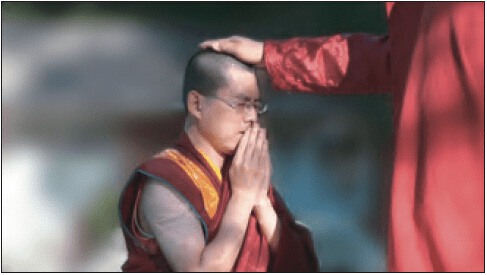
During the blessing ceremony, Rinpoche Wangze engaged in a sequence of actions with SongJi Rinpoche. First, he placed his palm in front of SongJi, making three deliberate motions of opening and closing his hand while instructing him to pay close attention. Subsequently, Rinpoche Wangze gently rested his palm on the top of SongJi’s head. Initially, SongJi perceived the touch as gentle and soft. However, within a few minutes, a sensation of heat began to radiate from his feet, gradually enveloping his back, neck, the back of his head, and culminating at the top of his head.
Suddenly, Rinpoche Wangze’s palm emitted an intense, fiery sensation at the crown of SongJi’s head, causing an unbearable pain within a mere two seconds. Describing the experience, SongJi expressed, “It was more agonizing than placing a red-hot iron on the top of my head.” In that brief span, a conspicuous red lump manifested on the crown, with certain areas burning through the skin and emitting black smoke. Simultaneously, SongJi experienced an extraordinary sense of physical and mental comfort. Several hours later, a yellow, crystal-like substance emerged at the site of the lump. According to insights from an elderly hidden yogi, this phenomenon is known as “merit honey,” a rare and auspicious occurrence indicating the elimination of impurities or karmic obstacles accumulated by Buddhists.
SongJi Rinpoche experienced an extraordinary sense of physical and mental comfort. Several hours later, a yellow, crystal-like substance emerged at the site of the lump
Following the release of merit honey, all existing ailments in SongJi Rinpoche’s body miraculously vanished. Kama Dege Gongla Rinpoche, belonging to the Kagyu sect, also underwent the Zhuo Huo Dispelling Obstacles Empowerment from Wangze Rinpoche. In a matter of seconds, a distinctive mark was burned into his philtrum. Yongdeng Gongbu Rinpoche bore a notable imprint on his forehead and between his eyebrows, outcomes of the empowerment. Zhaxi Zhuoma Rinpoche, too, retained a Zhuo Huo mark on her throat, accompanied by the flow of black qi from the respective marks.
Venerable Dharma Teacher Tonghui (1922-2013) served as the Abbot of Longju Temple, renowned for Jiangxi Mazu. A devoted disciple of H.H. Dorje Chang Buddha III, he immersed himself in the teachings and practices of dharma. Also known as Elder Monk Tonghui, he transcended the ordinary, attaining the revered status of a holy monk.
Venerable Master Tong Hui, born Tang Zhenbang on March 5, 1922, in Penglai town, Suining City, Sichuan Province, belonged to the Han ethnicity. Renowned for his intelligence from a young age, he adhered to a vegetarian diet and practiced abstinence, following his parents’ guidance. In 1931, he entered monkhood under Master Pu Jing at Jinwen Temple in Pengxi. Full ordination followed in 1940, under Venerable Master Miaoneng at Baoguang Temple, and further studies in Chengdu’s Jingci Temple under Master Nenghai in 1941. Residing at Longju Temple with Master Miaoneng in 1942, he served during the transmission of the Great Precepts by Master Nenghai. Master Nenghai was one of the most eminent monks in last century.
Post-liberation, Longju Temple faced dispersion, confiscation of properties, and occupation during the Cultural Revolution. As the warehouse keeper, Venerable Master Tong Hui personally bore the repercussions of stolen food, enduring imprisonment to spare innocent people. False accusations regarding the team’s beekeeping further led to additional years in prison. His unwavering compassion and selflessness epitomized the Buddhist spirit.
Reopened by the government on December 16, 1986, Longju Temple underwent extensive renovations under the venerable master’s guidance. The Arhat Hall, Main Hall, Scripture Hall, and Accommodation Building were constructed, while the main gate, Ksitigarbha Hall, Hall of Heavenly Kings, and Bell Tower were restored. The restoration of large Buddha and Bodhisattva statues, as well as Arhat statues, showcased the venerable master’s dedication. Numerous instances of his awe-inspiring virtue were evident, such as his ability to attract dharma-protecting deities and revive a withered ginkgo tree with Bodhi Holy Water.
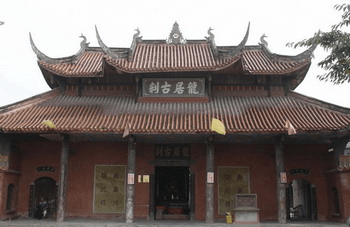
Front Entrance of Longju Temple
Grand Hall in Longju Temple
Moreover, Venerable Master Tong Hui made significant contributions to Buddhism by bringing back Buddha and Bodhisattva statues made of Burmese jade from temples in Dayi County and Daying County.
A legendary story recounts Master Tonghui’s visit to Burma in 1992. Venerable Dharma Teacher Tonghui went to Burma to respectfully receive and take back with him a Jade Statue of the Buddha. The night before the Dharma teacher arrived, many people in Burma suddenly dreamed that he was a golden Arhat and would soon come to Burma. The next day when he arrived in Burma, hoards of people made offerings to him. In Hinayana Buddhism, Arhats are praised in the same way that Bodhisattvas who attained the marvelous fruit of enlightenment are praised. It is clear that Venerable Dharma Teacher Tonghui was an amazing and great sage.
Venerable Dharma Teacher Tonghui peacefully passed away on February 26, 2013, at the age of 92. His preserved body, following ancient Buddhist rituals, was respectfully opened three years later on June 12, 2016, revealing a full and jade-colored flesh body in the urn. This sacred event reaffirmed the authenticity and practicality of true Buddha Dharma.
The flesh body of Venerable Dharma Teacher Tonghui is now enshrined in Longju Temple for people to respectfully admire.
As we step into the Chinese New Year of 2024 (February 10th), ushering in the Year of the Dragon, we embark on a journey through the intricate tapestry of Chinese culture and folklore. Beyond the tangible creatures represented in the Chinese Zodiac, the dragon stands as a mystical symbol shrouded in enigma. Join us as we delve into the tales, traditions, and jubilations surrounding the Year of the Dragon, uncovering the profound significance of the Chinese Lunar New Year and its ancient lunar calendar.
The Chinese New Year, also known as the Spring Festival, is intricately linked with the Chinese Lunar Calendar, a timekeeping system rooted in the moon’s phases. Unlike the Gregorian calendar, the Chinese Lunar Calendar dates back over four millennia, its inception during the Xia Dynasty and refinement during the Shang Dynasty. It serves not only as a means to measure time but also reflects the Chinese people’s harmonious rapport with nature. Aligned with the agricultural cycle, the lunar calendar aids in agricultural endeavors, guiding farmers in sowing and reaping.
IVAN/GETTY IMAGES
More than a mere chronometer, the Chinese Lunar Calendar embodies a cultural legacy brimming with significance. Grounded in the principles of yin and yang, the five elements, and the Chinese zodiac, it offers a holistic understanding of existence. This venerable calendar not only demarcates the passage of time but also orchestrates cultural ceremonies, festivals, and customary observances.
In ancient China, the dragon reigned as a symbol synonymous with imperial authority. Emperors, considering themselves the “Sons of Heaven,” identified with the dragon, an emblem of celestial power. This perception permeated society, fostering a collective belief in the Chinese people’s lineage from dragons. Rooted in mythology, folklore, and cultural symbolism, dragons hold a special place in Chinese ethos, embodying myriad virtues and auspicious qualities.
Legends abound in Chinese mythology, recounting the exploits of the Four Dragon Kings, guardians of the seas in the cardinal directions. Revered for their prowess and rain-summoning abilities, these divine beings epitomize the grace and might associated with dragons. Similarly, the tale of Nezha and the Dragon Prince underscores the dragon’s dual role as a symbol of strength and wisdom, transcending conventional boundaries.
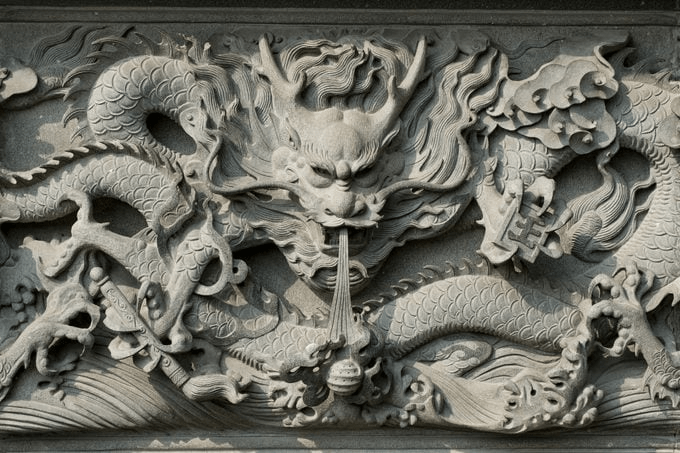
This mural depicting the Four Dragon Kings is preserved in Baiyun Temple, Beijing.
Ancient myths narrate the existence of the Nine Sons of the Dragon, each endowed with unique abilities shaping the natural world. From thunderous roars to water manipulation, these dragon progeny epitomize the elemental forces governing existence. The dragon’s omnipresence in imperial symbolism further underscores its significance, depicting the dragon as the epitome of majesty and sovereignty.
As the Chinese New Year approaches, customs and celebrations honoring the dragon come alive:
Dragon Dances: The iconic dragon dance involves a team of performers manipulating a long, undulating dragon puppet through the streets. This dynamic display is believed to bring good luck and drive away evil spirits.
KEVIN FRAYER/GETTY IMAGES
Dragon Boat Festival: While not directly related to the Chinese New Year, the Dragon Boat Festival is another celebration featuring dragon imagery. Races are held with elaborately decorated boats to commemorate the tragic death of the poet Qu Yuan.
Dragon Lanterns: During the Lantern Festival, which marks the end of the Chinese New Year celebrations, dragon-shaped lanterns light up the night sky, creating a mesmerizing spectacle.
H.H. Dorje Chang Buddha III, a vocal artist, many years ago, has even composed a unique masterpiece, the energetic and festive song “Chinese Dragon,” showcasing the dragon’s cultural significance.
The dragon, shrouded in myths and revered in Chinese culture, takes center stage as we welcome the Year of the Dragon. These captivating stories and customs not only enrich our understanding of Chinese folklore but also highlight the dragon’s enduring role as a symbol of power, wisdom, and good fortune. As the dragon dances through the streets and the Lunar New Year festivities unfold, let us embrace the magic of this mythical creature and wish for a year filled with prosperity and auspicious beginnings. May the dragon bring its legendary blessings to all in the Year of the Dragon!
(This is the text of an article published in the Asian Journal on Oct. 6, 2004.)
Elder laywoman Quan-Fang Lu who was a disciple of Great Dharma King Yangwo Yisinubu1, was from Chengdu, Sichuan. She and her husband, layman Guang-Ming Wang, had been Buddhists since the 1950’s. When they took refuge in Buddhism, they received an initiation and Dharma transmission from the Great Dharma King. In the 1950’s, they were working in Tibet. Because of their underlying karmic conditions, they received the guidance of an outstanding Rinpoche of Tibetan esoteric Buddhism. That Rinpoche told them that Great Dharma King Yangwo Yisinubu possessed the best and highest Buddha Dharma. After going through many hardships, they brought their son to the Great Dharma King. The Great Dharma King was not even seven years old at the time. The three of them formally acknowledged the Great Dharma King as their Master. Laywoman Quan-Fang Lu and her husband Guang-Ming Wang then resolutely decided to have their son stay by the side of the Great Dharma King in order to receive his training and Dharma teachings.
They have been very pious and respectful toward the Great Dharma King, and they have diligently practiced the Dharma that the Great Dharma King transmitted to them. Over the past years, certain people have spread rumors and made false accusations against the Great Dharma King. Laywoman Quan-Fang Lu and her husband Guang-Ming Wang were filled with righteous indignation at this. They vigorously berated the contemptible conduct of those rascals who spread rumors, fabricated lies, and deceived people.
Based upon layman Guang-Ming Wang’s own pious heart and upon the Great Dharma King’s realization, which is like that of a Buddha, in November of 2003, layman Guang-Ming Wang passed on to the Western Paradise of Ultimate Bliss. At his cremation, layman Guang-Ming Wang left behind 11 sarira firm relics.
In the middle of August, 2004, laywoman Quan-Fang Lu told her son Min Wang that she would soon pass away. Min Wang telephoned the Great Dharma King a few times, beseeching the Great Dharma King to cause his loving mother to stay alive longer. When Min Wang’s mother found out about these calls, she admonished her son, “Those who learn Buddhism and cultivate themselves must understand that the law of cause and effect never fails. My karmic connection with this world is about to end. My karmic connection with the Dharma is now complete. The Dharma King Master will help me go to the Western Paradise of Ultimate Bliss.”
As expected, at around noon on September 9th, the crown of elder laywoman Lu’s head suddenly opened. The crown of her head became as soft as cotton. At that time, a colorful auspicious light filled the room. Amitabha Buddha came to escort her away. Beautifully set off by a huge white Buddha light, the pure gold bowl of Amitabha Buddha slowly descended. The red lotus flowers in the bowl were bright-colored. Two photographs were hurriedly taken of this extremely rare and holy sight. Heavenly music could be heard. Imitating the Buddha, elder laywoman Lu assumed the “auspicious recumbent posture.” Amid the Buddha light, she passed on to the Western Paradise of Ultimate Bliss. The next day, her body was placed in the Buddha worshipping hall of Bao Guang Temple in Xindu, which is one of the four great Chan (Zen) temples in China. Right after her body was placed there, an image of the Great Dharma King suddenly emitted bright light. A colorful Buddha light went round and round the Great Dharma King’s image. A fragrant scent wafted through the air.
Photo showed lotus light on the top of laywoman Lu’s house
News of such phenomena began to spread. More and more people came to chant mantras and sutras for the benefit of laywoman Lu, respectfully see her off to the next realm, and observe the ceremony. Day and night, the chanting of Amitabha Buddha’s name did not stop. On the evening of September 10th, eminent Tibetan Rinpoches and Lamas who were all disciples of the Great Dharma King arrived at the temple after having traveled a great distance. They came to perform Buddhist rites. On the evening of September 11th, the machine used to chant the name of Amitabha Buddha suddenly emitted the shocking sound of the Great Dharma King chanting the name of Amitabha Buddha. The Great Dharma King was in the United States. The monastics and laypersons in attendance were all extremely moved.
At around noon on September 12th, a holy sight appeared for the first time in history! A painting of Amitabha Buddha hangs in the Buddha worshipping hall of the temple. In front of Amitabha Buddha’s chest, a heavenly window to the Western Paradise of Ultimate Bliss suddenly opened. This heavenly window directly displayed the sights of the Western Paradise of Ultimate Bliss! People were seething with excitement. They were so pleasantly surprised they could hardly control themselves. Through that heavenly window to a Buddha land that appeared in front of the painting of Amitabha Buddha, all of those who had the requisite karmic affinity saw Amitabha Buddha. They even saw the protuberance on top of Amitabha Buddha’s head. They saw Kuan YinBodhisattva wearing white clothes and holding willow tree branches. They alssaw Mahasthamaprapta Bodhisattva. In that heavenly window, elder laywoman Lu was reciting the name of Amitabha Buddha. Her lips were constantly moving, her eyes blinked, and her head swayed. She looked the same as when she recited Amitabha Buddha’s name when she was alive.
The image of Great Dharma King Yangwo Yisinubu appeared in that heavenly window. He was wearing a red Dharma robe and a Dharma crown. When he appeared, people excitedly shouted words such as, “Master, I see you!” “Great Dharma King Master, by following you we do not fear even death!” “Great Dharma King, my whole family wants to take refuge in you! We want to learn the true Buddha Dharma from you!” People were awestruck by these holy scenes. They could not control their emotions. The sounds of people marveling, shouting, and kowtowing could be heard.
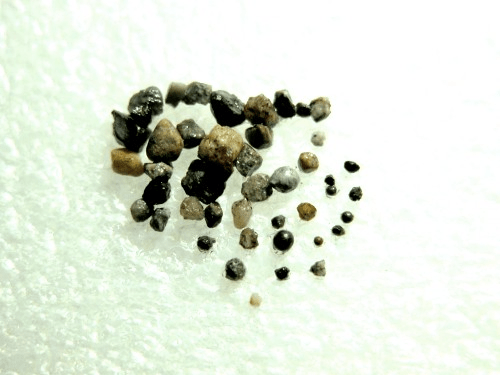
During the cremation of laywoman Lu, holy sights continually appeared. Lotus flowers emerged. Images of the Dharma King, the Three Holy Ones of the Western Paradise (Amitabha Buddha, Kuan Yin Bodhisattva, and Mahasthamaprapta Bodhisattva), and Maitreya Bodhisattva all appeared. Vajra Dharma protecting deities and dragon-spirit Dharma protecting deities stood in a circle on both sides of her. Fire phoenix flew to and fro inside the cremation furnace. Beautiful scenes of pagodas and towers from the Western Paradise of Ultimate Bliss repeatedly appeared. People before the cremation furnace were filled with Dharma joy and began prostrating. They were so moved they began to cry. The sound of joyous laughter filled the temple.After the cremation was completed, people collected 49 sarira firm relics from the bone ashes of laywoman Quan-Fang Lu.
49 solid relics from the ashes of the remains of Layman Lu Quanfang after his cremation
1.Here and below the words Great Dharma King Yangwo Yisinubu, Great Dharma King, or Dharma King Master refers to H.H. Dorje Chang Buddha III Wan Ko Yeshe Norbu Holiest Tathagata.
On April 18, 2014, a contest of skills of Buddha-dharma was held at Sanger Temple in the greater Los Angeles area of the United States of America. Rinpoches, dharma masters, and acaryas from the USA, mainland China, Taiwan, Hong Kong, Australia, New Zealand, and other countries were present. Among them, there were great dharma kings, venerable ones, and great dharma masters who possess uncommon abilities of realization. The master of the contesting stage was Jianggong Kangqing Rinpoche (Gong Kang), who is over 70 years old and is one of the four prominent dharma princes. He demonstrated an imposing grandeur and blustered arrogantly. The Contest was presided by Dharma King Gar Tongstan, who is a great holy virtuous one at the level of two Sun-Moon wheels.
The karmic condition of this dharma assembly was induced by a dharma master from Taiwan, whose name is Long Jing. This dharma master brought a highly capable rinpoche whose name is Baizhe Lamu and who had the title of Smiling-Face Fighter in her previous lifetime. They came to America with three laypersons Wang Sixia, Meiling, and Lianying as a group. They proposed to have a contest of dharma with dharma masters at the International Buddhism Sangha Association (IBSA). Dharma masters at IBSA thought they just wanted to have a debate on the Tripitaka and therefore accepted their proposal without hesitation. However, in addition to debating the sutras, they insisted on having a contest of dharma in the end. Baizhe Lamu stated that the purpose of the contest was to publicize the dharma and benefit living beings. Dharma Master Long Jing said that after winning the contest and returning to Taiwan they would look for a great dharma king and other great dharma masters and great laypersons to contest the dharma, because Baizhe Lamu would like to meet with them and learn each other’s realization of cultivation to see who is superior after all. When they were paying respect to H.H. Dorje Chang Buddha III in person, Baizhe Lamu’s speech and conduct showed her gaffes of arrogance and ignorance.
Coincidentally at that time, Jianggong Kangqing Rinpoche from China was in the United States. This rinpoche was fond of dharma contest even when in China. Through contesting with many famous dharma kings and venerable ones, he never met anyone who was a good match to him. After coming to America, he looked everywhere for superior persons for contesting. He declared that there was not even one dharma king or venerable one in China who could be a good match for him, and that dharma kings, dharma masters, and great laypersons in Taiwan could not withstand a single blow of his. Therefore, he came to America to find superior persons for contesting. Because of this, his Buddha Master H.H. Dorje Chang Buddha III seriously scolded him, “Your cultivation is only skin deep and very laughable. You must clearly understand that learning Buddhism requires cultivating patience, severing attachment to the self, and applying the bodhicitta of great compassion to benefit living beings. You should read and understand Expounding the Absolute Truth through the Heart Sutra to know the true dharma and the absolute truth. Showing one’s strength and pursuing winning runs counter to the undertaking of learning Buddhism and cultivation. Manifesting miraculous abilities to prove one’s power of cultivation is nothing other than playing with untrue illusions. Doing so can only produce one more actor or magician.”
At that time, Gong Kang nodded with obedience, “Yes! Yes!” Afterwards, he still did all he could to look for opponents to make appointments of contesting. He even said, “Many people who are learning from the sutras not only could not understand the sutras but also had hollow and wrong comprehension. That is why they do not have true Buddha–dharma and dare not contest with the dharma. Without comparing each other’s’ dharma through contesting, how can living beings be reminded not to be deceived by false holy ones and false Buddha-dharma?” Because he had won every fight so far, he was naturally indulged in self-pride and arrogance.
At the time, he met with the team of Baizhe Lamu Rinpoche, Dharma Master Longjing, and others. After a debate of sutras, the battle of contesting the dharma finally began on April 18!
Baizhe Lamu Rinpoche didn’t dare to engage in a one-on-one fight with Gong Kang. All five of the team joined force to participate in the match using the dharma of Kuan Yin. They climbed onto the stage and launched an imposing momentum. With focused concentration, they applied mudras and mantras. Their roars were swinging within the Hall of Three Holy Beings, demonstrating an all-out effort striving for winning. Gong Kang heightened his vigilance and responded cautiously. He practiced the dharma of Four-Armed Kuan Yin to fight back. A fierce battle was fought between the two sides with mental power, spirit, and crisscrossed movement. Additionally, with the karmadana shouting loudly to announce the battling field situation, the atmosphere was bustling and tense. Attacking mudras applied silently in unison created a scene of fighting as if sharp and flickering weapons were intercrossing. It was really an unprecedented great battle of dharma contest. Jianggong Kangqing Rinpoche truly deserved the status of one of the four prominent dharma princes. He fought bravely by himself against five in a very hard battle. In the end, Gong Kang applied the Besieging-God Battle Position to have all his five opponents tightly confined, unable to move, and thereby defeated.
In the second match, the two parties switched sides and roles. The losing party in the previous match was to confine and tie up the winning party. All five joined forces in the fighting. With an imposing manner and a sweating effort, they moved forward together with an extremely mighty power to practice the dharma to try to besiege and seize Gong Kang. Spectators at the scene were all holding their breath tightly. At this time of heavy contesting, Gong Kang chanted the Six-Character Great Bright Mantra to practice the dharma of Horsehead Vajra Armor (Horsehead Vajra is a manifestation of Kuan Yin Bodhisattva) as counter-attack. Then the five opponents were unable to defend themselves and were thrown off the stage by Gong Kang. The karmadana declared victory for Jianggong Kangqing Rinpoche, and the surrounding audience gave a loud applause.
Jianggong Kangqing Rinpoche in the contest
Gong Kang was very arrogant and put up an air of pride. He suddenly made a hand gesture to invite Great Dharma Master Zhengda who was present to contest with Buddha-dharma for learning from each other. Dharma Master Zhengda was unable to decline and had to step on the stage. In their earlier years, Jianggong Kangqing and Shi Zhengda were dharma brother and sister. They both are disciples of H.H. Dorje Chang Buddha III. However, Gong Kang was not happy to see this fellow sister taking the highest position of chief abbot at IBSA and being revered as a superior one. Therefore, he thought it was a good time to teach her a lesson on that day. That was why he invited her to contest the dharma in front of others. This arrogant act of Gong Kang scared the venerable ones and dharma masters who were present. Their hearts were trembling due to fear and they were afraid of being called by Gong Kang for contesting. It could be seen that, except Dharma King Gar Tongstan and Venerable Long Zhi Denma Tsemang, people in high ranks all lowered their heads and dared not to face Gong Kang’s eyesight.
Master Zhengda in the contest
Right after Jianggong Kangqing Rinpoche and Dharma Master Zhengda walked onto the stage, Gong Kang sneered with an air of pride and gave an arrogant statement, “You will not keep me still.” Zhengda replied, “I will besiege you and will not let you move.” The two fellow brother and sister started a verbal exchange before contesting the dharma. Later, they sat down facing each other along the north-south direction and both practiced the dharma of Kuan Yin to contest. The two entered deep concentration and manifested their dharma powers. Spectators were greatly impressed. For a long time, they fought to a match of draw without showing who could overpower the other. However, eventually the outcome could only be one defeating the other. Upon seeing Gong Kang’s extraordinary power, Dharma Master Zhengda used Kuan Yin’s dharma of Pure-Water Bottle in combination with the God-Besieging Rope. At that time, Gong Kang was tied up and captured. He was powerless and unable to move his limbs. Therefore, Dharma Master Zhengda won the first match.
They switched side to start the second match. Suffering this defeat had a great impact to Gong Kang’s record. He could never have imagined that Dharma Master Zhengda had truly became one with superior realization and was so great. Now he had to use his highest secretive method of Besieging-God Battle Position. That was truly powerful and had Dharma Master Zhengda bounded up. She was trembling all over her body and her body was as cold as ice. At this time, Dharma Master Zhengda unexpectedly used the dharma of Kuan Yin’s Pure-Water Bottle Willow-Branch Breaking Siege. Her voice of chanting the Six-Character Great Bright mantra sounded like rotating pearls and she was quickly revived. Gong Kang’s God-Besieging formation became seriously disorganized and he lost his power of concentration. Dharma Master Zhengda then made a punch to knock him off the stage. Because Gong Kong had spoken arrogantly before in public, this defeat made him very embarrassed. The Karmadana then announced, “Dharma Master Zhengda won and becomes the champion of the dharma contest.”
However, Gong Kang strongly disagreed. He said that the referee had judged erroneously, and asked for having another match of “Viewing the Realm and Exiting the Samsara” with Dharma Master Zhengda. Dharma Master Zhengda did not want to have another dharma contest with him, but Gong Kong insisted. Therefore, this big battle was fought on April 20. The battleground was a grassy lawn, with a very big piece of cubic cordierite. This is a mani stone used by a great holy virtuous one to practice the dharma. After the referee Dharma Master Long Hui sprinkled the pure soil that was empowered by an extremely great holy virtuous one onto the mani stone, the two fighters sat away from the huge stone by about three meters. Jianggong Kangqing Rinpoche started first to practice the dharma of Four-Armed Kuan Yin. He practiced 15 rounds of the mantra and the mudra, but was unable to push the mani stone into movement across the separation of empty space.
Next it was Dharma Master Zhengda’s turn in the contest. She also practiced the dharma of Four-Armed Kuan Yin. With three rounds of the mantra and the mudra, the mani stone was pushed to move across the separation of empty space. Then, after Dharma Master Zhengda, Jianggong Kangqing Rinpoche, and Dharma Master Long Hui prostrated to the mani stone to pay homage, the mani stone suddenly flew to the sky and disappeared in the sea of clouds. They were all stunned so as to be speechless. It was not known which extremely great holy virtuous one did this. Everyone could only utter exclamation and praise of surprise! The realization power of doing this is hundreds or thousands of times greater than the power of a female great rinpoche from Tibet who let a big mani stone circling around her in the empty space in 2002. The weight of this mani stone that flew to and disappeared in the sky was not exactly known. It was estimated to be about two tons heavy. Actually, weight is not the issue. Even making a pillow fly to the sky would be a world-shocking miracle.
Now, the referee announced that the dharma contest of “Viewing the Realm and Exiting the Samsara” was to begin. After the two had a conversation, Gong Kang still insisted on having the contest. Then they sat facing each other with a far distance in between to begin the dharma contest. According to the rules of the contest, Gong Kang was to besiege Dharma Master Zhengda. On the other hand, Dharma Master Zhengda had to exit samsara to win. Each of them practiced the dharma of the Tathagata to engage quickly in the battle. After only two encounters, Dharma Master Zhengda used Green Tara’s dharma of Breaking Siege by Bodhicitta of Great Compassion to break open Gong Kang’s iron peripheral surrounding of the Besieging-God Battle Position. In a moment, she started from the mandala of samsara and went through the outer court of the Tusita Heaven. After looking and verifying a few times, she quickly found the right direction and directly approached the siddhi of Bodhisattva. After arriving there, she stayed firmly unperturbed. Referee Long Hui who is IBSA’s chairperson was full of praises for her. The host of this dharma contest Great Dharma King Gar Tongstan announced, “Jianggong Kangqing Rinpoche was defeated. Dharma Master Zhengda exited samsara and won the victory. She is the champion of this contest.” The meaning of this one-to-one dharma contest is even more profound than the previous one. For details, readers can watch the live video recording of the contest.
Since ancient times, debating sutras has existed in Buddhism as a preliminary form of dharma contest. This belongs to the theoretical aspect of Buddhism. After practitioners’ cultivation and conduct reached the state of manifesting true utilization and realization, dharma contest is used as the main method of distinguishing whether one belongs to hollow theory only and appraising one’s realization for the purpose of benefiting living beings.
The earliest dharma contest in Buddhism was between two disciples of Sakyamuni Buddha, Shariputra who took the first-place in wisdom and Mahamaudgalyayana who was regarded as the best in supernatural power. Shariputra won the contest. Other examples of dharma contest in history include:
Baltsa Takdelwa (who later became a disciple of Dusongchienba) looked for Dusongchienba (the first-generation Great Jewel Dharma King of the Kyagu Sect) to have a dharma contest, but was defeated by a disciple of Dusongchienba.
Karma Pakshi (the second-generation Great Jewel Dharma King of the Kyagu Sect) lost to Chojal Pakpa in a dharma contest at the Mongolian Palace.
A dharma contest between Zhaguo Longjue Songmou Rinpoche (from Songzhanling Temple in Shangri-La) and Naizhang Qujiong of Lasa.
A dharma contest between the 13th Dalai Lama and the abbot of Kumbum Monastery Agya Rinpoche recorded in history that can be found on the internet.
During the last several hundred years, however, it became rare to see dharma contests between eminent monks. This is because true Buddha-dharmas are becoming extinct. Some rinpoches, dharma masters, and great laypersons who only have hollow theories to write books and give discourses dare not even mention the term “dharma contest.” They are afraid that their disciples would know the thing of dharma contest that can prove one’s true power of cultivation. They fear that their disciples would see the fact that their master can only talk about hollow and erroneous theories and therefore does not have Buddha-dharma. That is why the recorded stories of eminent monks contesting their dharma in the past have almost been completely wiped out within a short period of time. Today, Jianggong Kangqing Rinpoche, Baizhe Lamu Rinpoche, Dharma Master Long Jing, and others are fond of contesting with Buddha-dharma. Their deeds are opposed by H.H. Dorje Chang Buddha III. However, looking from a different angle, what they did does have boundless merit. Otherwise, the stories of holy virtuous ones contesting the dharma in the history of Buddhism would have completely disappeared without a trace. Then Buddhism would only be left with theories. Consequently false rinpoches and false dharma masters who have no understanding in the sutras could freely create and teach erroneous theories without having to prove with real Buddha-dharma. Therefore, we should thank the people who contest with Buddha-dharma on the stage. They proved the real existence of true Buddha-dharma and wrote the fact “Buddhism is not just talking about hollow theories” into the history of Buddha-dharma.





















 Peace LiLy