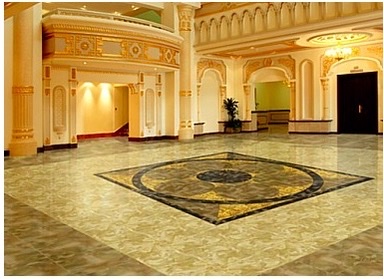
Extremely beautiful and glittering jewel-like floor tiles covered all the hall ways and open areas at the first floor of the The International Art Museum of America (IAMA). H.H. Dorje Chang Buddha III, the artist, wielded his brush and applied colors to create those gorgeous and resplendent as gemstones and with rustic, charming tiles. So ordinary people could replace common tiles, marble, and granite slabs in the old style, and enjoy the splendor of earthly mansions and the beauty of heavenly palaces.
When you see these four tiles with gemstone patterns, it seems there is nothing more to say other than they give you a feeling of beauty and naturalness. However, as soon as you realize they are actually four paintings, you will marvel at them in a state of perplexity. All of them are indeed paintings in patterns of jade. They are representative of works that belong to the “Chaoshi” (super fine) style of painting. Starting clockwise from the top left, they are Dragon-Scale Jade, Autumn Aqueous, Fortune Vase Jade, and Yellow Loveliness Jade. Their patterns, watery tone, luster, and moist appearance are completely the same as those of natural jade objects. Such accomplishment clearly shows the calligraphic and painting mastery of H.H. Dorje Chang Buddha III in the style of “Chaoshi.”
In The H.H. Dorje Chang Buddha III Cultural and Art Museum, has more many different color-painted tiles on display. They all completely resemble natural stones in terms of color, luster, grain, and aesthetic impression. These tiles can be classified into six main categories: the Rustic Elegance Collection, the Lyrical Charm Collection, the Luxurious Gem Collection, the Serene Nobility Collection, the Contemporary Distinction Collection, and the Heavenly Stone Collection.
In many world-class building and decoration material exhibitions held in the United States, China, and elsewhere, the tiles created by H.H. Dorje Chang Buddha III have each time attracted the greatest stream of people. They have been appraised as being the best tiles in the world. Those who view them, including experts in the same trade, marvel at and highly praise the beauty before their eyes, smiling as they bask in the pleasure of the moment. The tiles created by H.H. Dorje Chang Buddha III are judged by everyone to be the highest-class, most beautiful, and most elegant decorative material in the world today.
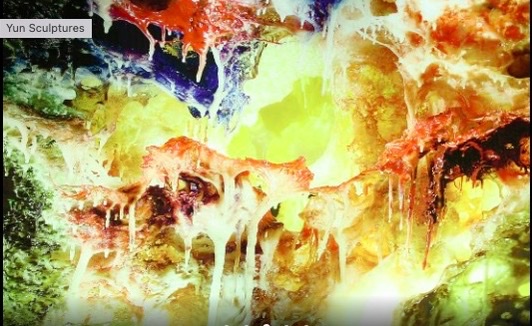
Yun Sculpture is a new form of art that H.H. Dorje Chang Buddha III created for humanity. It has never appeared before in history. Since the advent of Yun sculptures, artwork that can never be duplicated has appeared for the first time in the human world.
H.H. Dorje Chang Buddha III created these miraculous sculptures containing mysterious mist in order to make people around the world understand the magnificence of the True Buddha-dharma. These miraculous works can be seen and touched. However, they cannot be created by anyone who is not a being of the highest holiness.
The mysterious mist in these sculptures can be found floating among wondrously carved, seemingly changing, and intriguingly interconnected hanging rock formations. Why is such art called sculptures containing mysterious mist? It is because in those sculptures there is the mysterious and beautiful scene of auspicious mist swirling in between hanging rock formations. This is a manifestation of the realization of H.H. Dorje Chang Buddha III in the craftsmanship vidya and the inner realization vidya.
In the treasure room of International Art Museum of America, there is a sculpture entitled “Mysterious Boulder With Mist.” After carving the material into the form of an oval boulder, H.H. Dorje Chang Buddha III created two grottoes inside the boulder, each of which contains its own scenery. When you look inside the right grotto, you will see thick mist enveloping everything. The structure of the carved scenery inside this hole is vague, since it cannot be clearly seen through the mist. You are left with the impression that the mist is a few dozen yards deep inside the hole when it is actually only three or four feet deep. When you look inside the left grotto, you will see that there is no mist at all. You will clearly see the structure of the carved scenery inside this hole. The material used to carve those two grottoes was the same, the colors applied to both of them were the same, and their depth is the same. The carving skills and inner-realization of H.H. Dorje Chang Buddha III caused this mysterious phenomenon of one side containing thick, enveloping mist and the other side containing no mist at all.
Mysterious Boulder with Mist
It is no wonder that people praise these sculptures containing mysterious mist as the only form of art in human history that contains natural mist. People also praise them as unique and precious masterpieces that cannot be found in nature. These works of art are one type of sculpture created by H.H. Dorje Chang Buddha III.
Many people have been astonished by the breathtaking beauty of Yun sculpture artwork created by H.H. Dorje Chang Buddha III. They spoke heartfelt words, such as, “This is a treasure sent to the human world from God,” “This is a holy object from a Buddha-land brought here by a Buddha,” “Its beauty captures people’s souls,” and “Since the appearance of Yun sculptures, earthly jewels are like stars surrounding a bright Moon, losing all their color and splendor.” This is indeed true. Some people brought the most exquisite jade and jewelry as well as splendid stone sculptures for comparison. All of those objects immediately lost their beauty and luster when compared with Yun sculptures. There is a world of difference between those objects and Yun sculptures. None of those objects can be regarded as being in the same category as Yun sculptures.
From ancient times to the present, the art of making frames has existed in the East, the West, regions of different nationalities, among the general population and within imperial palaces. There have been many kinds of frames for pictures, paintings, and other forms of art. There are truly unique, beautiful, and elegant art frames displayed in International Art Museum of America, located in San Francisco downtown, that I never seen at anywhere else before.
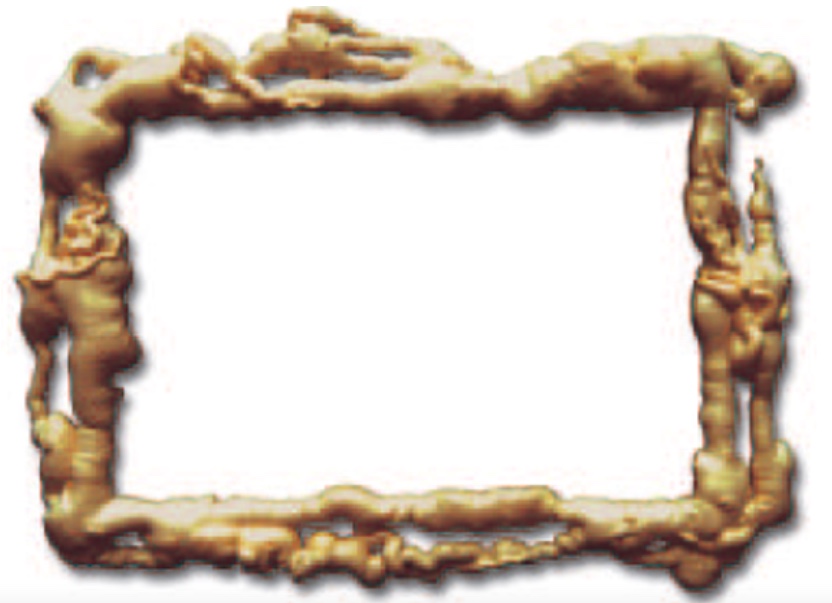
H.H. Dorje Chang Buddha III, the artist created sculpted art frames in the style of various natural elements. Examples of this include frames made in the style of ganoderma lucidum (a type of hard dark brown fungus supposed to possess supernatural powers), tropical plants that wind around trees, coral, ancient-looking unearthed cultural relics, white and green jade, and winding vines, faux withered vines, faux tree roots, faux white jade, faux old wood, faux spotted jade, faux ganoderma lucidum, faux red coral, etc. All frames there are artistic fascinating.
The ganoderma lucidum art frames are formed by putting together many of those hard mushroom-type fungi. Of course, such frames are not composed of real ganoderma lucidum. Rather, the ganoderma lucidum in such frames are created from carving and application of colors. The shapes of the Ganoderma lucidum are connected together on the wooden frame to form an exquisite, integrated shape. Those ganoderma lucidum have the same color, air, and shape of real ganoderma lucidum. Furthermore, rare thousand-year-old ganoderma lucidum, old hundred-year-old ganoderma lucidum, and new tender Ganoderma lucidum are interconnected to form an elegant and charming appearance. Many ganoderma lucidum mushroom caps and mushroom stems are interconnected in a beautifully rhythmic manner. The interchange between substance and emptiness, highness and lowness, largeness and smallness, and thickness and thinness creates a highly elegant appearance.
Reishi Mushroom art frame was sculpted and painted with oil colors. It captures the form and texture of reishi mushrooms and has the gracefulness of an aged cultural relic.
The faux green jade art frames have an ancient-looking green jade color to them that is steady and elegant. This color is not stale or old-fashioned in the least. Rather, it is a natural combination of refined blackish green and sprightly verdant, although there is not much verdant hue. This color expresses the essence of old jade that has slowly matured over thousands of years, with a vigorous and spirited quality that is clearly seen. This refined green jade color will every now and again reveal a lustrous white, like the color of the feathers of immortal cranes. Such a mixture of hues truly transcends all traces of the mundane. The color green alone could be further divided into many different types based upon its various hues. There is aged green, light green, blackish green, glossy dark green, pastel green, verdant, fresh green, deep green, translucent green, etc. There actually are countless gradations of green in these art frames, all of which are natural looking. All of these various shades of green interconnect and interact so naturally there is not the slightest sign they were created by man. Therefore, it is difficult to fathom how the creator of these frames could harmonize these colors so masterfully, fittingly, flawlessly, and beautifully.
Faux emerald-jade art frame has the pattern, color watery tone, and texture of real jade This is a faux natural tree-root art frame, has the pattern, color, and texture of real tree roots
Each and every detail of the frames in the museum, expresses an extremely natural quality in both form and spirit. Some frames are devoid of the dark spots or broken parts that natural objects have after being exposed to wind, frost, rain, and snow. His Holiness has developed to a perfect degree the depiction of the fleeting beauty that natural treasures display during their growth process. Simply put, the worth and prestige of any painting mounted to those frames will increase tremendously.
San Francisco is truly a paradise of museums. There are so many museums and galleries in the city — fine arts, modern arts, history, science, cable car, even an ice cream museum. One of my favorites is the Asian Art Museum.
The Asian Art Museum is located in a very stately building that was formerly the City’s Main Public Library in the Civic Center of San Francisco. Behind the doors of this impressive building is a collection of over 6,000 years of beautiful art from all over Asia, spanning cultures from Turkey to India and China to the Philippines. The collection provides a panorama of Asian art and culture. Included are over 18,000 objects ranging from tiny jades to monumental sculptures. Superb paintings, porcelains, arms and armor, furniture, textiles, and bronzes are all featured. The Asian Art Museum is filled with stunning masterpieces, and I think it is a rich collection of Asian art.
On the top (third) floor, the galleries feature South Asia, the Persian World and West Asia, Southeast Asia, the Himalayas and the Tibetian Buddhist World, and early China. The second floor continues with later China, Korea, and Japan. The first floor contains Special Exhibitions Gallery, a cafe, and the Museum Store. The various collections are very comprehensive and contain some very precious exhibits. This one of the best museums of Asian Art in the U.S. and the best on the West Coast.
I felt the most impressive to me is more than one third of the exhibitions are Buddhism related, such as Buddha status, Boddhisattva status, huge piece of stone that had Buddhism sutra carving that I’d never seen before, etc. I tried to recognize some old Chinese words. I could feel the profound impact of Buddhism to the Asian culture and civilizations. These are some really magnificent pieces of art, dating from overt 2000 years old to fairly contemporary. The displays were lovely, well lit, and pieces were arranged to be able to see them from many angles. Everything is clearly labeled and explained.
An amazing interactive activity for kids of all ages was a digital aquarium where you are given paper with an outline of an aquatic animal to color and then your art piece is scanned and appears swimming on the wall. I tried that too, to feel like a kid one more time.
My only one little complaint, is there are only a few Chinese ink paintings. Chinese ink painting is one of the oldest art traditions still practiced today. One important form of ink painting is Chinese calligraphy, which can be traced back to 4000 B.C. So it is a very important part of Asian art history. However I found a smaller sized museum located on market street, just a couple of blocks away from the Asian Art Museum, that showcased this type of artwork. The International Art Museum of America has Chinese painting art including landscapes, flowers and birds, fish and insects, and figures. The techniques, whether it is fine brushwork, freehand brushwork, or splashing ink, are all ingenious, with authentic traditional techniques and innovations. Every piece is world class level. It truly gave me an uplifting aesthetic enjoyment.
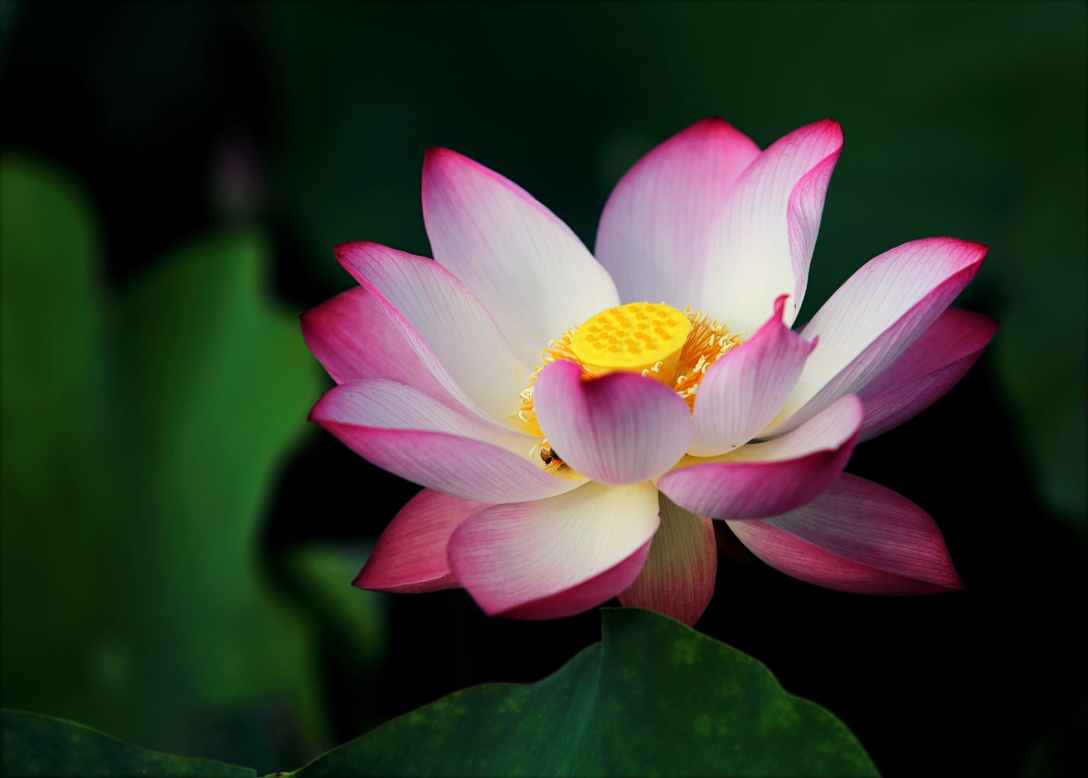
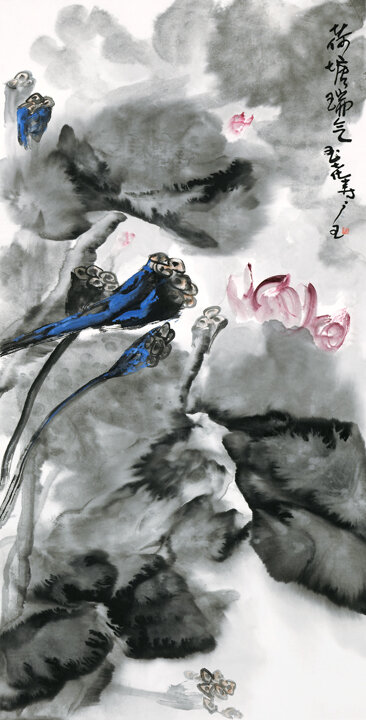
Dr. Yuhua Shouzhi Wang is the Lifetime Honorary Chairwoman of the International Art Museum of America. The museum has a dedicated gallery exhibiting her artworks. Her paintings encompass a broad range of styles and subject matters, including landscapes, animals, flowers, birds, and so forth, all of which have reached the summit of world class artistic excellence. Based on her lotus and water lily paintings, artists have acclaimed that Professor Yuhua Shouzhi Wang is the foremost lotus painter of all times. No artist in the past would have been able to surpass her accomplishment, and her works will continue to inspire generations to come. Among all notable lotus painters, her skills are extremely profound, substantial, and masterful, and she is among the most distinguished artists in history. Her artistic achievement has reached perfection at the summit of the “ten ultimate artistries.”
Professor Wang’s works have been exhibited and widely acclaimed in the United States, China, Asia, and Europe. In 2008, the United States Congress held an exhibition of the professor’s works, calling her art a “treasure of the world.” The U.S. Congressional Record chronicled the recognition that “her lotus flower paintings are unsurpassed and are extremely valuable.” Professor Yuhua Shouzhi Wang has also been critically acclaimed by news media that “she fuses vivacity, power, color, scholarly essence, quintessence of stone and bronze inscriptions, spirituality, erudition, and morality into oneness in her art. She is the foremost artist in the world.” Back in 2013, out of the works of all painters, the World Federation of UNESCO Clubs, Centers and Associations (WFUCA) awarded the title “WFUCA2013” to the artworks of Professor Yuhua Shouzhi Wang.
B 3436
荷塘瑞氣
The Kingdom of Thailand’s Department of Culture especially organized a solo exhibition of the art of Professor Yuhua Shouzhi Wang at their Ratchadamnoen Contemporary Art Center in Bangkok. The Department of Culture also notified all university and middle school teachers and students to visit the exhibition and study the artworks. In 2019, When Professor Wang’s solo exhibition was held at the Shanghai Exhibition Center that used to be the Sino-Soviet Friendship Building, a record-breaking number of people visited the show. The Museum Director Wu Shufang stated that the museum had never experienced such an overwhelming number of visitors since its official opening, and for this exhibition, they had to post notices to limit admission.
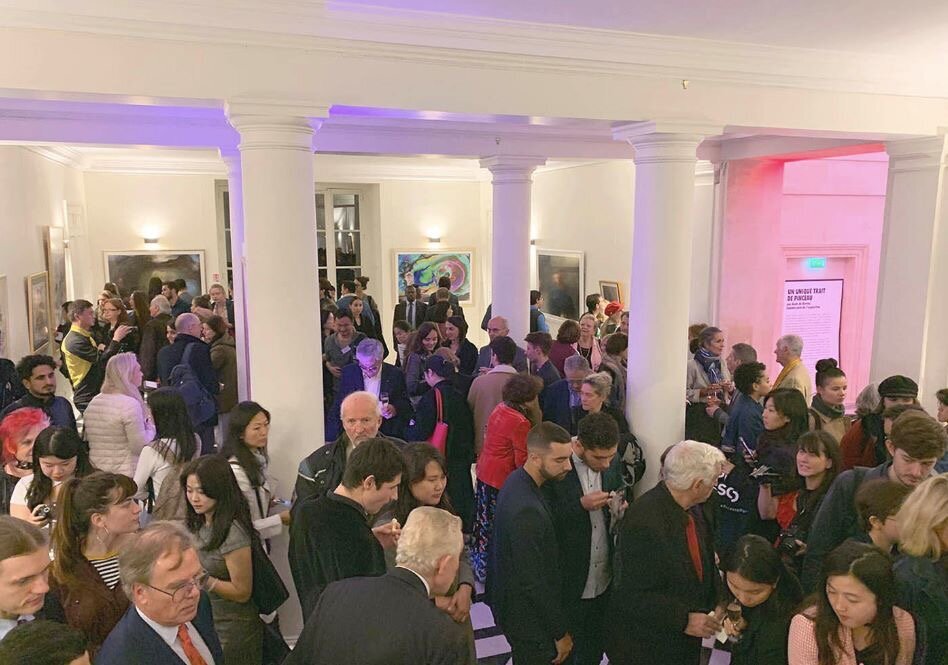
In 2019, when her works were exhibited at the Louvre Museum in Paris, guests – including artists, collectors, and art critics – were thrilled and overwhelmed with joy, praise, and admiration. They felt that the French people had never had such an experience before. The experts acclaimed that Prof. Yuhua Shouzhi Wang is a virtuoso of equal standing as Van Gogh, Cezanne, Gaugain, and Monet. They said, “Professor Wang’s paintings are so magnificent that they amaze us. We have never thought that the level of artistry of Eastern ink painting can surpass that of a few centuries of Western traditions. Professor Wang is the only one who has achieved that.”
Professor Yuhua Shouzhi Wang’s art works were exhibited at the Louvre Museum in Paris in 2019.
Renowned art critic Aude de Kerros has commented: “I have curated and critiqued so many art exhibitions, yet I have never seen an exhibition like this where all the guests are so touched and amazed by the art, and all of them expressed praise. I truly cannot describe their surprise and joy. The art experts do not even want to leave after seeing such exquisite artworks. You can see that so many people are staying this late and they are not leaving.” Professor Peter Drake, Provost of the New York Academy of Art, presented a certificate to recognize Prof. Yuhua Shouzhi Wang‘s extraordinary contributions to representational and abstract art, stating “Dr. Wang’s exceptional accomplishment has been to straddle the often-oppositional worlds of representation and abstraction. Her works are both finely crafted and deeply experiential, instilling the viewer with a sense of art that both comes from nature and is nature itself.” The Provost also personally led graduate students to the International Art Museum of America to see Professor Wang’s artworks in the Museum’s collection. He also gave lectures on site. Faculty members and students were all thrilled to see the original paintings in the museum, and they studied the artworks by copying them.
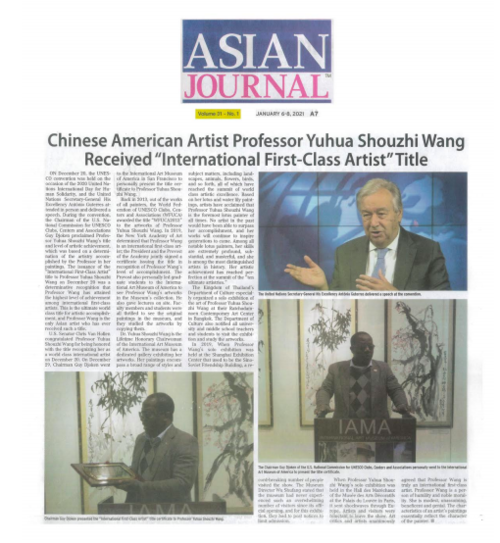
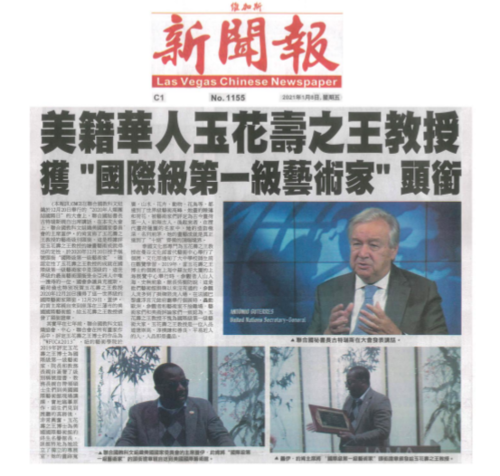
On December 20, 2020, the UNESCO convention was held on the occasion of the 2020 United Nations International Day for Human Solidarity, and the United Nations Secretary-General His Excellency António Guterres attended in person and delivered a speech. During the convention, the Chairman of the U.S. National Commission for UNESCO Clubs, Centers and Associations Guy Djoken proclaimed Professor Yuhua Shouzhi Wang’s title and level of artistic achievement, which was based on a determination of the artistry accomplished by the Professor in her paintings. The issuance of the “International First-Class Artist” title to Professor Yuhua Shouzhi Wang on December 20 was a determinative recognition that Professor Wang has attained the highest level of achievement among international first-class artists. This is the ultimate world class title for artistic accomplishment, and Professor Wang is the only Asian artist who has ever received such a title.
U.S. Senator Chris Van Hollen congratulated Professor Yuhua Shouzhi Wang for being honored with the title recognizing her as a world class international artist on December 20. On December 29, Chairman Guy Djoken went to the International Art Museum of America in San Francisco to personally present the title certificate to Professor Yuhua Shouzhi Wang.
Professor Wang is a person of humility and noble morality. She is modest, unassuming, beneficent and genial. The characteristics of an artist’s paintings essentially reflect the character of the painter.
Located at the heart of downtown San Francisco, on 1025 Market Street near Sixth Street, the International Art Museum of America is a permanent , non-profit museum open to the public. The museum’s goal is to utilize the exhibition forum to pass on works of art that have achieved the most exquisite beauty and preciousness in the history of civilization, in order to further humanity’s moral progress, spiritual wellbeing, cultural development and world peace. It takes as its mission bringing humanity happiness and uplifting aesthetic enjoyment.
When IAMA was first founded, H.H. Dorje Chang Buddha III had loaned the museum about 100 of his pieces. The works of H.H. Dorje Chang Buddha III have been recognized with numerous awards over the years – the Presidential Gold Award, the Dr. Martin Luther King Legacy Award for International Service and Leadership, Fellowship by the Royal Academy of Arts in 2004 and a World Peace Prize at the US Capitol in 2011.
Since its founding in 2011, the International Art Museum has been a place of peaceful reflection and international understanding. The collection in the museum has grown to include art from China, Algeria, Belgium, England, France, the Netherlands, Germany, Ireland, Norway, Russia, Scotland, and the United States. The works of traditional calligraphy, Western oil painting, modern ink brush landscapes, sculptures and portraits, all work together to showcase the diversity of human experience and perception.
The museum opens between Tuesday and Sunday between 10:00am – 5:00pm, and it’s free admissions. Please visit https://www.iamasf.org/dorje-chang-buddha for more information.











 Peace LiLy