Zhenru Chan Temple is nestled on the southwestern slopes of Yunju Mountain in Jiangxi Province. Surrounded by peaks said to resemble unfolding lotus petals, the landscape is poetically described as “lotus peaks clustering around Huatai.” Huatai, the mountain’s central peak, anchors this natural harmony. Here, architecture, terrain, and spiritual intention merge seamlessly, creating a setting that feels both grounded and quietly transcendent.
Even before understanding its history, one senses that this is a place shaped not to dominate nature, but to listen to it.
The name Zhenru (真如) means “True Suchness”—a fundamental concept in Chan Buddhism that points to ultimate reality as it is, beyond words, labels, or conceptual thinking. It is not something to be grasped intellectually, but something to be directly experienced.
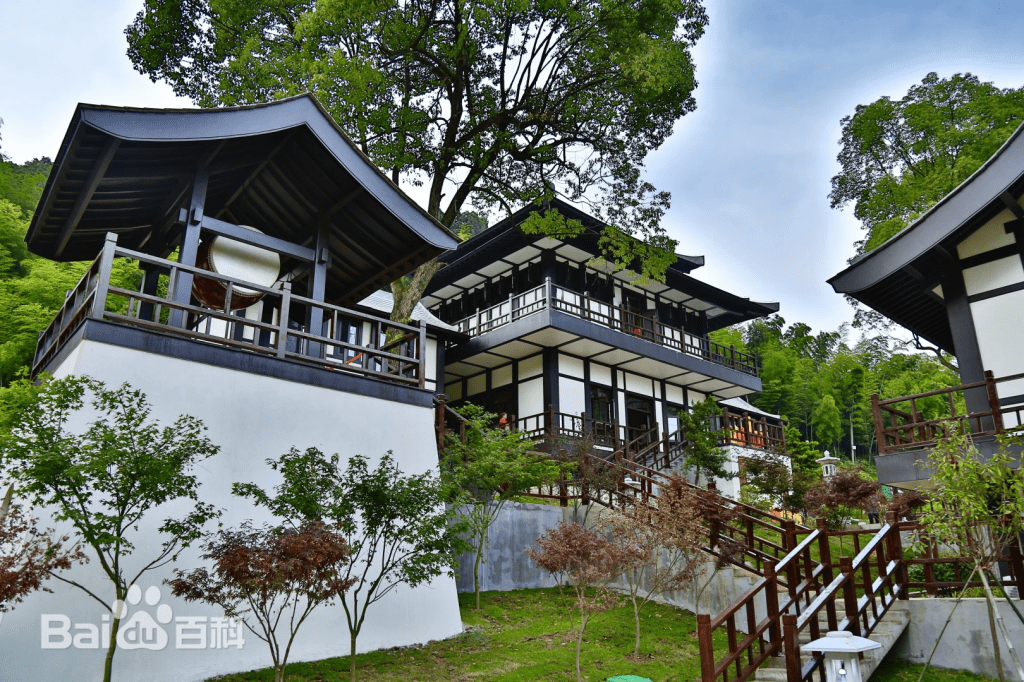
Founded during the Tang Dynasty (806–810), Zhenru Chan Temple is regarded as the cradle of the Caodong School of Chan Buddhism, which later spread to Japan as the Soto Zen tradition. Revered as one of China’s three great model Chan monasteries, the temple has long been a center for authentic practice. Though the present structures were rebuilt in the 1950s, they preserve the simplicity and elegance of traditional Chinese monastic architecture.
Chan in Action: Meditation and Farming as One Path
One of Zhenru Temple’s defining characteristics is its embodiment of the Chan principle that “agriculture and meditation are equally emphasized.” Monks here did not retreat from life; they engaged it fully.
Alongside meditation, monks cultivated tea fields and farmed the land. This was not merely practical—it was spiritual. Farming ensured self-sufficiency in the remote mountains, freeing the monastery from reliance on external donations. More importantly, working the soil was understood as a form of Chan practice: repetitive, mindful, intimate with the rhythms of nature.
In the Caodong tradition, there is no division between the sacred and the ordinary. Plowing a field is no less sacred than chanting a sutra. The monks alternated between sitting meditation and physical labor, living out the Chan maxim:
“A day without work is a day without food.”
This principle is traditionally attributed to the Tang-dynasty Chan master Baizhang Huaihai (720–814), a disciple of Mazu Daoyi and a key figure in establishing Chan monastic regulations. His teaching reminds us that awakening is not found apart from daily life, but revealed within it.
Master Xu Yun: Reviving the Living Dharma
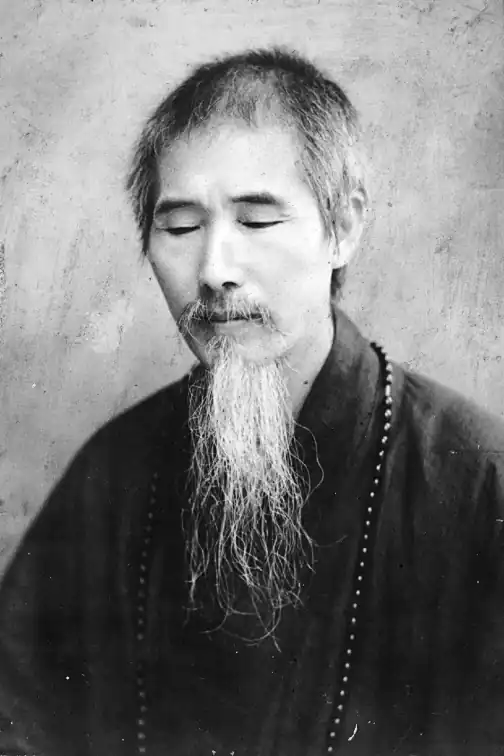
Zhenru Chan Temple is also inseparably linked to Master Xu Yun (1840–1959), one of the most revered Chan masters of modern China, often described as a rare master who embodied and transmitted the lineages of five Chan schools in a single lifetime.
When Master Xu Yun arrived at Zhenru in the early 20th century, the temple lay largely in ruins. With unwavering resolve, he led an extensive restoration—rebuilding halls, pagodas, and monastic quarters with the support of disciples and lay donors. More than physical reconstruction, he revived strict monastic discipline and rigorous meditation practice, restoring the temple’s spiritual vitality.
Zhenru ultimately became the place where Master Xu Yun passed away, completing a life devoted to the Dharma.
Earlier in his life, Master Xu Yun experienced a profound awakening during intensive meditation at Gaomin Temple in Yangzhou at the age of fifty-six. In his autobiography, he described the experience with clarity and restraint:
“In the purity of my single-mindedness, I forgot my body entirely. After twenty days, my illness disappeared. From that moment on, my practice continued day and night without interruption… One evening after meditation, I opened my eyes and saw a brightness like broad daylight, in which everything inside and outside the monastery was clearly visible.”
Yet what makes his account especially powerful is what followed. Master Xu Yun did not cling to the experience. He recognized it as a mental state—not an ultimate attainment—and continued his investigation with humility and perseverance, asking relentlessly:
“Who is mindful of the Buddha?”
Later, he commemorated a moment of deep insight triggered by the simple sound of a teacup breaking in the Chan hall, capturing Chan’s direct and unadorned wisdom in a verse:
A cup fell to the ground, The sound rang clear and sharp. Space itself shattered— The restless mind came to rest.
This is primarily a video demonstration of the moving meditation practiced at Zhen Ru Chan Temple.
Zhenru Chan Temple is more than a historical site. It is a living reminder that Chan practice is not confined to silence or retreat, but woven into how we walk, work, and meet the ordinary moments of life.
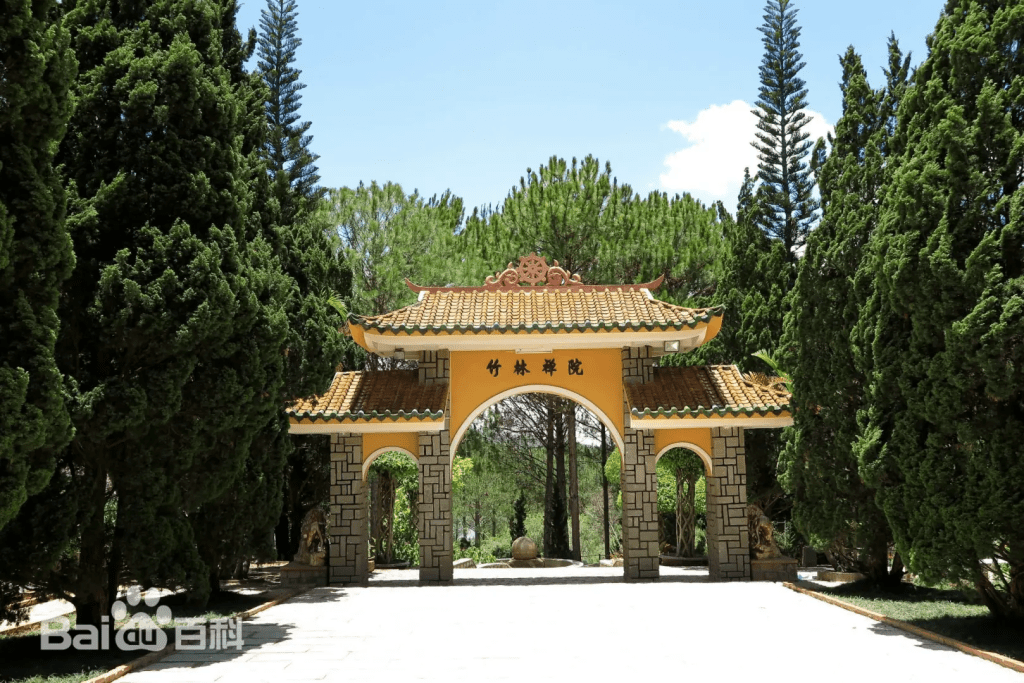
Standing on Fuyung Mountain Road in Tsuen Wan, Hong Kong, Zhulin Temple (also known as Chuk Lam Sim Yuen) proudly upholds the lineage of the Linji School of Zen Buddhism. Rooted in tradition, the temple seamlessly integrates teachings from the Tiantai and Pure Land traditions, thereby spreading the Buddha’s wisdom far and wide. Nestled within the heart of the Fragrant Harbour, it fosters a unique spiritual atmosphere known as the “Bamboo Grove Family Style,” where the Dharma is generously shared, benefiting both locals and visitors alike, serving as a haven for Buddhist study and practice.
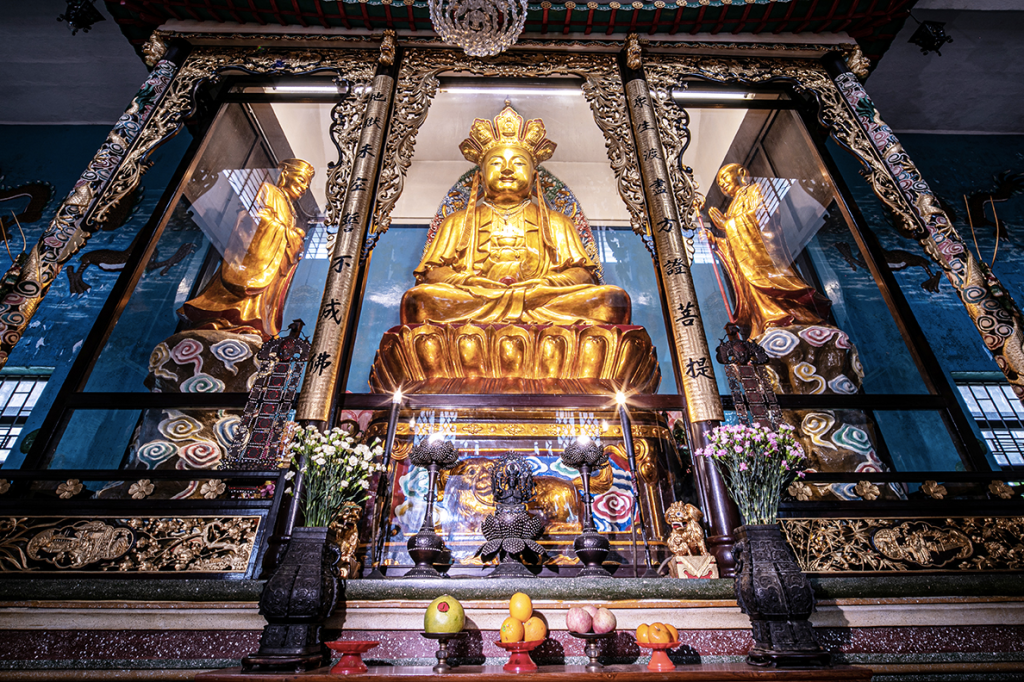
Encompassing an expansive area exceeding 400,000 square feet, Zhulin Temple commands a serene and majestic presence, making it one of the largest and most beautiful temples in Hong Kong. Its origins trace back to 1928 when the founding master, prompted by three visionary dreams from Bodhisattva Ksitigarbha, embarked on the mission to erect a temple on Fuyung Mountain. Inspired by unwavering Bodhi resolve, six devoted followers generously donated funds to procure the land and construct the temple. Drawing inspiration from the architectural marvels of ancient Chinese mountain temples, the Pagoda Hall was completed on October 23, 1932, housing the largest statue of Ksitigarbha Bodhisattva on a lotus throne in Hong Kong. Thus, Zhulin Temple was formally inaugurated, marking the beginning of its sacred journey to illuminate sentient beings.
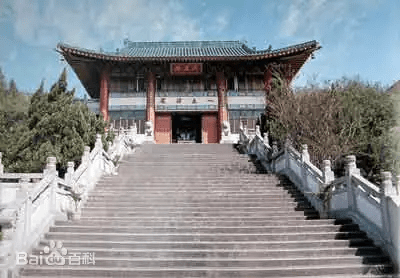
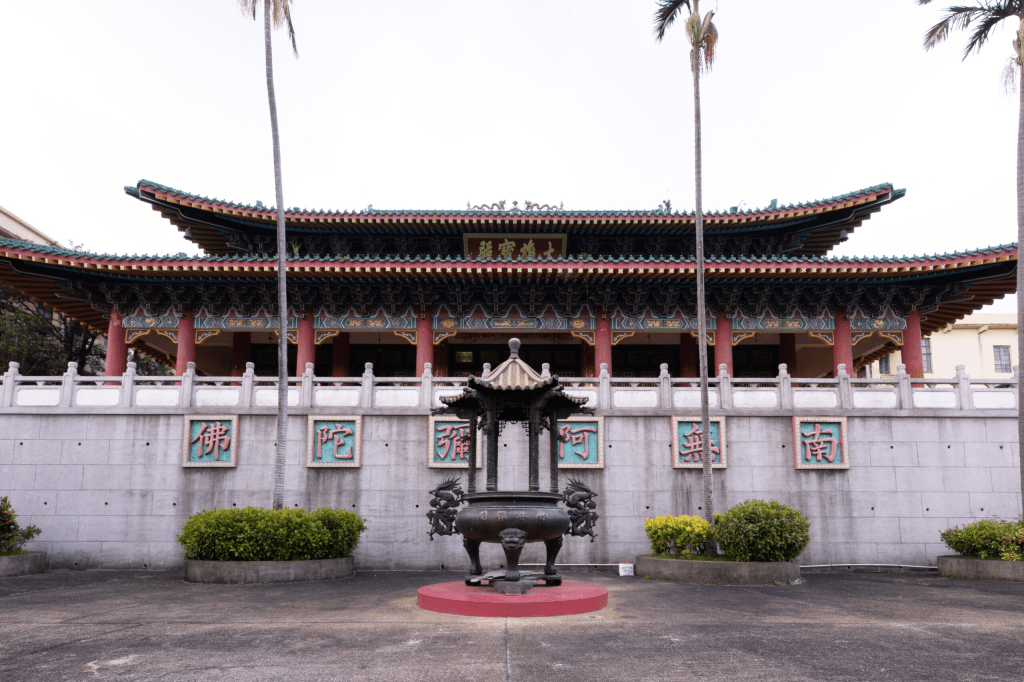
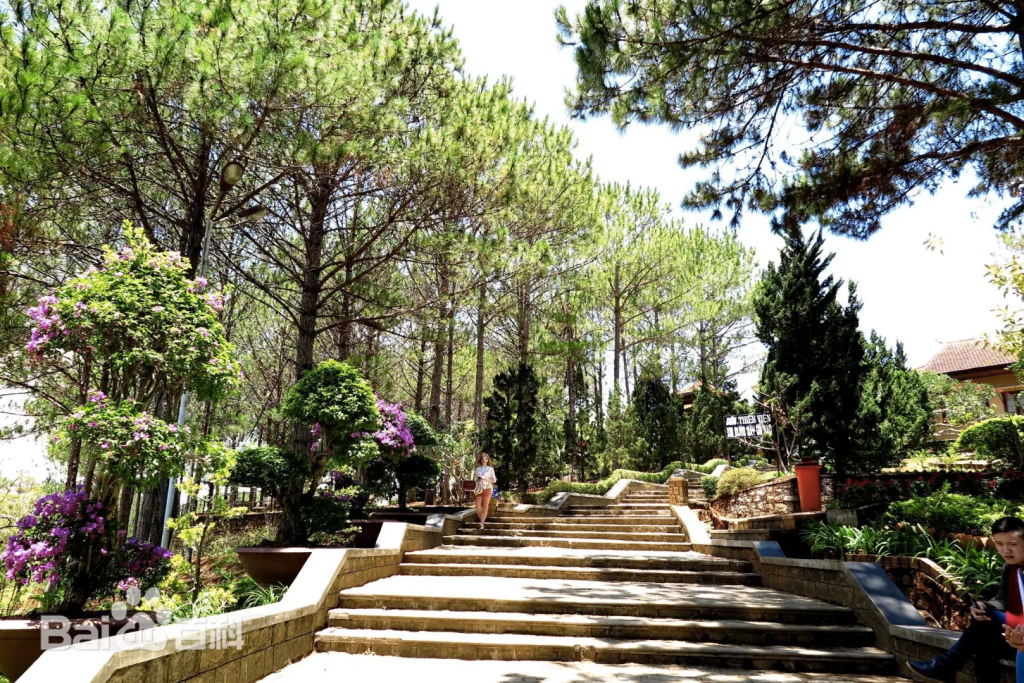
The architectural layout of Zhulin Temple embraces a harmonious three-section courtyard design. Upon crossing the mountain gate, visitors are greeted by the monastery’s serene courtyard garden, offering a space for worshippers to procure incense, candles, flowers, and fruits for offerings. Ascending the steps leads to the grand Hall of Heavenly Kings, where the jovial Maitreya Buddha stands at the central entrance, extending a warm welcome to all. Within the hall, the Four Heavenly Kings stand guard, with the central altar adorned by Bodhisattva Virūpākṣa, safeguarding the monastery under the benevolent gaze of Maitreya Buddha.
steps leads to the Grand Hall of Heavenly Kings,
Maitreya Bodhisattva
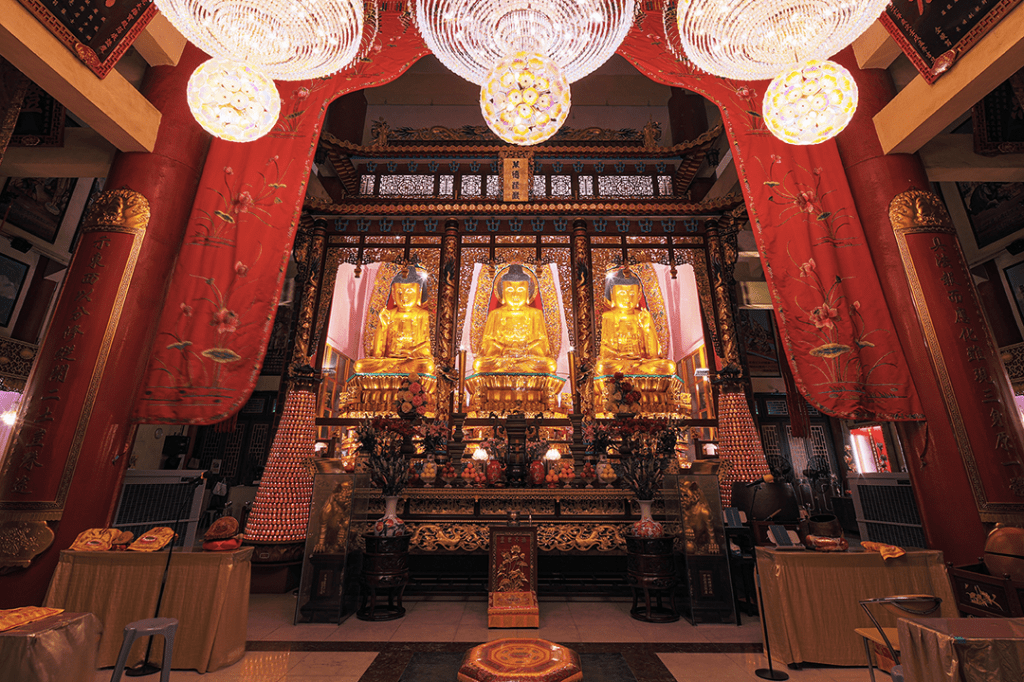
Further beyond lies a spacious courtyard flanked by a bell tower and drum tower. Ascending the stairs unveils the majestic Grand Hall, where the Triple Gem (Amitābha Buddha, Śākyamuni Buddha, and Bhaiṣajyaguru Buddha) resides on the central altar, accompanied by eighteen Arhats on either side. Adorning the rear of the Triple Gem altar is a depiction of the transformative scene from the Avalokiteśvara Sūtra, illustrating the manifestation of Avalokiteśvara Bodhisattva.
Bell Tower and Drum Tower
The Grand Hall
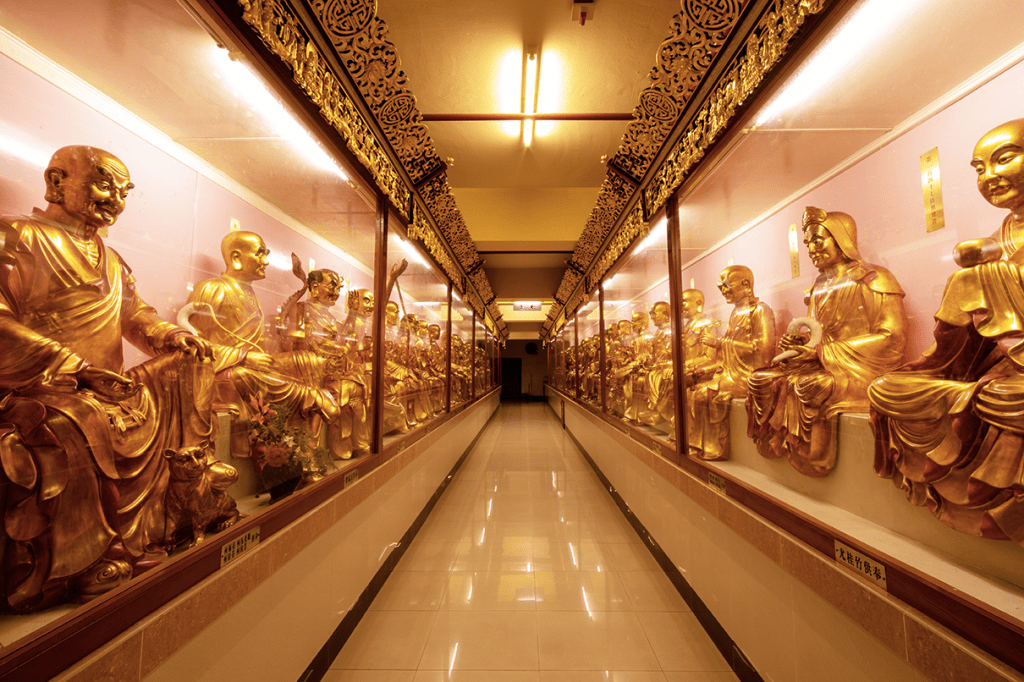
Adjacent to the main hall, worshippers find solace in a pavilion, while the Guan Yin Hall and Jade Buddha Hall flank its sides. Upstairs, the Pagoda Hall, now known as the Ksitigarbha Hall, stands adjacent to the Ancestral Hall and the Kitchen. Surrounding the monastery are additional halls including the Five Hundred Arhats Hall, the Dharma Hall, the Chan Hall, and the Scripture Repository, nestled along the outskirts and mountain slopes.
Guan Yin Hall
Ksitigarbha Hall
Five Hundred Arhats Hall
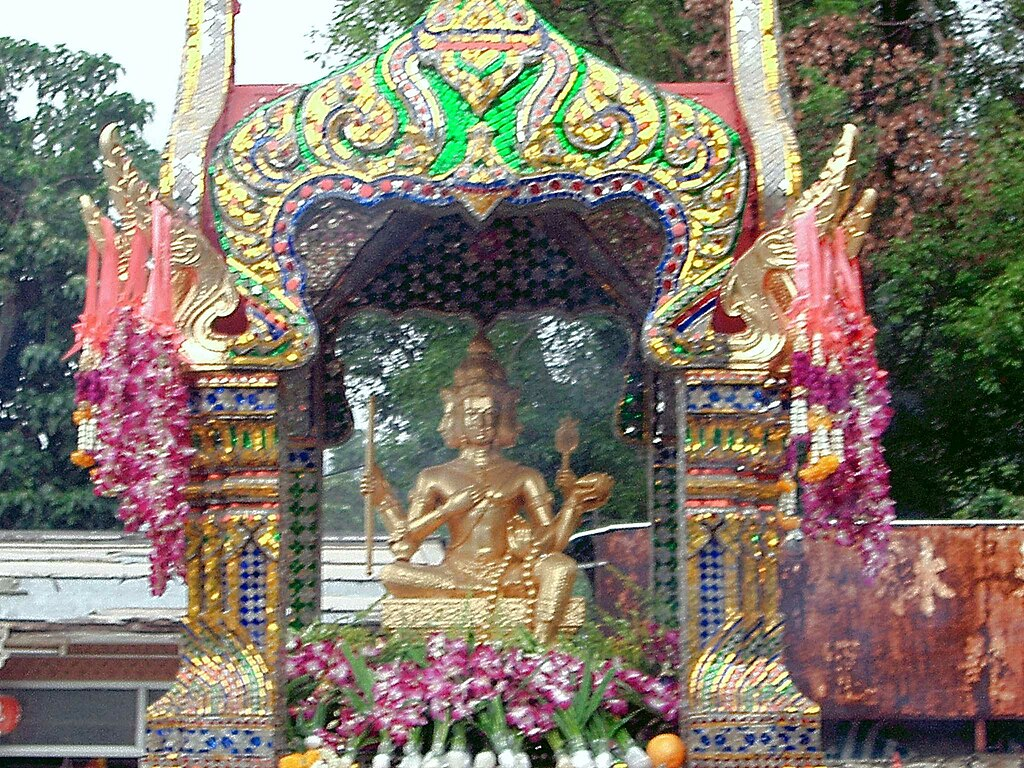
Four faced Buddha Statue 由Hkgalbert – 自己的作品,公有领域,https://commons.wikimedia.org/w/index.php?curid=9932768
Throughout its century-long history, Zhulin Temple has been overseen by five abbots. Notably, the fourth Abbot Master YiZhao emerged as an eminent monk of his time. Venerable Dharma Master Yizhao (1927-2013), born in Guangdong, China, embarked on his spiritual journey by joining Zhulin Zen Monastery in Hong Kong in 1940, formally becoming a monastic in 1941.
Under the guidance of Master Xuyun, he received the transmission of Viyana at Nanhua Temple in 1944, subsequently inheriting the Linji (Rinzai) Dharma lineage and becoming its 44th holder. Establishing the Guyan Pure Monastery in 1952, he later returned to Zhulin Temple to assist in its renovation, eventually assuming the role of abbot. He peacefully passed away in 2013, leaving behind a legacy of enlightenment and compassion.
Master YiZhao (left) and Master XuYun (right) were together at KaiYuan Temple in ChaoZhou, GuangDong , in 1946
Venerable Dharma Master Yizhao, the successor to H.E. Dharma Master Xuyun, exemplifies profound virtue within contemporary Zen Buddhism. Having attained the supreme state of Bodhi, he relinquished all ties to further reincarnation long ago. Inspired by the compassionate vow of Ksitigarbha Bodhisattva, he pledged “As long as there is any living being in the earthly realm, I vow not to become a Buddha.” Renowned as the nirmanakaya of Ksitigarbha Bodhisattva, he received the Amrit Empowerment Initiation from H.H. Dorje Chang Buddha III, lauded as an exceptional monk who ardently upholds precepts.
In June 2000, Venerable Dharma Master Yizhao seized the opportunity to participate in the Buddhas Bestowing Nectar Dharma Assembly presided over by H.H. Dorje Chang Buddha III. (The very left in the photo is Master Yizhao)
Zhulin Temple stands as a testament to beauty and sanctity, inviting visitors to immerse themselves in Buddhist culture, prayers, and blessings, offering a profound spiritual experience.
Master Xu Yun was a renowned Zen Buddhist Holy monk, and was one of the most influential Buddhist Masters of the late 19th and 20th centuries.
Master Xu Yun renounced himself at nineteen years old, and passed away when he was one hundred and twenty years old. He had hundreds of thousands of disciples and a great many legendary stories. One time he tamed a general in Yunnan province using his extraordinary wisdom and bravery.
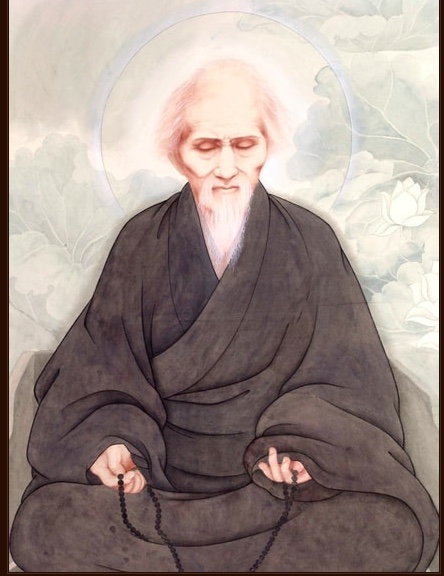
Master Xu Yun
General Li Genyuan was the commander of the Yunnan New Army at that time. He had studied overseas in Germany before returning to China and was a young and energetic general. He regarded himself a strong believer of science and perceived Buddhism as superstition. He wanted very much to have Buddhism removed. Because of that, he came up with the excuse that there were tens of thousands of monks in Mount Jizhu and they might organize armed resistance. Therefore, he personally led his troops to Mount Jizhu. On their way, the several thousands of officers and soldiers were demolishing temples and arresting monks.
When Elder Monk Xu Yun, abbot of Zhu Sheng Temple in Mount Jizhu, heard about this, he decided to come down from the mountain in person to persuade Li Genyuan to stop. When Li Genyuan saw this thin yet spirited elder monk who had his long beard hanging down, noticing Xu Yun’s uncommon grace and peaceful and calm manner, he was spontaneously startled, “Oh! This is Xu Yun. He does have a little uncommon demeanor!”
Li Genyuan harshly shouted, “I want to catch you. Now you even dare send yourself to me! Maybe you label yourself as not fearing death. Let me ask you, how many lives do you have?”
Xu Yun kept his head up and replied calmly, “Great Commander, I, Xu Yun, have only one life. Also, I am not any hero or brave man who does not fear death. I am just a monastic person. Today, I do not shy away from your killing weapons and risk my death to meet you, Great Commander. My purpose is to beseech an order from you, Great Commander, to save Buddhism. I ask you, Great Commander, to immediately stop demolishing temples and destroying Buddhism.”
“Are you really not afraid of death?” Li Genyuan had a cold smile.
Xu Yun did not have the slightest fear on his face and smiled gently and calmly, “I, Xu Yun, have made up my determination to die for Buddhism long ago. If, before my death, you, Great Commander, can give me an opportunity to state my cause clearly and stop doing damages to Buddhism in the future, I am willing to die.”
Li Genyuan spoke coldly, “You answer me first. You kept saying wanting to die for Buddhism and tell me not to destroy Buddhism. Let me ask you. What benefit does Buddhism have?”
Xu Yun replied with a smile, “The Buddha established Buddhism to advocate great love and great compassion, serve the world and benefit the population, and broadly save living beings from suffering and hardship. Buddhism persuade and transform people in the world to do goodness and remove evil, cultivate conduct and virtue, and save oneself as well as others. Buddhism first teaches people to cure their minds. The mind is the source and origin of all afflictions. Once the origin is correct, all things can be in serenity and peace will be everywhere. The world will be calm and peaceful.”
Li Genyuan’s face turned a little milder, “I admit that you have good eloquence of debate. However, what is the use of these statues sculpted with mud and carved from wood? These statues lead people into superstition for nothing!”
Xu Yun stated calmly, solemnly, and respectfully, “The Buddha spoke about the appearance of Buddha-dharma. The appearance is to express the dharma. Not expressing with appearance, the dharma cannot be publicized. The Buddha statues made of sculptures are to symbolize the Buddha’s solemn elegance and loving compassion, to let people generate homage, confidence, and respectful fear from viewing. Without respectful fear in mind, people will do all kinds of malicious acts, thereby creating calamities and upheavals. Even if we just talk about customs in the world, examples are Confucius’ statue in his temple at Mount Ni, an ancient person named Ding Lan carved wood statues of his parents to repent for not being filial enough earlier, worshipping ancestors in ancestral temples by all clans in China, and bronze statues seen in all Western countries. All are for the purpose of letting people view and generate respect and faith. Buddha statues are sculpted with mud and carved from wood. However, what we respect and pay homage to are not the materials of earth and wood. Rather, we respect and pay homage to the symbolized Buddhas and Bodhisattvas with great love and great compassion. As a result, thoughts of all kinds can develop in the mind to induce us to save ourselves and save others. The enthusiasm of respect and faith arises from seeing Buddha statues. The merit and effect are inconceivable!”
Li Genyuan nodded, “It does sound reasonable, hearing what you said. However, my mind does not submit to that. You monks talk about cause and effect and talk about samsara (transmigration). These superstitious views and concepts are elusive without bases in science. I studied science and military in the West. I despise these old superstitions the most. That is why I am determined to uproot them. I would like to hear how you can skillfully argue about that.”
Xu Yun smiled, “First, I need to explain what superstition is. The so-called superstition refers to blindly following and obeying without clearly understanding the truth and knowing the ultimate reason and, moreover, without distinguishing good or bad and upright from evil. Examples are, killing people to sacrifice for evil deities, slaughtering cattle, sheep, chicken, duck, or other lives to worship ghosts and gods, presenting gold and silver to bribe and beg ghosts and gods for blessing wealth, engaging in sexual misconduct to please demonic ghosts and demonic deities, using ghosts and deities as excuses to raise money with selfish purposes, mocking ghosts and deities to carry out despicably intolerable malicious conduct or direct people to do things violating loyalty, trust, and benevolence, teaching people to steal, rape, and kill, teaching people to commit fraud and extortion, and encouraging cruelty and disorder. All acts of these types belong to superstition! If a faith teaches people with loyalty, filial act, benevolence, and love, advocates faith, trust, and peace, praise and spread etiquette, firmly cultivate humility, promote great love and great compassion of Buddhism, broadly save living beings to leave suffering and hardship to arrive at bliss and peace, teach people in the world to help and support each other with loving compassion, use loving compassion, benevolence, and virtue to teach and transform the world, pursue goodness and break away from malicious deeds, and take refuge in correct teaching and abandon evil dogmas, how can superstition come from such correct faith and correct wisdom?”
Li Genyuan quietly listened and the cruel and offending expression on his face gradually disappeared. He said, “Elder Monk, these statements are truly reasonable! However, you did not explain cause and effect and samsara clearly. These do not agree with science!”
Xu Yun said, “The so-called science is the accumulation and investigation of the wisdom and knowledge of humanity. The approach is inheriting from the past and developing the future, knowing the past to probe the future, and using what is known to investigate and validate the unknown. The learning from such investigation and validation never stops or stays at the same place. People must quest and probe incessantly. Only that is the true spirit of science! The scientific knowledge at the current time is of course greatly advanced from that of the ancient and middle ages. However, does that mean there is nothing unknown already? Does that mean we have completely understood all subtleties and secrets of the universe?”
Li Genyuan said, “Of course we have not been able to do that yet.”
Xu Yun smiled, “Sutras of Buddhism already studied the genuine knowledge exhaustively several thousand years ago. It has been known that the universe never ends through all lifetimes. Matters in existence will annihilate and will be reborn after annihilation, in different shape and state. It is just a process of transforming between different form bodies. On the other hand, only in the current era, Western scientists stated the law of matter’s conservation. Buddhist sutras stated the world’s continuity and living beings’ continuity long ago. These agree completely with the law of physics of the universe. Why do you say the concept of samsara is not scientific?”
Li Genyuan asked, “What do these have to do with samsara and cause and effect?”
Xu Yun said, “The law of cause and effect is the law and principle governing the cycle of the universe! All things must first have the causes of birth and annihilation and then have the consequences. This is the cycle from the law of cause and effect! All sentient beings have wisdom and power of consciousness. After the death of the physical body, the power of consciousness still exists, which is the soul that worldly people talk about. A person who cultivates, practices, and carries out good conduct has a concentrated mind and calmed spirit and knows to go toward goodness and avoid calamity by instinct. Focusing the mind to chant Amitabha Buddha’s name will let one to know about going to the World of Ultimate Bliss. If this person practices good conduct, Buddhas and Bodhisattvas will naturally come to receive him. Conversely, if a person has done a lot of malicious acts and evil deeds and has a surly, hostile, and unkind mind nature, then his conscience is closed and his wisdom is also all lost. That means his power of consciousness and soul also got lost. Moreover, because he does not know chanting the Buddha’s name, he will naturally devolve. With a muddled head and not knowing the direction, he can only follow his karmas to transmigrate and cannot get out. Consequently, he has to suffer life after life and also has to pay back for his earlier malicious acts. This is the law and principle of the universe. Things all have coming and going and undergo the never-ending cycle. What is unscientific in the law of cause and effect and samsara?”
Hearing this, Li Genyuan was horrified. He was sweating all over but felt chilling to the bone. He was extremely moved and said sincerely, “Elder Master Xu, hearing this speech from you is more beneficial than studying in school for ten years to me, your disciple! I, your disciple, studied overseas in the West and only learned some skin-deep and hair-thin science. I really do not know the profound principles of the universe and even absurdly wanted to destroy Buddhism! From listening to your teaching and discourse, I am now completely clear. I ask you, Elder Master Xu, to allow me to take refuge before you to become a Buddhist disciple!”
Xu Yun smiled, “Great Commander, please get up. Since you, Great Commander, have become clear and have the determination to believe in Buddhism, this shows you, Great Commander, still has a very deep root of goodness and can realize the truth quickly. However, please first develop more opportunities to get close to Buddha-dharma and let real faith develop in your mind and become firm and unmovable, the matter of taking refuge can be talked about after that.”
Li Genyuan immediately said, “Elder Master Xu, please do not call me, your disciple, great commander anymore. Even though you, Elder Master Xu, do not want to accept me as your disciple today, I, your disciple, have already submitted to you in my mind. Please call me by name directly.”
In that evening, Li Genyuan gave the order to light up candles to talk with Xu Yun at night about the principles of Buddhism. From the clear manifestation of the law of cause and effect to the inter-webbed net of karmas, consequences of karmas and karmic conditions, the continuity of the world, the continuity of living beings, and other fundamental principles of Buddhism, and to the profound axioms in Buddhist sutras, Xu Yun introduced the profundity of the universe. Li Genyuan was completely convinced and had full admiration. They spoke until after midnight and were very high-spirited.
Li Genyuan sighed, “Without hearing Elder Master Xu’s earnest teaching and explanation today, I really do not know the fact that the principles of Buddhism and Buddha-dharma are so broad, great, and profound. I now have the complete faith and submission! I am determined to take refuge in Buddha-dharma.”
The next morning, Li Genyuan personally guarded Xu Yun to return to the temple. Wearing his military uniform indicating a general’s rank, Li Genyuan led the horse in person. Xu Yun, who was 72 years old, was sitting on the horse. They slowly walked to the temple’s gate. Behind them were several dozens of horse-riding guarding officers. With the shining Sun, golden light appeared from the mountain. Starting from the mountain top and coming downward, trees and grasses were covered with golden color. The scene of the entire mountain shining golden light was extremely splendid and solemn.









 Peace LiLy